
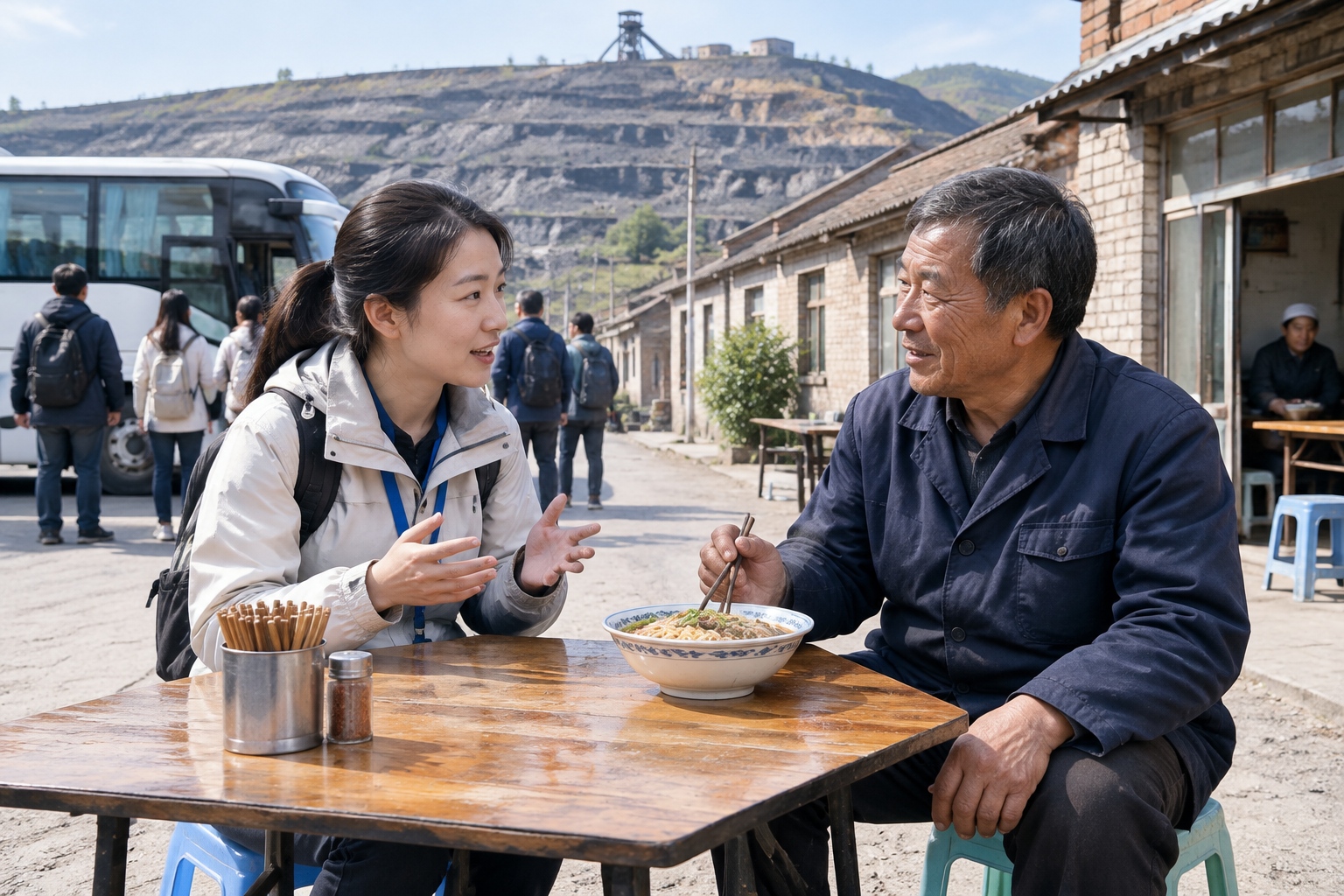

The bus pulls off the highway at 8:40 a.m. and parks beside a row of shuttered shops. Kouquan is a narrow valley on the western edge of Datong, in northern Shanxi, and on a windless morning it smells like coal dust and fried dough at the same time.
Wei Na, 33, counts heads as her group files out: twelve visitors from Shanghai, Guangzhou, Chengdu and one from Singapore. It’s day three of a five-day Shanxi loop. Today is the Yungang Grottoes.
Across the road, a man in a navy jacket sits on a plastic stool outside a noodle shop, watching the bus unload. Han Zhenhua is 61. He spent 34 years underground. Now he works three days a week at the mine park a few hundred meters up the valley, riding a cage elevator down with tourists who want to see where he used to cut coal.
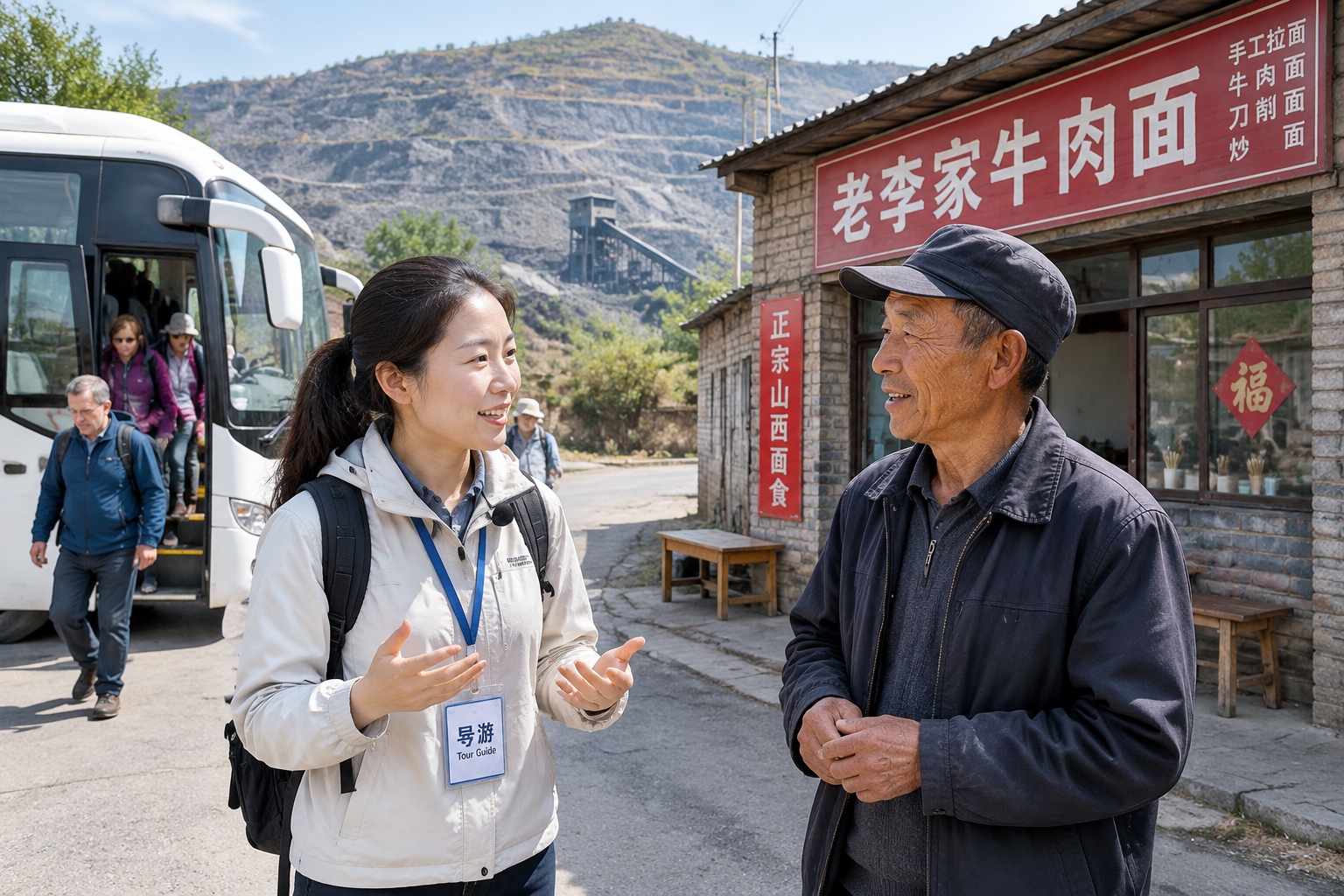
Wei Na walks over and asks if he wants tea. He says he’s had two cups already. They do this whenever her route passes through: twenty minutes of talking, a few photos, then the bus leaves and the valley goes quiet again.
What Coal Meant in Shanxi
Shanxi sits on one of the largest coal reserves on earth. The province mined about 1.38 billion tonnes of raw coal in 2023 — roughly a quarter of everything China pulled out of the ground that year. In Datong, coal wasn’t a sector of the economy. It was the economy.
“When I started, in 1982, the whole town was the mine,” Han says. “Your father worked there, your uncle, your neighbor upstairs. If you didn’t get into university, you went down. Nobody complained. The pay was three times what you’d make farming.”
That bargain held for thirty years, and it cost people. In the early 2000s, China recorded thousands of coal mine deaths a year. Tighter safety rules, the closure of small illegal pits and the consolidation of mines brought the official figure down to a few hundred. In Shanxi, an accident used to be a local ritual: names read out, compensation negotiated, the production target quietly raised the next quarter.
Then came the other pressure. In 2020, Beijing set targets to peak carbon emissions by 2030 and reach carbon neutrality by 2060. Coal still supplies more than half of China’s electricity and Shanxi’s mines still run, but the small, dangerous and chronically unprofitable ones closed. Tens of thousands of miners were reassigned, retrained or bought out.
A Miner’s Day Underground
Han’s shift started at six. By seven he was 400 meters down, in a tunnel where the temperature sat near 30°C and water sprayed constantly to keep the dust out of the air. It didn’t always work.
“You’d finish a shift, blow your nose, and it was black,” he says. “We all knew what that meant. Two men from my crew have pneumoconiosis. One of them can’t climb stairs.”
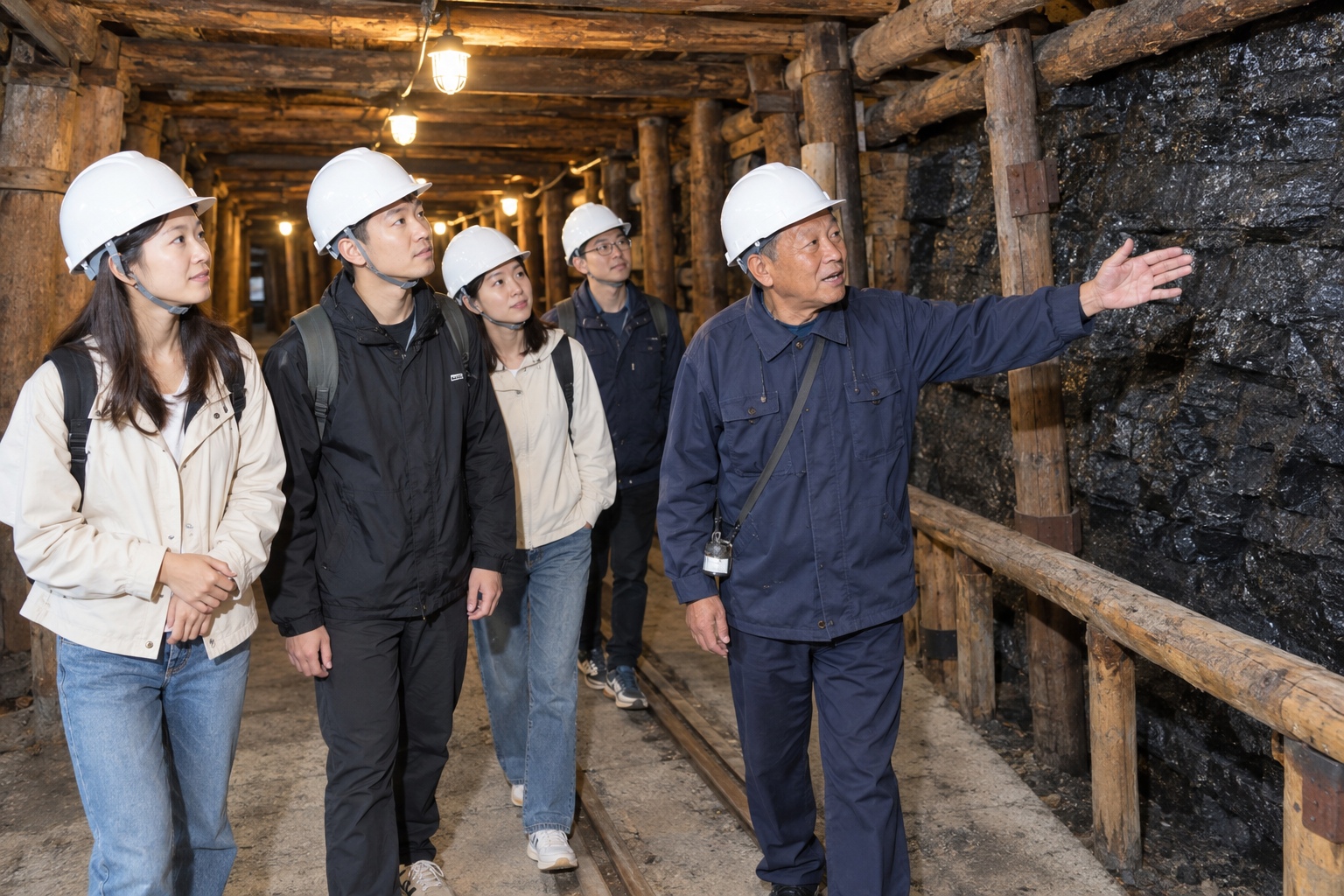
The pay was the reason. At his peak, in the late 2000s, Han took home 9,000 to 11,000 yuan a month with production bonuses — several times the local average, enough to build a house and put a son through vocational college. The base salary was never that high. The bonuses depended on tonnes cut, and tonnes cut depended on how much risk the crew accepted.
In 2016, his mine was listed for closure under a national capacity-reduction plan. He was 53. The choice was a transfer to a mine 300 kilometers away or a buyout. He took the buyout: a lump sum, two weeks of retraining he describes as “a certificate nobody asked for,” and a pension of about 4,200 yuan a month.
What he misses is the crew. “Twelve men in a tunnel — you don’t need to talk, you just know where everyone is.” What he doesn’t miss: the dust, the night shifts, and the particular silence of a phone call to a family that has just lost someone.
Why Tourists Are Coming to Shanxi
Wei Na grew up in Datong, studied tourism management in Taiyuan, spent three years with a Shanghai travel agency, and came back in 2019. She has watched the visitor numbers change from the inside.
Shanxi’s pitch isn’t obvious, because most of it is old. The Yungang Grottoes hold more than 51,000 Buddhist figures carved into sandstone in the fifth century. The Yingxian Wooden Pagoda has stood since 1056 without a single nail. Pingyao, a walled Ming-and-Qing merchant city, has been a UNESCO site since 1997. Then there are the noodles.
In August 2024, a video game did what decades of brochures couldn’t. “Black Myth: Wukong,” a Chinese-made action game, modeled 36 of its scenes on real Shanxi temples. Within weeks, sites in Jincheng and Linfen were overwhelmed. At Xiaoxitian, a Ming-era temple in the mountains of western Shanxi, daily visitors jumped from a few hundred to more than 10,000 on peak days; the county built temporary parking lots and hired traffic marshals.
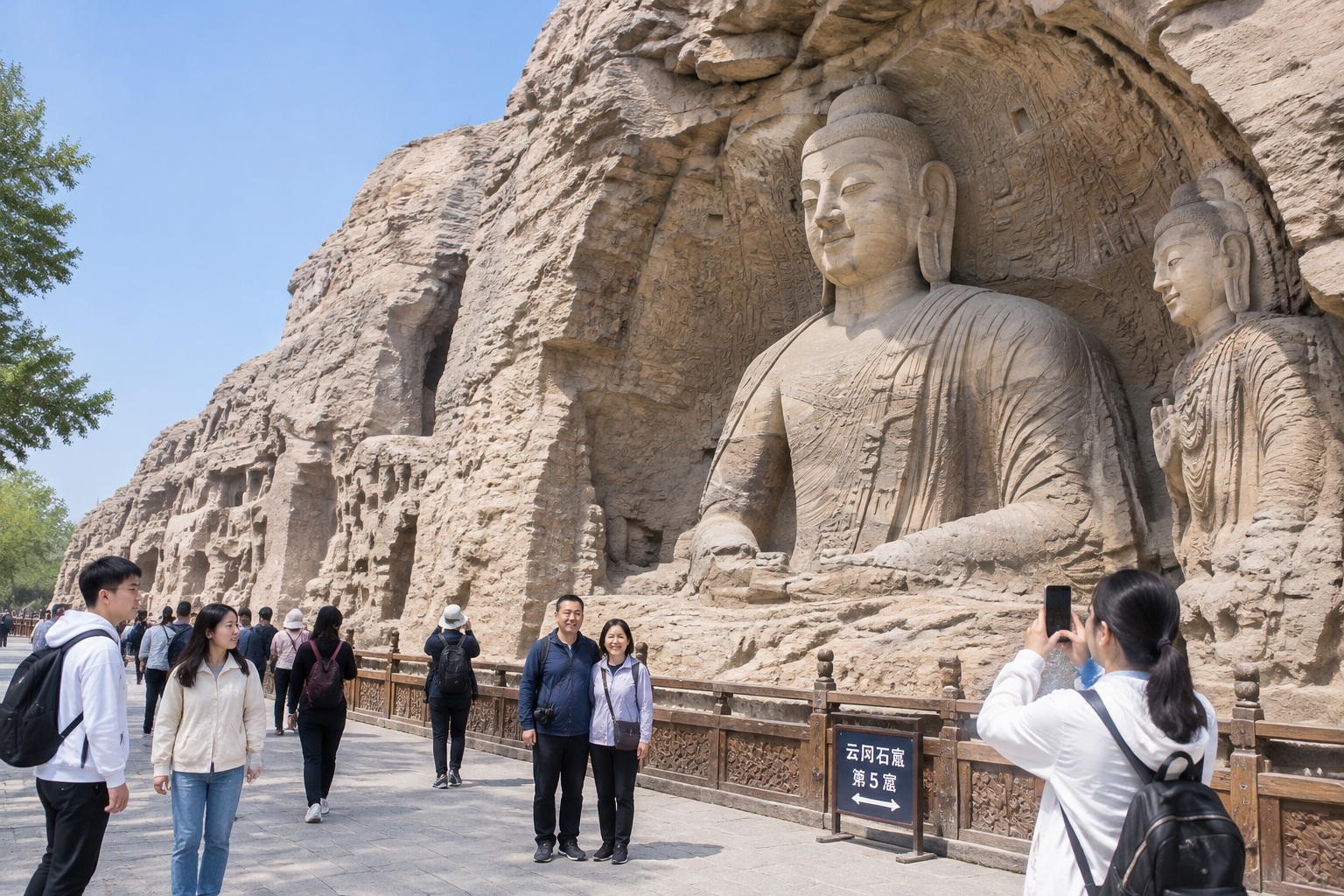
For Wei Na, the work is seasonal and uneven. From April to October she leads four- and five-day tours at 300 to 500 yuan a day, plus commissions from the guesthouses and restaurants she recommends. In winter, when the buses stop, she livestreams from her kitchen, selling Shanxi millet, aged vinegar, walnuts and dried jujube on Douyin. Her best month last year brought in around 15,000 yuan. January brought in about 3,000.
Better trains helped. The high-speed line that opened in 2019 put Datong about an hour and forty minutes from Beijing, turning a two-day trip into a weekend. Guesthouses in Pingyao and Datong’s old town now number in the hundreds, most of them converted courtyard houses run by families.
Life After the Mines
This is where the two of them disagree, politely.
“Coal isn’t finished,” Han says. “You still need it when the wind doesn’t blow and the sun doesn’t shine. The new mines are clean — you sit in an air-conditioned room and run the machine with a joystick.” He isn’t wrong. Shanxi has been building automated “smart mines” where the cutting is done remotely, and coal still anchors the province’s industrial output.
Wei Na’s answer is about who stays. “Ask a 25-year-old in this valley if they want to go underground for 10,000 yuan a month,” she says. “Some will. But the people I went to school with are opening coffee shops in Pingyao and running guesthouses in the old town. Tourism pays less. It also doesn’t give you black lungs.”
The visible changes are easier to agree on. Datong spent the 2000s near the bottom of China’s air-quality rankings; its PM2.5 levels have since fallen by more than half, and the city now reports more “good air” days than the provincial average. Families in Kouquan who lived above cracking ground — subsidence from decades of mining — have mostly moved into new apartment blocks with gas heating and elevators. Roads that used to be potholed truck routes are paved and lit.
Less visible: the province is shrinking. Shanxi has lost residents for several years running, and Datong, home to about 3.1 million people, is no exception. Young people leave for Taiyuan, Xi’an, Beijing. Some come back. Not many.
What Has Changed—and What Hasn’t
Changed: the air, the roads, the safety record, the number of jobs that don’t require going underground, and the fact that a mining valley has a tourism industry at all.
Unchanged: coal still pays better than culture. A miner at a state-owned mine can earn in a year what a guide earns in two, and a pension arrives every month while tourism income vanishes between November and March. The province’s railways, universities and power plants were built on coal money. That isn’t replaced in a decade.
“Coal gave us everything,” Han says, then stops, because he knows the rest of the sentence. “It also took a lot.”
Wei Na has her own version. “The grottoes have been here 1,500 years. Coal was 60. Which one do you think will still be here?”
Tomorrow, Han will be at the mine park by eight to check the elevator before the first group goes down. At nine, Wei Na’s bus leaves for Yungang, where she’ll tell twelve visitors a story she has told a few hundred times, and mean most of it. In ten days her route comes back through the valley. She’ll bring tea. He’ll say he’s already had two cups.
Start the discussion at forum.chinacomes.com