


On a headphone enthusiast’s desk, a Chinese-made amplifier can sit beside German headphones, an American laptop, and a Japanese recording. The listener’s immediate concern is practical: does the combination make a familiar voice sound convincing, without hiss, harshness, or an exhausting bill?
That everyday comparison helps explain the rise of “Chi-Fi,” an informal term for Chinese hi-fi equipment. Once associated mainly with inexpensive earphones bought online, it now includes ambitious headphones, digital converters, amplifiers, and portable players. Chinese brands increasingly appear on international shortlists because reviewers and listeners can compare their performance directly.
The headline needs one qualification: there is no reliable public count showing that audiophiles everywhere are switching to Chinese equipment. What is visible is a change in credibility. For a growing range of purchases, Chinese brands deserve serious consideration.
What is Chi-Fi, and why has its reputation changed?
Chi-Fi is neither a technical standard nor a consistent quality category. It can describe a $25 earphone or a headphone costing several thousand dollars. Some enthusiasts embrace the label; others think it keeps Chinese brands trapped in the bargain bin.
The older stereotype also confuses manufacturing location with responsibility for design. Many international electronics brands have long used Chinese production. The more consequential change is the visibility of Chinese companies developing acoustic designs, commissioning components, writing software, and selling under their own names.
For buyers, this creates a different question: can a relatively unfamiliar brand match an established competitor in sound, comfort, reliability, and service? The strongest Chinese products have made that question worth investigating.
Three Chinese audio brands that show the shift
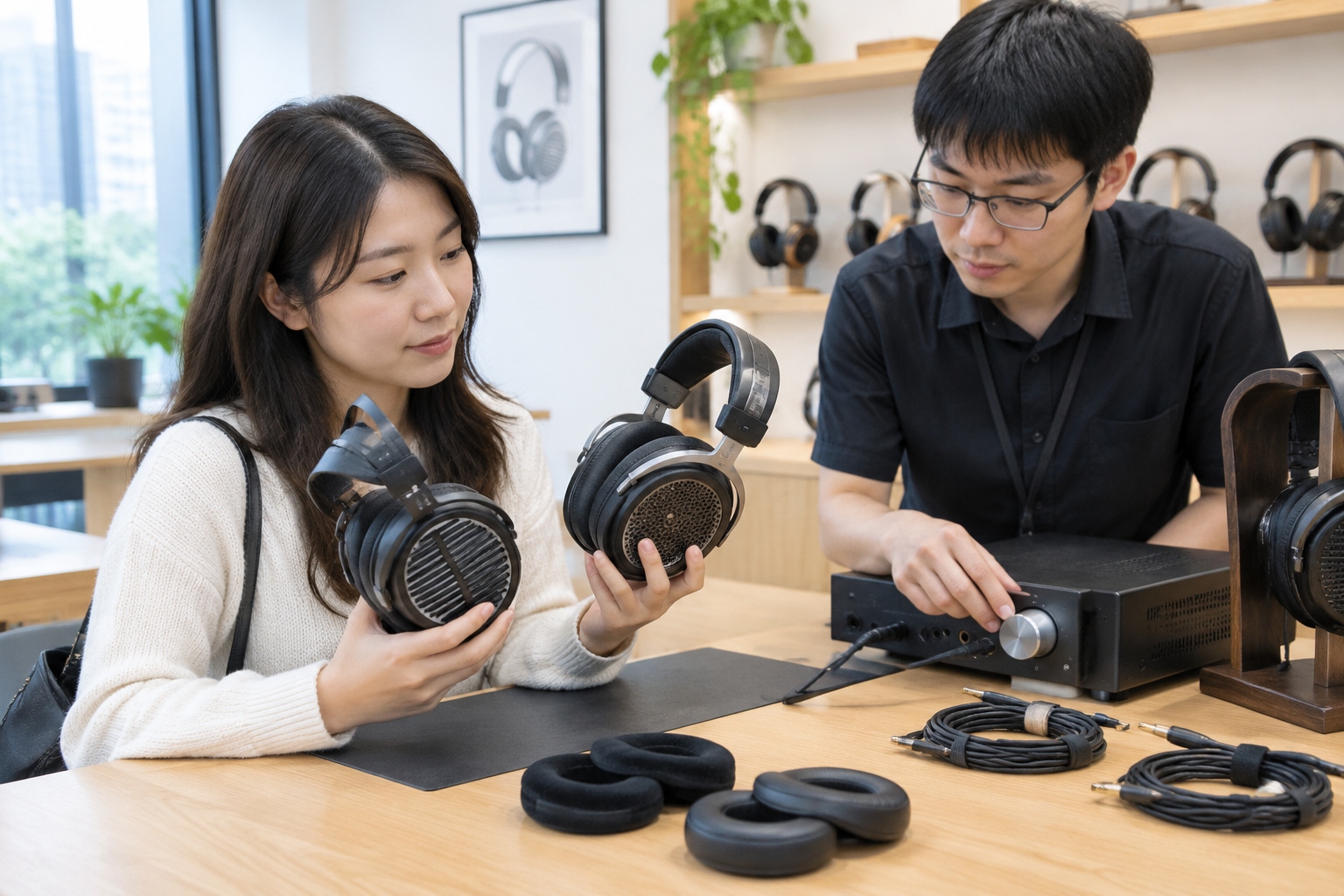
HiFiMan: planar magnetic headphones reach a wider audience
Founded by Chinese engineer Fang Bian in 2007, HiFiMan has become a prominent specialist in planar magnetic headphones. This technology uses a thin diaphragm with conductive traces, driven by a magnetic field distributed across its surface. A conventional dynamic driver usually applies force through a voice coil attached to the diaphragm.
Neither approach guarantees superior sound. Planar designs can offer low distortion and controlled diaphragm movement, but magnet systems add weight, and some models need substantial amplifier power.
The HiFiMan Sundara illustrates the appeal. Its open ear cups allow sound to escape, making it unsuitable for a quiet office or subway. At a desk, however, its tuning and distortion performance have earned detailed attention from outlets including RTINGS. Its movement into roughly the $300 price bracket over its commercial life helped make planar headphones accessible beyond luxury buyers; prices vary by market and promotion.
HiFiMan also sells much more expensive models, including the Susvara. Their demanding amplification requirements show why premium audio cannot be judged by headphone price alone: the whole listening system matters.
Moondrop: acoustic tuning becomes a selling point
Moondrop, based in Chengdu in southwestern China, demonstrates a different strength: in-ear monitors, or IEMs. These small earphones seal inside the ear canal, providing isolation without necessarily using electronic noise cancellation.
Its Blessing 3, introduced at about $320, combines two dynamic drivers with four balanced-armature drivers per side. The latter are miniature transducers widely used in hearing aids and earphones. Combining driver types lets engineers assign different frequency ranges to different components.
More drivers do not automatically produce better sound. The difficult work is integrating their output through acoustic passages and crossover design. Moondrop’s published response measurements and explicit tuning targets give buyers something more concrete to discuss than luxury language. The fit of a large earphone shell, however, remains intensely personal.
Topping: precision electronics without luxury pricing
Topping has built recognition through digital-to-analog converters, or DACs, and headphone amplifiers. A DAC converts digital music into an analog electrical signal; an amplifier supplies the voltage and current needed to drive headphones.
Independent testing of products such as the D90 has documented very low noise and distortion. That matters because well-designed electronics should reproduce a signal without adding audible interference. It does not establish that every newer model creates a clearly audible improvement. Once errors are sufficiently low, connectivity, power, controls, and reliability may matter more.
An overseas reviewer’s experience: trust earned on the test bench
A useful overseas perspective comes from Amir Majidimehr, founder of the US-based Audio Science Review forum. This account draws on his published work rather than a newly conducted interview.
In his review of the Topping D90, measurements placed the converter among the strongest performers he had tested at that time. The persuasive element was the visible test evidence: readers could inspect noise, distortion, and other results instead of relying entirely on a reviewer’s adjectives.
For an overseas enthusiast considering an unfamiliar Chinese brand, that reduces uncertainty. A modest-looking desktop box can earn credibility through independently examined performance. Measurements remain only part of the purchase: they cannot establish long-term durability, helpful customer support, or whether the controls suit someone’s daily routine.
Why China’s supply chain helps audio companies compete
In southern China’s electronics clusters, including Shenzhen and neighboring Dongguan, a product developer can access circuit-board assembly, metal machining, connectors, packaging, and logistics within an established industrial network. Proximity can shorten the practical journey between a prototype and a revised production sample.
Consider a desktop amplifier with an awkward volume knob. Improving it may require a different encoder, revised firmware, a modified front panel, and another test run. Nearby specialist suppliers make that coordination easier, although competent management still determines whether the revision succeeds.
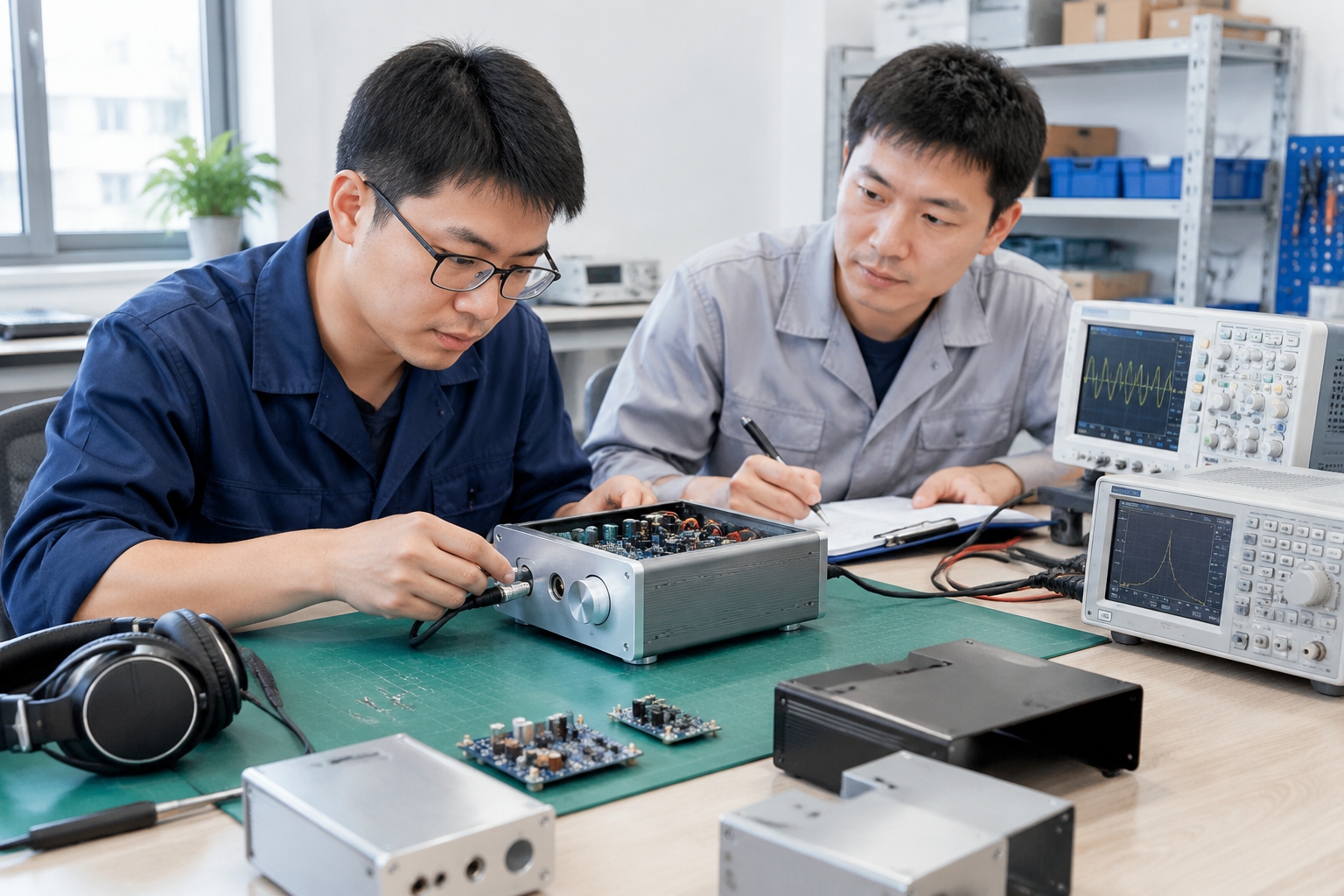
The engineering advantage also extends beyond inexpensive labor. Audio companies can draw on skills developed across consumer electronics: power-supply design, embedded software, precision assembly, and automated testing. Established DAC chips and amplifier components provide building blocks; implementation determines how well they work together.
This is an international system. Chinese equipment may use semiconductor designs, driver components, or measurement instruments from overseas suppliers. Its success demonstrates the ability to integrate global technology into a competitive product.
Fast iteration lowers barriers—and creates new problems
Direct online sales and specialist international distributors give smaller brands access to customers without building a worldwide shop network first. Reviews, frequency-response graphs, and discussion forums help buyers compare products across borders.
For a student assembling a first desktop system, this can mean choosing between credible options at several price levels. For a Chinese engineer, overseas feedback can arrive quickly: complaints about sharp treble, channel imbalance, or confusing firmware become visible alongside praise.
Speed also brings costs. Frequent launches can leave buyers wondering whether yesterday’s purchase will receive updates. Quality control varies by brand and model. International returns may be expensive, and an attractive purchase price can change after tax, shipping, or warranty complications.
No transparent public dataset neatly isolates global “Chi-Fi” sales. Headphone market totals include wireless consumer products far beyond specialist hi-fi, so they cannot honestly establish this niche’s market share.
What buyers should judge—and what comes next
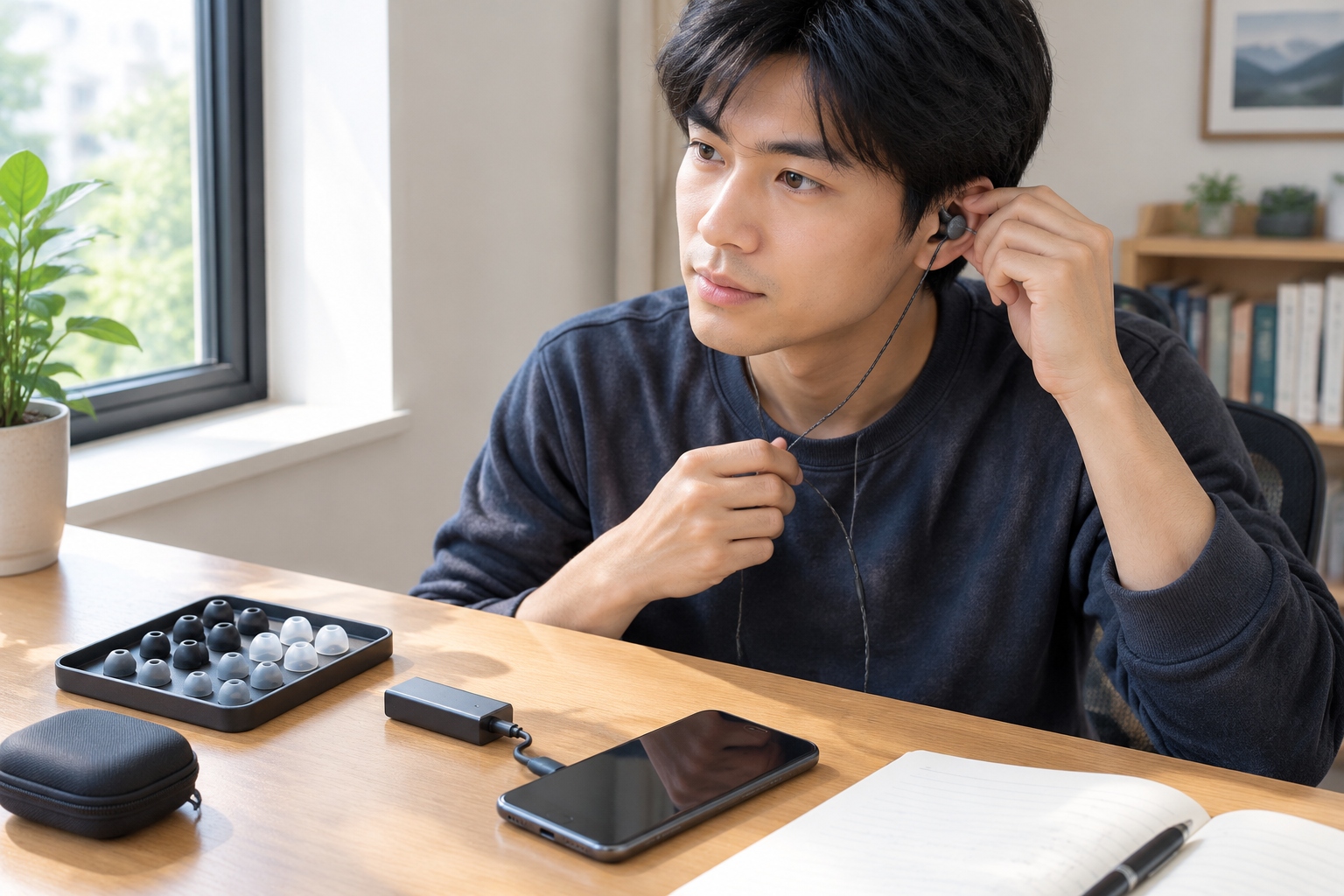
Start with the listening situation. Open-back headphones suit a quiet room; sealed IEMs are more practical for commuting. Check comfort, replacement pads or tips, amplifier requirements, return terms, and who handles repairs locally.
Then compare independent measurements with listening impressions. A frequency-response graph helps explain tonal balance, but the earphone seal can change what reaches your ear. An exceptionally clean DAC cannot repair a poor recording. Expensive cables rarely deserve priority over comfortable headphones and suitable equalization.
The cultural effect is already visible in how these products are discussed. Overseas buyers encounter Chinese engineering decisions and brand identities directly. Moondrop’s illustrated packaging, for example, carries a recognizable visual identity into a hobby once dominated by European, Japanese, and American names.
Future credibility will depend on less photogenic achievements: consistent production, repairable products, dependable software, and warranties honored across borders. Chinese audio companies have shown they can produce competitive sound and sophisticated engineering. Earning a place on a listener’s desk for the next ten years will require the same attention after the sale.
Start the discussion at forum.chinacomes.com