
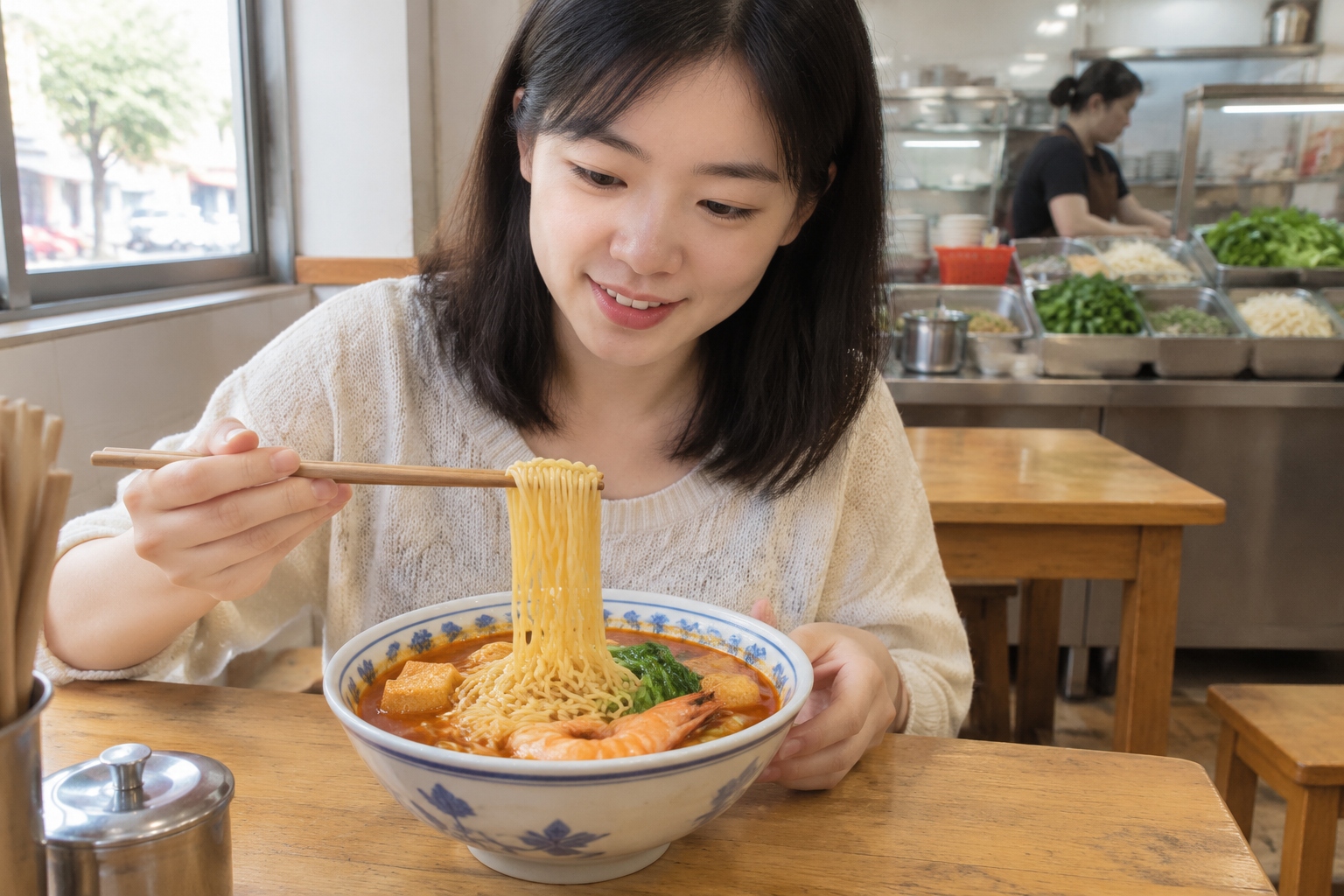

Before the first mouthful of Xiamen shacha noodles comes a small decision: which ingredients should go into the bowl? Tofu will soak up the soup. Shrimp will bring another texture. Pork or offal will take the meal in a different direction. At a traditional noodle counter, choosing lunch can begin with pointing rather than reading.
Wutang Shacha Noodles, or 乌糖沙茶面, is a well-known name in this coastal city in southeastern China. It provides a useful starting point for understanding a question visitors often ask: why does someone keep returning to the same modest noodle shop?
A reporting note: no dated visit, current menu photograph, or customer interviews were supplied for this article. It therefore does not present an eyewitness meal or claim to establish why Wutang’s customers return. Shop-specific prices, payment arrangements, and opening hours require confirmation.
What are Xiamen shacha noodles?
Xiamen shacha noodles are noodles served in a savory broth flavored with shacha sauce. English menus sometimes call them “satay noodles,” although the dish is a bowl of soup rather than grilled meat with a dipping sauce. Searching for both names can help when planning where to eat.
The characteristic flavor brings together roasted peanut richness, a salty seafood savoriness, and chili. Garlic and other seasonings can add depth. Recipes differ: one broth may taste sweeter and thicker, while another emphasizes seafood or carries a sharper heat. A reddish-brown soup does not reliably tell you how spicy it will be.
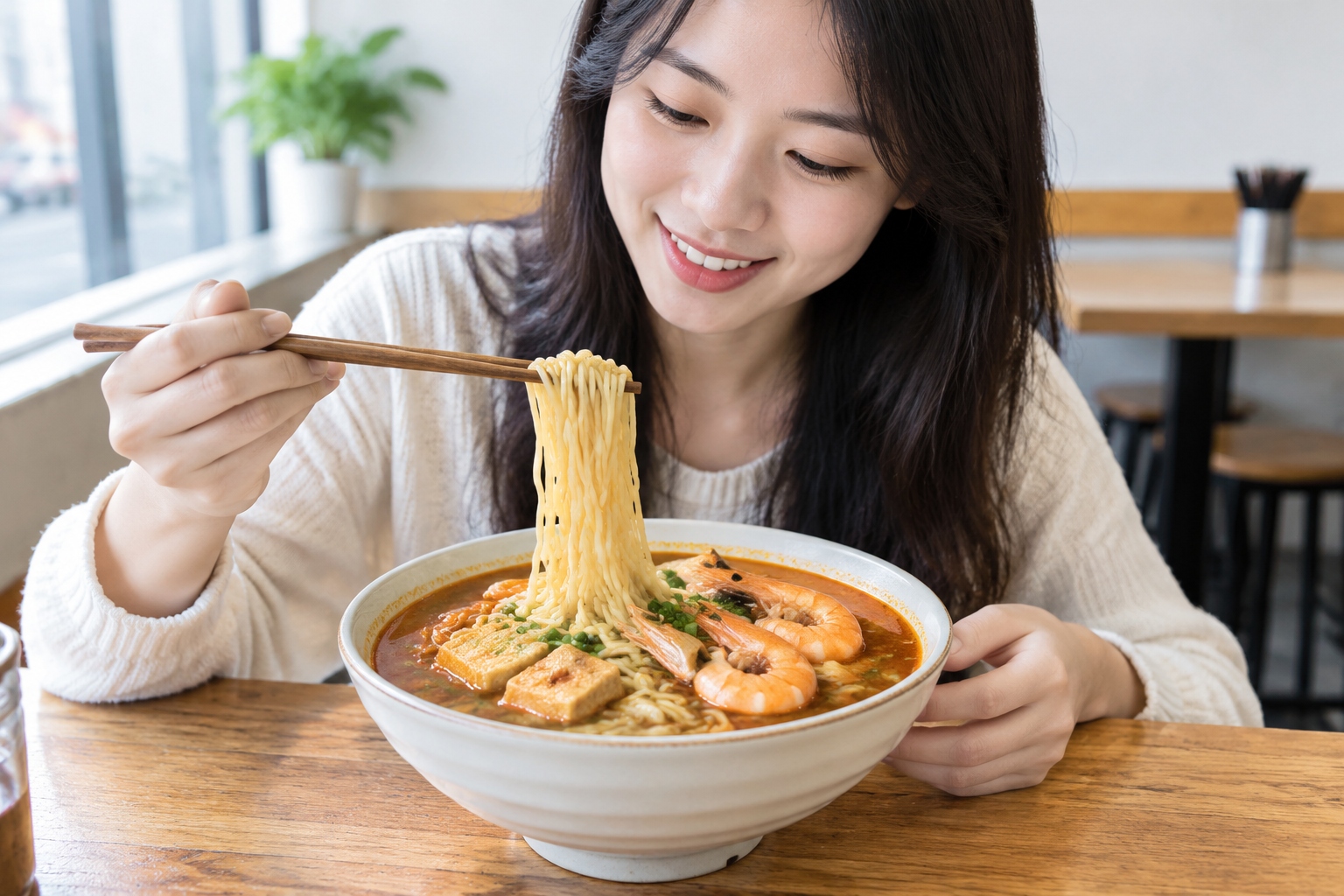
The noodles are commonly yellow wheat noodles, sometimes with a slightly springy texture. Around them, a customer can build a small meal from ingredients such as tofu, pork, shrimp, squid, fish balls, or offal, depending on the shop’s selection. Soft tofu absorbs the broth; seafood and meat change the texture and total price.
For a first bowl, a few ingredients make the flavor easier to understand. Taste the soup before adding extra chili. Notice how the peanut aroma gives way to saltiness and seafood flavor, then try a piece of tofu carrying the same broth.
How to order shacha noodle soup
At a counter-service Chinese noodle shop, it helps to settle five things in order: noodles, toppings, total price, payment, and collection. The exact sequence varies, so watch the customer ahead or show staff a short written request.
Choose noodles and toppings
Start by asking for one bowl of shacha noodles: 一碗沙茶面. If there are noodle options, point to the one you want. Then choose a few toppings from the display or menu. Ask whether an ingredient costs extra rather than assuming everything visible belongs to a standard bowl.
Offal is part of many Chinese food traditions, but you do not have to order it. Familiar ingredients are a perfectly reasonable introduction. If you want tofu, say 豆腐; for shrimp, 虾. Pointing can help, though it cannot resolve questions about hidden ingredients.
Confirm the total before paying
Ask 一共多少钱?—“How much altogether?” A plain bowl, a bowl with meat, and one with several seafood additions may have different totals. Online prices can refer to different portions or older menus.
No dated Wutang menu was available for this article, so there is no verified base price or topping surcharge to quote. Check the displayed menu and confirm the complete order before payment. A menu photograph with its collection date is more useful than an undated claim that a shop is “cheap.”
Check payment and collection
Alipay and WeChat Pay are widely used in China, but Wutang’s current arrangements have not been established here. Have a backup payment method and ask about cash before ordering if you need it. Do not assume an overseas bank card can be used directly at the counter.
Finally, check whether staff will bring the bowl or whether you should collect it. If seating is limited, ask before taking an empty place at an occupied table. The practical phrase is 这里有人吗?—“Is anyone sitting here?”

Why would someone keep choosing the same shop?
The title’s “one shop” needs a little unpacking. Xiamen residents have different favorites, budgets, and neighborhoods. Wutang’s reputation does not establish that locals collectively prefer it, and a busy queue alone cannot tell us who is a regular.
Still, repeat visits make sense when lunch is understood as part of a working day. A familiar bowl removes several decisions: how much to order, whether the soup will suit you, and whether the stop fits the time available. Someone may value that predictability as much as a visitor values novelty.
Flavor memory matters too. A person accustomed to a sweeter broth may find another shop’s version too salty. Someone else may prefer a lighter soup or firmer noodles. Those are preferences, not evidence that one recipe is objectively more authentic.
Then there are measurable considerations: portion size, the bill, walking distance, and waiting time. A shop near home can become a habit without being anyone’s citywide winner. Familiarity with staff may add warmth, but claiming that relationship for particular customers requires asking them.
These are explanations to investigate, not findings from interviews at Wutang. A persuasive account would let a regular explain a preference in their own words—and leave room for the neighbor who eats somewhere else.
A noodle lunch within an ordinary Xiamen day
For travelers, a famous bowl may be the day’s destination. For a nearby resident, it can simply be a meal between errands. Those two uses of the same restaurant help explain why food recommendations sometimes miss each other: visitors seek a memorable discovery; regulars may want something dependable and convenient.
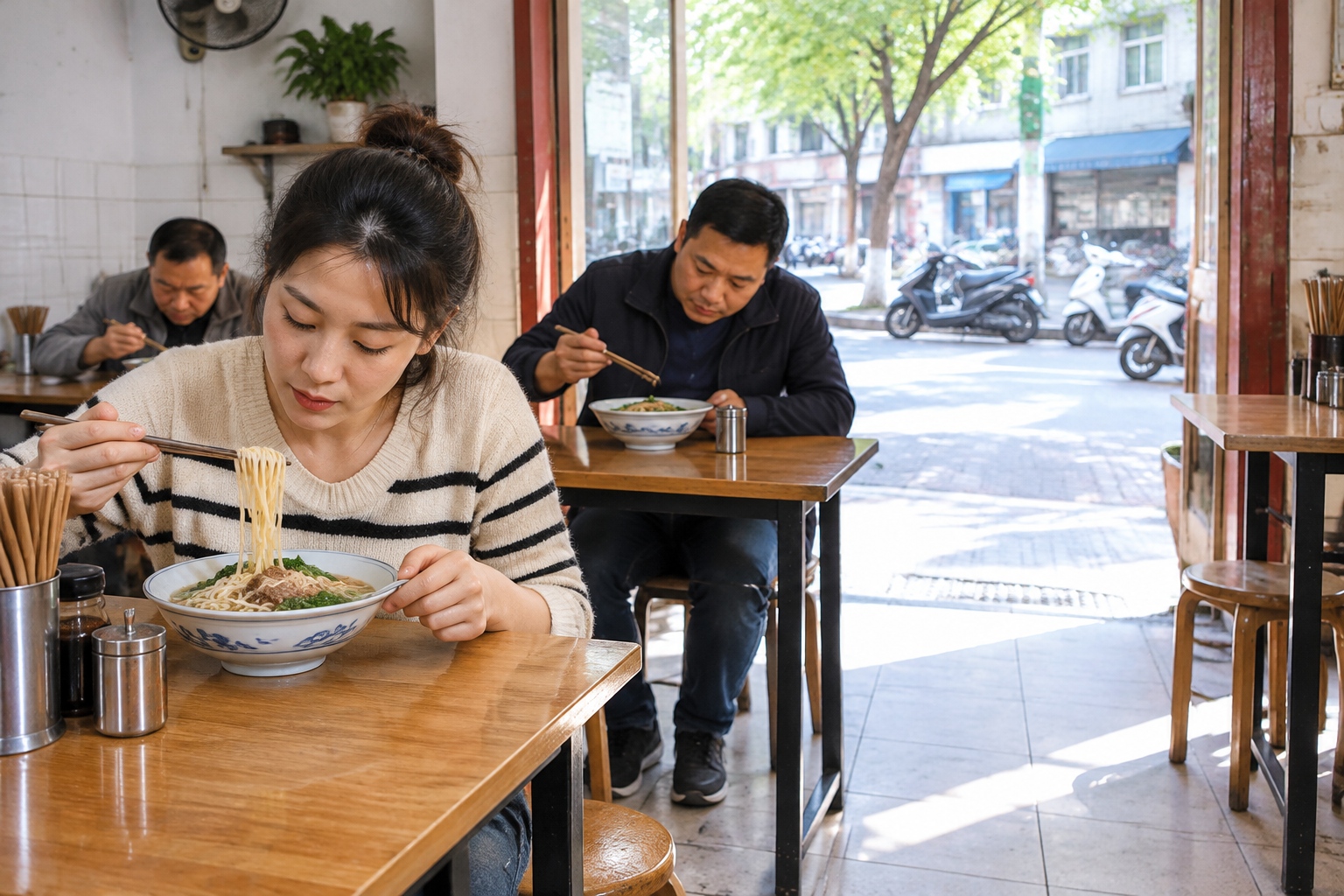
To understand a neighborhood restaurant, look beyond the length of its queue. Are people eating alone or sharing a table? Do orders leave in takeaway containers? How long does a customer remain after finishing? These details reveal how a meal fits into the street’s rhythm, provided they are observed rather than assumed.
The same care applies to technology. A payment QR code does not necessarily mean a shop requires phone ordering. A takeaway bag does not prove it runs an app-delivery business. Small distinctions matter when explaining contemporary Chinese life to someone encountering it for the first time.
Shacha, satay, and Xiamen’s connections across the sea
Xiamen belongs to the southern Fujian region, often called Minnan. Its coastal communities have long-standing connections with Southeast Asia through migration, family networks, and trade. Food moved through those relationships alongside people, goods, and cooking habits.
Shacha is commonly discussed in connection with Southeast Asian satay traditions. The family resemblance is easiest to grasp through the combination of peanuts, spices, and savory ingredients. But satay itself has many regional forms, and today’s Fujian shacha preparations have their own uses and variations.
It would take stronger historical evidence to assign Xiamen’s noodle soup to one returning migrant, one arrival date, or one original recipe. The broader maritime connection is a better starting point than a neat invention story. In the bowl, an overseas influence has become something people can regard as thoroughly local.
Visiting Wutang: what to check first
Name and location: Search for 乌糖沙茶面. Its commonly published address is 76 Minzu Road, Siming District, Xiamen—厦门市思明区民族路76号. Treat this as a navigation lead and confirm the current listing before traveling.
Transport and hours: Use the confirmed location for a live walking, public-transport, or taxi route. Current opening days, service hours, and any early sell-out arrangements were not verified for this guide. Check close to your visit, especially before making a dedicated journey.
Language and dietary needs: An English menu has not been confirmed. Save the Chinese dish name and a translated dietary request. Peanuts and seafood are particularly relevant; wheat, soy, or other allergens may also be present. Tofu toppings do not make the broth vegetarian. Ask about sauce, stock, and shared utensils as well as visible ingredients.
This style of noodle soup is likely to appeal if you enjoy peanut richness, seafood savoriness, and choosing your own additions. Whether Wutang becomes your favorite is a separate question. Try the broth, notice the textures, and decide for yourself. That personal judgment is also where a regular customer’s loyalty begins.
Start the discussion at forum.chinacomes.com