
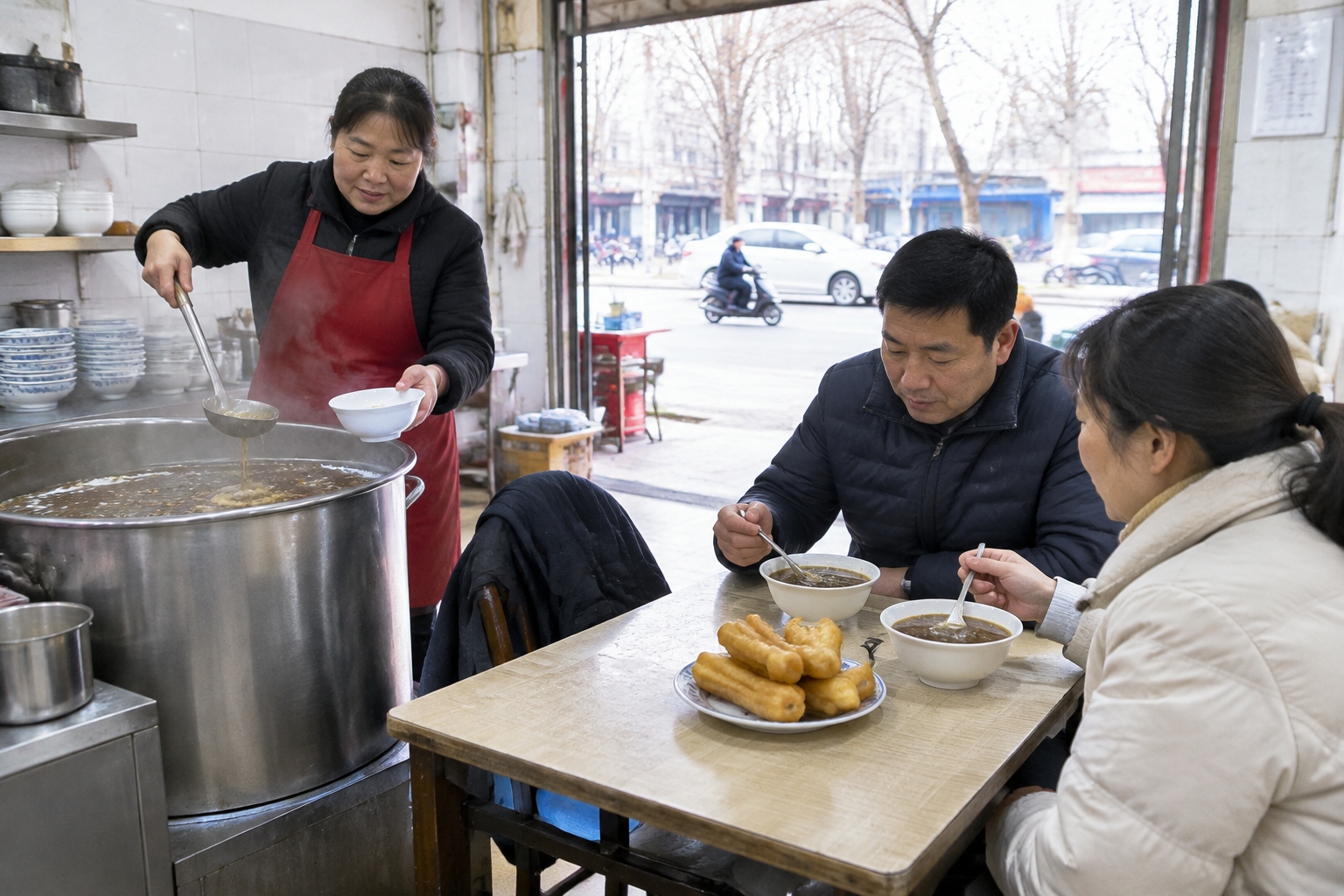

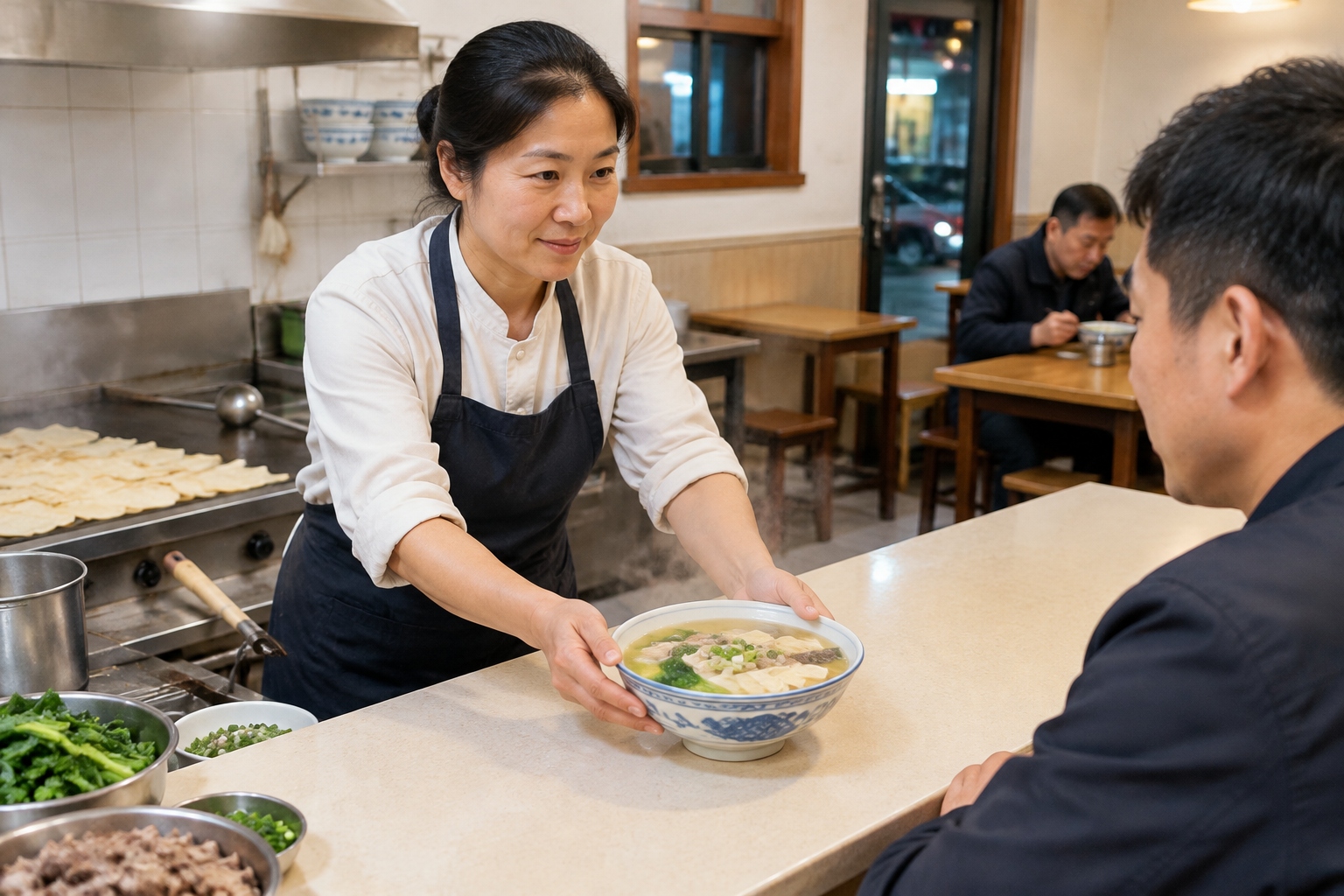
A ladle scrapes the side of a large pot. Thick brown soup falls into a bowl, carrying strips of beef, wheat gluten, and a peppery smell that reaches you before the first spoonful. Beside it sits a plate of youmotou: small pieces of fried dough with uneven, crisp edges. This is a familiar way to begin a morning in Zhengzhou, the capital of Henan province.
At a busy breakfast shop, there is little ceremony. Order, find a seat, move your bag so someone else can squeeze in. The soup is hot enough to slow you down, even when the working day is already pulling you toward the door.
Follow that bowl west to Luoyang, and the day ends among soup shops, snack counters, and young people posing in historical dress. These two cities offer a useful introduction to central China through the meals people fit around work, travel, and an evening outside.
Morning in Zhengzhou: Hulatang and Youmotou
Hulatang is often translated as “hot and spicy soup,” but that can give the wrong expectation. Its characteristic heat comes largely from pepper, rather than the chili-heavy flavor associated with some southwestern Chinese cooking. Recipes vary, and chili may also appear. The effect is warming, insistent, and especially noticeable at the back of the throat.
Many versions contain beef or mutton, wheat gluten, wood ear mushrooms, and other ingredients suspended in a thickened broth. Two well-known traditions come from Xiaoyao, in Xihua County, and Beiwudu, in Wuyang County. Their names appear on shop signs far beyond those places, including across Zhengzhou.
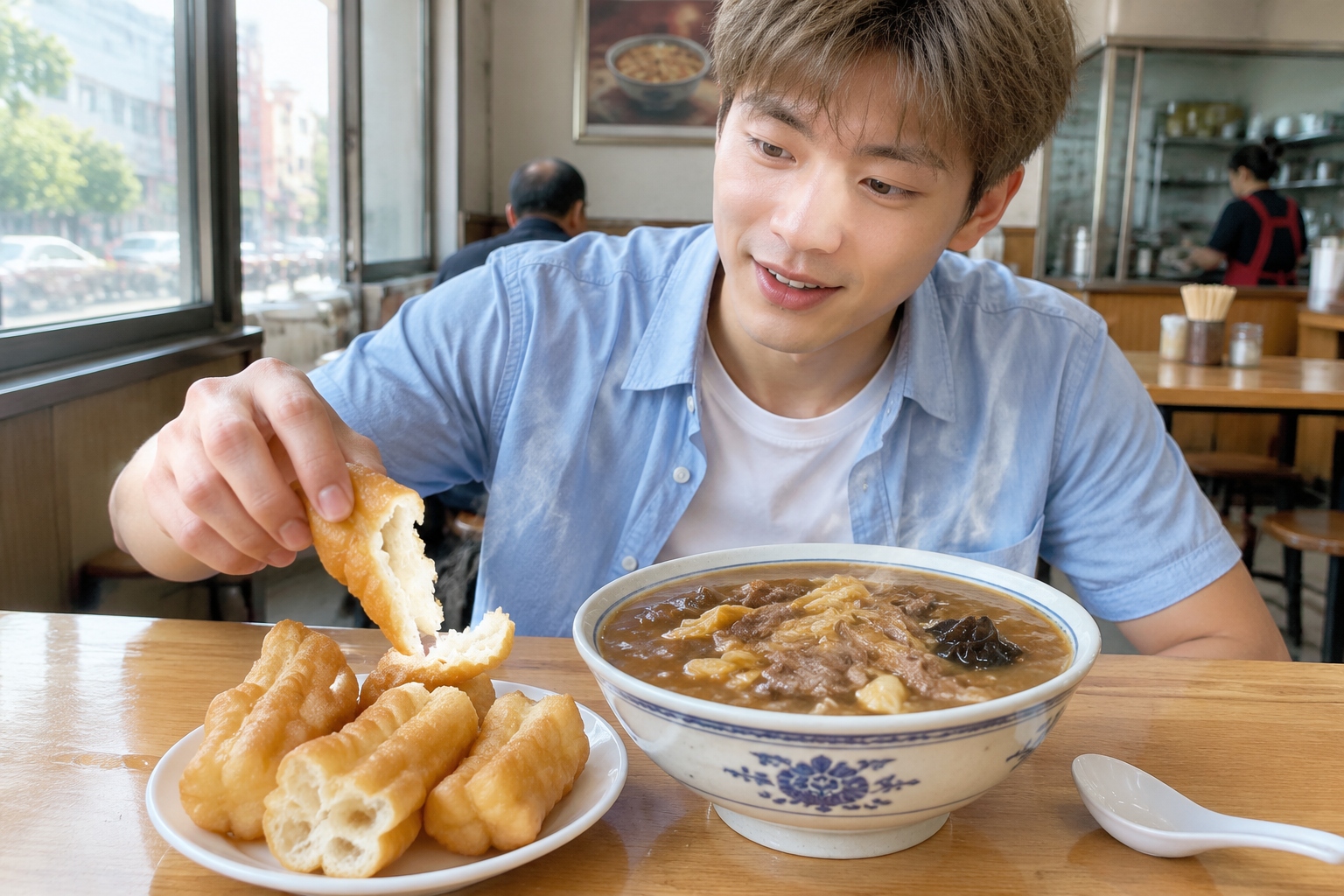
Youmotou makes a practical companion. Tear a piece open and dip an edge into the soup: the outside softens while the middle keeps some chew. Some customers add vinegar. Others order liangchan, a combination of hulatang and soft tofu pudding, which changes the texture and softens the peppery intensity.
This is an inexpensive breakfast by local restaurant standards, although portions and prices vary. The bowl and fried dough often cost somewhere around ten yuan or a little more. Look at the posted menu before ordering; extras and more elaborate beef versions can change the total.
Why Pepper, Wheat, and Soup Belong Together in Henan
Henan lies in the Zhongyuan, usually translated as the Central Plains, a region closely associated with early Chinese states and long-established agricultural settlements. For a visitor, that large historical label becomes easier to understand through wheat: noodles, steamed buns, flatbreads, fried dough, and gluten all have a place on the table.
Soup gives those foods moisture, warmth, and a way to carry meat flavor through a filling meal. In hulatang, the thickened broth also holds the chopped ingredients together. It is substantial enough to feel like breakfast rather than a drink alongside it.
Pepper reached China through trade centuries ago and became part of several regional cooking traditions. Its place in Henan should not be reduced to a single story about climate or ancient medical wisdom. Recipes, commerce, family habits, and the success of specialist shops have all helped keep this taste familiar.
Nor does everyone in Henan eat the same breakfast. Soy milk, steamed buns, noodles, and many other choices share the morning trade. Hulatang is distinctive because of its strong regional associations, not because every household starts the day with it.
Near Zhengzhou Railway Station: Breakfast Between Journeys
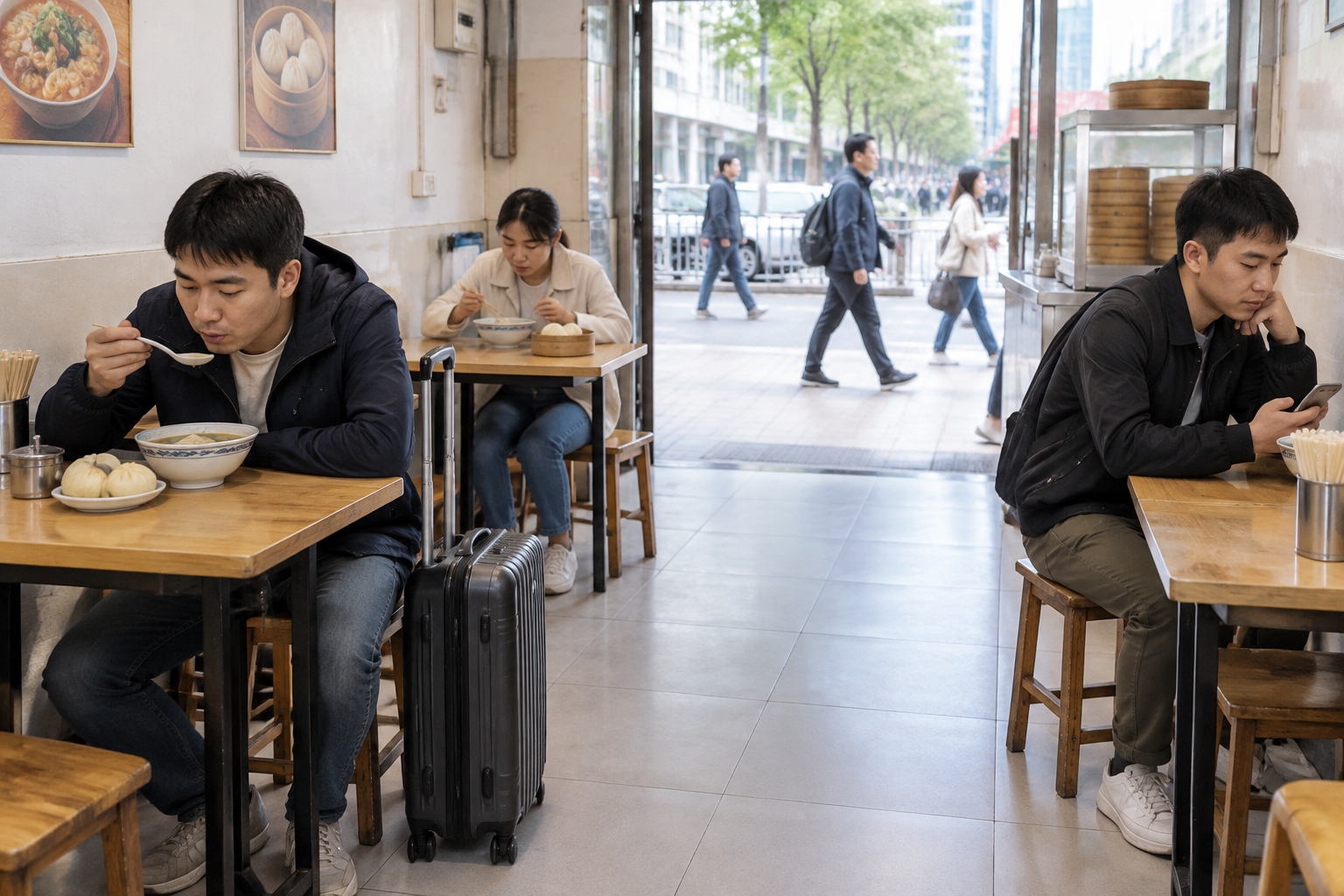
Around the older Zhengzhou Railway Station, food belongs to a landscape of luggage, budget accommodation, buses, and hurried decisions. This is a different station from Zhengzhou East, the major high-speed rail hub. Checking the station name matters when planning a journey—or choosing where to stop for breakfast.
Zhengzhou grew into an important railway junction where major north–south and east–west routes meet. For people arriving for work, changing trains, or visiting relatives, the station district can be an introduction to the city before any landmark is.
A suitcase tucked beside a table changes the way a meal works. You want something filling, a price you can see, and enough space to keep your belongings close. Breakfast shops and quick-service restaurants answer those ordinary needs. For someone arriving to look for work, even a modest meal is part of managing the day’s expenses.
It would be misleading to identify every traveler with a large bag as a migrant worker. Students, tourists, and families use the same streets. What the station area makes visible is a city receiving people with different budgets and uncertain schedules, sometimes sharing the same narrow breakfast counter.
West to Luoyang: The Old City After Dark
Zhengzhou and Luoyang are separate cities, roughly 140 kilometers apart in a straight line. Some high-speed trains connect Zhengzhou East and Luoyang Longmen in around 40 minutes, though journey times vary. Transfers to and from the stations add time, especially if your destination is Luoyang’s old city.
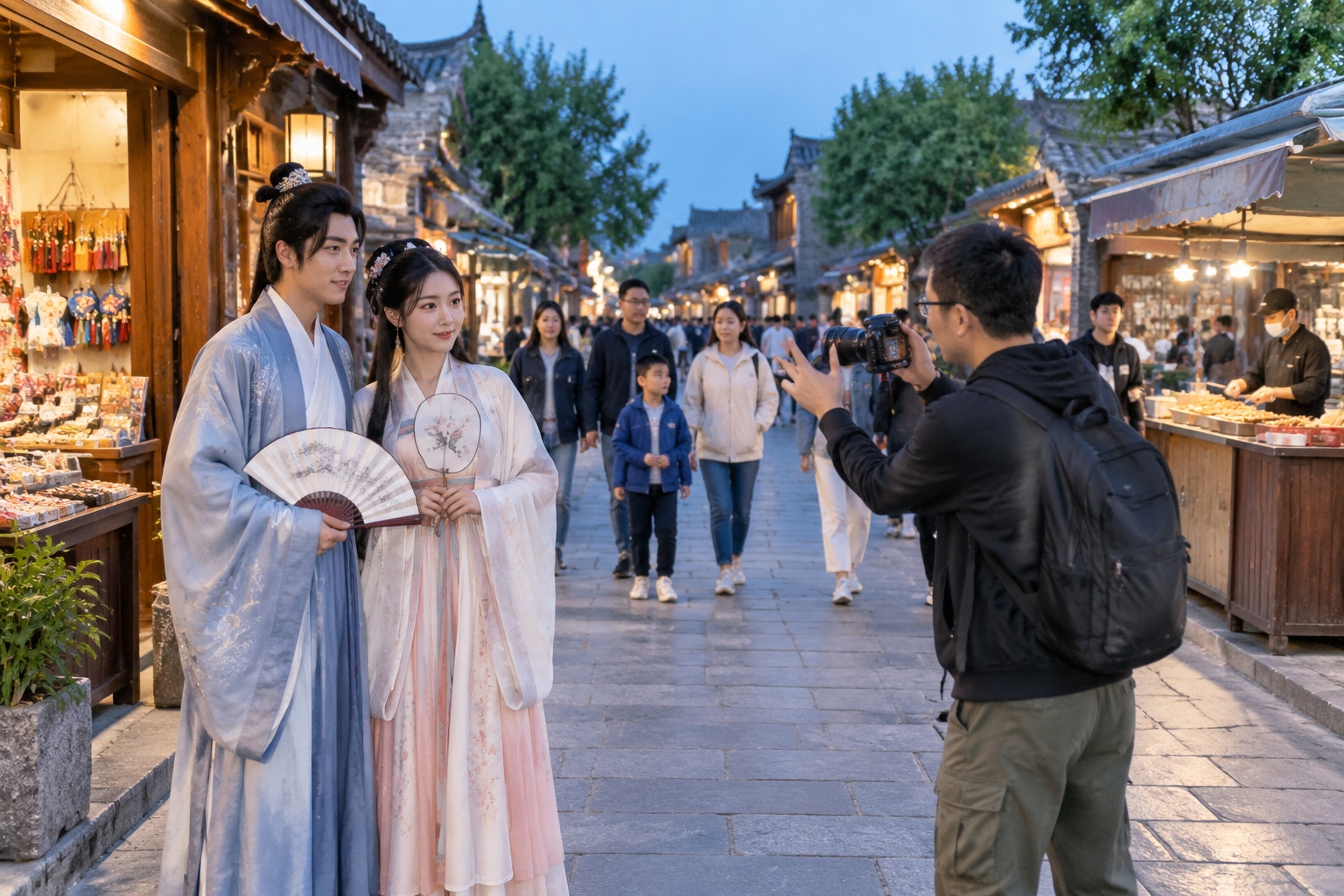
By evening, the streets around Lijing Gate and the Shizi Jie area offer a different eating rhythm. Snack counters, restaurant entrances, and people stopping for photographs compete for attention. Steam rises from cooking stations; a group deciding what to eat can briefly hold up everyone behind them.
“Nightlife” here includes much more than drinking. Families walk after dinner, couples share snacks, and friends browse before choosing somewhere to sit. The busiest tourist stretches can be crowded, particularly during holidays and the spring peony season. A quieter residential street nearby may feel quite different.
There is history in the street layout and surviving landmarks, but the visitor setting also includes restored buildings, contemporary businesses, and decorative lighting. Treating everything in view as an untouched remnant of an ancient capital misses how actively this district is being used and presented today.
Hanfu, Portraits, and the Work Behind the Evening
Young visitors in hanfu—the broad term used today for revived styles of traditional Han Chinese clothing—are a familiar part of Luoyang’s tourist scene. Long skirts and wide sleeves can make an ordinary street crossing look theatrical, until someone checks a phone or adjusts a slipping hair ornament.
The photographs involve work. Rental shops provide clothing, makeup artists prepare customers, and photographers guide poses and manage passing crowds. This creates opportunities for small businesses, while popular photo spots can also cause congestion. For residents, a lively evening economy may come with extra noise outside the window.
Eating Luoyang: Water Banquets and Smaller Bowls
Luoyang’s best-known dining tradition is the shui xi, or “water banquet.” A full version traditionally consists of 24 dishes, with soups and sauced preparations central to the meal. It is generally a seated restaurant experience shared by a group, rather than something to work through at a single night-market stall.
Visitors eating casually can look for individual dishes associated with the tradition. Mudan yancai, often translated as “peony swallow dish,” uses finely shredded radish in an elaborate preparation. Despite the English name, the familiar dish is not simply a bowl of edible bird’s nest.
Another local option is bufantang, named for a small pancake made without flipping it during cooking and served with broth and other ingredients. Recipes differ by shop. It offers a more manageable introduction to Luoyang’s soup culture than committing to a banquet.
Night-market menus also include foods sold across China. A skewer or grilled snack is not necessarily an ancient local specialty. Asking what a shop actually prepares, checking prices, and watching which dishes move quickly usually tells you more than a decorative historical sign.
From a Working Breakfast to an Evening Outside
Practical details shape both ends of this route. Small shops commonly use QR-code payments; overseas visitors should set up a supported payment method in advance and carry some cash. Dietary questions need care: wheat gluten is not meat, but the broth around it may contain beef or mutton.
By late evening in Luoyang, a rented costume needs returning and a restaurant worker still has bowls to clear. In Zhengzhou, breakfast preparation will begin again before many travelers wake. Between those shifts, pepper, wheat, and soup connect two cities whose history remains close to the ordinary business of feeding people.
Start the discussion at forum.chinacomes.com