

A Breakfast Queue in Zhengzhou
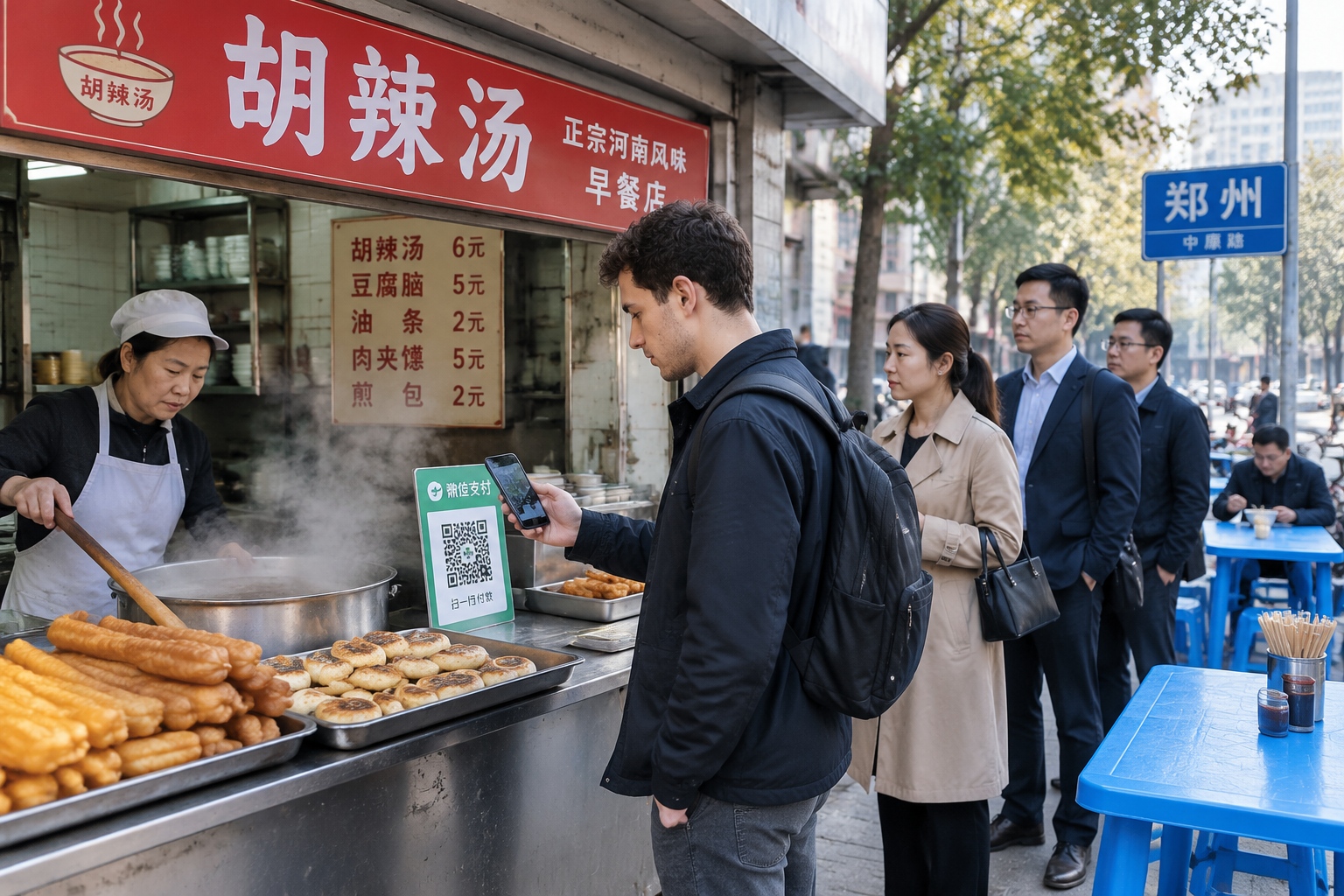
At 7:20 on a Tuesday morning, the line outside a Hu La Tang shop near a Zhengzhou subway exit is already eight people deep. A foreign English teacher from Leeds stands in it with his phone ready. He has lived in the city for four months and still cannot read most of the menu, but he knows the routine: scan the QR code, pay 11 yuan, take a paper ticket, wait for a bowl of dark, peppery soup and a paper bag of fried dough sticks. The first sip makes him cough. The second makes him laugh. By the third, he is adding vinegar and asking the woman behind the counter whether there is a smaller bowl for tomorrow.
This is not the Chinese food most people abroad learn first. It is not dumplings, fried rice, or a takeout box with a fortune cookie. It is a cheap, fast, regional breakfast eaten standing up or at a plastic table, and it says more about how Chinese cities actually eat than many restaurant menus do.
Why Chinese Food Abroad Looks Smaller Than It Is
For readers in Europe, North America, or Australia, Chinese food often arrives through a narrow door. Migration history, restaurant economics, and local taste shaped menus in foreign cities. Sweet and sour pork, beef with broccoli, spring rolls, and dumplings became familiar because they traveled well and pleased broad crowds. That is not fake Chinese food. It is one branch of a very large tree.
The result is a kind of shorthand: Chinese cuisine equals dumplings plus a few stir-fries. Henan snacks rarely appear in that shorthand. Henan is a province of about 100 million people in central China, and its food is everyday, filling, and cheap. A breakfast can cost 8 to 15 yuan. A bowl of noodles can be a full lunch for 20 yuan. Much of it is designed to be eaten quickly before work, not photographed for a tasting menu.
If you come from a country where a sit-down breakfast costs 15 euros, the first surprise is not the flavor. It is the price and speed. The second surprise is the texture. Hu La Tang is thick. Hui Mian is wide and chewy. Steamed buns may be filled with pork, lamb, or vegetables, but they are not soft brioche. Chinese food diversity is not an abstract phrase here. It is a morning queue.
Hu La Tang: Pepper, Gluten, and a Test of Palate
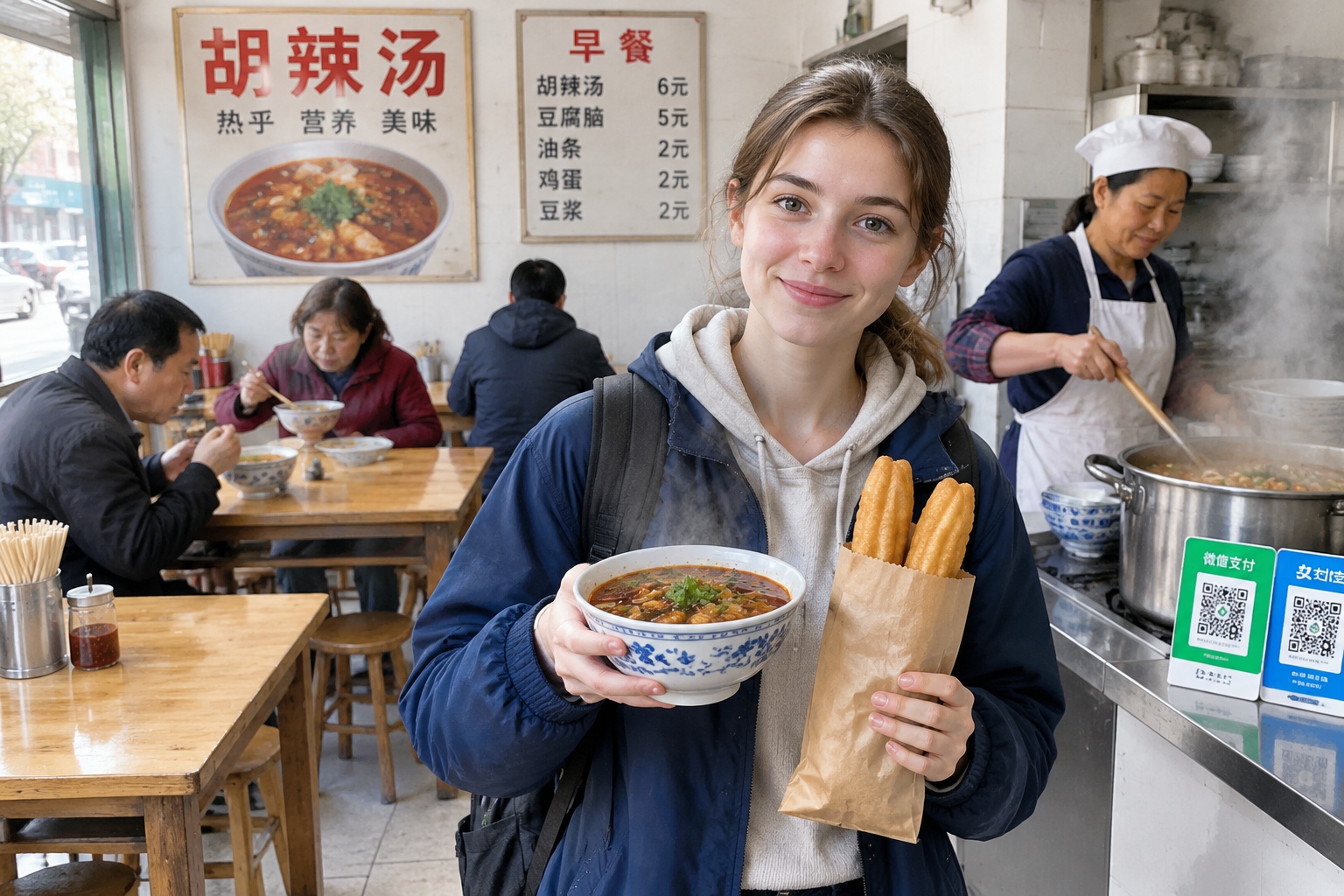
The shop near the subway has one large pot behind the counter. A cook stirs it with a long wooden spoon. The base is beef or mutton broth, thickened with starch. Into it go gluten, kelp, tofu skin, peanuts, and sometimes vermicelli. The dominant note is black pepper, not chili. It is warm, slightly gritty, and more like a savory porridge than a soup. Locals eat it with you tiao, fried dough sticks, or shui jian bao, pan-fried buns with juicy pork filling.
The English teacher, whose name is Tom, told me his first reaction was not delight. It was confusion. It tastes like gravy and tea had a meeting, he said. His second bowl was better. He now orders a small bowl, less pepper if the shop allows it, and extra vinegar. He still does not love the texture of gluten. He eats it anyway.
This is a useful correction to the idea that foreigners either love Chinese food or reject it. Most people move in smaller steps. A familiar smell helps. A friendly shop owner helps more. The woman at the counter now recognizes Tom and points at the cheaper breakfast set when he hesitates. That small interaction does more for Chinese food culture than any food show.
Hui Mian: A Bowl That Counts as a Meal
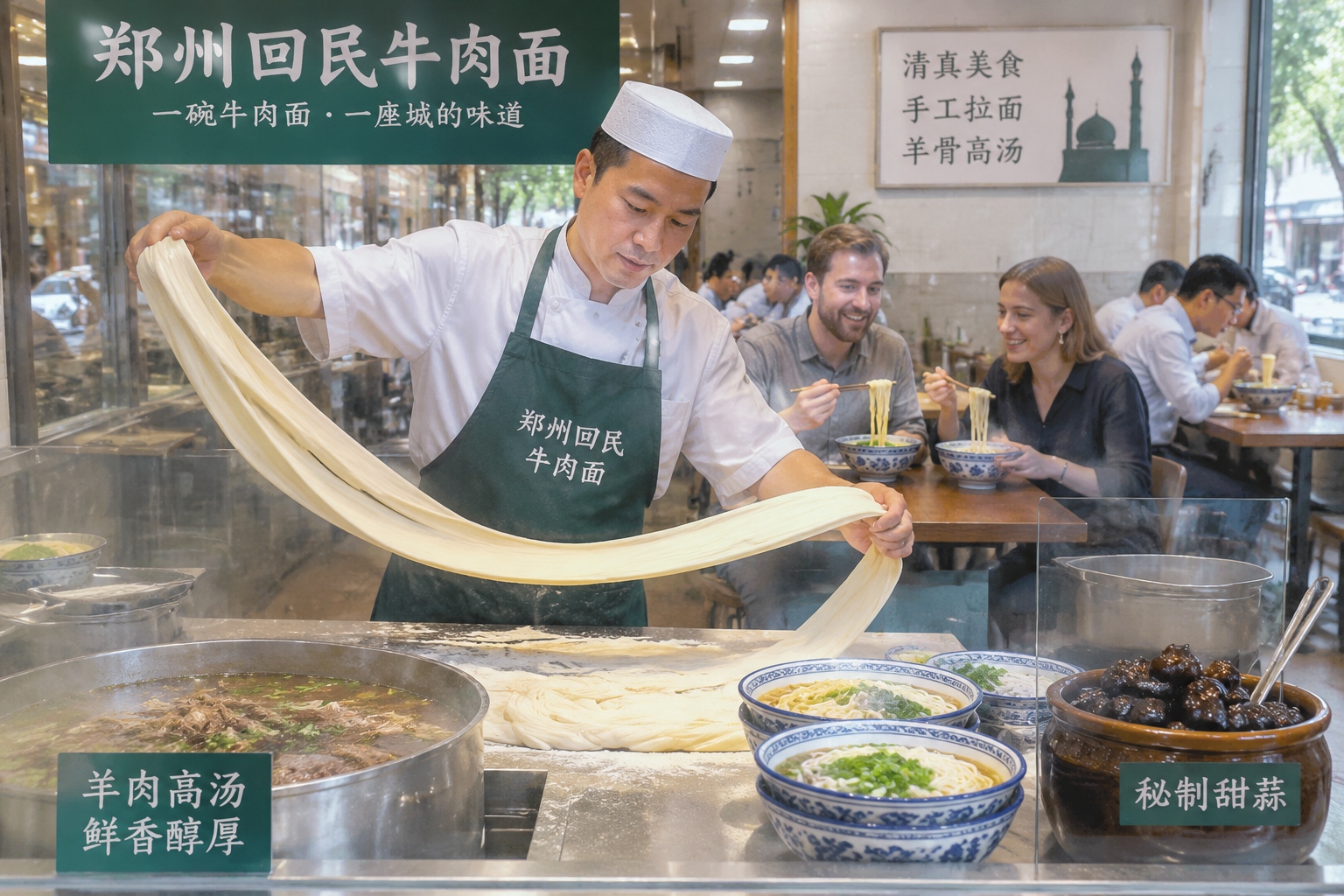
At lunch, I follow two office workers into a Hui Mian shop two streets away. The shop is narrow, with eight tables and a glass window into the kitchen. A cook stretches a piece of dough, folds it, stretches again, and pulls it into wide, belt-like noodles. They go into a bowl of lamb broth with sliced mutton, wood ear mushrooms, and cilantro. On the table: chili oil, vinegar, and a jar of sweet garlic.
The bowl is huge. In Zhengzhou, a normal portion costs around 18 to 25 yuan. It is not a delicate first course. It is the whole meal. Foreign visitors sometimes assume Chinese food is light because the restaurant version abroad is often built for sharing. A bowl of Hui Mian breaks that assumption fast. The noodles are thick and chewy. The broth is rich. You slurp, and nobody looks up.
One American student I met in Zhengzhou said she had expected Chinese food to be refined but not filling. After one Hui Mian lunch, she skipped dinner. She also learned to order a small portion, which in many shops is still enough for a light eater. The price matters too. For the cost of a sandwich and a coffee in London, you can eat a hot, sit-down lunch here and still have change.
One Province, Many Breakfasts
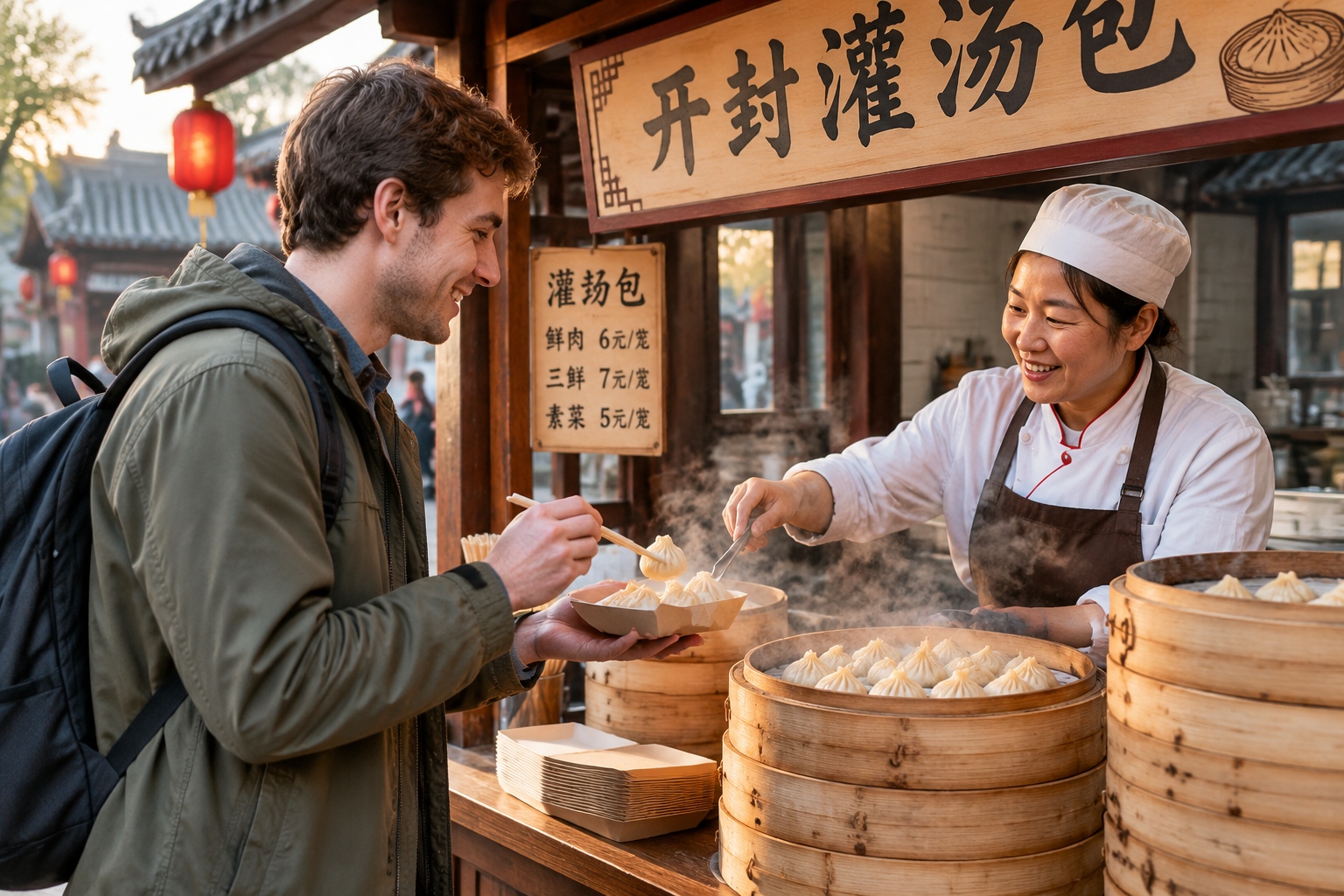
Henan is not one taste. In Kaifeng, soup dumplings are a morning and evening habit. The good ones are lifted by the topknot, dipped in vinegar, and bitten carefully so the hot soup does not burn your mouth. In Luoyang, the famous water banquet is a different kind of eating: many small bowls, repeated courses, and a rhythm that is closer to a family dinner than a quick snack. In Huaxian or Daokou, roast chicken is sold in paper bags and eaten with hands.
High-speed rail makes this easy to see. Zhengzhou to Kaifeng is about 25 minutes. Zhengzhou to Luoyang is under an hour. A foreign visitor can sleep in Zhengzhou, eat soup dumplings in Kaifeng at lunch, and be back for a Henan-style dinner. Chinese food diversity is not just a national idea. It is a weekend trip inside one province.
From Dumplings-Only to Regular Customers
Not every foreigner in Henan becomes an expert. The more honest story is uneven. I met a Spanish teacher who loves Hui Mian but cannot handle the pepper in Hu La Tang. I met an Australian traveler who tried a breakfast stall once, found the texture too thick, and went back to coffee and toast for the rest of his trip. I met an American student who now has a regular noodle shop, greets the owner in Chinese, and knows how to say micro-spicy and extra cilantro. She still avoids offal. That is fine.
What changes people is repetition. The first visit is a test. The third visit is a habit. By the fifth, they have a favorite table and a shop owner who remembers their order. That is how Chinese street food stops being an exotic challenge and becomes ordinary life. The same thing happens to Chinese students trying pizza in Italy or tacos in Mexico. Familiarity is built one meal at a time.
The Public Life of a Cheap Meal
Food shows can make regional cuisine look like a performance. The real experience is more practical. At 7:40, the breakfast shop is full of office workers, delivery riders, and students. They pay by phone. The menu is on the wall. The price is clear. Nobody is performing authenticity. They are eating before a shift.
For a foreigner, this is one of the fastest ways to understand a Chinese city. You see the cost of living. You see the pace. You see how public space works: a plastic stool on the pavement, a shared table, a shop owner who watches your bag while you get napkins. Mobile payment makes the transaction quiet and quick, which can be confusing at first for visitors used to cash. Many shops still take cash, but the default is the phone.
This daily rhythm explains why Henan food culture rarely appears in glossy overseas guidebooks. It is not built for a tasting menu. It is built for a Tuesday morning.
What Food Tourism Gets Wrong
There is a temptation to turn this into a story about brave foreigners being shocked by strange food. That is not accurate. Some people love Hu La Tang immediately. Some never do. Some dislike the smell of lamb. Some do not eat pork. Some are vegetarian and find the breakfast menu difficult. All of that is part of the encounter.
Henan snacks are not a challenge course. They are breakfast, lunch, and a late-night snack. The point is not to prove that one cuisine is more adventurous than another. The point is to widen the map. If dumplings are the first page, Hu La Tang and Hui Mian are pages that rarely get translated.
A First-Timer’s Breakfast List
If you are visiting Henan for the first time, start small. Order a small bowl of Hu La Tang, not a large one. Ask for less pepper if you are unsure. Add vinegar and a little chili oil at the table. Pair it with you tiao or a shui jian bao. Expect to pay 6 to 12 yuan. The breakfast rush is roughly 7:30 to 8:30. After 9, the shop may still be open, but the buns are less fresh.
For Hui Mian, know that one bowl is a meal. A normal bowl costs around 18 to 25 yuan. If you eat lightly, ask for a small portion or share. Add sweet garlic and chili oil. Do not expect a quiet restaurant at noon. The noise is part of the experience.
Chinese cuisine is not a fixed menu of symbols. It is a daily map you can walk into. In Henan, that map starts with a peppery bowl at 7:20 and a wide noodle at lunch. If you come with an open mouth and a little patience, the map gets bigger.
Start the discussion at forum.chinacomes.com