
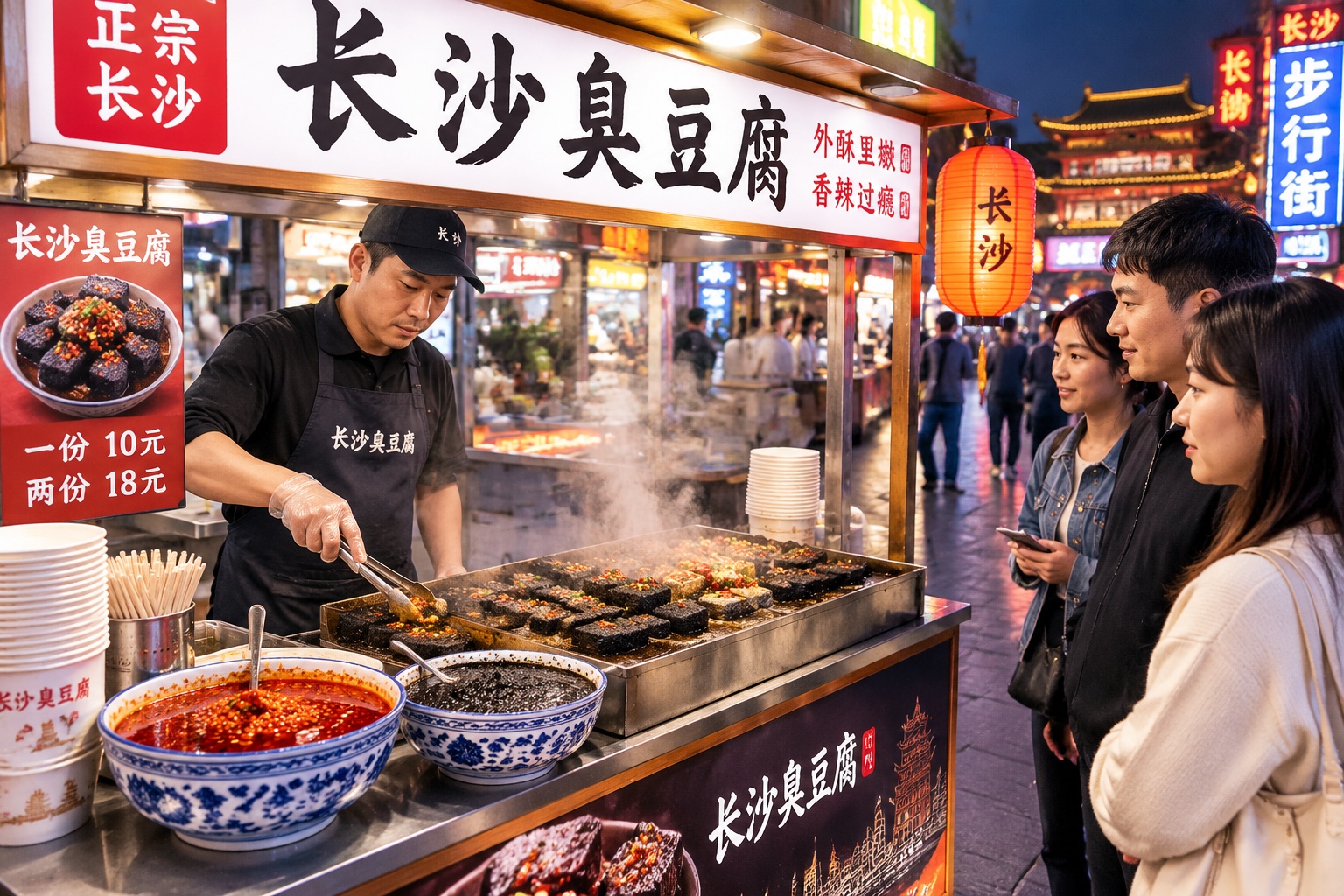

A Tourist’s First Bite: More Than Heat
At a night market in Changsha, a foreign tourist cautiously picks up a piece of stinky tofu (chòu dòufu) with a skewer. The first sensation is pungent—fermented brine hitting the nose. She bites, expecting only chili burn. Instead, a wave of savory broth bursts, followed by a deep, almost smoky richness. “It’s… not just spicy,” she says, surprised. This moment captures a common misunderstanding: Hunan food is often reduced to “fiery” or “numbing” in overseas minds, but locals know that heat is only a messenger. The real stars are xiān (freshness) and xiāng (aroma), two dimensions that turn simple ingredients into layered experiences.
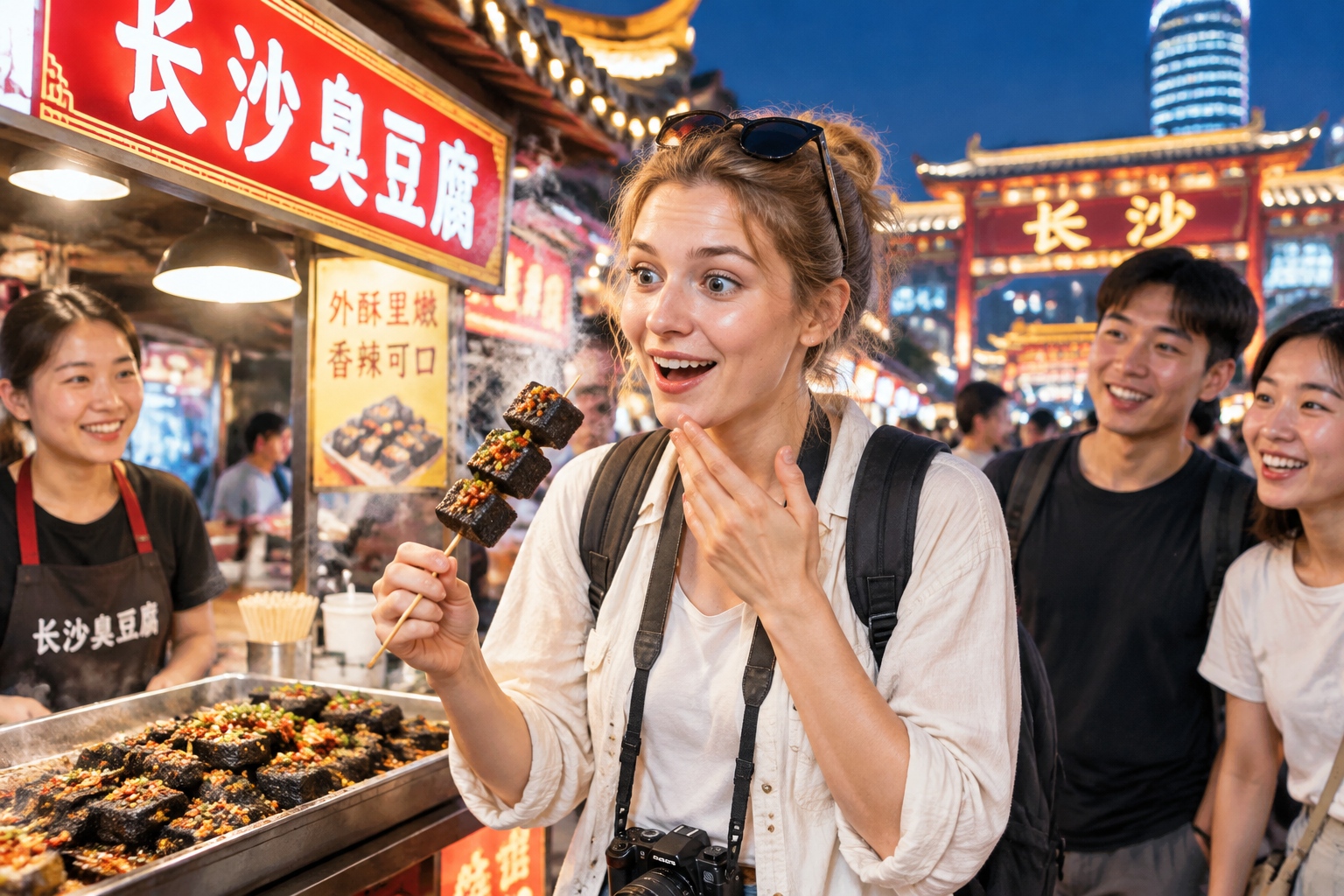
What Is “Freshness” (Xiān) in Hunan Cuisine?
In Western cooking, umami is often linked to aged cheese or slow-cooked stocks. In Hunan, xiān comes from a different tool kit: live river fish, garden-fresh vegetables, and—most importantly—fermented ingredients. Take dark fermented soybeans (dòuchǐ), for example. These black, wrinkled beans are aged for months, developing a concentrated savoriness that underpins many stir-fries and braises. A spoonful of douchi adds a meaty depth without any meat. Another key is pickled chilies (jiāolà), which are salted and fermented for weeks. The fermentation breaks down cell walls, releasing glutamates and creating a tangy, complex base that elevates dishes like steamed fish head with chopped chilies (duòjiāo yútóu).
Then there’s cured and smoked pork (làròu), a staple in Hunan’s mountainous west. The smoking process—often over pine or tea leaves—not only preserves the meat but also infuses it with phenolic compounds that taste like “woodsy” and “savory” to our tongues. When sliced thin and stir-fried with garlic sprouts, the fat renders into a glossy coating that carries both salt and smoke, a textbook example of xiān.
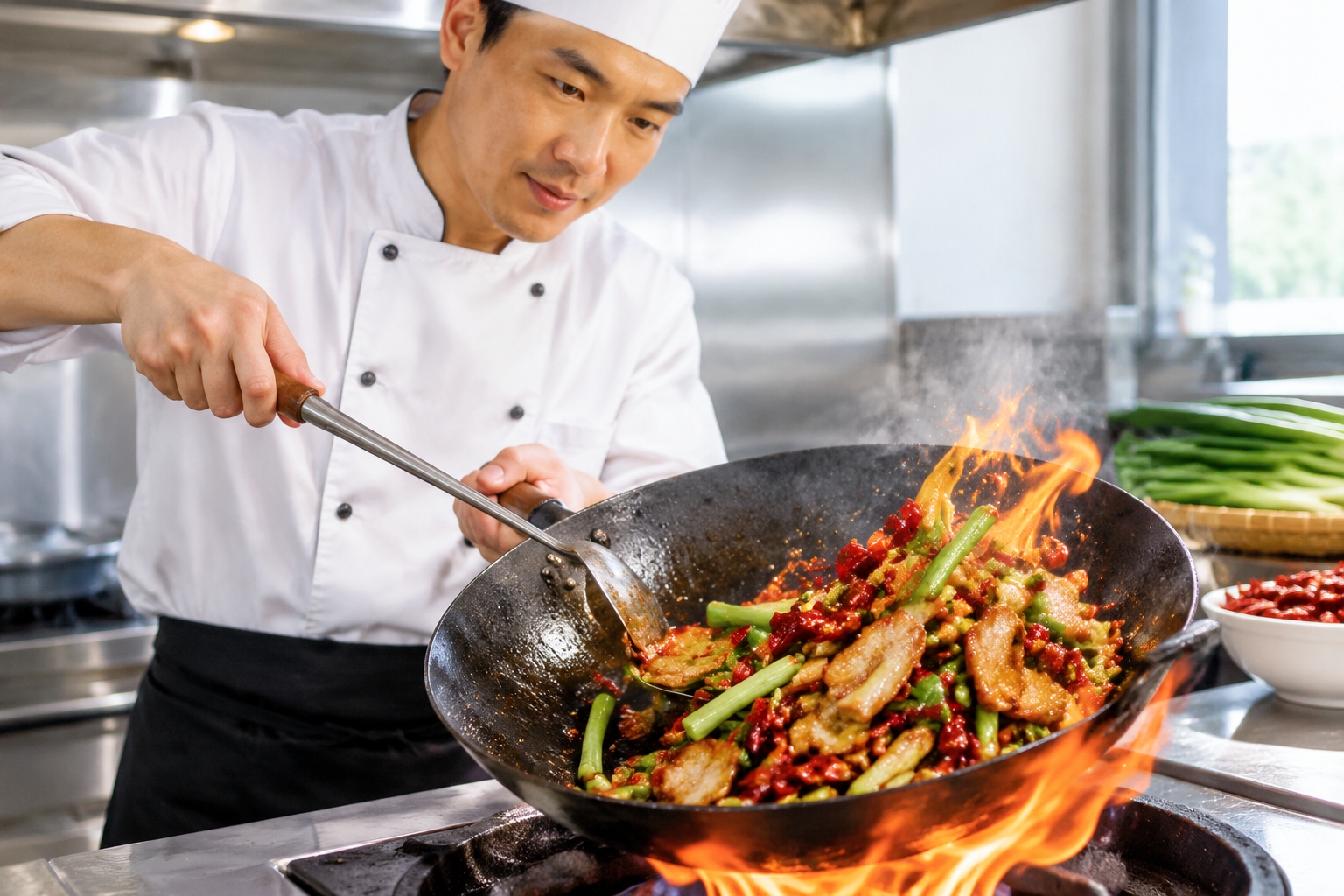
The Aroma Factor: How Hunan Builds Fragrance
If xiān is the backbone, xiāng is the perfume. Hunan cooking relies on several fragrance-building techniques:
1. The Wok Hei (Wok Energy)
In high-heat stir-frying, a seasoned carbon-steel wok reaches temperatures above 300°C (570°F). When oil, ginger, garlic, and scallions hit the surface, they sizzle immediately, releasing volatile aromatic compounds. A splash of cooking wine—usually yellow rice wine (huángjiǔ)—creates steam that carries these scents into the food. This is why a well-made Hunan stir-fry smells so inviting.
2. Spices and Herbs Beyond Chili
Tourists often overlook the secondary spices: star anise, cinnamon, Sichuan peppercorn (though less dominant than in Sichuan), dried mandarin peel, and especially fresh perilla leaves (zĭsū). Perilla is used in fish dishes to counterbalance any muddiness, adding a minty, basil-like lift. Another underrated ingredient is dried shrimp or scallops, ground into powder and sprinkled on vegetables, lending a marine umami that mingles with chili oil.
3. The Earthy Smell of Smoked Chilies
Many Hunan kitchens use smoked dried chilies (làjiāo miàn), made by smoking fresh red peppers over low heat before grinding. This process adds a tobacco-like aroma that pairs beautifully with pork belly or wild greens. The result is a heat that smells as good as it tastes.
Iconic Snacks Revisited: What Tourists Miss
Stinky Tofu (Chòu Dòufu) – The Umami Bomb
Made by soaking tofu in a brine of fermented milk, vegetables, and sometimes shrimp, the tofu develops a pungent outer crust. When deep-fried, the surface becomes crispy, but the inside stays silky. It’s dressed with soy sauce, chili oil, and pickled radish. The “stench” is actually a complex mix of amino acids—similar to aged cheese—that vanishes on the tongue, leaving behind nutty and meaty notes.
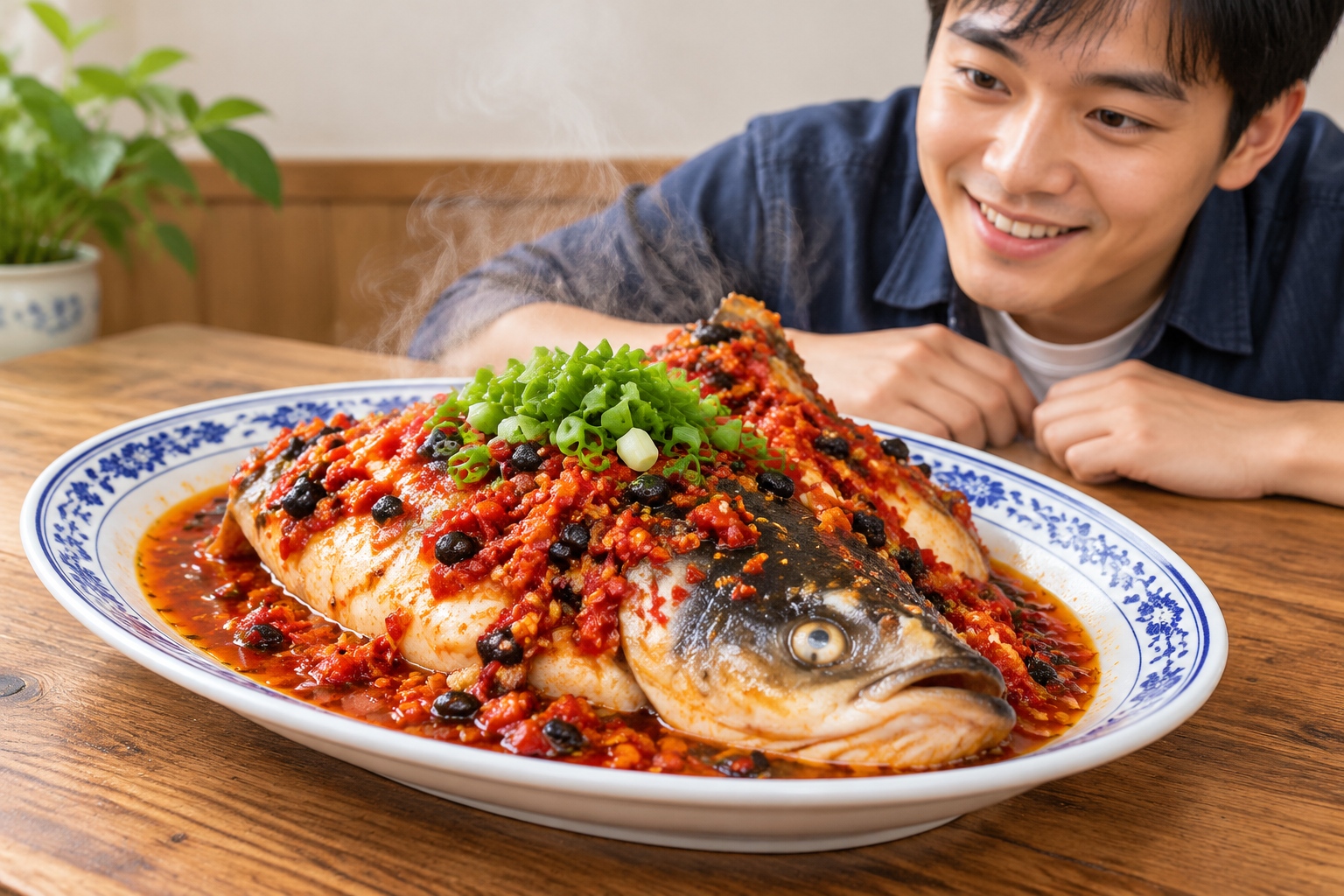
Steamed Fish Head with Chopped Chilies (Duòjiāo Yútóu)
A whole fish head (usually bighead carp) is steamed with a bed of fermented chopped chilies and black beans. The steaming gently cooks the collagen-rich cheeks and eyes, extracting a gelatinous sweetness. The chili paste seeps into the fish, but the heat is mellowed by the fermentation—it’s more about the tangy, savory punch than raw spiciness.
Spicy Crayfish (Kǒuwèi Xiā)
Hunan’s version of crayfish is stir-fried with a thick sauce made from beer, chili bean paste (dòubànjiàng), garlic, and a secret blend of spices. The eating ritual—peeling the shells, dipping the meat into the sauce, and sucking the heads—is a social activity. The sauce’s depth comes from slow cooking the spice mix in oil, allowing flavors to meld before the crustaceans are added.
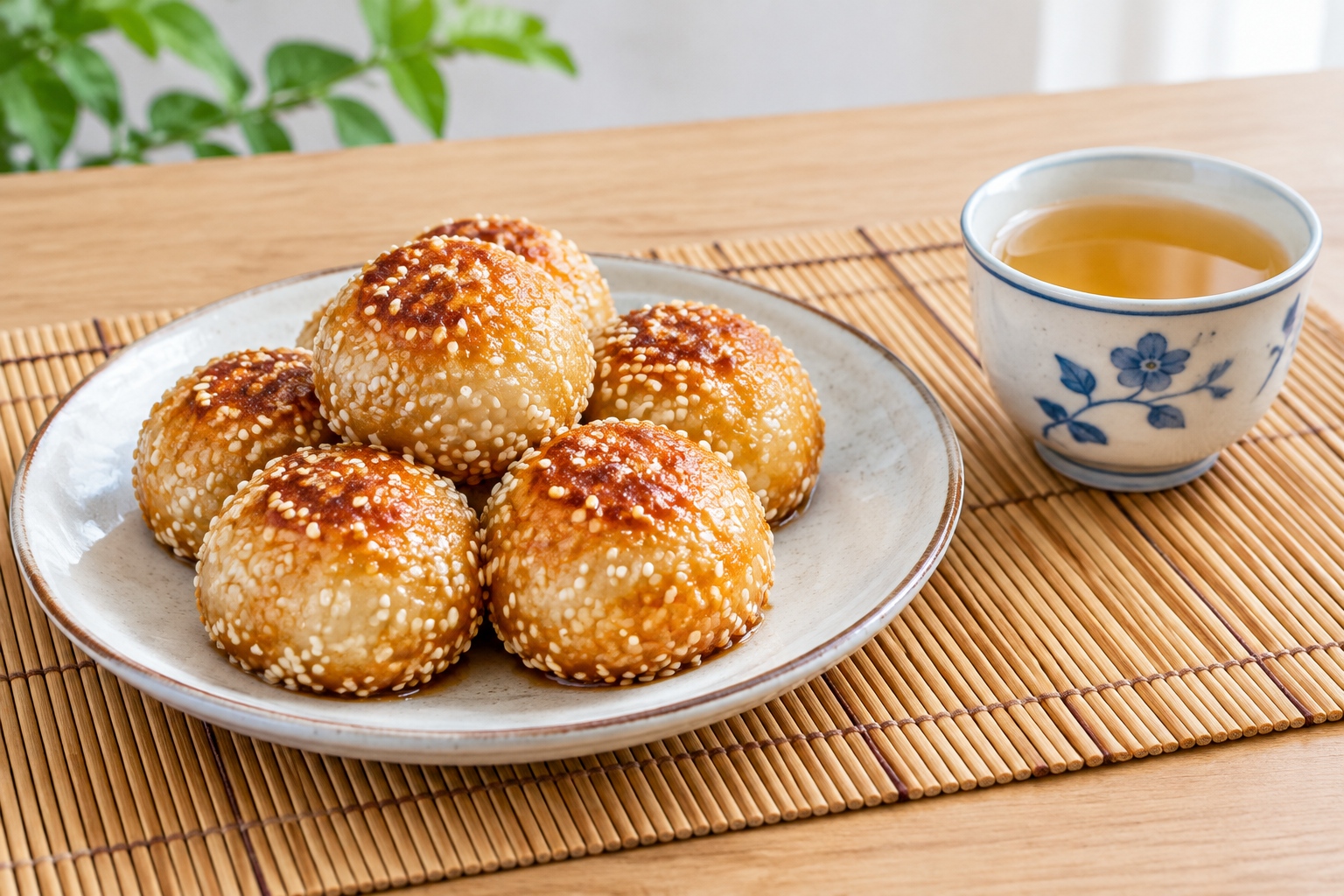
Sweet Glutinous Rice Balls (Táng Yóu Bā Bā)
To see the balance of Hunan cuisine, one must try a sweet snack. Sticky rice balls are pan-fried until caramelized, then coated with brown sugar and sesame. The caramelization creates a nutty, sweet aroma that contrasts beautifully with savory mains—proof that Hunan chefs understand the full spectrum of flavor.
The Science of Chillies: Delivery System, Not Star
Why does Hunanese cooking rely so heavily on chillies? Sichuan has numb, Hunan has heat—but the function is different. In Hunan, chilies are often used fresh or fermented, which means their capsaicin (the compound that makes them hot) is accompanied by a host of other molecules: sugars, organic acids, and volatile esters. When cooked, these molecules interact with proteins and fats to enhance xiān. In other words, the chili acts like a conductor in an orchestra, not the soloist. Remove the chili, and you lose the harmony; but focus only on the chili, and you miss the symphony.
One local chef explained: “We don’t eat chili for the pain. We eat it to make everything else taste better.”
Hunan Snacks: A Balanced Composition
The next time you visit a Hunan street stall, look beyond the red oil. Ask the vendor about their black bean sauce, their smoking wood, their fermentation time. Taste the broth soaked into stinky tofu, the crispiness of a stir-fried water spinach with fermented shrimp, the sweetness of a caramelized rice ball. You’ll find that Hunan food is not a one-dimensional assault on your tongue—it’s a carefully orchestrated play of xiān and xiāng, where heat is just the opening note.
Hunan’s culinary tradition teaches us that flavor is not about overpowering, but about layering. And once you understand that, every bite becomes a story.
Start the discussion at forum.chinacomes.com