

A 6 A.M. Line for Beef Noodles in Lanzhou
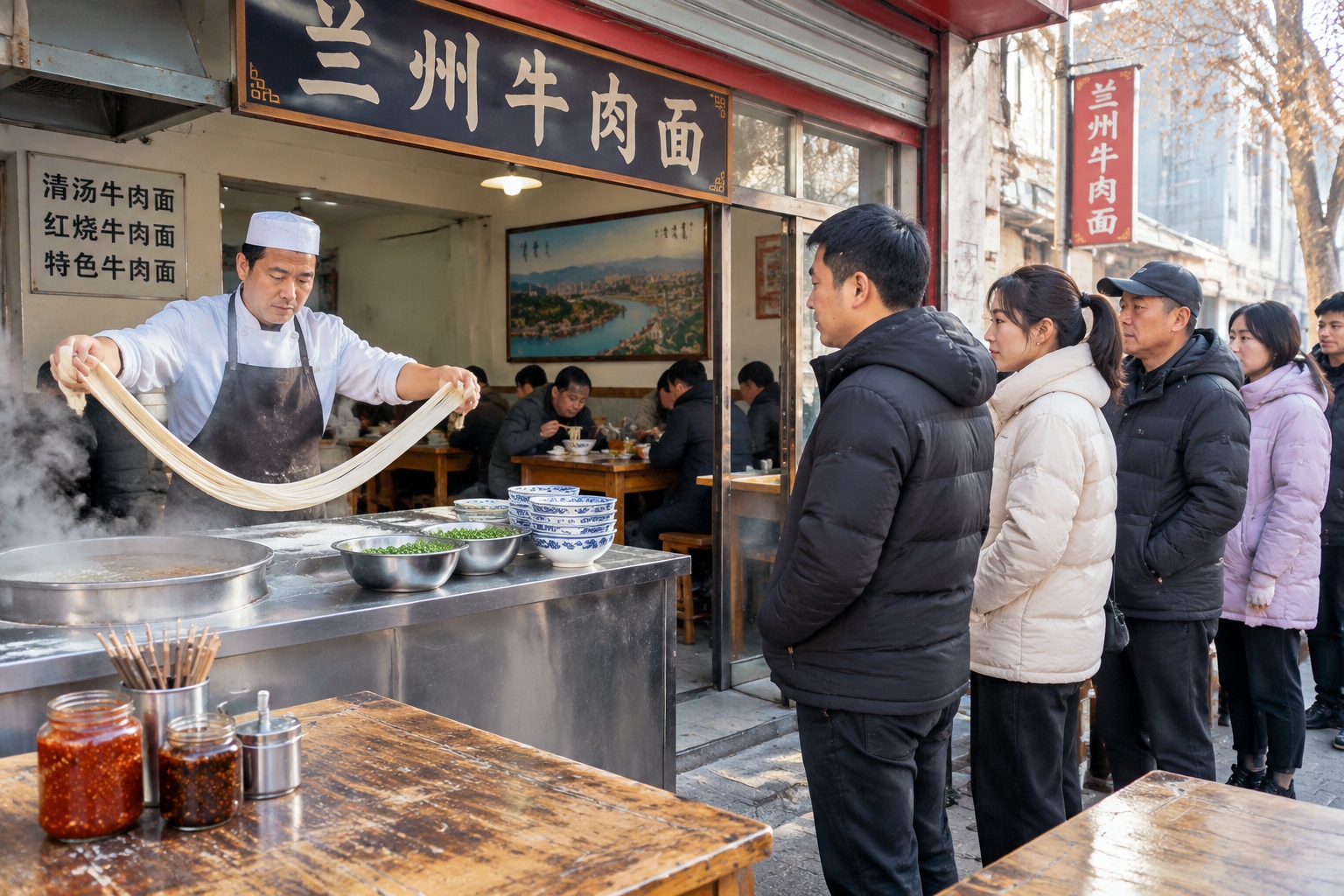
At 6 a.m. in Lanzhou, the capital of Gansu province, the air is still sharp with cold. A man in a padded jacket stands outside a noodle shop on a side street, stamping his feet. Behind him, the line has already curled past the door. Inside, a cook slaps a rope of dough against the counter — once, twice — then pulls it into threads thin enough to see through. A ladle of clear broth, a handful of chopped garlic sprouts, a spoon of red chili oil. The bowl costs eight yuan, about a dollar. He eats standing up, because every stool is taken.
This is the version of Gansu food most visitors meet first. Lanzhou beef noodles are famous across China, and there are branches in Beijing, Shanghai, and even abroad. But the bowl is only the front door. The flavors that rarely leave the province — the ones that surprise even Chinese travelers from the coast — sit further west, along the old Silk Road corridor, in small towns where breakfast is still a social event and sweetness comes from fermentation, not sugar.
Why Gansu Tastes the Way It Does
Gansu is a long, narrow province stretched like a handle between the Tibetan Plateau and the Gobi Desert. The Hexi Corridor, a string of green oasis cities — Wuwei, Zhangye, Jiuquan, Dunhuang — was the main road for traders, monks, and armies moving between China and Central Asia. That history left a food culture built on movement and storage: wheat, barley, oats, lamb, potatoes, and a deep reliance on fermentation.
The climate explains a lot. Winters are dry and bitterly cold; summers are short and hot. Fresh vegetables are scarce for months at a time. So families pickle, dry, and ferment. In the markets you’ll see sacks of highland barley and oats, jars of dark vinegar, and plastic buckets of a pale, grainy mixture that looks like lumpy yogurt. That mixture is tainpei — fermented oats or barley — and it is the closest thing Gansu has to a local dessert.
The Bowl That Feeds a City
Lanzhou beef noodles follow a formula locals can recite: clear broth, white radish, red chili oil, green garlic sprouts, yellow noodles. The broth simmers for hours with beef bones, ginger, and a spice packet that includes star anise, fennel, and a local wild pepper called huajiao. The noodles are pulled to order — diners choose the width, from hair-thin to belt-wide.
For many Lanzhou residents, this is breakfast, not lunch. Shops open before dawn and close by early afternoon. The meal is fast, cheap, and eaten standing or hunched over a shared table. It costs between 7 and 12 yuan, depending on the neighborhood. Office workers, taxi drivers, students, and retirees all stand in the same line.
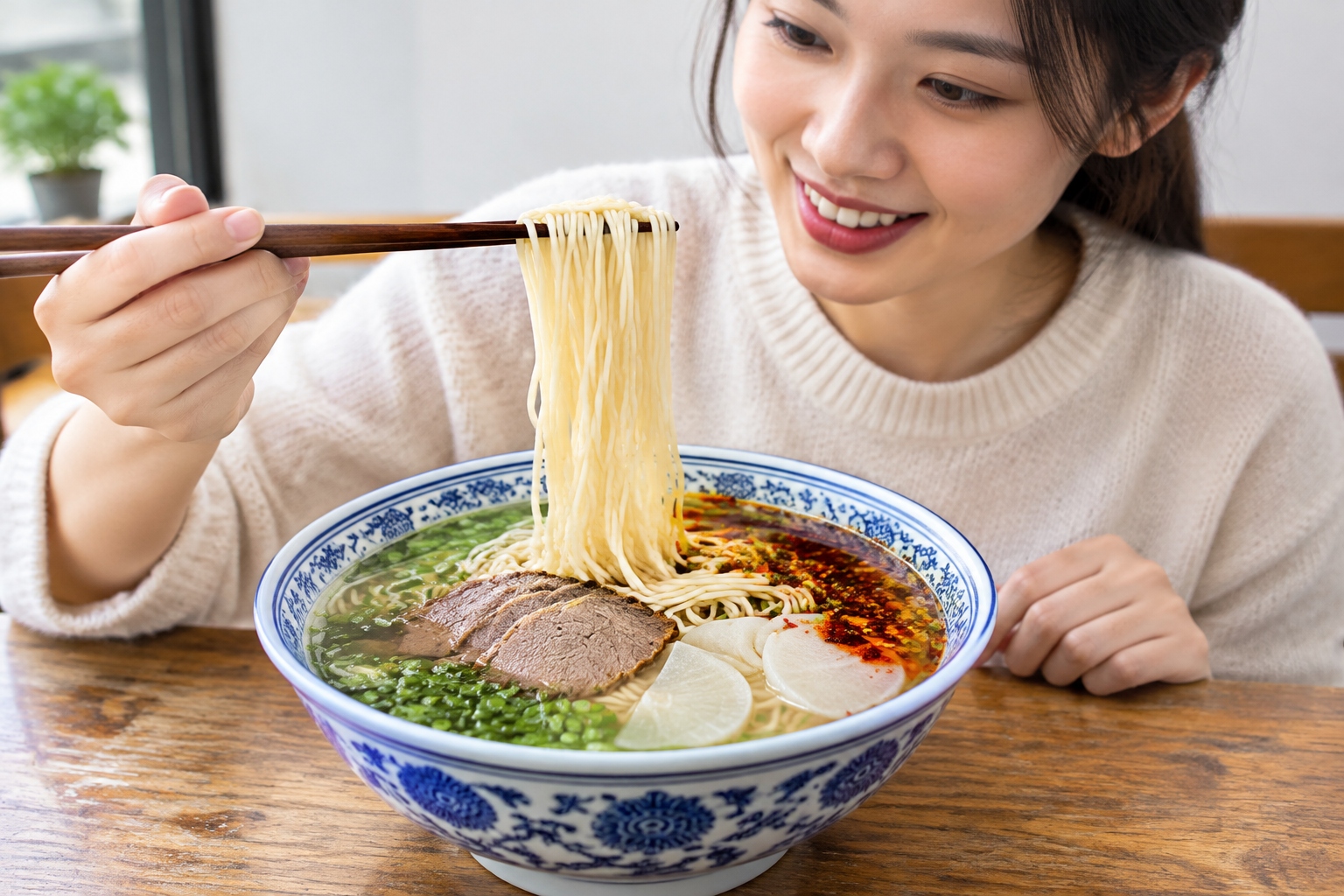
What surprises outsiders is not the taste — it’s the rhythm. The whole transaction takes maybe six minutes. Nobody lingers. The shop doesn’t try to be cozy. It is a utility, like a bus stop, and that is part of its charm.
Beyond the Noodles: Lamb, Potatoes, and Hand-Pulled Wheat
Drive three hours west of Lanzhou and the landscape turns to dry hills and wind farms. In towns like Wuwei, family dinners look different from the noodle shops. A typical home meal might be a plate of hand-torn noodles — mianpian — cooked with lamb, potatoes, tomatoes, and a handful of dried chili. The dough is rolled flat, torn into thumb-sized pieces, and dropped straight into boiling water or broth.
In the evening, market streets fill with charcoal smoke. Cumin and chili powder coat skewers of lamb. Vendors sell fried potato slices on sticks, and bowls of thick yogurt topped with honey. In Dunhuang, near the Mogao Caves, restaurants cater to tourists with “Silk Road banquets,” but locals eat at smaller places where a bowl of noodles with lamb costs 15 yuan and the tea is free.
The Hidden Sweetness: Tainpei and Fermented Flavors
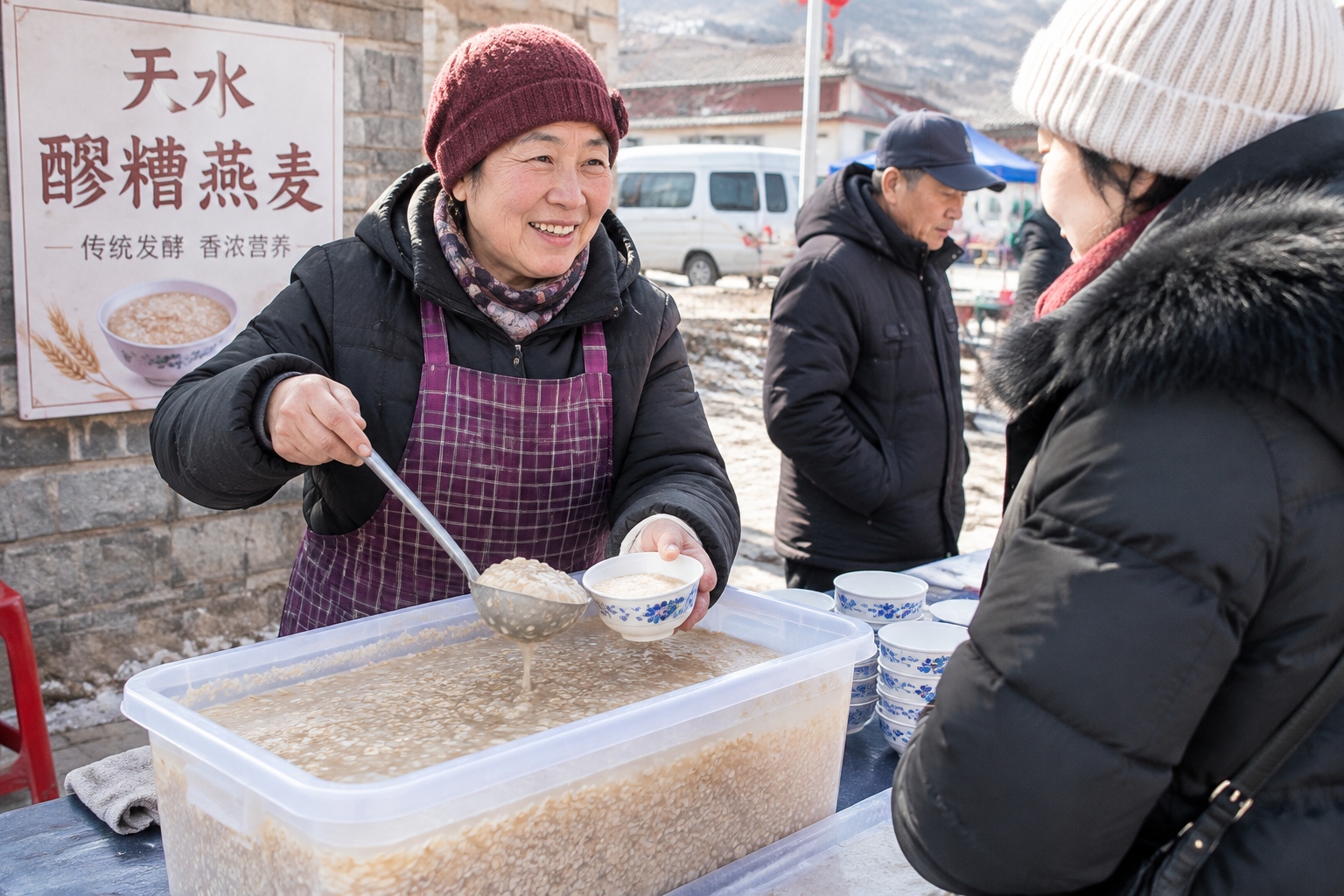
Here is the flavor that rarely makes it onto travel posters. Tainpei — also spelled tianpei, or sweet fermented oats — is made by steaming oats or highland barley, mixing them with a yeast-like starter called jiuqu, and leaving them to ferment in a warm place for two or three days. The result is slightly sweet, slightly alcoholic, and faintly sour, like a cross between rice pudding and a very mild cider. It is sold in small bowls from street carts, especially in summer, when it’s served cold with a splash of the fermenting liquid.
In Lanzhou and Wuwei, you’ll find older women selling tainpei from plastic tubs outside markets, next to vendors selling fresh milk and fried dough. A bowl costs 5 yuan. Children eat it as a snack; adults eat it for breakfast or after a spicy meal. During the Lunar New Year, families make it at home in large ceramic jars.
Fermentation runs through Gansu food in other ways too. There is jiangshui — a cloudy, sour liquid made by fermenting vegetable leaves in water — which is used as a base for cold noodle soups in summer. The taste is tart and slightly fizzy, and locals swear it cools the body. There is also the dark, thick vinegar from Tianshui, aged for years in clay jars. None of these flavors are famous outside the province. They don’t travel well, and they don’t photograph like a bowl of noodles with red chili oil.
But they explain why Gansu food feels different from the Chinese food most foreigners know. The sweetness here is not from sugar. It comes from time, bacteria, and temperature — a kind of patience that fits a place where fresh fruit was, for centuries, a seasonal luxury.
How Flavors Move Along the Road
It’s tempting to tell a grand story about the Silk Road and exotic ingredients. The reality is more ordinary and more interesting. Wheat came from West Asia centuries ago and became the backbone of northern Chinese cooking. Lamb, cumin, and flatbreads arrived with Muslim traders and soldiers, and they blended with local Han and Tibetan cooking. In Gansu, that blending is visible in the everyday menu: hand-pulled noodles next to lamb skewers, barley porridge next to steamed buns.
But the road is still moving. In Zhangye, a young cook named Li Wei runs a small restaurant that serves both traditional mianpian and a version with curry powder and bell peppers — a nod to customers who have traveled or watched cooking videos online. His mother makes the tainpei sold at the front counter. “Young people want stronger flavors,” he says. “But they still want the old dishes at holidays.”
Chain Stores, Delivery Apps, and the New Food Economy
Food in Gansu is changing, but not in the way you might expect. The biggest shift is not foreign cuisine — it’s convenience. Delivery apps like Meituan and Ele.me now reach into small cities. In Wuwei, a bowl of noodles can arrive at your apartment in 25 minutes for an extra 3 yuan. Chain noodle shops have standardized the Lanzhou beef noodle experience, sometimes to the annoyance of locals who argue about which neighborhood shop has the best broth.
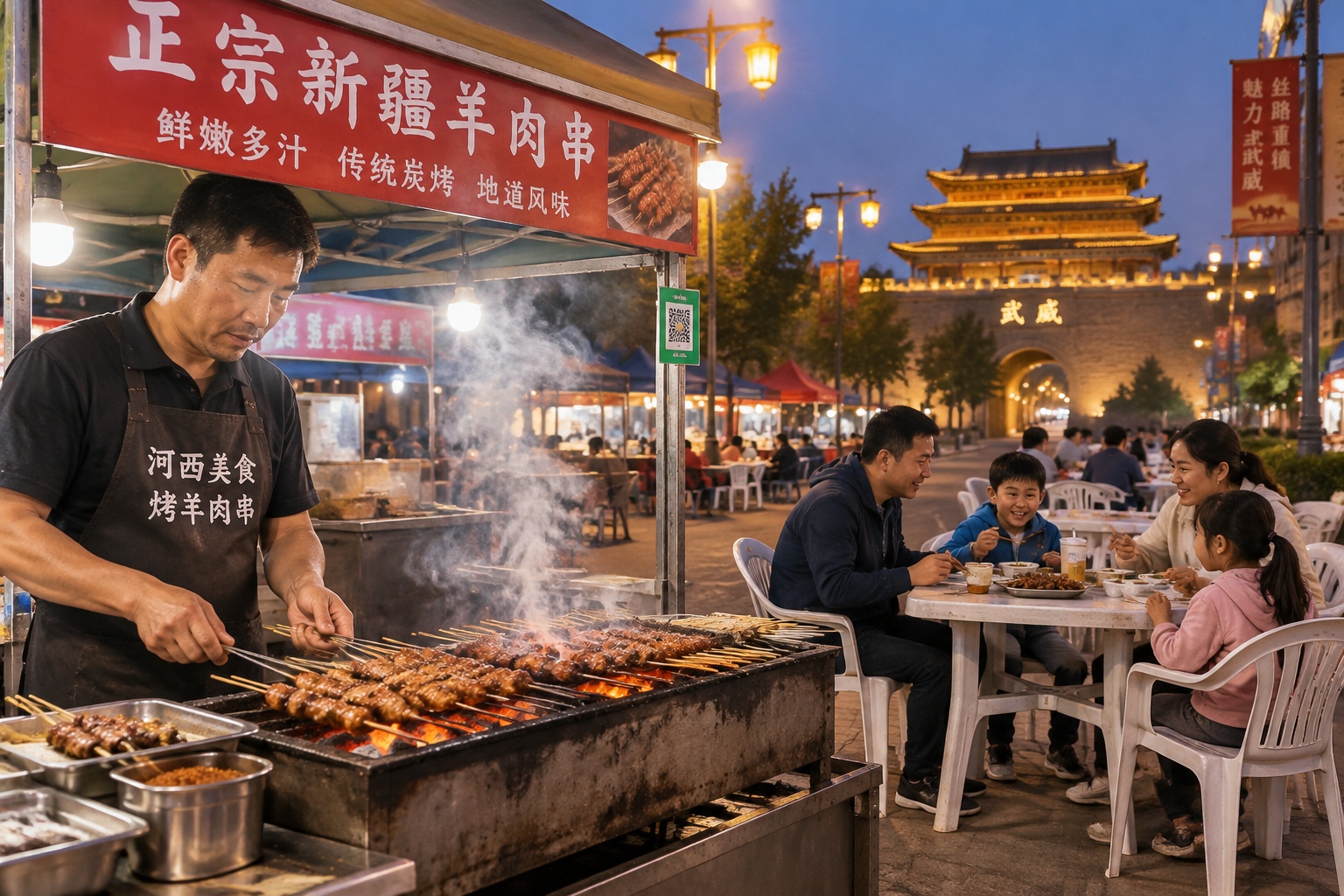
Tourism has also left a mark. Dunhuang’s night market now has English menus and QR codes. But step one street back and the prices drop by half. The older food culture — the market vendors, the family ferments, the standing breakfast — hasn’t disappeared. It has adapted. Some stalls now sell tainpei in sealed plastic cups for takeaway. Others have added WeChat Pay QR codes taped to their carts.
What hasn’t changed is the social function. Breakfast is still eaten in public. Lunch is still often noodles from a shop with plastic stools. Dinner is still the meal where families sit down, even if one person is watching a phone. The food is not precious. It is infrastructure.
What It Feels Like for an Outsider
If you’ve ever stood in line for a taco truck, eaten a bowl of ramen at a counter, or bought fermented food from a farmers’ market, you already understand the rhythm of Gansu eating. The scales are different, but the logic is familiar: fresh dough, fast service, a limited menu, and a price that makes it a daily habit rather than a treat.
The main difference is fermentation. Western readers might know kimchi or sauerkraut, but the idea of fermented oats as a sweet snack is unusual. Think of it as a cousin of kombucha or sourdough — a living food with a slightly sour edge. It is not a dessert in the Western sense. It is a small, everyday pleasure, sold from a cart, eaten with a plastic spoon.
Dinner at a Family Table in Wuwei
On a recent evening in Wuwei, a retired teacher named Zhang Guilan set out dinner on a low table in her apartment. There was a plate of mianpian with lamb and potatoes, a bowl of pickled cabbage, and a small dish of chili oil. For dessert, she brought out a ceramic jar of tainpei she had made three days earlier. The room smelled faintly of yeast and sweetness.
Her grandson, who is 19 and studies in Lanzhou, ate two bowls. He said the tainpei in the city is too sweet, too processed. His grandmother’s version has a sharper edge. She laughed and said nothing. Outside, the streetlights came on. The market vendors packed up their carts. The day ended the way it started in Gansu — with something fermented, something warm, and someone standing at a counter, eating quickly.
Start the discussion at forum.chinacomes.com