

Seven Twenty in the Morning, Kunming
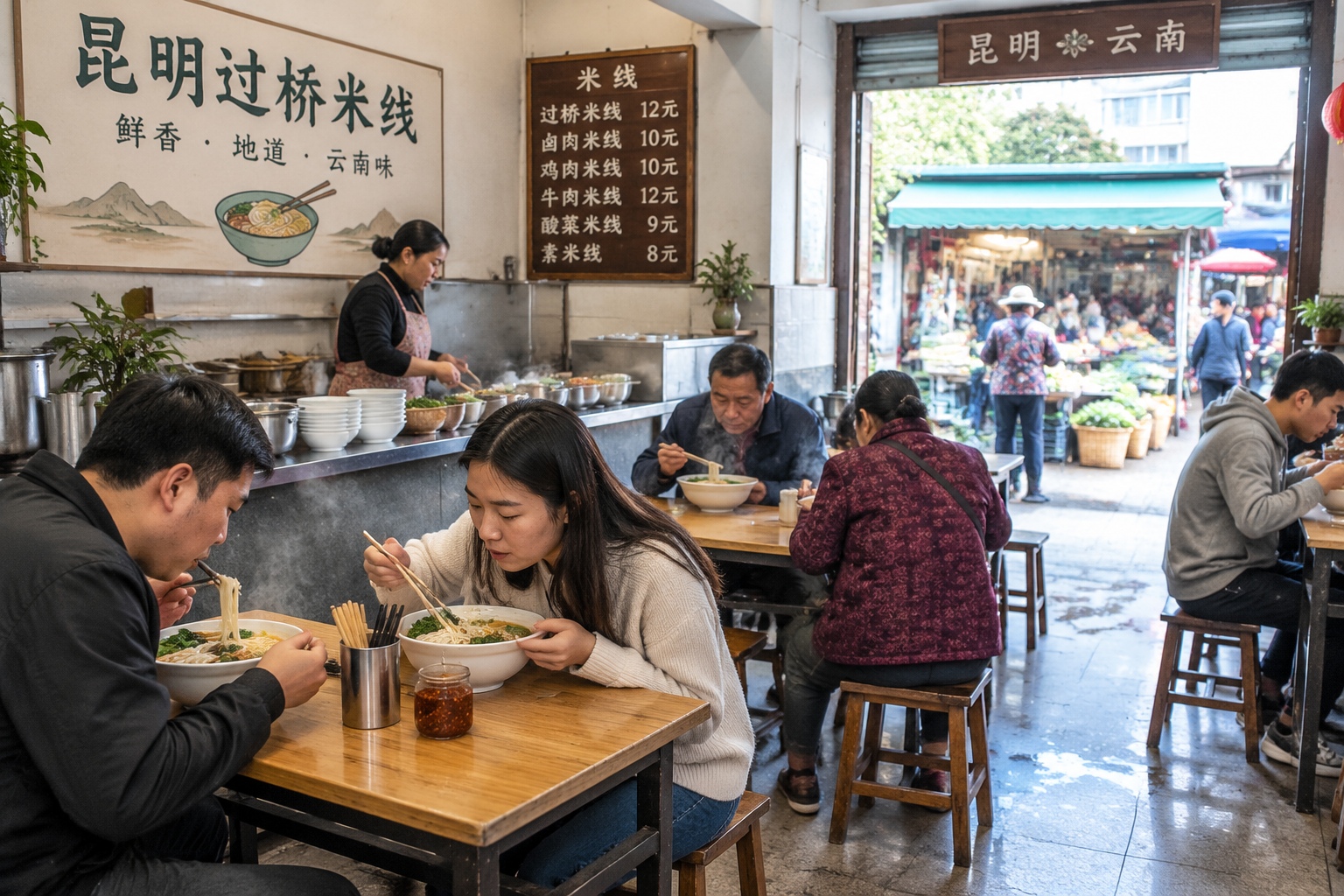
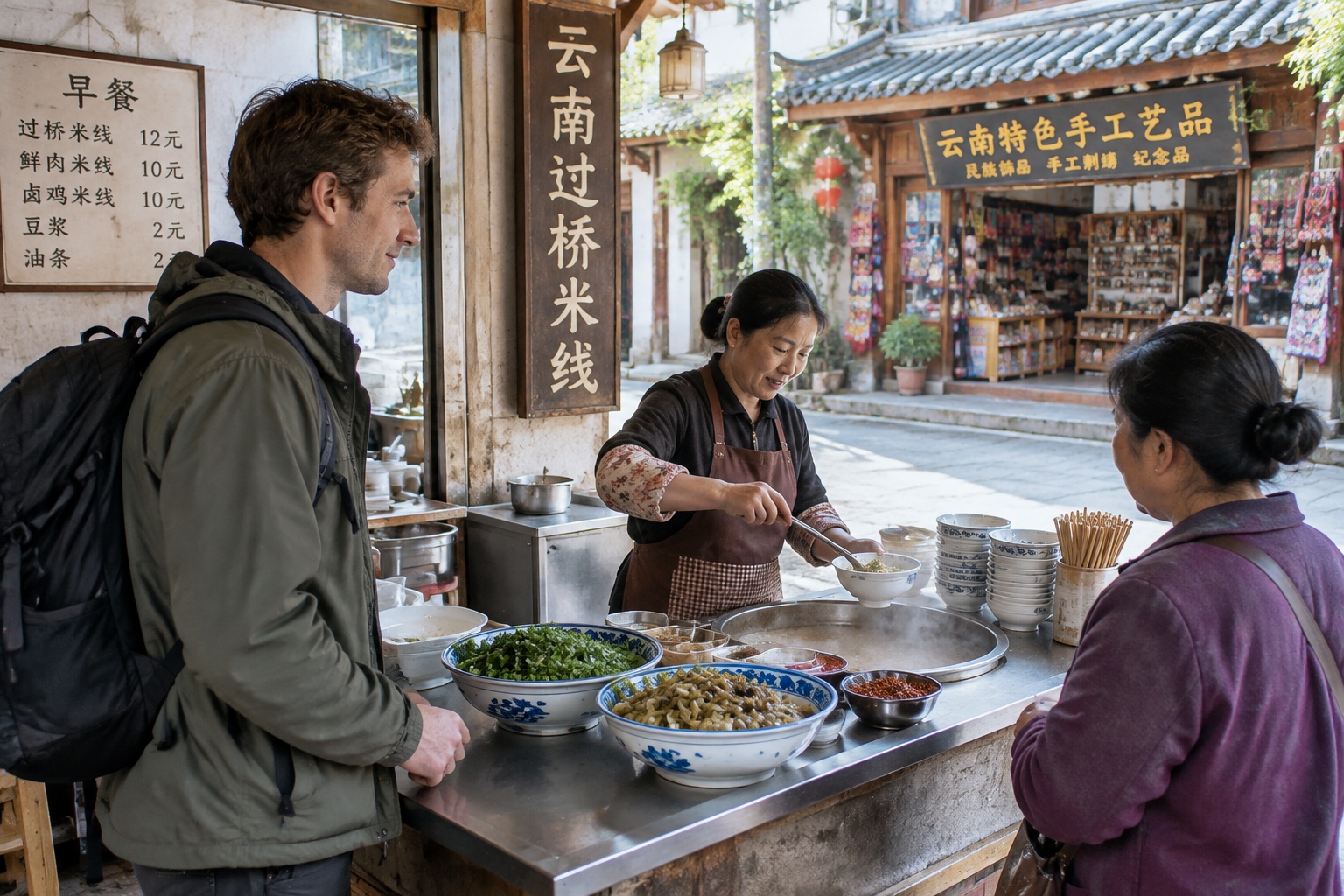
At 7:20 on a weekday morning, a rice noodle shop near a wet market in Kunming is already full. Office workers in lanyards, taxi drivers, students and retirees sit shoulder to shoulder at narrow tables. Each has a bowl of hot broth, rice noodles, minced pork, pickles, scallions and a spoonful of chili oil. The shop owner calls out orders; the line moves fast. Across the street, a tourist couple is buying vacuum-packed rice noodles and rose cakes from a gift shop. They are thoughtful gifts. They are also, for the people in the noodle shop, not quite the point.
That contrast is the key to understanding Yunnan food. Many things visitors label as local specialties are, for locals, ordinary staples. The question is not who is right. It is why the same food can sit in two different worlds: one wrapped in plastic and sold as a souvenir, the other eaten before the workday begins.
How a Daily Staple Becomes a Tourist Souvenir
Yunnan sits in southwest China, sharing borders with Myanmar, Laos and Vietnam. It has tropical valleys, high mountains, and more than two dozen recognized ethnic minority groups. That geography and diversity produce a wide range of foods. But a tourist on a short trip sees a filtered version. Souvenir shops stock what can survive a suitcase: dried rice noodles, mushroom sauce, ham, rose jam, coffee, tea, vacuum-packed erkuai. These are real local products. They are also selected for a particular purpose: to be carried home.
Local consumption follows a different logic. People choose food by freshness, price, speed and habit. A package of dried noodles may last for months. A bowl of fresh rice noodles is eaten in ten minutes. The souvenir market selects for durability and portability. Daily life selects for what is on the way to work.
Rice Noodles Are Not a Special Occasion
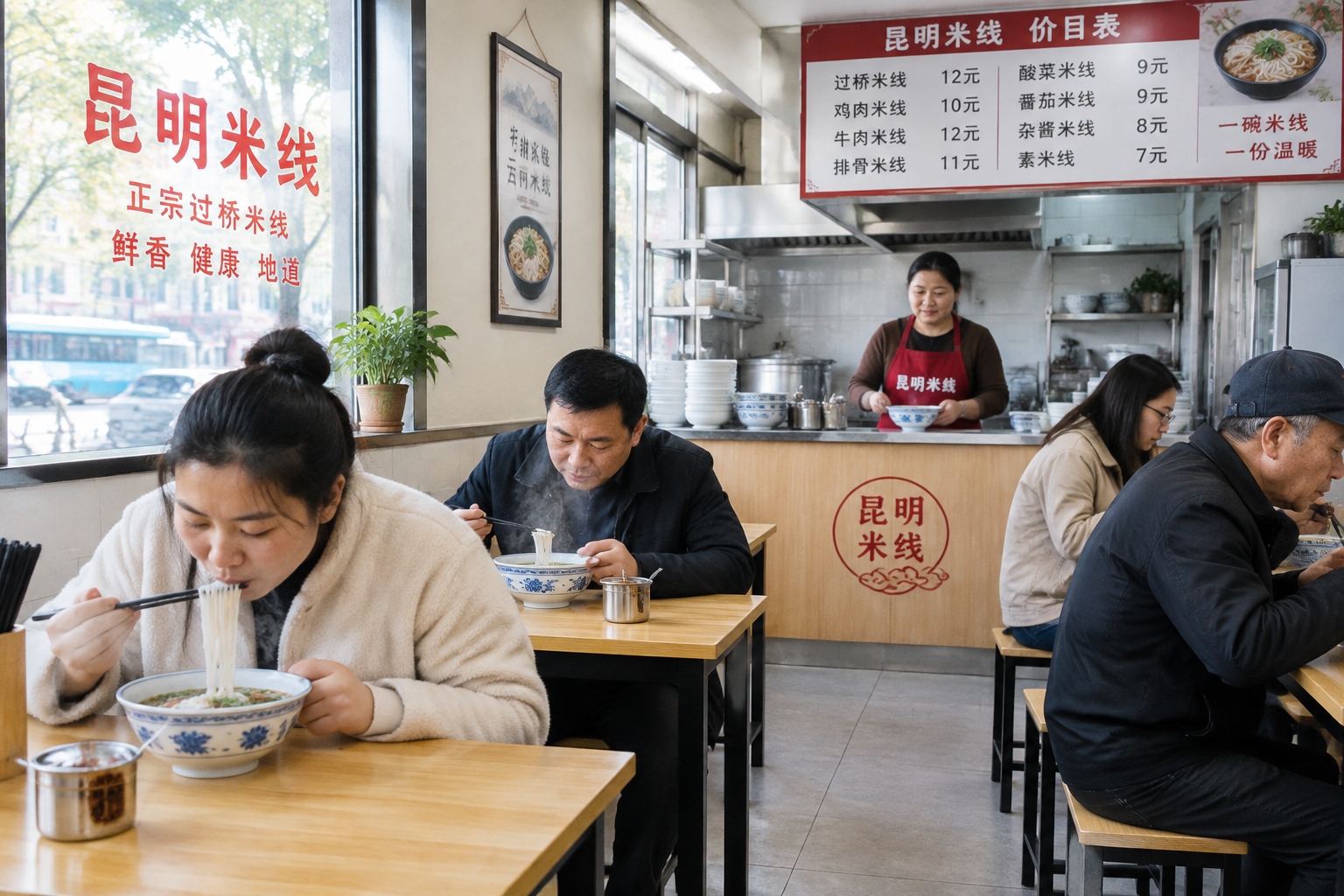
For many Yunnanese, the day starts with rice noodles. In Kunming, a neighborhood bowl often costs around 10 to 15 yuan, with extra toppings pushing it higher. The broth may be pork, chicken or beef; the toppings vary by shop and region. Crossing-the-bridge rice noodles are the famous version, often served with small plates of meat, vegetables and egg. But locals also eat simpler bowls: small-pot rice noodles, cold rice noodles, beef rice noodles, and bowls with local pickles or fermented beans. The point is speed and regularity. A bowl is hot, salty, filling and fast. It fits between a bus ride and a morning meeting.
This is why packaged rice noodles miss the everyday logic. The dried version is a useful pantry item. The local version is a morning ritual measured in minutes. The shop is not a museum of Yunnan culture. It is a service station for people who need to eat before 8 a.m.
Erkuai: The Rice Cake That Works Like Bread
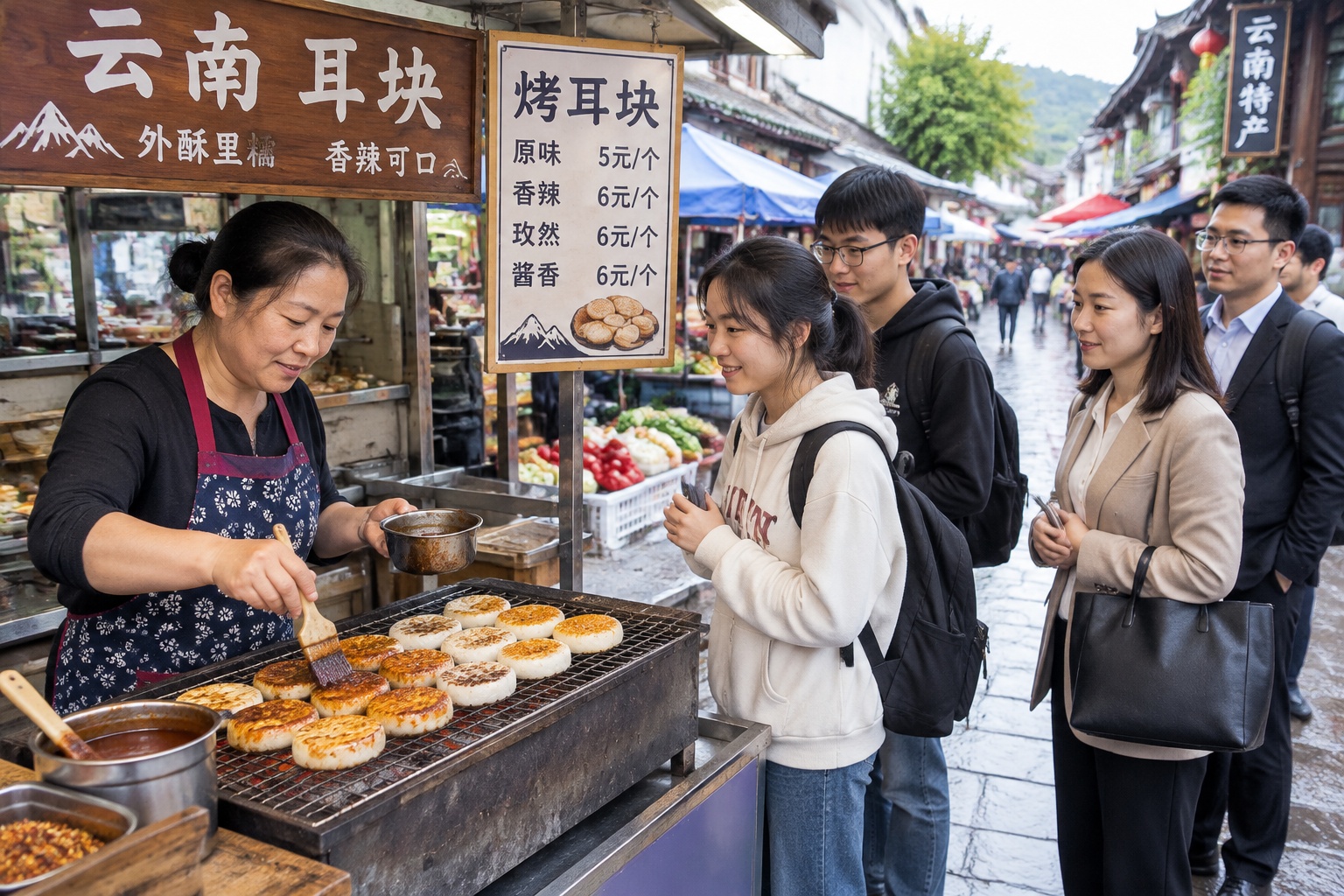
Erkuai is another example. It is made from rice that is soaked, steamed, pounded and shaped into cakes or bricks. In a family kitchen, it can be sliced and stir-fried with ham and greens, or boiled in soup. On the street, it is grilled over charcoal and brushed with sweet or savory sauce. A piece can cost just a few yuan. Students eat it on the way to school. Office workers grab it as a mid-morning snack. Vendors sell it next to buses and markets, not only in scenic old towns.
Tourists often buy vacuum-packed erkuai as a souvenir. Locals buy it fresh, by weight, and eat it within days. The texture changes when it is fresh; the grill gives it a crisp edge and a chewy center. It is not an exotic curiosity. It is a carbohydrate base, closer to bread or a tortilla in the way it fits into a meal.
Potatoes, Corn and the Mountain Pantry
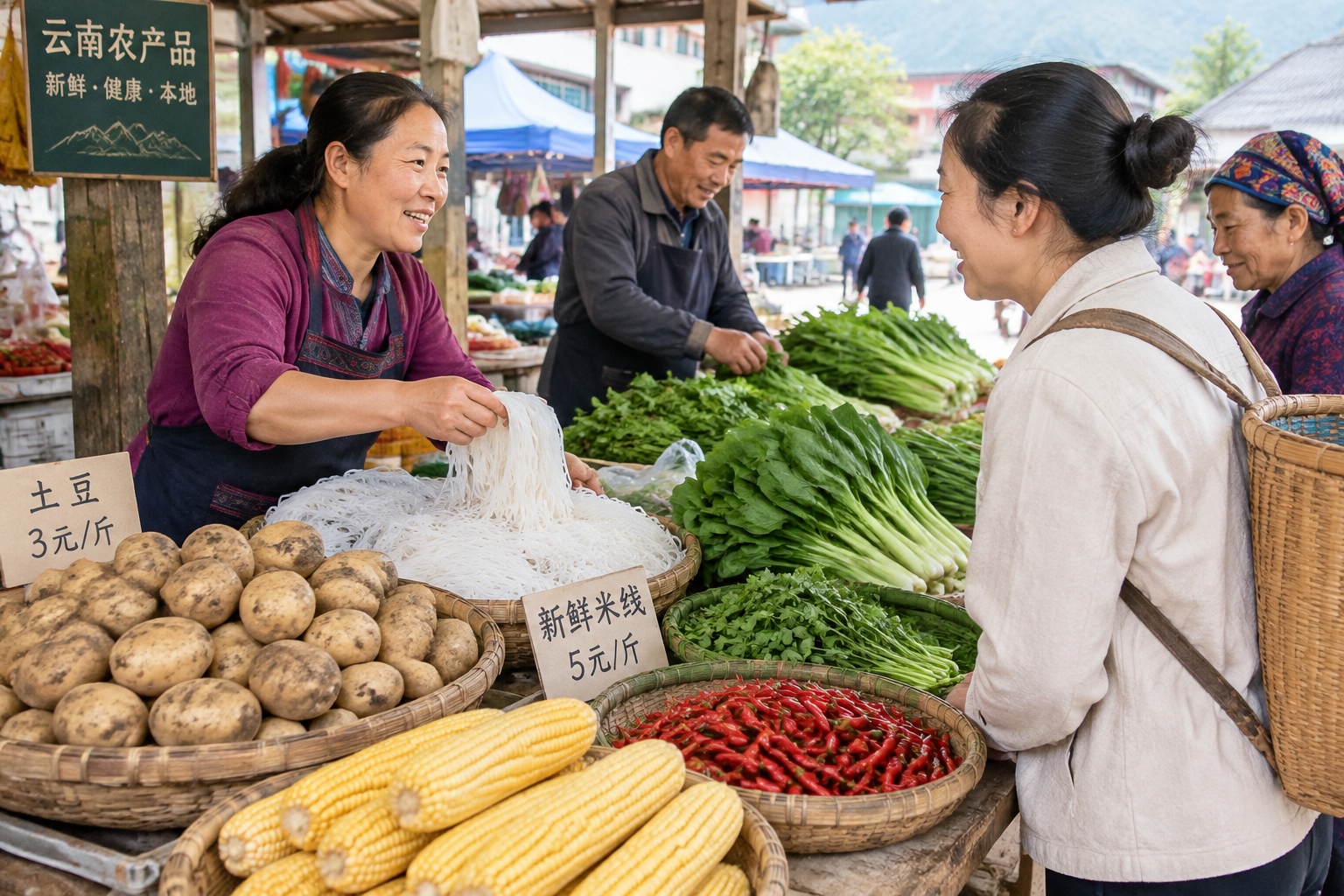
Yunnan is often described as mountainous, but the detail matters: rice grows in lower valleys and basins, while corn and potatoes do better in cooler highlands. In some mountain households, potatoes are not a side dish. They are energy, storage and insurance. Corn can be cooked into corn rice, a filling staple that mixes with rice or stands on its own. In cities, tourists meet potatoes as snacks: baked potatoes, fried potato balls, potato pancakes with chili. For highland families, they are part of the main meal.
This is where the souvenir label gets thin. A bag of potato snacks in a tourist shop looks like a novelty. A basket of potatoes in a wet market looks like dinner. The same crop carries different meanings depending on the kitchen it enters.
Dairy and Ham Belong on the Side, Not in a Freak Show
Rushan, a cow milk fan from the Dali area, is another food that gets flattened by tourism. It is made by heating milk and stretching the skin that forms on top. It can be grilled on a street stall, fried, or eaten as a snack. In Bai communities around Dali, dairy has a long history. But rushan is not the main event of every meal. It is a side, a snack or a festival food. Xuanwei ham works in a similar way: it flavors soups, rice dishes and vegetable stir-fries. It is treasured, but it is not eaten as a daily steak.
Visitors are often drawn to foods that look unusual. That is understandable. The mistake is to assume that unusual means central. In Yunnan, as anywhere, daily meals are built from ordinary staples, with strong flavors used in support.
Geography Written in Carbohydrates
Yunnan’s food diversity is not a marketing invention. It comes from ecology and history. High mountains separate valleys; different altitudes support different crops; ethnic minority communities have their own cooking traditions. Rice, corn, potatoes, wheat and buckwheat all have a place. A single province can contain several staple systems. A visitor who stays in Dali or Lijiang for three days may see old-town shops, guesthouse breakfasts and souvenir shelves. That is a slice of Yunnan, but not the whole daily diet.
The tourist market selects what is photogenic, portable and easy to explain. Daily life selects what is affordable, available, filling and familiar. Those two filters rarely produce the same list.
The Market Is Not the Souvenir Shop
Walk into a local wet market in Kunming, Jianshui or Dali and the food looks less like a gift and more like a schedule. Fresh rice noodles are sold in loose bundles. Erkuai sits in stacks. Potatoes are sorted by size. Greens, herbs, chilies, fermented vegetables and dried mushrooms fill the stalls. In community restaurants, the lunch crowd orders rice noodles, rice with stir-fries, or a quick bowl of soup. Delivery apps add another layer: prepackaged noodles and local snacks can arrive at home, but they still compete with the shop downstairs.
Tourism has helped local producers. It creates income for ham makers, tea farmers, coffee growers and small food companies. It can also turn daily food into a symbol. Rose cakes, vacuum-packed rice noodles and gift-boxed ham are not fake. They are real products with real markets. But they are the travel version of a food system that is much more ordinary, and more interesting, at home.
A Comparison for Visitors
Imagine visiting Italy and buying dried pasta as a souvenir. Pasta is real Italian food, but Italians also eat it on a Tuesday night without taking a photo. Imagine visiting Mexico and treating tortillas as a street-food curiosity. For many Mexican families, they are the base of the meal. Yunnan rice noodles and erkuai work in the same way. The difference between a staple and a souvenir is not authenticity. It is frequency, price, portion and time of day. A 12-yuan breakfast bowl and a 40-yuan gift box can contain the same grain, but they are not the same object in daily life.
What to Do on Your Next Visit
If you want to understand Yunnan food, skip the souvenir aisle for an hour. Go to a breakfast shop at 7:30. Order what the person in front of you is eating. Try a plain bowl of rice noodles, then add chili and pickles. Buy a grilled erkuai from a street stall and eat it while it is hot. Walk through a wet market and look at what is sold by weight, not by gift box. Ask a local what they ate on a normal Tuesday. The answer will probably be less exotic and more delicious than the label suggests.
Yunnan specialties are not false. They are simply not only specialties. They are breakfast, lunch, late-night food, family cooking and mountain storage. The visitor who sees that will stop collecting Yunnan as a souvenir and start tasting it as a place where people live.
Start the discussion at forum.chinacomes.com