


If You Sit Long Enough in Wuhan, You’ll See It
On a Tuesday afternoon, I found a seat by the window of a small coffee shop near Wuhan University. A PhD student at the next table was editing a paper on optical communications. Across from her, two friends were sketching a business idea on a napkin. That mix—pure research and sudden entrepreneurship—felt very Wuhan to me.
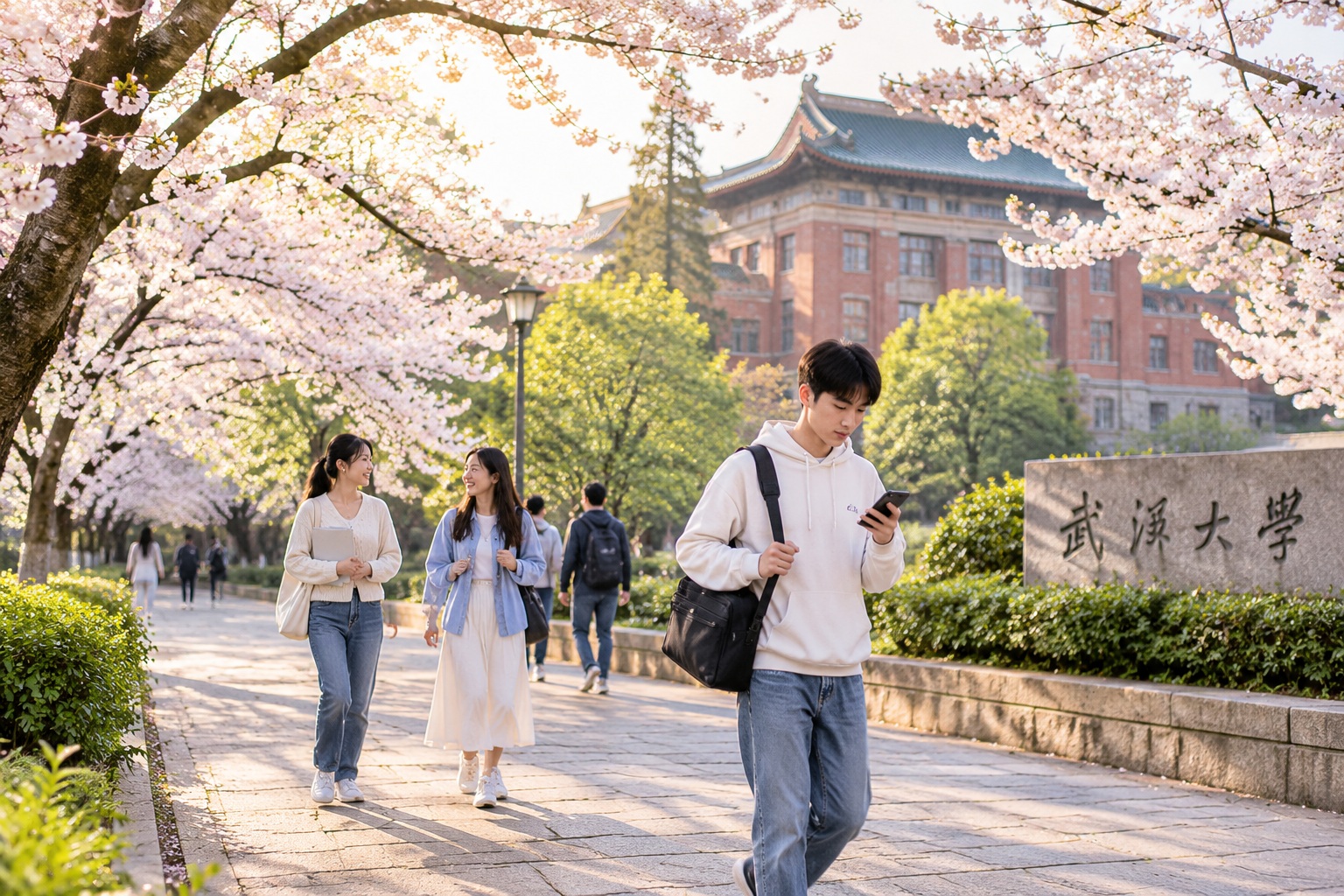
Wuhan is a city people tend to know for a few things: the spicy hot dry noodles at breakfast, the brutal humidity in summer, and the fact that it was the first to lock down during the COVID-19 pandemic. But those images miss the city’s longer, quieter arc. With more than 80 universities and colleges, Wuhan is one of China’s most important education centers. Every year, over a million students study here. For a long time, many of them packed their diplomas and left for Beijing, Shanghai, or Shenzhen. In recent years, that pattern has started to reverse, and the reasons show up in daily life.
Where the Knowledge Economy Gets Its Heat: The Campuses
In spring, Wuhan University’s cherry blossoms are a famous tourist sight. But if you step away from the crowds and follow the narrow roads uphill, you’ll find labs that stay lit well past midnight. Students are building optical sensors, writing machine-learning code, and testing prototypes for hospital equipment. A short metro ride away, Huazhong University of Science and Technology has a culture of engineering and problem-solving that feels almost industrial. There, students don’t just study ideas; they build things.
This energy does not stop at the school gate. Walk through the streets around any big university in Wuhan, and you’ll see small restaurants where students argue about equity caps, factory costs, and product launches. I once sat next to a group of undergraduates who were trying to convince a friend to delay his startup launch by a month. They weren’t being cautious. They just wanted him to have enough clean data for the demo.
That kind of conversation would have been unusual ten years ago. Today, starting a company is not considered a betrayal of academic life. It’s another way of answering the same questions they study in class.
Professors as Bridges
Some of the most important bridges between campus and the market are professors. A mechanical engineering professor I spoke to told me that several of his former students now run robotics companies in the Optical Valley, a high-tech zone about twenty minutes from campus. When they hit a technical wall, they sometimes come back to the lab to talk through the physics. “I don’t teach them how to register a company,” he said, laughing. “But I do still teach them why something spins or slips.”
Universities are becoming more formal about these relationships. Many have technology transfer offices, joint research centers with local companies, and programs that let student projects use expensive lab equipment at low prices. In exchange, the university might take a small stake in a promising company. It’s a practical arrangement—one that works because everyone is already in the same city.
From Classroom to Company: Stories in the Making
Ask any young founder in Wuhan how they started, and you’ll usually get a campus story. A bioengineering graduate student noticed that hospitals could not get test kits quickly enough. She worked with a local packaging supplier to compress the delivery time and started a small company with two employees. A computer science undergraduate built a tool for farmers to detect crop diseases from photos, and now sells it to agriculture cooperatives.
These are not billion-dollar stories. But they are exactly the kind of roots that a knowledge economy needs. Small companies hire classmates, share suppliers, and form the dense network that makes bigger companies possible. The city now counts more than one hundred thousand companies in the Optical Valley alone, from fiber-optic manufacturers to AI startups. Many of them began as student projects.
The local government has made this easier. It now takes only an ID and a registered address to start a business. “Roadshow” events, where young founders pitch to investors in a few minutes, are common on weekends. Shared office spaces in the university districts are filled with teams that look like they were formed in a dorm room yesterday—because many were.
Optical Valley: A Tech District That Keeps Its Feet on the Ground
Take the metro east from downtown Wuhan, and you’ll arrive at the Optical Valley (Guanggu). It began in the 1990s as a cluster of optical communication companies and grew into one of China’s largest high-tech districts, with strengths in biotech, semiconductors, and new energy. But its most interesting feature isn’t the skyscrapers—it’s how normal the place feels.
At lunchtime, the food court between two office towers is packed with workers. A software engineer in a hoodie sits next to a factory line manager in a blue uniform. After work, basketball courts fill with players from the nearby companies. On summer nights, the main boulevards turn into open-air snack streets, where you can get the same spicy crayfish you’d find in an old neighborhood. The tech economy here is not sealed off from the rest of the city. It’s embedded in it.
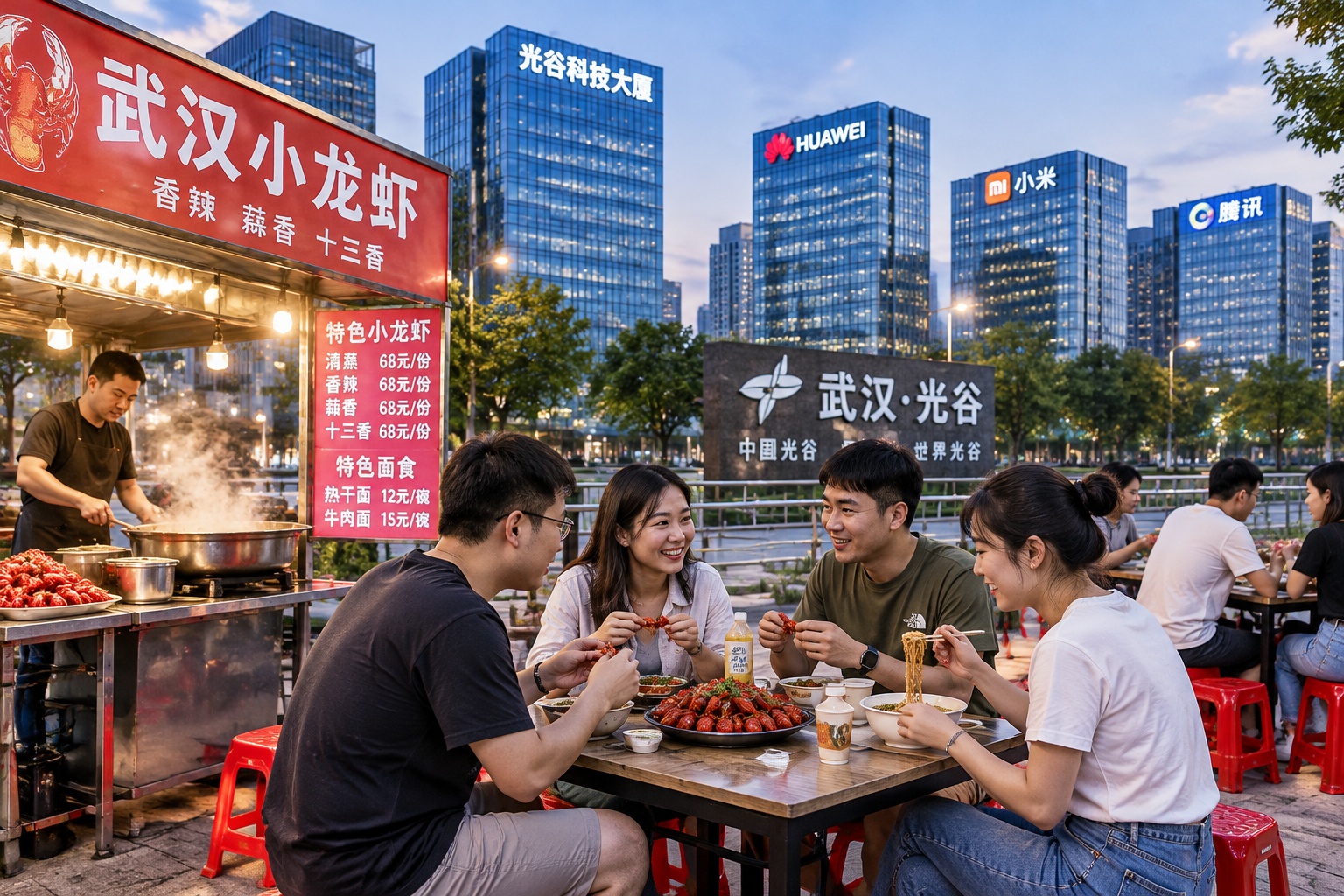
A 26-year-old founder I met had just pitched her drone inspection service to a local energy company. She held two patents, and her biggest problem wasn’t finding investors. It was finding a reliable web developer to update her cloud platform. That kind of challenge is refreshingly concrete. It shows how close the economy is to the ground.
Why People Stay Now
For decades, Wuhan trained talent and then lost it. Cities like Beijing and Shenzhen offered higher salaries, bigger brands, and faster career tracks. Wuhan started fighting back around 2017 with a citywide campaign titled “Million College Students Stay in Wuhan.” The program offered subsidized rental housing, free entrepreneurship training, and simplified paperwork. It helped, but the real game-changer is something more basic: the cost of living.
An apartment in Wuhan can cost a third of what you’d pay in Beijing, in a city that is still huge and busy. Fresh graduates can share a decent flat without spending most of their salary. Startups can bootstrap longer because money lasts further. This changes how people make decisions. A founder told me the difference between starting a company in Shenzhen and Wuhan: “In Shenzhen, you’re always running after the next round. In Wuhan, I can spend time designing the product properly. The market is still global.”
This new stability has started to reverse the brain drain. Hundreds of thousands of graduates have chosen to stay or come back since the program began. Not all will become founders. But their presence strengthens the idea that Wuhan is not a place you leave to get anywhere.
The Knowledge Economy Lives in the Streets
Official reports measure the knowledge economy in R&D spending and patent counts. But you can also see it in the details of ordinary life. The fruit seller near my apartment uses a QR code for payments, and his daughter is studying machine learning at a local university. The barber plays tech podcasts between customers. A small bookstore that sells engineering textbooks started hosting free robotics lectures for high school students last year.
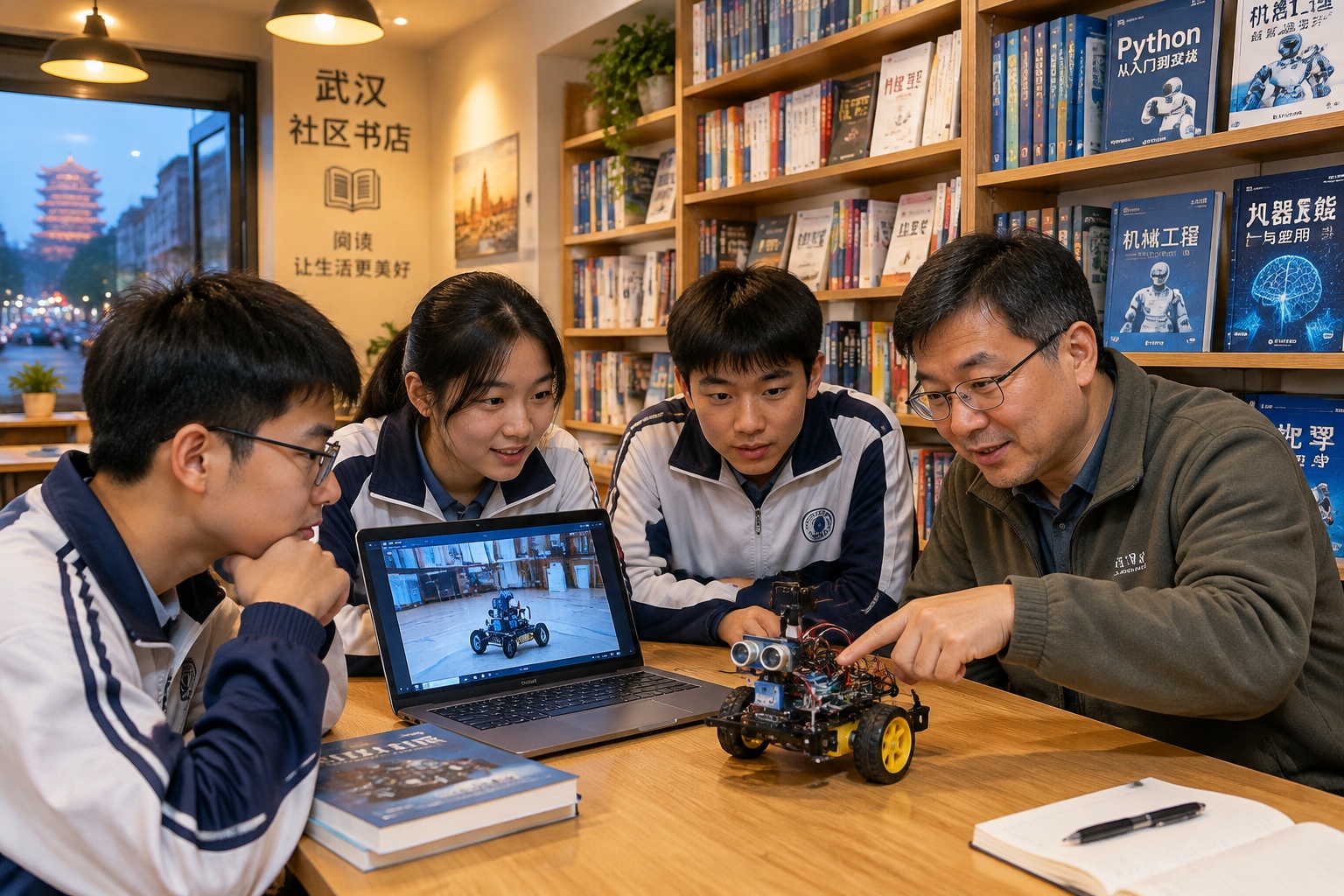
That may seem disconnected from GDP numbers, but it’s exactly how knowledge economies take root. When high-technology industries become visible to everyone, curiosity becomes normal. Children see what’s possible. Families celebrate a son or daughter’s robotics trophy not as a hobby, but as a future. That cultural shift is the foundation everything else builds on.
Back at the coffee shop, the PhD student closed her laptop. She was going to meet a friend who had dropped out of university to launch a drone company. “We have different paths,” she told me, “but we both want to build something real.” That, I think, is the best way to understand Wuhan’s knowledge economy. It isn’t a plan drawn in a government office. It’s the repeated choice of people like her to stay, to build, and to turn an old industrial city into a workshop for the future.
Start the discussion at forum.chinacomes.com