
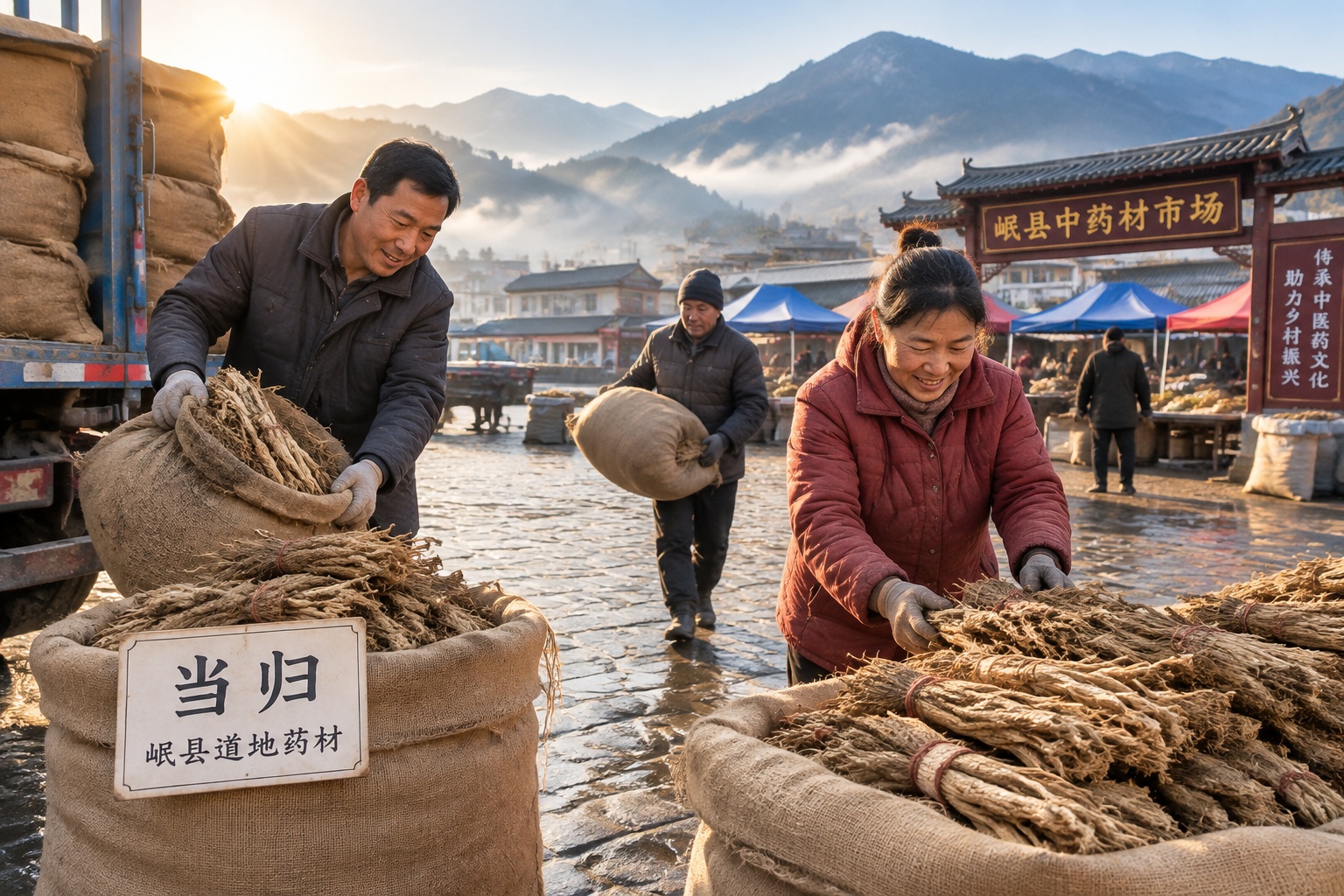

Morning in the Herb Capital
At 6 a.m., the main street of Minxian, a county in Gansu province, is already crowded. Three-wheeled tractors carrying burlap sacks rumble through the cool morning air. Farmers jump off and loosen the ties. A musty, earthy scent spreads—the unmistakable smell of freshly dug angelica root.
Minxian calls itself “the home of Chinese angelica.” The county sits 2,400 meters above sea level on the western edge of the Loess Plateau. Around it, fields line the hillsides, where many of China’s most important medicinal herbs are grown. Gansu is the country’s largest producer of angelica and a major source of astragalus, two staples of traditional Chinese medicine (TCM). But how does a root go from farmer to pharmacy shelf? We followed the path.
Two Herbs, Two Personalities
For readers new to TCM, it helps to know these two. Angelica, known as danggui in Chinese, is called the “female ginseng” because it has been used for over two thousand years to nourish the blood, ease menstrual pain, and support skin health. Astragalus, or huangqi, is a yellow, pencil-thick root that strengthens qi, or vital energy. It is commonly added to soups to fight fatigue and improve immunity. In a Chinese hospital, the two are often combined.
Both are “daodi” (authentic) herbs, meaning they are most effective when grown in a specific region. For danggui and huangqi, that region is Gansu.
Why Gansu? The Geography of Good Roots
The high altitude, clean air, and sharp difference between day and night temperatures create a kind of natural stress test for plants. “Cold nights slow down growth,” says Zhang Wei, 52, a farmer in a village near Minxian. “The root gets more time to pack in aromatic oils and active compounds.”
The soil matters too. Danggui prefers sandy loam that drains quickly; huangqi needs deep, dry earth. Both grow best on hills that have never been heavily farmed. “We move our fields every three years,” Zhang says. “If you plant the same herb in the same place year after year, you get diseases. The roots rot.”
Harvesting: A Dance of Fingers and Wood
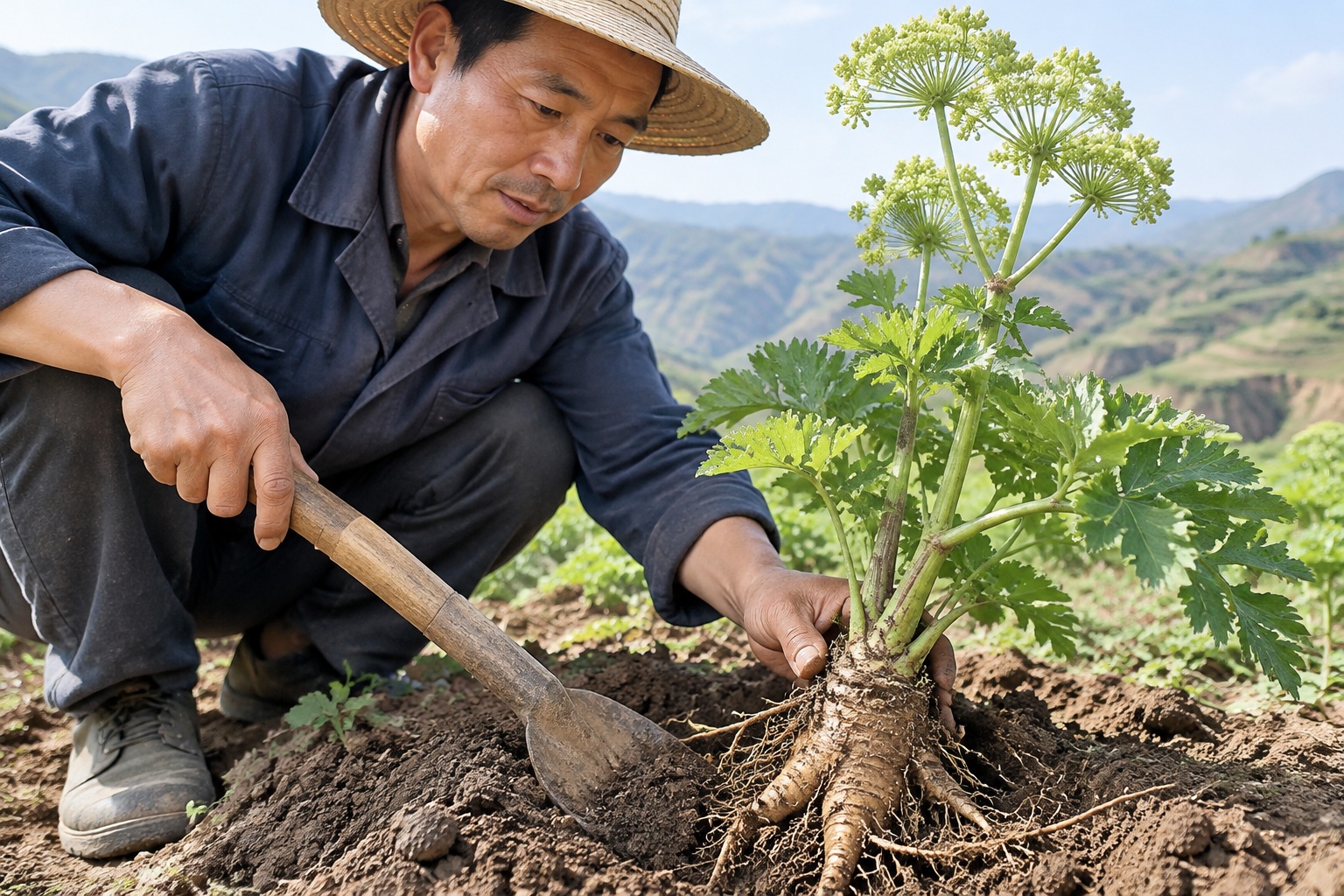
In late autumn, Zhang and his wife walk through the yellowing leaves of the angelica plants. They carry wooden shovels, short-handled and narrow. “A metal blade can cut the root easily,” Zhang explains. “The root is brittle. One cut and it loses its grade.”
He kneels, digs around the base of the plant, and gently lifts a cluster of branching roots. It looks like a gnarled brown hand. “This one is about three years old,” he says, brushing off the soil. “It will dry to about half its weight.”
The work is slow, done by hand across thousands of small plots. In regions where machinery has appeared, it is only used for plowing, never for lifting the roots.
The Drying Process: Patience Is Everything
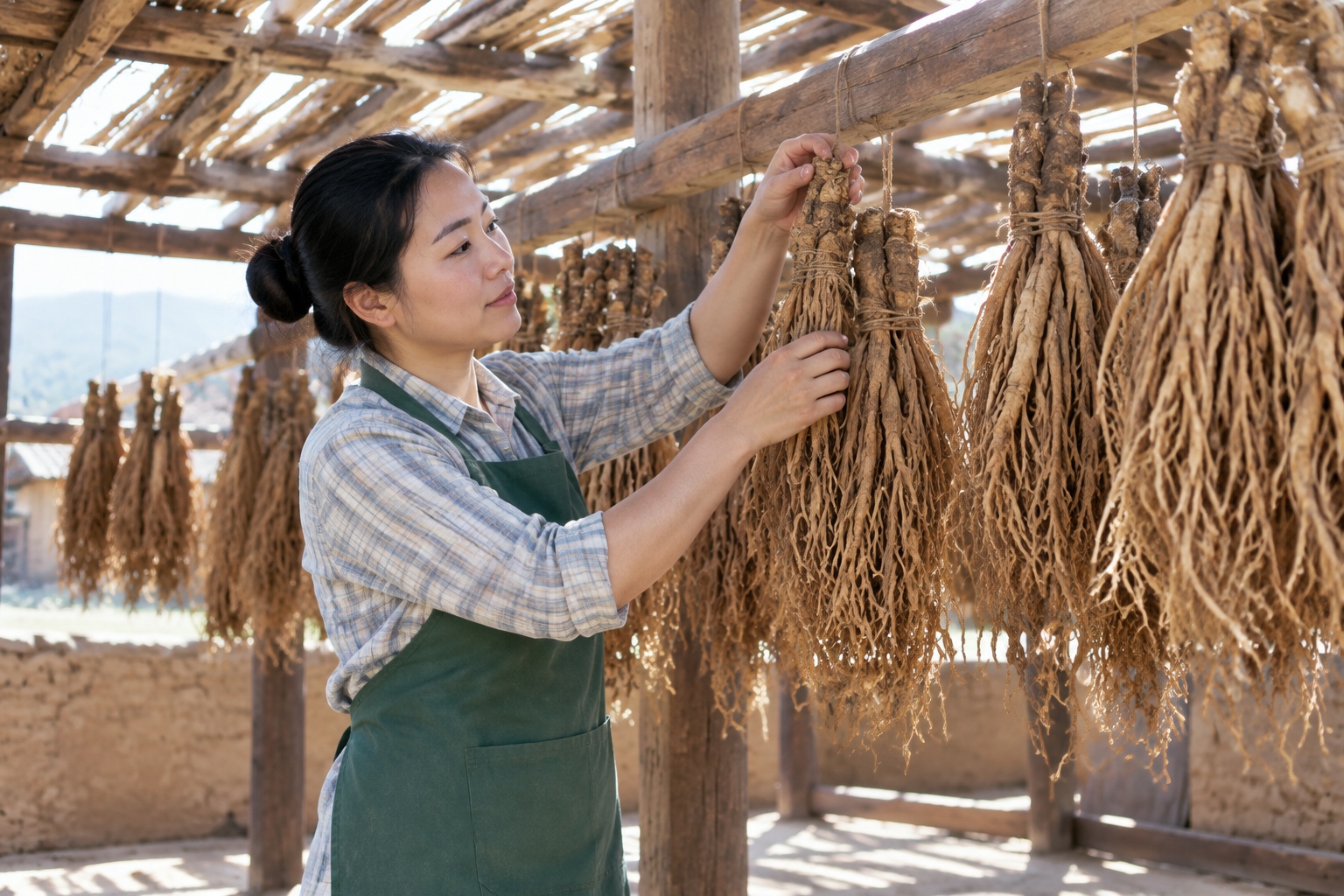
Harvest is only the beginning. The roots must be tied in bundles and hung under shaded roofs for three to four weeks. The drying must be gradual. “If you sun-dry them directly, the skin hardens and the inner flesh turns dark,” says Li Qunying, a neighbor of Zhang. “You need slow, steady airflow.”
The result is a hard, aromatic root that keeps for years. After drying, danggui is sorted by thickness and color, then packed into clean gunny sacks. Huangqi is often cut into thin slices before sale, revealing a bright yellow-and-white core.
A Morning at the Minxian Herb Market
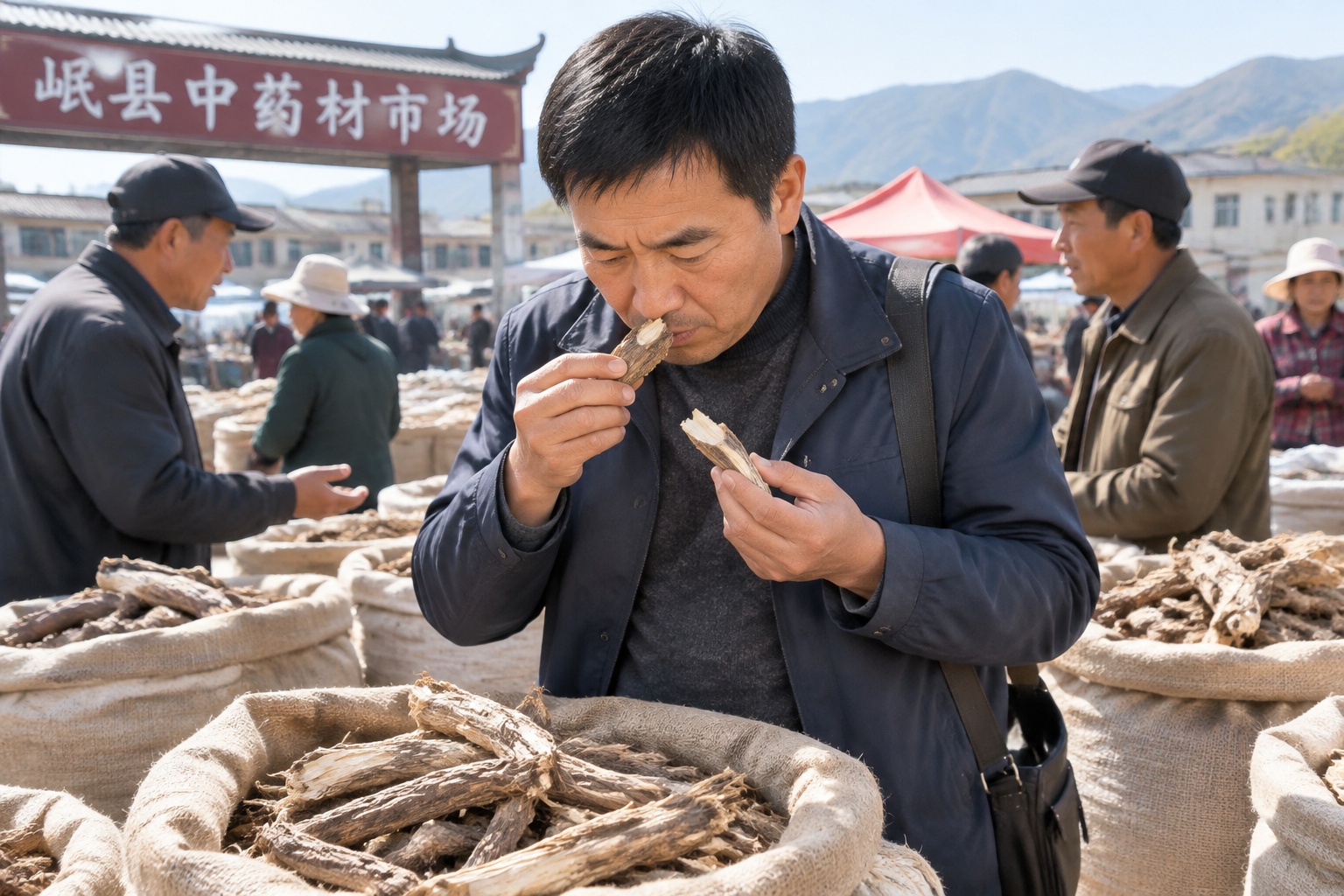
By 8 a.m., the market is in full swing. The unmarked gate opens onto a large courtyard ringed by three-story buildings. Sacks are spread across the pavement like a patchwork quilt. Buyers—many working for pharmaceutical firms or wholesalers—move through, stopping to pick up samples.
Wang Yong, a middleman from Lanzhou, picks a danggui root and breaks it in half. He sniffs the interior, licks it, and checks the color of the fracture. “Good ones are brown outside, yellowish inside, and smell like celery mixed with something sweet,” he says. He then uses a portable moisture meter. “Under 14% moisture, otherwise it will rot.”
Deals are struck with handshakes and phone numbers. Payment is often made through WeChat or Alipay moments later. “When I started in the 1990s, we used cash and banknotes,” Wang says. “Now it’s just a QR scan.”
Prices fluctuate daily. This year, a kilo of high-grade danggui sells for about 80 yuan ($11), a significant jump from last year. But farmers don’t always profit. “Seed, fertilizer, and labor costs have gone up,” Zhang Wei says. “And if it rains at the wrong time, the yield drops.”
From Sacks to Slivers: Processing and Quality Control
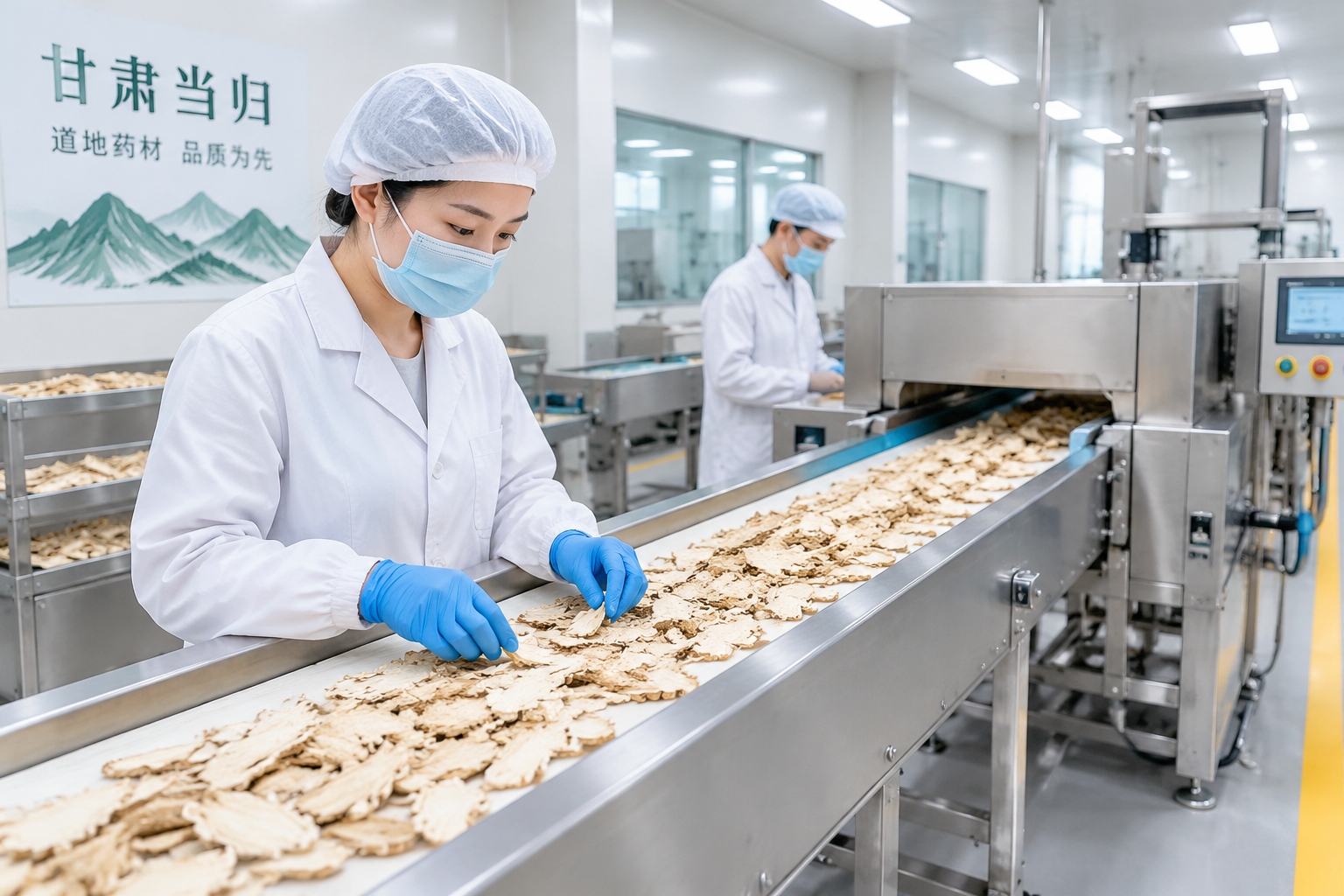
A few hours away, in Longxi county, a processing plant that supplies a nationwide chain of TCM pharmacies takes in several tons of dried herbs daily. The dusty sacks are weighed and sampled by a lab technician.
Inside the plant, danggui roots are washed in high-pressure water, partially dried, and then sliced by automated blades into uniform pieces. Workers in white clothing and masks check the slices on a conveyor belt. Larger, thicker slices are packed as topgrade; broken or thin slices go into lowerpriced bags for soup mixes.
For huangqi, the process is similar but includes an extra step: rolling and pressing to form cylindrical rods that are easier to store. The plant also uses sulfur smoking, an old method to brighten the color and repel insects, but now carefully controlled to stay within safety limits.
“The market demands both the traditional secret technique and the modern standard,” says plant manager Wang Feng. “We cannot skip the lab test.” The facility has a quality-control lab where samples are screened for pesticide residues, heavy metals, and microbes. Herbs that fail are rejected or re-processed.
The Final Journey to the Pharmacy
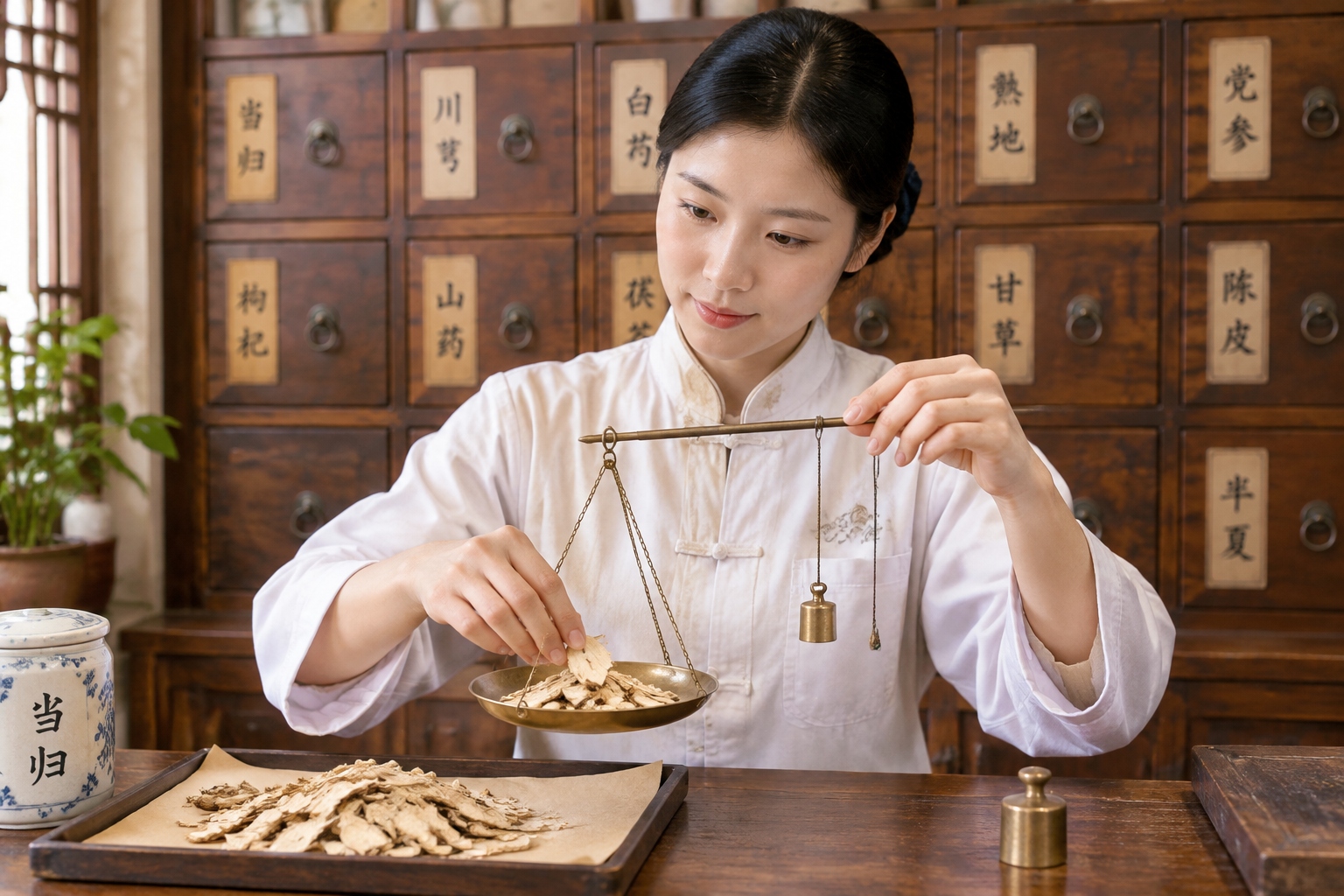
After packaging, most processed herbs are dispatched to distributors across China. A pack of danggui slices might travel by truck to a TCM hospital in Shanghai, then be weighed and wrapped by a pharmacist in a characteristic square paper packet.
In Shanghai, pharmacist Lin Tao explains how she uses these herbs daily. “A typical prescription for postpartum weakness might include danggui and huangqi together,” she says. “Danggui nourishes the blood; huangqi strengthens qi. Together they build the foundation for recovery.”
Outside China, the market is growing too. In 2022, China exported over $1 billion in traditional herbal materials, with Gansu among the leading provinces. Herbs from Gansu are sold in Asian supermarkets, European health stores, and American online shops. However, overseas regulations vary. The main obstacles are not demand but standardization and traceability—proving that the root is exactly what it claims to be.
More Than a Commodity
As the sun climbs higher in Minxian, the market begins to empty. Zhang Wei’s truck is lighter now, and his phone shows a series of digital payment notifications. The work isn’t done, but for a moment he stares at the empty sacks.
“This plant has been in our family for three generations,” he says. “It’s not just a crop. It’s a part of us.”
The next time you see a bottle of herbal supplement or a tea blend with danggui and huangqi, think of the wooden shovels, the shaded drying sheds, the price shouts in the Minxian morning. That’s the story of Gansu—an old story, still being written.
Start the discussion at forum.chinacomes.com