

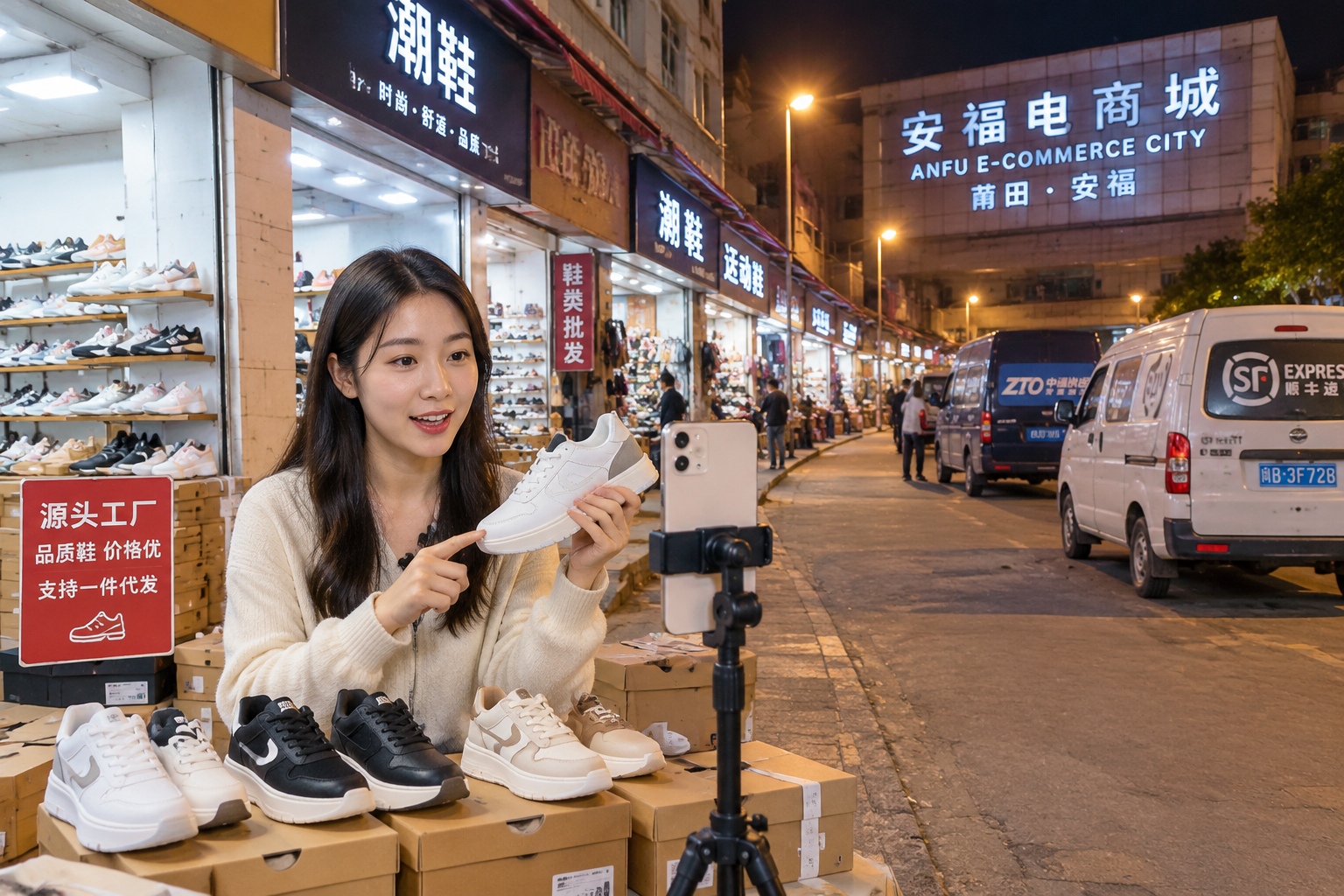
2 A.M. at Anfu E-Commerce City
It’s just past 2 a.m. in Putian, a city of about 3.2 million in Fujian province, and the lights are still on inside Anfu E-Commerce City — a sprawling warren of shoe stalls, courier vans, and cheap noodle shops that never quite closes. A 27-year-old named Chen Hao is hunched over a phone on a tripod, holding up a pair of white sneakers with a chunky sole.
“These are ours,” he says to the camera, in Mandarin, to maybe 200 live viewers. “Not a copy. Our logo’s on the tongue. See?”
Five years ago, Chen was shipping fake Yeezys out of a rented room two floors down. The shoes looked almost identical to the real thing, cost a tenth of the price, and moved through WeChat groups, Xiaohongshu posts, and freight forwarders who knew exactly which customs offices to avoid. He was good at it. He also barely slept.
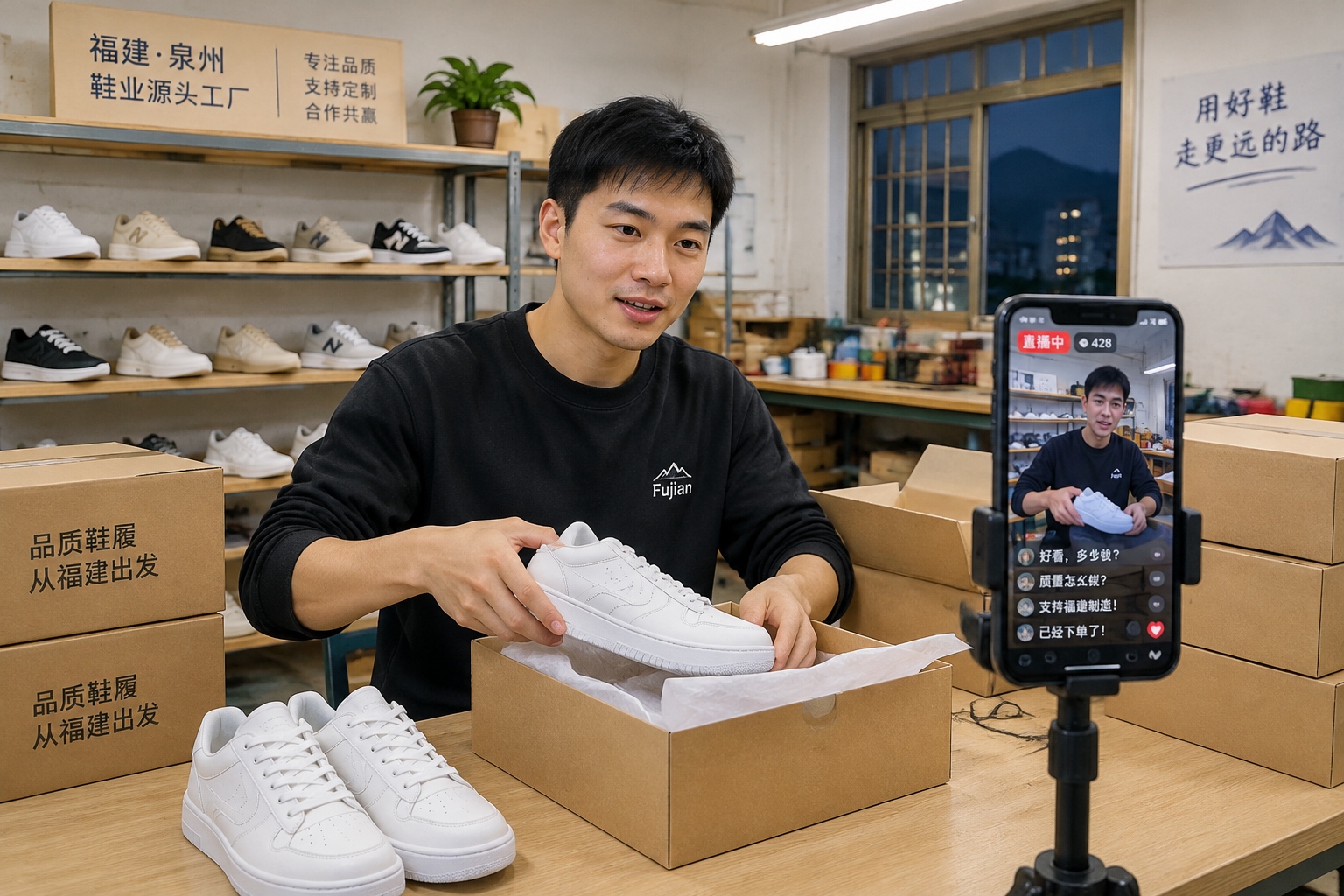
Now he’s trying something harder. He has a brand name, a trademark certificate, a small factory partner, and roughly 900 pairs in stock that he designed himself. The question that keeps him up at night is the same one a lot of people in Putian are asking: can a city famous for fakes actually become a place where real sneaker brands are born?
The honest answer is: maybe. And the honest version of that maybe is a lot more interesting than either the cheerleaders or the cynics admit.
How Putian Became a Shoe City
Putian’s shoe story didn’t start with counterfeits. It started with contract manufacturing.
In the 1980s and 1990s, Taiwanese and Hong Kong shoe companies moved production to Fujian to take advantage of cheaper labor and coastal shipping. Putian — sitting between Fuzhou and Quanzhou, with a port nearby and a labor pool that learned fast — became a natural hub. By the 2000s, factories in the area were making shoes for Nike, Adidas, Puma, and dozens of other international labels.
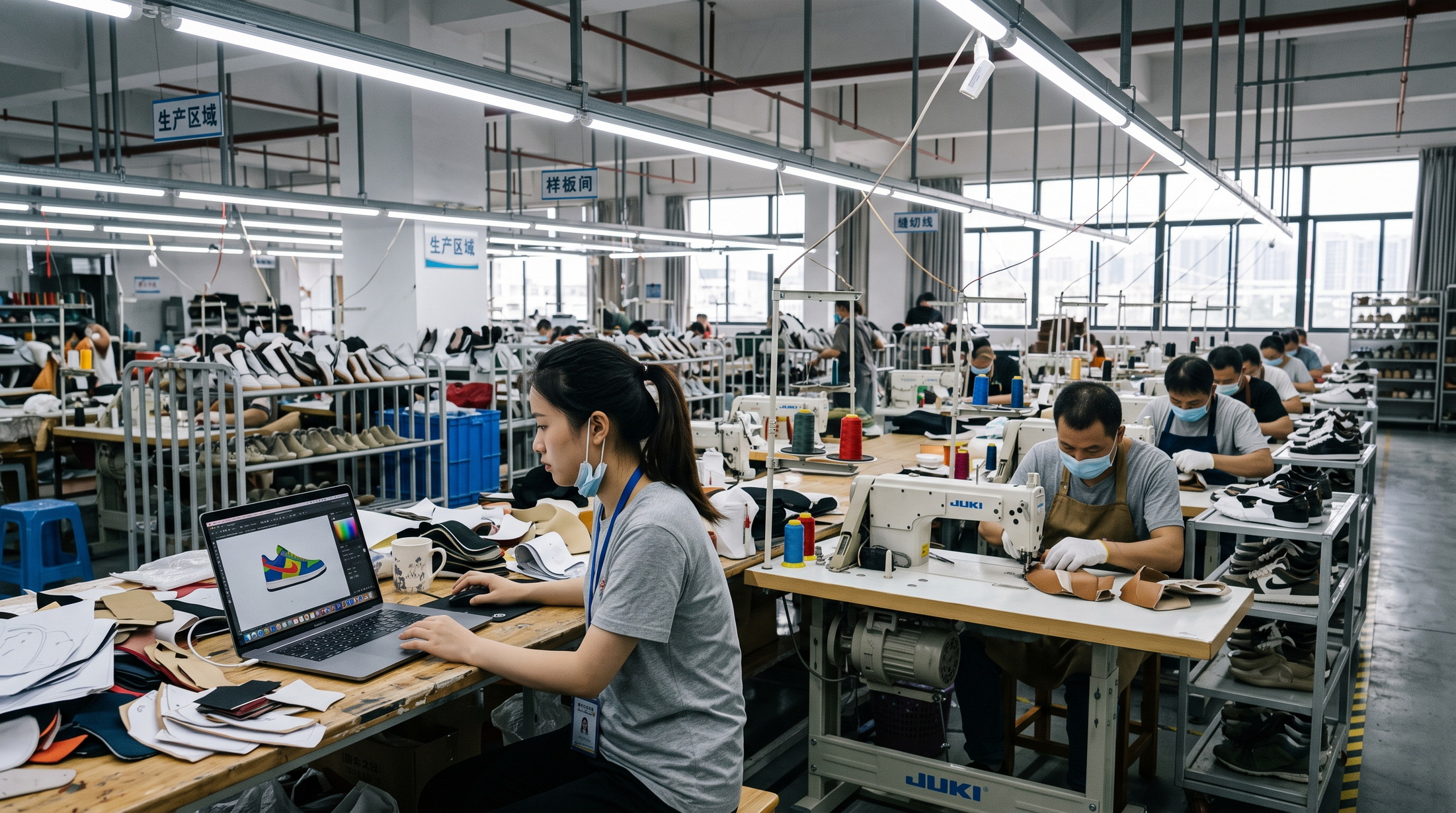
That work built something valuable: a complete supply chain. Sole makers, leather tanneries, foam cutters, stitching workshops, mold makers, packaging suppliers — all within a 30-minute drive of each other. Workers learned to read a tech pack. Factory managers learned to hit deadlines. The city learned how to make a lot of shoes, quickly, at almost any quality level a buyer was willing to pay for.
What it didn’t build was a brand.
The ‘Counterfeit Capital’ Reputation
Here’s the uncomfortable part. The same supply chain that made real Nikes also made fake ones. A worker at a contract factory could go home and, with a few friends, reproduce the same shoe in a small workshop. The molds were often the same. The materials were close. The margins were absurd.
By the 2010s, Putian had a reputation overseas that locals both resented and profited from. Bootleg sneakers moved through micro-import networks — WeChat sellers, Telegram groups, DHgate listings, fake receipts, and shipping labels that said “gift.” For a lot of families in Putian, this was the household income. For the city’s name, it was a problem.
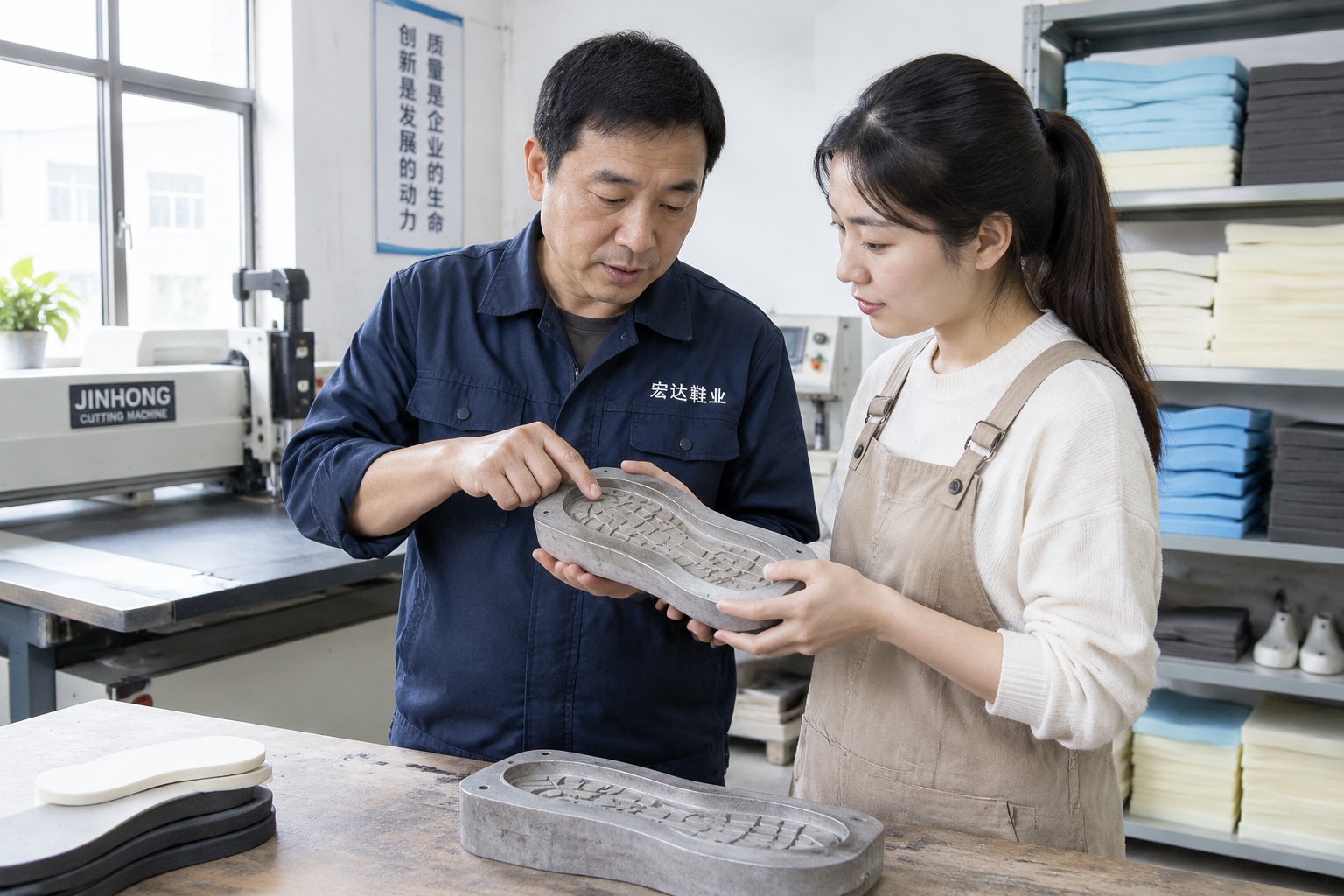
“We knew what people called us,” a factory owner in his 50s told me, standing next to a machine that cuts sole foam. He didn’t want his name used. “But you have to understand — a lot of us were just trying to eat.”
This is the part that gets flattened in Western coverage. The counterfeit trade wasn’t a cartoon villain. It was a livelihood, a skill network, and a symptom of a manufacturing region that had almost everything except its own name on the box.
The Squeeze That Changed Things
Several things hit Putian’s counterfeit economy at once.
Chinese authorities stepped up raids and prosecutions, especially after 2015. Alibaba and later platforms like Douyin and Pinduoduo cracked down on listings and livestreams that used brand names without authorization. Overseas customs got better at spotting the telltale packaging. And the economics shifted: labor costs rose, freight costs spiked during COVID, and buyers in Europe and North America became more cautious about anything that might get seized.
At the same time, a generational shift was happening. Younger workers in Putian grew up with smartphones, Taobao, and Instagram. Many of them didn’t want to spend their 20s faking someone else’s logo. They wanted to see their own name on a shoe.
That’s where the brand incubators come in.
What a Brand Incubator Actually Looks Like
The term sounds bureaucratic. In practice, it’s a mix of shared factory space, design help, and someone who knows how to fill out a trademark form.
One of the better-known efforts is a government-backed program sometimes translated as “Putian Good Shoes,” which tries to certify local factories that meet quality and originality standards. There are also private incubators run by former e-commerce sellers, design studios that rent out pattern makers by the hour, and small “shared factories” where a brand can produce 50 or 100 pairs without committing to a 5,000-pair minimum order.
Services typically include:
- Design and pattern-making support
- Small-batch production (100–500 pairs)
- Quality inspection and material sourcing
- Trademark registration and compliance help
- Livestream studios and short-video coaching
- Cross-border logistics and platform onboarding
None of this is glamorous. Most of it is logistics. But it lowers the barrier for someone like Chen Hao, who can’t afford a factory but can afford to rent time in one.
The People Trying to Make the Leap
Walk through the incubator floors and you meet a specific kind of person: late 20s, phone always in hand, half engineer and half content creator.
There’s Lin Jie, a 31-year-old former pattern maker who now runs a small studio making minimalist leather sneakers. She spent two years learning to sketch on an iPad and another year convincing a factory to take her order seriously. “The first factory laughed at me,” she said. “They said, ‘Come back when you want 10,000 pairs.’ I came back with 200. They took it because I paid upfront.”
There’s a 24-year-old livestreamer named Xiao Yu, who sells other people’s brands but is quietly building her own line of slip-ons. Her audience is mostly in Southeast Asia and the Middle East. She taught herself English through TikTok comments.
From Sketch to Repeat Purchase
Here’s how a shoe actually becomes a brand in Putian right now:
- Idea and sketch. Usually starts with a mood board — a mix of Japanese workwear, Korean street style, and whatever sold well on Pinduoduo last month.
- Pattern and prototype. A pattern maker turns the sketch into a 3D model. A sample pair is made in a week or two.
- Mold and materials. Soles need molds, which cost money. Brands often reuse existing molds for the first run to save cash.
- Small-batch production. 100 to 500 pairs. Enough to test, not enough to sink you.
- Listing and livestream. The shoe goes up on Douyin, Taobao, or a cross-border platform. Chen Hao’s rule: “If we don’t sell 30 pairs in the first livestream, we redesign.”
- Feedback and iteration. Complaints about sizing, comfort, or color come back fast. The next batch changes.
- Repeat buyers. This is the real test. A brand with 20% repeat buyers is surviving. A brand with 5% is a hobby.
The whole loop can take six weeks. In the counterfeit days, it took three.
What Still Doesn’t Work
Not every story here ends well. A lot of them don’t.
Copyright disputes still happen, sometimes between Chinese brands themselves. Price wars on Pinduoduo and Temu crush margins. Platform algorithms decide who gets seen, and small brands have no leverage. Getting an international trademark, a trademark, and a distributor takes years. And overseas consumers still don’t associate Putian with quality — they associate it with knockoffs.
“We’re asking people to forget what they know about us,” Lin Jie said. “That’s not a marketing problem. That’s a reputation problem, and reputations move slowly.”
Some former counterfeiters have simply gone back. The money was faster. The risk was higher, but the learning curve was shorter. The transition isn’t a straight line; it’s a lot of people trying and some of them quitting.
What It Means for Ordinary People and Overseas Buyers
For workers in Putian, the shift changes the skill mix. Sewing a shoe is one thing; designing, marketing, and managing a brand is another. Wages for designers and livestream operators are rising. Wages for basic assembly work are flat. Some people are moving up. Others are being left behind.
For overseas consumers, the practical effect is already visible. A growing number of sneakers sold on Amazon, TikTok Shop, and independent online stores are made in Putian by factories that used to make fakes. Some are decent. Some are not. The price is often lower than a Western brand, and the quality is unpredictable — which is exactly what you’d expect from an industry learning to stand on its own.
The bigger question is whether a Chinese city can build a global sneaker brand the way Korean cities built cosmetics brands or Japanese cities built electronics brands. That’s not guaranteed. It requires patience, legal protection, and consumers willing to try something new.
Back to the Night Shift
At 3 a.m., Chen Hao is still in the livestream room, but he’s turned the camera off. He’s packing orders now — 14 pairs tonight. Not a lot. But they’re his.
Outside, the courier vans are lining up. Somewhere in the building above him, someone is still cutting foam for shoes that will never carry a real logo. Somewhere in a factory across town, Lin Jie’s next batch is drying.
Putian’s next shoe might not be famous yet. It might not even be good. But for the first time in a long time, it has a chance to have its own name on the tongue.
Start the discussion at forum.chinacomes.com