
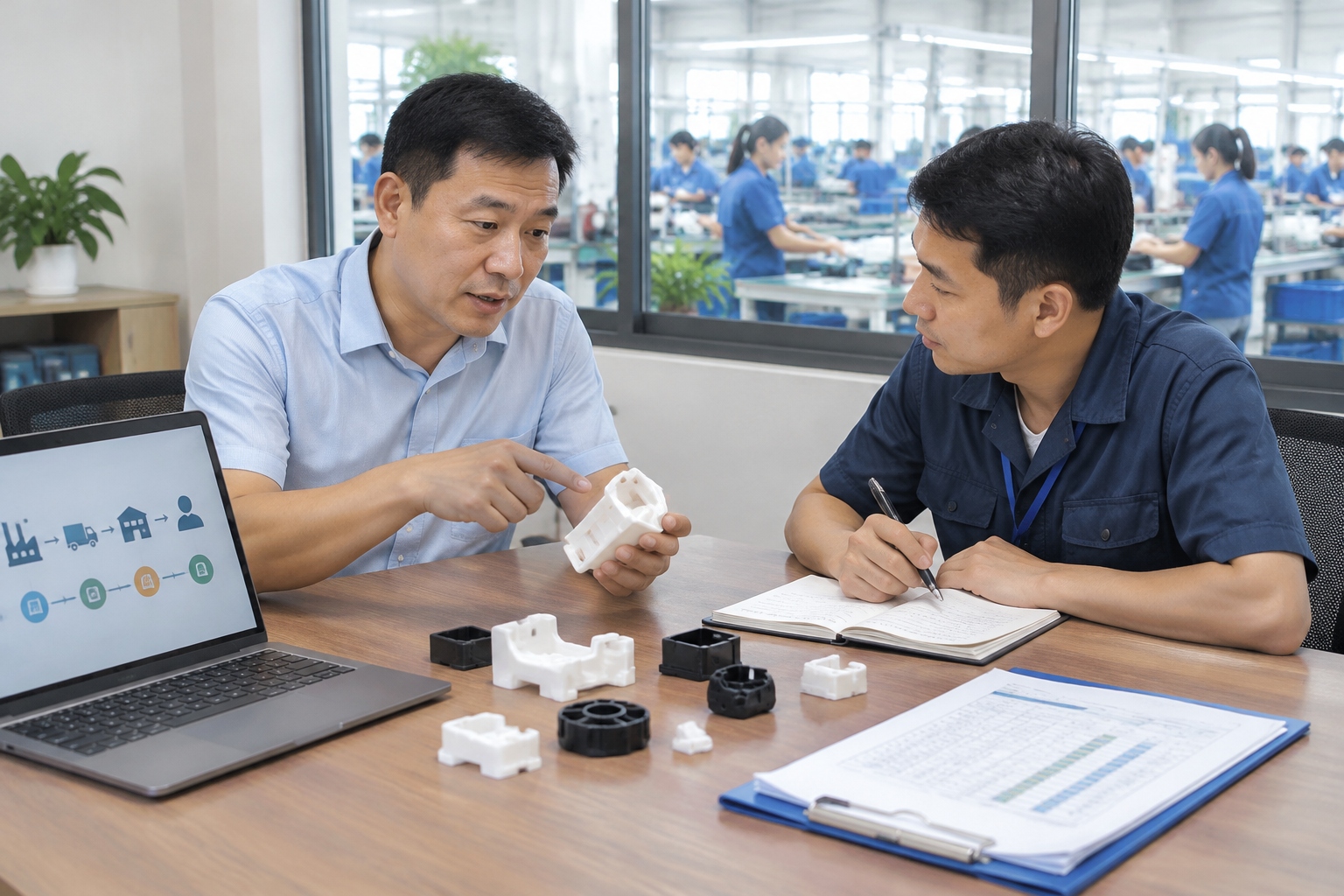

A late-night calculation in Dongguan
In Dongguan, a manufacturing city in southern China, a factory owner in his forties keeps two numbers on his phone. One is the quote he just sent to a European buyer. The other is the monthly rent for a small unit in Bac Ninh, Vietnam. His workshop makes plastic housings for home appliances. Ten years ago, an order of 20,000 pieces was normal. Now buyers split the same order among three suppliers and ask for a 5 percent cut every quarter. He employs 90 people. He is not a giant, and that is the point. The newest wave of Chinese “going global” is not led only by BYD or Shein. It is being tested by owners of small factories, trading companies, and brand teams with 20 to 300 employees.

Why “going global” is no longer only for giants
“Going global,” or chūhǎi in Chinese, literally means “heading out to sea.” For decades it described state-owned giants and consumer electronics brands. Today it has a more ordinary meaning: finding a second market because the first one has become brutally competitive. Domestic demand is softer in many consumer categories. Online platforms have trained buyers to compare prices in seconds. Factories that once ran one shift now run three days a week. At the same time, customers in Europe and the United States have been spreading orders across countries under “China plus one” sourcing strategies. When a buyer moves 30 percent of an order to Vietnam, the Chinese supplier has a choice: lose the account or follow it.
Overcapacity makes this sharper. China has deep, fast, and relatively cheap industrial clusters. That is a strength, but when too many workshops chase the same appliance-parts order, margins collapse. A small boss cannot wait for a macro recovery. He can rent a smaller unit abroad, keep the Dongguan “mother factory” for samples and high-mix work, and assemble closer to the customer.
What draws them to Vietnam, Indonesia, and beyond
Vietnam is often the first stop. It shares a land border with China, and a truck from Shenzhen or Dongguan can reach industrial parks in northern Vietnam in a couple of days. Places such as Bac Ninh, Hai Phong, and Dong Nai already have ports, industrial parks, and a growing pool of factory managers. Vietnam’s population is around 100 million, with a median age in the early thirties. For labor-intensive assembly, that matters. So do Vietnam’s trade agreements, which give exporters access to markets that are harder to reach from China directly.
Indonesia offers a different prize: scale. Its population is roughly 280 million, with a median age around 30. A Chinese maker of snacks, cosmetics, or affordable household goods can sell to a domestic market without immediately fighting for export orders. Thailand has a strong automotive and electronics base. Malaysia has mature semiconductor and electrical testing clusters. The appeal is not only lower wages. It is geography, young consumers, incentives in industrial parks, and the chance to be an early supplier in a market that is still building its middle class.
Wages are part of the story, but the gap is narrower than headlines suggest. Minimum wages in Vietnam are set by region and rise most years; actual factory pay is often higher. In Indonesia, minimum wages vary by province and city. A boss who moves only for cheap labor usually gets a surprise. A boss who moves to be near customers, reduce tariff exposure, and build a local sales team has a better chance.
The real edge: a supply chain brain, not just cheap hands
The Chinese small manufacturer’s advantage is not a secret machine. It is a way of thinking about production. A 100-person factory owner often knows how to source a mold, fix a jammed injection machine, read a quality report, and renegotiate with a supplier in the same afternoon. That knowledge travels well. In a new Vietnamese or Indonesian plant, he may still import hinges, chips, or special plastics from China. But he can design the line, train supervisors, and set a rhythm that local competitors have not yet built.
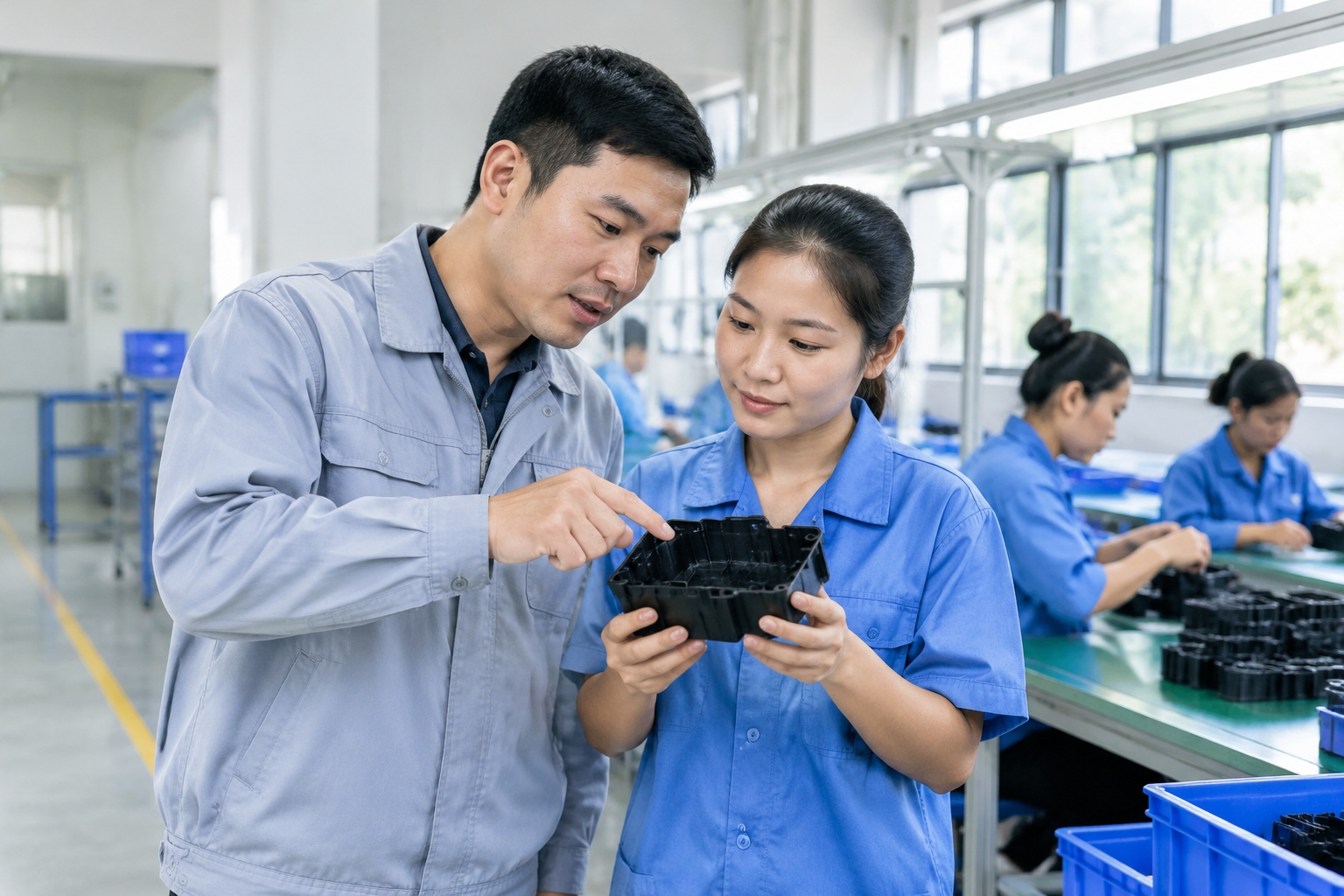
This is where the phrase “copying China” misses the point. Chinese firms are not recreating whole industrial clusters abroad overnight. They are plugging into local parks and using Chinese supply-chain management as a bridge. One common model: keep design, mold-making, and core components in China; do assembly, packaging, and last-mile customization in Southeast Asia. Another: partner with a local distributor who knows the permits and the customers, while the Chinese side handles product development and cost control. The smart ones localize quickly, because a factory that imports a large share of its parts and ships them thousands of miles is not really saving much.
The reality check: higher costs and unfamiliar rules
Southeast Asia is not a blank map with cheap land. Industrial park rents in the hottest parts of Vietnam have climbed. Skilled workers move between factories. Overtime rules and social insurance are not identical to China’s. In Indonesia, permits can involve local governments, and rules differ by province. Language is a daily tax: a Chinese manager who cannot read a local labor contract depends on a translator who may also be the HR officer, the fixer, and the person everyone trusts. That is too much power in one role.
Logistics can also bite. A component that arrives in two hours in Guangdong may take three days and a customs broker in another country. A Vietnamese factory may import a large share of its components from China, so the “Made in Vietnam” label does not mean the supply chain has left China. For small companies, the cash-flow shock is real. A big firm can absorb a six-month ramp-up. A 90-person workshop may not. Many owners test the water with a small assembly line, a local partner, or a trading office before committing to a full factory.
Trust, language, and the limits of copying the China playbook
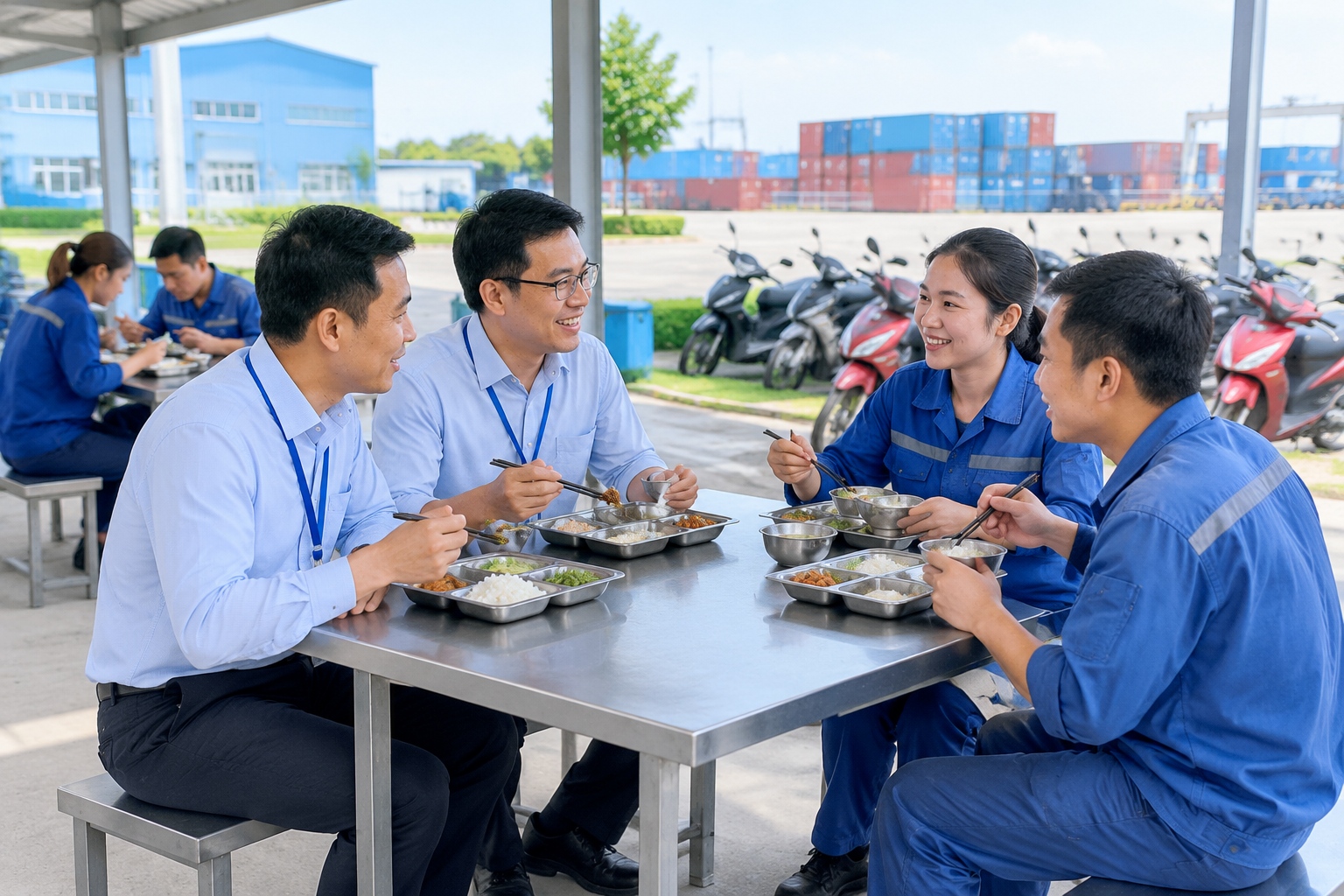
Cultural adaptation is not a soft issue. It decides whether the line runs on Monday. In Vietnam, Tet is not a minor holiday; it can empty a factory for a week or more. In Indonesia, Ramadan and Lebaran reshape production schedules and cash flow. Chinese bosses who expect workers to match the speed of a Shenzhen plant during a holiday week will fail. Those who plan around local calendars, pay overtime clearly, and train local line leaders tend to keep their teams.
Management style matters too. Some Chinese small bosses are used to direct, fast, hierarchical decisions. That can feel harsh in a workplace where local supervisors expect more discussion, or where religious practice and family obligations are part of the day. The successful ones give local managers real authority, not just translation duties. They hire HR early. They learn enough Vietnamese or Bahasa Indonesia to greet people and read a safety sign. None of this is glamorous. It is the difference between a factory that looks Chinese-owned and one that works.
If you come from Europe or North America, think Mittelstand in Poland
For readers in the West, the closest comparison is not a geopolitical takeover. It is more like a German family manufacturer opening a plant in Poland, or a small U.S. workshop moving final assembly to Mexico. Germany’s Mittelstand firms are its small and mid-sized manufacturing champions. The motives are familiar: cost, customers, tariffs, and speed. The difference is the density of the Chinese supplier network and the speed at which a small Chinese boss can mobilize it. A European Mittelstand firm might spend a year on a feasibility study. A Chinese SME may send two managers for a week, rent a unit, and start with ten workers. That speed is an advantage, and a risk.
Chinese local governments also encourage outward investment, sometimes with information sessions and trade delegations. But most small owners are not following a grand plan. They are following a purchase order, a customer email, or a competitor’s move. This is why the shift feels messy. Some will succeed. Some will lose money on a half-empty factory. Others will become de facto regional managers, shuttling between Guangzhou, Hanoi, and Jakarta.
What this means beyond China
The result is not “decoupling.” It is re-wiring. More Chinese managers are living in Southeast Asian industrial cities. More Chinese-language signs appear near factory gates. Local suppliers learn new quality standards. Southeast Asian workers get jobs, but also face the same pressure over overtime and productivity that Chinese workers know well. Western buyers get more diversified sourcing, yet the company behind the label may still be Chinese. The label changes before the supply chain does.
For Southeast Asia, the opportunity is to move beyond assembly. For Chinese small businesses, the test is whether they can become local employers rather than temporary guests. The ones that last will not be the ones with the loudest “going global” slogan. They will be the ones who understand that a factory is a community, not just a cost sheet.
Back to the two numbers
The Dongguan owner still has two numbers on his phone. He has not closed his Chinese workshop. He is adding a small assembly line in Vietnam and sending one trusted manager to learn the local rules. If the first order ships on time, he will move more. If not, he will try Indonesia. He is not chasing a geopolitical story. He is chasing a purchase order, and trying to keep 90 families employed along the way. That is less dramatic than the headlines, but it is the real shape of China’s small-business “going global” moment.
Start the discussion at forum.chinacomes.com