
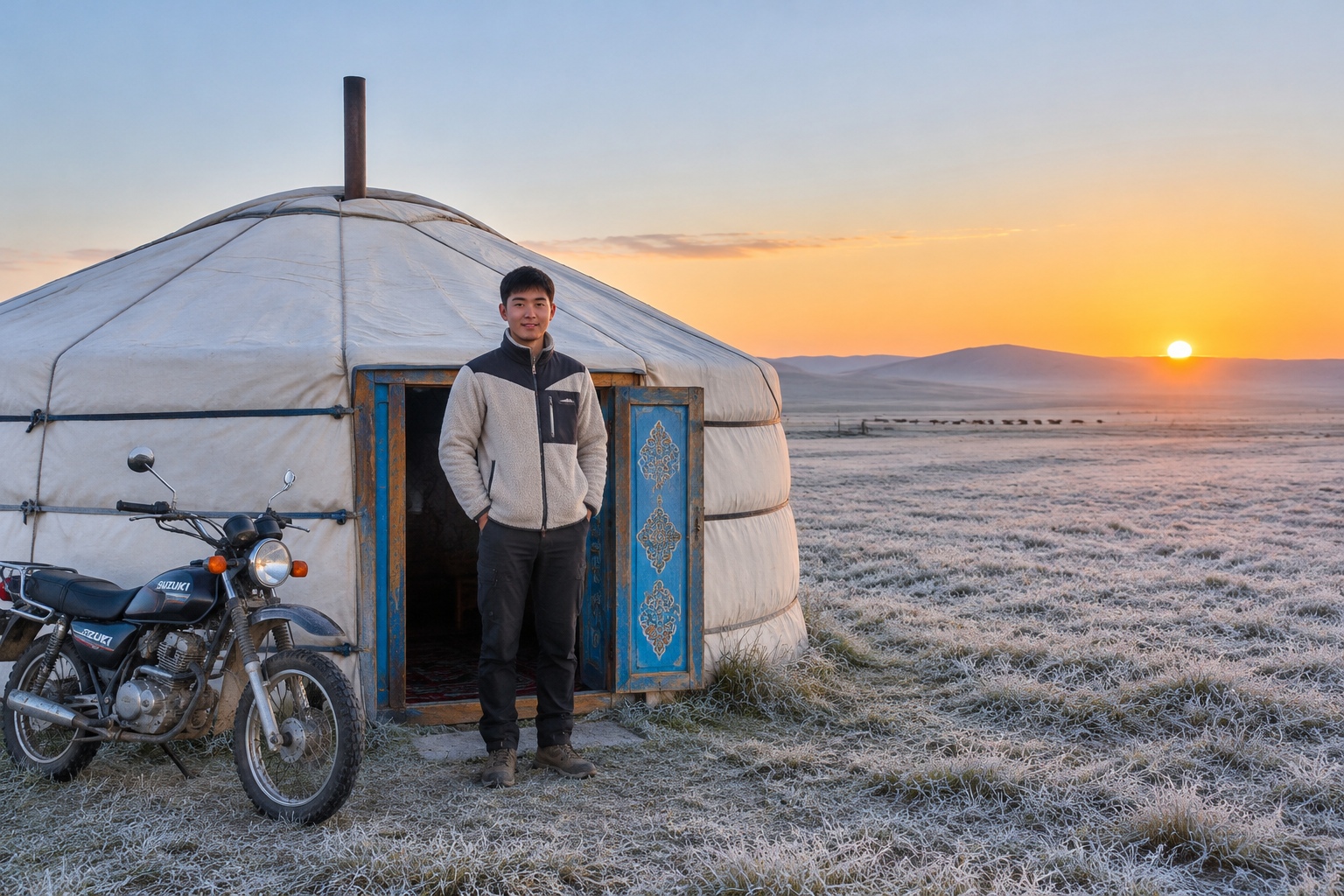

Morning: The First Light Over the Grassland
The alarm on Wang Lei’s phone buzzes at 5:30 a.m., but the sound is almost lost under the wind rattling the canvas of his Mongolian yurt. He unzips the thick sleeping bag, pulls on a fleece jacket, and steps outside into the freezing air. The grass is brittle with frost. To the east, the sun is just beginning to push a pale orange glow across the horizon. His father, Gal, is already by the sheep pen, his breath visible in the cold. The sheep bleat impatiently.
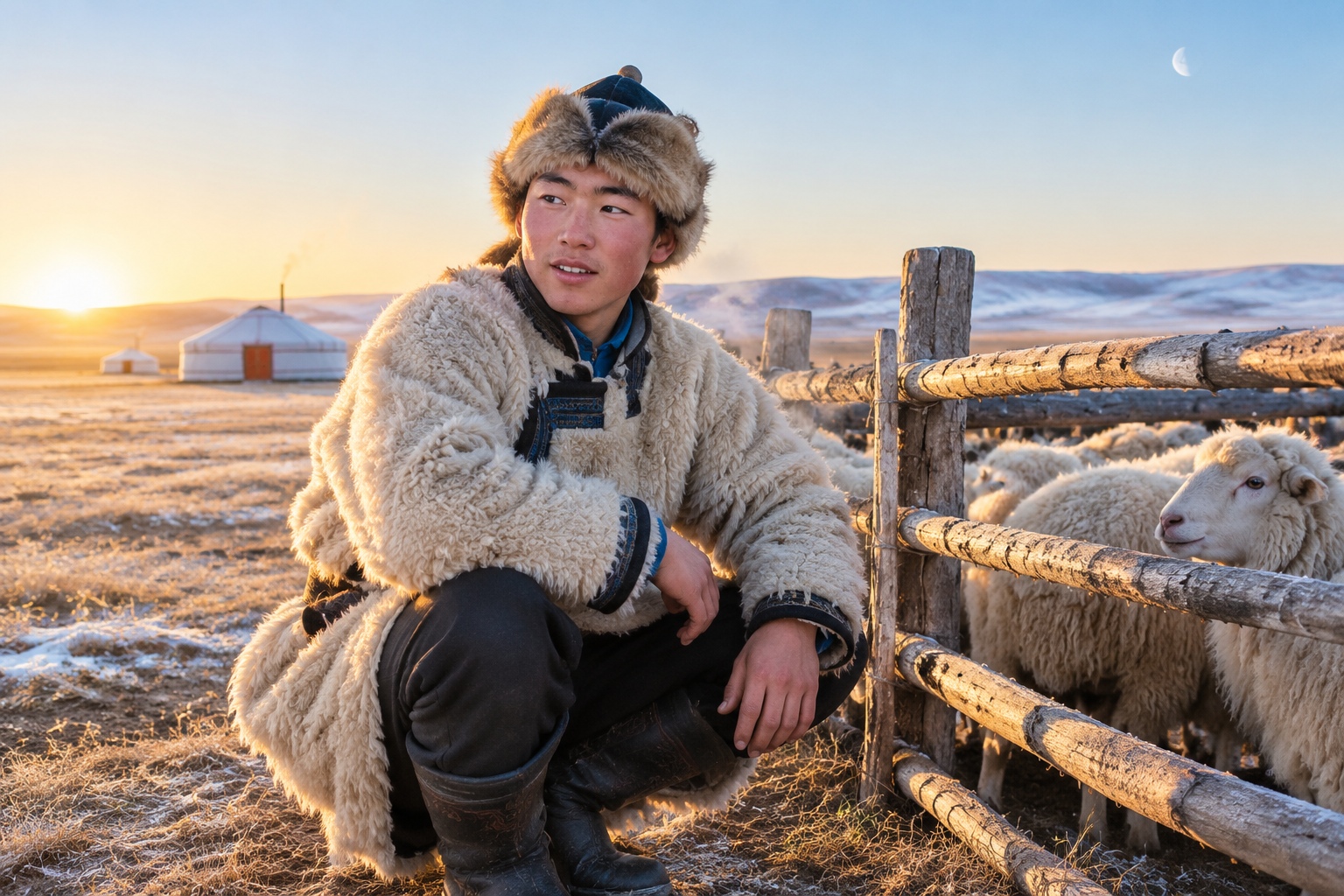
Wang Lei, 28, is a herder in the Xilingol League of Inner Mongolia, a region about the size of France but with only a fraction of the population. For generations, his family followed the old nomadic pattern: moving with the seasons, grazing sheep and cattle, living in a collapsible yurt. But the China of the 2020s has changed that rhythm. Today, Wang Lei’s life is a hybrid—part mobile, part rooted. The government has built clusters of brick houses in the grasslands, offering subsidies to families who settle in winter. Wang Lei’s family has one such house, but they also keep a yurt for summer pasturing. “We are neither fully nomadic nor fully settled,” he says, pouring a cup of salted milk tea. “We are both.”
Midday: The Motorcycle and the Flock
By 9 a.m., the sun has burned off the frost. Wang Lei mounts his motorcycle—a second-hand Lifan—and rides out to check the herd. A decade ago, his father would have used a horse. Now, the younger herders universally prefer motorcycles. They are faster, cheaper to maintain, and can carry more supplies. But the horse is not gone; Wang Lei has a small brown mare he uses for mustering sheep in rough terrain. “The horse knows the land better than the bike,” he says. “But the bike saves time.”
His flock of 300 sheep grazes on a fenced pasture. The government has divided the open grassland into individual family plots, a policy intended to prevent overgrazing and desertification. Each family has a quota. Wang Lei checks his phone for the weather forecast—a 3G signal, weak but enough. He adjusts the grazing plan accordingly. “My grandfather used to look at the clouds and the wind. I use an app. Same result, different tools.”
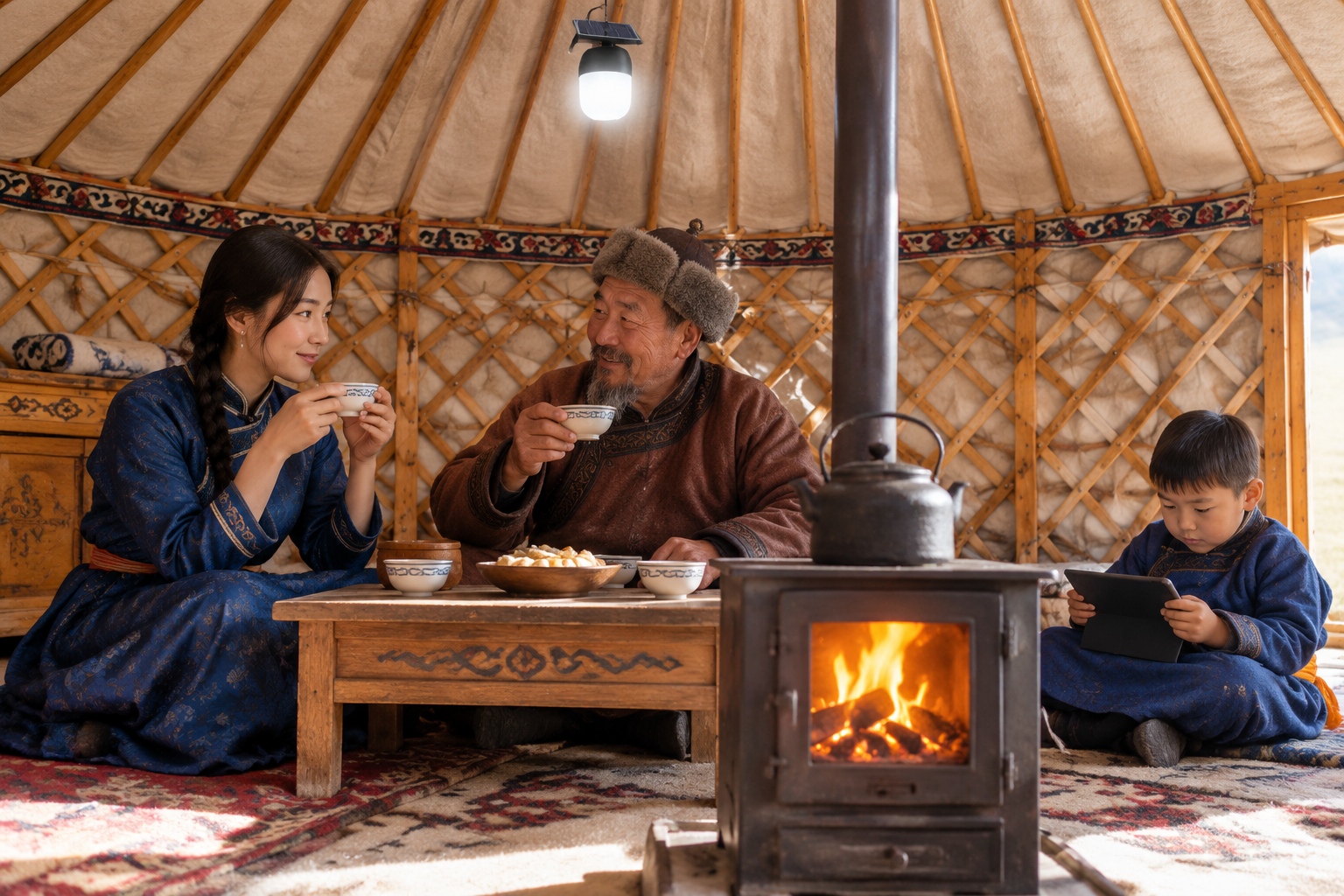
At noon, he rides back to the yurt for lunch. His mother, Lhamo, has prepared steamed buns filled with mutton and onions. She speaks little Mandarin, but her son translates. The family sits on felt rugs, the stove burning dried dung. A solar panel outside powers a small LED light and charges their three phones. The yurt feels warm, cramped, and alive. Wang Lei’s niece, 8-year-old Naran, watches cartoons on a tablet. She will go to a boarding school in town next year—a decision that haunts the family. “If she stays, she learns nothing. If she goes, she forgets the grassland,” Wang Lei says quietly.
Afternoon: The Town and the Supply Run
After lunch, Wang Lei drives his pickup truck 40 kilometers to the town of Sunite. The road is a single lane of asphalt, flanked by endless grassland. He passes a few other pickups, some carrying hay bales, others with families heading to market. The town has a clinic, a primary school, a police station, and a large supermarket selling everything from frozen dumplings to motorcycle oil. Wang Lei picks up 50 kg of feed supplement, a bag of cement for fixing the sheep pen, and a new SIM card for his phone. “The mobile signal is better in town. Sometimes I download videos for the evenings.”
Back in the yurt, he shows me a video he recorded last week: a drone shot of his herd moving across a valley. “I want to start a small online store—sell cashmere and wool directly to buyers in Shanghai or Beijing. We have good quality. But logistics is hard. And I don’t know how to do the marketing.” He laughs, a little embarrassed. The entrepreneurial spirit has reached the grassland, but it bumps against the limits of distance and education.
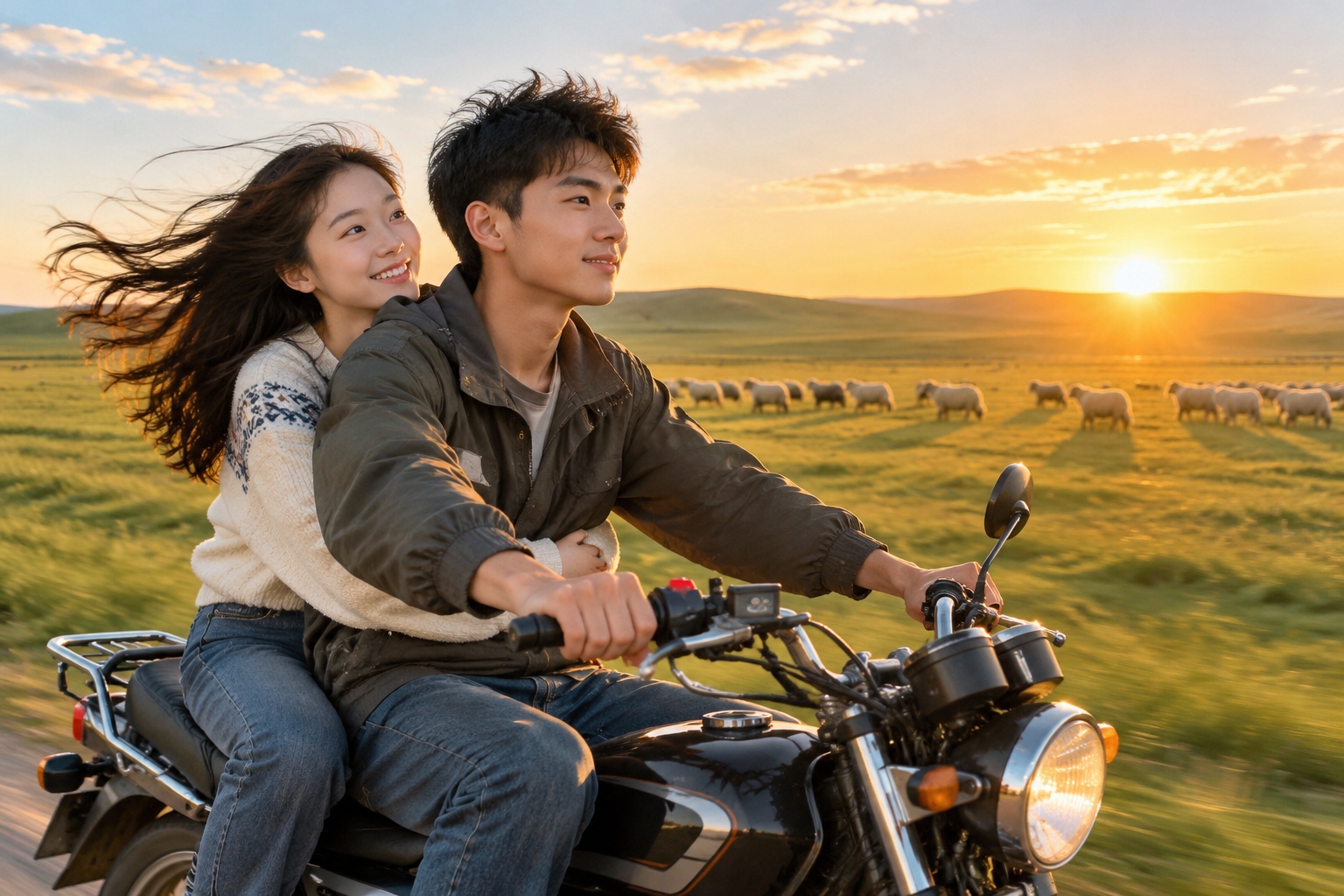
By 5 p.m., the sun is already low. Wang Lei must round up the sheep before dark. He starts the motorcycle, his niece Naran riding behind him, her small hands gripping his jacket. The image of the girl on the motorcycle, her hair streaming, her face lit by the golden light of the late afternoon, feels like a metaphor for the whole region: old and new, tradition and modernity, moving forward together on a machine that was never meant for the steppe but has somehow become part of it.
Evening: The Settled House
As night falls, Wang Lei drives the family to their winter house—a two-bedroom brick home with insulated walls, running water, and a coal-fired heater. The house is a few kilometers from the yurt, closer to the main road. Here, they will spend the coldest months. The house is small but comfortable: a TV, a sofa, a gas stove. The family eats dinner of lamb stew and noodles. Wang Lei’s father, Gal, still prefers to sit on the floor, but the younger generation uses the chairs. After dinner, Wang Lei checks his phone for news about the new subsidy policy for ecological restoration. The government pays herders to reduce their herds and restore degraded grassland. “It’s necessary,” he says. “But every sheep we sell is a piece of our history.”
Before sleep, he steps outside. The stars are brilliant, untouched by city lights. The wind carries the smell of grass and earth. He thinks about the future: will Naran come back to the grassland after school? Will the tradition of herding survive another generation? He doesn’t have the answer. But he knows that for now, his life is a quiet negotiation between the old songs of his ancestors and the new sounds of the modern world. The motorcycle engine, the phone notifications, the bleating of sheep, the wind—all of it, together, makes the sound of a real life in Inner Mongolia today.
Start the discussion at forum.chinacomes.com