
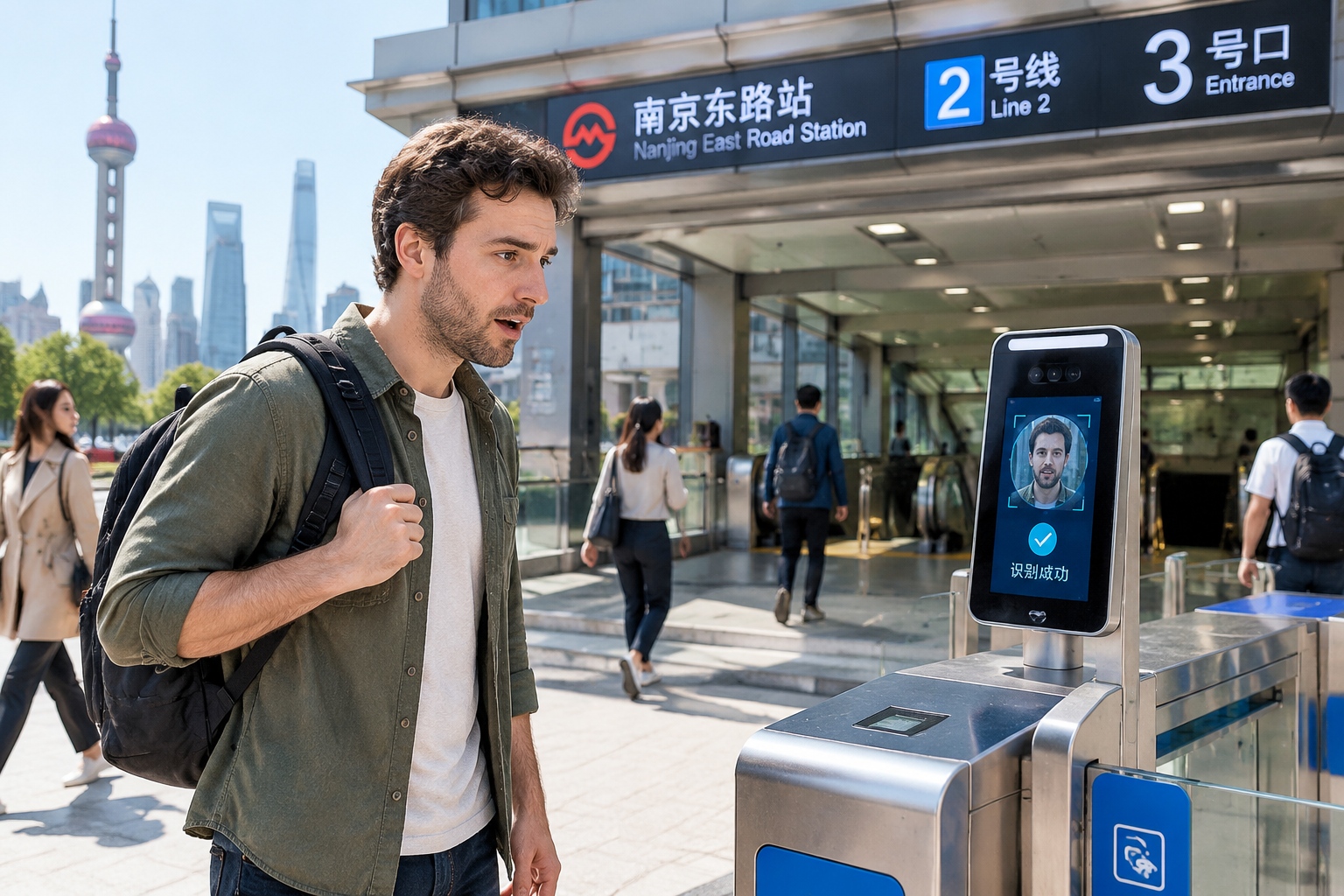

7:30 a.m. — The Subway Gate That Knows Your Face
Mike, a 34-year-old graphic designer from Portland, steps into the cavernous entrance of Shanghai Metro’s Line 10 at Yuyuan Garden Station. He doesn’t fumble for a ticket or transit card. Instead, he glances at a screen beside the turnstile, and within half a second, the gate swings open. A small display reads his name: “Mike Johnson — Payment Successful.” He had linked his passport and Alipay account the night before at the airport. Now his face is his ticket. The system, used on 18 metro lines across Shanghai, processes over 3 million such facial-recognition entries daily. Mike raises an eyebrow: back home in Portland, he still taps a card or pulls up an app. Here, he just shows up.
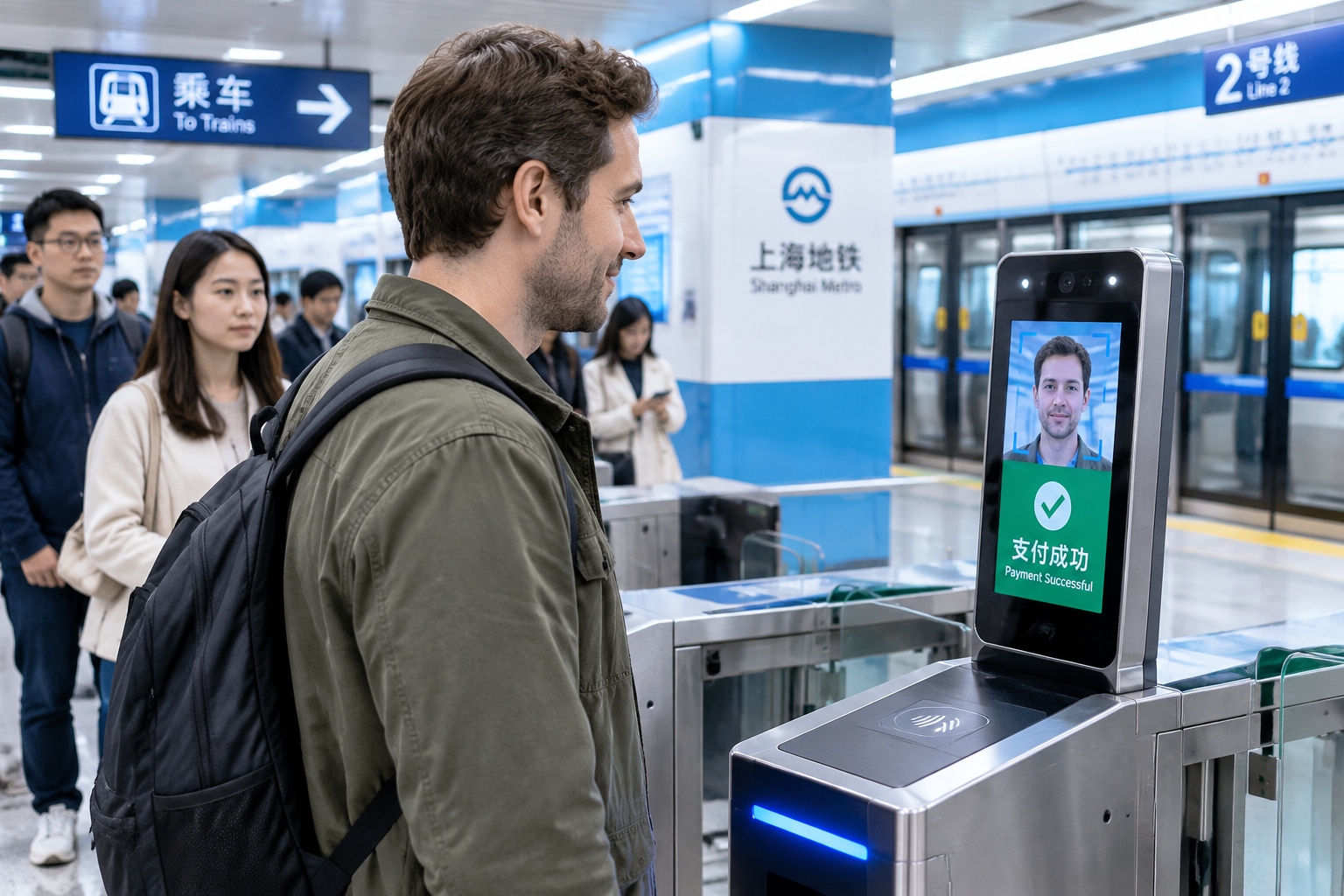
8:15 a.m. — A Steamed Bun, Paid for by a QR Code
Outside the station, a breakfast cart steams with baozi (stuffed buns) and soy milk. A handwritten sign on the cart lists prices in Chinese yuan. Mike points to a pork bun. The vendor, a woman in her 50s, holds up a small plastic card with a QR code. Mike scans it with his phone, types in 4 yuan (about 55 cents), and hears a cheerful “Payment received!” from her speaker. No cash changes hands. According to a 2023 report by the People’s Bank of China, mobile payments now account for over 80% of all retail transactions in major Chinese cities. Mike notes that even the tiniest vendor is plugged in.
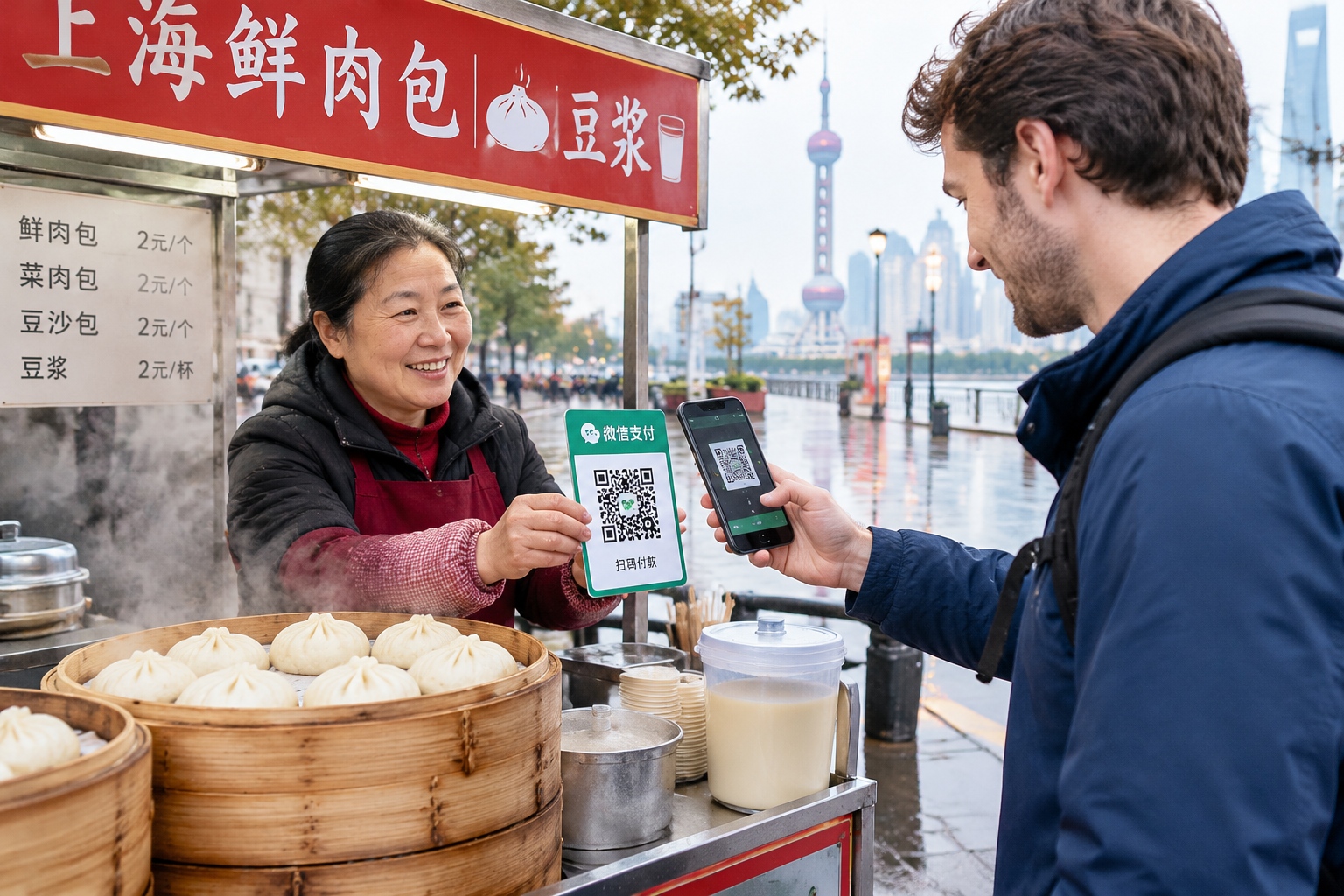
10:00 a.m. — A Bike Share Without a Deposit
Mike wants to explore the former French Concession. He opens the Alipay app, points the camera at a blue Hellobike (a dockless bike share), and the lock clicks open. No separate app, no deposit—just a score-based system. If his credit score (a government-backed social credit system) were lower, he might need to pay a deposit. But as a foreigner with a clean record, he’s in. He pedals along tree-lined Wukang Road, past art deco buildings and modern boutiques. The bike costs him about 20 cents for a 20-minute ride. He locks it at a designated zone, and the app deducts the fee automatically. “In Portland, the last time I used a bike share, I had to download an app, enter my credit card, and pay a $1 unlock fee,” he says.
12:30 p.m. — Cooking Without a Trip to the Store
Mike is staying with a Chinese friend, Li Wei, in a high-rise apartment in Pudong. Li Wei opens an app called Dingdong Maicai (literally “Dingdong Grocery”). He scrolls through fresh vegetables, pork, and tofu, adds them to a cart, and sets a delivery window for 2 p.m. Within 30 minutes, a delivery driver in an orange uniform knocks on the door with two reusable bags. Mike examines the receipt: the total is 58 yuan (about $8) for three meals’ worth of ingredients. “If I ordered the same from an American grocery delivery service, I’d pay at least $25,” Mike calculates. The app’s promise—from order to door in under an hour—holds true.

3:00 p.m. — A Smart Toilet That Speaks English
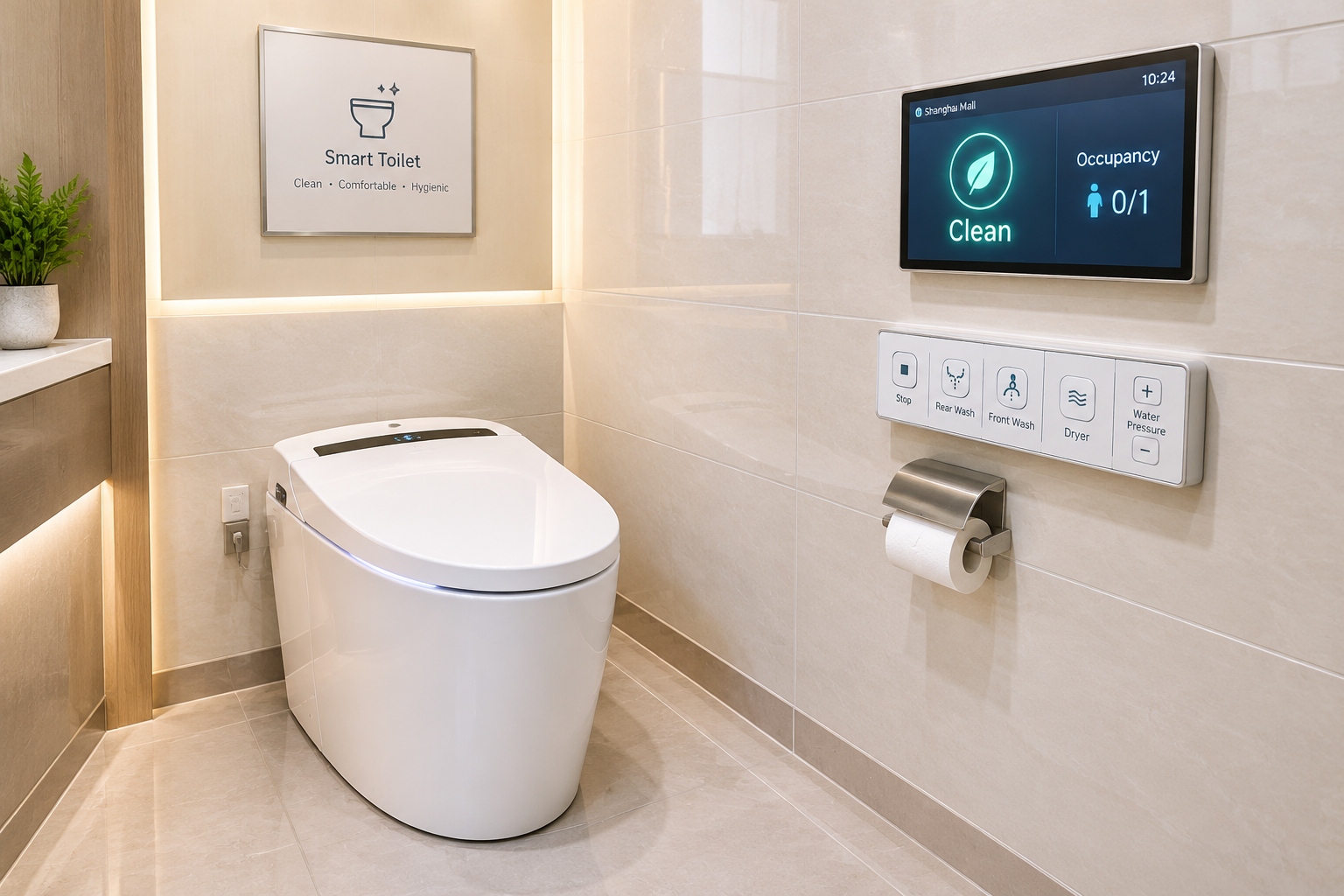
In a shopping mall near Lujiazui, Mike uses a public restroom. The toilet has a heated seat, a bidet function with adjustable pressure, and a control panel with English labels. The stall is spotless. A digital screen on the wall shows the real-time occupancy and cleanliness status of each stall. Mike laughs: “I’ve visited Japan before, but this is the first time I’ve seen a public toilet that tells you it’s ‘clean’ in real time.”
6:30 p.m. — Dinner Paid for by a Fingerprint
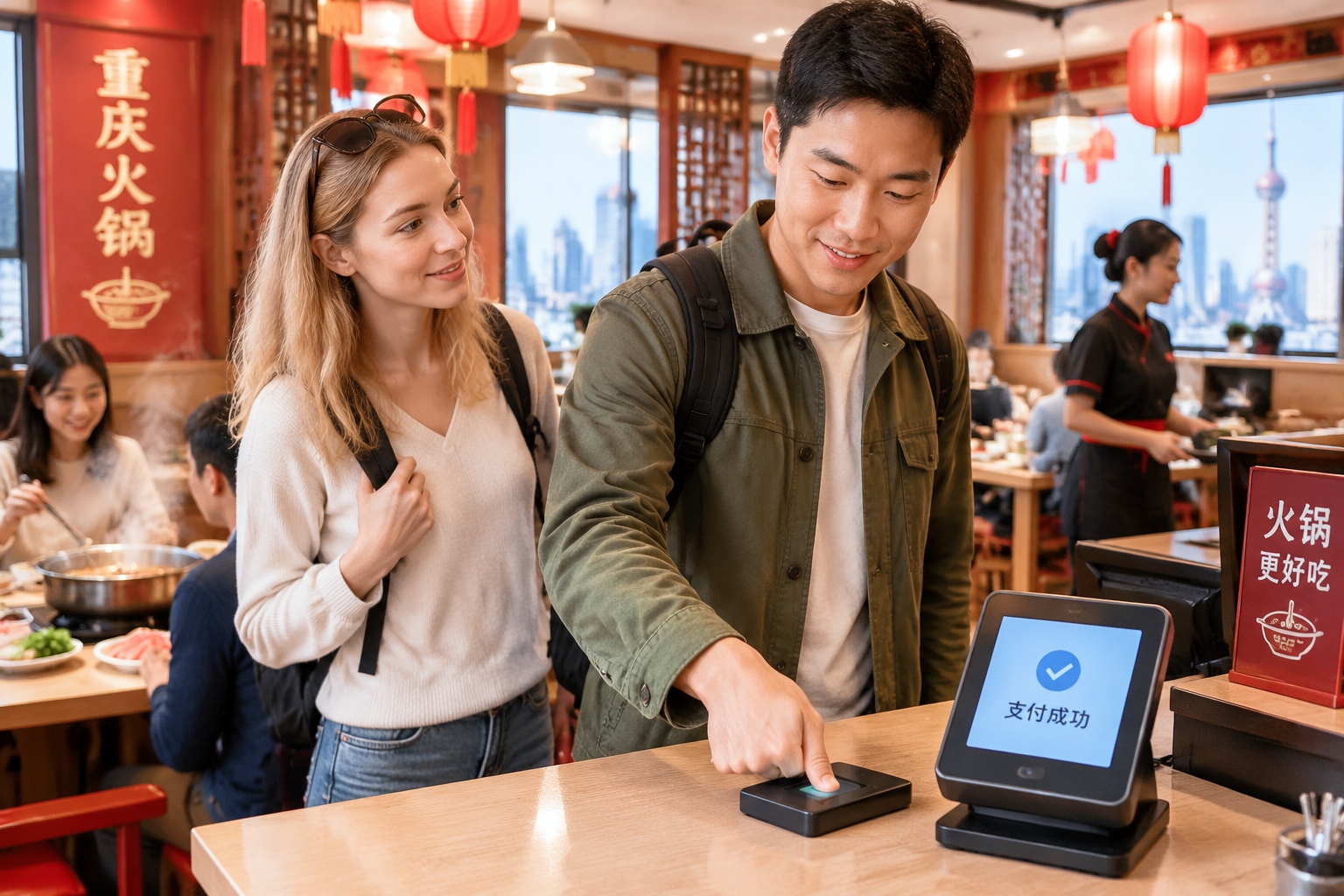
Li Wei takes Mike to a hotpot restaurant. At the host stand, they order via a tablet—scrolling through photos of beef slices, mushroom platters, and sesame sauce. When the bill comes, Li Wei places his thumb on a small black sensor next to the register. The payment goes through instantly, linked to his bank account. Mike is amazed: “You don’t even need your phone.” The restaurant uses a system called “fingerprint payment” by Alipay; it’s less common than QR codes but growing fast, especially among younger Chinese who forget their wallets but never their hands.
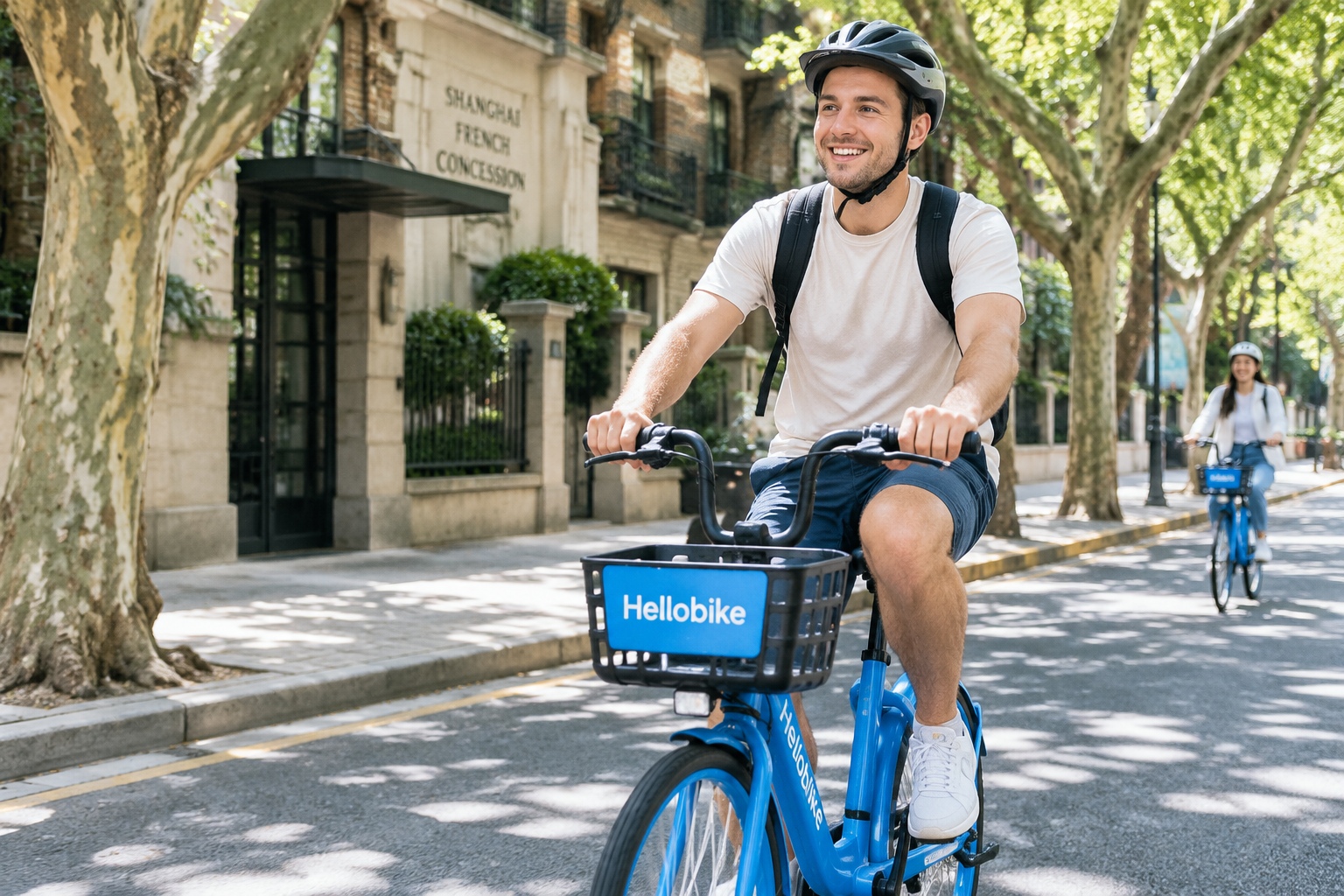
9:00 p.m. — The Last Metro Ride
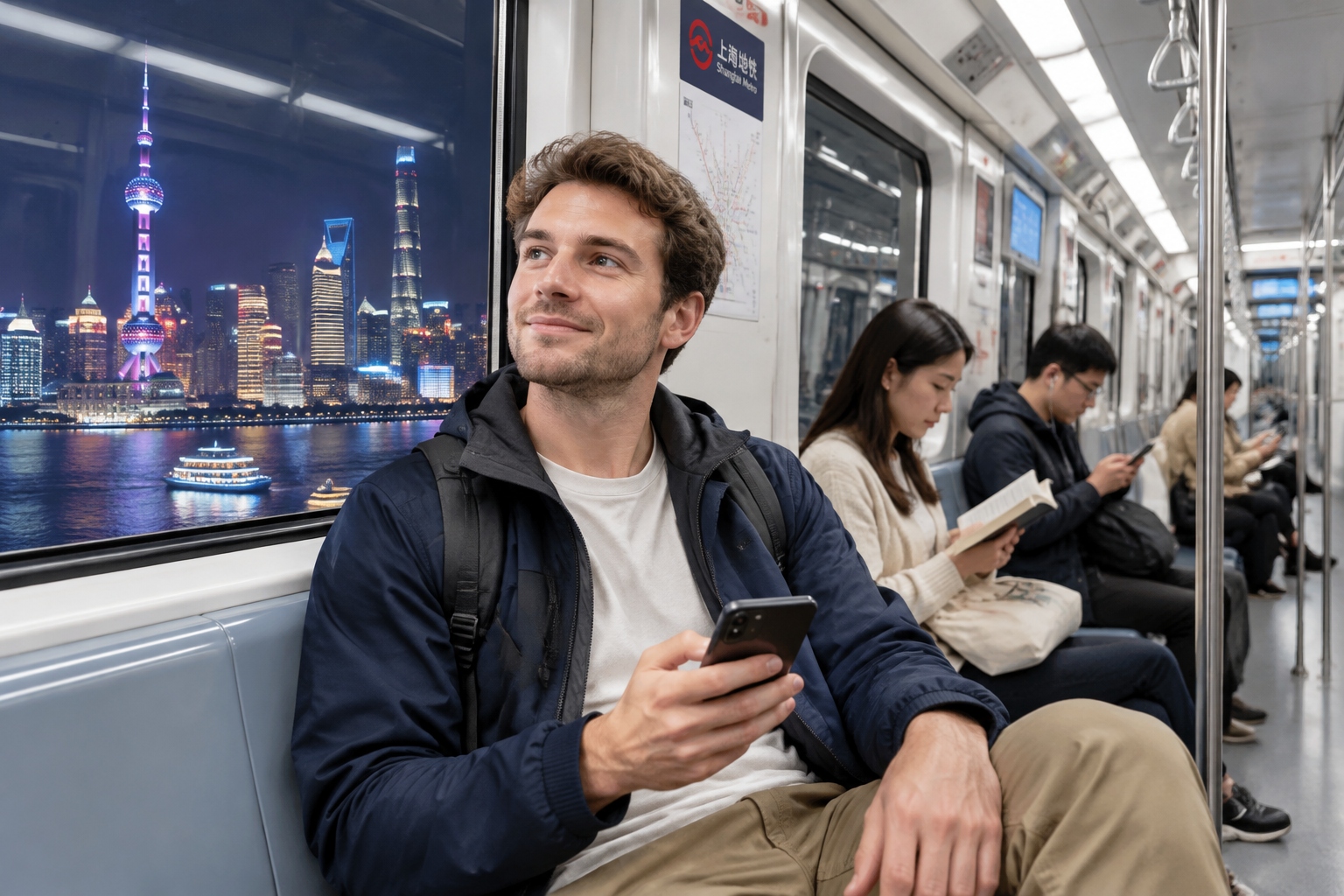
Back at the metro station, Mike again uses his face to enter. The train is quiet, passengers scrolling on phones or reading on Kindle-like devices. No one speaks loudly. A sign in the carriage reminds commuters to lower their phone volume. As the train glides under the Huangpu River, Mike reflects: “I came expecting a chaotic city, but what I found was a seamless system where tech quietly lubricates everyday life.” The day ends without a single piece of cash touching his pocket. Tomorrow, he plans to visit the Bund—and maybe buy an umbrella via drone delivery if it rains.
Start the discussion at forum.chinacomes.com