

An Evening in Chengdu and a Question About “Tradition”
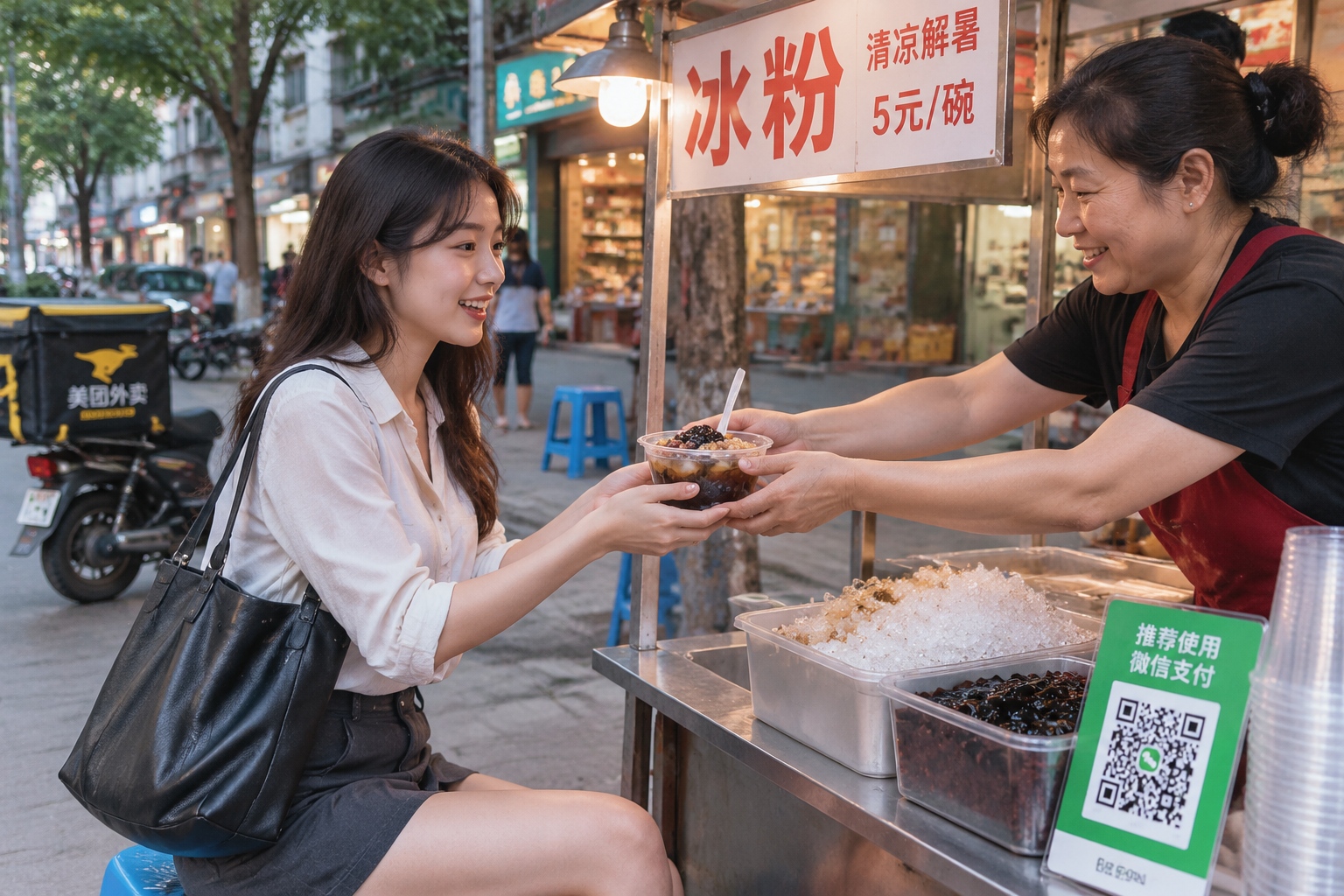
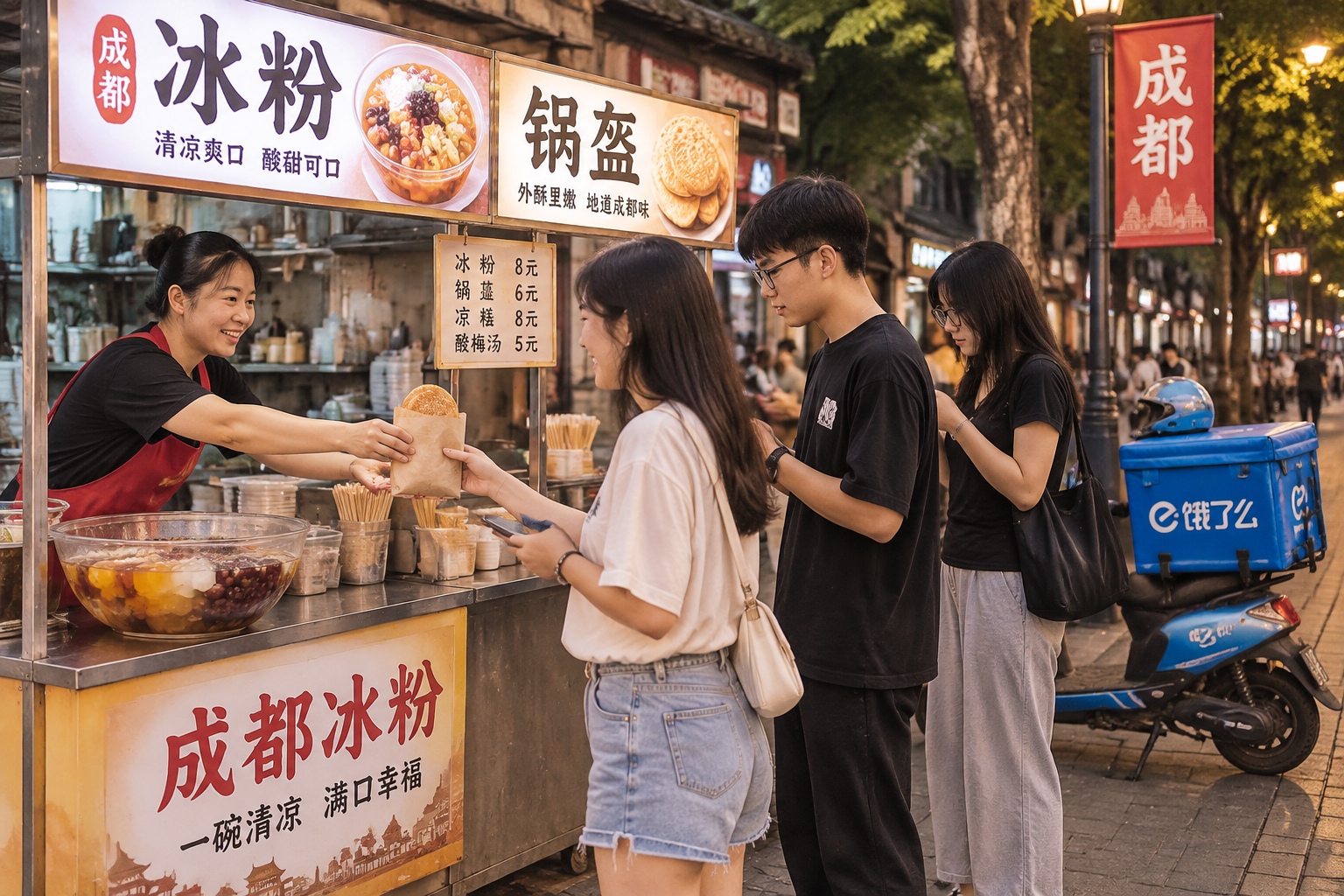
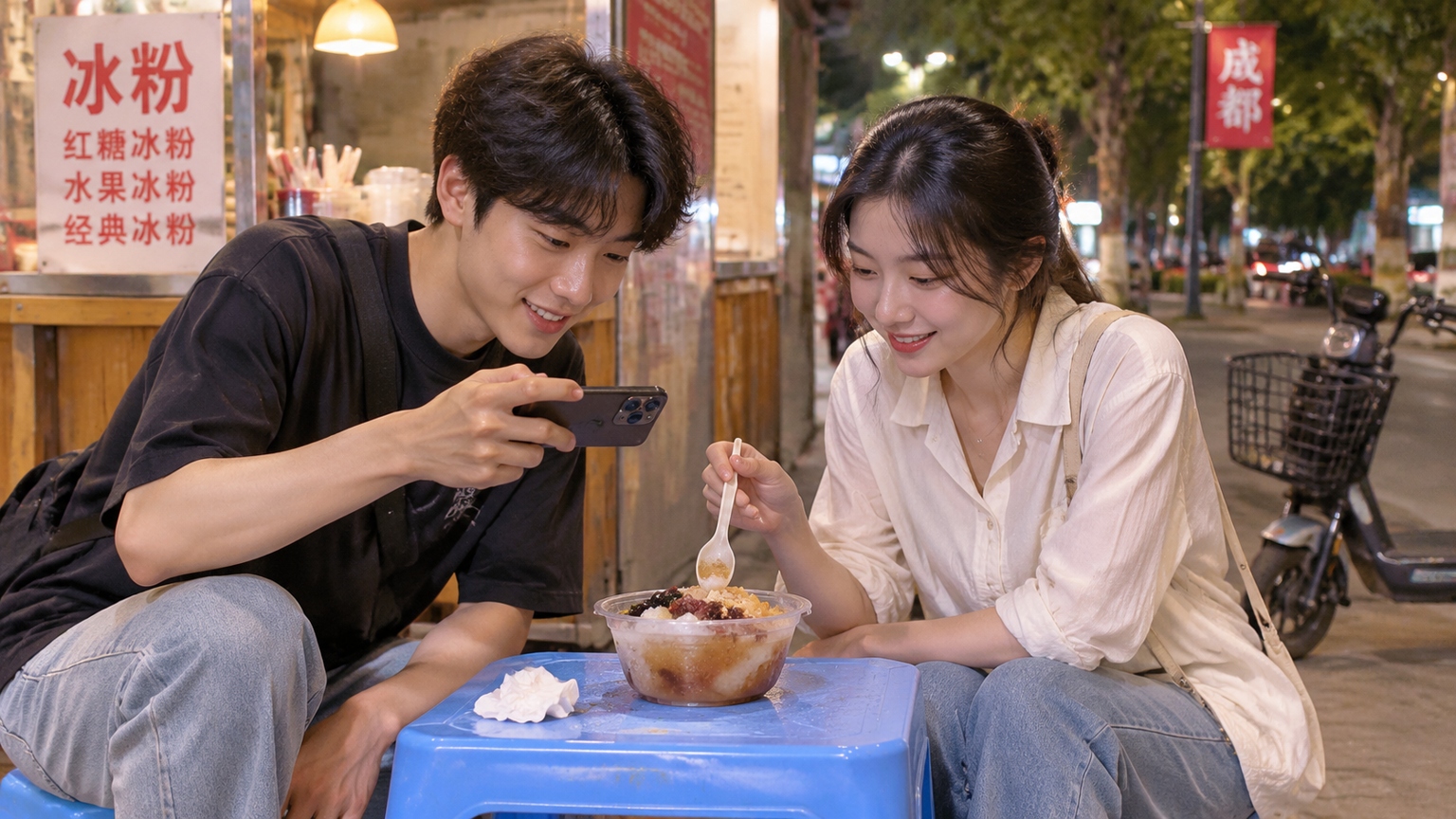
At 7:40 on a Tuesday, the line outside a bingfen stand in Chengdu’s Yulin neighborhood curls past a parked delivery bike and a stack of plastic stools. A 24-year-old graphic designer I’ll call Tang orders a bowl with less brown sugar, extra hawthorn flakes, and no raisins. She pays with a QR code, waits for the jelly to be ladled over crushed ice, and takes a photo before the first spoonful. Behind her, two students debate whether to add mochi; ahead, a couple shares one bowl so they can save room for guokui.
Bingfen is a humble dessert: ice jelly, brown sugar syrup, toppings. It is also a useful way to ask a bigger question. Sichuan’s traditional snacks are not disappearing into museums. They are being eaten on the street, ordered through apps, photographed for social media, and quietly adjusted by a generation that grew up with both a grandmother’s kitchen and a smartphone.
What happens to a “traditional” snack when the people buying it are 20 or 27 or 31, not 60? The answer is more practical—and more interesting—than a story about old versus new.
What Counts as a Sichuan Snack Now?
“Sichuan snack” is not one dish. It is a whole ecosystem of small foods: guokui (a layered flatbread often stuffed with meat), bobo chicken (cold skewers in chili oil), danhonggao (sweet rice cake), tangyoubaba (fried glutinous rice balls with sugar), sweet fermented rice, noodles, dumplings, and dozens of local variations. These are not banquet centerpieces. They are breakfast on the way to work, a mid-afternoon bite, a late-night stop after karaoke, a cheap treat for a family on a Sunday walk.
For a long time, many of these snacks lived in a very local circuit: a neighborhood stall, a school gate, a market lane. Delivery apps, short video, tourism, and later closing hours have widened the circle. A guokui maker who once sold to nearby residents can now reach an office tower across town. A bingfen vendor can post a 15-second clip and see customers arrive from another district. This does not mean every stall is famous online. It means young people encounter these foods in more places—on a phone screen, in a hotel lobby, at a night market—and they bring new expectations back to the counter.
What Gen Z Actually Orders
Ask a dozen young Chengdu residents why they choose one snack over another, and the answers rarely stay on flavor alone. Price matters. Convenience matters. So does the small social life around eating: what can be shared, what looks good in a group chat, what fits into a 40-minute lunch break or a 10 p.m. walk home.
“Is it worth a photo?”
For many Gen Z customers, the first contact with a snack happens on Douyin or Xiaohongshu, where vendors show the pull of cheese, the crunch of a guokui crust, the gloss of chili oil. A photogenic bowl is not automatically a good bowl, but it gets a first visit. Young owners respond with clearer layers, brighter toppings, and packaging that survives a 20-minute delivery ride. The photo is not the point; it is the invitation.
“Can I eat this after work?”
A snack has to fit a schedule. That is why small portions, mixed sets, and flexible hours matter. A young office worker may not want a full meal at 9:30 p.m. She may want five skewers, a half portion of noodles, or a bowl of bingfen shared with a friend. Shops that offer “small” and “regular” sizes, or let customers choose sugar and spice levels in an app, remove small frictions. In a city where commutes can be long, that convenience is part of the taste.
“Is it too heavy?”
Health concerns show up, but not always as a strict diet. Young customers ask for less sugar, less oil, more vegetables, or a smaller portion. Some order a spicy bobo chicken set and a plain yogurt drink; some share one order three ways. The point is balance within a day, not a purity test. Traditional snacks were never health food. What has changed is that customers now expect to adjust them—and shops increasingly let them.
Price remains a quiet filter. A bowl of bingfen often costs 8–15 yuan (about $1–2), a guokui 6–12 yuan. At those prices, a snack can be a daily pleasure. When a “creative” version appears at 35 or 48 yuan, young customers may try it once for the photo, then go back to the stall that feels fair. Gen Z is often described as impulse-driven. In Sichuan snack shops, they are also quite calculating.
The Shops Changing Around Them
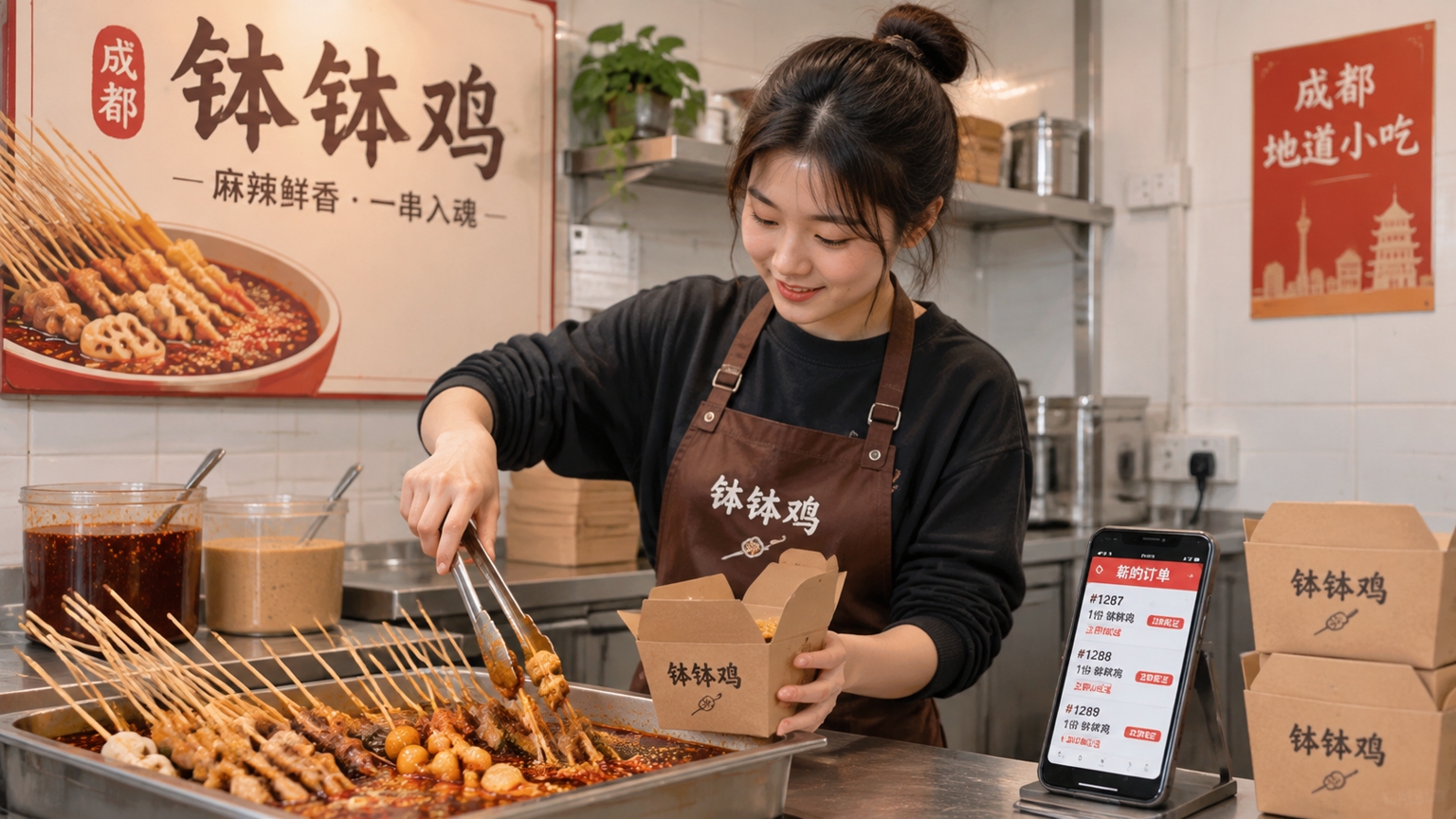
Owners are reading the same signals. Some old shops have added online ordering, longer opening hours, and smaller takeout boxes without changing the recipe. Others have hired a younger family member to run social media. The most common adjustment is not a dramatic reinvention. It is a series of small operational fixes: pre-portioning toppings, printing clearer menus, offering a “less spicy” option that still tastes like something, and keeping one bench outside for customers who want to eat immediately.
Young entrepreneurs are experimenting more openly. A vendor might keep the classic bobo chicken marinade but add a sesame or pickled pepper version. A bingfen stall might offer fruit toppings, oat milk, or a low-sugar syrup. A guokui shop might sell a mini size for office workers and a family pack for weekend tourists. These are not necessarily “authentic” in the strictest sense. They are attempts to meet a customer who wants novelty and convenience without losing the memory of the original flavor.
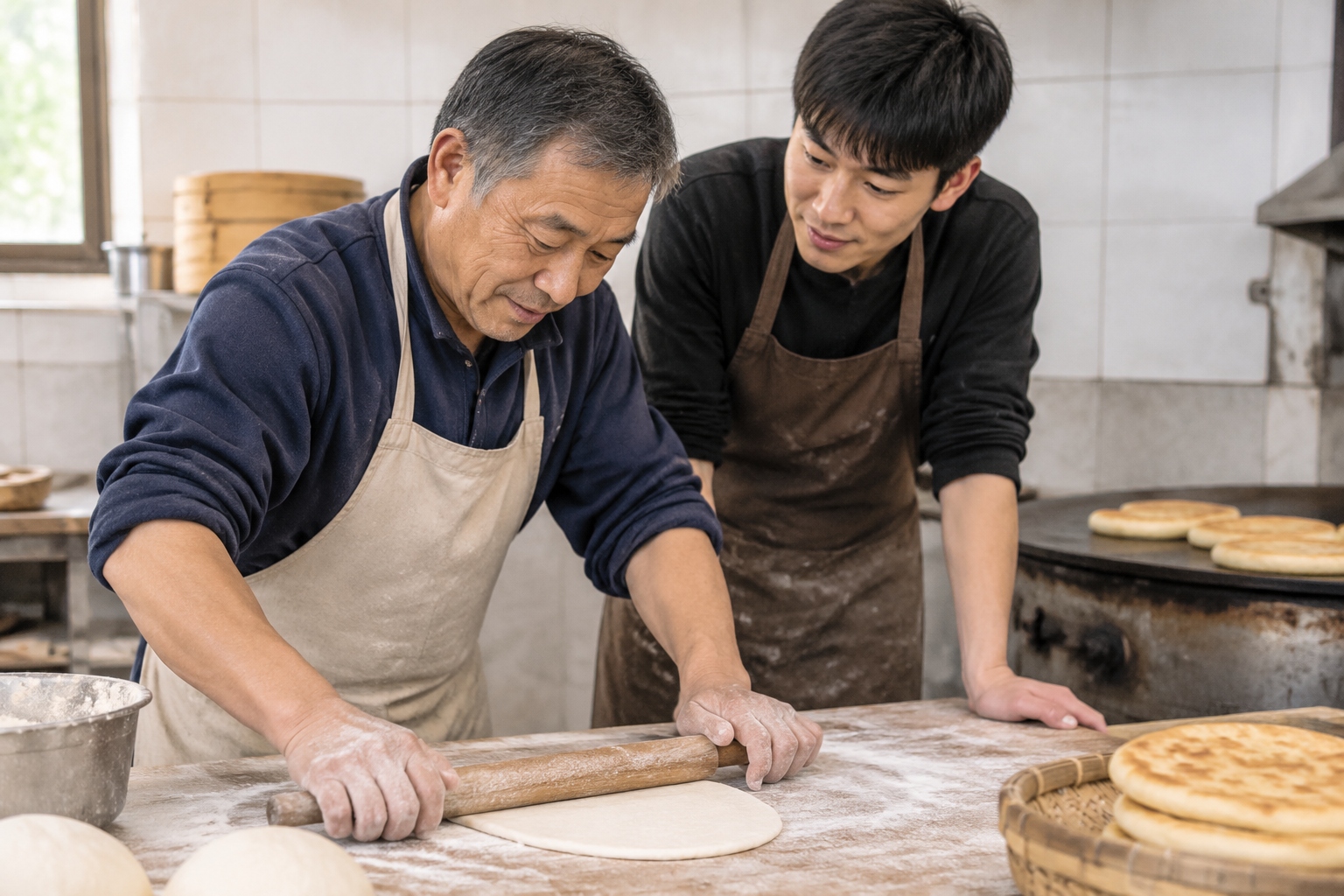
The harder negotiations happen inside families. In one old noodle shop, the father insists the broth must simmer for hours; the daughter wants to add a delivery-only rice bowl to raise the average order. In a guokui stall, the mother says the dough needs more resting time; the son wants to prep faster for the evening rush. The argument is rarely about rejecting tradition. It is about which parts are load-bearing. The broth and the dough are; the paper bag and the queue system may not be.
One Day, Three Snack Stops
To see how this works in daily life, follow Lin, a 27-year-old office worker in Chengdu’s high-tech zone. At 8:10 a.m., she buys a guokui and soy milk near the metro exit. The guokui is wrapped in paper, hot enough to make her switch hands. She eats half walking, half at her desk. This is not a leisure ritual. It is fuel.
At 12:40, she meets two colleagues for bobo chicken. They order a mixed set through a mini-program, choose mild spice, and pick it up downstairs. The shop has no chairs, only a narrow counter and a wall of skewers. They eat standing, then return to work. The whole meal takes 25 minutes.
At 9:50 p.m., she meets a friend in Yulin for bingfen. The line is shorter now. They share one bowl, add extra hawthorn, and film a 10-second video for a group chat. The friend complains that a nearby “viral” snack shop charges 38 yuan for a tiny portion. Lin says she would rather come here. They sit on plastic stools, phones face down for a few minutes, and finish the bowl.
This is the pattern: snacks are not separate from work and friendship. They fill the gaps. Delivery riders wait outside offices; vendors shift prep times toward lunch and late night; customers use apps not because they love apps, but because the apps save ten minutes. The traditional snack survives by becoming part of a schedule that did not exist when the recipe was written down.
The Friction: What Should Stay, What Can Change?
Not everyone is happy. Traditional cooks worry that flavor is being flattened for the camera. If a guokui is made too fast, it loses layers. If bobo chicken is made too mild, it loses the point. Some young customers agree. They complain that “internet-famous” snacks are overpriced, oversweet, or designed for a photo rather than a second bite. Locals and tourists often measure differently: a visitor wants a story and a picture; a local wants the same taste on a Tuesday night at a fair price.
The friction is useful. It forces a distinction between the parts of a snack that should travel and the parts that can be updated. Packaging, ordering, portion size, and clearer ingredient labels can change without damaging the core. The technique and balance—the texture of the jelly, the layering of the dough, the ratio of chili to sweetness—are harder to fake. Sichuan food has never been frozen in time; chili itself arrived in China centuries ago. The real question is not whether a snack changes. It is whether it still belongs to daily life, not just to a content calendar.
Why This Matters Beyond Sichuan
For readers outside China, this is a small window into how young Chinese people consume and work. They are fluent with platforms, but they also complain about platform fees. They like novelty, but they return to an 8-yuan bowl. They photograph food, but they also eat it quickly on a plastic stool before the metro closes. The changes in Sichuan snacks are not a top-down campaign. They are negotiated at counters, in family kitchens, and in the gap between a lunch break and a delivery deadline.
Back in Yulin, it is almost 10:30 p.m. The line has thinned. The vendor stacks the stools, wipes the counter, and checks tomorrow’s online orders. A delivery rider picks up the last bag. The smell of brown sugar and chili oil stays in the air. Tomorrow evening, the line will form again, a little different, in the same spot.