

Why I Signed Up for Three Days of Kung Fu at Shaolin Temple
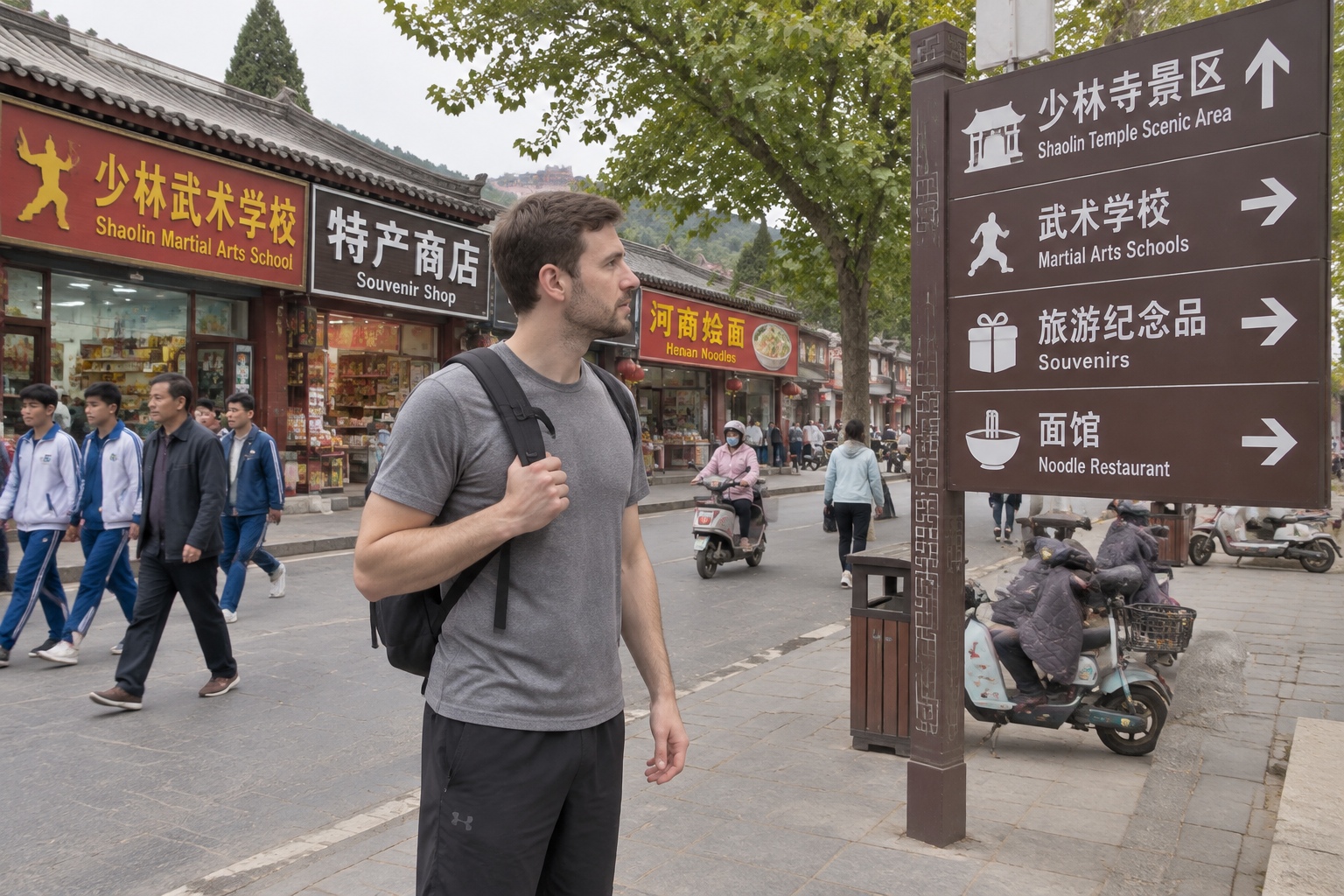
The bus from Zhengzhou dropped me on a wide road in Dengfeng a little after 7 a.m. The air smelled of diesel, dust, and steamed buns. Electric scooters hummed past a row of shops selling staffs, wooden swords, and noodles. A group of children in matching tracksuits jogged through a gate. I had a small backpack, a hotel booking, and no idea what three days of kung fu training would actually feel like.
I signed up because of a 15-second video. A monk swept a courtyard, a student punched the air, and the caption promised ancient secrets. I knew it was an advertisement. I still wanted to see the place behind the clip: part monastery, part martial arts school, part tourist site. I am not a martial artist. I write about everyday life in China, and I wanted to test the gap between the Shaolin Temple of movies and the Shaolin Temple that people in Dengfeng live beside.
The logistics were simpler than I expected. I took a regular bus from Zhengzhou to Dengfeng, about 90 minutes and 25 to 35 yuan, then a 15-minute taxi to the temple area. My guesthouse owner, who spoke enough English to explain breakfast times, helped me book a three-day beginner course at a nearby martial arts school. The package cost 1,800 yuan and included a simple room and meals. Other schools quoted 1,200 to 2,500 yuan. The scenic-area ticket is 80 yuan and is separate. The coach spoke little English. We used a translation app, hand gestures, and the universal language of counting out loud.
My first impression was not mystical. The road outside the temple gate is a working tourist street: souvenir shops, guesthouses, noodle restaurants, sportswear stores, and schools with concrete yards. Older students practice in the morning. Younger ones sell water and pose for photos. Local residents ride through the tour groups on scooters. It looked less like a hidden mountain sect and more like a small town built around one very famous name.
Day One: Registration, Uniform, and the Horse Stance
At 7:30 on the first morning I was handed loose black pants, a grey T-shirt, and a pair of cloth shoes. The schedule was written on a whiteboard by the office: wake at 6:30, breakfast at 7, training from 8 to 10:30, lunch, rest, second session from 4 to 5:30, dinner, free time. No ceremony. No bowing to an altar. Just a line of students on a concrete yard and a coach telling us to spread out.
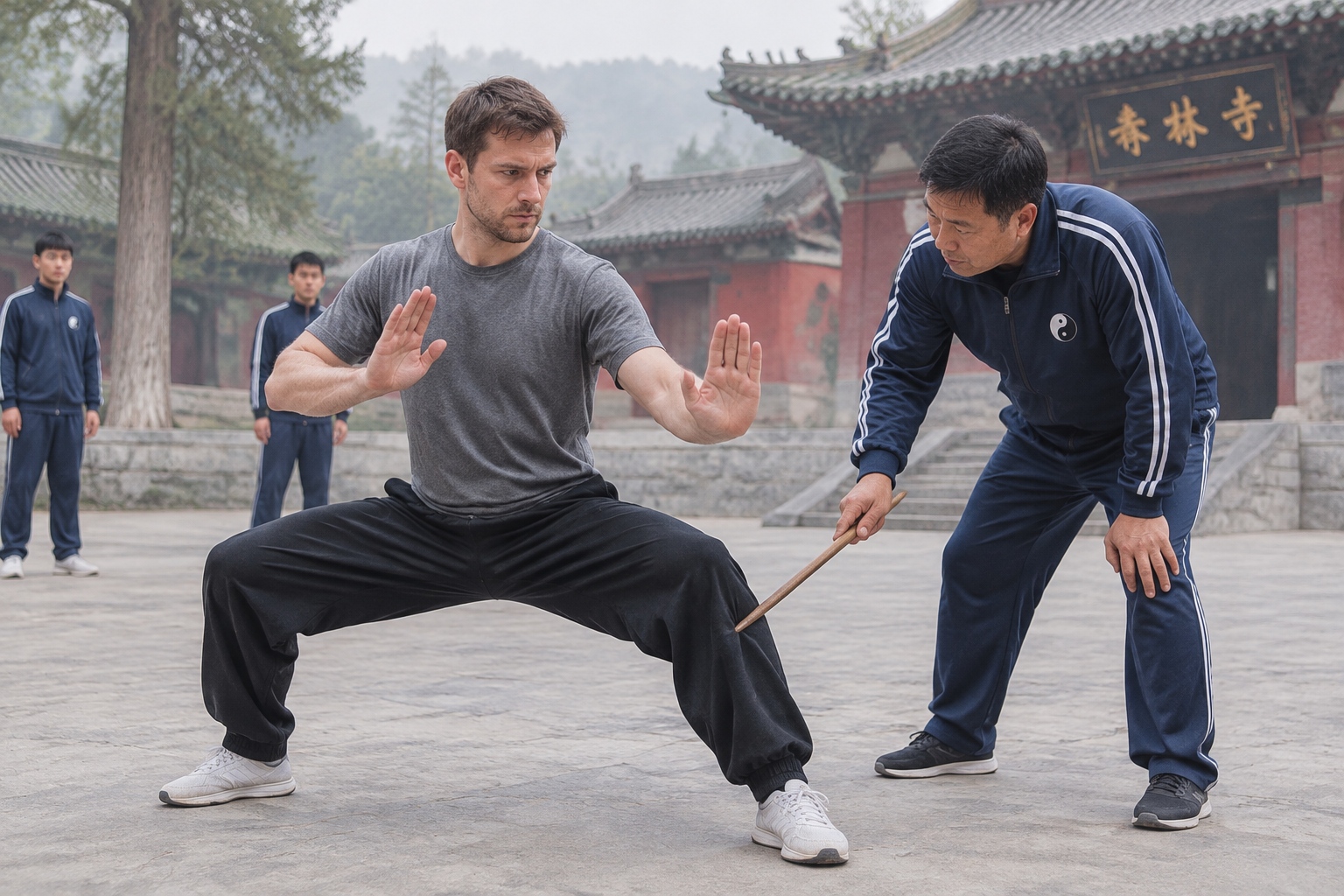
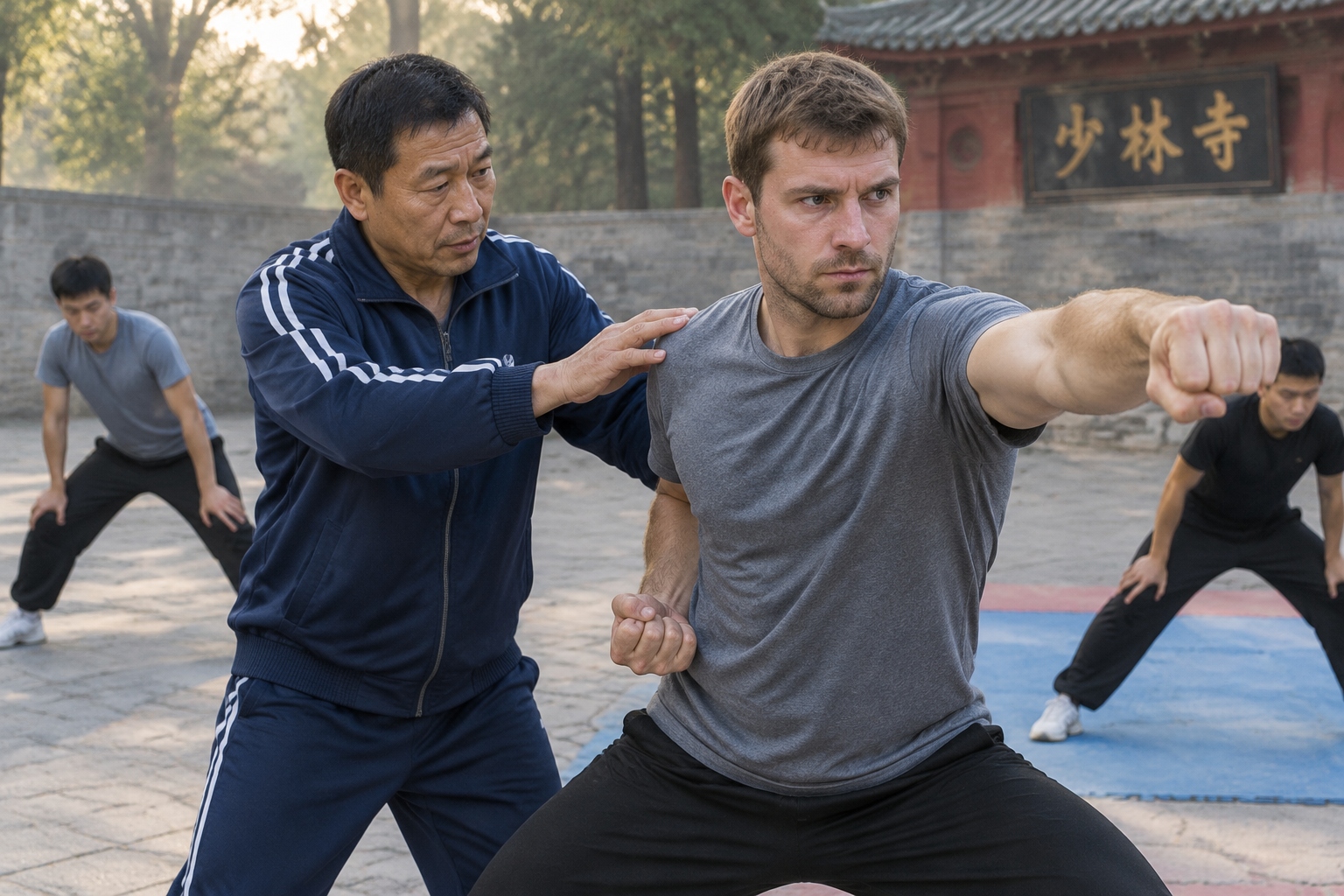
We jogged around the yard, stretched our shoulders, and then stood in horse stance. The coach walked down the line in a dark blue tracksuit. He tapped my knee with a thin stick and said, “Lower.” He pushed my back straight. We held for one minute. Then two. My thighs began to shake. Sweat ran down my back. This was the first surprise: the most famous martial art in the world began with standing still and being corrected.
My training group was a small sample of the Shaolin economy. There were two German backpackers on a weekend detour, a Chinese college student from Zhengzhou who wanted a break from exam preparation, a 14-year-old local boy sent by his parents, and a handful of long-term students who trained six hours a day. The coach gave instructions in simple English and typed longer explanations into his phone. When I bought an extra bottle of water, I scanned a QR code on the wall. The translation app, the QR code, and the wooden stick sat comfortably together.
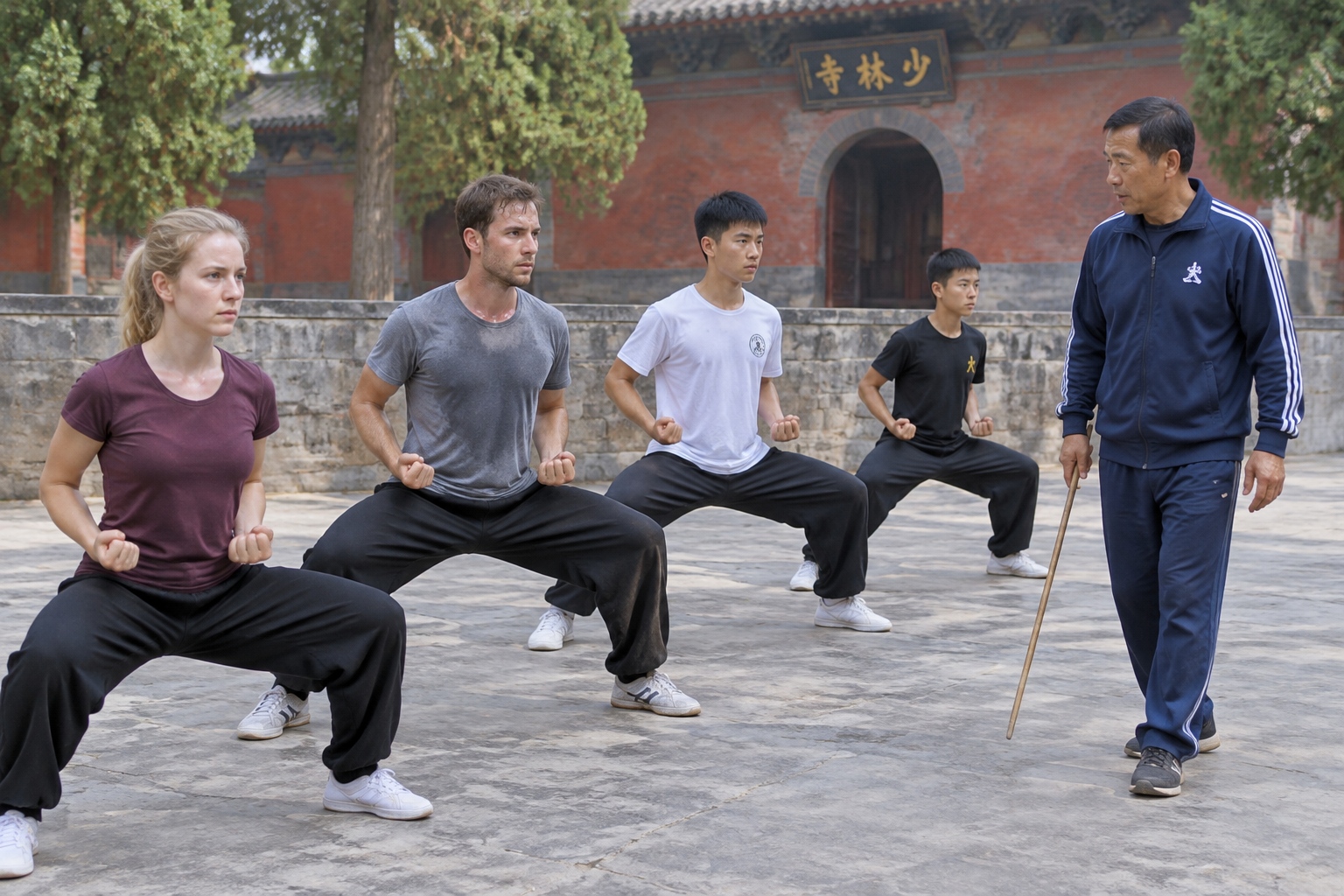
What I learned on day one was repetition. We practiced a straight punch from horse stance until my shoulder ached. We stepped forward and back. We fixed our eyes on one point. No flying kicks, no secret scrolls. The gap between the movie in my head and the yard in front of me was not disappointing. It was clarifying. Discipline is boring before it becomes strong.
Day Two: Between the Temple and the Tourist Trail
On the second morning we ran along the road before breakfast. Trucks passed. A woman swept the pavement outside a guesthouse. Breakfast was steamed buns, eggs, pickles, and millet porridge, eaten quickly at a long table. Then I walked to the Shaolin Temple with my ticket, joining the tour groups, incense smoke, and camera phones. Inside the temple grounds, the mood changed. People lowered their voices. Monks walked past in grey robes. A tour guide explained a stone inscription while a child cried nearby.
The dual identity is impossible to miss. Outside the ticket gate, Shaolin is a brand: kung fu shows, souvenir stalls, package tours, noodle shops with photos of monks on the wall. Inside, it is a religious site with courtyards, incense burners, and rules about dress and behavior. The short-term training I joined mostly happens outside the temple walls, in nearby schools and guesthouses. This matters for foreign visitors. A three-day kung fu course is not monk training. It is a beginner class in a local martial arts economy that has grown up around a sacred site.
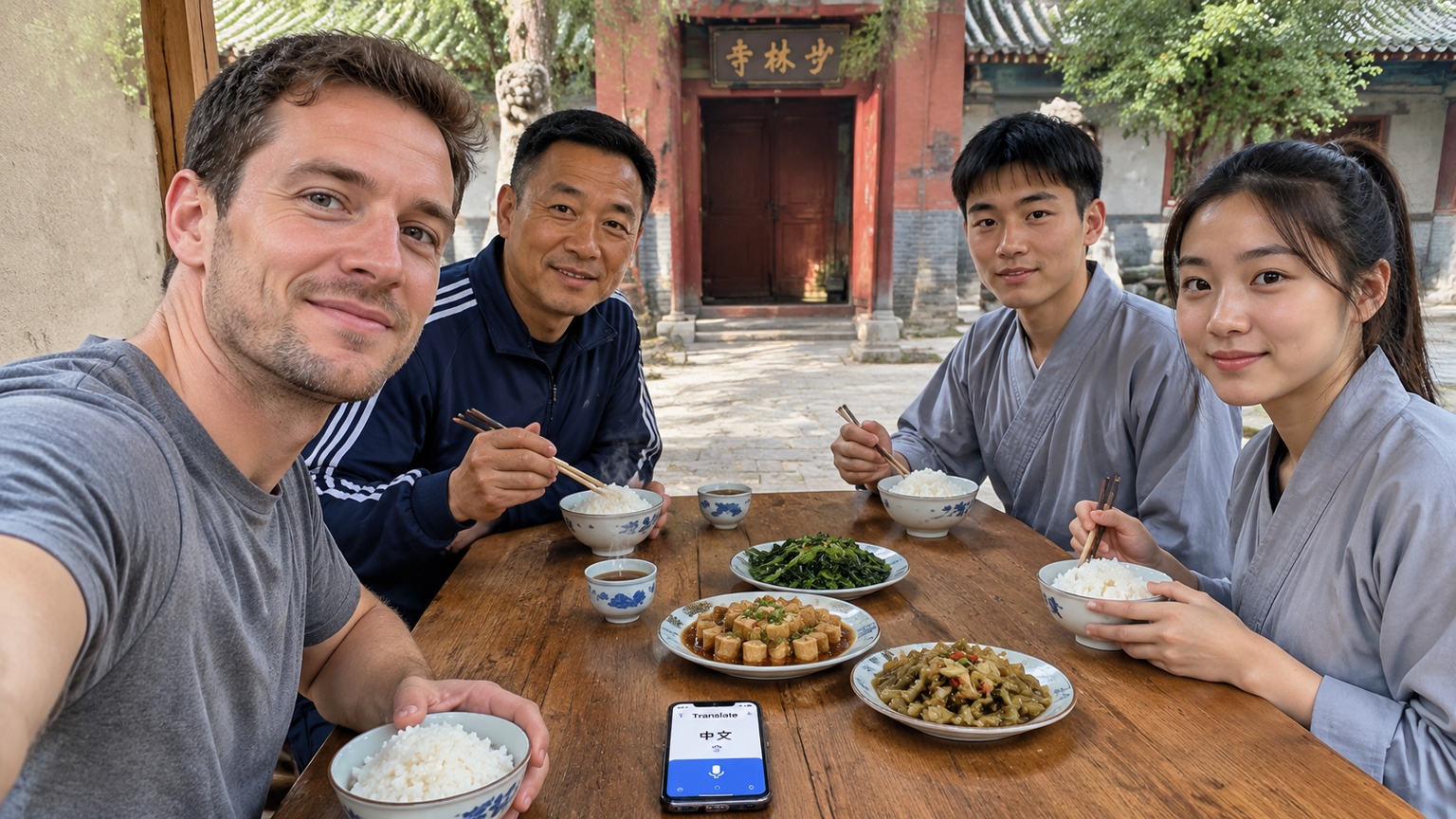
At lunch I sat with my coach, a man in his late 40s who started training at 12 and spent years in a performance troupe. He now teaches short-course tourists and long-term students. “The short courses help pay for the school,” he said. “The serious students keep the art alive.” Young people in Dengfeng work in tourism, sportswear shops, restaurants, and performance teams. Some train for months. Some take a weekend class and post the photos. Both are part of the same system.
So: Is it expensive? My three days cost less than a mid-range hotel in Shanghai. Is it tiring? Yes, in a plain, muscular way. Is language a problem? Less than I feared, if you are patient and willing to use a translation app. Is it worth it? For me, yes, but not because I became dangerous. Because I understood how a training day is organized, how local people earn a living beside a famous name, and how much repetition sits behind a polished performance.
Day Three: From Movements to a Small Shift in Understanding
By day three my calves hurt when I walked downstairs. I could hold horse stance longer than on the first morning. I had learned five basic stances, a straight punch, a front kick, and a simple bow. The school took a group photo and printed a small certificate with my name in Chinese and English. It was a modest ritual, not a transformation.
The coach watched me run through the short sequence. “Your shoulders are still high,” he said. He pressed one hand down on my shoulder and stepped back. I tried again. The correction was the lesson. Chinese martial arts, at least at this beginner level, is not a secret technique. It is a long conversation between your body and a teacher who notices small things.
That evening I talked with my roommate, a Chinese student who had been at the school for two weeks. He said foreigners often arrive with movie images and leave with sore legs. “Some come for novelty,” he said. “The ones who stay are serious.” The coach was more practical. He liked foreign students because they asked questions and paid for classes, but he did not confuse a three-day course with a life of practice.
Before I came, I imagined secrecy, mountain mist, and masterful old men. What I found was a courtyard, a schedule, a stick tapping my knee, and a town where kung fu is both a sacred tradition and a job. The contrast did not make the place less interesting. It made it more real.
What Three Days Can and Cannot Teach You
Three days can teach you what a horse stance feels like after two minutes. It can teach you how a local school runs, how much patience a basic punch requires, and how tourism and religious life share the same road. It can give you a small, physical sense of cultural immersion that a museum cannot. It cannot make you a fighter. It cannot make you a monk. It cannot replace months of practice, and it should not be sold as spiritual transformation.
Practical notes for foreign travelers
Go to Dengfeng, not just the temple gate. Book through a guesthouse or a martial arts school, and confirm whether training happens inside the temple or at a nearby school. For a short beginner course, budget roughly 300 to 700 yuan per day including simple lodging and meals, plus the 80-yuan scenic-area ticket. Bring loose pants, a refillable water bottle, and shoes you can stand in. Learn a few Chinese numbers and phrases. Set up WeChat Pay or Alipay if you can, and keep some cash. At the temple, dress modestly, ask before photographing monks, and remember that people are there to worship, not just to pose.
On my last morning, the coach handed me a bottle of water and said, “Come back when you can stand for five minutes.” Behind him, the next group was already counting out loud in the yard. I walked to the bus with sore calves and a certificate in my bag. The video I had watched before the trip was fifteen seconds. The memory that stayed with me was much slower: the sound of a stick tapping concrete, the smell of incense and dust, and a coach waiting for my shoulders to drop.