

The Morning Shift
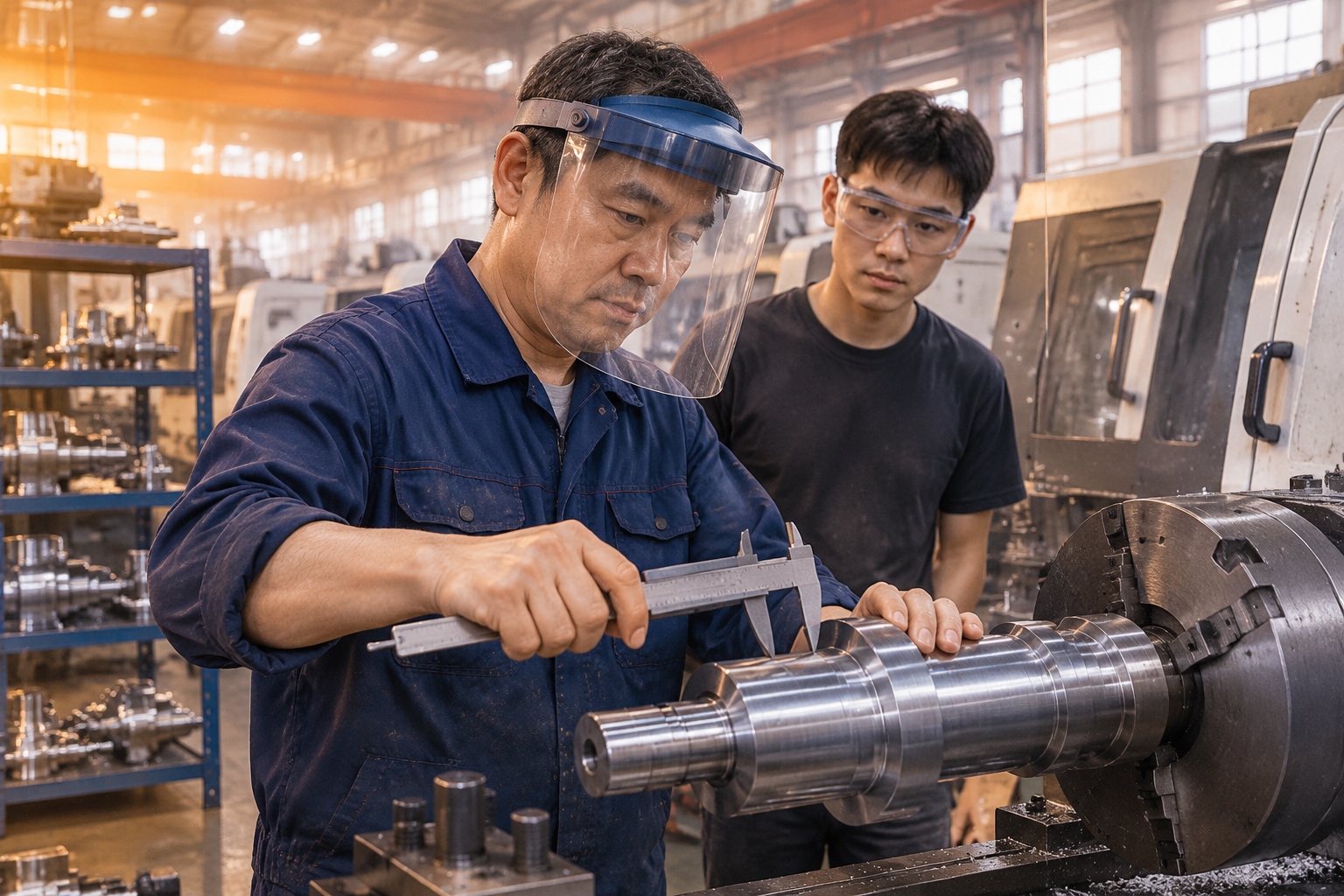
The workshop in Changsha smells of cutting fluid and steel dust. At 7:40 a.m., Wei Dong, a 46-year-old machinist, checks the coolant level on a CNC lathe before starting the first part. His apprentice, Xiao Tang, 22, wipes the table and pulls up a blueprints file on a tablet. The part is a drive shaft for a concrete mixer destined for Indonesia. The tolerance is 0.02 mm—about one-third the width of a human hair.
Wei Dong adjusts the tool offset by a fraction and starts the spindle. For a minute, the only sounds are the hum of the motor and the hiss of coolant. He watches the tool cut, then stops and runs a fingernail along the fresh thread. “The metal tells you when it’s right,” he says. “Your hands just have to listen.” Xiao Tang nods and writes “offset 0.004” in his notes.
A City That Grows on Steel
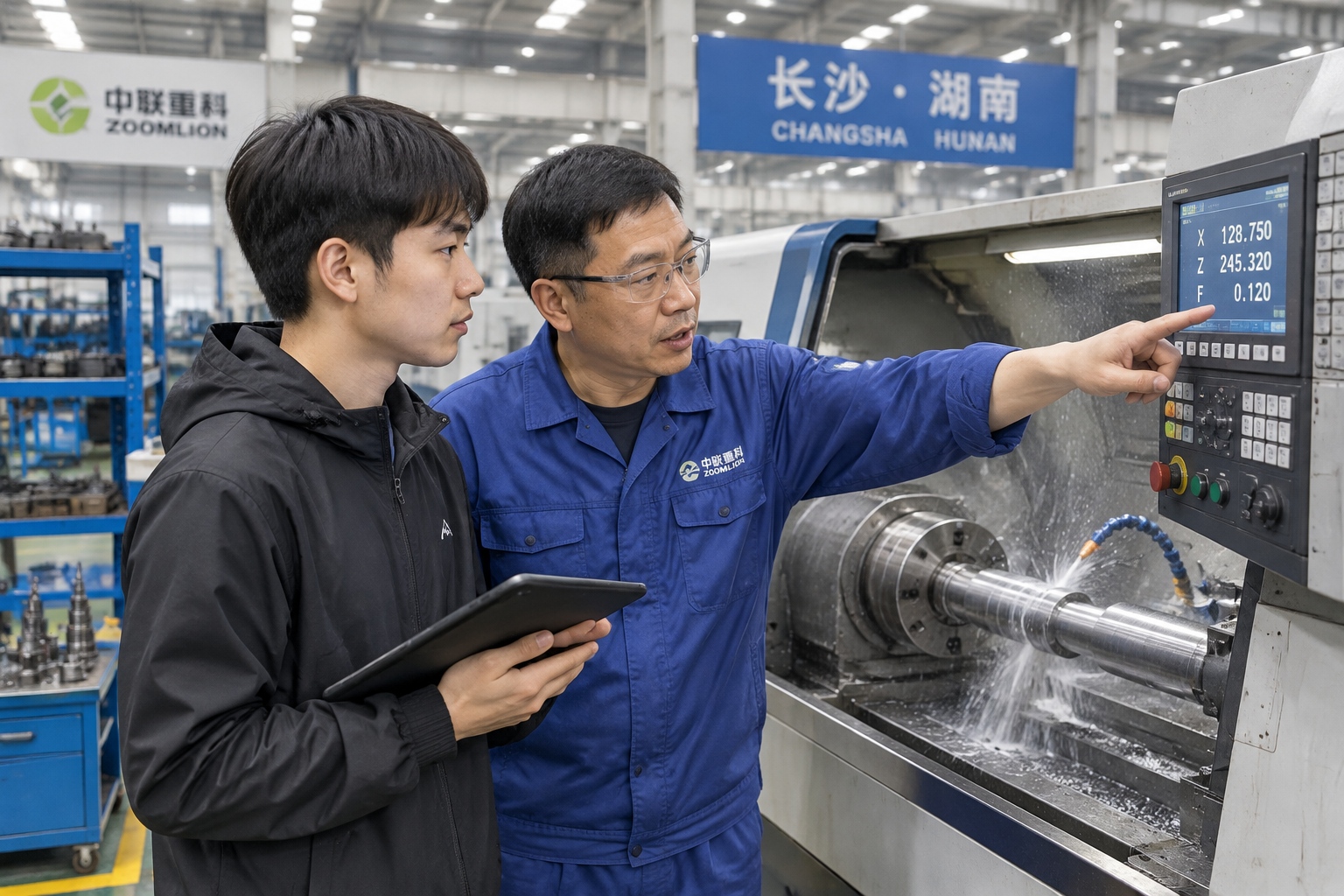
Hunan Province, in central China, has been building machines for more than half a century. In the 1950s, the state set up railway workshops in Zhuzhou and Xiangtan; later, in the 1990s, Changsha’s private companies turned into global names. Today, the city’s eastern suburbs are crowded with factories that make concrete pumps, crawler cranes, and tunnel boring machines—some of the biggest on earth. By several industry estimates, roughly half of the world’s concrete pump trucks are assembled in this province. The physical presence of these plants is hard to miss: huge yellow booms, weighing tens of tons, stand in rows outside distribution yards, waiting to be loaded onto ships bound for Africa, the Middle East, and Southeast Asia.
The industrial scale is matched by a skills pipeline. Central South University and Hunan University produce mechanical engineers, while vocational schools feed thousands of machine operators into the local supply chain. For a young person in Hunan, a job at one of these plants is no longer a last resort; it can lead to a national skill certificate and a monthly salary higher than in many white-collar jobs.
From Apprentice to Provincial Champion
Wei Dong did not come from any of these schools. He started in the factory at 17, sweeping metal chips off the floor and fetching tools for a master named Liang. “Liang told me, ‘Metal never lies. You have to respect it,'” Wei recalls. Every night after work, he practiced reading blueprints. He failed his first factory exam, then passed, then started on the machines.
In 2019, he entered a Hunan machining skills contest. Among CNC operators from all over the province, he finished third. The prize was modest—about 5,000 yuan, a certificate, and a spot in a provincial training programme. But the real reward was confidence. When his factory began to supply construction equipment to international customers, Wei was sent to Dubai to install a concrete pumping unit. It was hot, the language was hard, and the concrete mix was different from what he knew at home. He remembers phoning his old master in Changsha to ask about the viscosity of cement with sand. “He just laughed and said, ‘You’re a professional now. Figure it out.'”
Flying Out to Fix Machines
Wei’s global work is not only about installation. In Dubai, the local crew struggled with a leaking piston seal. The spare part was still on a ship somewhere, so Wei found the exact rubber ring in a local industrial market and modified it with a file. He made a temporary repair that lasted longer than the original. The client’s site manager, an Egyptian, asked him, “Why didn’t you tell us we could do that?” Wei shrugged: “You never asked me.”
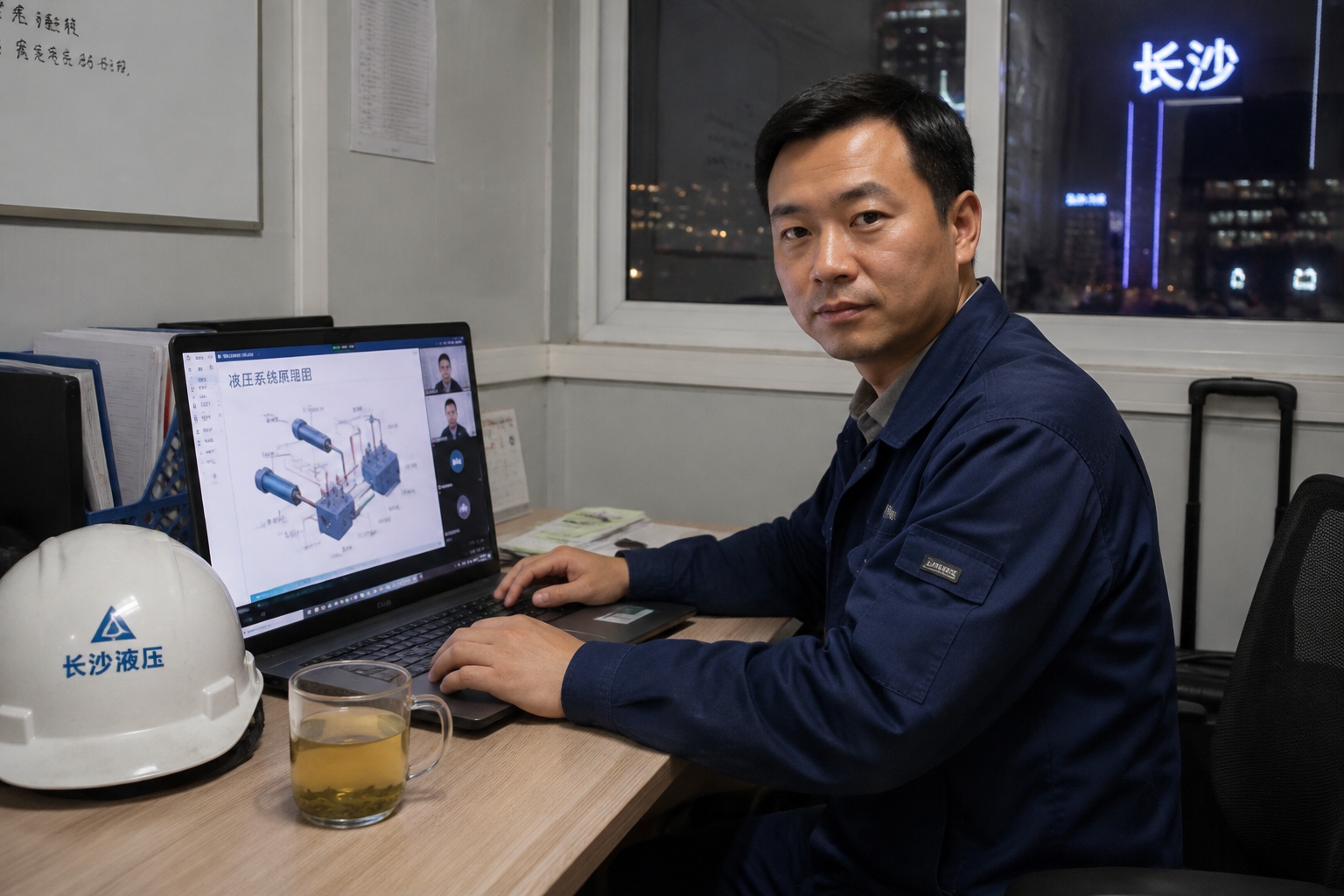
Chinese machinery has changed in the past decade, and so have the workers who support it. Export products now come with bilingual manuals, remote diagnostics, and service videos. Wei still travels twice a year, but most of his support happens online. From his office in Changsha, he can log into a machine in Lagos and read its parameters. A few months ago, he guided an engineer in Indonesia through a hydraulic valve replacement using a 3D model on a tablet. “I talk, but the customer does the work. When it works, it’s a good day for both of us.”
Why “Made in China” Sounds Different Now
Visitors from Germany and Japan often tour Wei’s workshop. They measure welds, check the calibration certificates, and ask hard questions. Wei likes this. “Ten years ago, a customer would only look at the price. Now they look at the data. If a drawing says 0.02, they expect 0.015.”
He has seen limits close enough to feel them. In 2021, a shipment of castings from an outside supplier arrived with a hairline crack hidden under paint. Wei caught it by chance, because he ran an ultrasonic test late at night. The supplier’s owner tried to argue; the factory scrapped the batch. “We lost money that quarter,” Wei says. “But our clients stayed with us.”
Young People Need More Than Machines
Not everything is smooth. Chinese factories face an aging workforce and a different generation with different expectations. Many vocational school graduates would rather drive for ride-hailing apps than stand eight hours in front of a lathe. The wages at factories did not rise fast enough for years.
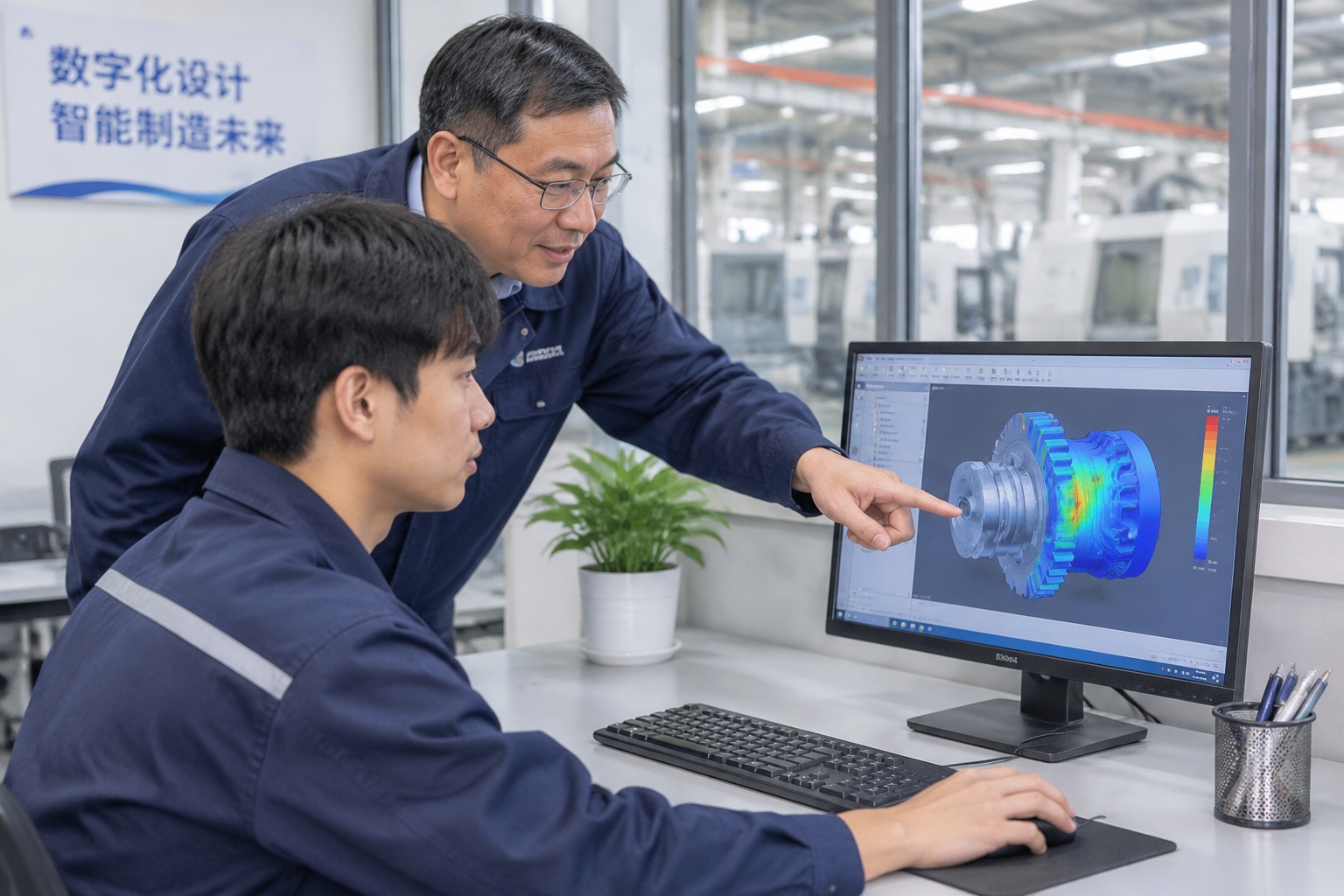
Xiao Tang is the exception. He joined Wei’s team because he wants to program industrial robot arms, not just cut parts by hand. He spends break time studying digital twin software and even designed a quick-lock fixture that speeds up setup time. Wei watches him with pride and also a little jealousy. “When I was his age, I could only dream about 3D simulation,” Wei says. “He sees a part in the computer before he touches the metal.”
Local governments are pouring money into vocational training and skill competitions, trying to convince young people that machining is a career, not a stopgap. Wei says the message is finally getting through—but slowly. He still tells Xiao Tang, “You can make good money with your hands. But you also have to make the machines smart enough to need you.”
Evening Shift
At 6:30 p.m., the day shift ends. The last batch of drive shafts passes inspection. The packaging team marks a German client’s logo on the boxes. Xiao Tang looks at the finished pieces and asks, “If the machines get so smart, will we still need to know how to feel metal?”
Wei Dong picks up one shiny piece and holds it to the light. A small mark on the edge catches the reflection. “You see that?” he asks. “The CAD model never tells you that a tiny burr can affect the assembly.” He puts the part back in its foam slot. “A machine can learn a lot. But it doesn’t know what perfection costs.”
Outside the window, the lights of the logistics yard are on. A container truck is being loaded with equipment for the sea journey ahead. In a few months, this drive shaft will turn inside a machine on a worksite somewhere far away. Wei Dong’s hands will be hours away in Changsha, but his knowledge will be traveling with it.
This is the quiet international story of Hunan’s machinery industry: not a single hero, but thousands of engineers, technicians, and ordinary workers who have learned to think in global tolerances. The apprentice, the master, and the machine are still learning from one another. And the world, one part at a time, is getting used to workmanship made in Hunan.