

Six-twenty in the morning, before the shutters open
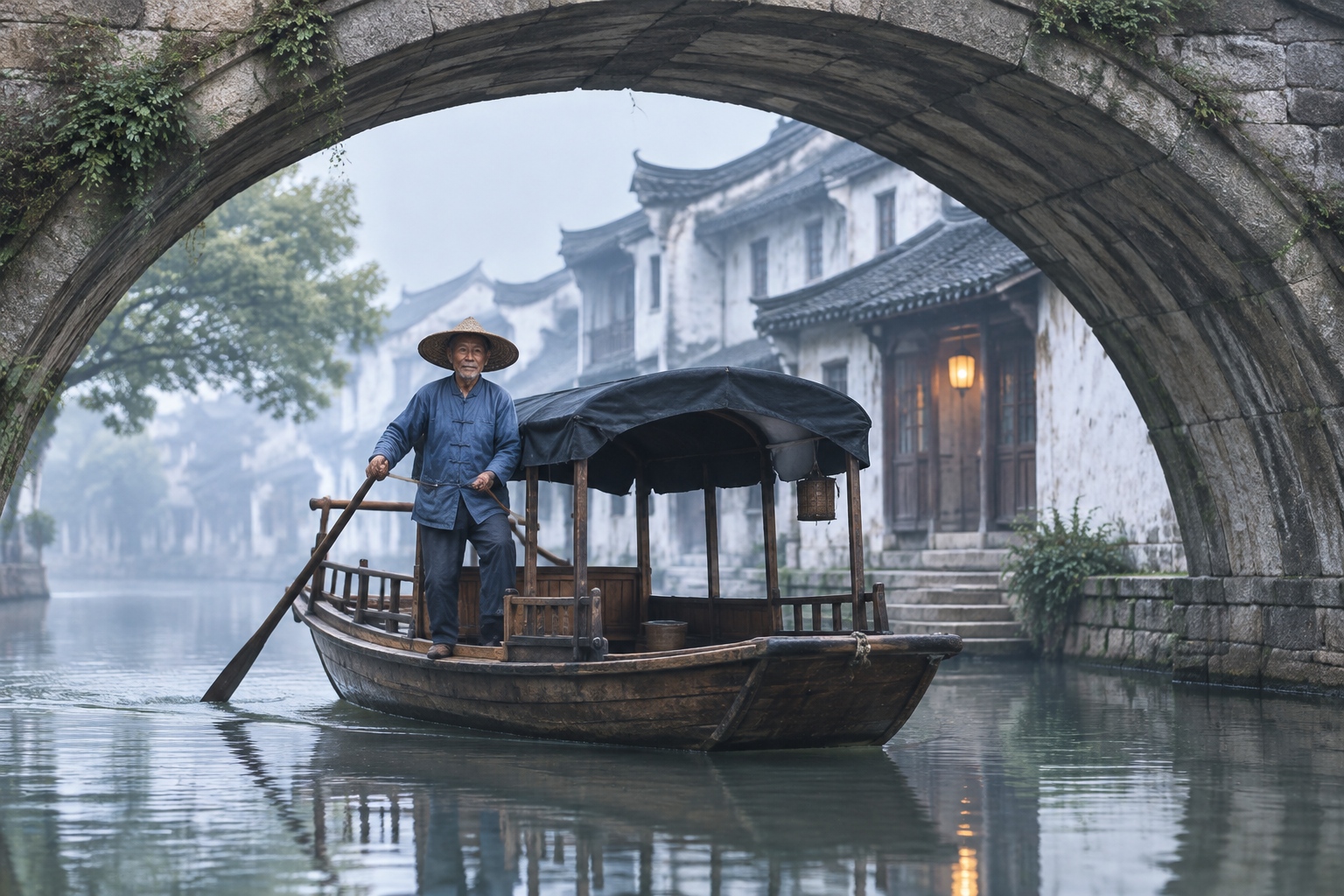
The canal is the colour of wet slate. Mist hangs level with the upstairs windows, and the only sound is an oar creaking against its wooden pin. A boatman stands at the stern of his black-awning boat — one foot on the oar, one foot on the tiller — and slides the hull under a stone arch bridge without looking up. The echo under the arch is loud enough to make you duck.
Twenty minutes later the first tour group arrives, led by someone holding a flag. The town is still lovely. It is just no longer the same town. Nearly everything worth remembering about Jiangnan — the water-and-scholar country south of the Yangtze that Chinese poetry has been worrying at for a thousand years — happens in the hour before that flag appears.
What this route actually is
Shanghai, Suzhou, Hangzhou, Huangshan, Hongcun. Eight days, six places, six different scales. Classical Chinese aesthetics stop being an exhibit behind glass and become something you can walk into: a stone-paved road, a rockery in a courtyard, a bridge over a canal, mist on a mountain.
The scale shifts by degrees, which is the whole design. A city wall. A garden that contains a mountain inside its own walls. A canal. A lake. An entire mountain. Finally a village. High-speed rail links each leg in one to two hours, so you never spend a day in transit.
Three things make it work. It is probably the densest concentration of classical beauty in the country — garden, water town, lake-and-hill, Huizhou village, four unrelated kinds of beauty strung on one line. The pace is gentle: no long bus rides, no altitude, no fitness barrier. And the scenery photographs itself; white walls and dark tiles lying in the water do not need a good camera.
Stone: Shanghai, days 1–2
Shanghai is the entrance, but do not treat it as a transfer. The Bund is a row of buildings made of stone — granite, marble, Ionic columns — where the world’s best architects competed in the 1920s. At dusk the stone turns warm gold.
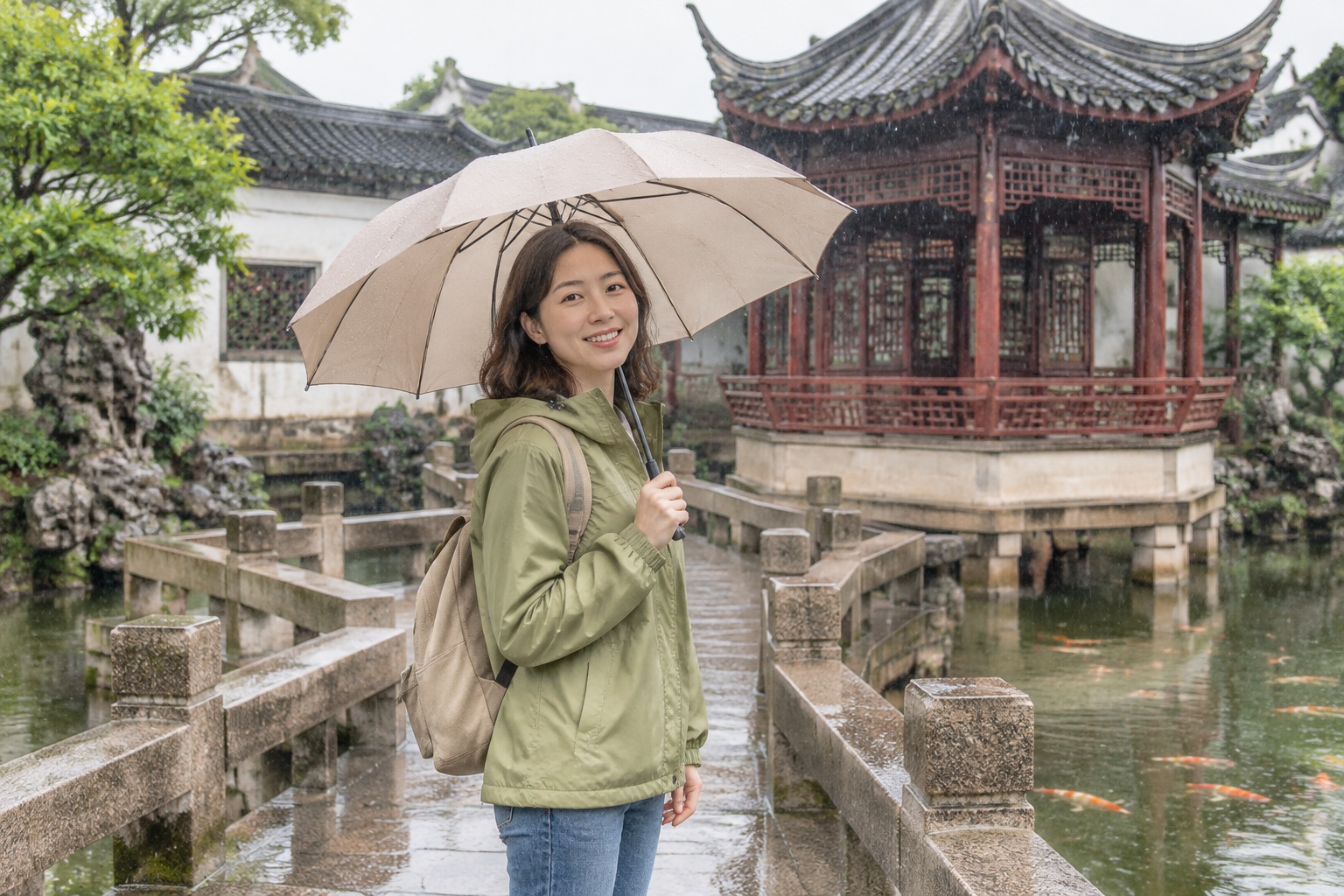
On the second morning, Yu Garden: a Ming-dynasty private garden where the zigzag bridge turns deliberately back and forth. Local lore says ghosts can only move in straight lines, so they cannot follow you across. Drink tea in the pavilion in the middle of the pond and order a basket of xiaolongbao — bite a small hole first, drink the soup, then eat.
In the afternoon, the old French Concession — now usually called the plane-tree district. On Wukang Road and Anfu Road the leaves cut the light into pieces.
Small practical note: walk the Bund from north to south so you pass the Peace Hotel, the Customs House and the old HSBC building in one line. Get into Yu Garden before nine and you will have the corridors almost to yourself.
The garden that hides things: Suzhou, days 3–4
Thirty minutes on the train and the world changes register. Suzhou is slow — people speak slowly, walk slowly, and the kitchen is in no hurry either.
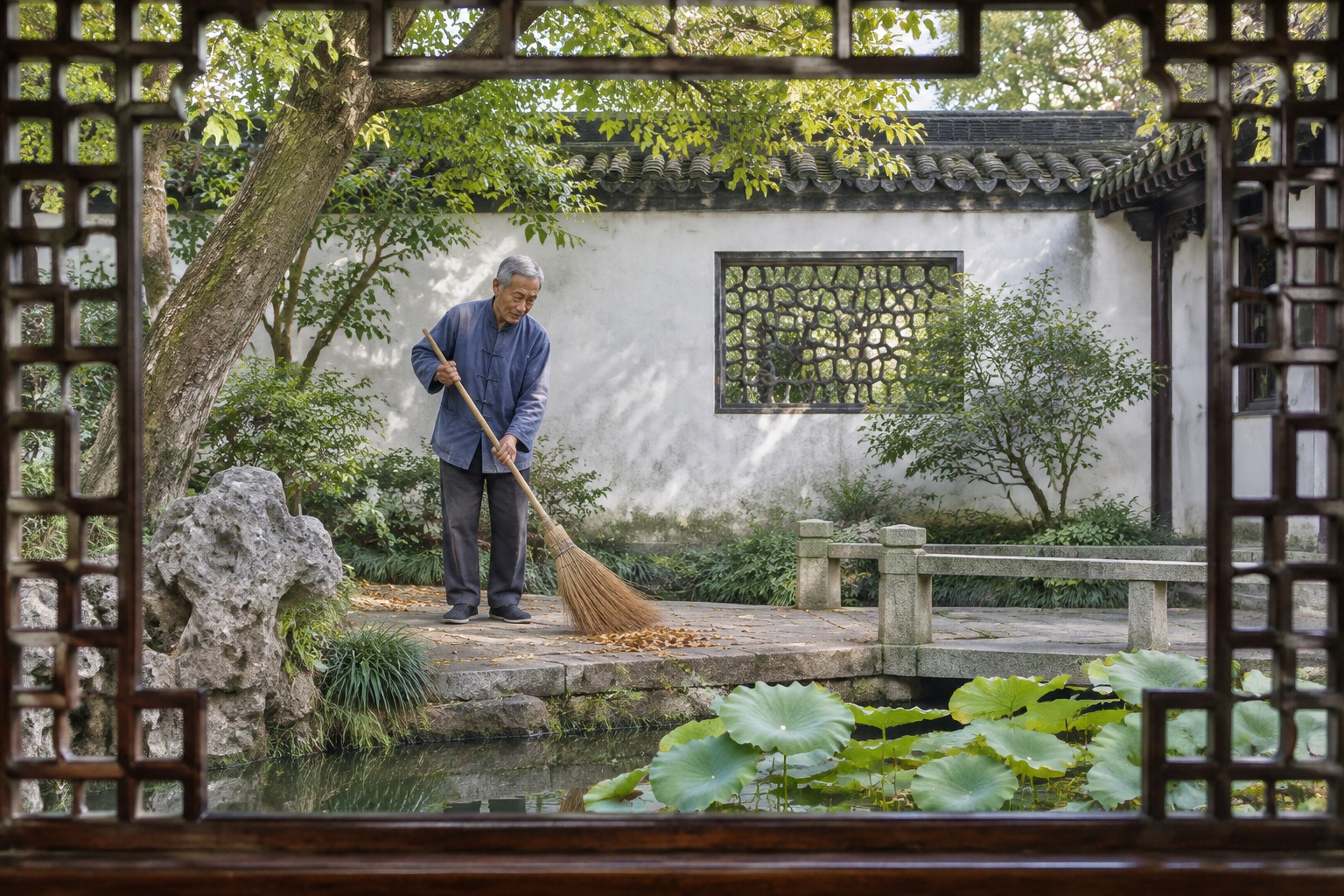
The Humble Administrator’s Garden is one of China’s four great classical gardens, built in the Ming dynasty, more than five hundred years old. Its real skill is concealment. A rockery blocks the view at the entrance; you walk around it and a whole pond opens up. The windows are perforated, and every window frames a different picture. Nothing is shown to you all at once.
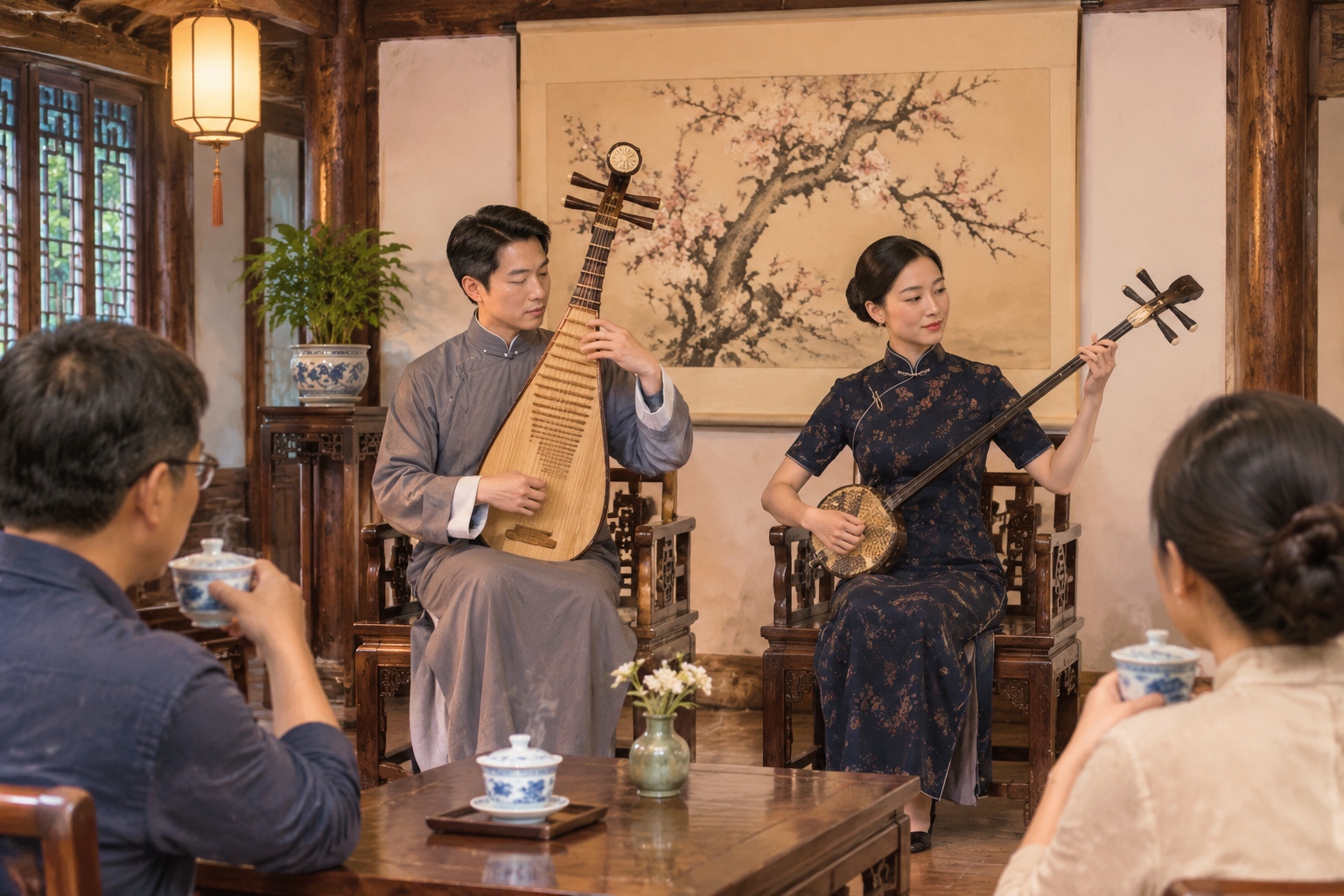
In the afternoon, Pingjiang Road: a street along a canal whose layout has not changed in eight hundred years. Water on the left, path on the right, someone washing vegetables in a doorway. When your legs give out, go into a teahouse and listen to pingtan — one man, one woman, a pipa and a sanxian. You will not understand a word and you will still understand the mood.
Small practical note: the garden opens at 7:30; be there then. Tour groups land around ten. The side alleys off Pingjiang Road are better than the main street.
Water: Tongli or Wuzhen, day 4
Two hours in the afternoon and you are in a canal town. Pick one. Tongli is quieter, and its Retreat and Reflection Garden is the rare garden built directly on the water; locals say walking across its three little bridges — Taiping, Jili, Changqing — brings peace of mind. Wuzhen is more intact, and Xizhai at night is the better show: lamps in the water turn the whole canal into a ribbon of light.
Take the boat. The boatman stands at the stern, one foot rowing, one foot steering, and pushes the hull through a stone arch. The sound under the bridge is enormous. Early morning is best — the mist has not lifted and the reflection is sharper than the original.
Back in Suzhou at night, take a boat along the old Grand Canal: lights on the bank, pingtan drifting out of upstairs windows, bridges passing overhead one after another.
Lake and tea: Hangzhou, days 5–6
At West Lake, resist the urge to walk the whole loop first. Get on the water — a hand-rowed boat or a sculled boat — and look back at the city from the middle. The boatman will point out Baochu Pagoda and Leifeng Pagoda: the old one collapsed in 1924, this is the replacement, but the sunset is the same sunset. In the evening, walk a stretch of the Su Causeway with willows trailing into the lake.
Next morning, Lingyin Temple, founded in the Eastern Jin period some 1,700 years ago. The cliff face of Feilai Peak is carved with Buddhas from the Five Dynasties through the Song and Yuan, half-hidden in shade and moss.
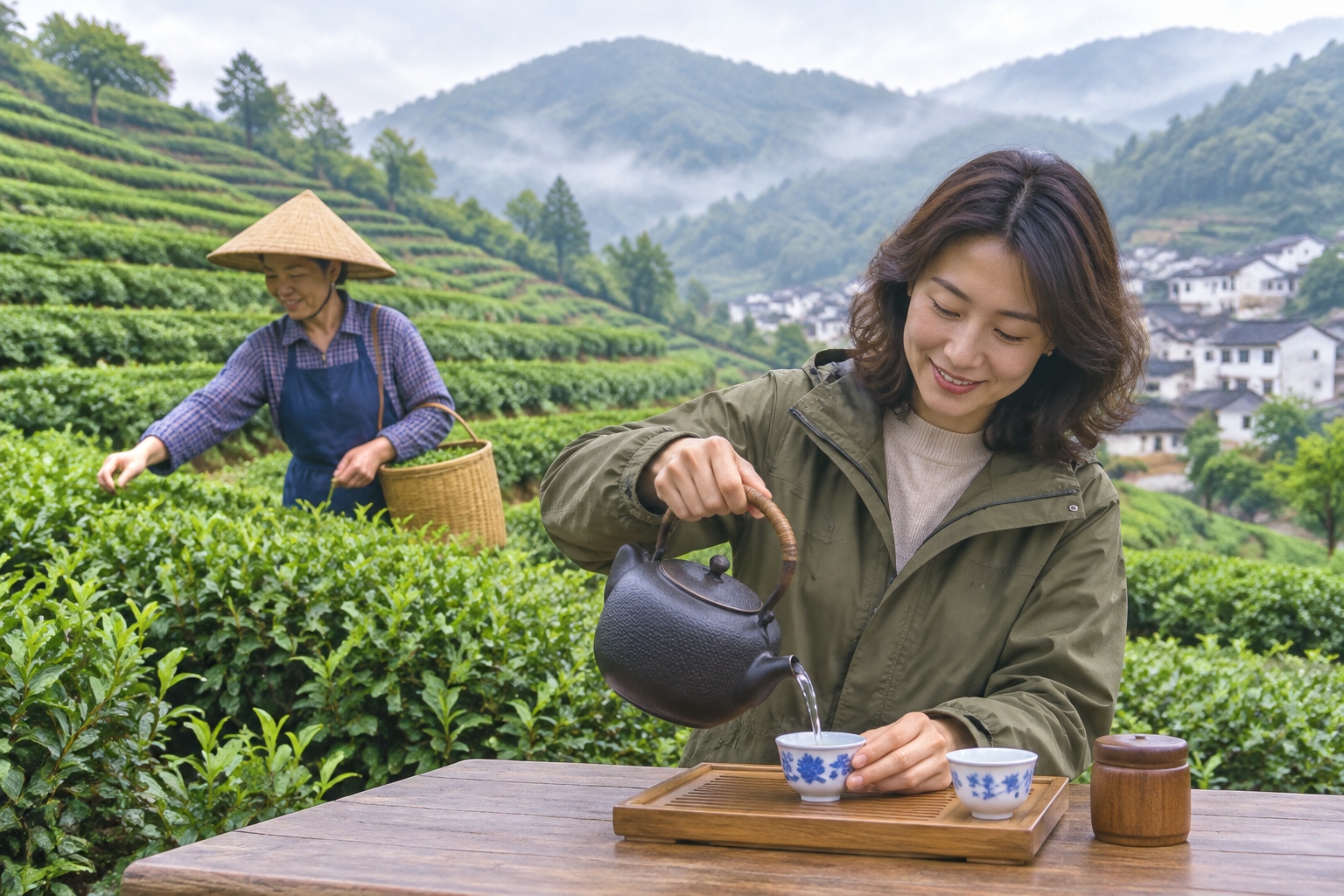
In the afternoon, go up to Longjing village or Meijiawu to see the tea terraces — bushes planted along the slope in lines that look like contour maps. Then sit down and learn the actual ritual: how to warm the cup, how to pour, why the first infusion is discarded. It is the most useful souvenir on the trip, because you can repeat it at home.
Small practical note: boats in the morning, when the lake is flat. “Direct from the farmer” Longjing ranges from a few dozen yuan to over a thousand per jin; if you cannot tell them apart, do not buy the expensive one.
Mist: Huangshan, day 7
Train to Huangshan North, then up. The mountain is famous for four things: strange pines, odd rocks, sea of cloud, hot springs. The cloud sea cannot be booked. Your best odds are a clear morning after rain.
The Guest-Greeting Pine stands at Yupinglou, well over a thousand years old, one branch extended sideways as if ushering people through. Bright Summit, at 1,860 metres, is one of the best places to watch sunrise. Sleep on the mountain and you do not have to hike in the dark.
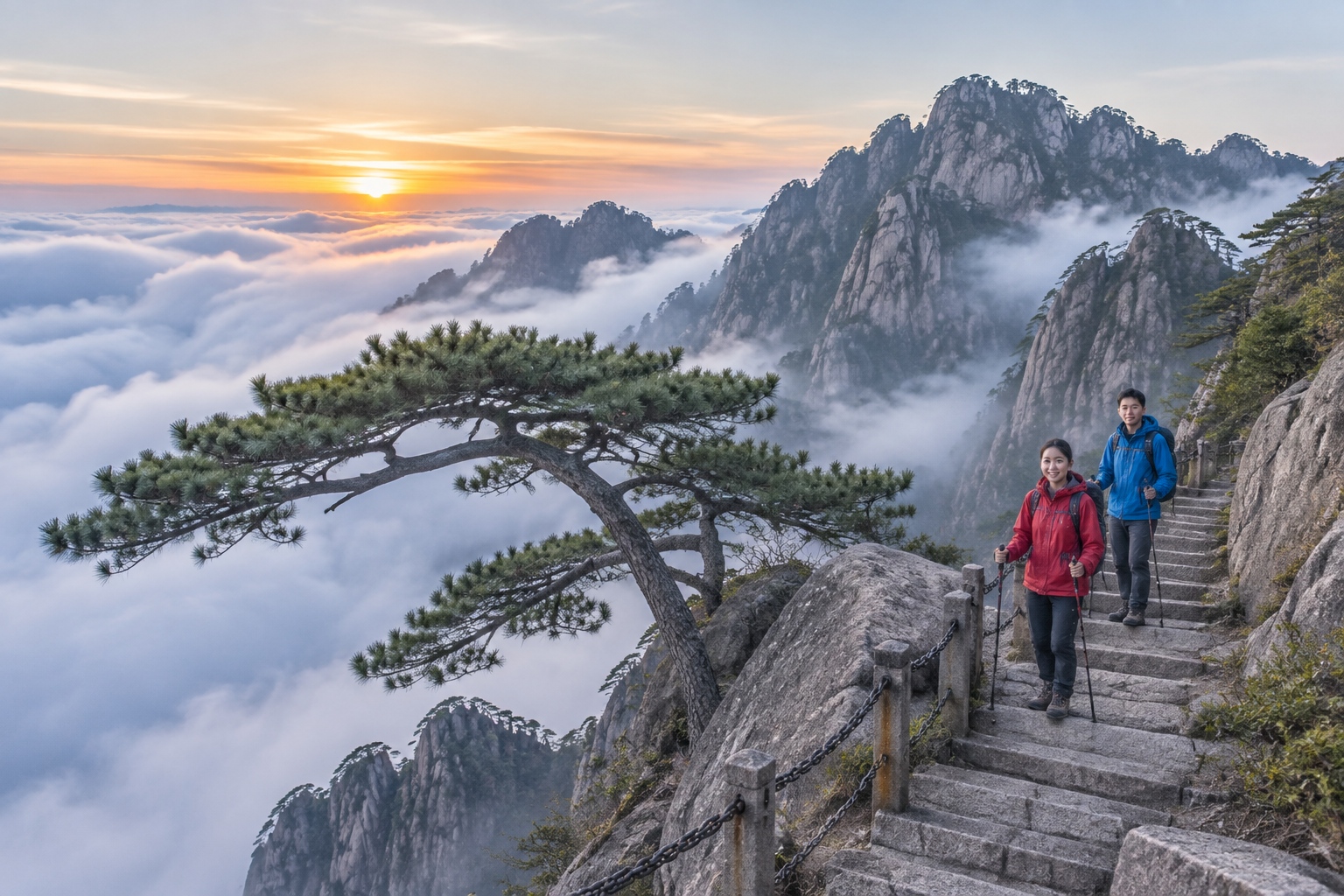
Small practical note: combine cable car with walking; there are a lot of steps, so wear shoes with grip. The summit is 8–10°C cooler than the valley — bring a jacket even in summer. And if the cloud sea does not appear, do not be disappointed. Huangshan in fog looks more like an unfinished painting, which is arguably the better version.
Village: Hongcun, day 8
Down the mountain to Hongcun, a village laid out in the Ming dynasty as a single water system shaped like an ox. Water is diverted from the stream above and runs past every doorstep in narrow channels — first for washing vegetables, then clothes, then irrigation. Six hundred years ago someone here did the water allocation.
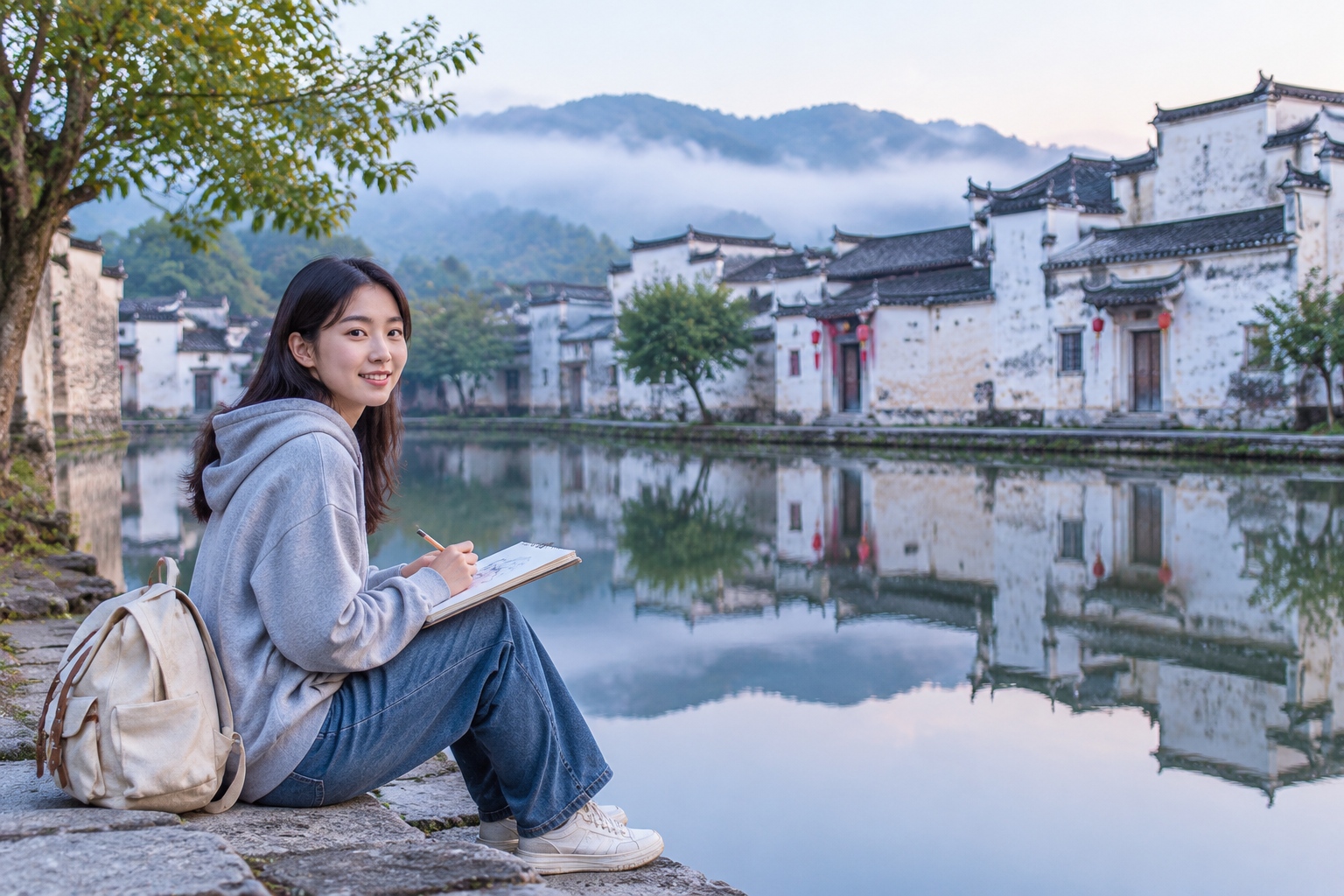
At the centre is Moon Pond, a half-moon of still water ringed by white walls and dark tiles, the reflection complete. On the South Lake there is a small painted bridge whose arch frames another version of the village.
Students come here to sketch every day, sitting on low stools for a whole morning. You can sit down too. Then leave from Huangshan by train or plane.
Small practical note: enter before 6:30, when the water is glass. Moon Pond is crowded by day; early and late it is a different village.
Things worth knowing before you go
March and April are the prettiest but wet; September to November is the most comfortable, with osmanthus in bloom; winter is quiet and Huangshan gets rime ice. Bring rain gear — Jiangnan rain arrives without warning, so a folding umbrella and shoes that tolerate water matter more than a nice outfit. You will walk 8–10 km most days; shoes beat clothes. Book garden and cable car slots early in peak season and leave the hotel an hour earlier than you think. Suzhou and Hangzhou cooking leans sweet — ask for less sugar and restaurants will adjust.
Who this suits
First-time visitors who want a gentle version of China. People who like gardens, old buildings and tea. Families travelling with parents, since there is no physical threshold. Anyone happy to spend an afternoon in a teahouse doing nothing.
It is not for people chasing spectacle, or people who lose patience in a crowd — West Lake and the Humble Administrator’s Garden are genuinely packed in high season. And half the beauty of this line lives in the rain, so it helps if a grey day does not ruin your mood.
What you take home
Not silk and not tea. A handful of specific images: wet stone railings on the zigzag bridge; the sound of a sanxian in a Pingjiang Road teahouse; the echo as a boat passes under an arch; the speed at which cloud climbs up from below your feet while you wait for sunrise on Huangshan; a white wall in Moon Pond suddenly crumpled by a gust of wind.
Eight days, walking from the stone of a city to the reflection in a village pond. That is what people here mean by Jiangnan. It is not a place so much as a way of looking at the world: shrink the mountains and rivers down to the size of a courtyard, then put yourself inside the painting.