


The car park at 6:40 a.m.
The car park at the foot of Beigao Peak, on the edge of Hangzhou, has room for about a dozen cars. At 6:40 on a Saturday morning, four are parked. One has its boot open, and a man in his mid-forties is crouching beside a ten-year-old girl, checking that her bootlaces are double-knotted.
His name is Chen. He runs an industrial sensor company with roughly 300 employees. Every other Saturday he drives out here and walks up this hill with his daughter, Xiaoyu. The phone stays in the glove box. That’s the deal, and it applies to him as much as to her. He asked me not to use his company’s name, so Chen will do.
Ask a reader outside China to picture a wealthy Chinese founder on a Saturday and you’ll probably get a golf course, a banquet table, or a phone pressed to an ear outside a factory gate. For a long time that picture was accurate, and for plenty of people it still is. But there’s a second scene playing out in the same kind of car park.

The stereotype isn’t wrong — it’s just unfinished
Start with what’s true. Private-sector founders here work punishing hours. “996” — 9 a.m. to 9 p.m., six days a week — became a national argument, not a joke. Factory owners in Guangdong, noodle shop owners in county towns, logistics operators: many of them have no weekend at all. Any story that pretends otherwise is a brochure, not a report.
But “works all the time” and “never sees his kids” are two different sentences, and the second one is where the stereotype starts to slip. Surveys of China’s high-net-worth households by the Hurun Research Institute have repeatedly placed education at or near the top of the list of things they worry about — ahead of health, ahead of property, ahead of their own companies. Money follows that worry, obviously. What’s changed is where the hours go.
One policy shift matters here. In July 2021, China’s “double reduction” (双减) rules effectively shut down weekend and holiday tutoring in core school subjects. For families who had outsourced Saturday to a cram school, Saturday suddenly came back — empty. Something had to fill it.
What the money buys now: hours
Ten years ago, the answer an affluent Chinese parent gave to “how do I raise a good kid” was mostly a purchase: a better school, a better tutor, a piano, a summer in Vancouver. The same parent today is more likely to answer with a schedule.
You can see it in the equipment. Camping took off in China between 2020 and 2022 — tent sites multiplied around big cities, outdoor brands opened stores in shopping malls, and weekend traffic heading out of Shanghai and Hangzhou became a standing joke. The boom has cooled since, as booms do, but the habit it created didn’t disappear. A tent costs less than a term of tutoring. The expensive part is the accompanying.
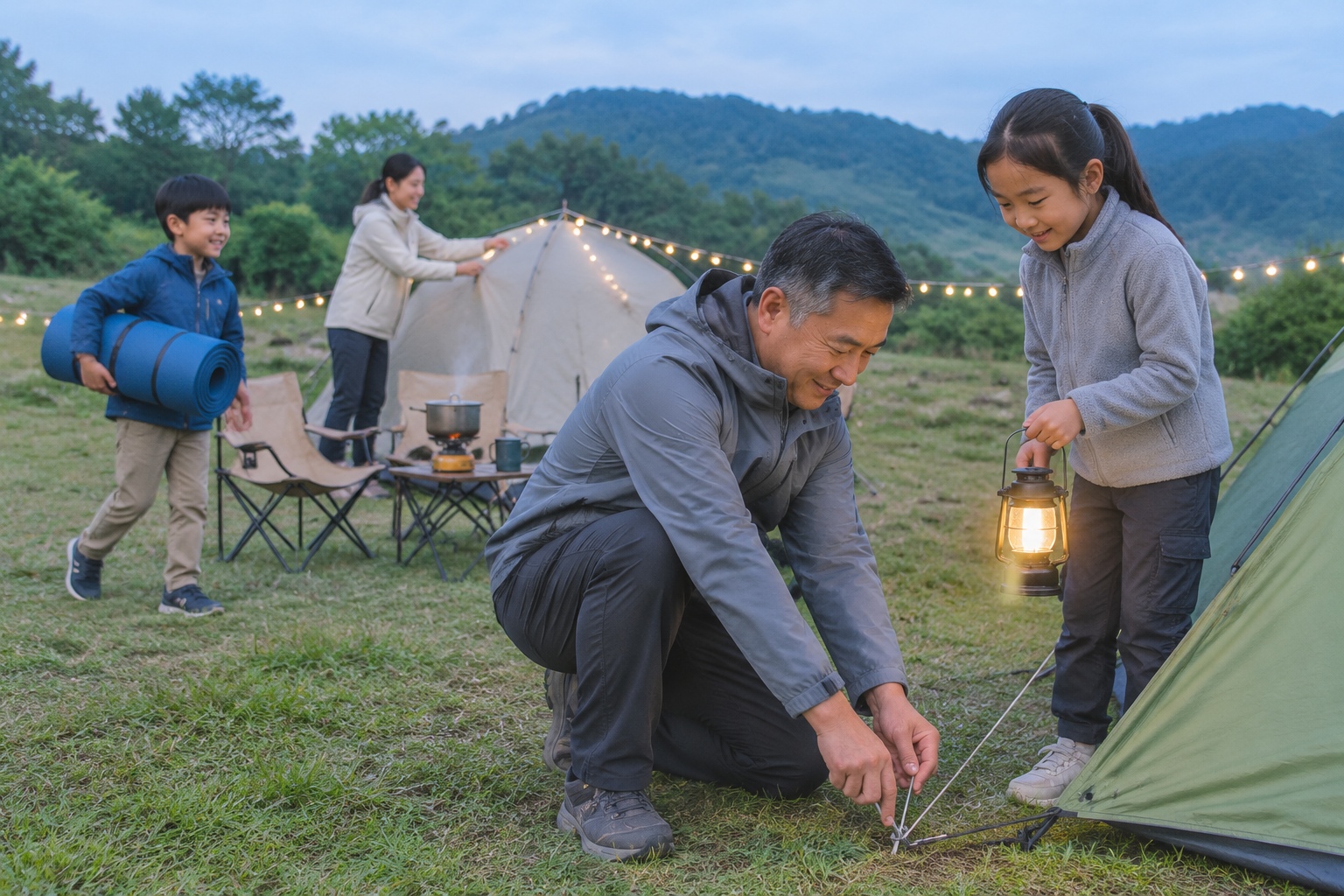
That’s the trade a lot of these parents are making, and it isn’t purely sentimental. It’s a bet that a shared experience does something a purchased service cannot.
In China, the helicopter lands
“Helicopter parent” — 直升机父母 — is a borrowed phrase in Chinese, and for years it was used as an insult: the mother who calls the teacher five times a week, the father who rewrites his son’s homework to a higher standard. Hovering, in that sense, is about control.
Among the better-off, the hovering has changed shape. It looks less like surveillance and more like co-presence: the parent who is physically there, doing the thing too, being watched while doing it. Chinese parenting writing has a word for this — 陪伴, peiban, “accompanying.” It doesn’t translate neatly. It implies presence with attention, and it’s the word these parents reach for most.
It’s worth separating peiban from 鸡娃 (jiwa) — literally “chicken-raising the child,” the drill-and-rank arms race that fills weekends with worksheets. Peiban runs the opposite way: same intensity, different object. Fewer exercises, more shared hours. An older phrase keeps surfacing when founders talk about this: 言传身教 — teach by what you say, but mostly by what you do.
A Saturday with Chen
The loop he and Xiaoyu walk is about eight kilometres: stone steps, terraced tea fields, a small temple, a bamboo grove that swallows sound. Around the third kilometre she usually starts complaining. He doesn’t argue and he doesn’t bribe her. He hands her the thermos and keeps walking.
Near the top, a man sells cucumbers out of a bucket with salt and chilli. They split one. That is, more or less, the entire curriculum.
What he ends up talking about on these walks is work — not the impressive parts. A supplier once shipped the wrong specification and then lied about it. On the trail, Chen laid out the situation for a ten-year-old and asked what she would do. “She doesn’t care about sensors,” he told me. “But she understands fairness.” They also read maps, argue about the weather, and practise being bored, which he considers a skill.
There’s a rule about turning back. Last spring they gave up halfway because her legs hurt. A tougher parent might have pushed. He didn’t. “If we’d forced it, she’d never come again,” he said. The point of the walk is the next walk.
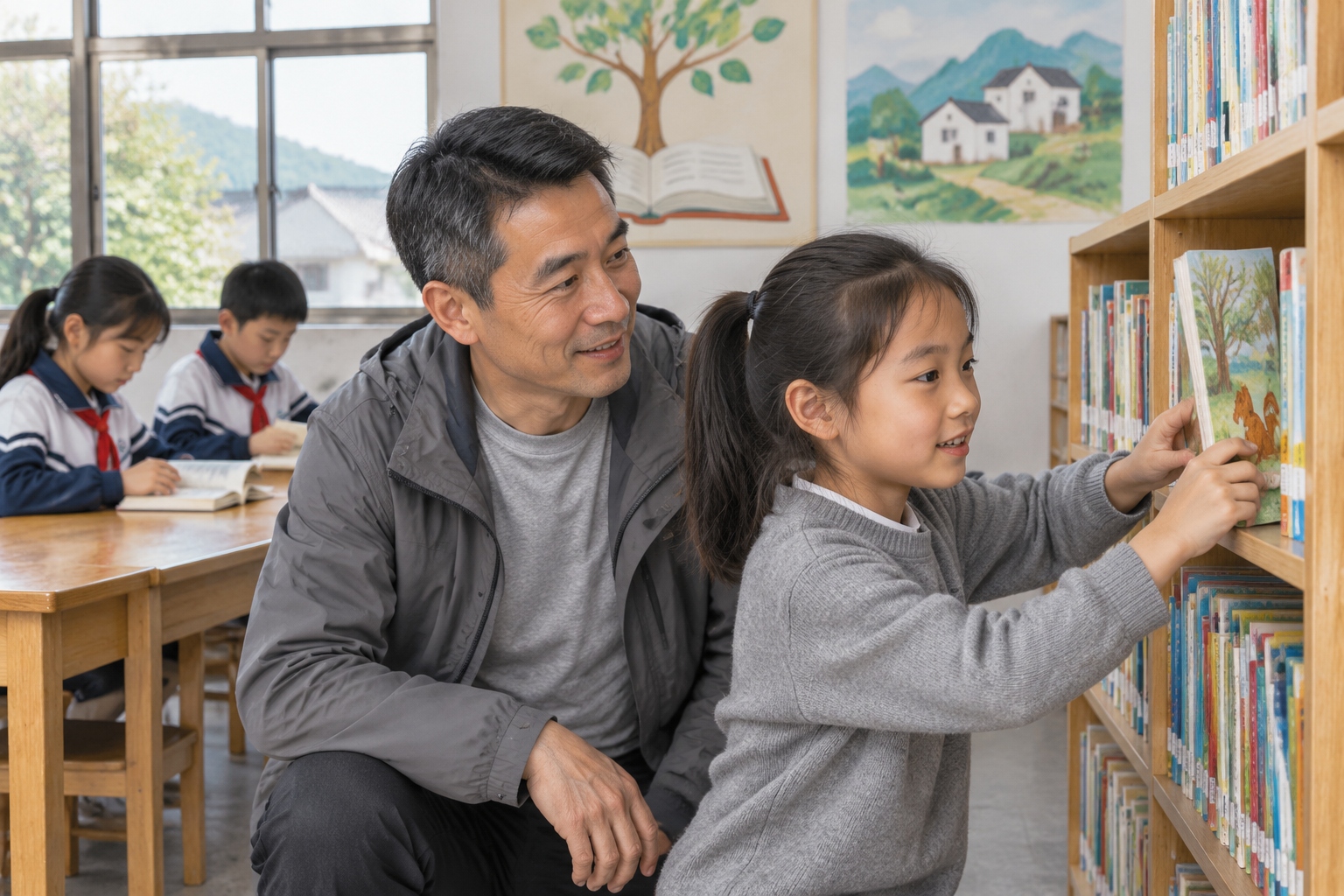
Once a quarter, the trip is different. His company funds a small library at a rural school outside the city, and he takes Xiaoyu along to shelve books.
Why this generation, why now
Three things push in the same direction.
The first is demographic. Today’s wealthy parents were mostly born between the late 1970s and the late 1980s — many of them only children themselves, now raising one child, often with grandparents nearby. They grew up as the object of adult attention and are reproducing it, sometimes more deliberately than they received it.
The second is an old anxiety with a blunt name: 富不过三代, “wealth doesn’t survive three generations.” A company can be handed over. A temperament can’t. For parents who built something from nothing, that’s not a proverb — it’s the thing that keeps them up at night. Hence the hiking, the camping, the volunteer days, the summer programmes that involve a rural homestay rather than a hotel.
The third is institutional. Schools now expect community service hours; international school applications ask about volunteering; study-travel (研学) has become a normal part of the school year. There’s a cynical reading of all this — resume-building, performed for an admissions officer. The honest answer is that both things are true at once, and it’s usually hard to tell where the performance ends and the person begins.
The part that doesn’t fit the story
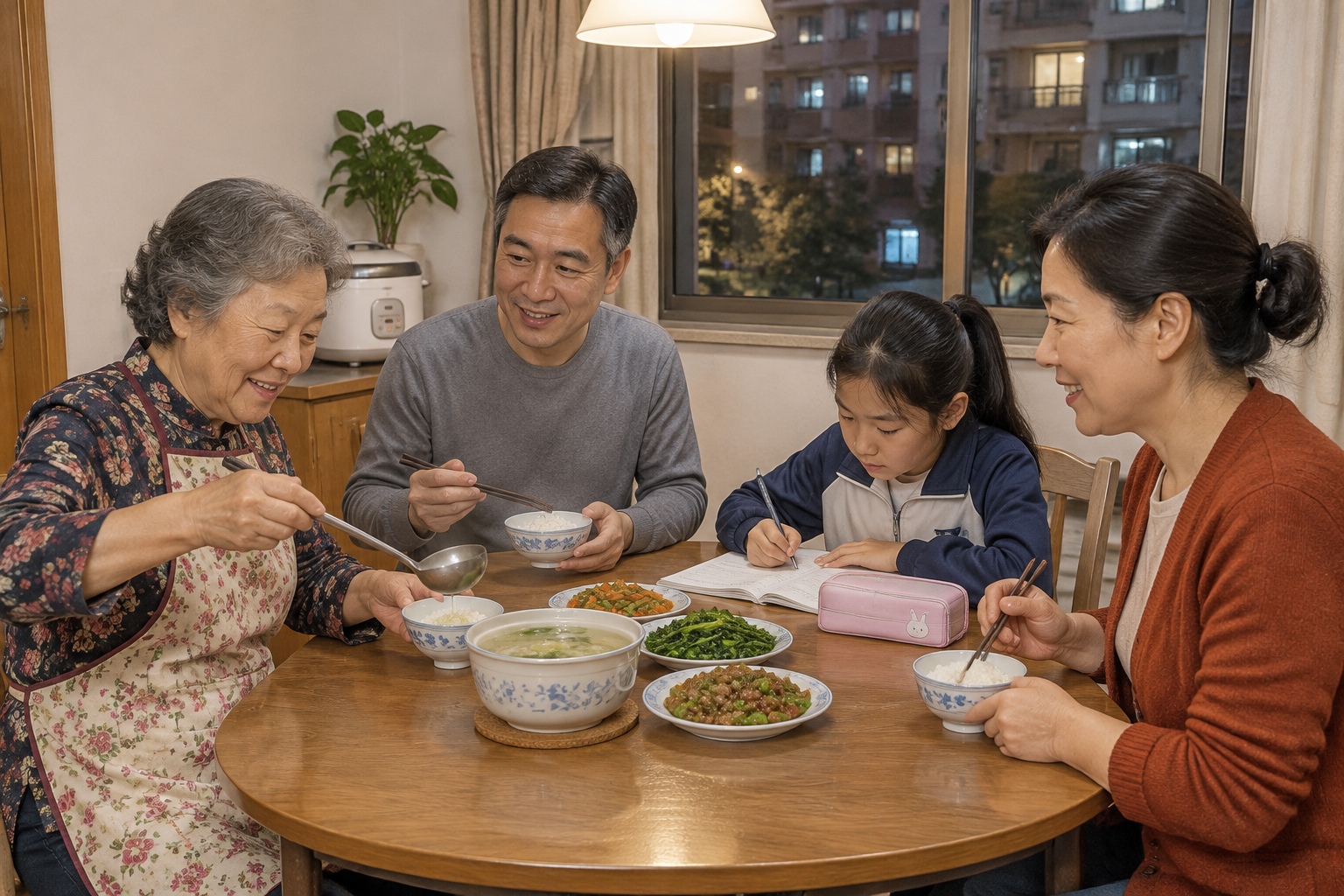
Time is distributed more unequally in China than money, and it’s the one thing you can’t borrow. A founder with a management team can take a Saturday off. The owner of a small restaurant cannot. Delivery riders, factory workers on rotating shifts, and the tens of millions of children who grow up with grandparents in rural hometowns while their parents work in cities are living a different version of the same country. Their version of parenting happens over video calls at ten at night.
Even inside the wealthy bracket, this isn’t a clean story. Some children genuinely resent the character-building weekends, the forced marches, the father who turns a camping trip into a seminar on resilience. A ten-year-old on a mountain can tell the difference between being accompanied and being managed, and she will say so.
Back to the car park
By eleven the car park is full, and the hill is crowded with people who drove out from the city. Chen and Xiaoyu come down the last flight of steps arguing pleasantly about whether the temple cat counts as the highlight. He opens the boot, puts the poles away, and takes the phone out of the glove box. It lights up immediately with the rest of the week.
For a long time, the Chinese argument about parenting was really an argument about money — who could buy the better school, the better tutor, the better head start. The newer argument is about hours, and hours are much harder to buy. That may be exactly why they feel worth so much.