
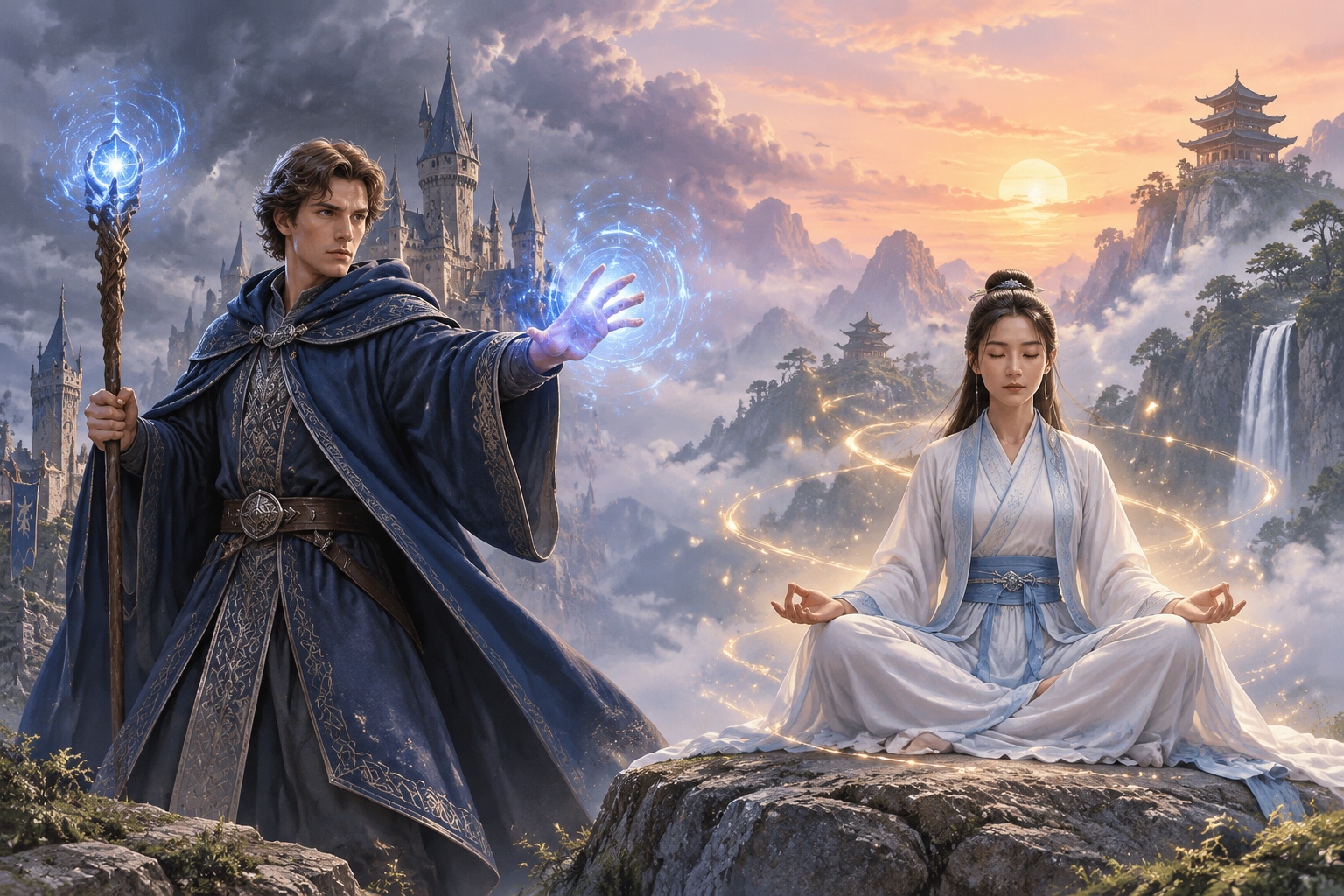

Introduction: A Tale of Two Worlds
Imagine a young man who stumbles upon a magical book. In a Western fantasy, he might learn a spell, fight a dark lord, and save the kingdom. In a Chinese cultivation novel, he would instead begin a lifelong journey of meditation, facing inner demons, and seeking harmony with the universe. These two narratives reflect deep cultural differences that fascinate millions of readers worldwide.
Western Fantasy: Divine Order and the Battle of Good vs. Evil
Western fantasy, from Tolkien’s The Lord of the Rings to J.K. Rowling’s Harry Potter, is built on a clear moral framework. Power is often external—granted by gods, magical artifacts, or innate talent. Heroes are chosen by destiny, and the story revolves around a cosmic struggle between good and evil. The ultimate goal is to defeat a villain and restore order.
This worldview has roots in ancient Greek philosophy and Christianity. The idea of a transcendent God, absolute morality, and the concept of original sin shape how power is viewed: it can corrupt, so it must be wielded with caution. Magic is a tool, often associated with taboo or forbidden knowledge.

Chinese Cultivation: The Way, Virtue, and Personal Transcendence
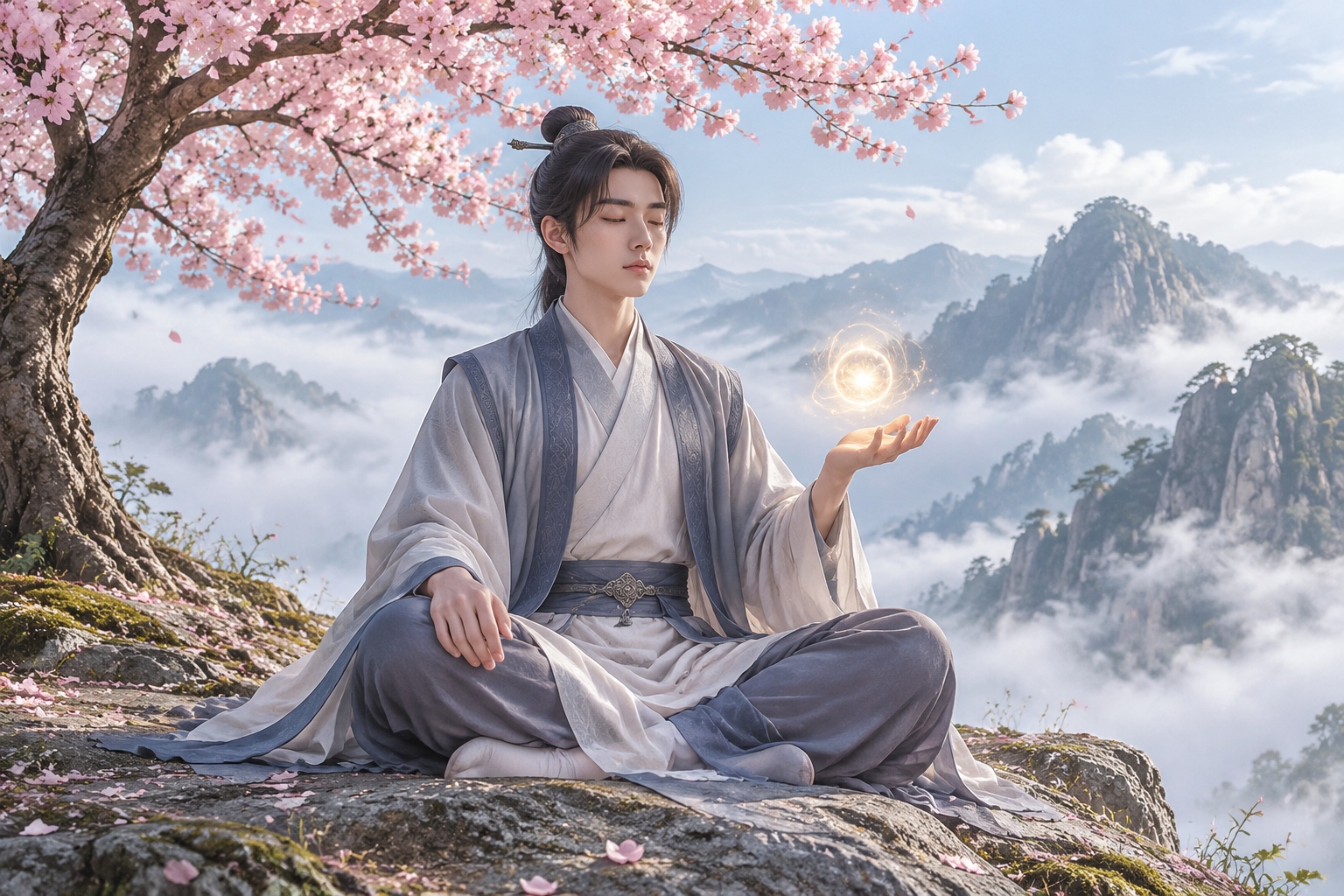
In Chinese cultivation novels like A Record of a Mortal’s Journey to Immortality or Against the Gods, the protagonist seeks not external power but inner realization of “Dao” (the Way). The goal is to break free from the cycle of reincarnation and become an immortal. Power is accumulated through meditation, alchemy, and moral cultivation. Every action has karma—good deeds bring blessings, evil deeds lead to disaster.
The concept of “De” (virtue) is central: a cultivator must align with the natural order, avoid excessive ambition, and respect the balance of all things. This reflects Daoist and Confucian ideals. Unlike Western magic, which is often a gift or curse, cultivation is a lifelong practice accessible to anyone who perseveres.
How “Dao” and “De” Shape the Story
In cultivation novels, the journey is internal. Heroes face tribulations (thunderstorms, demonic energy) that test their will and morality. They rarely win through brute force alone; wisdom and patience are key. Compare this to a Western wizard who might rely on a powerful staff or a stroke of luck. The moral of a cultivation story often is: “The true enemy is within,” while Western fantasy says, “Evil must be vanquished without.”
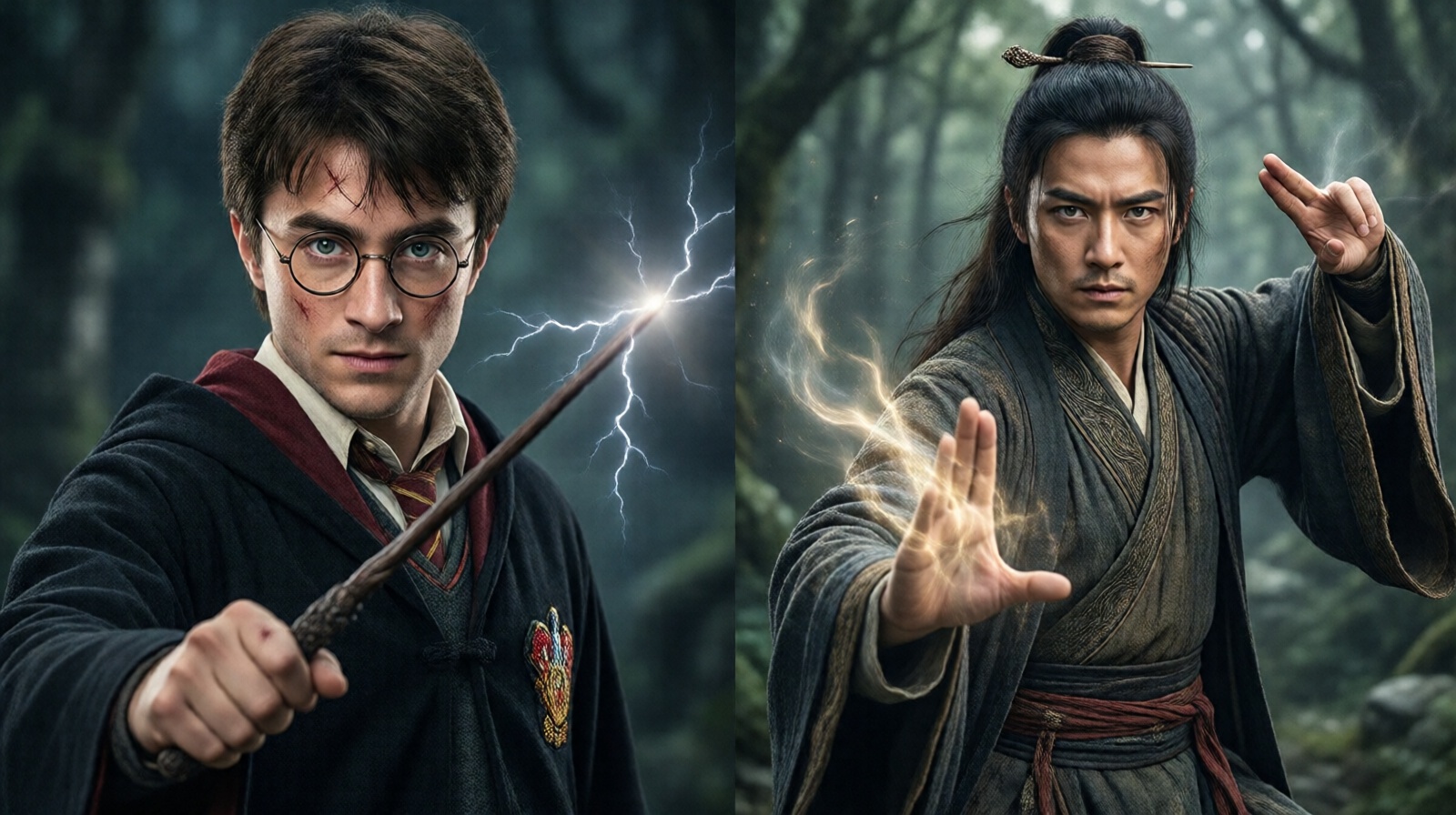
For example, in Harry Potter, Harry’s power comes from his mother’s love and his innate talent. In I Shall Be Sealed (a popular Chinese web novel), the protagonist uses cunning, hard work, and ethical choices to slowly rise from a weak beginner to a mighty immortal.
Cultural Roots: Ancient Greece & Christianity vs. Daoism & Confucianism
Western fantasy traces its lineage to Homer’s epics and the Bible. Heroes like Achilles and Beowulf embody strength and divine favor. Christianity adds a clear division between heaven and hell, with magic often seen as pagan. In contrast, Chinese cultivation draws from Daoism’s Dao De Jing and Confucianism’s emphasis on self-cultivation. The universe is not created by a god but arises spontaneously from the Dao. Morality is not dictated by a deity but emerges from harmony with nature.
This explains why Chinese stories rarely have a “dark lord” figure. Evil is often a result of imbalance or ignorance, not absolute malice. The villain might be a greedy cultivator who disrupts cosmic harmony.

An Everyday Analogy for Foreign Readers
If you work in a Western company, success might come from winning a promotion (external reward) or outshining competitors. In a Chinese workplace, success often depends on building relationships (guanxi), maintaining humility, and following the unspoken rules of harmony. That is the difference between Western fantasy’s “power-up” and Chinese cultivation’s “cultivation of virtue.” Both aim for success, but the paths reflect different values.
Another analogy: a Western gym trains muscles (external), while a Chinese martial arts school trains qi and balance (internal).
Conclusion: Why Cultivation Novels Resonate in Modern China
In today’s fast-changing China, many people feel stressed by competition and uncertainty. Cultivation novels offer a fantasy where effort, patience, and moral integrity are rewarded over time. They revive ancient philosophies in a modern context, giving readers a sense of control and purpose. No wonder these stories have exploded in popularity on platforms like Qidian and Webnovel, attracting not only Chinese but also global fans curious about a different kind of hero’s journey.
The next time you pick up a Chinese fantasy, remember: behind the flying swords and pill concoctions lies a worldview that values inner peace over outer power. And that might just be the most magical thing of all.