


A clinic question that starts with emotions, not organs
In a bright community health center in Chengdu, a woman in her early 30s describes insomnia and a stomach that tightens after meals. Her blood tests are unremarkable. The doctor, a Chinese woman in her 50s with short black hair and a white coat, takes her pulse, looks at her tongue, and asks: ‘Have you been angry a lot lately?’
The question is not about blame. It is about context. In traditional Chinese medicine (TCM), emotions are not treated as private mental states floating above the body. They are part of the body’s movement. That is why a stomach problem can lead to a conversation about anger, and why a conversation about anger can lead back to the stomach.

The five emotions and the five organs, in plain terms
The classic TCM map pairs anger with the liver, joy with the heart, worry or overthinking with the spleen, grief with the lungs, and fear with the kidneys. Textbooks call these the five emotions, or wuzhi. Older texts sometimes list seven and group them differently, but the five-organ correspondence is the version most people meet in clinics and popular books.
The logic comes from a medical system built on correspondences: yin and yang, the five phases, qi, blood, and the zang-fu organs. In this system, an organ is not just a piece of anatomy. It is a functional cluster tied to a season, a taste, a tissue, and an emotional tendency. The liver is linked to free flow and the smooth movement of qi. The heart houses the shen, often translated as spirit or consciousness. The spleen governs digestion and transformation. The lungs govern qi and the skin. The kidneys store essence and are linked to fear and will.
To a biomedical reader, this can sound like poetry. It is. But it is also a clinical language. Practitioners use it to organize symptoms, ask questions, and decide what to do. It is closer to a map than to a lab report. A map can be useful without being a photograph.
Why ‘anger hurts the liver’ is not a liver-disease warning
This is where many overseas readers get stuck. In English, ‘liver’ means the organ that filters blood and processes bile. In TCM, ‘liver’ includes that organ but is not limited to it. ‘Anger hurts the liver’ is not a claim that one shouting match causes cirrhosis. It is a way of saying that chronic frustration can disturb a pattern of tension, sleep, digestion, and menstrual cycles that TCM labels as liver-related.
The same caution applies to the other pairs. ‘Joy hurts the heart’ does not mean happiness is bad for you. It usually refers to excessive or unsettled excitement—the kind that leaves a person unable to settle, with palpitations or insomnia. ‘Worry hurts the spleen’ points to the way rumination can dull appetite, make stools irregular, and leave a person feeling heavy and tired. ‘Grief hurts the lungs’ captures the chest tightness and shallow breathing many people notice after a loss. ‘Fear hurts the kidneys’ links sudden fright to urgency, lower-back weakness, or frequent urination—as a pattern, not a diagnosis.
Chinese everyday speech carries these ideas without requiring belief in them. A frustrated colleague says ‘my liver is on fire’. A worried parent says ‘my lungs are about to explode from anger’. An English speaker says ‘worried sick’ or ‘scared to death’. Different cultures draw the line between mind and body in different places, but they keep drawing it.
The modern mind-body bridge
Modern psychosomatic medicine does not use the language of liver qi, but it has its own map of two-way signals. Chronic stress affects the hypothalamic-pituitary-adrenal axis, the autonomic nervous system, and inflammatory markers. The gut has its own nervous system and a constant conversation with the brain. Grief and sudden shock can trigger real cardiac events, including takotsubo cardiomyopathy, sometimes called broken heart syndrome. Anxiety can produce palpitations, sweating, and shortness of breath. Depression can change appetite, sleep, pain thresholds, and immune function.
This does not validate every TCM claim. It does show that the old idea of separate organs and separate emotions was always too simple. A gastroenterologist may describe a problem as stress-related gastrointestinal dysfunction; a TCM doctor may describe it as spleen deficiency with liver qi stagnation. The words are not interchangeable. The clinical attention is similar: sleep, appetite, bowel habits, mood, and social context.
In China, many patients use both systems. Large public hospitals often have a gastroenterology department and a TCM department in the same building. Patients move between them, sometimes with the same complaint and different explanations. That is not necessarily confusion. It can be a practical way to cover different angles.
What it looks like in ordinary life—and where it goes wrong
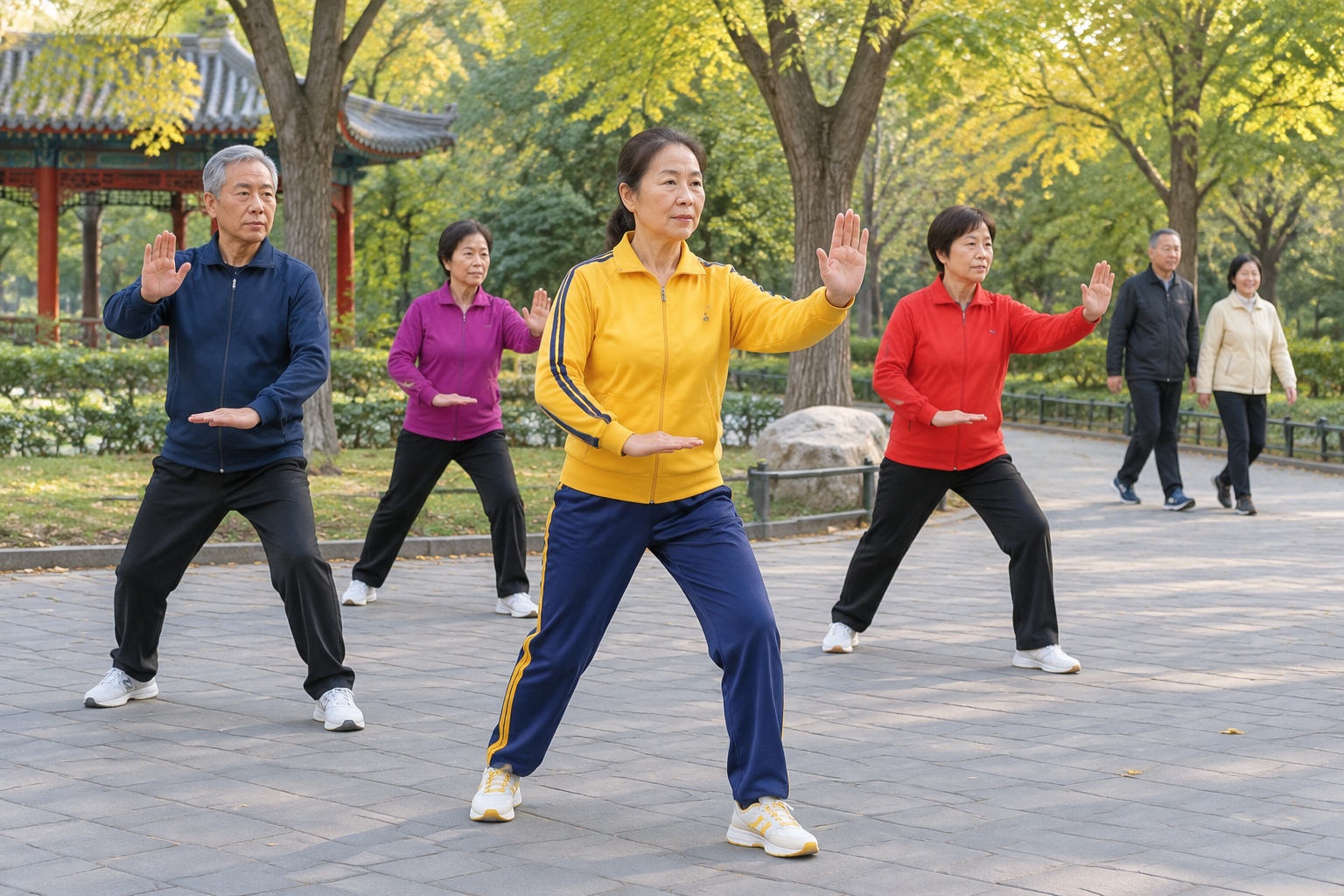
You can see the five-emotion idea in places that have nothing to do with clinics. In a Shanghai office at 9 p.m., a young analyst rubs her temples and says she has ‘too much fire’. Her colleague tells her to drink chrysanthemum tea. In a Beijing park at 7 a.m., retirees practice slow qigong movements, not because each movement targets an organ, but because it helps them feel less stiff and less anxious. In a family group chat, an aunt sends an article about ‘not holding anger in’, and everyone ignores it until someone says they have been sleeping badly.

This is not a nation of people who think emotions cause all illness. It is a culture where the language of emotions and the language of organs have never been fully separated. That can be useful. It can give people permission to mention stress in a medical setting where otherwise they might only mention stomach pain. It can also be misleading, especially when it becomes a way to blame a patient for being sad or angry.
The biggest risk is turning a cultural explanation into a causal promise. ‘Your liver is angry’ can sound like a diagnosis. ‘You need to stop being sad’ can become a moral instruction. Neither is good medicine. Emotions are real physiological events, but they are not simple switches. A person can have a healthy emotional life and still develop cancer, diabetes, or depression. A person can be chronically angry and have no liver disease at all.
Careful practitioners use the five-emotion map as one lens among many. They check for red flags: unexplained weight loss, blood in the stool, persistent fever, severe pain, sudden shortness of breath, chest pain, fainting, or a change in bowel habits that lasts for weeks. They refer when they need to. The same rule applies to any clinician, whatever the tradition.
When to seek professional help
If you are in China and struggling with persistent anxiety, depression, or unexplained physical symptoms, general hospitals in most large cities have psychiatry, psychosomatic medicine, or clinical psychology departments. If you are outside China, start with a primary care doctor or a licensed mental health professional. In an emergency—chest pain, difficulty breathing, fainting, thoughts of harming yourself—call local emergency services or go to an emergency department. Do not wait to balance your qi.
For everyday stress, the old map can still be a decent conversation starter. Ask yourself: Am I angry, and where do I feel it? Am I worried, and what has it done to my appetite? Am I grieving, and has my breathing changed? These questions do not diagnose anything. They reconnect what modern life often splits apart: the person who has the symptom and the life that surrounds it.
At the end of the Chengdu consultation, the doctor does not tell the woman that her anger has damaged her liver. She suggests lunch away from her desk, a twenty-minute walk after dinner, and a follow-up in two weeks. She also asks her to return for a blood test if the stomach pain continues. The old language and the new language sit in the same room. Neither has to win.