

What a visitor notices first on the clinic wall
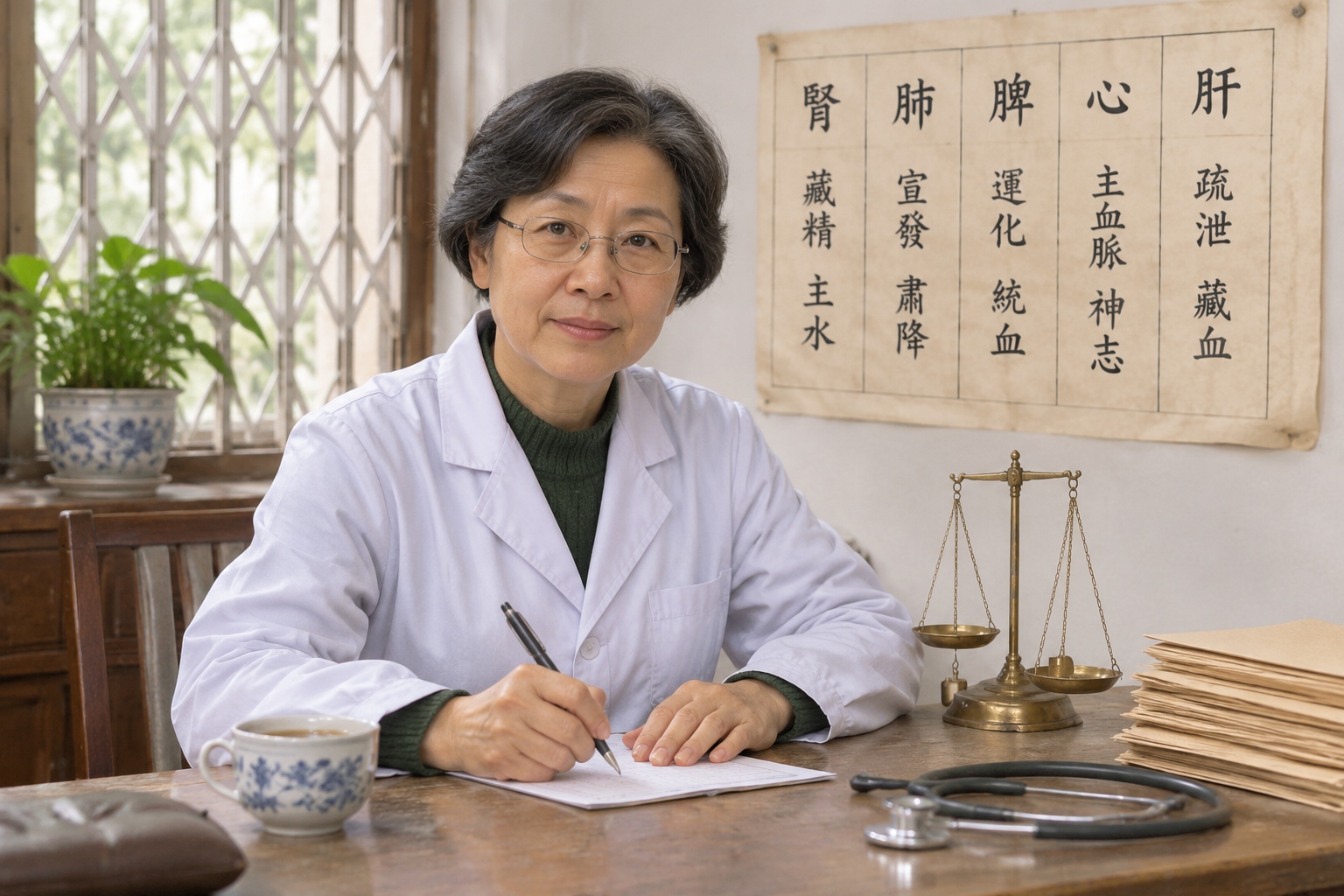
In a fourth-floor clinic above a wet market in Chengdu, Dr. Lin keeps a chart taped to the wall behind her desk. It has five columns. Each column lists an organ, a season, a color, a sound, an emotion, a taste. A woman in her early thirties has come in about her stomach. Within ten minutes she has been asked about her temper, her sleep, her eyes, her menstrual cycle, and whether she sighs a lot without noticing.
To a visitor from Europe or North America, the chart reads like an old chemistry table that never got corrected. Wood is assigned to the liver, fire to the heart, earth to the spleen, metal to the lung, water to the kidney. It looks like a taxonomy of substances, the kind of thing that a periodic table was invented to replace.
It is not that. The chart is closer to a wiring diagram. The rows matter far less than the arrows that connect them.
The mistranslation is baked into the English name
“Five Elements” is a translation problem that has been repeated for so long that it now feels natural. The Chinese term is 五行 — wǔ xíng. Xíng means to move, to go, to act, to conduct. If Chinese thinkers had meant five materials, they had a word for it: 五材, wǔ cái, five substances. That is not the term that survived.
So a more literal rendering is “five movements” or “five phases.” Greek cosmology had four elements — earth, air, fire, water — and those really were substances, which is why chemistry could later replace them. The Chinese five phases were never a claim about what things are made of. They were a claim about how things move, and in what order.

Two verbs do most of the work: sheng and ke
The five phases are held together by two basic relationships. The first is 生, shēng, generating: wood feeds fire, fire leaves ash that becomes earth, earth bears metal in its veins, metal collects water as condensation, water grows wood. The second is 克, kè, controlling or restraining: wood’s roots break up earth, earth dams water, water puts out fire, fire melts metal, metal cuts wood.
Notice what kind of statement each of these is. None of them says “wood is this.” Every one of them says “wood does this to fire.” The unit of meaning is the verb, not the noun.
Mapped onto the body, the five phases become five functional networks rather than five anatomical organs. The Liver here is not the lump of tissue your doctor can biopsy. It is a network that includes mood regulation, tendon tone, eye function, and the smooth flow of the menstrual cycle. The Spleen is not just the organ that filters blood; it is digestion, absorption, and the energy you have after lunch. This overlap is the single biggest source of confusion for foreign readers, because the same English words are being used for different objects. It is a bit like how “the market” in economics is not a place you can walk into.
What a feedback loop feels like inside a body
A 34-year-old UX designer in Shenzhen comes to the clinic. She eats dinner at ten at night, sleeps at two, snaps at colleagues, has acid reflux, loose stools, and a habit of sighing. Her periods have become irregular and painful.
Dr. Lin’s sentence is short: liver wood is overacting on the spleen earth — 肝木乘脾土. The word 乘, chéng, means to ride over, to press on. The normal restraining relationship between wood and earth has been pushed past its limit, like a supervisor who starts doing a colleague’s job badly.
The treatment principle follows from the sentence, not from a list of symptoms: 疏肝健脾, ease the liver, support the spleen. She is given a box of 逍遥丸, Xiao Yao Wan, which you can buy in any pharmacy chain in China without a prescription, next to the vitamin C.
This is what it means to call the five phases a diagnostic language. Nobody in that room believes the patient contains wood. Wood is a position in a network, and the diagnosis describes the direction of pressure inside it.

Cheng and wu: when a loop fails in two different directions
Two more terms make the model more precise than a simple balance metaphor.
乘, chéng, is over-acting: the same direction as normal control, but excessive. Liver pressing too hard on the spleen, as above.
侮, wǔ, is insulting or rebelling: the direction reverses, and the party that should be controlled pushes back. Liver fire scorching the lung produces the kind of dry cough that gets worse when someone is angry or stressed. Spleen failing to hold water leads to edema — earth that can no longer dam the river.
This is where a flat list of five substances would be useless. Chéng and wǔ give a clinician vocabulary for direction and for degree. They make it possible to say not just “something is wrong with the digestion” but “the digestion is being pressed from this side, and here is how hard.”
Mother and child: a reasoning step you can follow
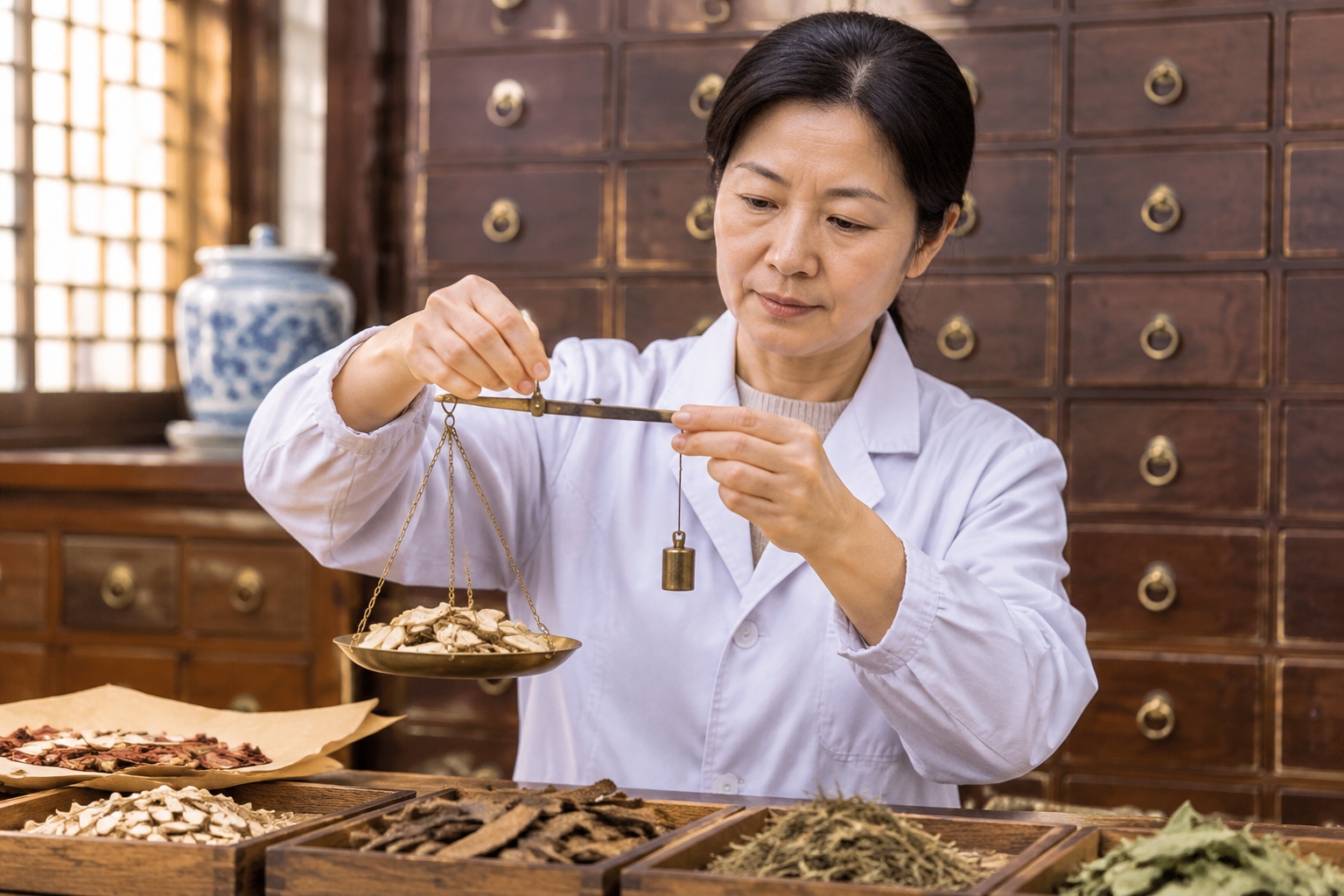
Inside the generating cycle there is a second relation, 母子, mother and child. Whatever generates is the mother; whatever is generated is the child. This gives an actual rule of practice: 虚则补其母, when the child is deficient, tonify the mother.
A chronic cough with fatigue and poor appetite, read as lung deficiency, may be treated by strengthening the spleen, because earth generates metal — 培土生金, “pile earth to give birth to metal.” Anyone who has taken a Chinese herbal formula for a lingering cough after a bad winter has probably met this reasoning without knowing it.
The point is not whether you accept the physiology. The point is that the model is rule-governed. You can follow a chain of reasoning, disagree with a step, and argue about it. That is what separates a language from a mood.
Western readers have had this kind of medicine too
Relational medicine is not uniquely Chinese. European physicians worked with the four humors — blood, phlegm, yellow bile, black bile — for nearly two thousand years. That system also explained temperament and illness through balance and interaction rather than through substances alone. It faded out in the nineteenth century as pathology, anesthesia, and germ theory made a different kind of explanation far more useful.
The fair question, then, is why the Chinese model did not fade. Several answers are plausible, and they are mostly historical rather than mystical. It was never a physics claim, so chemistry never falsified it. It was carried by a continuous textual and clinical tradition with centuries of case records. It was cheap and portable, absorbed into the language of food and daily habit rather than locked inside universities. And in the twentieth century, China institutionalized it: dedicated hospitals, five-year degrees, insurance coverage, national standards for herbs.
Separating the system’s internal logic from its clinical evidence is the honest move here, and it cuts both ways. Some herbs have produced real drugs — the antimalarial artemisinin came out of a project reading 青蒿 in a fourth-century text, work that won Tu Youyou a Nobel Prize in 2015. Plenty of other claims remain unproven, and some are overstated. A reader can hold both facts at once.
The vocabulary is already in everyday Chinese
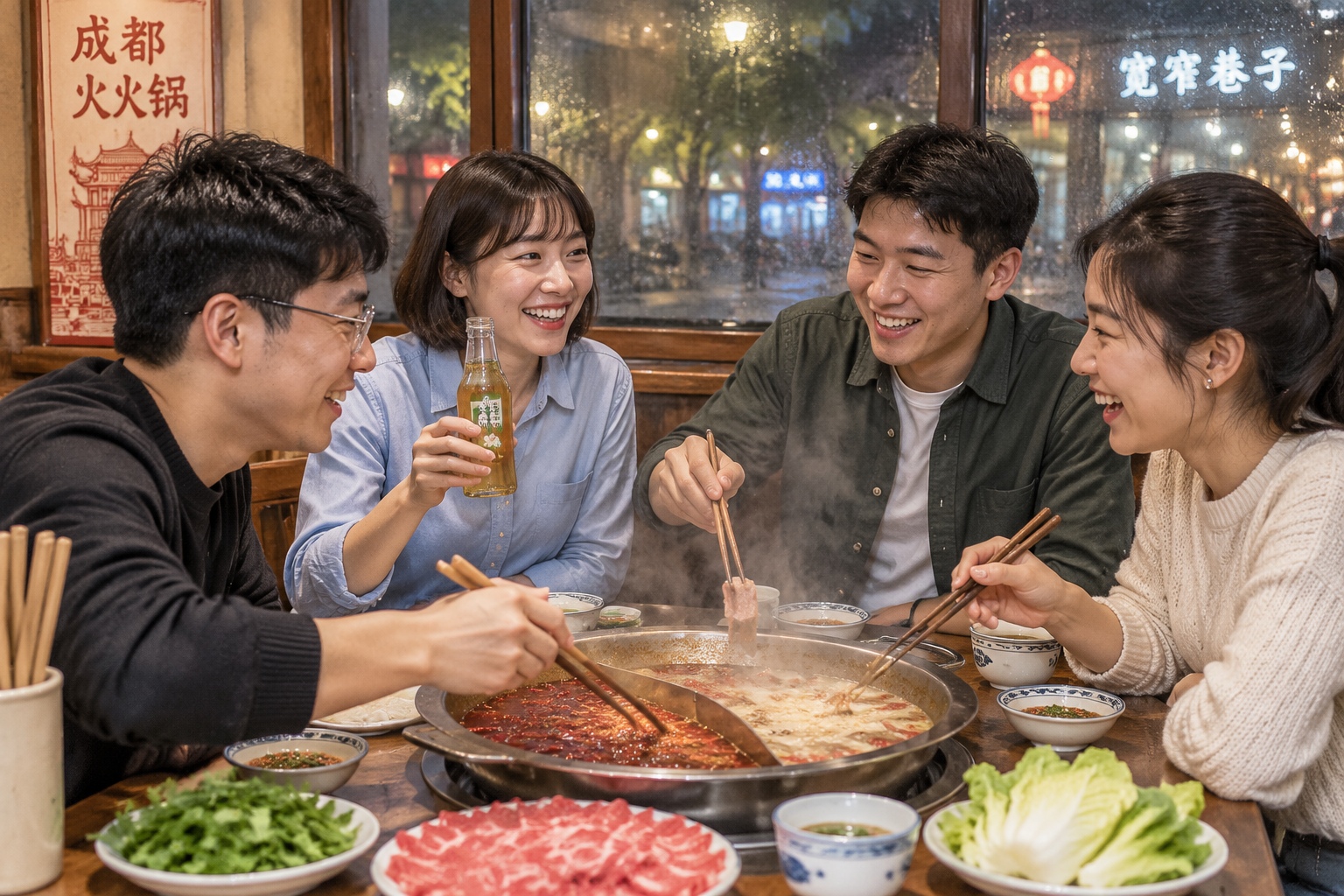
You do not need to visit a clinic to meet the model. It is in ordinary conversation. 上火, shàng huǒ, “fire rising,” is what you say when your mouth breaks out in ulcers after three nights of hotpot and 2 a.m. bedtimes. 湿气重, “heavy dampness,” appears in half the wellness advertising in the country. 肝火旺, “liver fire is strong,” is a standard explanation for a short temper.
This vocabulary shapes behavior in small, visible ways. A 26-year-old in Shanghai drinks a bottle of herbal tea after a week of late nights. A grandmother tells her grandson not to eat mangoes while he has a sore throat. Hospitals run 治未病 centers — literally “treating before illness” — aimed at people who are not sick yet.
Some of this is genuine clinical culture. Some of it is marketing. The two are tangled together on the same shelf, and Chinese consumers navigate the difference the way anyone navigates a pharmacy aisle.
Where the model gets flattened and misused
Search Chinese social media for the five phases and you will mostly find one-to-one correspondences: eat red foods for the heart, green for the liver, yellow for the spleen. That is exactly the thinking the system is not. Two patients with the same stomach pain can get entirely different relational readings depending on everything else in the picture. The correspondence tables are a memory aid, not the method.
There are real criticisms, too. A model built on relationships can absorb almost any outcome after the fact, which makes it hard to falsify. Its language can slide into vagueness. And there are practitioners who over-claim, especially in the commercial wellness sector.
The useful habit for an outsider is to ask a different question than “is wood real?” Ask instead: which relationship is being described, in which direction, and with what degree of pressure? Once you ask that, the chart on the wall stops looking like bad chemistry and starts looking like a diagram of a system talking about itself.
Back to the fourth-floor clinic
The woman in Chengdu asks Dr. Lin directly: “So do I have too much wood in me?”
Dr. Lin laughs. “You don’t have wood,” she says. “You have a pattern of tension that is pressing on your digestion. Wood is how we describe the direction the pressure is coming from. Fix the tension and the wood goes back to being a tree.”