


“Drink some hot water.” A friend in Shanghai says it as she slides a mug across the kitchen table. You’ve just come in from the rain. There’s an electric kettle on the counter, a towel on the back of a chair, and plain warm water in the mug. If you grew up in a household where the kettle came out for tea or coffee, you might pause for a second. Is this the drink, or is she about to bring out the tea?
Picture that kitchen as one everyday example. The Chinese phrase, hē diǎn rè shuǐ (喝点热水), can be a simple offer when there’s a cup in front of you. It can also come from a parent on the phone after you mention a sore throat, or from a friend who has heard that you’ve had a rough day. The English translation carries the words over just fine. The cup, the timing, and the relationship are harder to bring along.
What does “drink some hot water” mean in China?
The little word diǎn means “some” or “a little.” It softens the invitation. In the kitchen, “Here, have some warm water” comes closer to the way the line lands. When someone says it after hearing you shiver, “Have a sip and warm up” may capture the intent. On the phone, where there’s no mug to hand over, the same words sound more like a suggestion.
Temperature is part of the confusion. Water offered as rè shuǐ, literally “hot water,” might be comfortably warm by the time you drink it. Water straight from a dispenser can be much hotter. Someone filling a cup at home might wait for the kettle to cool or add a little room-temperature drinking water. If you ask for wēn shuǐ (温水), you’re being more specific. You want warm water you can sip.
A guest who usually gets ice water in an American restaurant might hear the offer as advice and wonder what prompted it. A host who pours warm water for herself every morning may simply be reaching for the household default. Even two people raised in China can have different reactions. To one, the mug is exactly what they want after getting wet. The other may ask where the cold drinks are.
Why hot water is easy to find in everyday life
At home and at work
At home, the habit can be as ordinary as putting the kettle on while clearing the breakfast dishes. Some households pour boiled water into a vacuum flask and keep it for later. Others let it cool in a pitcher and drink it at room temperature. What gets boiled and what gets served warm are two separate choices. A flask gives everyone a way to make the second choice hours after the kettle clicks off.
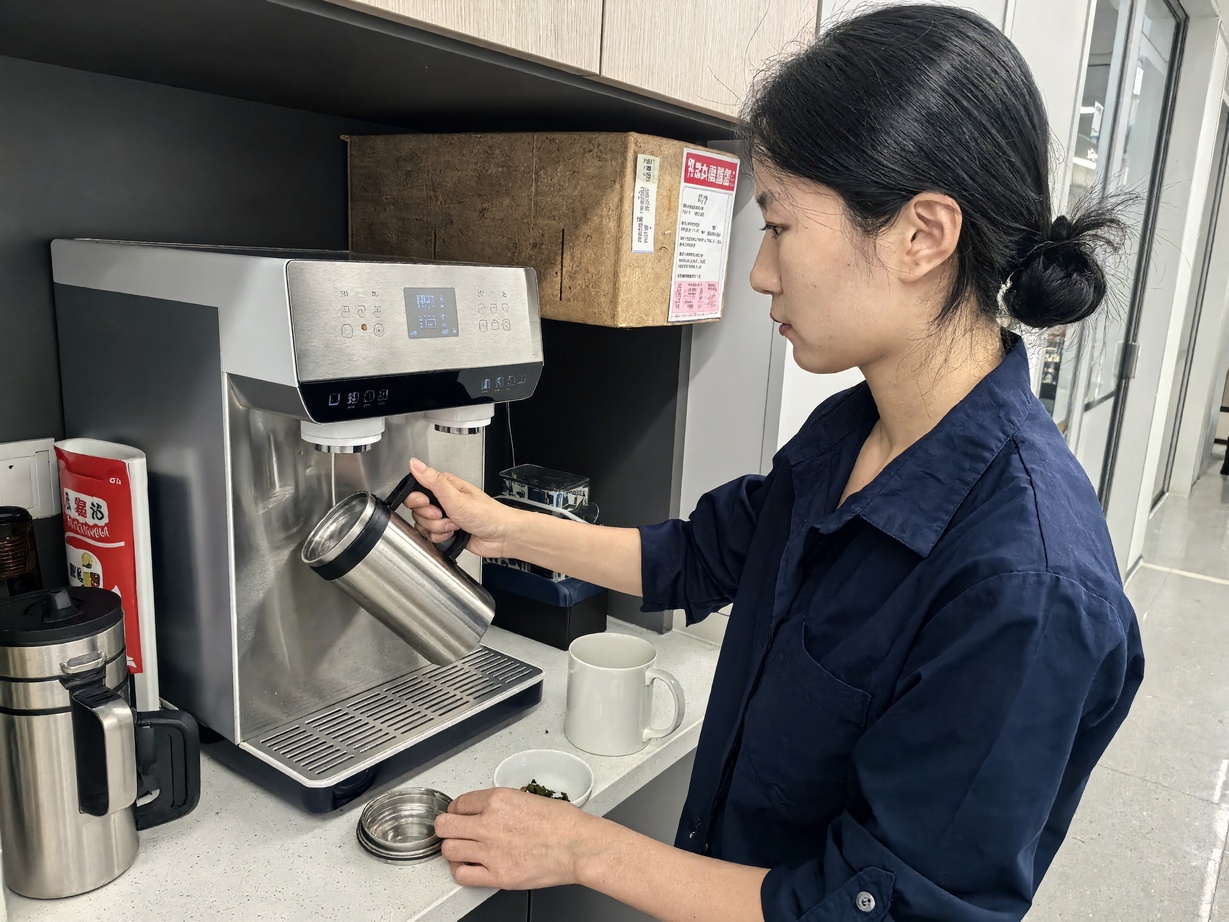
In an office with a shared water dispenser, a colleague might take a travel mug to the pantry between meetings and top it up before going back to their desk. One mug holds tea leaves that will get a second or third pour. The next holds plain water. A coworker can make the same walk and fill a bottle from the room-temperature outlet, then pick up an iced coffee on the way back from lunch. The equipment makes warm water easy to choose, and the desk tells you what each person actually chose.
At the railway station
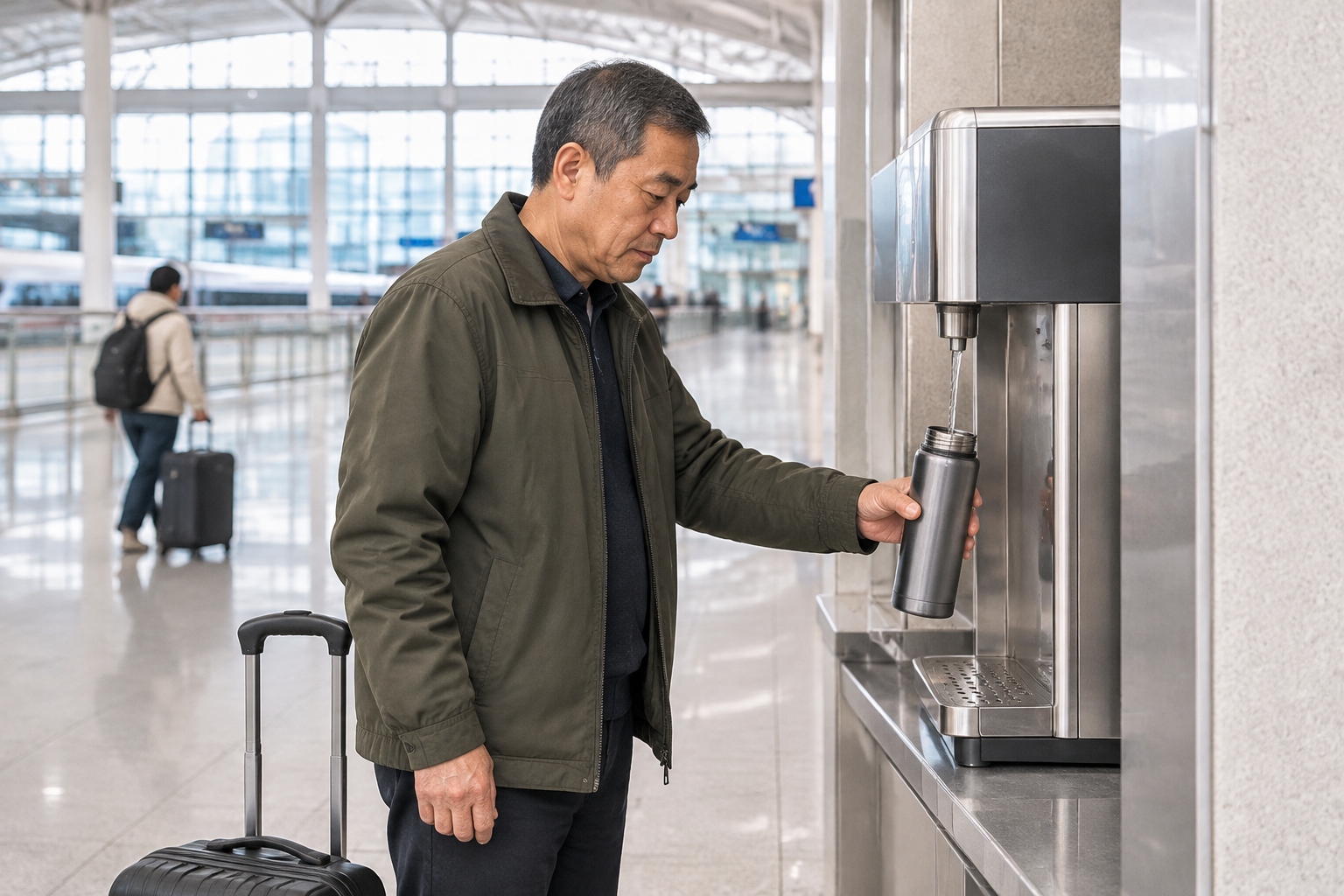
At a large railway station in China, the drinking-water area may have a hot-water outlet marked 开水, meaning boiled water. A traveler can fill an insulated bottle before boarding. Another might use the same outlet to prepare a cup of instant noodles. If you’re carrying a narrow-necked bottle and just want a drink before your train, look at the labels first. Where the equipment has separate outlets, 常温 means room temperature.
Travel brings out the difference in expectations. Someone used to filling a bottle at a cool-water fountain before boarding might head for the dispenser and be surprised by the steam. Someone traveling with tea leaves in a flask has probably been looking for that very outlet. A traveler buying a chilled bottle from the shop across the concourse has made a third perfectly ordinary choice.
Plain hot water and Chinese hospitality
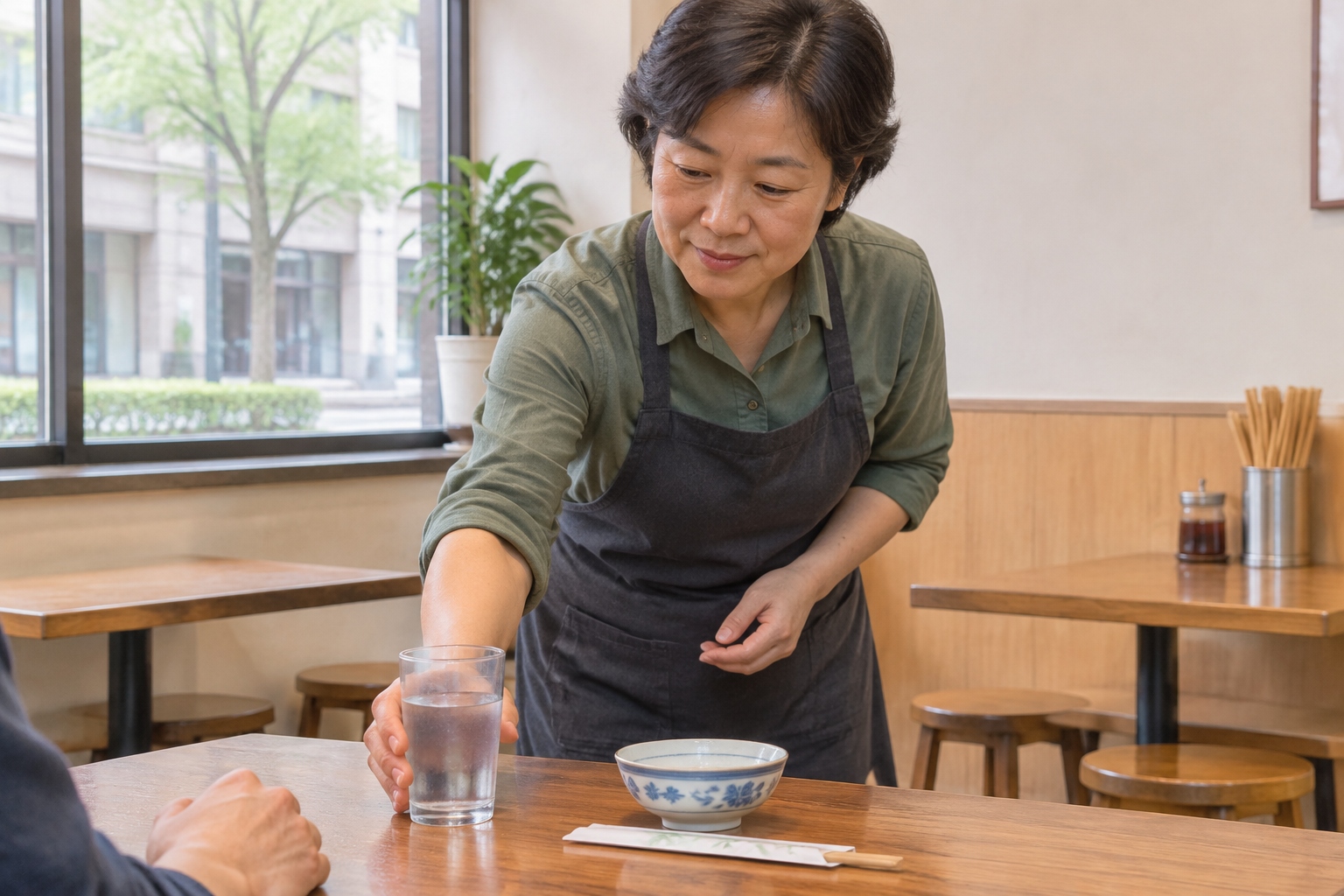
At a restaurant, what arrives with the menus depends on the place. A neighborhood dining room might set down a pot of tea or a glass of warm water. At a café, the server might bring room-temperature water, and the drinks menu may have a whole page of iced options. If you want room-temperature water, chángwēn shuǐ (常温水) is a clearer request than simply asking for cold water. For ice water, ask for bīng shuǐ (冰水). It helps to name the temperature you have in mind.
In a home, the first drink often arrives while everyone is still getting settled. A host clears a space on the table, pushes a cup toward you, and asks whether you’ve eaten. If you’re used to being asked “Tea or coffee?” first, it can take a moment to recognize the gesture as hospitality. For the person holding the kettle, the offer has already happened. There’s a cup within reach, and you can get on with the conversation.
When “drink more hot water” sounds like a brush-off
Add one word and you get duō hē rè shuǐ (多喝热水), “drink more hot water.” A parent might say it when an adult child calls from another city and mentions feeling under the weather. Some families prefer warm drinks when someone feels unwell. The line can also give a worried parent something concrete to say from a few hundred miles away. A follow-up question about how you’re feeling can do as much to convey the concern as the advice itself.
In text messages, the line can land differently. Imagine telling a partner that you’ve had a miserable day and getting back only those four characters. You were hoping they’d ask what happened. That gap is part of the joke when Chinese speakers use duō hē rè shuǐ online to tease someone for offering the quickest possible response. The same words could feel thoughtful if they came with a cup and ten minutes to talk. People who grew up hearing the phrase can find it comforting, funny, or irritating, depending on who says it and when.
Back at the kitchen table
In that Shanghai kitchen, the friend who said “Drink some hot water” pulls out a chair and hands you the towel. Then she asks how long you were stuck outside. By then, you’ve got enough to understand what her first sentence was doing. She saw you come in wet and gave you something warm to hold. If you’d rather have tea, you can still ask. For now, you wrap your hands around the mug and tell her about the rain.