


A Clinic Visit That Doesn’t Begin With a Disease
In a modern clinic in Shanghai, Anna, a 32-year-old designer from Berlin, expects a session of acupuncture. She has been sleeping badly for months. The doctor, a Chinese woman in her fifties with short hair and glasses, asks a different set of questions. Does Anna wake at night feeling hot? Is her mouth dry in the morning? Does she crave cold drinks? How does her tongue look? The doctor takes her pulse at both wrists, looks at her tongue, and writes a formula of granules to dissolve in hot water. Anna leaves with a paper bag, not a diagnosis in the Western sense, but a pattern: liver and kidney yin deficiency with empty heat.
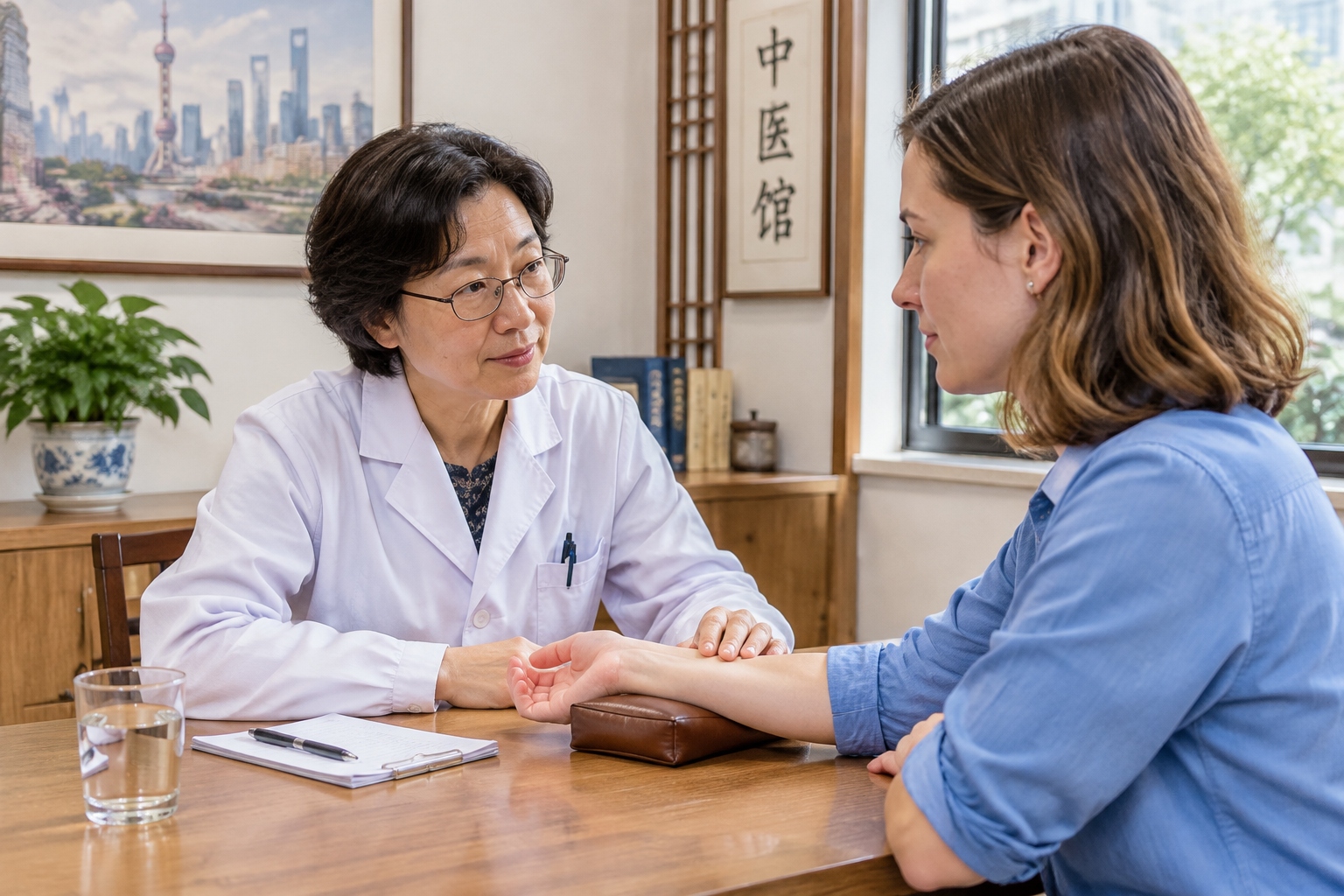
For a foreign reader, that phrase can sound like astrology. It is not meant to. It belongs to a system that organizes the body through relationships: between organs, emotions, seasons, colors, sounds, tastes, and daily habits. This series is a guide to that system. It does not reduce Chinese medicine to acupuncture and herbal teas, and it does not turn it into a mystery. It treats it as a coherent medical tradition with its own logic, history, internal debates, and modern institutions.
Why a Web, Not a List
Most readers outside China learn Western biomedicine first. That model tends to start with a disease category: asthma, diabetes, migraine. Chinese medicine often starts with a pattern of imbalance in a person at a particular time. The question is not only “What disease does this person have?” but “How is this person’s system behaving, and why now?”
Yin and yang are the first pair. They are not good and evil, black and white. They describe qualities that shift: cold and heat, rest and activity, moisture and dryness. Five phases, often translated as five elements, are not five substances in a jar. They are categories of change: wood, fire, earth, metal, water. They link a season, an organ network, an emotion, a color, a sound, and a taste into one map. The zang-fu organs are not simple copies of the anatomical organs. They are functional networks with emotional and seasonal associations. The channels, often called meridians, form a route system through which qi, blood, and fluids are said to move.
Chinese medicine is often called holistic, but the word is vague. In practice, it means a doctor may read sleep, digestion, mood, tongue, pulse, weather, and routine together rather than chasing one number. This is where the web metaphor helps. If biomedicine is a diagnostic atlas of separate roads, Chinese medicine is a weather map. It asks how fronts, pressure, moisture, and wind combine. The map can be elegant. It can also be abused if someone treats metaphor as proof. The series will keep both sides in view.
The Correspondence Table: One Body, Many Layers
The five phases generate a table of correspondences. Wood goes with spring, the liver, the eyes, tendons, anger, the color green, the sour taste, and the sound of calling. Fire goes with summer, the heart, the tongue, blood vessels, joy, red, bitterness, and laughter. Earth goes with late summer, the spleen, the mouth, flesh, worry, yellow, sweetness, and singing. Metal goes with autumn, the lungs, the nose, skin and hair, grief, white, pungency, and weeping. Water goes with winter, the kidneys, the ears, bones, fear, black, saltiness, and groaning.
The system also groups the five body tissues, five tones, five colors, and five flavors. Tendons, vessels, flesh, skin and hair, and bones each belong to an organ network. The five tones are not a playlist for healing; they are another layer of association. The same goes for color and taste. These links are not promises that eating sour food will cure anger or that listening to a certain note will fix a liver. They are a way to track patterns. A person who feels irritable, has red eyes, headaches, and a bitter taste may be described as having liver fire rising. A person with dry cough in autumn, dry skin, and sadness may be described through the lung network. The point is not to replace one label with another. The point is to see how Chinese medicine connects body, environment, and emotion in a single frame.
For readers from Europe or North America, this may feel close to older humoral medicine, where temperament, season, and diet were linked. That comparison is useful, as long as it is not used to say one system is more ancient or more advanced. Chinese medicine has changed. It has absorbed new ideas, argued with itself, and adapted to modern hospitals, universities, and regulations.
What the Series Will and Won’t Do
This series will not present Chinese medicine as a secret key to health. Nor will it dismiss it as superstition. It will explain the concepts clearly, then show how they appear in real life: in consultations, pharmacies, hospitals, classrooms, kitchens, and gyms. It will mention evidence where evidence exists, uncertainty where uncertainty remains, and safety issues where they matter. Herbal medicine can interact with drugs. Acupuncture carries risks when poorly practiced. Not every Chinese person uses Chinese medicine. Many rely on it for chronic complaints, sleep, stress, fertility, and recovery, while also using antibiotics, surgery, and vaccines. The two systems often sit side by side, sometimes in the same hospital, sometimes in the same family.

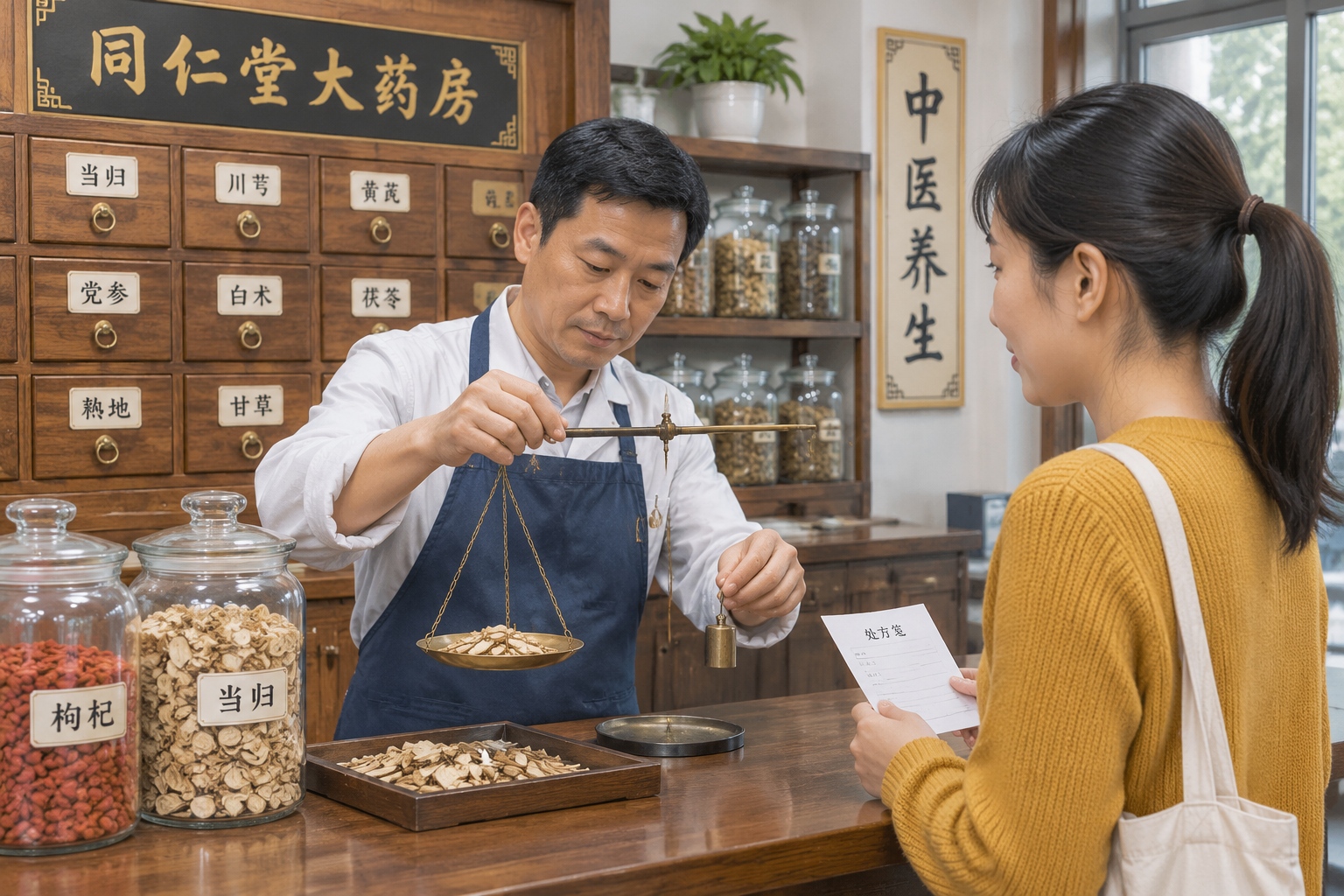
Modern Chinese medicine is not a street-corner curiosity. It is taught in dedicated universities, practiced in public hospitals, sold in chain pharmacies, and covered by some public insurance schemes. Herbal granules have made traditional formulas portable. Tongue and pulse diagnosis still matter, but they sit beside blood tests and imaging. That mix is one of the most interesting parts of the story, and one of the easiest for outsiders to misread.
How the 15 Parts Fit Together
This opening guide is Part 1. The rest of the series is built as a route, not a pile of terms. You can read it in order, or use the short paths below.
The 15-part route
- Part 1: A Web of Correspondences. Why Chinese medicine is a relational system, and how to use this series.
- Part 2: Yin and Yang. Balance as a moving relationship, not a static midpoint.
- Part 3: The Five Phases. Wood, fire, earth, metal, and water as categories of change.
- Part 4: Zang-Fu. Organ networks, emotions, and the difference between Chinese and biomedical organs.
- Part 5: Channels. The body as a route system, and what acupuncture is actually mapping.
- Part 6: Qi, Blood, and Fluids. Why translation is difficult, and why “energy” is only a starting point.
- Part 7: Causes of Illness. Wind, cold, damp, heat, diet, overwork, and emotion as practical categories.
- Part 8: The Four Examinations. Looking, listening, asking, and pulse-taking in a real consultation.
- Part 9: Patterns, Not Just Diseases. How a diagnosis is assembled from many small signs.
- Part 10: Herbal Theory. Taste, temperature, direction, and why formulas are not single herbs.
- Part 11: Formula Logic. How herbs are combined, adjusted, and sometimes replaced.
- Part 12: Acupuncture, Moxibustion, and Cupping. What the tools do, what they don’t, and how they feel.
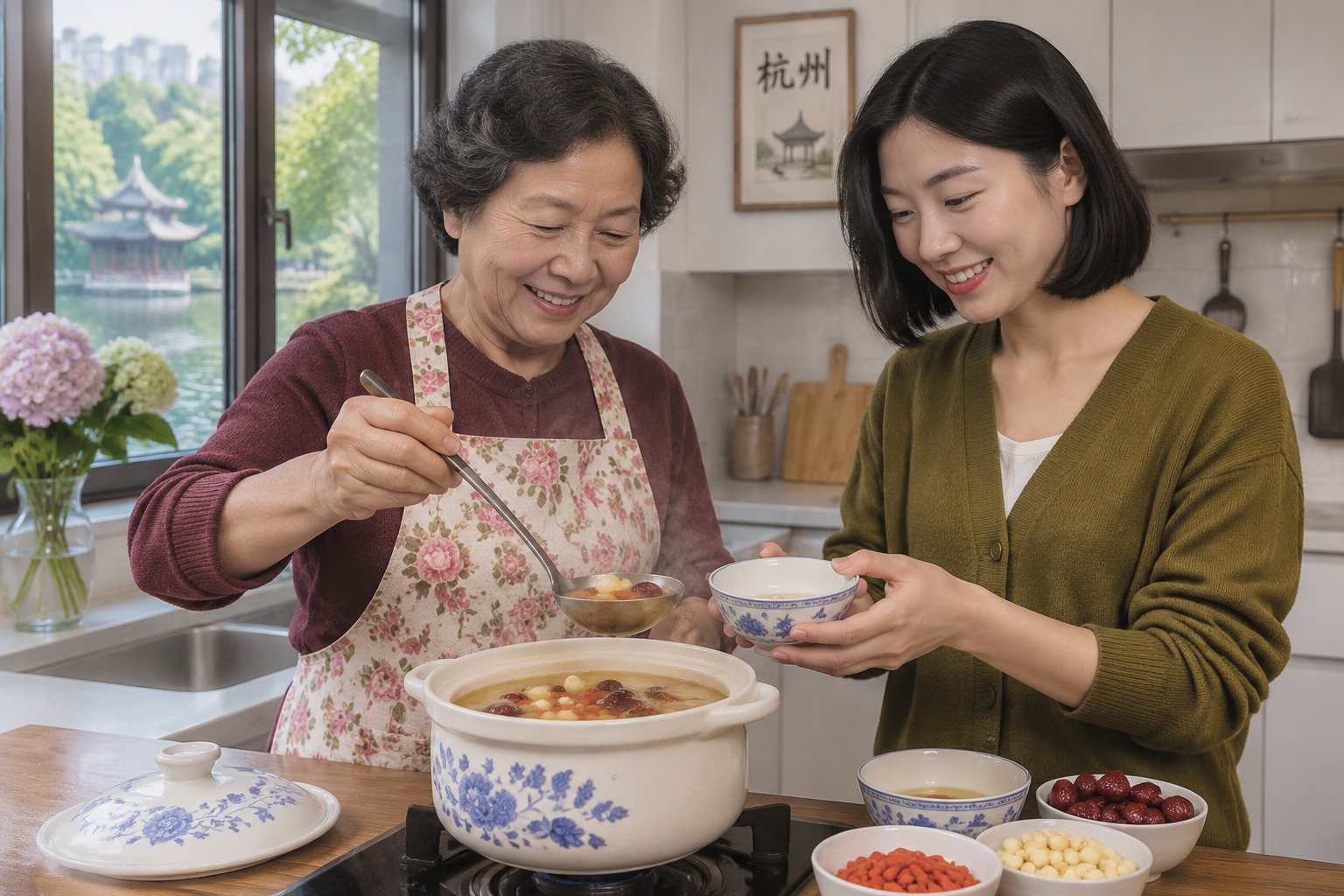
- Part 13: Food and Daily Rhythm. Kitchen medicine, seasonal eating, and the limits of self-treatment.
- Part 14: Chinese Medicine Today. Hospitals, universities, insurance, industry, and young practitioners.
- Part 15: Evidence, Safety, and Comparison. How to think across systems without keeping score.
Reading paths
If you have ten minutes, read Parts 1, 2, 4, and 14. If you are mainly curious about acupuncture, start with 1, 5, 8, and 12. If you want the full conceptual map, follow the numbers. If you are a clinician or student, Parts 9 to 12 will be the most technical, and Part 15 will address evidence and safety directly.
Terms, Translations, and Comparing Without Keeping Score
Translation is part of the story. Qi is often rendered as energy, but that word carries New Age baggage. We will use qi first, then explain it as a broad term for activity, transformation, and movement. Meridians will usually appear as channels, because they are described as pathways with internal branches, not lines on a diagram. Zang-fu will stay in pinyin where English organ names would mislead. Each key term will get a short gloss on first use, so you do not need to memorize a dictionary.
Comparison will be concrete. When this series compares Chinese medicine with biomedicine, it will ask different questions. What counts as evidence? How is a diagnosis made? What does the patient expect from a visit? How are herbs regulated? How do doctors handle uncertainty? The aim is not to declare a winner. It is to show that the same human problem, such as insomnia or chronic pain, can be framed in more than one way. That framing has consequences for what gets treated, what gets ignored, and what gets sold.
China itself is not a single opinion. Some patients swear by a particular doctor. Some doctors are strict about classical texts. Others prefer randomized trials and hospital protocols. Younger people may drink herbal granules for sleep while also tracking their heart rate on a smartwatch. The coexistence is messy, practical, and very human.
How to Use This Map
Back in Shanghai, Anna does not become a believer overnight. She sleeps a little better, maybe because of the herbs, maybe because the consultation made her slow down, maybe because of both. She keeps the paper bag and the follow-up appointment. What changes is her mental map. She no longer sees Chinese medicine as one strange practice beside modern medicine. She sees a system with its own grammar, one that can be studied, questioned, and compared.
That is the purpose of this series. It is a web of correspondences, not a wall of jargon. Read it as a guide to how another medical culture organizes the body, the seasons, and the emotions. You do not have to accept the map to learn how to read it.