

Introduction: A 40-Year-Old Show That Won’t Fade
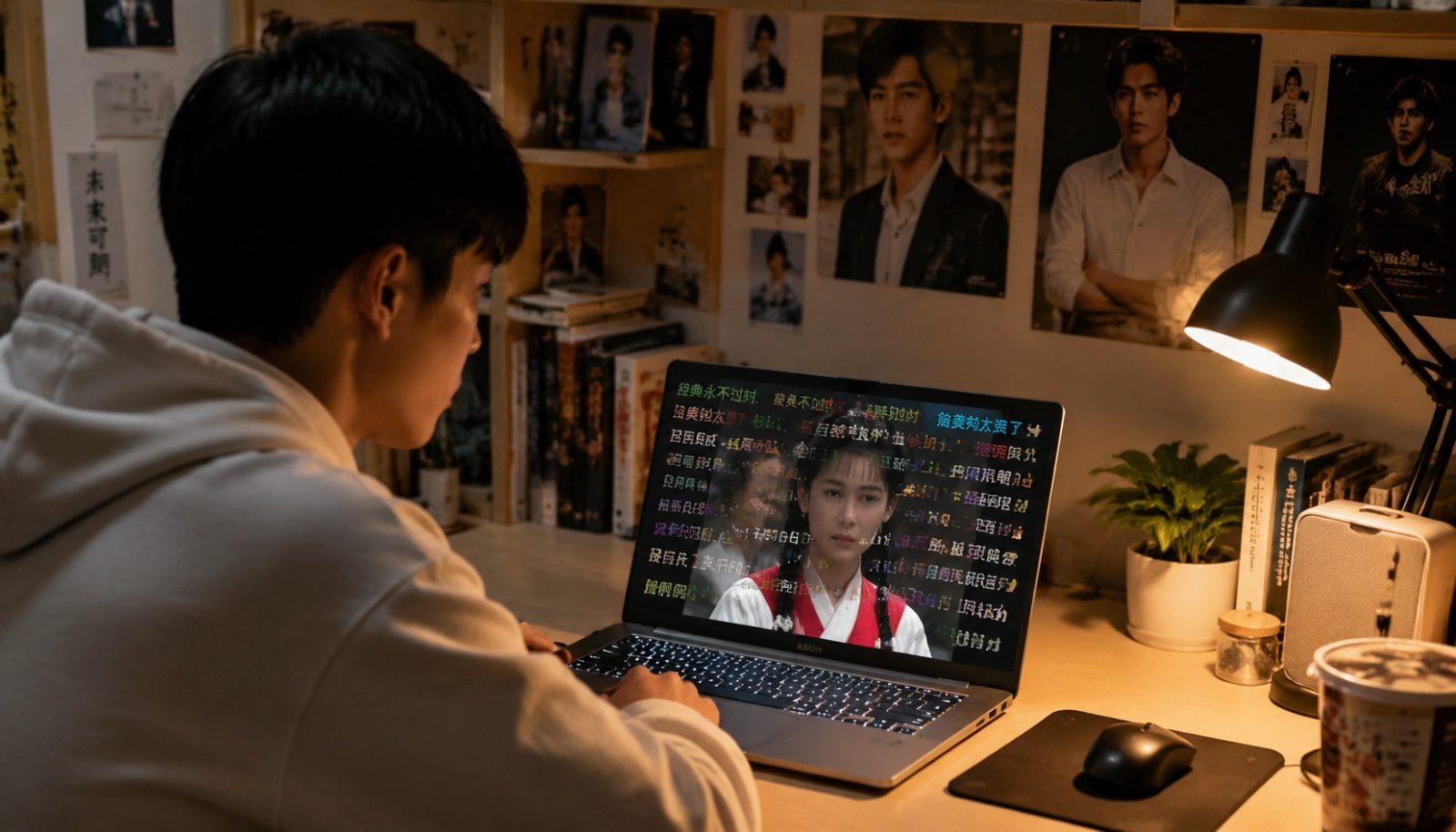
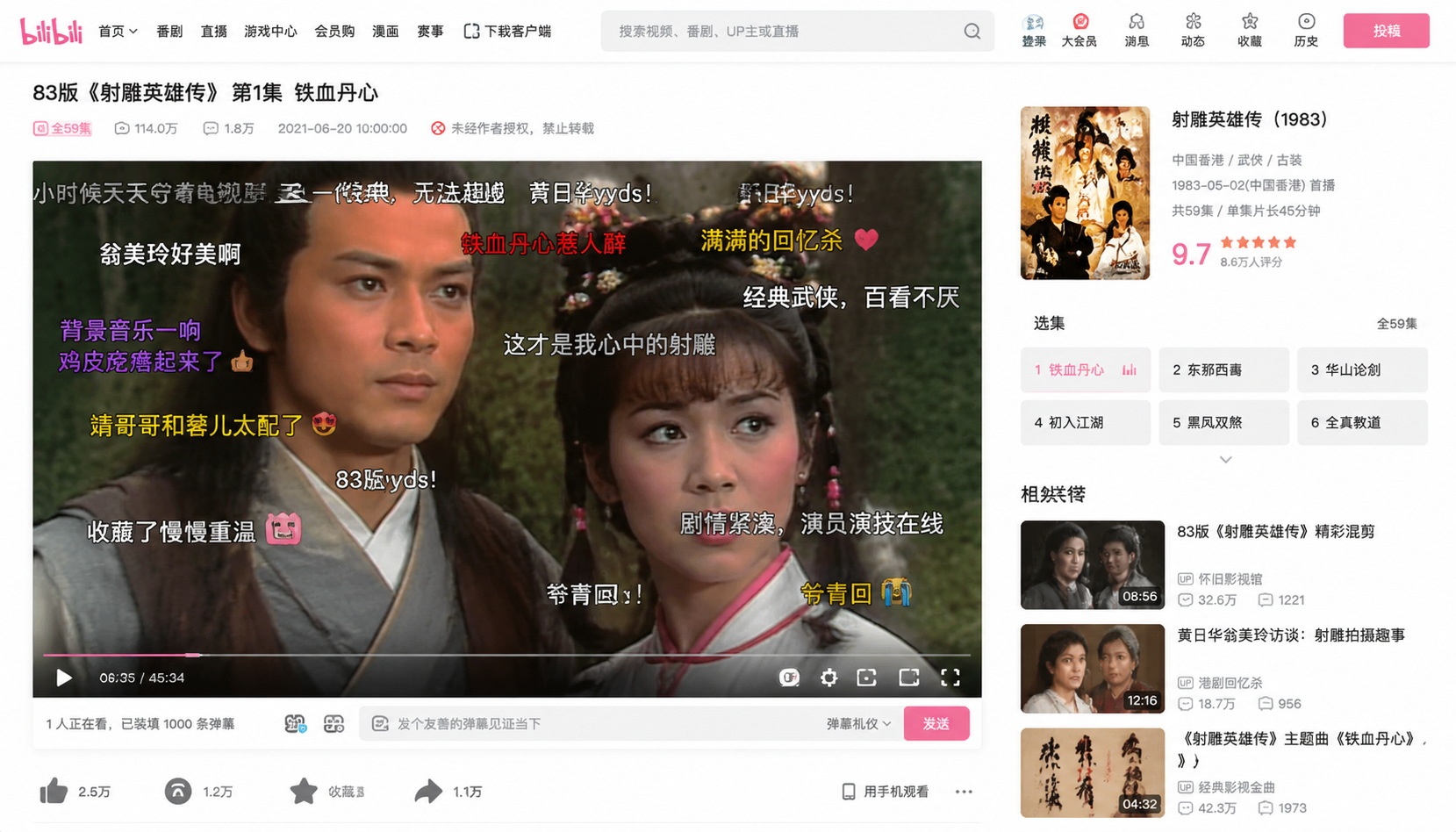
In 2025, scrolling through Bilibili — China’s answer to YouTube, especially popular among Gen Z — you might be surprised to find the 1983 TV adaptation of Jin Yong’s wuxia novel The Legend of the Condor Heroes sitting at over 100 million views and counting. The danmaku (live scrolling comments) are a constant stream of “爷青回” (youth is back) and “经典永远不过时” (classics never go out of style). Who is watching? Not just nostalgic parents, but a huge number of young people born after 2000. Why are they still streaming a show made before many of them were born?
The Numbers: A Billion Streams and Millions of Danmaku
The 1983 version of Legend of the Condor Heroes is not just a cult favorite — it’s a streaming giant. On Bilibili alone, the series has accumulated more than 120 million views by early 2025, with the official upload attracting over 100,000 concurrent viewers during peak hours. The danmaku count exceeds 5 million, with many comments coming from first-time viewers. A survey on the platform shows that nearly 60% of the viewers are under the age of 25. These viewers are not just passively consuming; they are actively engaging, creating fan edits, covers of the theme songs, and even analyzing the show’s martial arts choreography frame by frame.

Why the Old Show Still Hits Home
Several factors converge to make this 1983 classic a hit among Chinese youth. First, the show offers a window into a golden era of wuxia — a genre of martial arts and chivalry that is deeply embedded in Chinese cultural identity. The characters, especially the couple Huang Rong and Guo Jing, represent ideals of loyalty, wit, and perseverance that resonate across generations. Second, the rise of danmaku culture transforms the viewing experience: young people comment together in real time, creating a shared virtual living room. Third, the show’s relatively simple production values and melodramatic acting are ironically embraced as a form of retro chic, a break from the polished CGI-heavy dramas of today.
Data-Driven Nostalgia: What the Numbers Tell Us
Bilibili’s data team has published insights showing that engagement with classic wuxia dramas has grown steadily since 2020. The 1983 Condor Heroes leads in both total views and average watch time. Interestingly, the peak viewing hours are from 11 PM to 1 AM, suggesting that many young people treat it as a nightly ritual. The danmaku frequently include lines from the show that have become internet memes, such as Aunty Mei’s famous line “Wu Ji Wu Ji” (a comedic catchphrase). This cross-generational word-of-mouth is a key driver: when a parent or older sibling plays an episode at home, the younger family member gets hooked.

A Bridge Between Generations
What’s truly remarkable is how this show has become a bridge between generations. Parents who grew up in the 1980s can share the story with their children, and the children, in turn, introduce the show to their friends through clips on Douyin (TikTok’s Chinese version). The show’s theme songs, especially the iconic “The World’s Most Powerful” (世间始终你好), are covered by young musicians on platforms like NetEase Cloud Music and have amassed millions of streams. It’s not unusual to see a university dorm room blasting the theme on a Friday night, or a group of college students debating whether the 1983 version is better than the 2003 or 2017 adaptations.
Conclusion: Classics Never Die, They Just Get Streamed
The 1983 Legend of the Condor Heroes is more than an old TV show — it’s a living document of Chinese pop culture, continuously reinterpreted by each new generation. In an era of endless new content, the fact that young people still choose to invest dozens of hours in a black-and-white, 40-year-old drama speaks volumes about the enduring power of great storytelling and the human need for shared cultural touchstones. As long as there are young people seeking authenticity, humor, and heroism, the streaming numbers will keep climbing.
Start the discussion at forum.chinacomes.com