
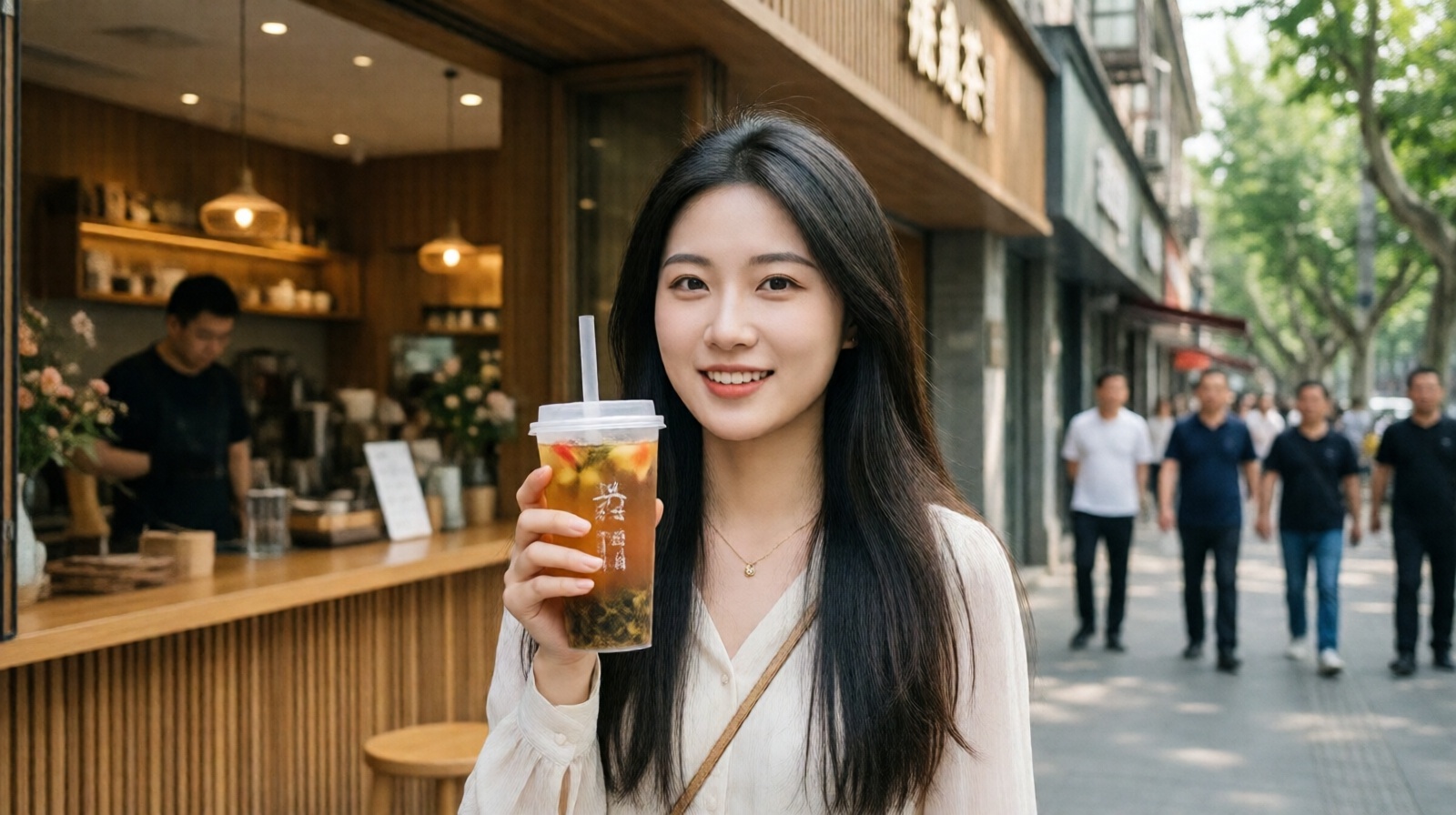

Introduction: A 2 PM Tea Run in Shanghai
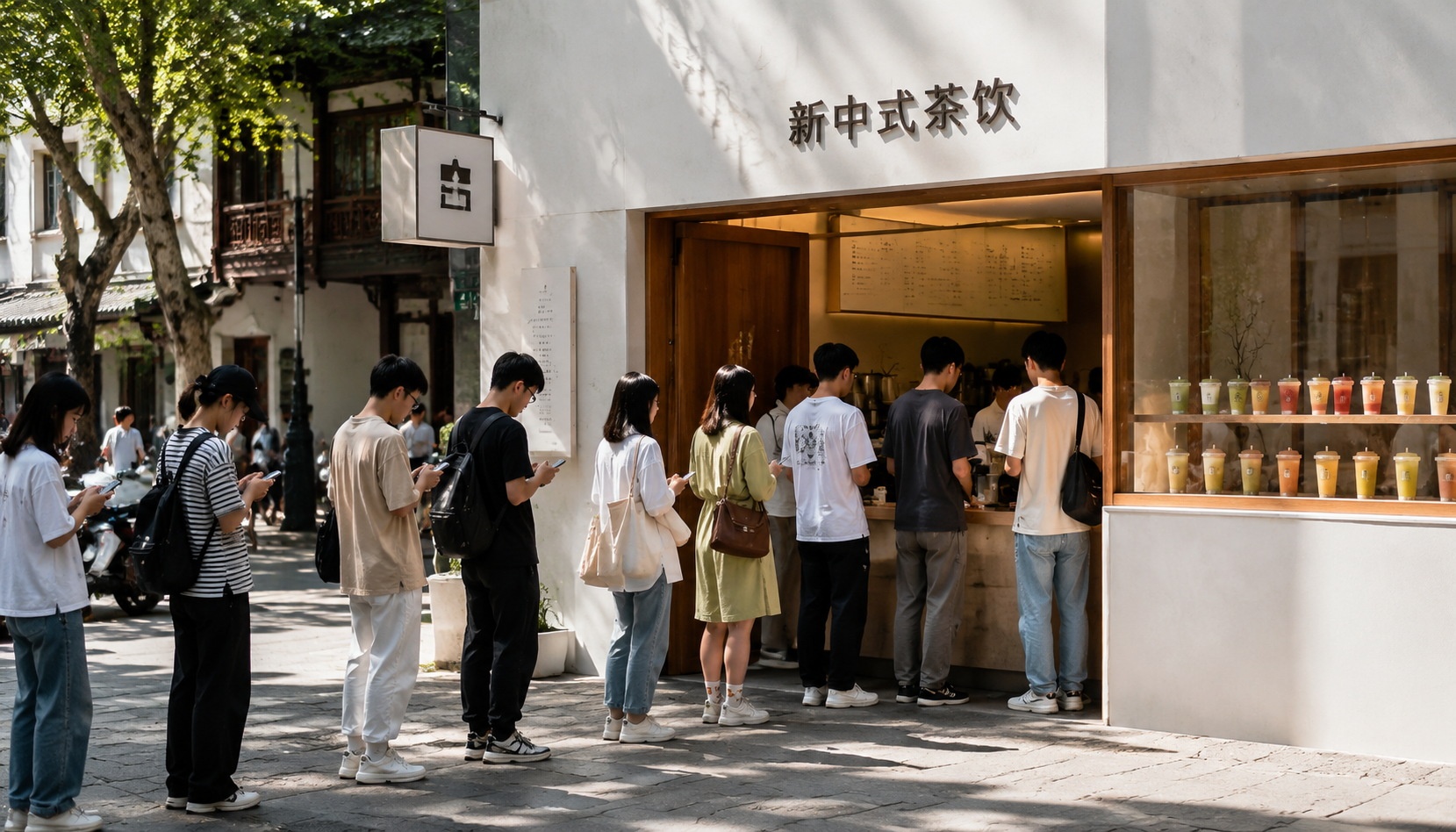
It’s 2 p.m. on a Thursday. On Wukang Road in Shanghai, a line of about 20 people snakes outside a small shop with a minimalist wooden facade. The customers are mostly in their 20s, phones in hand, some chatting, others snapping photos of the shop’s sign. Inside, baristas are busy shaking iced teas, topping cups with thick cheese foam, and sliding fresh grapefruit slices into transparent cups. This is a scene repeated thousands of times a day across China: young people queuing for new-style tea drinks (新中式茶饮).
What Exactly Is ‘New-Style Tea’?
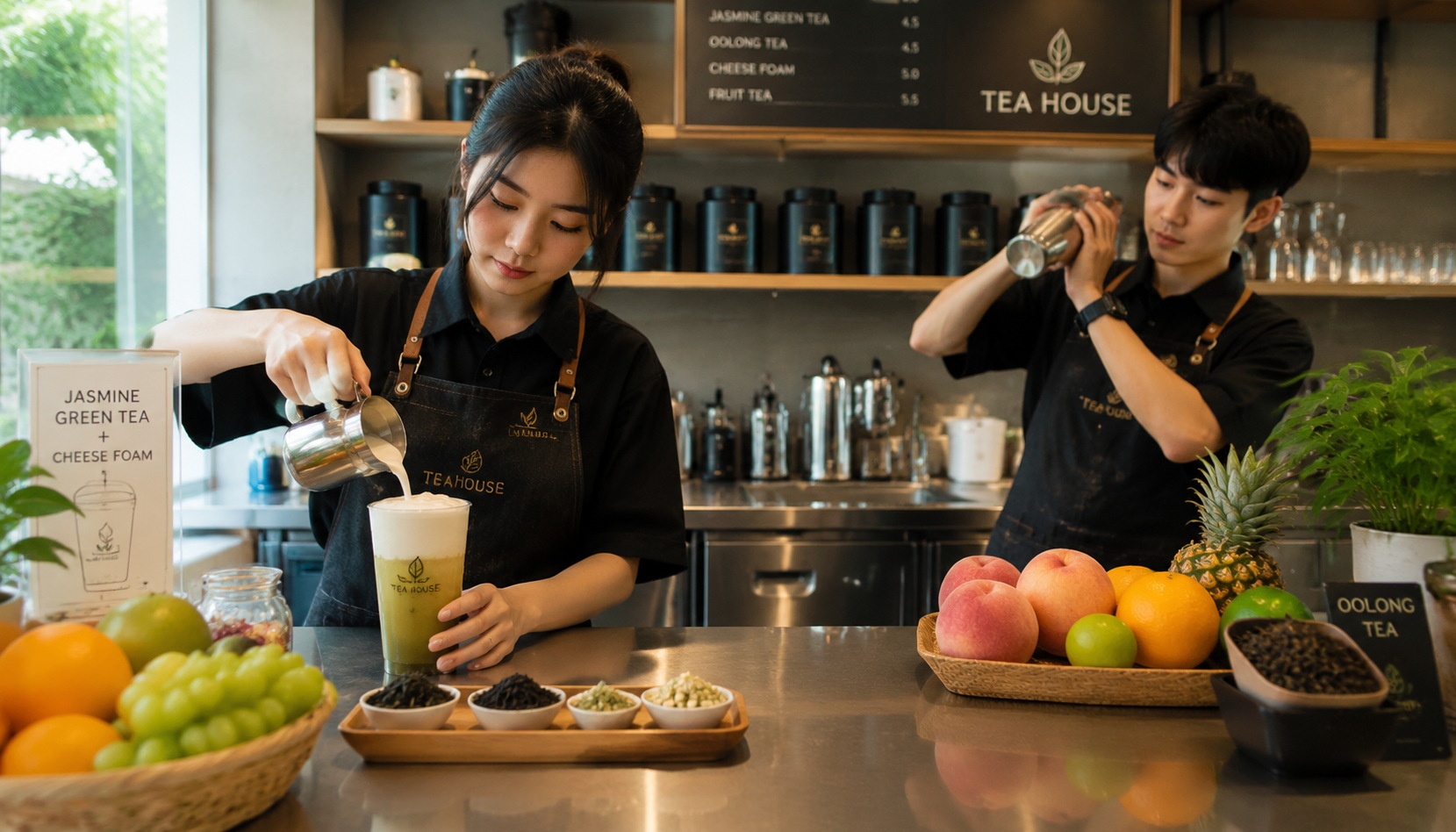
If you imagine traditional Chinese tea—a simple cup of green or oolong leaves brewed hot—you’d be only half right. New-style tea drinks are a creative evolution. They start with real tea leaves (jasmine green, tieguanyin oolong, or aged pu’er) as the base, but then add modern twists: fresh milk, plant-based creams, fruit purees, tapioca pearls, or even cheese foam. The result is a drink that looks as good as it tastes, often served in Instagram-worthy cups.
Brands like Heytea (喜茶), Nayuki (奈雪的茶), and Chagee (霸王茶姬) lead the market. Their menus read like a fusion of a tea house and a cocktail bar: “Jasmine Green with Cheese Foam,” “Grapefruit & Oolong Iced Tea,” “Matcha Latte with Red Bean.” Prices range from 15 to 35 yuan ($2–$5), making them an affordable daily treat for most urban young people.
Why Are Young People Drinking More Tea?
1. Healthier Than Soda, More Fun Than Plain Water
China’s Gen Z is increasingly health-conscious. Many have cut back on sugary sodas and artificial juices. New-style tea drinks, often marketed as “real fruit + real tea,” feel like a better choice. A typical fruit tea might contain half a fresh orange or a whole passionfruit. “I feel less guilty drinking this than a can of cola,” says 24-year-old designer Li Wei from Beijing. Brands also offer sugar-level customization (0%, 30%, 50% sweetness), which appeals to health-trackers.
2. A Social Currency and ‘Check-In’ Moment
For Chinese youth, a beautifully presented tea drink is a social media asset. Before taking the first sip, many snap a photo for Xiaohongshu (Little Red Book) or WeChat Moments. The drink’s layered colors, the branded cup sleeve, the creative packaging (some cups have spin-the-wheel games or collectible stickers)—all of it becomes content. “Drinking a limited-edition flavor from a trendy brand shows you’re in the know,” says student Zhang Lin, 22, from Chengdu.
3. A Return to Chinese Roots
After years of coffee and bubble tea from Taiwan, young Chinese are rediscovering their own tea culture. New-style tea brands often highlight traditional tea varieties like Longjing or Biluochun, but served cold or with milk foam. Some stores even offer tea-tasting sessions. “It’s a modern way to connect with heritage,” explains cultural observer Wang Fang. “Drinking a cup of Tieguanyin with cheese feels both new and familiar.”
How Did This Trend Explode?
The rise of new-style tea mirrors China’s booming consumer economy. In 2023, the market was valued at over 140 billion yuan ($19 billion), with annual growth rates around 20%. Key drivers include:
- Widespread delivery apps: Meituan and Ele.me make ordering a 10-minute affair. Many shops are located in office districts and subway stations.
- Social media buzz: KOLs (Key Opinion Leaders) on Douyin (TikTok’s Chinese version) review new flavors, creating viral trends. A single post can cause a nationwide shortage of a particular ingredient.
- Affordable luxury: For the price of a movie ticket, you get a premium drink experience. Young people treat themselves as a small reward.
A Day in the Life: Chen Yu’s Tea Habit
Chen Yu, a 27-year-old accountant in Shenzhen, starts her morning with a “Jasmine Green with Coconut Milk” from a shop near her apartment. She orders via app while still in bed, and picks it up on her way to the metro. At noon, after lunch, a colleague suggests a group order for afternoon tea. They use a shared mini-program in WeChat to vote on a flavor. Chen Yu chooses a “Peach Oolong Iced Tea” at 50% sweetness. By the end of the day, she’s had two tea drinks—a common consumption pattern among young urbanites. “It’s not just about the drink,” she says. “It’s the ritual of taking a break, the taste of real tea, and the feeling of treating myself.”
Is It All Hype? Some Realities
Not everyone is a fan. Critics point out that many new-style teas still contain high sugar levels (even with custom options) and can be pricey for daily consumption. Environmentalists worry about the plastic cups and single-use packaging. Some traditional tea purists argue that adding fruit and cream masks the subtle flavors of good tea. But the trend shows no sign of fading. Brands are now experimenting with biodegradable cups and reusable bottle programs, and some shops offer discounts for bringing your own cup.
Conclusion: More Than a Drink
What’s happening in China’s tea scene is a microcosm of a larger shift: young people are looking for experiences that are healthy, shareable, and culturally grounded. New-style tea drinks check all these boxes. They are not just a beverage—they are a lifestyle statement, a daily ritual, and a bridge between tradition and modernity. The next time you see a queue outside a Chinese tea shop, know that it’s not just thirst driving those customers. It’s a generation redefining what tea means.
Start the discussion at forum.chinacomes.com