
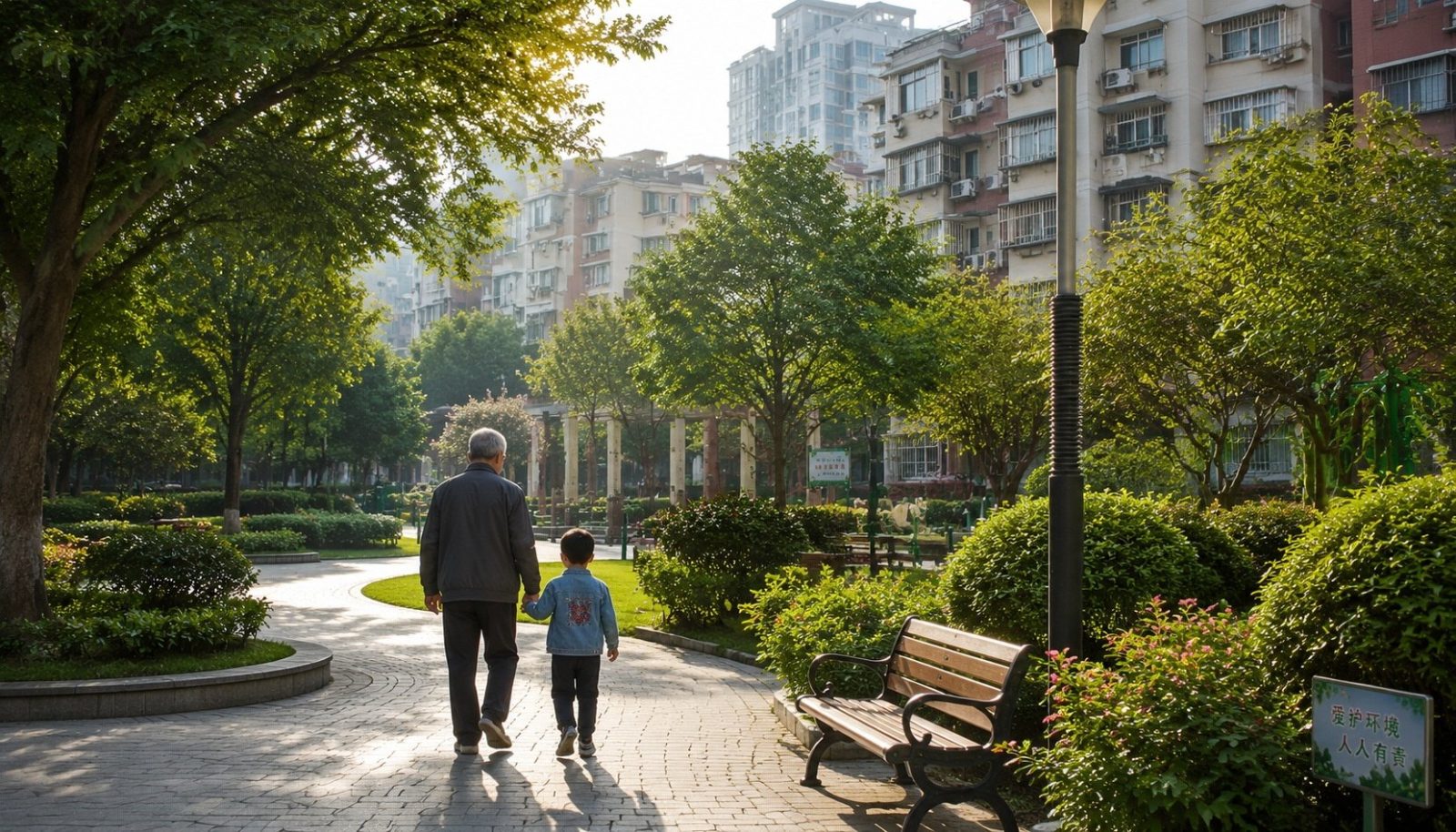

A Morning Stroll: A Resident’s Typical Day
At 6:30 a.m., Liu Xiang, a retired factory worker in his late 60s, slips on his sneakers and steps out of his apartment in downtown Shanghai. He doesn’t need to cross a busy road or wait for a bus. Within three minutes, he enters a pocket park—a tidy green space with benches, a small pond, and a shaded walking path. “When I moved here 20 years ago, this corner was a dusty vacant lot,” he says, nodding toward the flower beds. “Now it’s my favorite spot to start the day.”
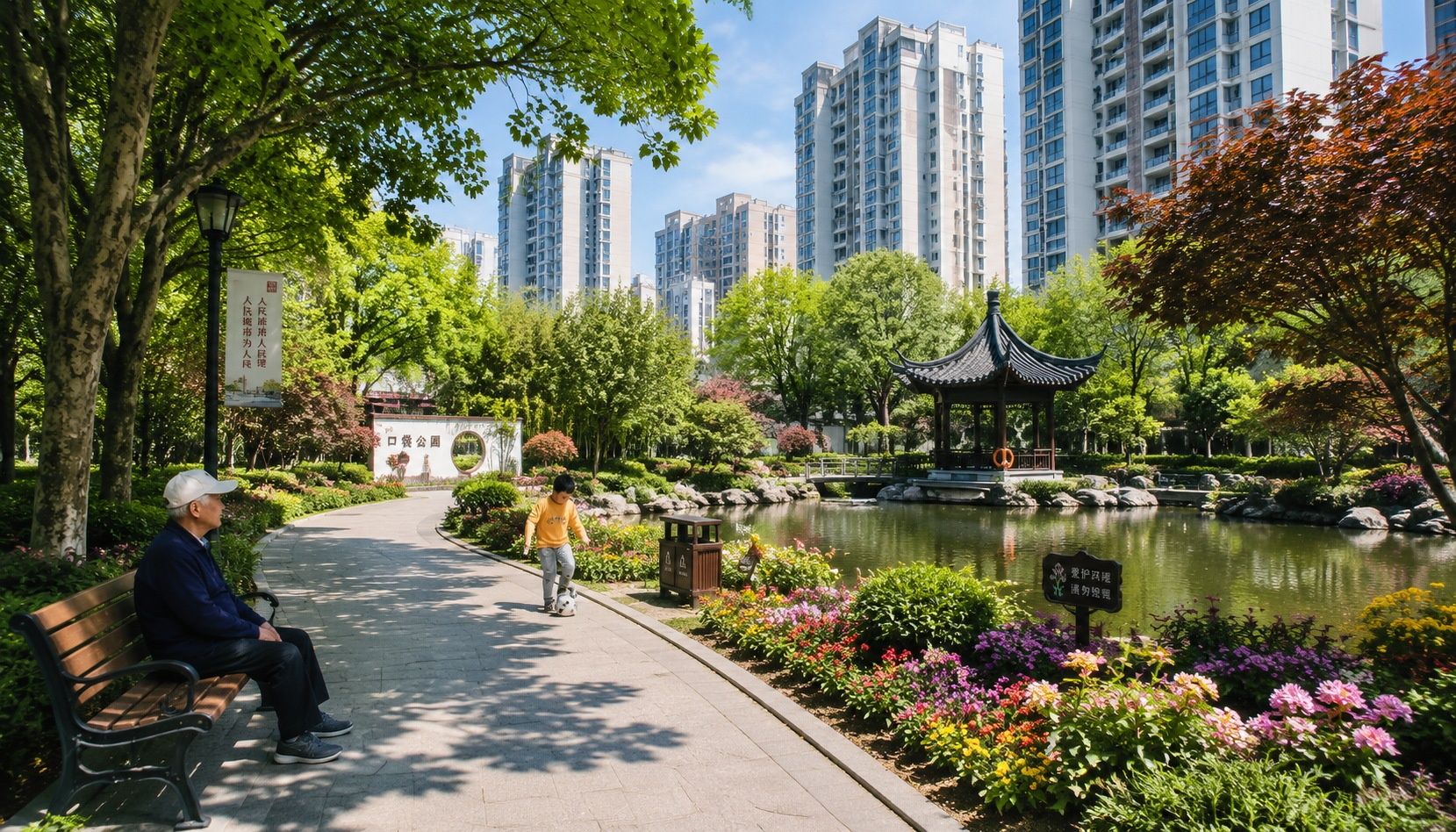
For millions of Chinese urbanites, the idea of a “park at your doorstep” is no longer a luxury—it’s a deliberate design goal of the country’s rapidly spreading “15-minute living circle” (15分钟生活圈). This urban planning concept aims to ensure that all essential services—from green spaces and grocery stores to clinics, schools, and even cultural venues—are reachable within a 15-minute walk from any home. It’s a shift from mega-scale development toward human-scale neighborhoods where everyday life is simpler, greener, and more connected.
What Exactly Is the ’15-Minute Living Circle’?
The term is not just a slogan. It’s a concrete planning guideline embedded in China’s city development standards. A “living circle” typically covers a radius of about 800 to 1,000 meters around a residential cluster. Inside this circle, residents should find:
- A park or green space (often a “pocket park” of 500–5,000 square meters)
- A fresh food market or a supermarket
- A community clinic or a pharmacy
- A kindergarten or primary school
- A public transport stop (bus or metro)
- A community service center (with amenities like a library, elderly care station, or repair shop)
China’s Ministry of Housing and Urban-Rural Development first promoted the concept in 2018 as part of efforts to improve urban livability. By 2023, over 90% of Chinese cities had adopted some form of the living circle plan, according to government reports. In Shanghai alone, more than 200 pocket parks have been built since 2017.
How Parks Found Their Way to the Doorstep
The transformation from abandoned corners to lush retreats didn’t happen overnight. City planners across China adopted several innovative approaches:
Turning Vacant Lots into Pocket Parks
In densely built older neighborhoods, large parks are often impractical. Instead, local governments identified leftover spaces—underused triangles of land near intersections, forgotten strips between apartment blocks, or even rooftop gardens. For example, in Beijing’s Hutong district, a former garbage dump was turned into a 300-square-meter “micro-garden” with bamboo, benches, and a ping-pong table.
“Sewing Green” into Community Plans
Urban planners call it “sewing green” (见缝插绿): inserting small green patches wherever possible. When a new residential area is approved, developers must allocate at least 15% of the land for public green space. But the real magic happens in the gaps—narrow alleys, road medians, and riverbanks have been transformed into linear parks and green corridors.
Co-creation with Residents
In many pilot programs, residents themselves voted on designs for their pocket parks. In Chengdu, a community posted three design proposals for a new park on a vacant lot next to a subway exit. After a week of online voting, “Option C” won—a park with a dog-friendly zone and a children’s slide. “We thought they’d want more flowers,” says a local planner, “but what they really needed was a place to let their kids run safely.”
Beyond Green Space: Services that Make the Circle Work
A park alone doesn’t create a livable community. The “15-minute living circle” also includes a bundle of daily services. In cities like Hangzhou and Nanjing, community canteens offer affordable meals for the elderly and busy parents. Small but vital services—shoe repair, key cutting, package lockers—are clustered near the parks, turning the living circle into a genuine “neighborhood hub.”
For younger residents, the circle often includes a “shared study room” (共享书房)—a quiet co-working space with free Wi-Fi, often located in a converted ground-floor apartment. “I can drop my son at school, pick up groceries, and then work for two hours at the study room—all within 15 minutes from home,” says Chen Rui, a 34-year-old marketing manager in Nanjing.
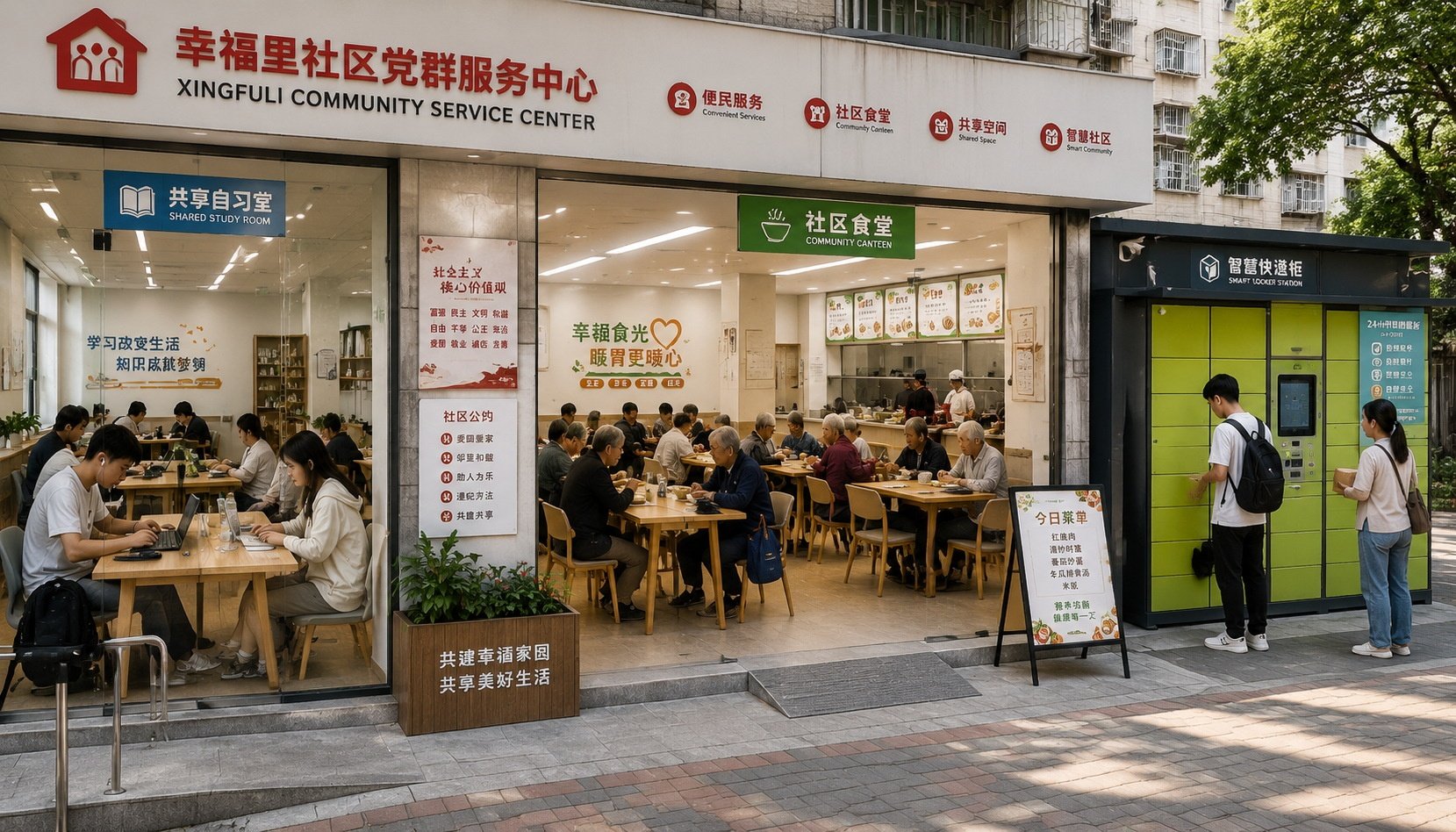
Meanwhile, China’s express delivery stations—sometimes called “smart lockers” or “post stations”—are also integrated into the circle. A resident can pick up packages while walking the dog. In many communities, elderly care centers offer chat groups, health checks, and even calligraphy classes, ensuring that older residents have a social outlet right next to the park bench.
Real Voices: What Residents Say
Grandpa Liu (Shanghai): “I never used to go out much—my legs hurt. But now the park is so close that I go twice a day. I take my grandson to the sandpit. I have met three new neighbors here. This park gave me a community.”
Xiao Chen, office worker (Nanjing): “After a day sitting at my desk, I need to move. Our pocket park has a 400-meter jogging track and outdoor gym equipment. It’s free, it’s safe, and it’s lit at night. I run three times a week now.”
Ms. Zhao, new mother (Chengdu): “When I was pregnant, I worried about where to push the stroller. Now there’s a small garden with a winding path just outside our building. It’s not huge, but it’s enough for a daily stroll.”
Challenges and the Future: Making Every Circle ‘Work’
Not everything is perfect. Older neighborhoods that were built without modern planning often lack the space for pocket parks and service centers. Retrofitting them requires careful negotiation—sometimes residents resist changes to parking spots or existing layouts. “We had to hold 10 meetings just to agree on which trees to plant,” a community planner in Guangzhou recalls.
Digital tools are helping. Many cities now use “community micro-renewal” platforms where residents can report problems, suggest improvements, and even track the progress of a park renovation via a WeChat mini-program. In Shenzhen, an AI-powered analysis of foot traffic helps decide where to put benches and drinking fountains.
The future of the circle model lies in customization. Planners in cities like Xi’an are experimenting with “shared courtyards” inside old apartment blocks, creating green spaces where there once was only concrete. The ultimate goal: not just a park at the doorstep, but a neighborhood that feels like a village within a metropolis.
When Life Returns to the Neighborhood
The “15-minute living circle” is more than an urban planning fad. It reflects a deeper shift in how Chinese cities think about growth—from building bigger to building better, from high-speed expansion to slow, human-centered design. As more pocket parks bloom, as more canteens hum with conversation, and as more children run safely in the shadows of high-rises, the city becomes not just efficient, but soft.
For Grandpa Liu, that softness is a small patch of green where he can breathe, chat, and watch the seasons change. “A park at the doorstep,” he says, “is like a second living room.” And across China, millions of second living rooms are opening their doors.
Start the discussion at forum.chinacomes.com