

The Railway That Changed the Map
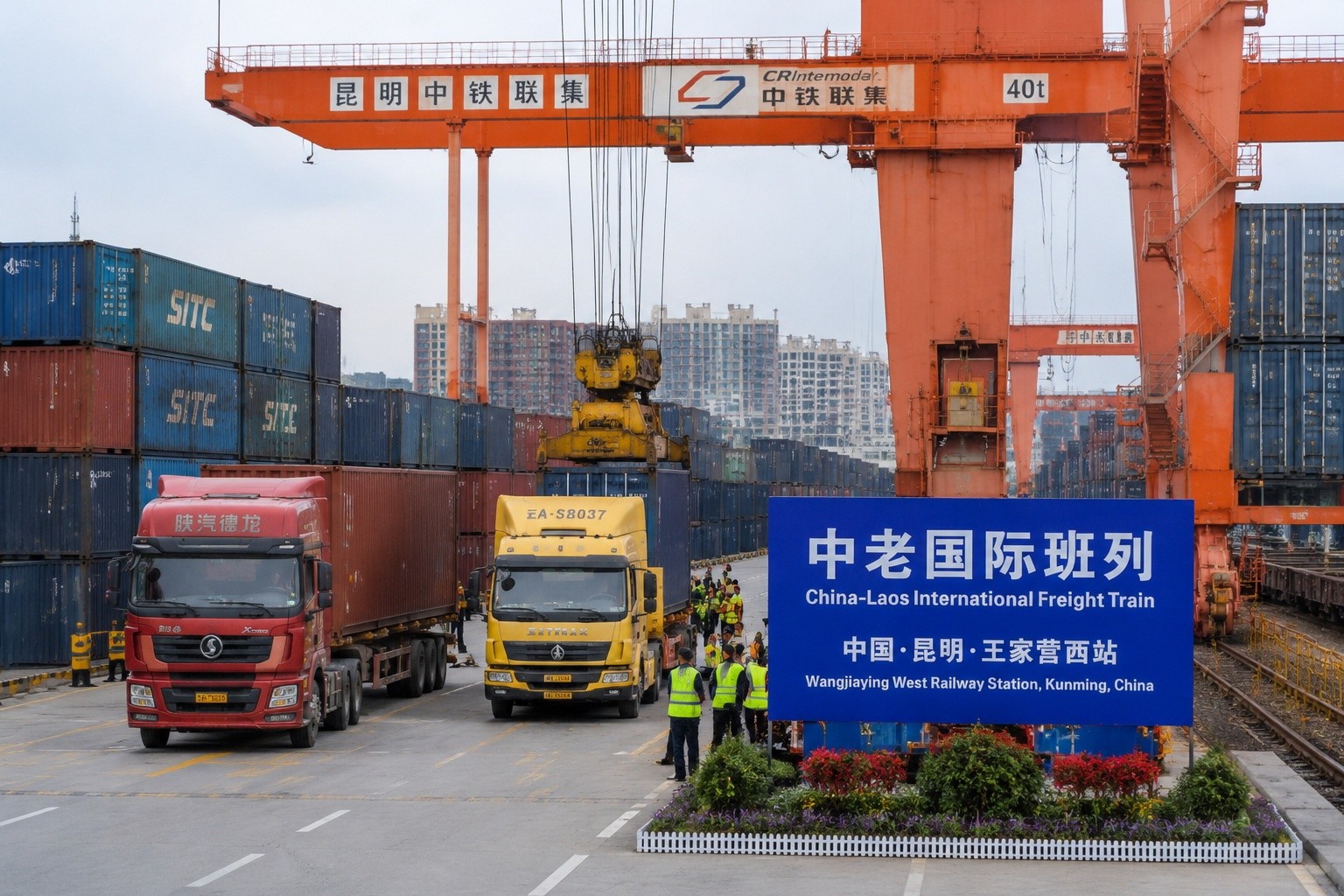
At the Wangjiaying West freight station in Kunming, a cold-chain train loaded with Thai durians sits waiting for departure. Behind its insulated doors, the sweet-smelling cargo has already made a 1,000-km journey from orchards in Chumphon to the Chinese border. But the most surprising part is the last leg: it took just over 30 hours to travel from Vientiane in Laos to Kunming, the capital of Yunnan province. Before the China-Laos Railway opened in December 2021, the same trip by road could take three days, and a lot could go wrong—mudslides, border traffic, a broken truck clutch. Now the orchards of Southeast Asia are linked to China’s high-speed rail network by a single standard-gauge track.
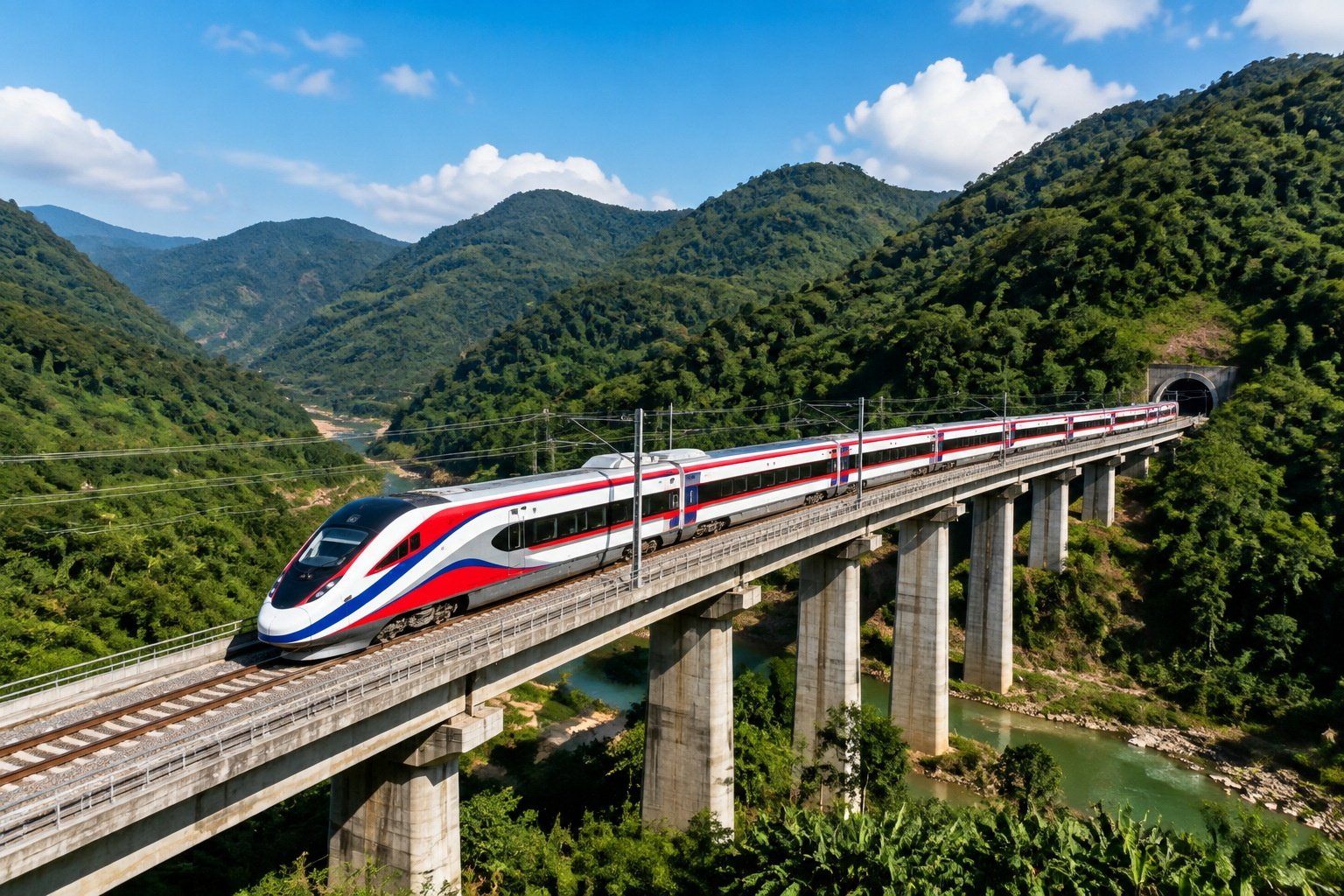
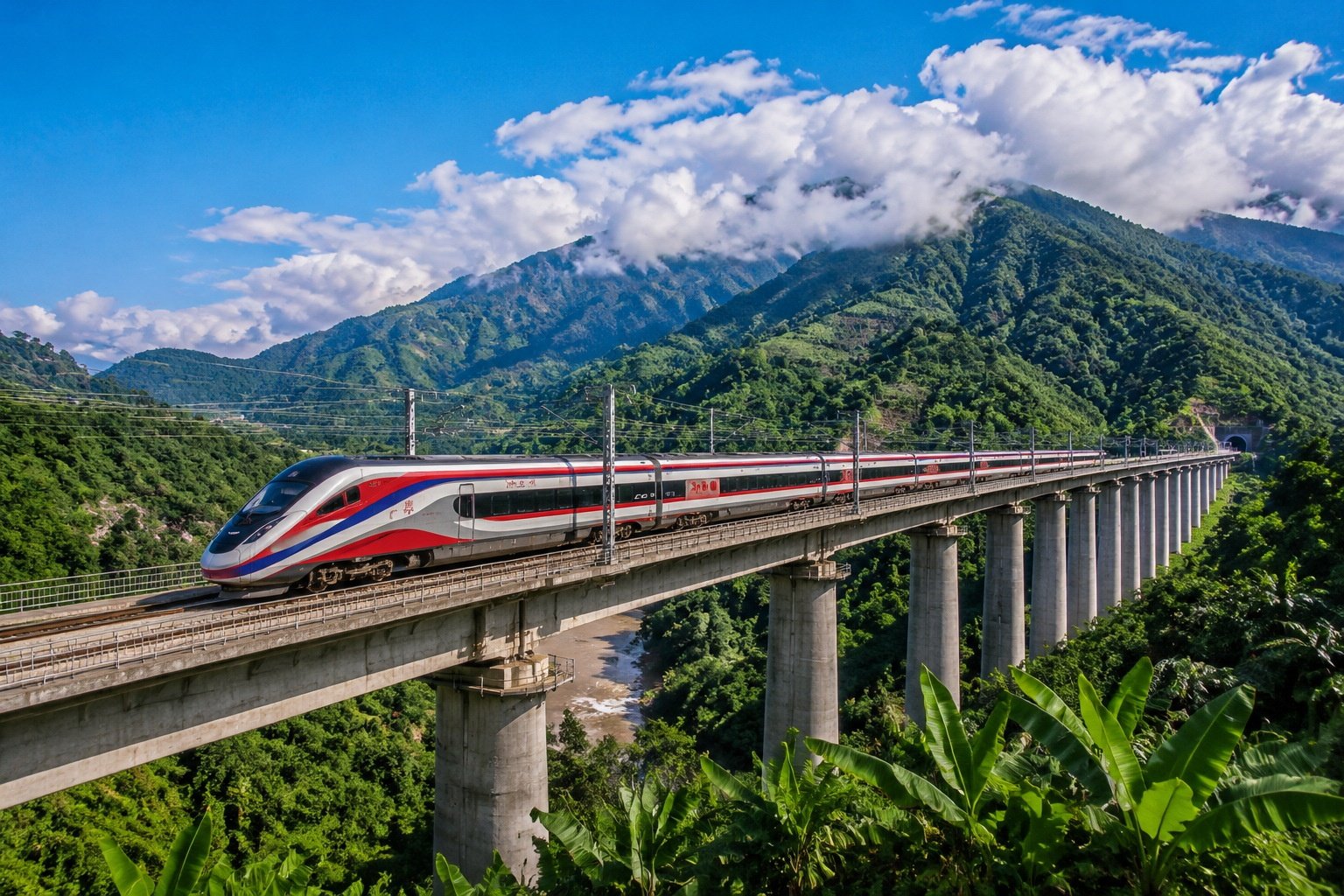
The 1,035-km line starts in Kunming, runs south through Yunnan’s mountain valleys, crosses the border at Mohan, and terminates at Vientiane, the capital of Laos. It’s China’s first overseas railway built primarily to its own standards, and the first in Laos. Designed for speeds of 160 km/h, it carries both passengers and freight. In its first two years, it moved more than 25 million passengers and 30 million tons of cargo, according to data from China Railway. Those volumes exceeded expectations and have turned a once-marginal route into a busy corridor.
What the Numbers Say
To understand why the railway matters, compare the old and new logistics costs. A container from Bangkok to Kunming used to take 10–14 days when routed by sea via Hong Kong or Vietnam and then by truck. Today, the rail journey from Vientiane to Kunming takes around 30–40 hours, and with road connections from Thailand’s rail head at Nong Khai to Vientiane, door-to-door time is now around 4–5 days. Freight costs have fallen by something like 20–30%. For time-sensitive products—fruits, electronic components, vegetables—that shift is huge. Thai durian, a tropical fruit that used to be a luxury for inland Chinese cities, now appears in supermarket shelves in Chengdu and Chongqing within days of being picked.
Faster, Cheaper, Greener
The environmental gains are also real. A study in 2022 by the UN Economic and Social Commission for Asia and the Pacific estimated that shipping goods by rail on the Kunming–Vientiane corridor produces roughly one-third of the CO2 emissions of road transport. As companies in Europe and North America push for greener supply chains, the railway gives manufacturers in Southeast Asia a way to reduce their carbon footprint without giving up speed.
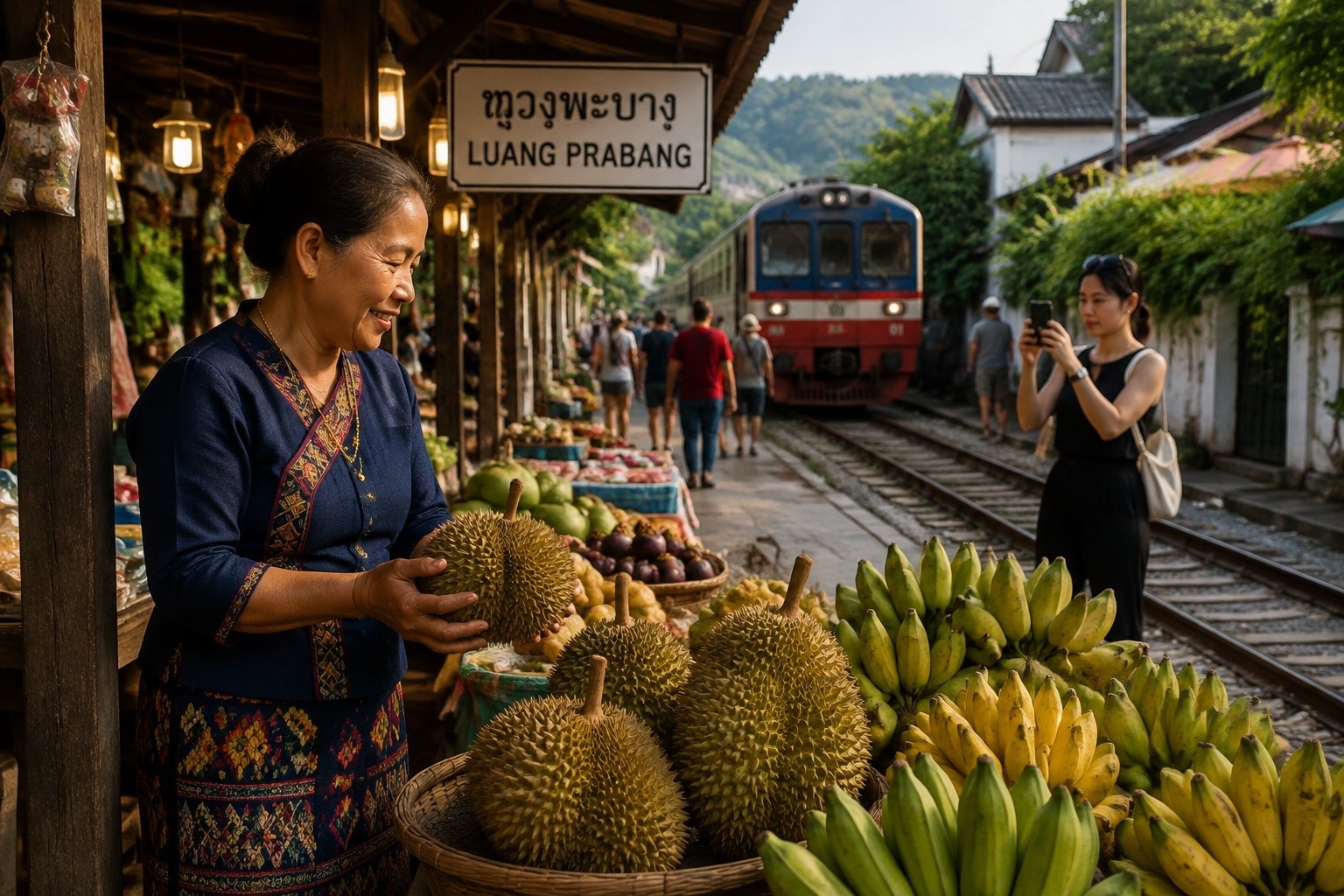
The railway is not just about long-distance freight. On the passenger side, the overnight train from Kunming to Vientiane takes about ten hours, making travel that once took days a weekend adventure. That has brought a wave of Chinese tourists to Luang Prabang, and a counterflow of Lao travelers discovering the mountains and cities of southern China.
From Dead End to Gateway
For much of the 20th century, Yunnan was a remote frontier. The province’s rugged terrain made transport expensive, and it was largely the end of the line for China’s railway network. The China-Laos Railway has fundamentally changed that position. Yunnan is no longer the edge; it is a central corridor. Goods from China’s manufacturing heartlands now flow south across Southeast Asia, while raw materials and agricultural products move north. The railway has also spawned new logistics services in Kunming, from bonded warehousing to customs clearance. A growing number of Chinese companies are setting up regional distribution centers in Yunnan, seeing it as a cheaper, faster entry point into ASEAN markets.
Local governments have responded quickly. Yunnan has invested in a network of logistics parks along the rail line, and the Chinese border town of Mohan has expanded from a village to a customs-and-warehousing hub. Meanwhile, in Laos, the previously sleepy station town of Boten is being rebuilt as a duty-free trade zone, with Chinese-owned hotels, markets and logistics companies.
Life Along the Line
The railway has also touched people in ordinary ways. In the Lao town of Luang Prabang, a UNESCO World Heritage site, guesthouses and restaurants near the station are busier than ever. Farmers along the route can now sell bananas and rubber to Chinese buyers within days instead of waiting for middlemen to negotiate roads that were often impassable in the rainy season. Some young Lao people have taken jobs as station staff or train attendants, learning Chinese phrases along the way. And in Yunnan, coffee growers in Pu’er are experimenting with shipping beans to new customers in Southeast Asia.
An Unfinished Transformation
Yet the transformation is far from smooth. There are complaints about imbalanced cargo—trains heading south are full, but the return north still has gaps. Border procedures remain more complicated than they should be, although both countries have introduced paperless clearance. The future will depend on how fast complementary corridors get built, especially the planned China-Thailand railway and new dry ports in Laos and Thailand.
Not a Magic Wand
It would be wrong to call the railway a magic bullet. Laos is still one of the world’s least-developed countries, and the railway’s economic effects don’t automatically spread to everyone. In some areas, land prices near stations have risen so fast that local people fear displacement. Small truckers who used to carry goods across the border have lost business to the train. The UN and other development agencies have pointed out that unless logistics networks, warehousing, and trade facilitation improve, the railway’s benefits will be captured by a few large players.
The Road Ahead
The bigger picture, though, is clear. Yunnan has moved from the periphery of China’s economy to the center of a new regional trade network. A planned extension of the railway into Thailand, along with existing road links to Vietnam and Myanmar, will make the province even more important. As trade between China and Southeast Asia grows faster than trade with the West, infrastructure like this shapes not only how goods move, but what can be traded, and who gets to take part.
The railway doesn’t make the mountains vanish, but it makes them easier to cross. In that sense, it’s a reminder that in the 21st century, geography is not destiny.
Start the discussion at forum.chinacomes.com