

Where Sneakers Learn to Fly
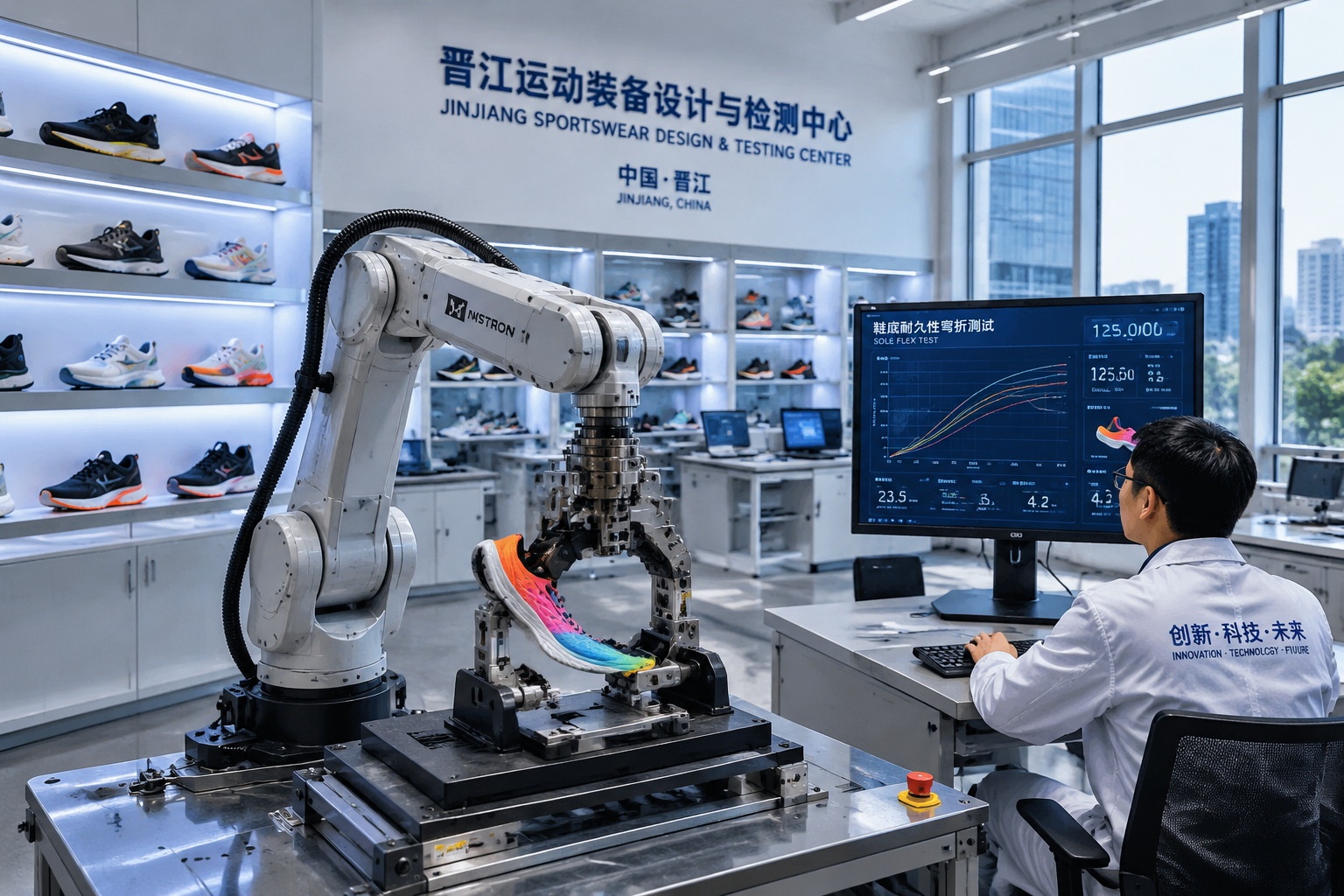
The machine in the corner of Anta’s research center looks like a robot from a sci-fi movie. It twists a running-shoe sole back and forth, 100,000 times, while sensors record every millimeter of deformation. Next to it, a young designer sketches a new upper on a tablet. This is not the sweatshop of Western imagination. It is the heart of Jinjiang, a city in southeast China’s Fujian Province that has turned itself from a cheap shoe-manufacturing town into a global sports-industry capital.
Jinjiang’s story is also China’s story. In just four decades, it has moved from sewing sneakers for other people’s brands to building its own international champions. The path was not linear, and the struggle shows in the faces of the factory owners who lived it.
A Town Built on Stitch and Glue
In the early 1980s, Jinjiang was a small county with little industry. The first shoemakers started in family workshops, using leftover leather to hand-stitch shoes. They sold them at local markets, earning just enough to feed their families. Then came foreign buyers.
When Nike and other Western brands arrived in China looking for low-cost factories, Jinjiang’s entrepreneurs learned a new word: OEM, or original equipment manufacturing. They would make shoes exactly to the buyer’s specifications, and the buyer would put its own name on the box. For a while, it was a good business. Tens of thousands of workers found jobs, and the local economy boomed. But the profits per shoe were tiny—often less than a dollar—while the brands sold those same shoes for a hundred dollars or more overseas.
Ding Shizhong, a young man from an entrepreneurial family, traveled to Beijing in the late 1980s to sell shoes for a small Jinjiang factory. For months he slept on a plastic sheet in a crowded market stall. He noticed that a pair of imported athletic shoes could cost several times as much as the identical shoe made in his hometown. The difference, he realized, was not the leather but the logo. That observation changed everything.
The Bold Turn to Self-Owned Brands
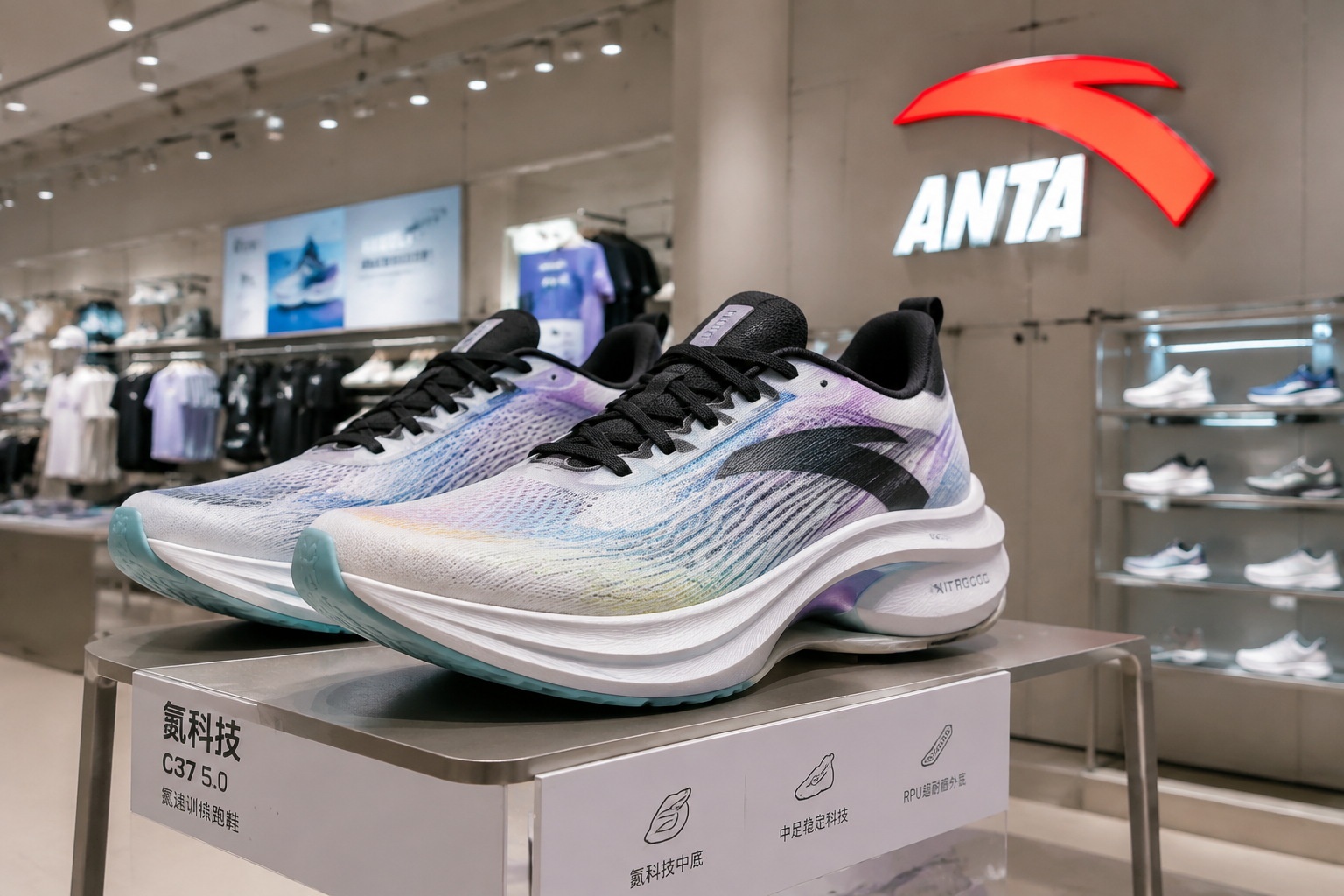
In 1991, Ding and his brothers founded Anta, a brand name that literally means “safe and at ease.” Instead of waiting for foreign orders, they invested in their own design, marketing, and distribution. They opened small shops across China and began sponsoring national sporting events. By the 2000s, Anta was competing with international brands on Chinese shelves, and winning.
Other Jinjiang firms followed the same route. Xtep, 361°, Peak, and a dozen more jumped from OEM to OBM (original brand manufacturing). Some failed, but the successful ones learned the hard lesson of the sportswear trade: a brand is not just a logo, but a relationship with the athlete who wears it and the fan who cheers for it.
Today, Anta leads this pack. In 2023, its annual revenue surpassed 50 billion yuan (about $7 billion US), exceeding Nike’s sales in China for the same year. After acquiring the Chinese license for FILA in 2009 and taking a controlling stake in Finnish sports giant Amer Sports—owner of Wilson, Arc’teryx, and Salomon—Anta has become a global conglomerate with products from tennis rackets to mountaineering jackets.
Numbers That Tell of a Changing City
The scale of Jinjiang’s shift is visible in a few key figures. The city produces about 20% of all athletic shoes in the world, but the value of those shoes is no longer just in the stitching. Local companies now own more than 100 brands and run over 1,000 research and development centers. More than 50 Jinjiang companies are listed on China’s stock exchanges.
In official statistics, the sports industry contributes more than a quarter of Jinjiang’s GDP. The local government has set a target to double that number by 2030, focusing on high-value segments like performance apparel, smart wearables, and sports services.
These are not hollow promises. During the Tokyo Olympics, several national teams wore Xtep shoes designed and tested in Jinjiang. At the 2023 World University Games in Chengdu, athletes on the podium had Anta shoes on their feet. The brand names are no longer “made in China” afterthoughts; they are inspiration for millions of young Chinese.
More Than Shoes: An Ecosystem That Moves Fast
What makes Jinjiang special is not one famous company but the dense network of suppliers, designers, and engineers within a 30-minute drive. If you want to test a new recycled sole material, you can find three different factories willing to make a prototype overnight. This flexibility, sharpened by decades of deadlines and margin pressure, is hard to replicate even in a high-tech country.
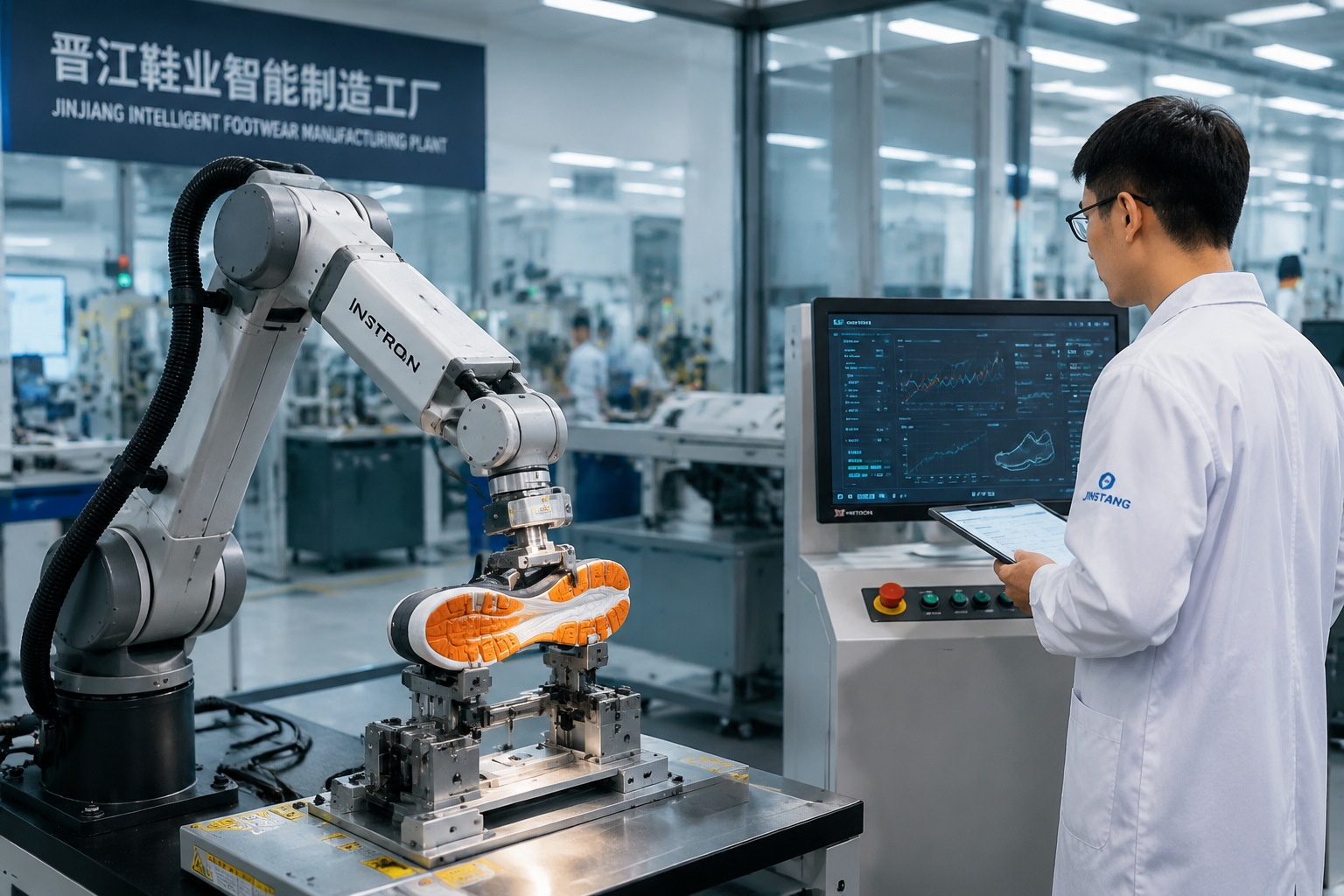
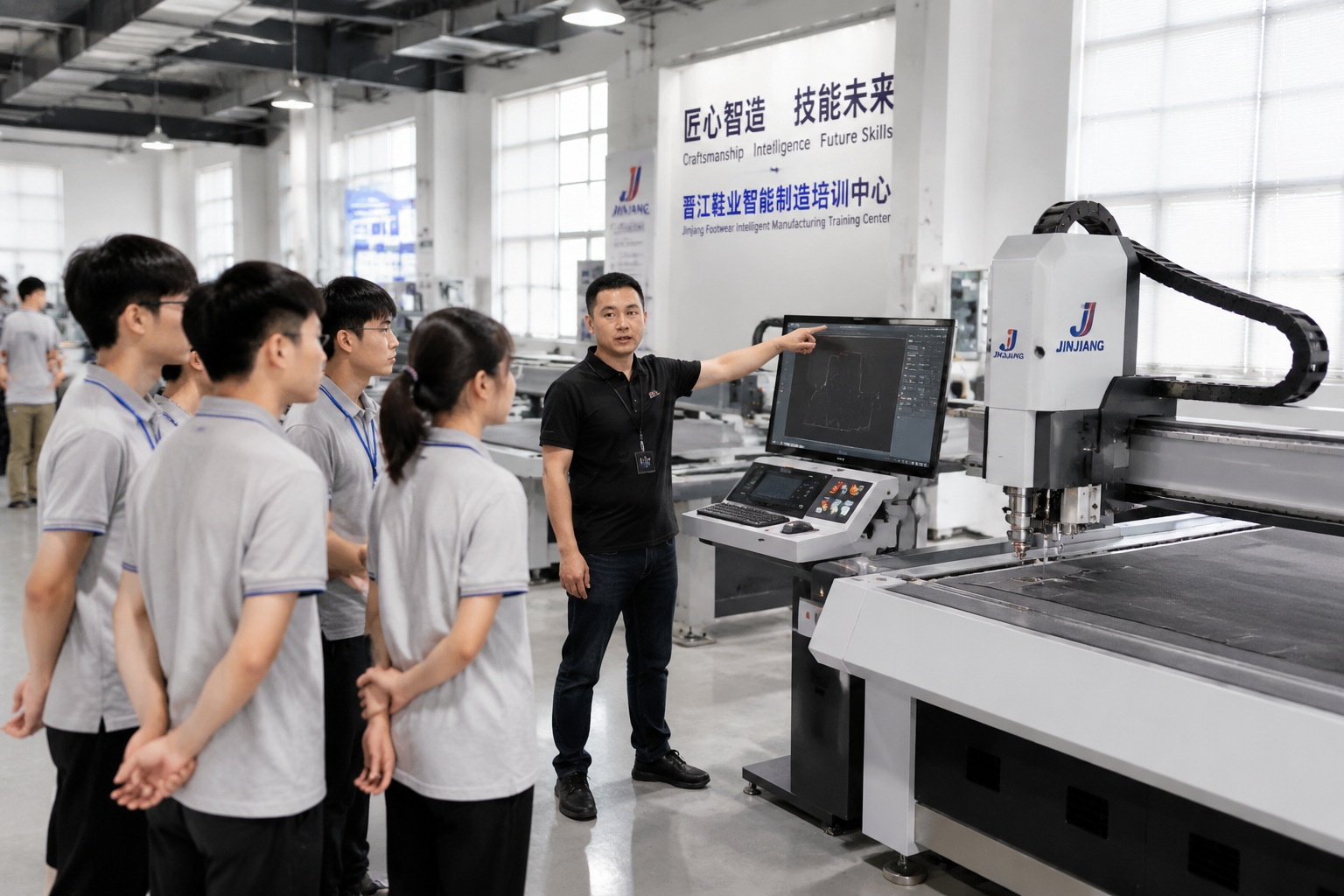
The city has invested heavily in education to keep up with the upgrade. A local polytechnic now offers China’s first undergraduate degree in sports-shoe science. Students learn biomechanics, material engineering, and 3D printing, not just shoemaking. Existing workers are retrained to operate robotic arms and automated quality checkers. One factory manager put it simply: “In the old days, we told workers to stitch faster. Now we tell them to read a code and adjust the software.”
This ecosystem is also luring outsiders. Global materials companies like Dow and BASF have set up offices in Jinjiang to be near their customers. Startups working on “smart shoes” that correct running posture have moved to the city to access its rapid prototyping culture.
The Human Side of an Industrial Shift
Behind the numbers are thousands of ordinary people whose lives have improved in measurable ways. In the early 1990s, a shoe-factory worker in Jinjiang might have earned 500 yuan a month and slept in a crowded dormitory. Today, the average monthly wage for a skilled worker is more than 5,000 yuan, with social insurance, meals, and even training subsidies.
Younger workers are different from their parents. They grew up with smartphones and social media, and they are not willing to work endless hours on a line. Factory owners say retaining good workers is now a major challenge, and the answer is not just higher pay but better work environments. Many plants now have air-conditioned production halls, display screens showing real-time data, and spaces for workers to rest and socialize.
“My mother worked here for 20 years and her back still hurts,” said one worker at a Peak factory. “I want my generation to work with our heads, not just our hands.” That attitude is exactly why the city is moving toward automation and sending workers back to school.
What Jinjiang’s Transformation Means for China
Jinjiang is not a perfect model. Many smaller factories still struggle with thin margins and high competition. The global sportswear market is crowded, and Chinese brands have to work hard to break into established markets in North America and Europe. But the direction is clear.
China’s manufacturing base is not vanishing; it is transforming. Jinjiang shows that a region can move from assembling parts for others to creating the concept, design, technology, and brand that others assemble for it. When you buy a pair of sneakers from a brand born in Jinjiang, you are buying more than a product—you are buying decades of trial, error, and hard-headed ambition.
The robotic arm in that research center will keep bending the sole until it breaks, which is also, in some ways, the story of Jinjiang itself: it refuses to stop testing its limits.
Start the discussion at forum.chinacomes.com