
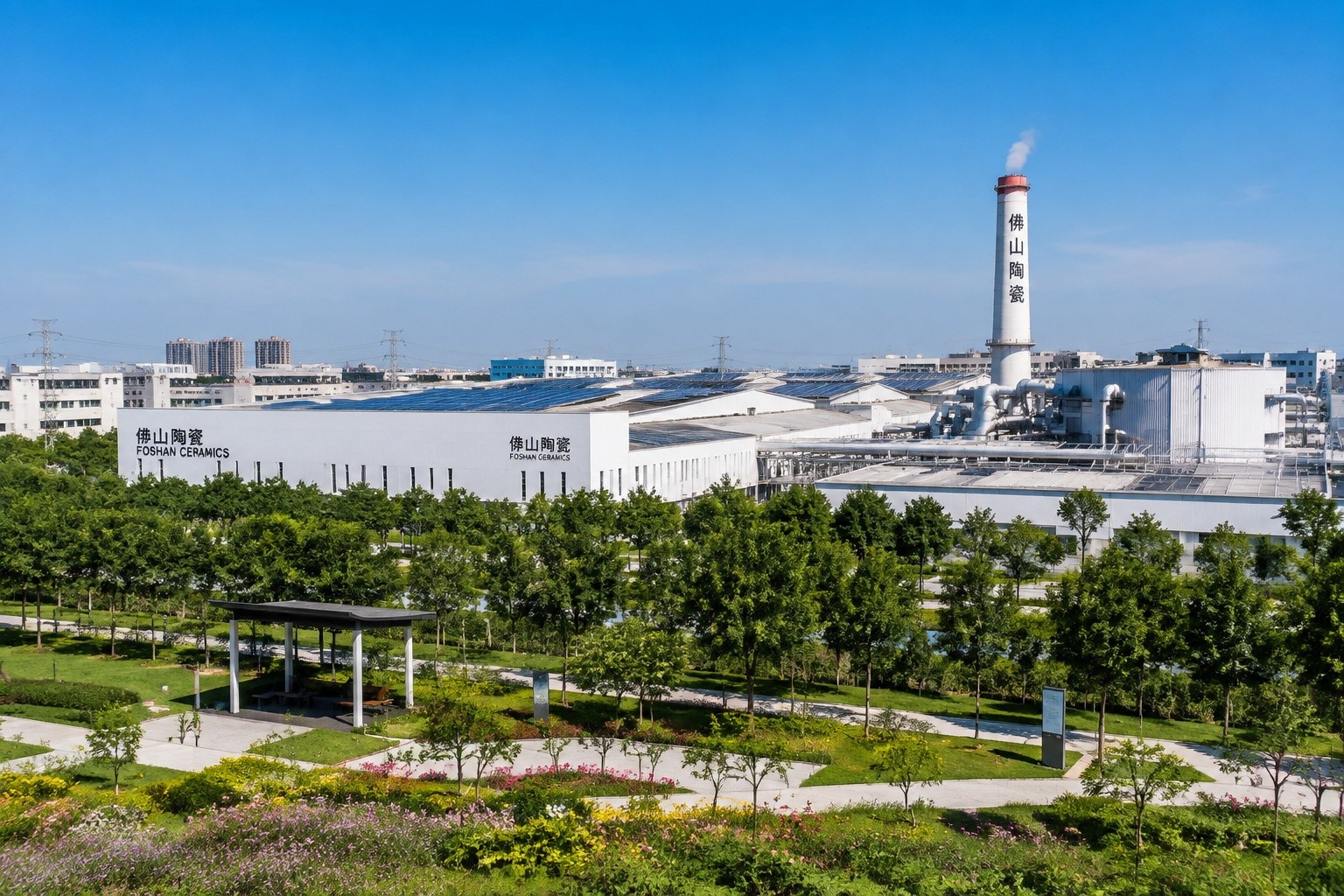

The Old Image of Foshan’s Ceramic Industry
For decades, the word “ceramics” in China was tied to a gray, gritty image: coal dust in the air, workers wearing masks, and rivers stained with white glaze wastewater. No city personified this better than Foshan in Guangdong Province, the ceramic capital of China, producing over a quarter of the country’s tiles. In 2010, Chen Jianhua, a 60-year-old plant veteran, remembers wiping a finger across his car windshield every morning and finding a film of dust within hours.
Today, that scene has changed. On the same streets of Nanzhuang, a town within Foshan that is home to hundreds of ceramic factories, you can see white-walled workshops and blue skies. “We used to measure air quality by how long you could breathe outside without coughing,” Chen jokes. “Now we read data on the wall display like everyone else.”
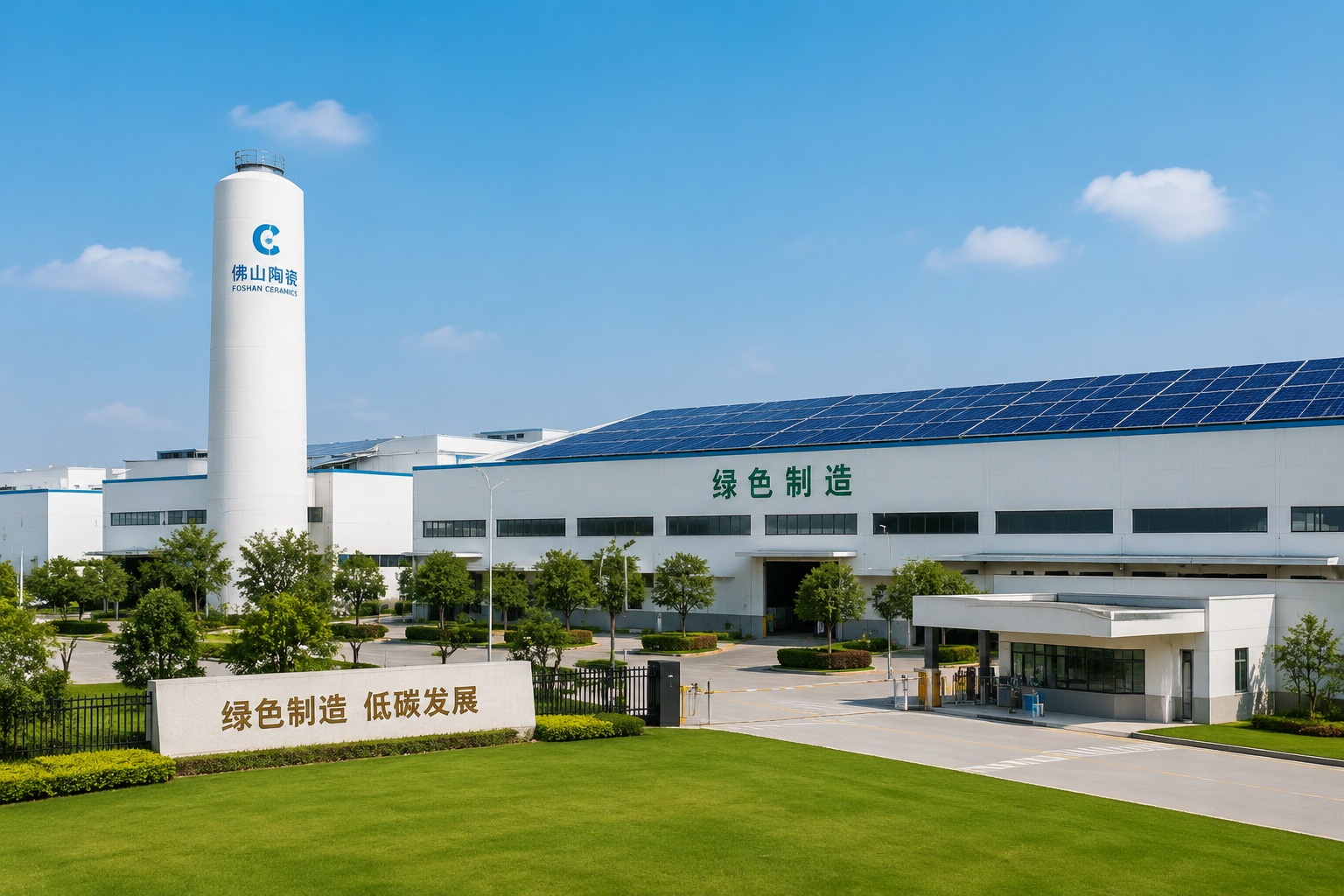
From the Most Polluting to a Green Industry: What Changed?
Foshan’s ceramic industry is a perfect case study of how a traditional, highly polluting sector can be rebuilt and made cleaner. It didn’t happen overnight, nor did it happen only because factories installed a few filters. It was driven by a combination of strict regulations, market consolidation, and a wave of technological upgrades that revolutionized the way tiles are made.
First, Replace the Fuel
The most significant change was the switch from coal gas to natural gas. Historically, ceramic kilns ran on coal gas produced by burning coal in large gasifiers, which generated a large amount of sulfur dioxide, nitrogen oxides, and dust. By the mid-2010s, the Foshan government began to phase out these gasifiers and pushed the industry to hook up directly to the national natural gas pipeline. Natural gas burns much more cleanly, producing almost no soot and much lower emissions of sulfur compounds.
This single change dramatically cut the visible pollution. According to data from the local environmental authorities, between 2015 and 2020, the ceramic industry in Foshan reduced particulate matter (PM) emissions by more than 70% and sulfur dioxide (SO2) emissions by over 60%.
Recycling Heat, Water and Dust
Turning a kiln green isn’t just about fuel; it’s about using energy wisely. In a traditional ceramic plant, the heat from the kiln’s surface simply dissipated into the air. Today, many Foshan factories have installed waste heat recovery systems that capture this heat and use it to preheat incoming tiles or generate electricity. Some large factories now derive around 30% of their total electricity from their own waste heat.
Water is equally important. Tile polishing and glazing produce a milky slurry that used to be dumped into rivers. Now, advanced filter presses recycle the water, and the dried solid waste is turned into building bricks or used in road construction. The result: the average Foshan ceramic factory now recycles more than 90% of its process water.
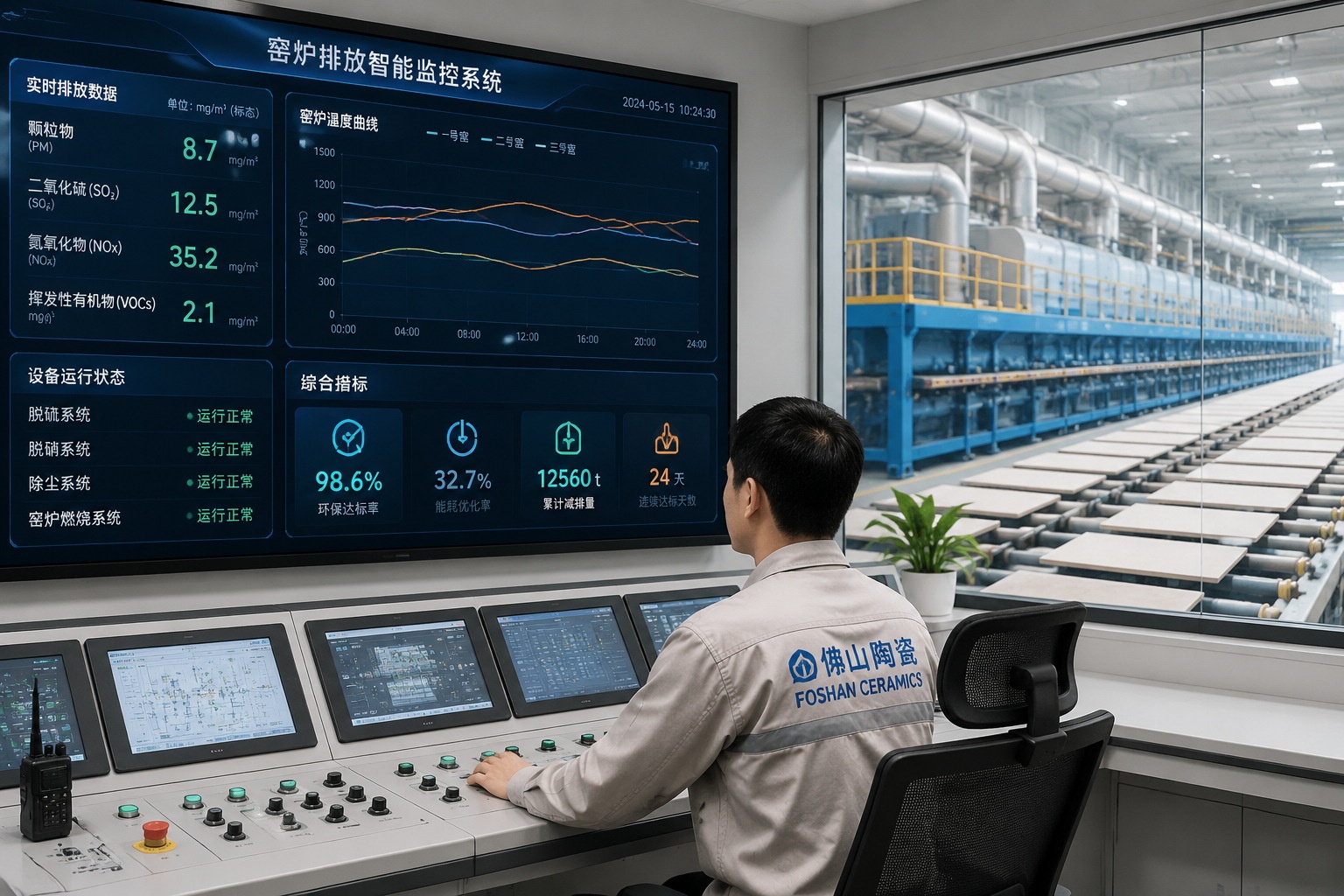
Digital Monitoring—Seeing Every Emission
What can’t be seen can’t be managed. Since 2018, all major ceramic plants in Foshan have been required to install continuous emissions monitoring systems (CEMS), which feed pollution data in real time to a central environmental protection bureau platform. This means inspectors can see an instant spike in emissions, and factory managers can catch a malfunctioning filter before it becomes an issue. “Suddenly, the environment became something we could manage with data,” says Li Wei, an engineer at a mid-sized tile factory. “It felt less like a regulation and more like a productivity tool.”
The Numbers Behind the Transformation
Beyond the obvious improvements in air quality, there are hard numbers that show how much more efficient these factories have become. According to the China Building Ceramic Association, the average energy consumption per square meter of polished tile has fallen by about 20% since 2015. The adoption of new spray drying technologies, which use high-efficiency pumps and automated controls, has cut energy use in that step by 15–20%. Meanwhile, replacing old screen-printing lines with digital inkjet printers has significantly reduced ink waste and solvent emissions.
Environmental investment has also become a point of competitiveness. Some factories in Foshan now operate what are known as “green intelligent parks,” where sensors throughout the plant monitor everything from kiln temperature to air pressure in dust collection bags. These systems can predict when filters need cleaning, preventing breakdowns and reducing downtime.
The Economics of Going Green
Some people outside China assume that environmental protection is a luxury that factories in developing countries cannot afford. Foshan’s experience suggests the opposite: going green has actually become a competitive necessity. In 2010, Foshan had over 600 ceramic companies, many of them small, inefficient, and heavily polluting. By 2023, that number had dropped to less than 200, while total output actually remained roughly stable. This was a wave of consolidation, driven by higher environmental standards and rising costs for energy and raw materials.
The survivors are the ones that embraced technology. They now operate larger, modern lines that use less energy per square meter of tile, produce fewer defective products, and command higher prices for their “green” reputation. In export markets, some buyers now require certification that the factory uses clean fuels and has a proper environmental management system. For Chinese suppliers, this is a box they can now tick.
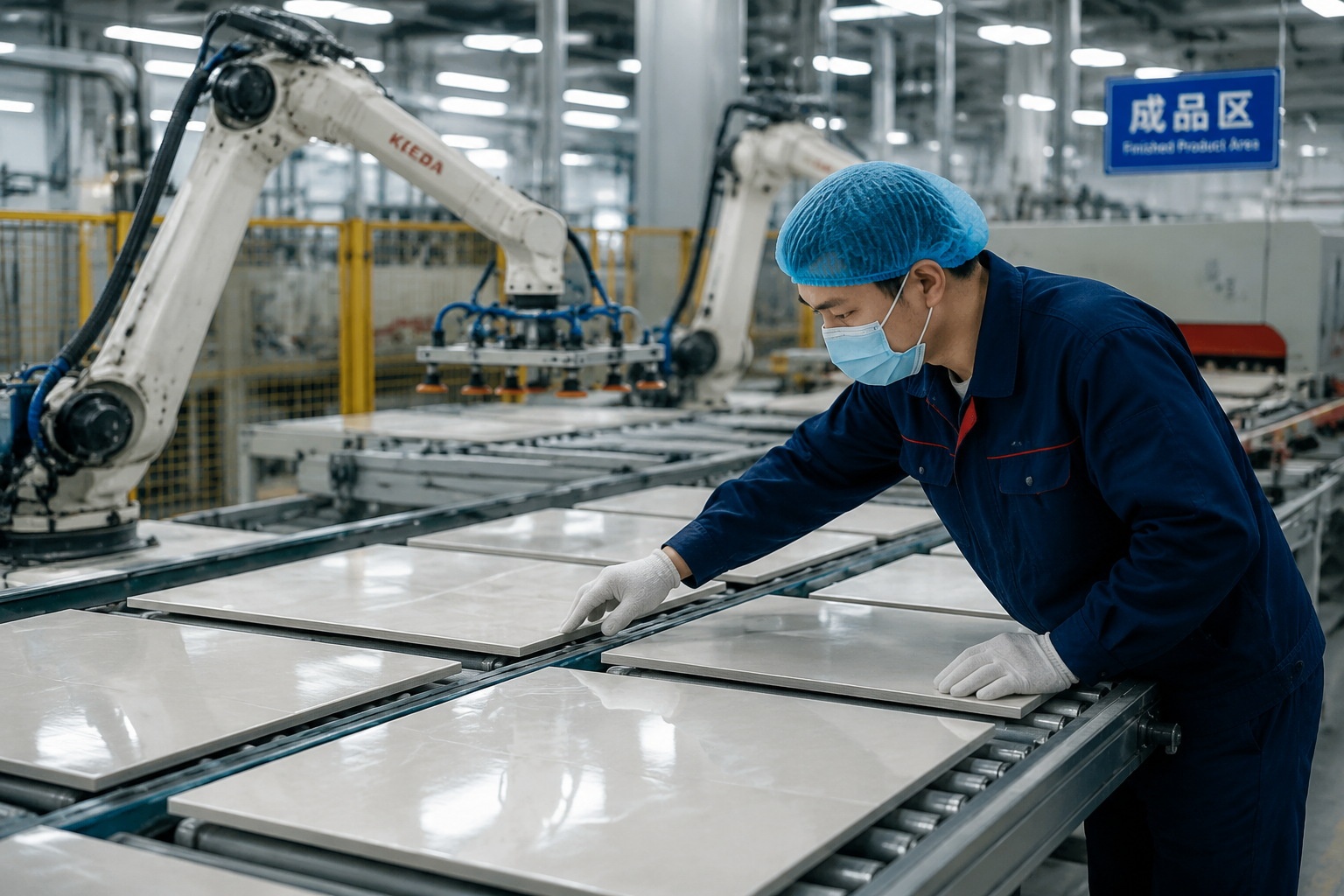
The cost of green transformation remains significant. A single gas-fired kiln with waste heat recovery can cost several million yuan more than a traditional one. However, the savings in energy consumption, raw materials, and fines for pollution violations are often recovered within five years. And in a country where the government has made “peak carbon” a policy goal, having a low-carbon footprint is becoming an asset for banks and investors.
From Foshan to the Future
Foshan’s story is not unique in China—similar transformations have happened in the steel, glass, and cement industries. But ceramics are a particularly good lens into what’s happening across the Chinese economy today: the shift from scale-driven, cost-cutting manufacturing to technology-driven, quality-oriented production.
The change also resonates outside the factory gates. In Nanzhuang, there is a small riverside park popular with families. The water is clear enough for fish to live, and the grass is green under the heat of the kilns just a few hundred meters away. Chen Jianhua, the veteran employee, often brings his grandchildren there after work. “When I started in the 1980s, we told our children not to play near the factory,” he says. “Now the factory is part of the neighborhood again. It still makes tiles, but it doesn’t make the air dirty. That’s a change I didn’t think I’d see.”
For anyone wondering whether a traditional industry can become cleaner, Foshan offers a concrete answer: it’s not just possible; it’s already happening. With stricter regulations, digital monitoring, and technological innovation, the same clay that goes into bathroom tiles now also supports a much cleaner urban environment.
Start the discussion at forum.chinacomes.com