

By [Our Farmer Narrator]
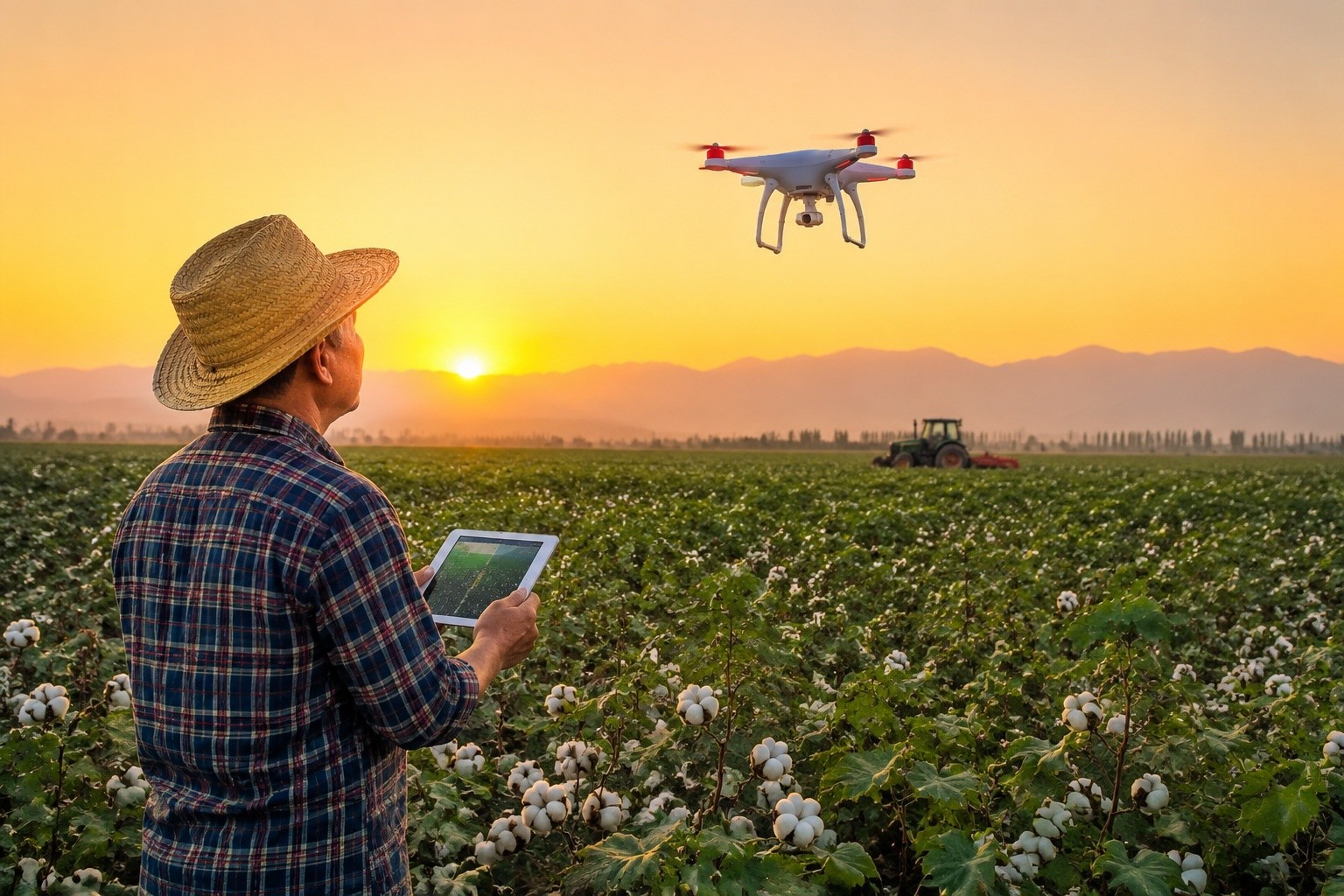
At 6:30 a.m., the sun is just lifting over the Taklamakan Desert’s edge. I’m standing in my cotton field in Aksu, Xinjiang, with a tablet in one hand and a small remote control in the other. There’s a faint hum overhead—my drone is already mapping today’s irrigation plan. Ten years ago, this would have been an unthinkable image for a farmer like me. I wouldn’t have imagined drones, GPS, or soil sensors. But today, my 300 mu (about 20 hectares) of cotton is managed with a thermal drone, a soil moisture monitor, and a smartphone app.
A Farmer’s Morning, Changed
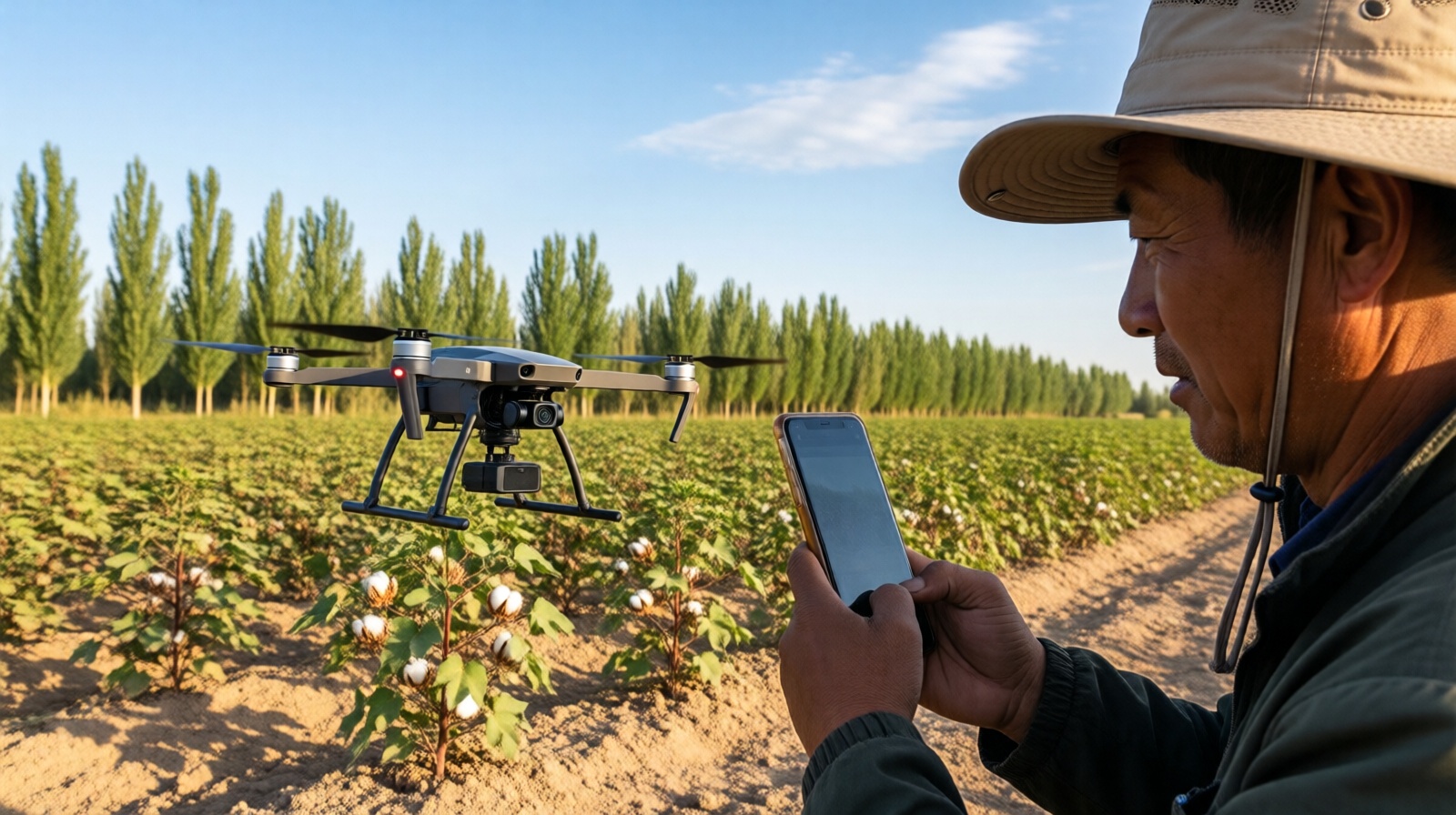
The first thing I do each morning is check the app on my tablet. It tells me the soil moisture at three different depths, the temperature, and the wind speed. Then I launch the drone. It flies along a pre-set route, taking high-resolution images of every row. The software analyzes the images and flags any area that looks unhealthy—maybe a pest problem, a water shortage, or a fertilizer imbalance. In the old days, I would walk the field for hours with a hoe, guessing where to water. Now the drone tells me exactly which patches need attention.
My father, who farmed this land for 40 years, comes out to watch me fly the drone sometimes. He doesn’t say much, but I see him studying the screen. The other day, he picked up the remote control and asked, “Which button starts the rotary nozzle?” I showed him, and he grinned like a kid. In his time, the only machine on the farm was a small tractor. The rest was all by hand.
Why Xinjiang Cotton Matters
Xinjiang is the largest cotton-producing region in China, yielding more than 80% of the country’s cotton. Most of it is grown in the arid Tarim Basin, where water is scarce and the growing season is short but hot. The cotton from here is famously long-staple, valued by textile mills around the world. But for farmers, the challenge has always been the harsh climate. Irrigation is everything. In the 1980s, when I was a child, we flooded fields with canal water, letting it soak the soil. That wasted a lot of water and often left parts of the field too dry.
Today, we use drip irrigation—thin tubes laid under the rows that release water directly to the roots. And it’s not just about water. Sensors measure soil conductivity, pH, and nitrogen levels. The data helps us apply fertilizer and pesticide only when needed, and only where needed. This is called “precision agriculture,” but for us, it’s just how we farm now.
Spring: Sowing with GPS and Drones
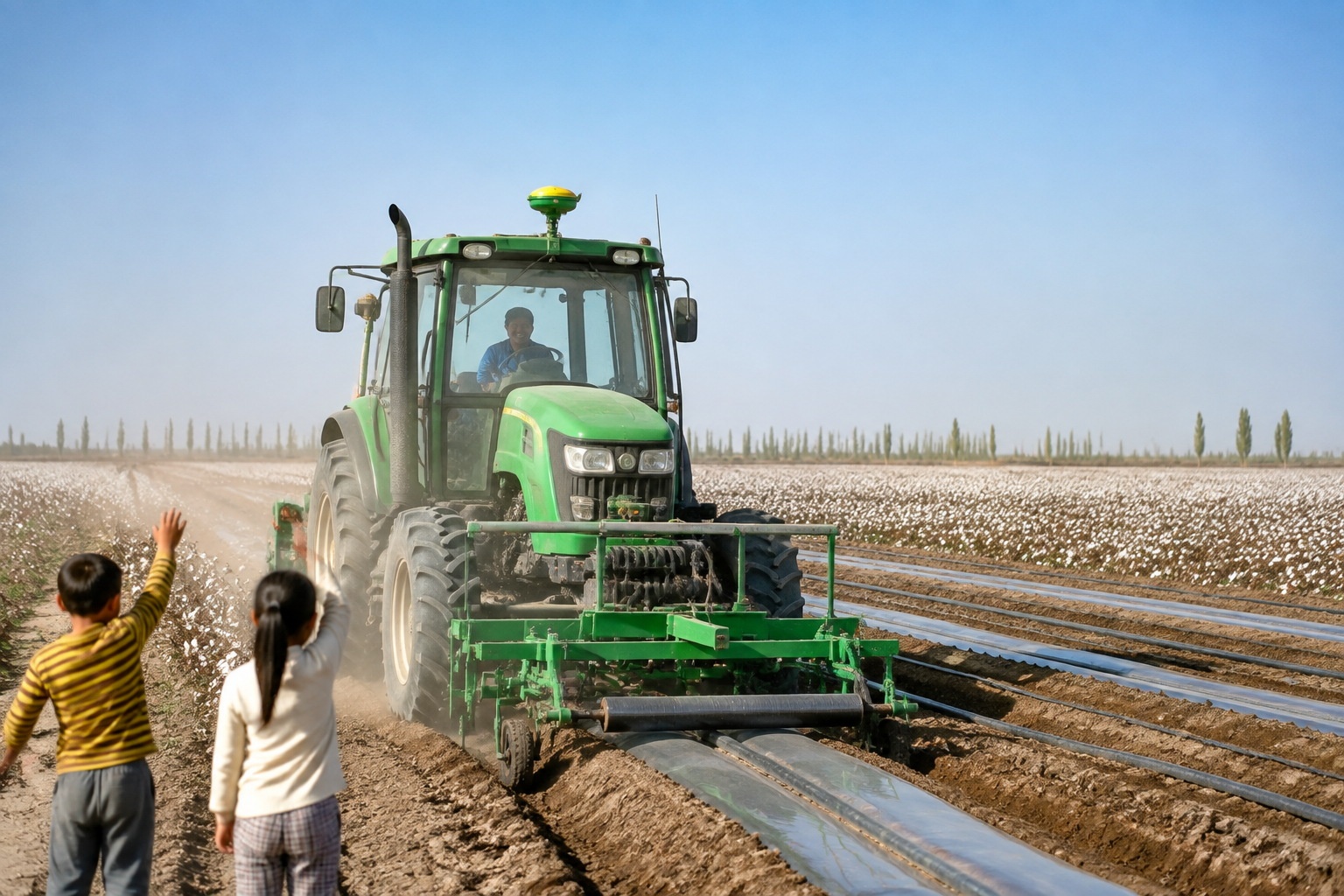
Sowing used to be the most tiring job. A 300-mu field took nearly two weeks of backbreaking labor. Now, I use a GPS-guided tractor to lay the plastic mulch and drip lines in one pass. Then I send the drone to map the field and check that every row is properly aligned. The drone also scatters cover crop seeds in between rows to reduce erosion.
This year, I tried a new trick: using the drone to broadcast a fine layer of organic fertilizer on the young plants. The fertilizer granules look like tiny brown pellets, and the drone spreads them with a spinner at the bottom. It’s not as precise as a tractor, but it saves time and avoids compacting the soil. My neighbor, who is 62, watched me do it and said, “So you’re farming from the sky now.” I told him, “Yes, and it’s the best seat in the house.”
Summer: Watching Data, Not Just Weather
In June, when the cotton plants are knee-high, the hard work begins. That’s when the crop is most vulnerable to pests like aphids and mites. In the past, we used to spray the entire field with pesticide, whether it was needed or not. That was expensive and harmful to the soil and beneficial insects. Now, I use the drone to generate a spectral map of the field, which highlights stressed plants. If a patch shows low vigor, I’ll send a small spray drone to that exact spot. It uses a fine mist that coats the leaves without overspray.
I also use a weather station that sends data to my phone. It tells me when the wind is low enough for spraying, when frost is a risk, and how much water the field has received. Last summer, we had a sudden heatwave during flowering. The station alerted me two days in advance, so I increased the drip irrigation in the west block and put up a shade net over the most sensitive rows. That saved a lot of stress—for me and the plants.
My son, who studies agricultural science in Urumqi, came home for the summer and taught me to use an app that tracks “growing degree days.” It calculates the heat accumulated each day, which tells us roughly when the bolls will open. That lets me plan the harvest schedule accurately. For a farmer, that’s golden information.
Autumn: The Harvest Arrives on Its Own
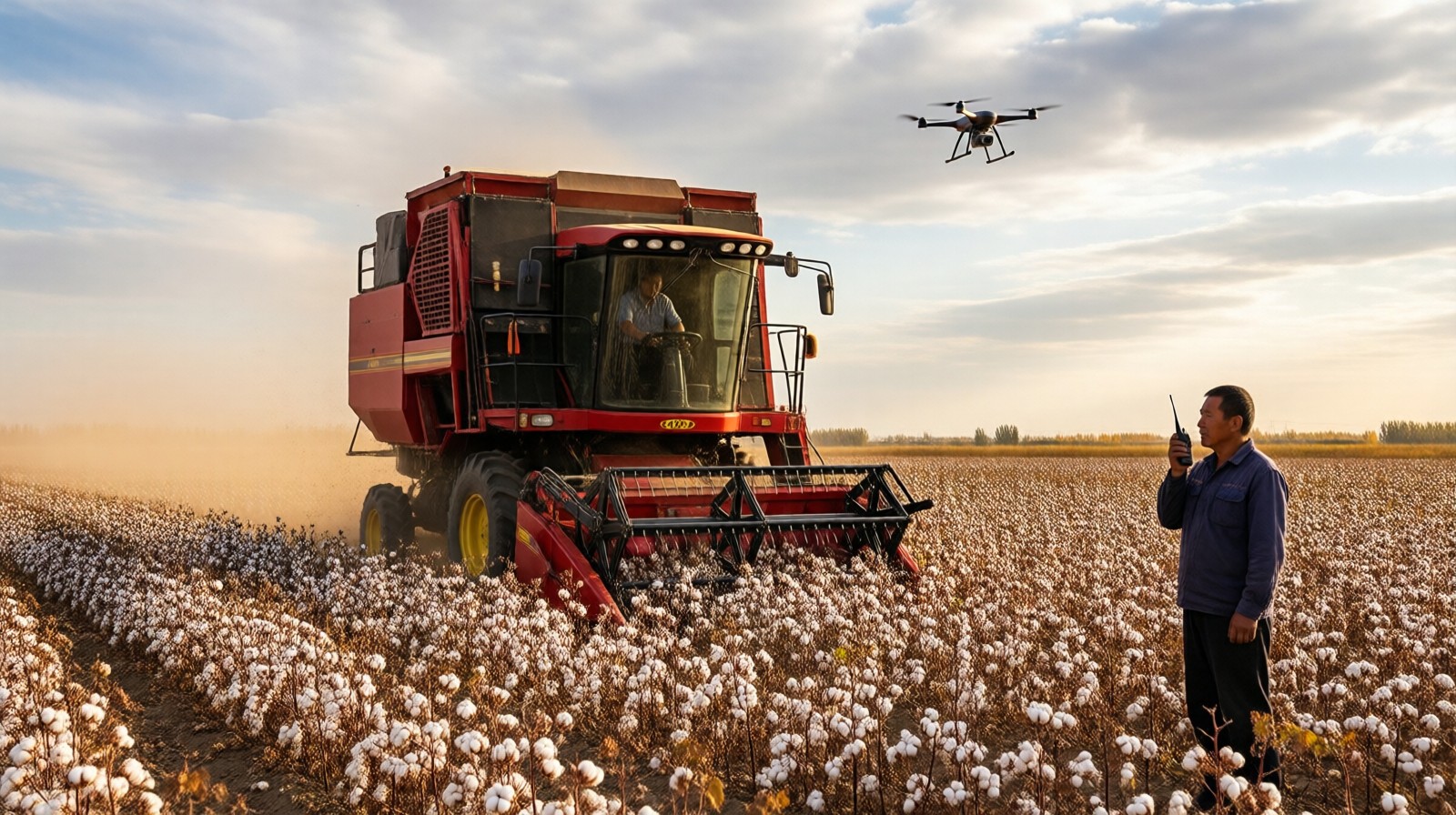
Harvest season in Xinjiang is a race against the weather. The bolls burst open in late September, and you have to pick them before frost or rain ruins the lint. In old times, tens of thousands of seasonal workers from other provinces would arrive by train to pick cotton by hand. It was a massive human effort, and the work was brutally hard. Today, most of my field is harvested by a large cotton picker, a machine that looks like a mechanical dinosaur. It takes about eight hours to harvest the whole 300 mu, and it’s controlled by a computer that follows GPS lines.
But even here, the drone has a role. Before the picker rolls in, I fly the drone to survey the field and identify the areas that are fully mature. The picker can then start on the earliest rows and avoid unripe patches. After the harvest, the drone checks for leftover cotton in the furrows, so we can send a manual crew if needed. It’s like having eyes everywhere at once.
The yield this year was 420 kilograms per mu, which is about 15% higher than my father’s best year. And we used 30% less water and 20% less pesticide than in 2005. That’s not just technology for better profit—it’s technology for surviving in one of the driest places on Earth.
The Learning Curve
Let’s be honest: this transition hasn’t been easy. When I first bought the drone in 2018, I almost crashed it into a power line. The local agricultural extension center runs evening classes where farmers learn to fly drones and read data charts. I went with my father, and he learned to write his name on a tablet for the first time in his life. We also have a village WeChat group where we share tips and troubleshoot our equipment. Sometimes, the drone’s software updates at an awkward time, and I have to call a young technician who lives 80 kilometers away. But the help is always there.
There are also costs. A good agricultural drone costs about 60,000 yuan (about $8,300), and a combine harvester can run close to a million yuan. The government gives subsidies for some equipment, but loan payments are a real burden. Still, the savings in water, labor, and chemicals are considerable, and the yield increases are consistent. In my generation, we see this as an investment, not a gamble.
And yet, not every farmer here is on board. The older ones are often scared of the new technology. That’s why we’ve started a “tech mentorship” program where younger farmers like me are paired with veterans. We show them how to hold the remote control, how to read the color gradients on the digital map, and how to use the weather app. Slowly, they start to trust it. My father now flies the drone by himself, though he still calls it “an electric bird.”
A Different Kind of Farming Life
What has really changed is the lifestyle. Farming used to mean exhaustion and sunburn, endless manual labor and unpredictable yields. Now, it means problem-solving, data analysis, and a lot less physical pain. My son is excited to come back to the farm after finishing school, because he says it’s like running a tech startup with fields instead of offices. Actually, that’s not far from the truth.
I don’t want to paint a rosy picture. There are still sandstorms in spring, droughts in summer, and the constant worry about market prices. But the cotton fields of Xinjiang are no longer a place frozen in the past. When I stand under the drone’s shadow, watching it trace its path across the green rows, I feel like I’m part of a generation that has turned a harsh land into something manageable.
If you ask me what a typical day is like, I’d say: I open my app, I fly my drone, I read the data, and I make decisions. The computer does the heavy lifting, but the brain is still the farmer’s. That’s what technology has given us—a chance to be smarter, not just stronger.
Tomorrow, I’ll fly the drone again. The field is almost ready for next season’s planting. The soil is resting, but the digital map doesn’t sleep. Neither do I, sometimes.
Start the discussion at forum.chinacomes.com