

Starting Line: A County Town in Northern Anhui
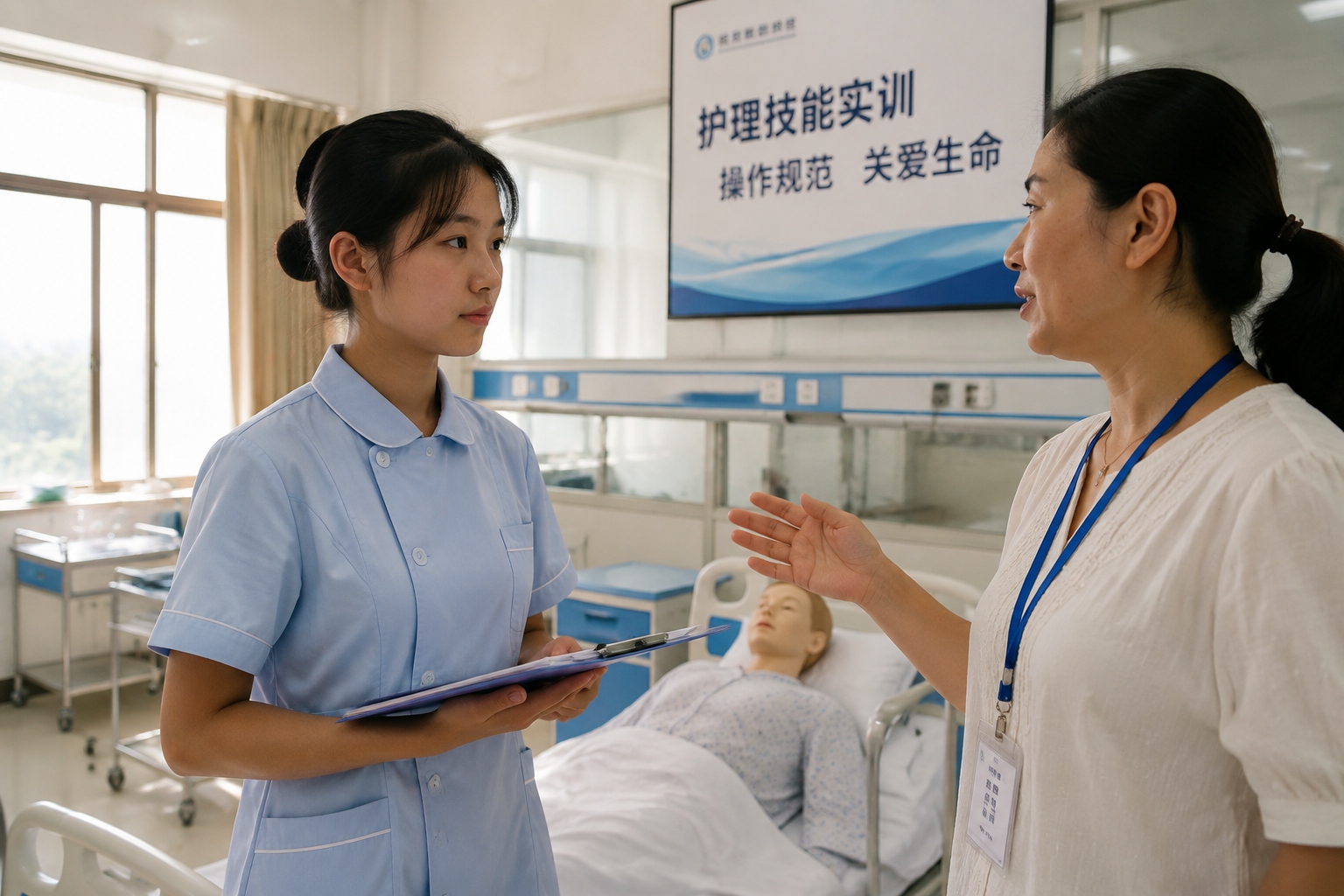
In early September, the heat still hangs over northern Anhui. Xiao Fang, 16, stands outside the gate of Fuyang Vocational Education Center with a plastic basin, two cotton quilts, and a backpack stuffed with that year’s clothes. She has just finished junior high in a village 40 kilometers away, and she is one of the few girls in her class who did not go to a regular high school. Her parents run a small wheat farm. Her father once said, “If you don’t read, you’ll carry cement like me.” But she is not going to university, at least not directly. She is here to learn nursing.
For many families in rural northern Anhui, this is the hard math of education: a regular high school might lead to college, but college tuition plus living costs in a big city can exceed 50,000 yuan a year, with no guarantee of a good job at the end. Vocational school costs less, and it promises a skill. For a girl, the family often reasons, a stable job in a hospital or kindergarten is safer than drifting to a factory.
What a Vocational School Actually Looks Like
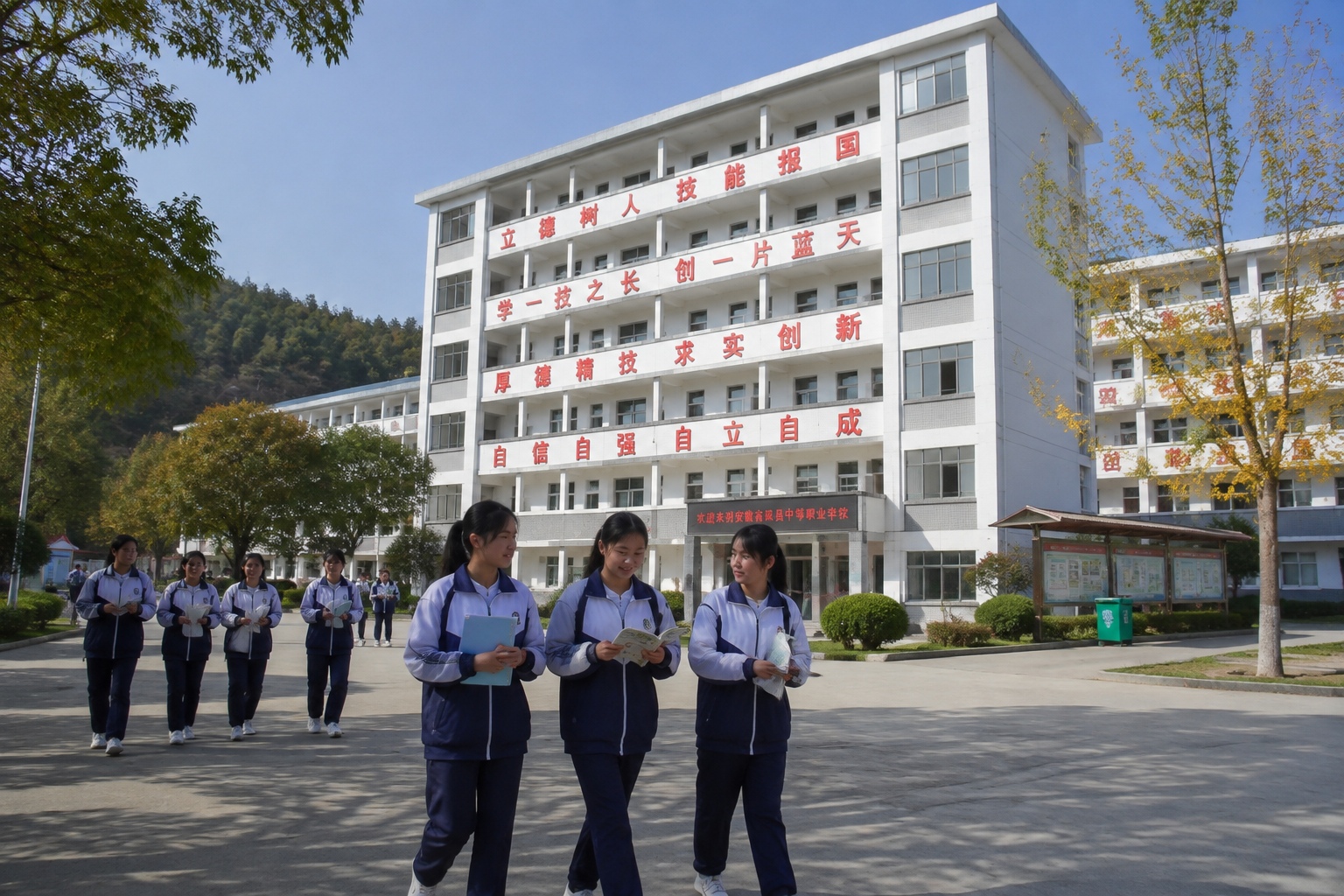
The campus is newer than Xiao Fang expected. White five-story buildings, a simulation hospital ward on the third floor, and a training lab stocked with mannequins, IV stands, and stethoscopes. The teachers are mostly women in their 30s and 40s, many with clinical experience. In the first year, Xiao Fang learns anatomy, basic nursing, and medical ethics. She practices tying a square knot on a pillowcase until her fingers ache. Her favorite class is the simulation: she must check a “patient’s” vitals, clean a pressure ulcer, and report calmly to a “doctor.” When she gets it right, she feels a quiet thrill.
School life is structured and a bit militaristic. Morning exercises at 6:30, lights out at 10:30. Uniforms are mandatory. Phones are allowed but discouraged during class. Xiao Fang shares a six-bed dorm with five other girls, two from her own county, three from nearby towns. On Sundays, they walk to the Wanda Plaza to buy cheap ice cream and watch TikTok. They talk about boys, but more often about how much money they can send home after graduation.
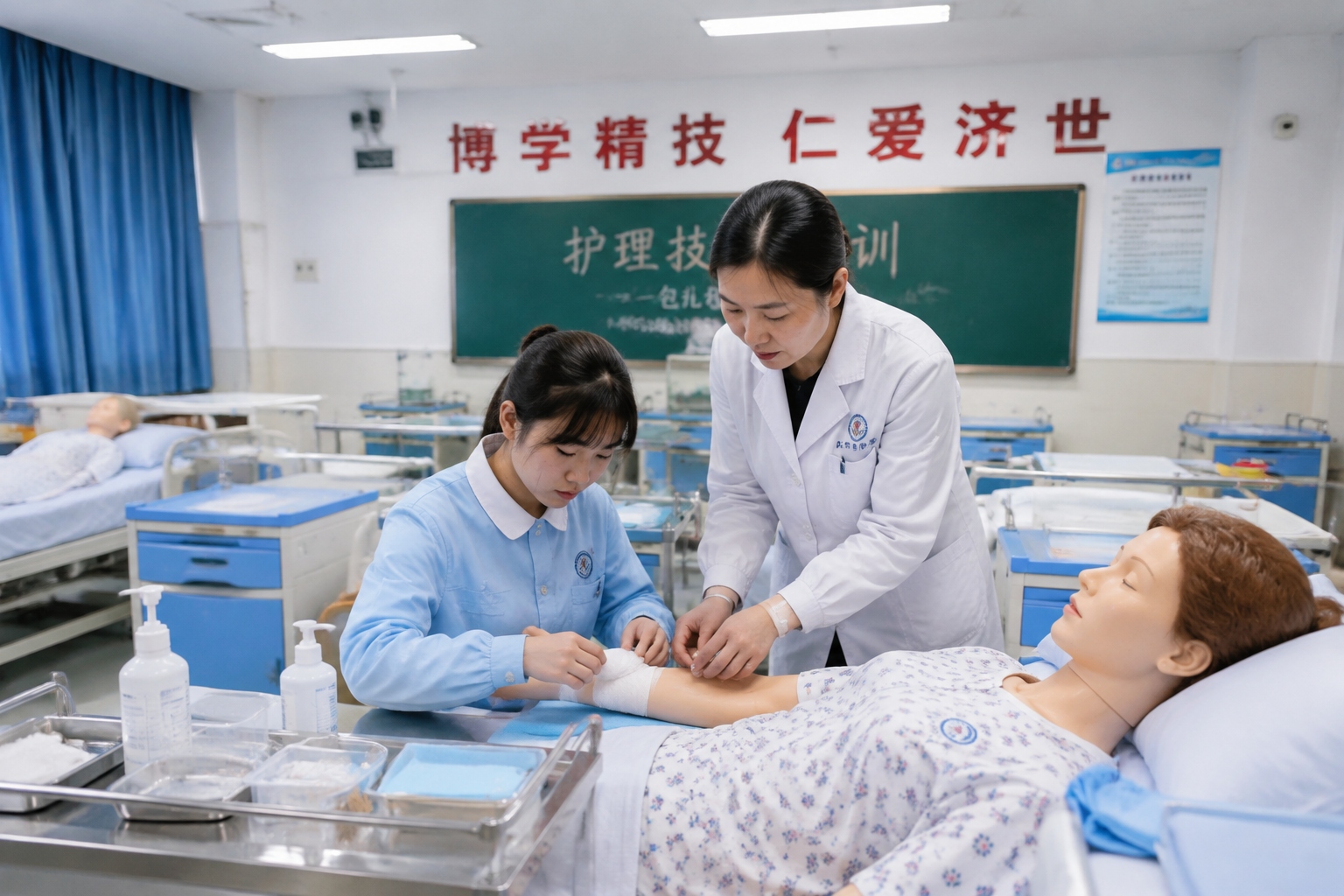
Not everything is smooth. The math class is hard for Xiao Fang; she fails her first exam in drug dosage calculation. Her teacher, Ms. Zhang, stays after class to help her. “In a city school, someone might have given up on you,” Ms. Zhang says. “Here, we know you need one extra push.” Over time, Xiao Fang learns to convert milliliters to drops, and later, she helps her dorm mate with injections.
Internship: Learning to Work in a Hospital
In her third year, Xiao Fang is placed at a county hospital for an 8-month internship. She works 8 to 10 hours a day, rotating through internal medicine, surgery, and pediatrics. She learns to change bedsheets with a patient still in the bed, to whisper a child calm before an IV needle, and to keep her voice steady when an elderly patient gets angry. The internship is unpaid, but the hospital provides lunch and a small monthly stipend of 500 yuan. She lives in a crowded dorm with five other interns. At night, she studies for the national nursing license exam, because without it, she cannot be a full nurse.
The exam is tough. Only about 40% of her cohort passes on the first attempt. Xiao Fang passes, barely. She cries in the bathroom of the hospital dorm, then calls her mother. Her mother says, “Good girl, your father will be proud.” That evening, she goes to a noodle shop with two friends and spends 12 yuan on an extra portion of braised pork.
City Job, City Life
After graduation, Xiao Fang moves to Hefei, the capital of Anhui province. She finds a job at a private nursing home for elderly residents, starting at 4,800 yuan a month. It is not a glamorous job—she changes diapers, adjusts feeding tubes, and comforts confused residents at 2 a.m. But she likes the head nurse, who is patient and teaches her how to use a electronic health record system. She sends 2,000 yuan home every month. Her parents use it to buy a second-hand electric tricycle and to repair the roof.
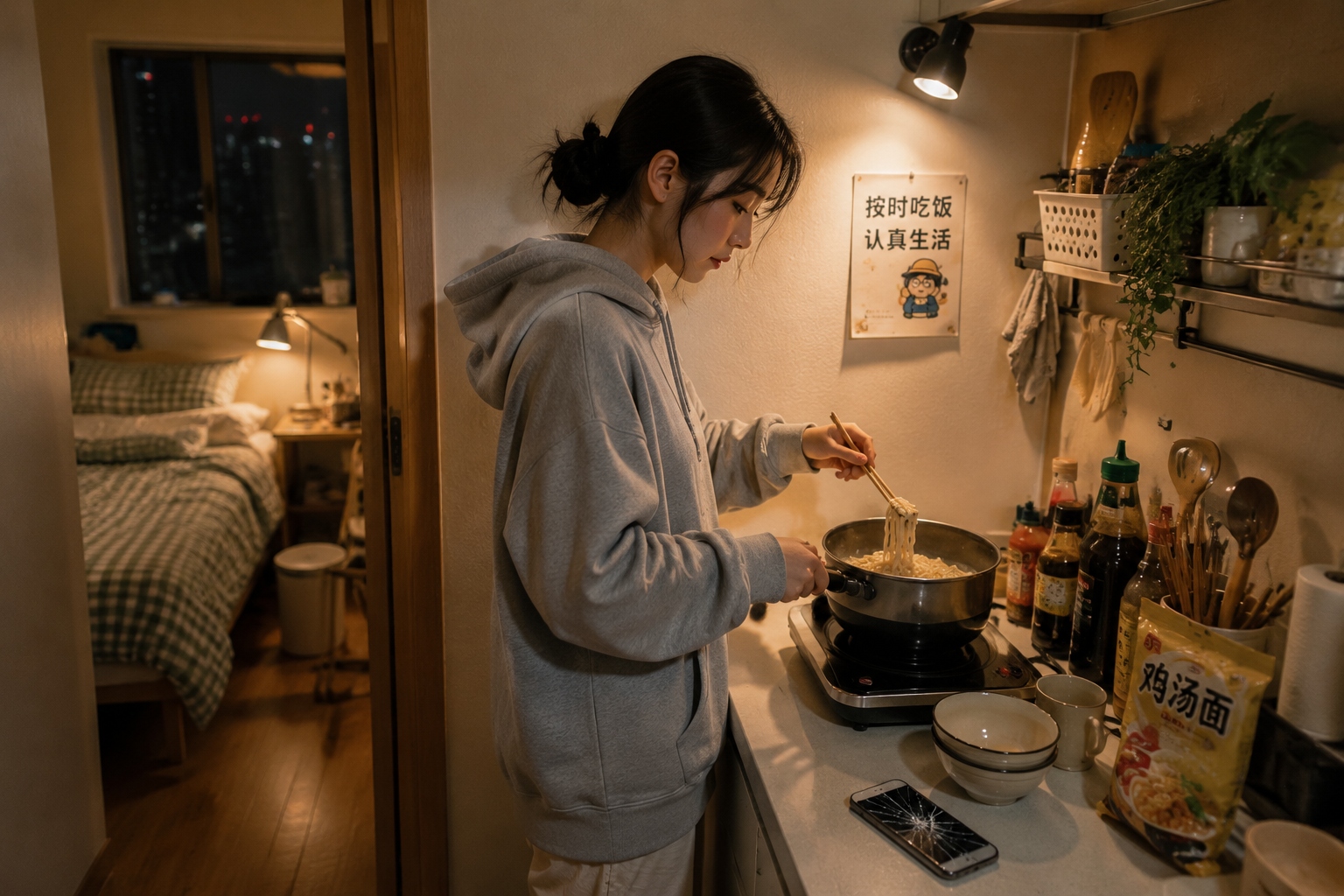
Life in the city has its costs. She rents a small room near the nursing home for 800 yuan. She eats out rarely, cooks noodles in a shared kitchen. Her phone is an old Huawei with a cracked screen. On her days off, she strolls through a park, watching old men fly kites and young couples take wedding photos. She feels invisible, but also free. For the first time, her meals are not dependent on whether the wheat harvest is good.
Not every girl from her school is so lucky. A classmate who studied preschool education now works at a kindergarten in Suzhou, earning 3,500 yuan a month, but she says she feels burned out. Another who studied e-commerce works in a live-streaming studio in Hangzhou, but she videos are often humiliating—”they make you act stupid,” she once said. Yet another girl dropped out of vocational school after getting pregnant at 18 and now works at her in-laws’ grocery store. Xiao Fang’s story is hopeful, but not universal.
Is It Really ‘Changing Fate’?
The official line in China is that vocational education “opens a path to success.” For Xiao Fang, it has indeed changed her salary and her address. But she is aware of the limits. When she applies for a better hospital job, the HR manager asks about her university degree. She doesn’t have one. The nursing home offers a training program for a specialist certificate in geriatric care—she signs up immediately, because she knows the more certificates she stacks, the less the education gap matters. She has also started part-time online courses through an open university, hoping to one day get a bachelor’s degree in nursing.
Her father’s attitude has shifted. He used to say that a girl’s education was “like pouring water on a stone.” Last winter, when she returned home for Spring Festival with a red envelope for him, he told her, “You did good, girl.” For Xiao Fang, that moment mattered more than any certificate.
Still, she understands the larger puzzle. “If I have children one day,” she says, “I will try to save money for a better school. But I also know that learning to lay bricks could be as useful as learning Shakespeare. You need both, depending on where you stand.”
A Narrow Door, Not a Closed One
Vocational education in rural China is not a miracle worker. It cannot erase geography, class, or the fierce competition for good jobs. But for Xiao Fang, it was a door that opened just enough for her to squeeze through—into a city job, a steady salary, and a sense that she can take care of herself and her parents. No one who knows her would say she has fully “changed her fate.” But she has changed her options. On a warm Saturday in Hefei, she walks to a library, checks out a textbook on advanced nursing, and sits by the window, reading. The sun hits the pages. Somewhere behind her, two other girls in uniform—maybe vocational students—are taking photos of the lake. They might not have a clear path yet. But they are moving, and moving is how any path begins.
Start the discussion at forum.chinacomes.com