

A Village Warehouse That Smells Like Toast
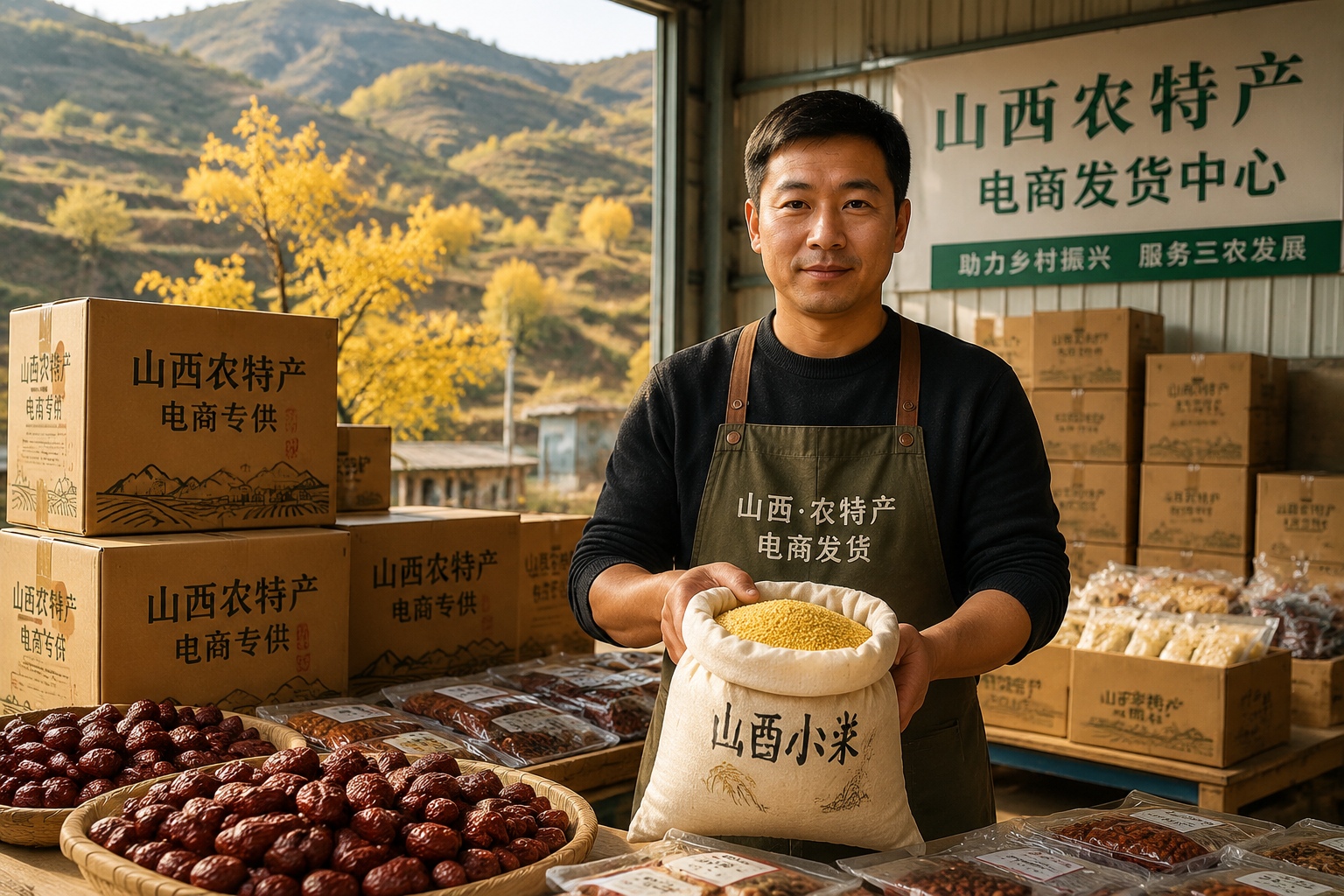
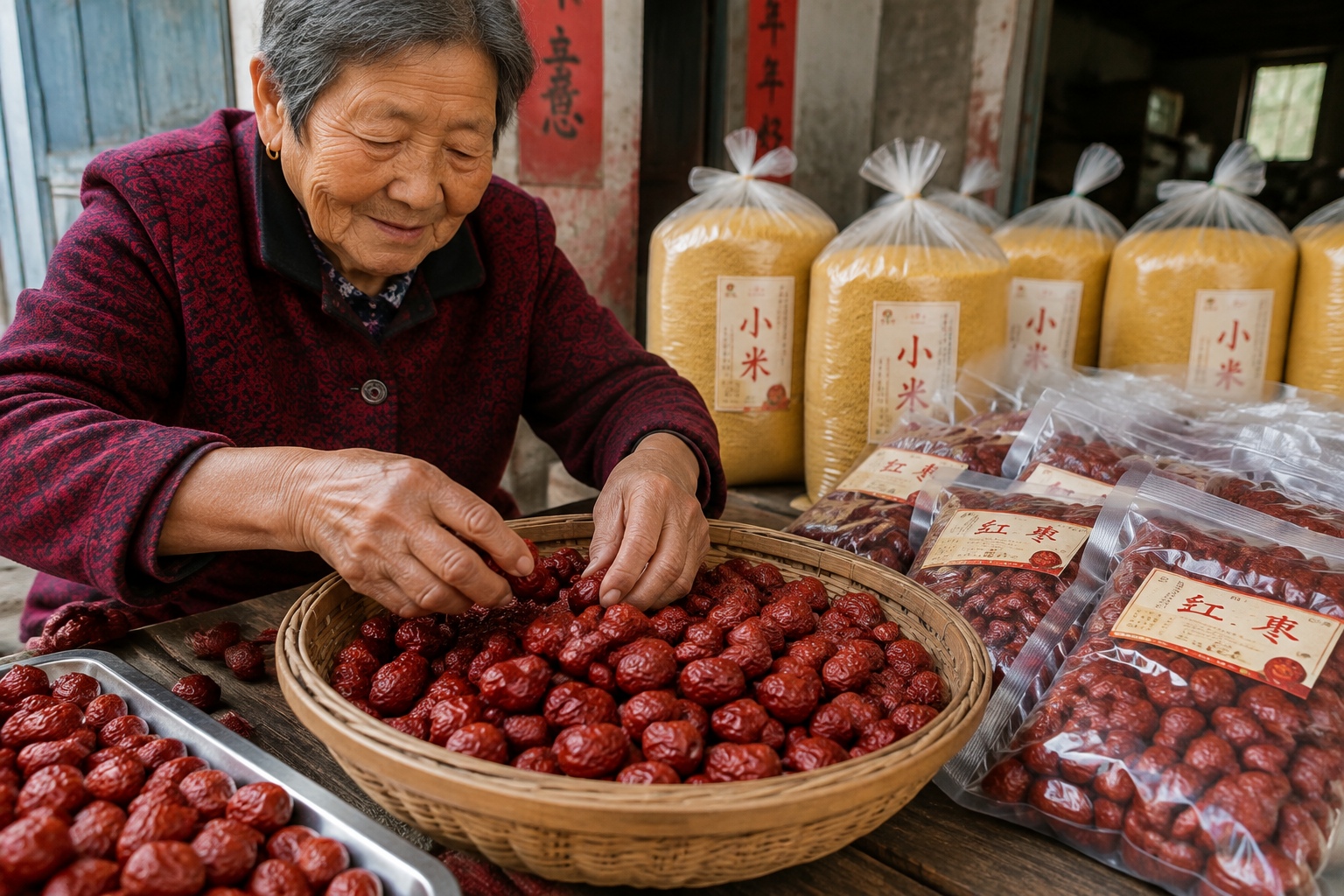
Li Qiang’s warehouse smells like toasted grain and dust. On the table behind him, an old woman in a blue cotton apron is sealing bags of yellow millet with a heat sealer. On the floor, cartons of dried red dates are stacked almost to the ceiling. Every five minutes, a courier van pulls up at the door and picks up another pile of boxes.
This is a typical afternoon in Jiexiu, a county-level city in central Shanxi province, on the yellow-earth plateau of northern China. Li, 34, used to work in a factory in Guangdong, two thousand kilometers to the south. In 2015, he moved back and started selling his village’s two best-known products—millet and red jujubes—through Taobao, the country’s largest online marketplace. “I had no idea what e-commerce meant,” he said. “My plan was simple: if people can buy sneakers online, maybe they can buy grain too.”
Why Shanxi? A Short Geography Lesson
Shanxi is not what many foreigners picture when they imagine China. There are no neon towers or mega-factories here. Instead, the Loess Plateau rises in folds of dusty golden hills, cut by rivers and terraced farmland. Winters are dry and cold; summers are short.
This is one of the oldest grain-growing regions in China. Millet—a small round grain, like modern quinoa’s harder cousin—has fed people here for thousands of years. The red jujube, often called Chinese date, grows in clusters on spiny trees and dries naturally in the sun. Both crops survive drought well. That resilience, Li says, is exactly why his e-commerce shop exists: the land rarely produces a beautiful harvest, but it produces something reliable.
From Factory Worker to Internet Grain Seller
Li’s first online orders were a joke. “I sold three bags in the first month. My mother had to help me pack them with newspaper,” he remembers. The problem wasn’t the product—it was trust. Chinese consumers want to know where food comes from, who grew it, and how it was handled.
So Li started doing something most local sellers hadn’t tried: He put his real name, his phone number, and photos of his family’s terraced fields on the product page. He also began eating his own millet every day and posted a video of it. “You can’t fake porridge,” he laughed.
Demand grew word-of-mouth. By 2020, he had formed a cooperative with 42 neighboring families. The cooperative now operates two workshops—one for millet, one for jujubes—and sells through Taobao, Pinduoduo, and Douyin. Last year, the cooperative shipped about 300 tons of millet and dates, according to Li. That’s more than the whole village used to sell at markets in a decade.
What It Actually Takes to Ship Grain Across China
Shipping farmland products is harder than shipping a phone. Millet must be dry before packaging, or it will mold in transit. Jujubes need to be sorted by size and color, because a perfect batch of red dates is premium food. One bad order can ruin a shop’s rating.
Li learned this the hard way. In 2016, a batch of millet arrived wet at a customer’s home in Shanghai. The customer posted a photo with a one-star review. “After that, we bought a moisture meter and changed our packaging completely,” Li said. The cooperative now vacuum-seals every bag in thick plastic, then wraps it in corrugated carton boxes with printed tape that reads “Shanxi Millet.”
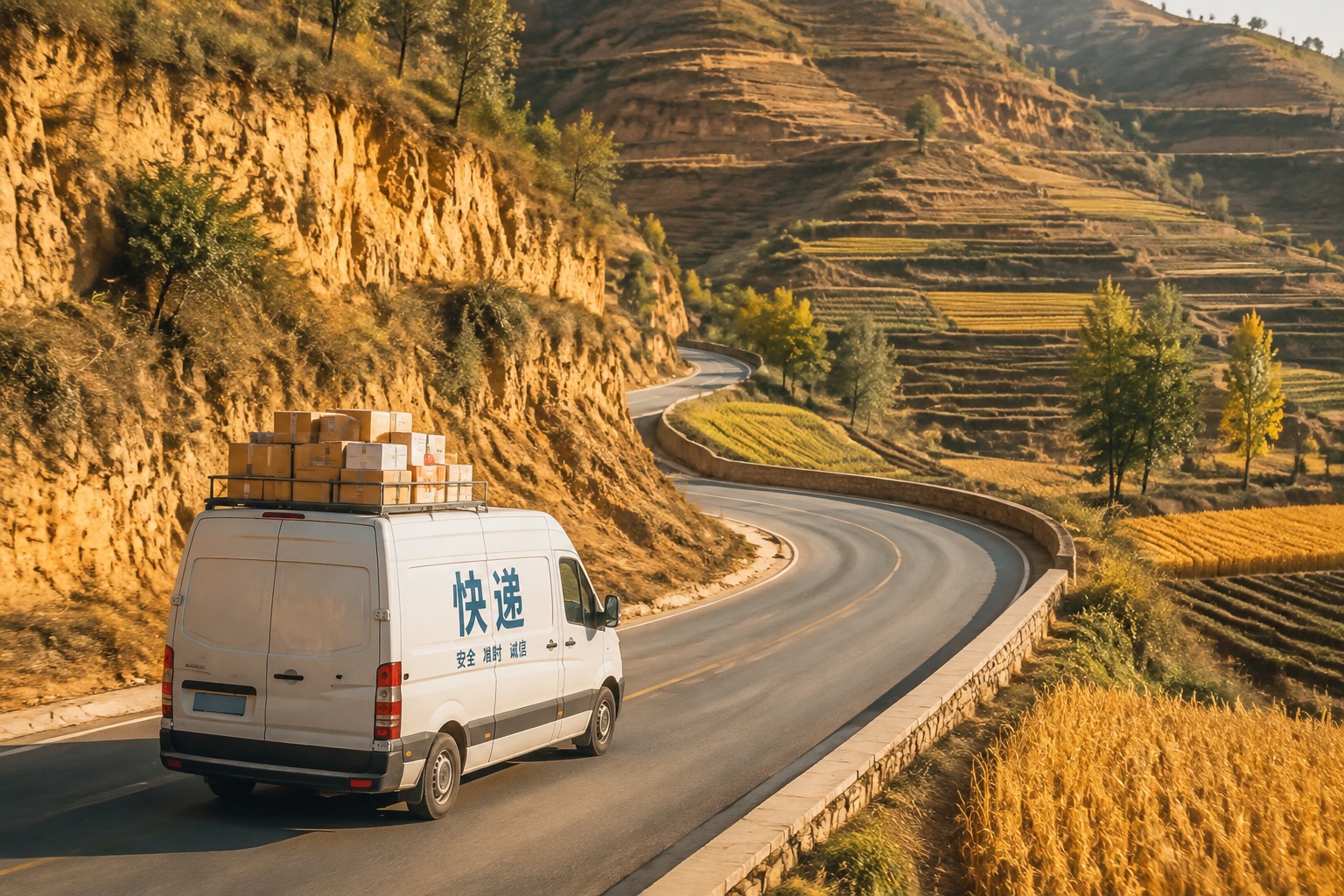
The logistics side, surprisingly, is no longer a problem. China’s postal system has built village service stations across the plateau. In Jiexiu, four courier companies pick up from Li’s workshop daily. “Back in 2015, a parcel took a week to reach Beijing. Now it takes two days,” he said. “The roads are better, the trucks are faster, and the pricing is cheap enough for grain.”
The People Behind the Packages
Most of the workers in Li’s cooperative are women in their fifties and sixties. Sorting dates, packing grain, and checking orders give them income without leaving home. “Before e-commerce, my only options were working in the fields or finding a job in the city,” says Li Ying, 58, who packs jujubes by hand every morning. “Now I make 1,500 yuan a month in my own village.”
That may not sound like much by Shanghai standards, but in rural Shanxi, it’s a meaningful cushion. For many older rural women, it is the first year they have had their own bank card with their own savings.
The Hard Parts Nobody Talks About
E-commerce is not a magic bottle for rural China. Li is frank about the difficulties. “Everyone can open a shop,” he says. “The problem is making people find yours.” Platform advertising fees, short-term discount campaigns, and a constant stream of new sellers make visibility expensive.
Weather is another unchangeable variable. In 2023, a late frost damaged the jujube harvest, cutting his supply in half. “I had to refund customers who ordered dates months earlier,” he recalls. “You feel like you’ve let everyone down—the customer, the farmer, and yourself.”
And there’s the emotional cost of relying on algorithms. His shop’s traffic sometimes drops without explanation. He has learned to adjust keywords, upload new photos, and use livestreams instead of complaining. “The platform is not your friend. It’s a market that changes its rules,” he shrugged.
What Buyers Ask Before They Click “Buy”
Li gets the same questions over and over from customers around China. Here’s what new buyers often want to know:
Is this the same as the millet I saw in a supermarket?
“Most supermarket millet has been polished or mixed with other grains. What we send is the whole grain from one harvest, not blended. You can tell by the brighter yellow color and the fact that it smells slightly nutty.”
How do you cook millet?
“Wash it, boil it in three times the water, then lower the heat and let it simmer for 25 minutes. It’s the most comforting bowl of porridge you’ll ever have. Or you can cook it like rice with a bit of pumpkin.”
Are Chinese dates the same as Medjool dates?
“No, they’re jujubes—firmer, less sweet, and very high in vitamin C. People eat them as a snack, in tea, or in soup. If you’ve never tried them, start with a small pack: dried jujubes are intense.”
Livestreams Turn Terraces into Storefronts
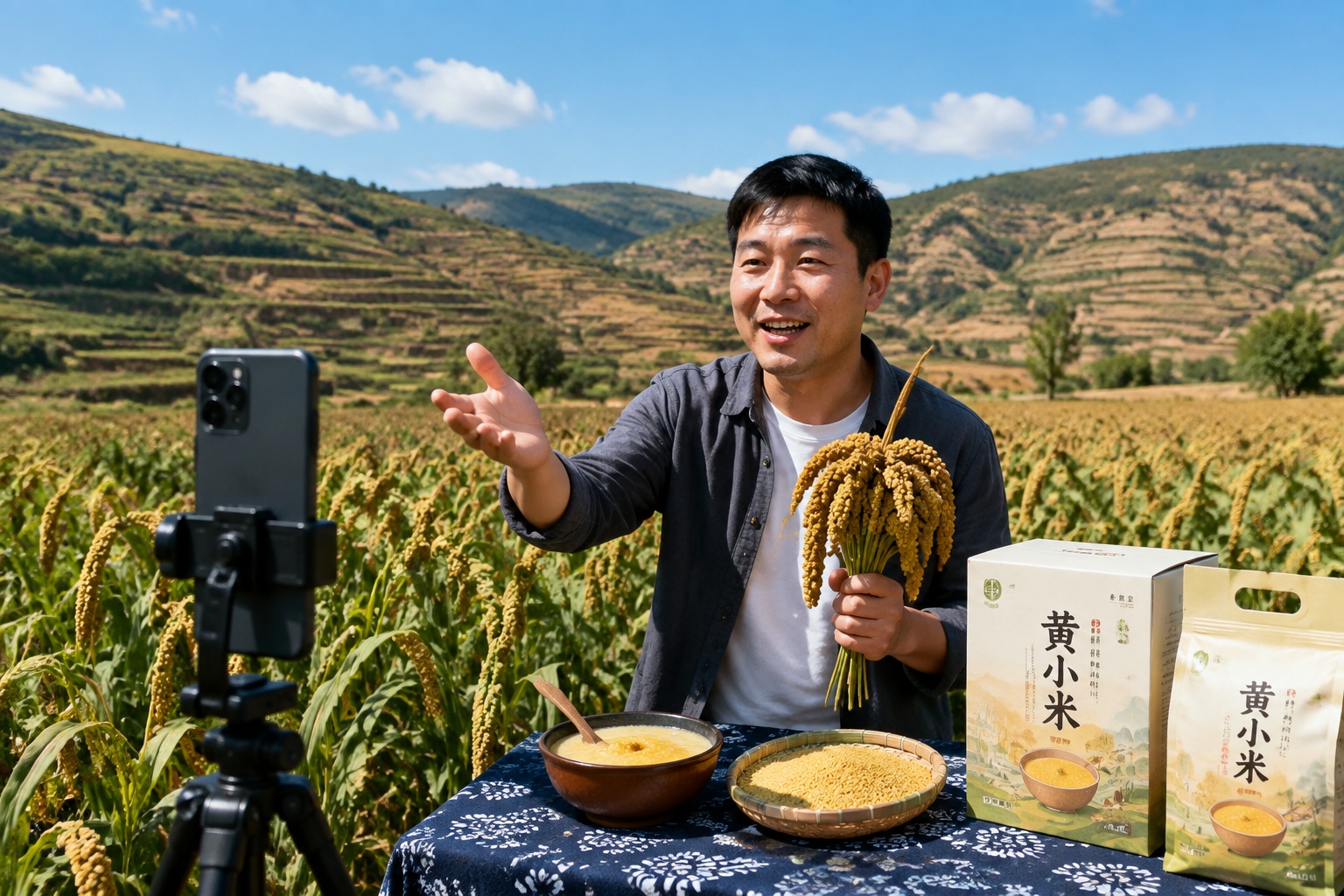
Since 2021, Li has spent three mornings a week livestreaming from the field or the workshop. He doesn’t hire professional hosts. “I’m the host, and so is my 70-year-old mother,” he says. Viewers like watching her stir a pot of millet porridge over a round oven. It’s honest theater.
The results go beyond sales. A customer from Guangzhou wrote to Li after a stream: “I know we have rice farms here, but watching your yellow fields made me miss simple life.” That kind of connection, Li says, is why he returned home.
Counting What Really Matters
When I asked Li what success looks like, he didn’t show me his revenue charts. He pointed at a photograph hanging near the warehouse door. It shows a 2019 family meal: his parents, his wife, his two children, and seven aunts and uncles, all seated in the same courtyard where the sorting tables now stand.
“If I stayed in Guangdong, I would make more money,” he said. “But I would miss this.” Now the family lives under one roof again, and the income from millet and jujubes supports multiple generations. The e-commerce shop didn’t just sell grain. It gave people a reason to stay.
E-commerce won’t turn every plateau village into a business hub, and not every seller will succeed. But in places like Jiexiu, the yellow dust that settles on the village square is no longer only a sign of weather. It is also the fine powder of 300 tons of millet that left through a back door and disappeared into millions of kitchens across China.
Start the discussion at forum.chinacomes.com