

A Friday Night Escape from Beijing
On a sticky Friday evening in late July, a Beijing friend sends you a message: “We’re driving to Beidaihe tonight. Want to come?” If you look out the window, the expressway heading east is already a glittering river of headlights. Beijing plates, Tianjin plates, Hebei plates. Half the city seems to be moving toward the same patch of coastline.
If you don’t know the name, Beidaihe is a coastal town in Qinhuangdao, Hebei Province, located on the Bohai Sea. It’s about 280 kilometers east of Beijing, a drive that takes three to four hours when traffic is kind. For people in the Beijing-Tianjin-Hebei region, it is the closest thing to a real seaside getaway, available without a plane ticket.
This is not the Hamptons, nor is it a tropical island with a pool. It’s a Chinese seaside resort that has evolved over more than a hundred years, with a unique blend of history, crowds, and seafood.
Why Beidaihe? A Little History
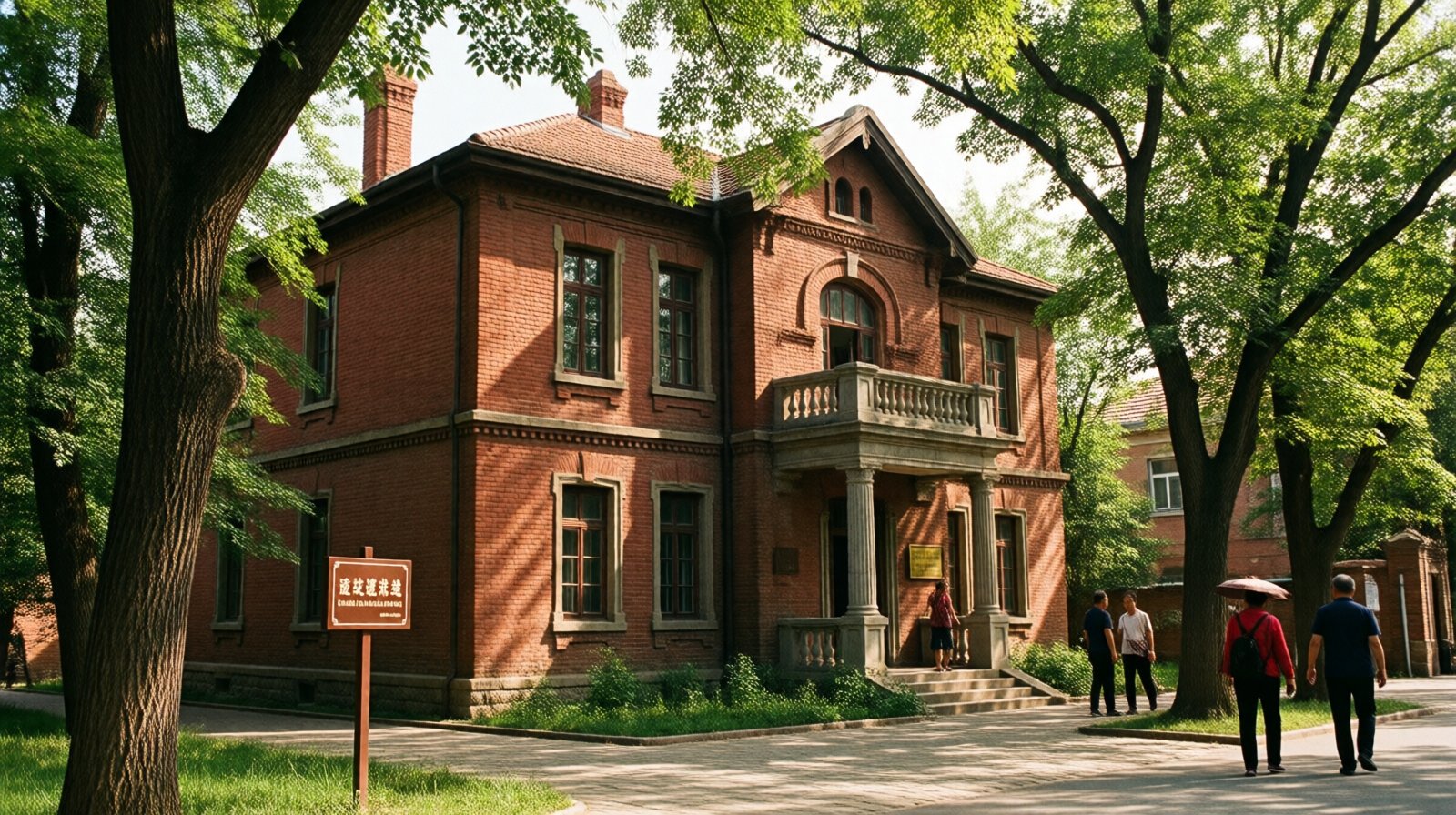
British missionaries first “discovered” Beidaihe in the 1890s, building summer villas on the cliffs overlooking the sea. Wealthy foreign families and Chinese elites followed, and by the 1920s it had become a fashionable summer escape. After 1949, it became a retreat for government leaders, with many “sanatoriums” built by state organizations. For a long time, ordinary citizens could only dream of visiting.
That changed in the 1980s when Beidaihe opened to the public. Now, old red-brick villas sit next to busy hotels, and the beaches that once hosted quiet walks are filled with loud families and floats. The history is still visible if you know where to look.
The Beach Experience, Chinese Style
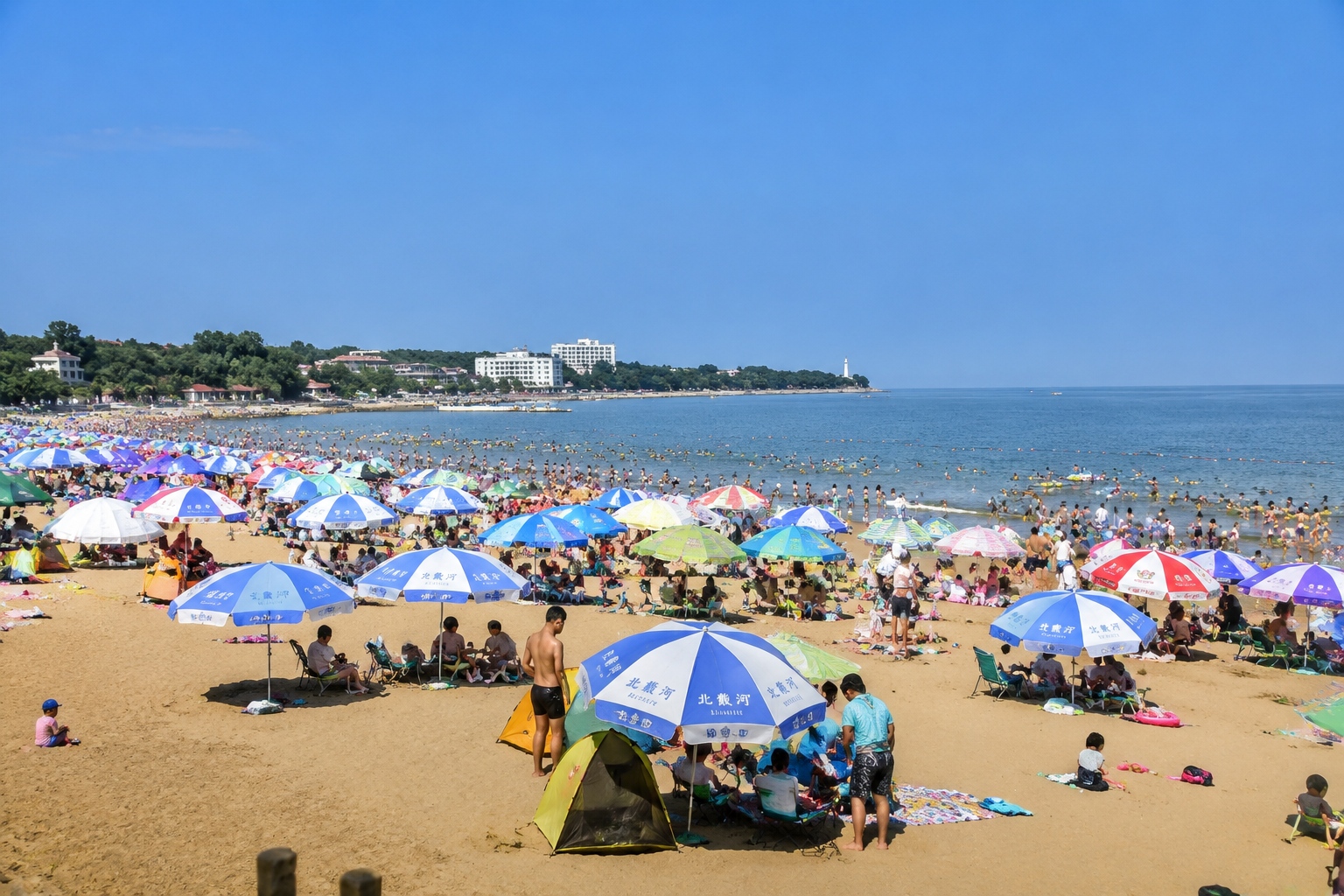
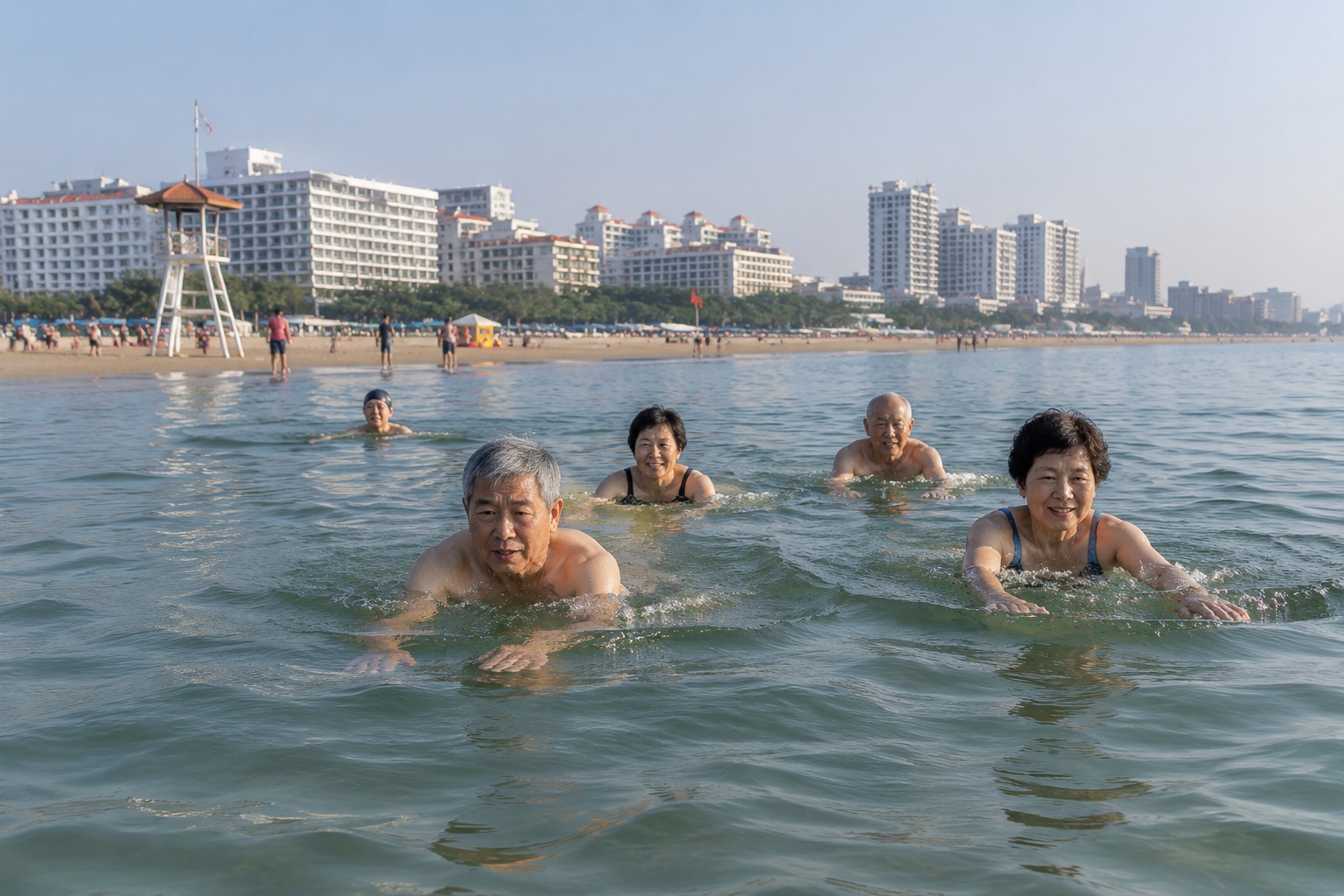
Early morning at the East Beach, the most famous spot, is a spectacle. People don’t come to sunbathe quietly. They come to swim, build sandcastles, and eat snacks. The sand is soft and flat, and the sea is calm and shallow, perfect for kids and the elderly. Grandpas do breaststroke in the surf while grandmas sit under rented umbrellas, fanning themselves.
You’ll see large groups of three generations together. Dads carry inflatable rings; mothers set up camping chairs; kids run around with plastic shovels. The noise is a happy roar, mixed with the sound of vendors selling “kongming lanterns” (paper lanterns) and cold drinks. It’s communal, loud, and proudly unpretentious.
Contrast this with a typical western beach where people lie alone with a book. Here, swimming is a group activity. Someone brings a speaker and plays old songs, and friends splash each other. It’s less about escaping society and more about sharing the beach with everyone.
Seafood and Local Flavors
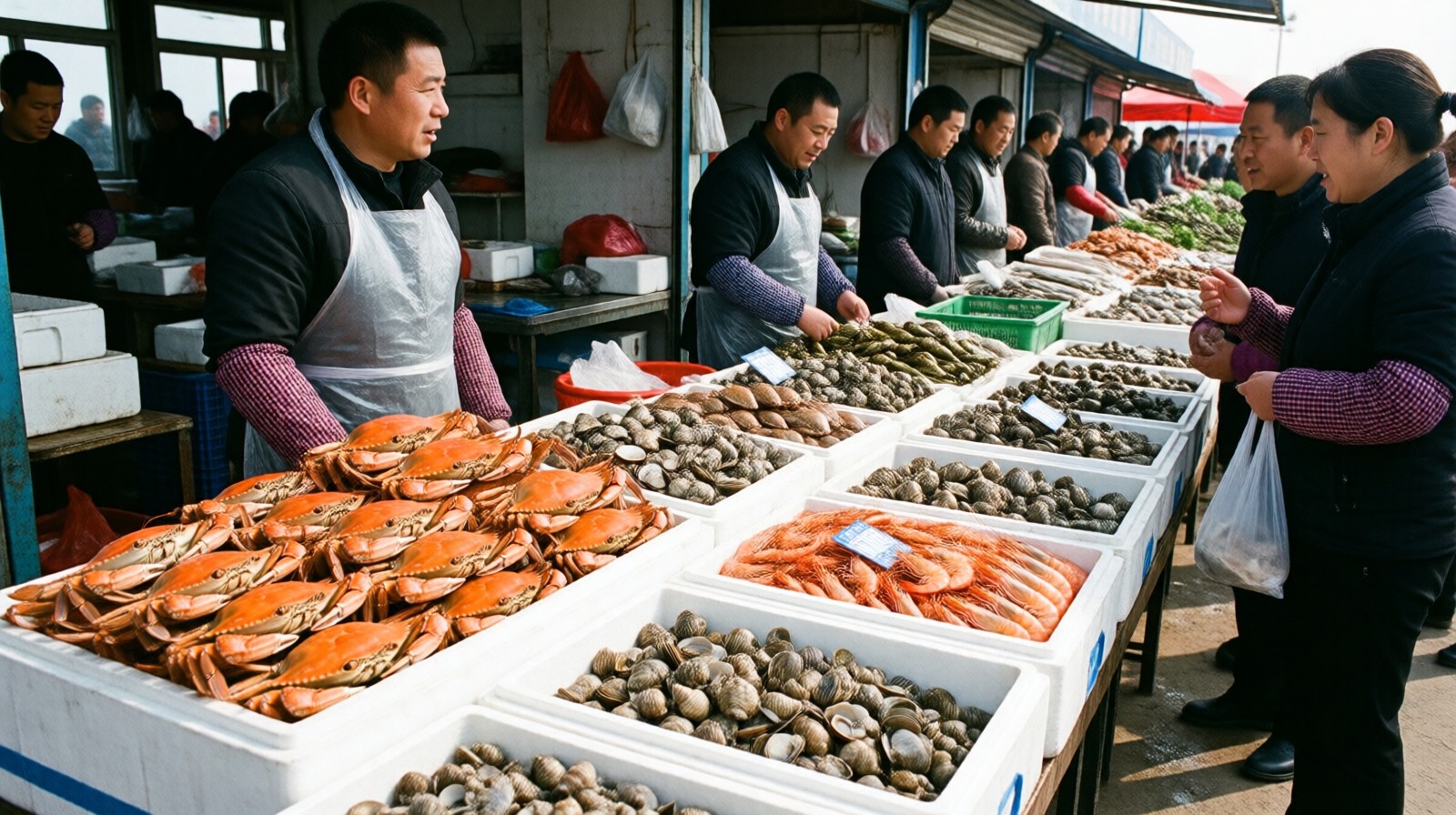
After a few hours in the water, hunger kicks in. At Beidaihe, you can’t escape seafood. The pier is lined with vendors selling buckets of live crabs, prawns, clams, and sea snails. Many restaurants let you pick your own seafood from a tank, then cook it to order for a small fee.
One favorite local dish is “pi pa shrimp” (mantis shrimp) boiled with salt, eaten with a skewer of grilled ear corn. Another is “bang bang” clams in garlic sauce. And for something refreshing, try “bingfen”—a jelly-like dessert made from seaweed, served with sugar water and fruits. It’s a bit like a light Chinese-style pudding and costs only a few yuan.
Seafood here is far cheaper than in Beijing. A meal with three or four dishes might cost 150 yuan (about 20 USD) per person at a mid-range spot. That’s a bargain in comparison to the overpriced seafood restaurants in the capital. It also explains why many families drive all the way just for dinner.
Beyond the Beach: The Backyard of Three Provinces
Beidaihe is nicknamed the “backyard” of Beijing, Tianjin, and Hebei. More than 100 million people live in this region, and many of them need a place to escape the summer heat. The town itself has a yearly cycle: winter is quiet, but from June to September, the population triples.
Not everyone comes just for the beach. Some families rent small apartments for a month and stay, letting kids play in the sand every day. Retirees come in groups to the sanatoriums, where they can have a health check, eat three meals a day, and do Tai Chi by the sea. Young people might come for a weekend and hit the nearby night market, with its skewers and grilled oysters.
The “backyard” feeling is also about accessibility. There are high-speed trains from Beijing that reach Beidaihe in about two hours, with tickets around 100 yuan. Once you arrive, many hotels are a short walk from the beach. No need for a luggage-heavy flight or a long transfer.
The Downsides and the Charm
Let’s be honest: the weekend traffic is often terrible, and the beaches can be packed shoulder to shoulder during the August holiday. Vendors are sometimes pushy, and the water quality isn’t as clear as the tropical beaches in the south. In 2023, millions of visitors descended on the town, leaving some complaining about long lines at seafood restaurants.
But people keep coming. Because for all the mess, there’s a genuine simplicity. You can rent a deck chair for a few yuan, buy a cold beer from a corner shop, and watch the sun drop into the Bohai Sea. The smell of grilled squid mixes with the sound of waves. Kids leave the beach tired and happy, and parents feel like they’ve earned a break.
A Place That Knows How to Relax
Beidaihe isn’t a paradise, and it doesn’t need to be. It’s a place that was built for rest, and after a century of use, it still does the job. For the ordinary middle-class family in Beijing or Tianjin, it represents the weekend they can rely on: familiar, affordable, and always within reach.
So next time you hear about a Chinese travel rush, think of Beidaihe. It’s not about luxury or perfect beaches. It’s about a shared escape from the city heat, with a plate of grilled prawns by the water. That’s what makes it the true backyard of the capital region.
Start the discussion at forum.chinacomes.com