


A Morning in the Old City
At 7 a.m., the wooden shutters of Wang Jun’s handicraft shop come down with a creak. Wang, 52, sweeps the stone tiles in front of his store on South Street, the main drag that runs through Pingyao, a walled town in north China’s Shanxi province. The first tour groups haven’t arrived yet. The smell of fried dough and vinegar drifts from a nearby breakfast stall. A street cleaner in an orange vest pushes a cart past the Ming-era brick archways.
Pingyao is not a theme park. It is a living town, and like many historic places in China, it has found that being a UNESCO World Heritage Site is both a blessing and a business model.
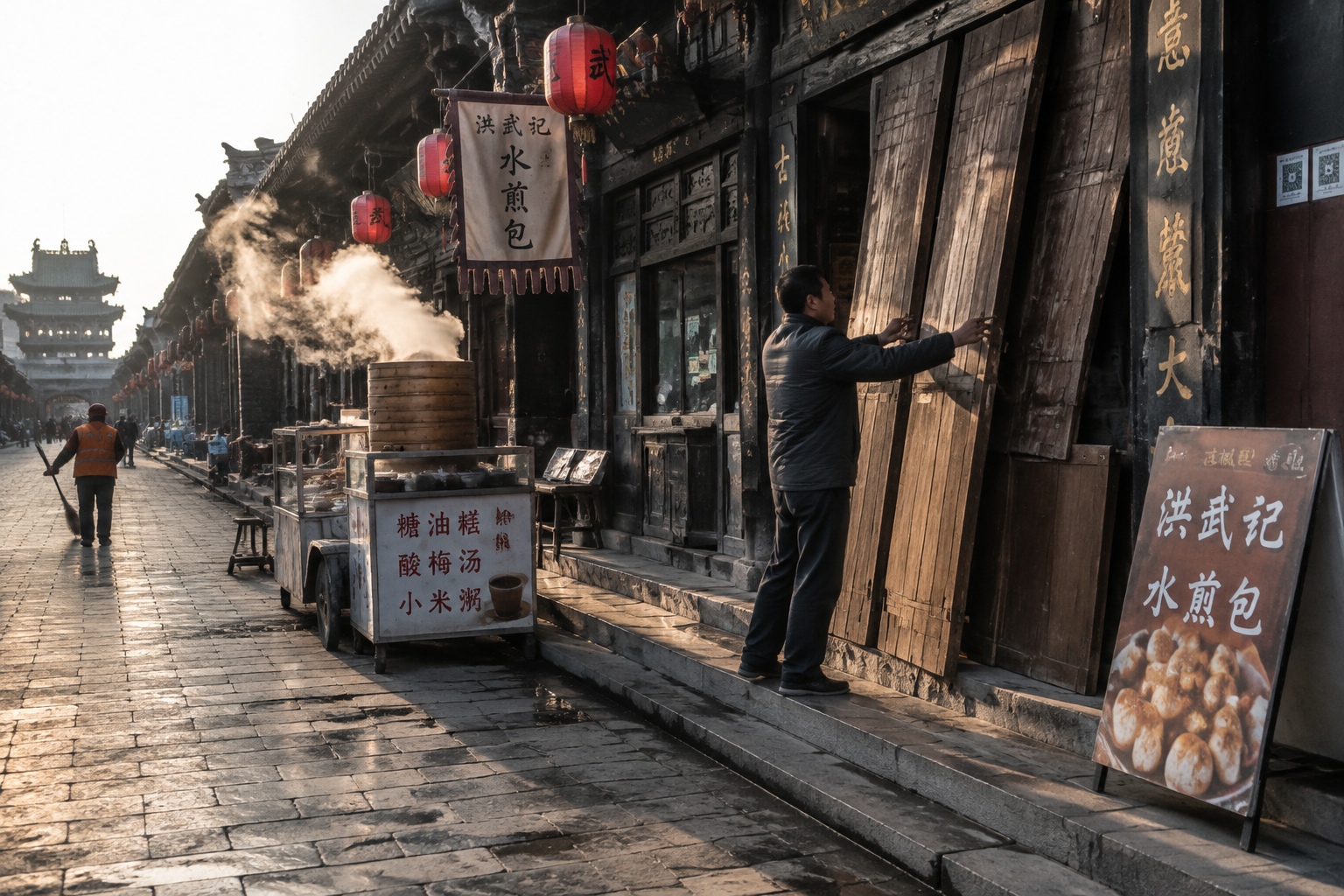
A Town That Old Money Built
Pingyao’s fame rests on its past. During the Ming and Qing dynasties, it was the financial heart of China. The first draft bank, Rishengchang, opened here in 1823, dealing in silver notes that moved wealth across the empire. The town’s 600-year-old walls, street grid, and 3,000 courtyard houses remain, making it one of the best-preserved ancient cities in the country. The city wall runs 6.4 kilometers, rises 12 meters high, and is studded with 72 watchtowers. UNESCO added Pingyao to the World Heritage list in 1997 for its exceptional town planning and architecture.
That designation changed everything. Tourists came by the millions. In 2023, Pingyao welcomed roughly ten million visitors, according to local tourism statistics. Tourism now accounts for a huge share of the county’s GDP — some estimates say more than 50 percent. For a place with about 500,000 residents in the county, that dependence is as visible as the city’s famous red-bean cakes.
Living Off the Lanterns
The old city — an area of about 2.25 square kilometers — is home to more than 20,000 residents. Most of them make a living from visitors.
Li Fang, 38, runs a guesthouse called Courtyard No. 17 inside a restored Qing dynasty home. She converted the family’s home into a themed inn eight years ago, after her husband lost his factory job. She serves breakfast, organizes shuttle rides, and explains how kang beds work. On peak days, every room is full. On quiet days, she might not see a single guest.
Her experience is common. The town’s main streets are lined with shops selling mint-flavored pastries, wooden lacquer boxes, and pretend-antique silver jewelry. Many are rented by entrepreneurs from nearby cities. The numbers are telling: In 2022, there were over 1,000 registered tourism businesses inside the walled town, from restaurants and bars to photo studios offering Ming-style dresses for rent.
Tourism has brought money but also pressure. Rents have risen sharply. Some locals have moved to new apartments outside the wall, renting out their old homes to commercial operators. Others stay, turning their front rooms into stalls for noodles or handcrafted cloth shoes. A small noodle shop on East Street can sell more than 500 bowls on a busy day, but it pays twice the rent it did five years ago.

Keeping the Walls From Cracking
Heritage protection is not just a slogan here; it’s a daily chore. The local government spends millions each year to repair sections of the wall, rebuild drainage systems, and enforce strict building codes. No cars are allowed inside the old city during the day. Electrical wires are buried underground. Even the color of a shop sign is regulated: it must match the traditional black-and-gold style.
But preservation is expensive. The ticket office at the city’s entrance charges about 125 yuan (roughly $18) for a full pass, and in recent years, rising costs have forced officials to look for new sources of income. In 2023, the city launched a series of night tours and three-dimensional light shows on the city wall. Some residents say these productions turn the ancient streets into a stage, but officials argue that they generate the revenue needed to maintain the site. A local tourism officer says the goal is to keep visitors overnight instead of just a quick photo stop.
The People Inside the Picture
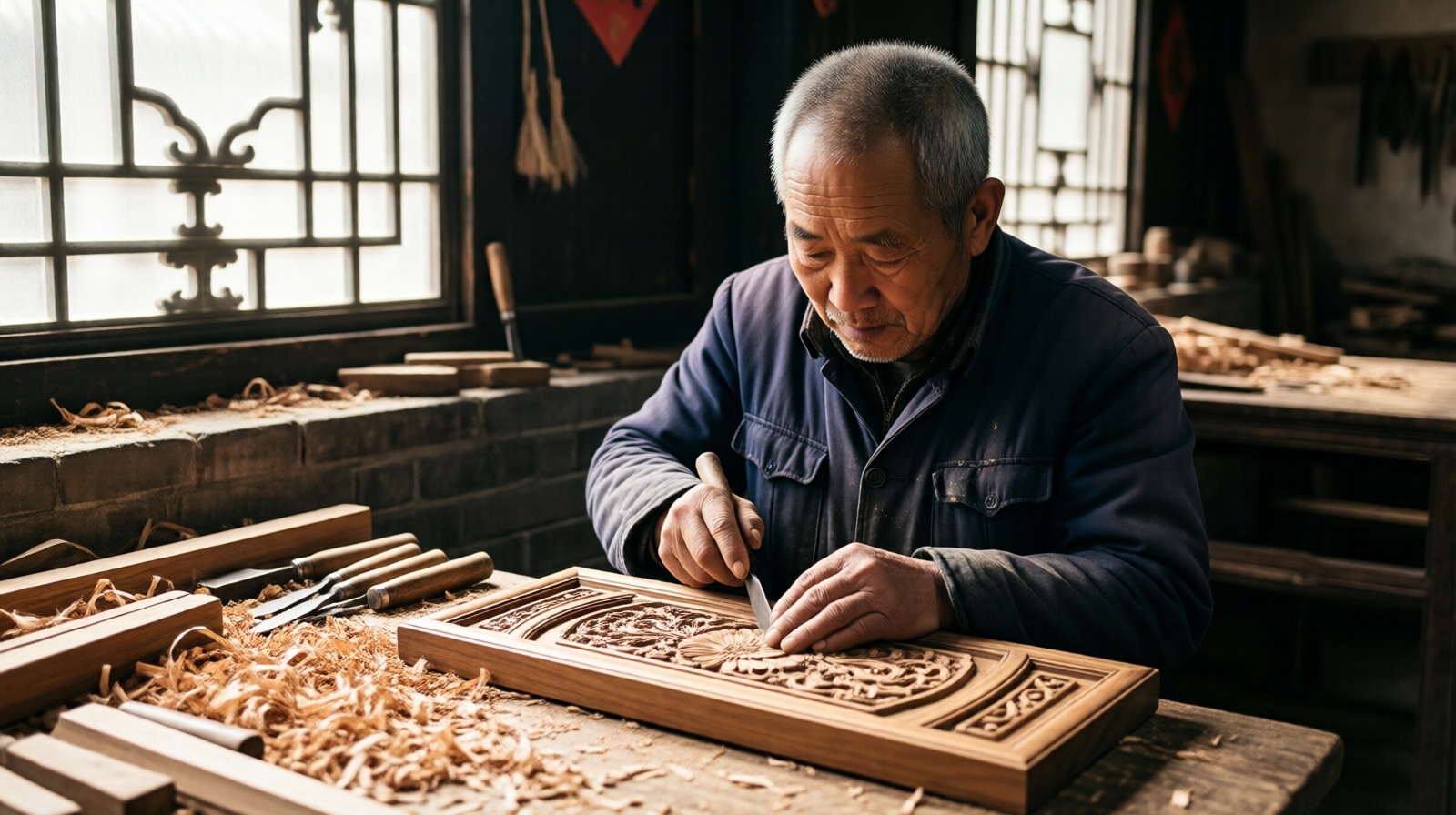
Not everyone is thriving. At 60, Zhao Qiang sits in his tiny workshop behind West Street, carving wooden panels. He learned the craft from his grandfather, but today his son works in a digital marketing agency in Xi’an. He says no one wants to learn this anymore, pointing to his cracked hands. His income has dropped because tourists prefer cheap machine-made souvenirs. He can sometimes earn less than 2,000 yuan a month, about a third of an average waiter’s salary in the town’s restaurants.
Yet some young people are choosing to return. Beijing-born Liu Niu, 29, moved to Pingyao three years ago to open a studio making traditional lacquer jewelry. She says the cost of living is low and the customer base is international. She runs online livestreams from her shop, showing the process to viewers from around the world. Her sales now come half from tourists and half from e-commerce. She also rents workspaces to other young artisans who want to try a slower life.
When the Music Stops
The COVID-19 pandemic tested Pingyao’s resilience. The town went under multiple lockdowns, and in 2020, visits fell by almost 70 percent compared with the previous year. Many small businesses shut. The government responded with tax cuts and rent subsidies, but the crisis exposed a deeper problem: a city that depends too heavily on a single industry is as fragile as its ancient walls.
There are signs of change. The local bureau of culture and tourism is pushing for more diverse offerings: heritage workshops, traditional wedding experiences, and even a digital museum where visitors can see 3D scans of the city. The goal, as one official explains, is to let the ancient city pay for its own protection without turning it into a candy store.
Evening Returns
As the sun drops behind the western gate, the last tour guides fold their flags. The neon lights of the evening show flicker on, but the back alleys are quiet again. Wang Jun closes his shop after eight hours of haggling about the price of paper-cuttings. His wife sets a bowl of hand-cut noodles on the table in the courtyard, under a walnut tree older than the workshop itself. He says the city has been here for 2,800 years, and they are just keeping it warm for the next generation.
For now, that warmth is measured in tickets, noodles, and the careful hands of those who choose to stay.
Start the discussion at forum.chinacomes.com