

Introduction
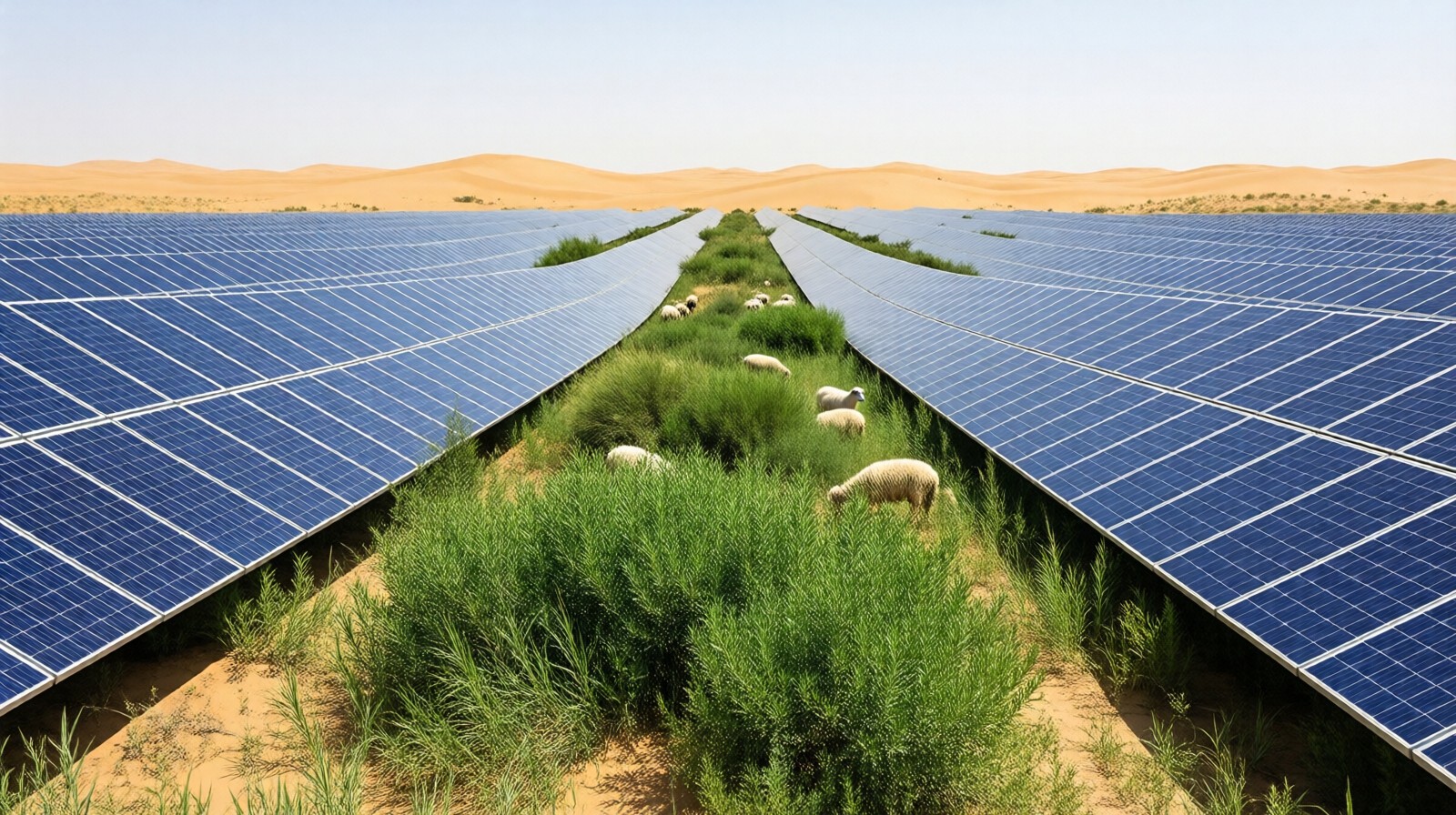
On a cool autumn morning in Yulin, a city on the edge of the Maowusu Sandy Land in northwest China’s Shaanxi Province, a flock of sheep grazes peacefully under rows of solar panels. Beneath the photovoltaic arrays, alfalfa and drought-resistant shrubs grow densely, their roots holding together soil that was once barren. Twenty years ago, this land was shifting sand, contributing to the dust storms that blanketed Beijing.
A Desert That Refused to Stay Put
Maowusu used to be one of China’s largest sandy lands, spanning about 42,200 square kilometers across Shaanxi and Inner Mongolia. Yulin sits at its heart. For centuries, windblown sand invaded farms and villages. The historian and journalist Edgar Snow described the region in the 1930s as ‘the great sandy waste.’ By the mid-20th century, sand was advancing at a pace of several meters per year, swallowing homes and arable land.
People Fought Back with Trees
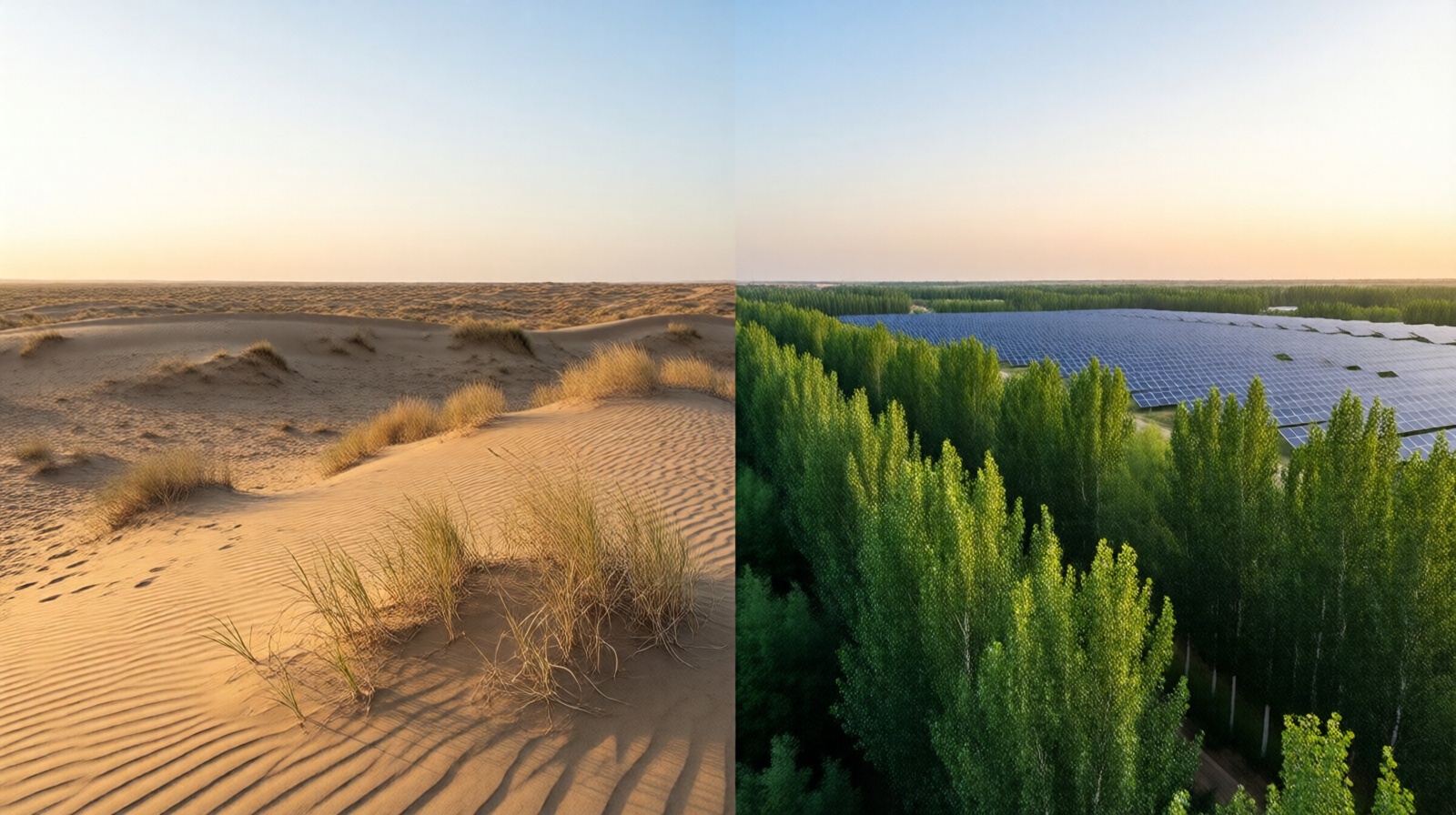
The turning point came after 1949, when the Chinese government launched large-scale afforestation programs. In the early 1950s, farmers, soldiers, and students planted millions of trees, mostly drought-resistant species like elm, poplar, and Chinese pine. This was later integrated into the Three-North Shelterbelt Program, known as the ‘Great Green Wall’ of China, which began in 1978. Locals like Shi Guangyin, a farmer who has planted forests since the 1980s, led by example. By 2020, Yulin’s forest coverage had jumped from 0.9% in 1949 to about 34.8% of its total area.
Solar Panels Enter the Picture
While tree planting stabilized the sand, the region’s economy still depended on coal. Yulin is one of China’s major energy bases, with massive coal reserves. But as the country shifts toward carbon neutrality, the city faces a double challenge: maintaining economic growth while cleaning up its act. That’s where solar photovoltaic (PV) power comes in.
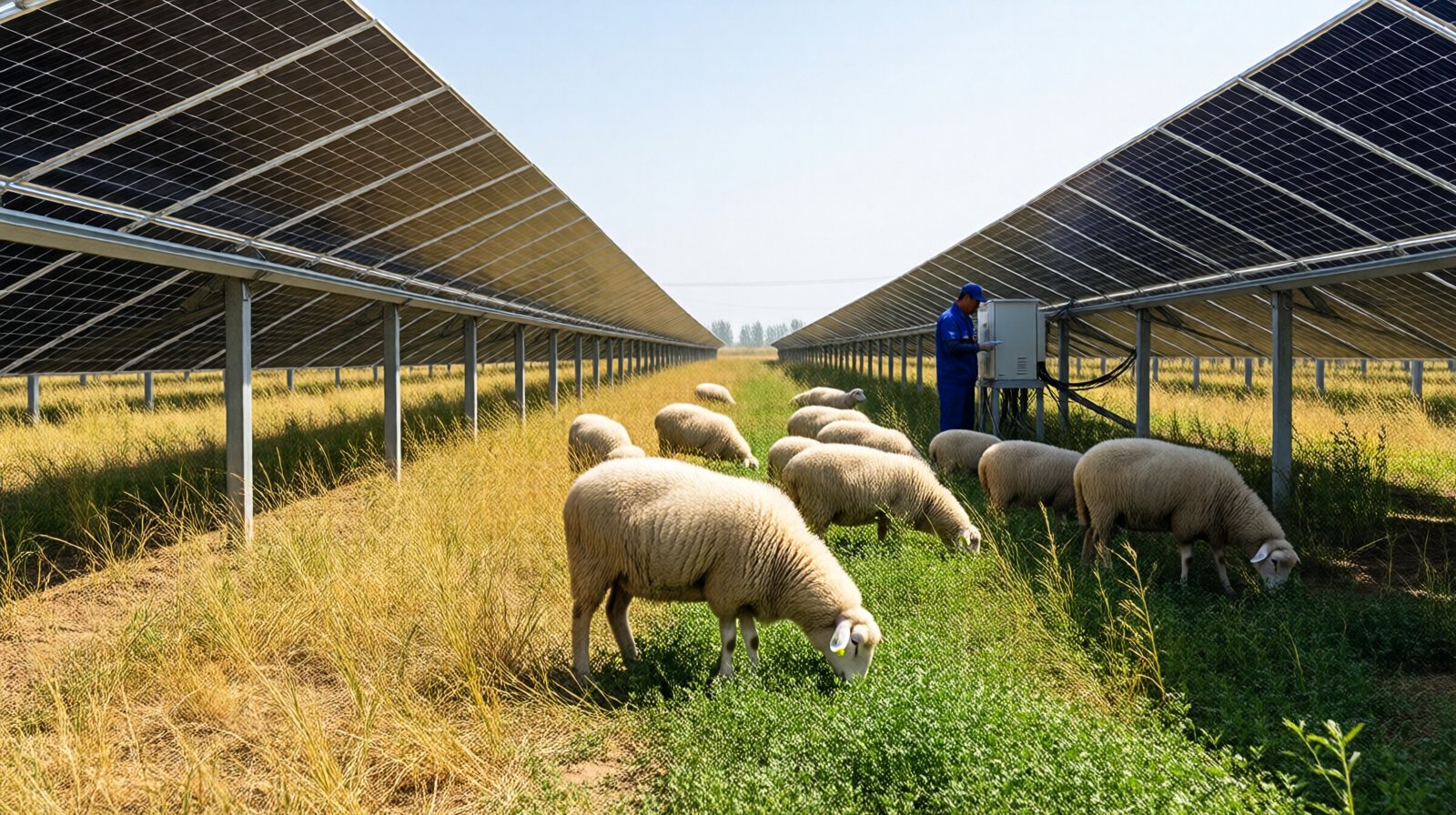
Yulin has abundant sunlight — about 2,800 hours per year — making it an ideal spot for solar farms. Since the mid-2010s, the government and state-owned energy companies have built large-scale PV installations on former desert land. The concept is simple: install solar panels high enough to let crops or grass grow underneath. Rainwater and dew slide off the panels, creating a slightly more humid microclimate beneath. Panels also reduce evaporation and block intense sunlight during hot summer afternoons.
One Park, Three Layers
A notable example is the 100-megawatt Xiaojihan photovoltaic agricultural park in Yulin. It combines power generation on top, crop and grass cultivation in the middle, and livestock such as sheep and chickens grazing below. The sheep keep the grass short, eliminating the need for mowing and reducing fire risk. Farmers can lease the land from the park, earning income from both solar royalties and agricultural produce.
According to local officials, the park’s solar farm generates about 110 gigawatt-hours of electricity annually, enough to power roughly 60,000 households. At the same time, it has contributed to an increase in organic carbon in the soil by around 20% since 2016, according to a 2022 study by the Chinese Academy of Sciences that examined similar projects.
Numbers That Tell the Story of Change
Between 2000 and 2020, Yulin’s sandy land area dropped by about 50%. The number of dusty days in the city decreased from 20–30 days per year in the 1990s to less than a week today. Air quality has improved dramatically. Satellite data from the Chinese environmental authority confirms that the northern edge of the Maowusu Sandy Land has retreated by more than 20 kilometers in parts.
But Groundwater Is a Concern
These gains did not come without costs. Planting trees in arid environments requires water, and some fast-growing species have become ‘water pumps’ that lower the water table. In some areas, groundwater levels have dropped. A 2021 report from the Northern Shaanxi Research Institute warned that more water-efficient species and smarter irrigation are needed. Solar panels, too, can shed chemical coatings over time, though modern panels use environmentally safer materials. Researchers at Xi’an Jiaotong University are testing biodegradable coatings and special water-recycling systems to address this.
Not All Solar Farms Are Equal
Yulin’s experience is not the only model. In Xinjiang and Inner Mongolia, several ‘solar + shepherd’ projects have shown mixed results. Some huge installations have ignored local ecosystems. But Yulin’s approach incorporates decades of community-based afforestation experience. Villagers are trained as technicians and maintenance crews, so they have a clear stake in keeping the system running. This social embedding is often what makes or breaks such projects.
What Comes Next?
Yulin’s climate is still dry, but the water crisis is manageable if planting choices and irrigation are optimized. The 14th Five-Year Plan of Yulin envisions further expanding solar generation capacity to 30 GW by 2025, while using smart tracking and bifacial panels that capture more sunlight. The city also aims to phase out coal-fired heating in rural homes, replacing it with solar-powered heat pumps.
Local scientists are exploring ways to make solar panels more efficient under dusty conditions by adding cleaning robots and special anti-dust coatings. At the Yulin Institute of Clean Energy, researchers are testing a system that uses condensed water from the air to clean panels and water the plants below. If this works, it could make desert solar agriculture much more self-sustaining.
A Model for Other Drylands?
The Maowusu story is, in many ways, a Chinese-scaled experiment in ecological restoration. It shows that with state investment, scientific adaptation, and local labor, it is possible to turn barren land into a multi-purpose landscape that produces energy, food, and environmental services. But it is not a simple template. Other countries, such as Niger and Senegal, which face similar desertification, must adapt the technology to their social and hydrological settings.
‘The key is not to copy but to understand the local system,’ says Dr. Wang Lei, a geographer at Northwest University in Xi’an. ‘What worked in Yulin was a persistent community effort and a willingness to kill failed ideas quickly.’
Returning to the Grassland
Back in the Xiaojihan park, a tourist asks a farmer how long it took to make this land productive. ‘We started with one row of trees and one water truck,’ the farmer says with a grin. Now, the grass rustles under the solar panels, and the sheep are fat. The desert is not gone — it has been reshaped into a working landscape, one that keeps the sand at bay and offers a glimpse of how energy and ecology might share the same ground.
Start the discussion at forum.chinacomes.com