
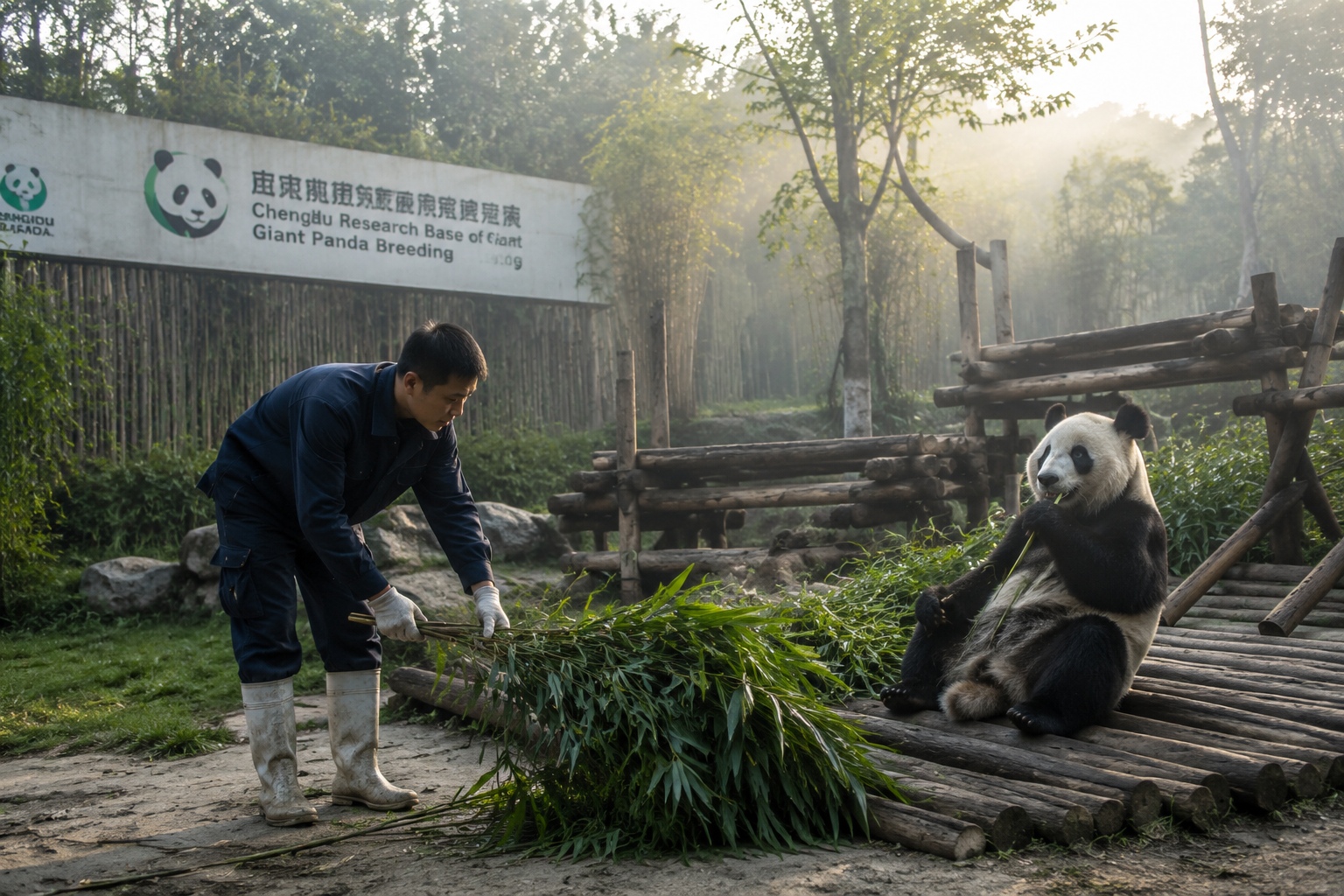

The alarm clock rings at 4:30 a.m. for Wang Ling, a giant panda keeper at the Chengdu Research Base of Giant Panda Breeding. By 5 a.m., she is walking down a quiet path under the pale sky. The bamboo leaves are still wet with dew. The first sound she hears is the unmistakable crunch of a panda biting into a stalk. It is steady, loud, and oddly soothing.
Wang Ling has worked here for nine years. “People think pandas are just cute,” she says, adjusting her blue uniform. “But they are also intelligent, complicated animals. My job is to understand what they need before they know it themselves.”
A Morning Routine That Starts Before Sunrise
Before the first visitors arrive, there is a mountain of work to do. The pandas eat between 12 and 38 kilograms of fresh bamboo every day, and the base prepares hundreds of kilos each morning. Wang Ling walks through the kitchen where two staff members are chopping apples and steaming cornbread — a special treat called “wotou” that the pandas love.
Each panda has a health chart. Every morning, Wang Ling checks their appetite, their stool, and their weight. “We weigh them once a week for young ones and once a month for adults,” she explains. “But the most important thing is their behavior. A panda that doesn’t react to food is telling you something.”
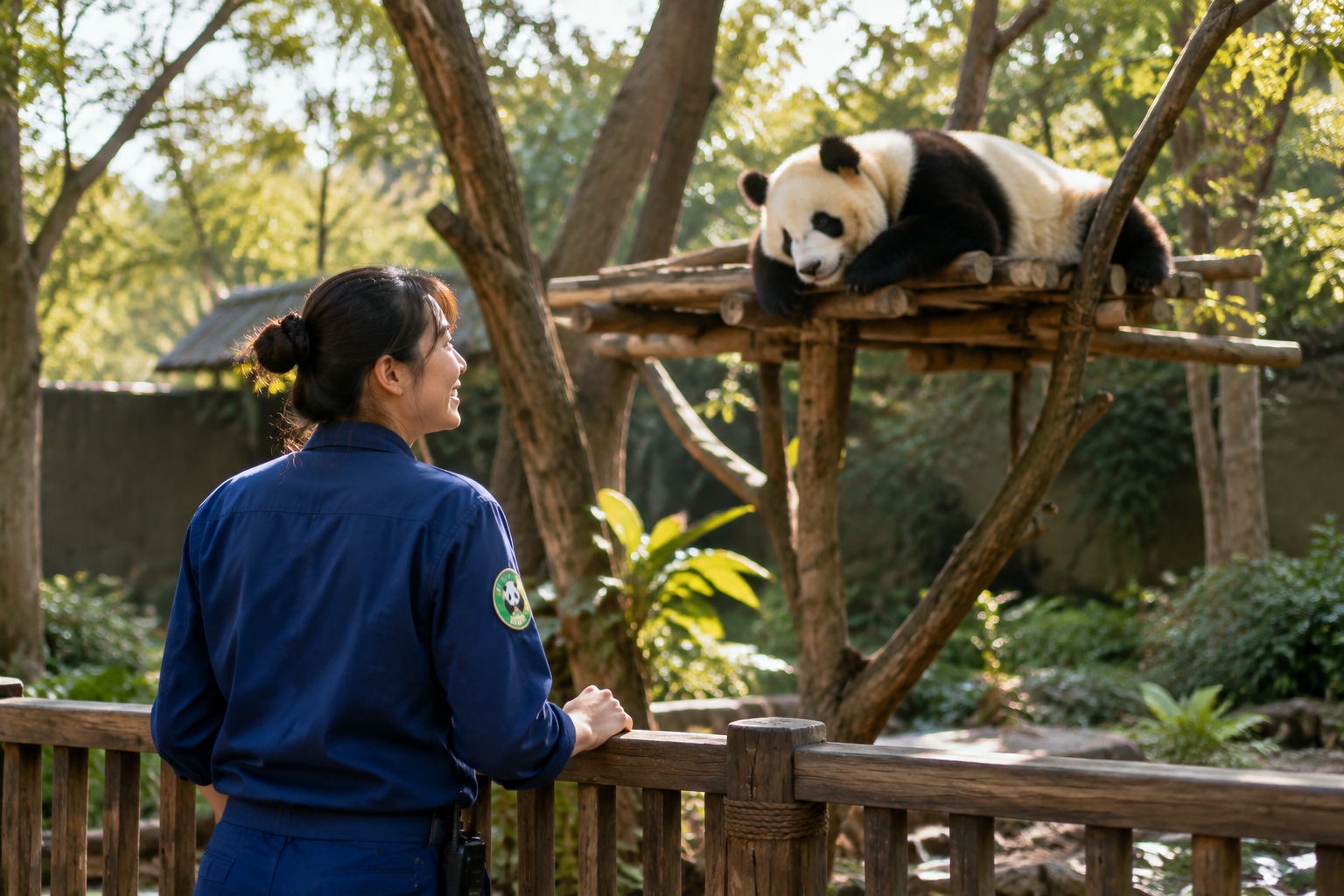
She stops by an enclosure where a young panda named Mei Hua is sleeping in a tree. Mei Hua, which means “Beautiful Flower,” was born here in 2021. Wang Ling has watched her grow from a pink, blind cub into a curious toddler who now climbs trees like a daredevil. “She’s the troublemaker of this group,” she laughs. “One time she stole her mother’s apple right in front of the older keepers. We couldn’t even be mad.”
More Than Just Bamboo: The Care Behind the Cute
Feeding the pandas is only part of the job. The keepers also do behavioral training. By using positive reinforcement — usually apples or sweet potatoes — they teach the pandas to present their paws, open their mouths, or lie down on command. These behaviors allow vets to check blood pressure, take blood samples, or perform ultrasounds without anesthesia.
“We are not trying to turn them into circus performers,” Wang Ling says. “We are training them so that medical care is less stressful for them. It’s like teaching a dog to sit before you give it a treat.”
The bond between keeper and panda is real, but it has limits. Pandas are still solitary, wild animals. Keepers enter the enclosures only when absolutely necessary, and they rely on training rather than direct contact. “We don’t hug them,” Wang Ling explains. “We respect their space. That is how we show we love them.”
When the Gates Open: A World of Visitors
By 7:30 a.m., the main gate is already crowded. Tourists from all over the world line up under umbrellas and sun hats. There are families with small children, university students with selfie sticks, and retired couples holding binoculars. Many of them have planned this visit for years.
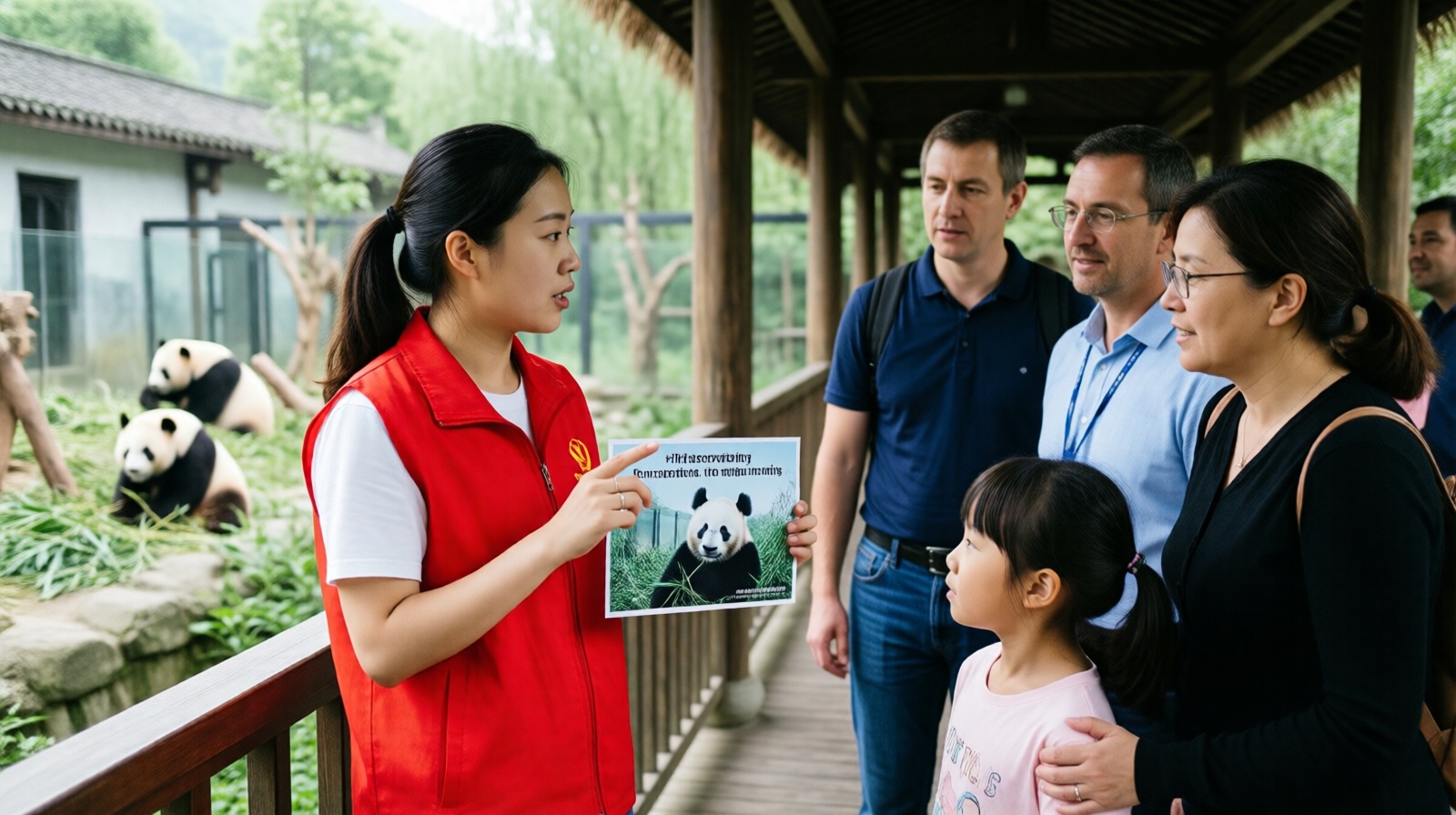
Zhang Min, a 28-year-old volunteer, stands near the entrance, holding a sign that says “Silence, The Pandas Are Eating.” She has been volunteering at the base since 2022. “People always ask, ‘Where is the newborn panda?’ or ‘Why isn’t the panda doing something funny?’” she says, smiling. “My job is to help them see that pandas are not actors. They have their own pace.”
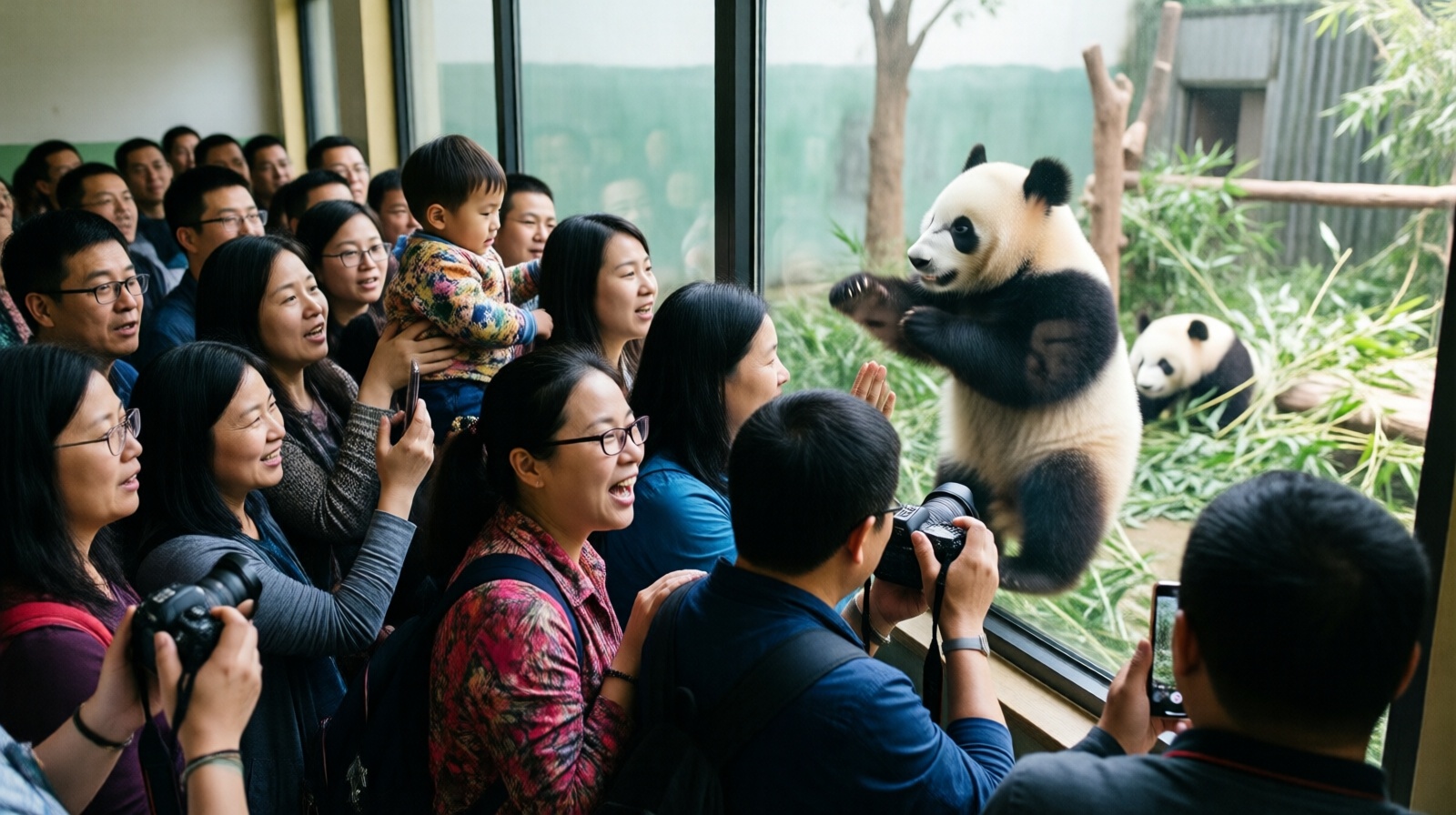
Inside the base, the morning rush is organized but still overwhelming. The panda kindergarten — where cubs sleep, play, and wrestle — is the most popular spot. Visitors press against the glass, phones raised. A toddler shouts “Panda!” over and over. A woman from Mexico City tells me she brought her daughter because “she has been begging for a panda toy for a year. Now we are seeing the real thing.”
Turning Curiosity into Conservation
The base is not just a tourist attraction — it is also a research center. Since the 1980s, scientists here have worked to rescue giant pandas from the brink of extinction. Through captive breeding and rewilding programs, the wild panda population has grown to around 1,900 in China. It is a rare conservation success story.
Volunteers like Zhang Min play a key role in sharing this story. She explains to visitors how bamboo is 99% of a panda’s diet, but pandas absorb only a fraction of its nutrients. That is why they eat so much and sleep so often. “When you see a panda sleeping at noon, it’s not being lazy. It’s saving energy,” she says.
Perhaps the most touching moment of the day happens at the nursery, where visitors can watch cubs through glass windows in small creches. Here, they are close enough to see the tiny black-and-white fur and hear their squeaky calls. A middle-aged man from England tells me he had tears in his eyes: “I have been watching panda videos on the internet for years. I never imagined I would be so close to one. It feels unreal.”
As the Park Quiets Down
By 5 p.m., the crowds thin out. The pandas are asleep in their trees or curled up in the shade. Wang Ling makes one last round, checking the water bowls and the bamboo racks. She stops at Mei Hua’s enclosure and talks to her through the fence. Mei Hua lifts her head, blinks, and goes back to sleep.
“Every day is a little different,” Wang Ling says. “Some days are hard — a panda gets sick, a baby struggles to gain weight. But when you see a cub take its first steps or a released panda thrive in the wild, you know why you do this.”
For visitors, the memory is often private and lasting. A photo of a panda eating bamboo, a child’s first glimpse of a live giant panda, the quiet moment when you forget the crowd and just watch an animal being itself. The panda base is a place where people reconnect with something older than their own worries.
As the gates close, the park is almost silent again, except for the soft crunching of bamboo. Wang Ling heads home, tired but calm. Tomorrow, the cycle begins again — for the pandas, the keepers, and the thousands of strangers who come to see a living symbol of what can be preserved when people care.
Start the discussion at forum.chinacomes.com