

It Starts with a Cup of Coffee
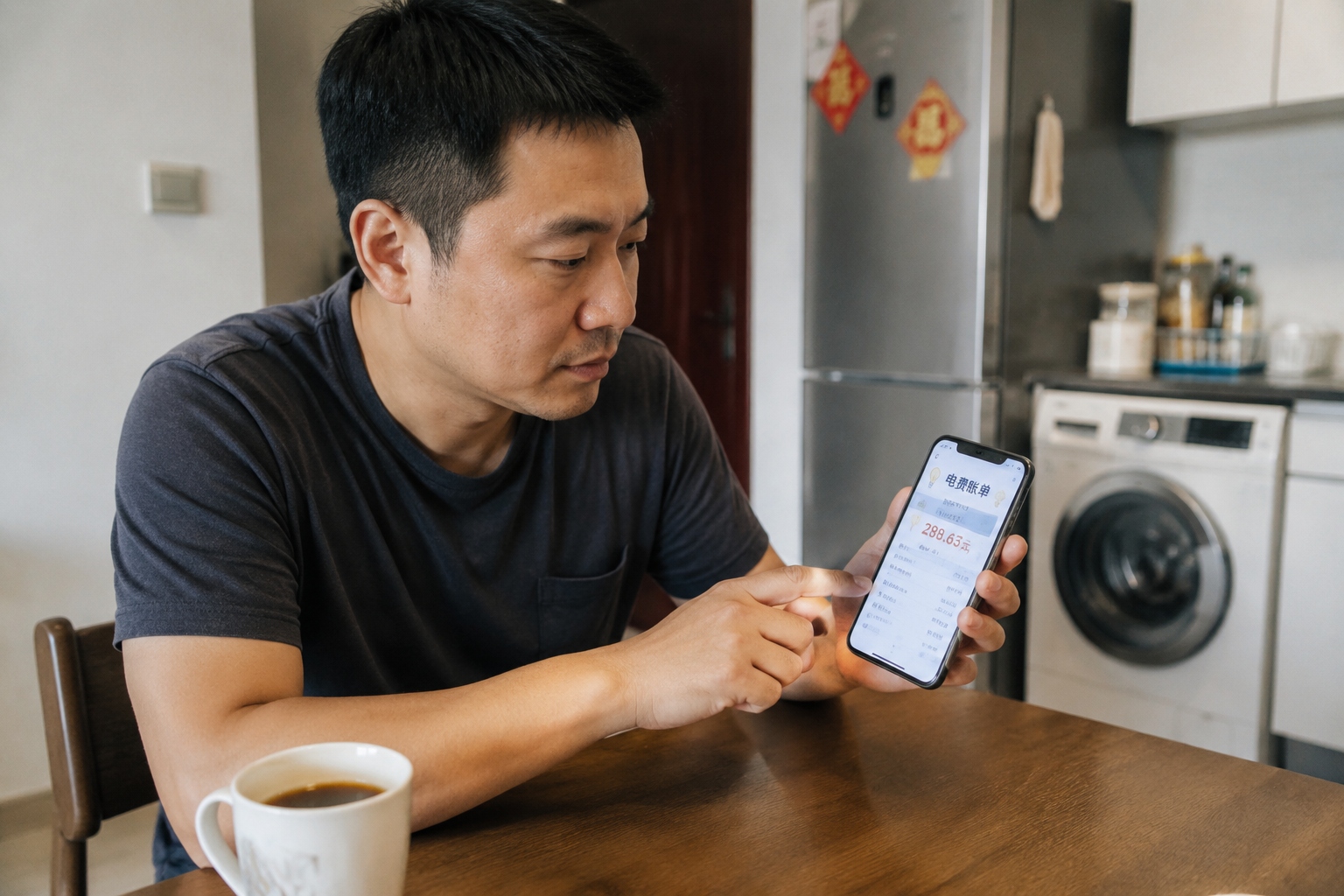
A few weeks ago, I was having coffee with my friend Li Hua in his apartment in Hangzhou, a city in eastern China known for its tea plantations and tech startups. He pulled out his phone and showed me his latest electricity bill: 156 yuan (about $22) for the month. “That’s less than what I spend on coffee in a week,” he laughed. “But I remember when it was half that.”
Li Hua’s casual comment made me think. China has been the world’s largest electricity generator for more than a decade, producing nearly one-third of the planet’s electricity. But what does that statistic actually mean for a family like his? The answer, I found, is written in the details of a single monthly bill.
The Bill That Changes with the Seasons
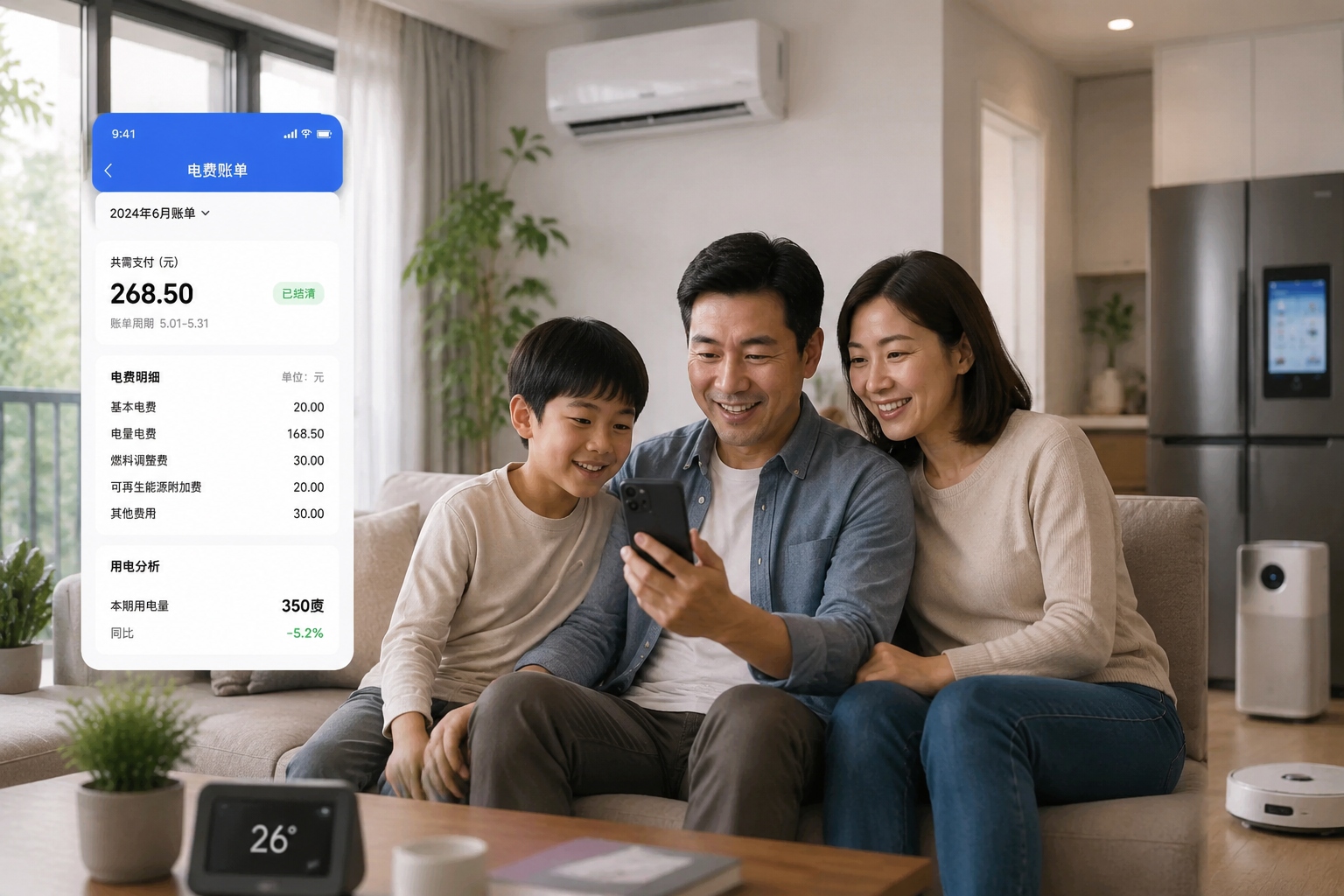
Li Hua lives in a three-bedroom apartment with his wife and their young daughter. He works in tech, she is a teacher. Their home is typical: two air conditioners, a refrigerator, a washing machine, a water heater, and a growing collection of smart devices. In summer, when the AC runs day and night, the bill can climb to 300 yuan ($42). In mild spring or autumn, it drops to around 120 yuan ($17).
Like most Chinese households, Li Hua is on a tiered pricing system. The first 230 kilowatt-hours (kWh) per month are charged at a low rate of 0.52 yuan per kWh. Usage between 231 and 400 kWh jumps to 0.57 yuan; above 400 kWh, it spikes to 0.82 yuan. This progressive structure encourages conservation—and it works. “We keep the air conditioner at 26°C (79°F) in summer,” Li Hua said. “If we go lower, it feels wasteful.”
He also benefits from time-of-use pricing, a policy that offers cheaper electricity at night (0.30 yuan per kWh between 10 pm and 8 am). So he runs the washing machine and dishwasher after 10 pm. “It adds up,” he said. “Maybe 30 yuan saved a month. Enough for a couple of bubble teas.”
From the Grid to the Rooftop
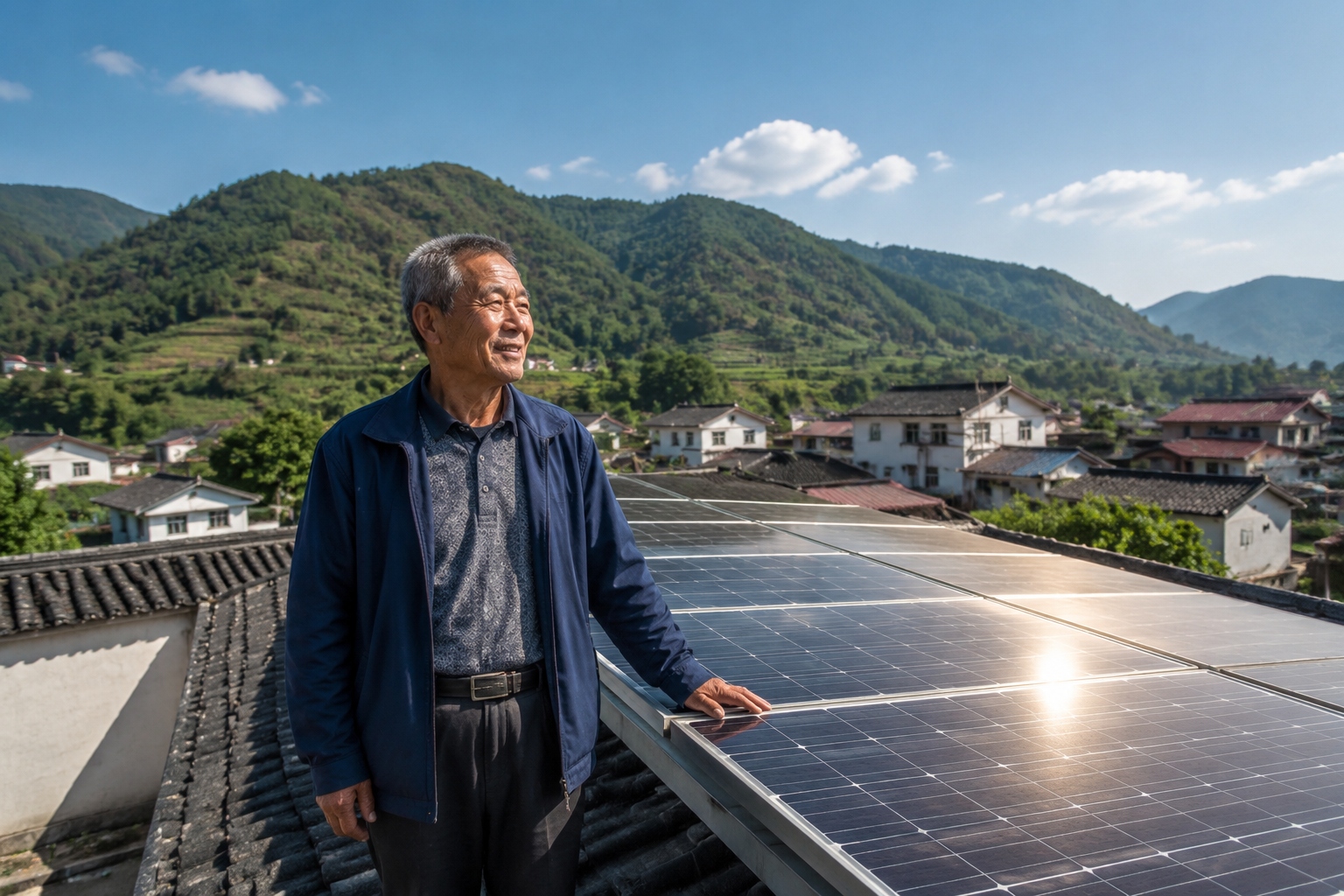
But Li Hua’s story is only part of the picture. On a recent weekend, I visited a village on the outskirts of Hangzhou, where farmers have installed solar panels on their rooftops. The government offers subsidies and a feed-in tariff: households can sell excess electricity back to the grid at about 0.40 yuan per kWh. Mr. Chen, a retired factory worker, showed me his panel array. “I earned 2,700 yuan last year,” he said proudly. “It covers my own electricity costs and puts a little extra in my pocket.”
China is now the world’s largest producer of solar energy, with over 600 gigawatts of installed capacity. Rooftop solar is a big part of that—around 40% of new solar installations in 2023 came from residential and commercial rooftops. The government’s goal is to reach 1,200 GW of solar by 2030, and ordinary families like Mr. Chen’s are helping to make it happen.
The Invisible Grid Behind the Bill
Li Hua’s bill, and Mr. Chen’s solar income, both depend on the same thing: a massive, reliable power grid that spans 4.5 million kilometers of transmission lines. China’s grid is a marvel of engineering, connecting coal plants in the north, hydro dams in the southwest, wind farms in the Gobi Desert, and nuclear plants along the coast. The State Grid Corporation, one of the world’s largest utilities, manages it all with a digital control center that can balance supply and demand in real time.
But reliability comes at a cost—both financial and environmental. Coal still supplies about 60% of China’s electricity, though that share is declining. In 2023, China added more renewable energy capacity than the rest of the world combined. The challenge is to integrate all that variable wind and solar while keeping the lights on.
For Li Hua, the grid is invisible but constant. “I don’t think about it until there’s a power outage,” he said. “And that happened maybe twice last year, for a few minutes each time. Honestly, I’m more annoyed when my phone battery dies.”
What the Bill Tells Us
So what does a Chinese family’s electricity bill really say about the world’s largest power grid? Three things.
First, affordability. The average Chinese household spends about 2–3% of its income on electricity, similar to many developed countries. For a family like Li Hua’s, the monthly bill is less than a dinner out. That’s the result of state-controlled pricing, subsidies for residential users, and economies of scale.
Second, behavioral change. Tiered pricing and time-of-use rates have made Chinese families more conscious of their energy use. Smart meters, installed in over 90% of urban households, give real-time feedback. People are learning to shift usage to off-peak hours and invest in energy-efficient appliances.
Third, the green transition is real—and it’s happening at the grassroots. Roofs are becoming mini power plants. Electric vehicles (EVs) are charging in garages. China now has more than 20 million EVs on the road, and many families charge them at home overnight, effectively using the grid as a giant battery. Li Hua is considering buying an EV next year. “The electricity cost per kilometer is about one-tenth of gasoline,” he calculated. “It just makes sense.”
A Quiet Revolution
Back in Li Hua’s apartment, I asked him if he feels proud that China produces more electricity than any other country. He thought for a moment. “I’m proud that the lights always come on when I flip the switch,” he said. “And that my daughter can study under a lamp at night without worrying about blackouts. That’s what the bill really means to me.”
Sometimes, the most powerful stories about a country aren’t in the headlines. They’re in the small, daily details—a monthly bill, a rooftop panel, a midnight wash cycle. China’s electricity revolution is not just about giant dams or towering wind turbines. It’s about the choices a family makes to save a few yuan, and the quiet confidence that comes from knowing the grid will always be there.
Start the discussion at forum.chinacomes.com