

Introduction: From Global Headlines to a Field in Xinjiang
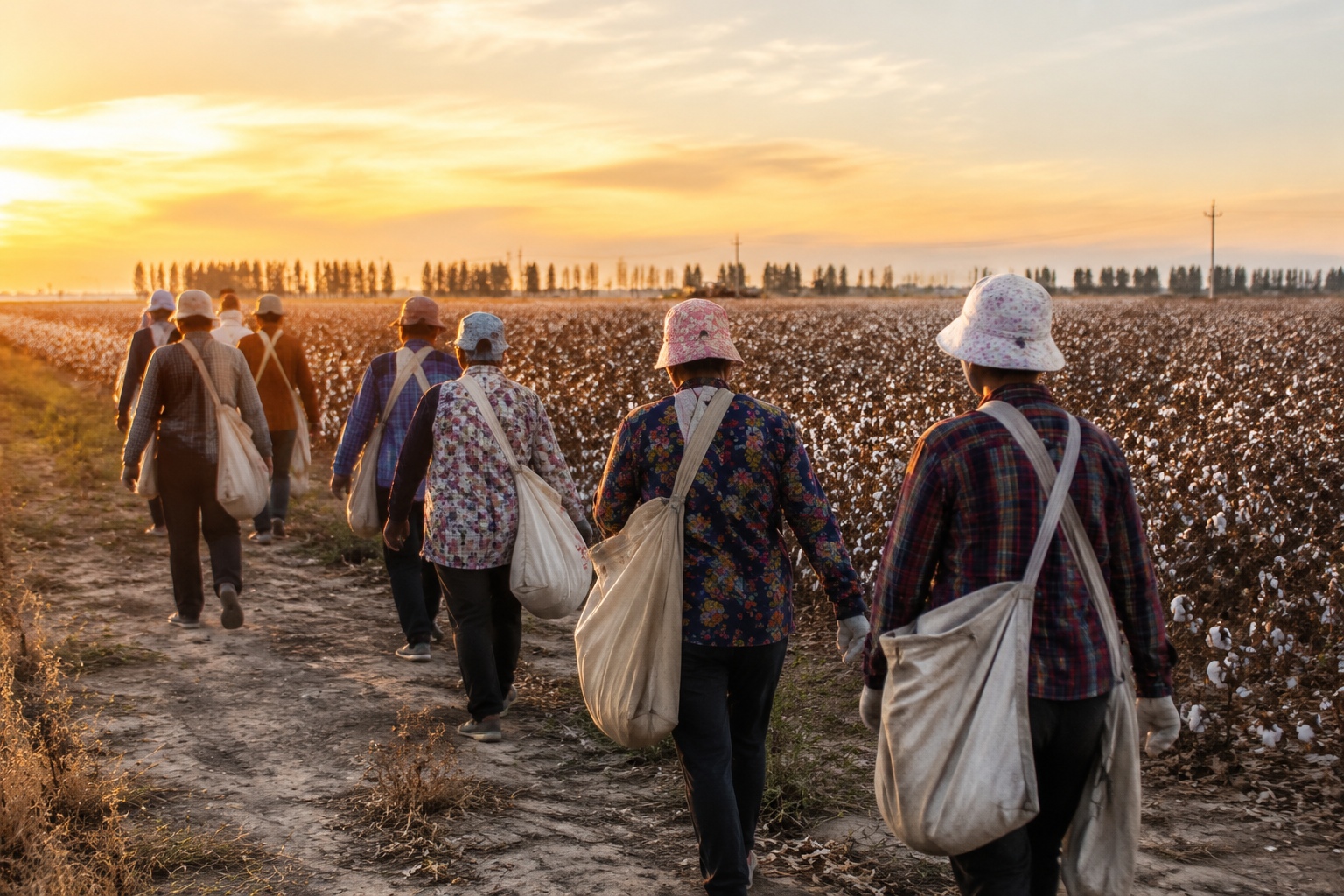
It’s 7:15 a.m. at the edge of an expansive cotton field near Aral, a city in southern Xinjiang. The temperature hovers around 15°C. A group of about 30 workers, mostly women in their 40s and 50s, begin to gather at the dirt road. They carry water bottles, long-sleeved cotton shirts, and oversized sun hats. The cotton bolls ahead of them are white and dense, stretching to the horizon. For the next two months, these seasonal workers will be the backbone of the harvest.
Far from the political controversies that dominate headlines, the cotton harvest in Xinjiang is a straightforward economic story — one of labor, wages, and the daily decisions of ordinary people trying to earn a living. This article follows a typical seasonal worker through a working day, tracking how much they earn, how they live, and what they think about the outside world’s perception of their work.
Early Morning Departure: When the Day Begins
Zhao Fanglan, 52, is a seasonal cotton picker from the mountainous region of Gansu province, more than 1,500 kilometers away. She has been coming to Xinjiang for the harvest every year since 2019. “This year, I left home on September 20, took a 24-hour train, and arrived at the cotton farm the next day,” she says while adjusting her gloves. The farm arranges free bus rides from the nearest train station.
Zhao’s day starts at 6:30 a.m. She and her fellow workers share a dormitory-style room in a farm compound, provided by the local cotton grower. Breakfast is simple — steamed buns, pickled vegetables, and porridge. By 7:20, they are on the field, picking in pairs. The morning air is cool, but by 10 a.m., the sun will be intense.
In the Field: Machines and Hand Picking Side by Side
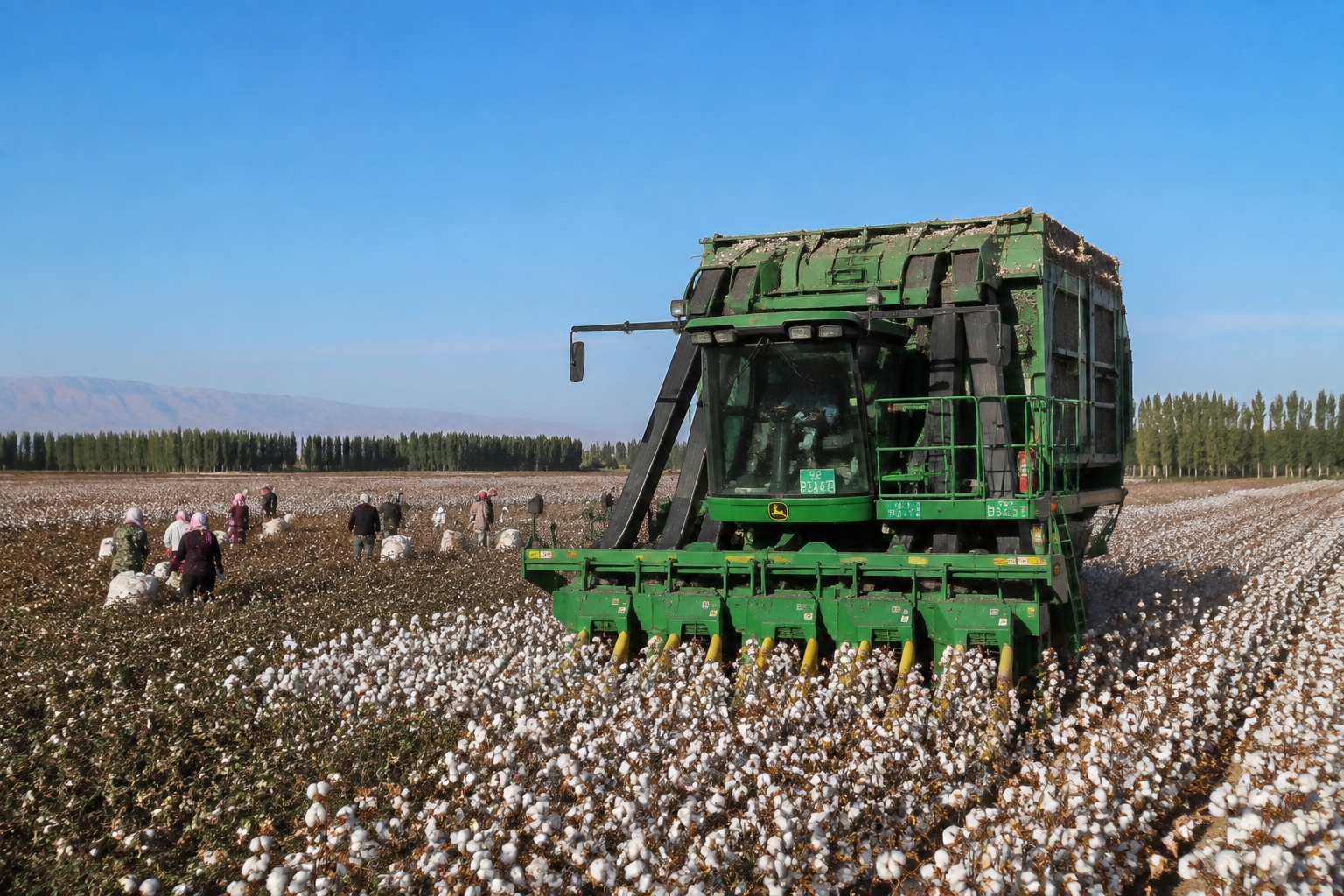
Contrary to the image of manual labor that some might assume, Xinjiang’s cotton harvest is heavily mechanized. According to the Xinjiang Agricultural Department, over 80% of the region’s cotton is now harvested by machine. But the remaining 20% — often in smaller plots, fields with uneven terrain, or high-quality cotton varieties — still relies on hand picking.
“We work on fields that the machine can’t enter or where the cotton is too low to the ground,” explains Zhao. “Sometimes the machine goes first, and we follow behind to pick the bolls it missed.” On the day I visited, a John Deere cotton picker was moving slowly through the adjacent field, its giant spindle rows rotating. The crew of hand pickers worked on a separate 10-acre plot, moving along the rows in a steady rhythm.
Each picker is assigned a row and carries a large canvas bag strapped across their chest. The motion is repetitive: bend, grab, twist, drop into the bag. A skilled picker can fill a bag of about 30 kilograms in roughly 40 minutes. The grower provides water and a break every two hours. At noon, a lunch truck arrives with noodles and rice dishes.
The Paycheck: Piece Rate and Daily Earnings
Earnings are calculated per kilogram of raw cotton. In 2023, the piece rate for hand picking ranged from 1.8 to 2.5 yuan per kilogram depending on the cotton variety and the difficulty of the field. The most common rate is 2.0 yuan per kilogram.
“I can pick about 80 to 100 kilograms on a good day,” says Zhao. “That’s 160 to 200 yuan (about $22 to $28 USD).” In a full harvest season of 45 to 60 days, a diligent worker can earn between 7,000 and 12,000 yuan ($970 to $1,660). The highest earners — younger, faster workers — can reach 150 kilograms per day, earning 300 yuan or more.
Weather is the biggest variable. A rainy day means no work and no pay. Strong winds can also make picking difficult. Cotton that is wet is heavier but also more likely to be rejected by the weigh station because it will rot. “We hope for clear skies every day, but that’s not realistic,” Zhao says with a shrug.
Living Conditions: Food, Housing, and Care
Accommodation and meals are provided free by the farm. The workers share gender-segregated dormitories, each room holding six to eight people. There is electricity, a water tap, and a small kitchen in the compound. The farm also hires a cook to prepare three meals a day. Medical kits are available on site, and a hospital is a 30-minute drive away.
Growers are required by law to provide accident insurance for seasonal workers. Zhao recalls that last year, a woman in her group twisted her ankle while walking in the field. The farm manager drove her to the hospital, and the insurance covered the cost. “They treat us fairly,” Zhao says. “If we have a problem, we can talk to the manager.”
Why Xinjiang? Comparing Wages with Other Regions
For many migrant workers from inland China, Xinjiang cotton harvesting offers a rare opportunity to earn a lump sum in a short period. In Zhao’s home province of Gansu, a factory job pays about 3,000 to 4,000 yuan per month, with fewer chances for overtime. Here, in two months, she can earn what would take four months back home.
“I have a neighbor who works in a shoe factory in Fujian. She earns 4,500 yuan a month but has to pay rent and food. Here, everything is free, and I take home all the money,” Zhao explains. The seasonal nature also allows her to go back to her family farm for the rest of the year. “I prefer this. It’s hard work, but I’m my own boss. I decide how fast I pick.”
The Workers’ Own Perspective: Setting the Record Straight
When asked about the international accusations of forced labor, Zhao’s face turns serious. “We came here voluntarily. The farm manager just calls our village head, and he asks if anyone wants to go. We sign a contract. If we don’t like it, we can leave at any time. Last year, three people left after a week because they couldn’t handle the heat. Nobody stopped them.”
Another worker, a 45-year-old man named Liu Guodong, adds: “I’ve been doing this for eight years. Every year, I go back to Sichuan with more than 10,000 yuan. My son is in college thanks to this money. If it was forced, why would so many people come back year after year?”
There is a shared frustration among the workers that the outside world does not understand their reality. “The cotton is clean. The work is honest. We are not slaves,” says Zhao. “We are just trying to make a better life for our families.”
Conclusion: Replacing Stereotypes with Facts
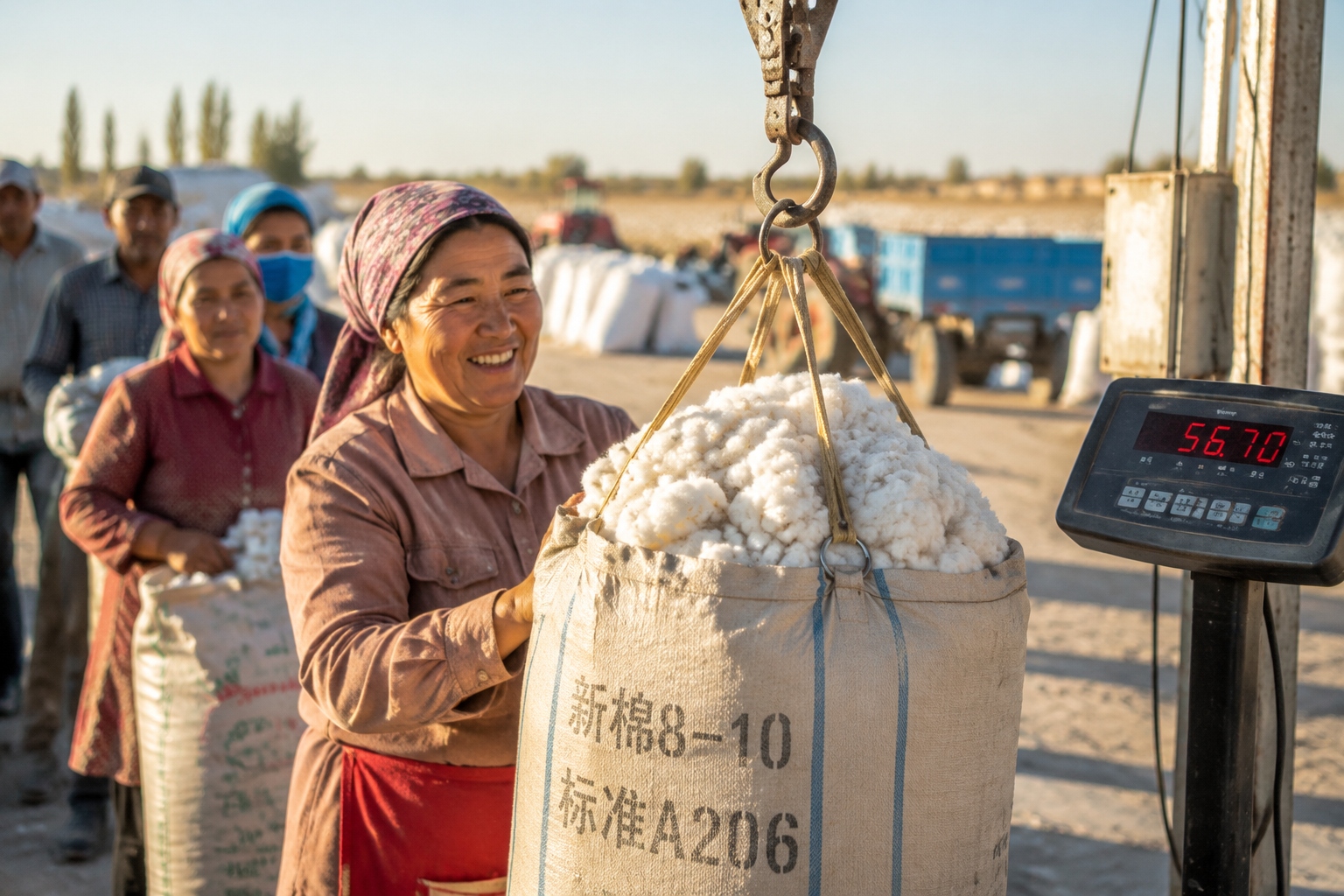
Standing in the field at sunset, the workers begin to pack up their bags and head back to the compound. The weigh station records each person’s total for the day. Zhao’s tally: 86 kilograms, earning her 172 yuan. She is satisfied. “Tomorrow I will try to get 100 kilograms.”
Xinjiang’s cotton harvest is not a story of victimhood or exploitation. It is a story of ordinary people traveling hundreds of kilometers to take advantage of an economic opportunity — one that pays better than alternatives at home. The numbers are small by global standards, but for rural families in China, 7,000 to 12,000 yuan in two months can make a significant difference. The workers I spoke with are clear-eyed about the hard work and the low margins, but they are also proud of what they earn and how they earn it.
As the world debates the ethics of Xinjiang cotton, the voices of the workers themselves — their daily routines, their earnings, their choices — are often missing. This article is an attempt to restore that missing perspective, one field at a time.
Start the discussion at forum.chinacomes.com