
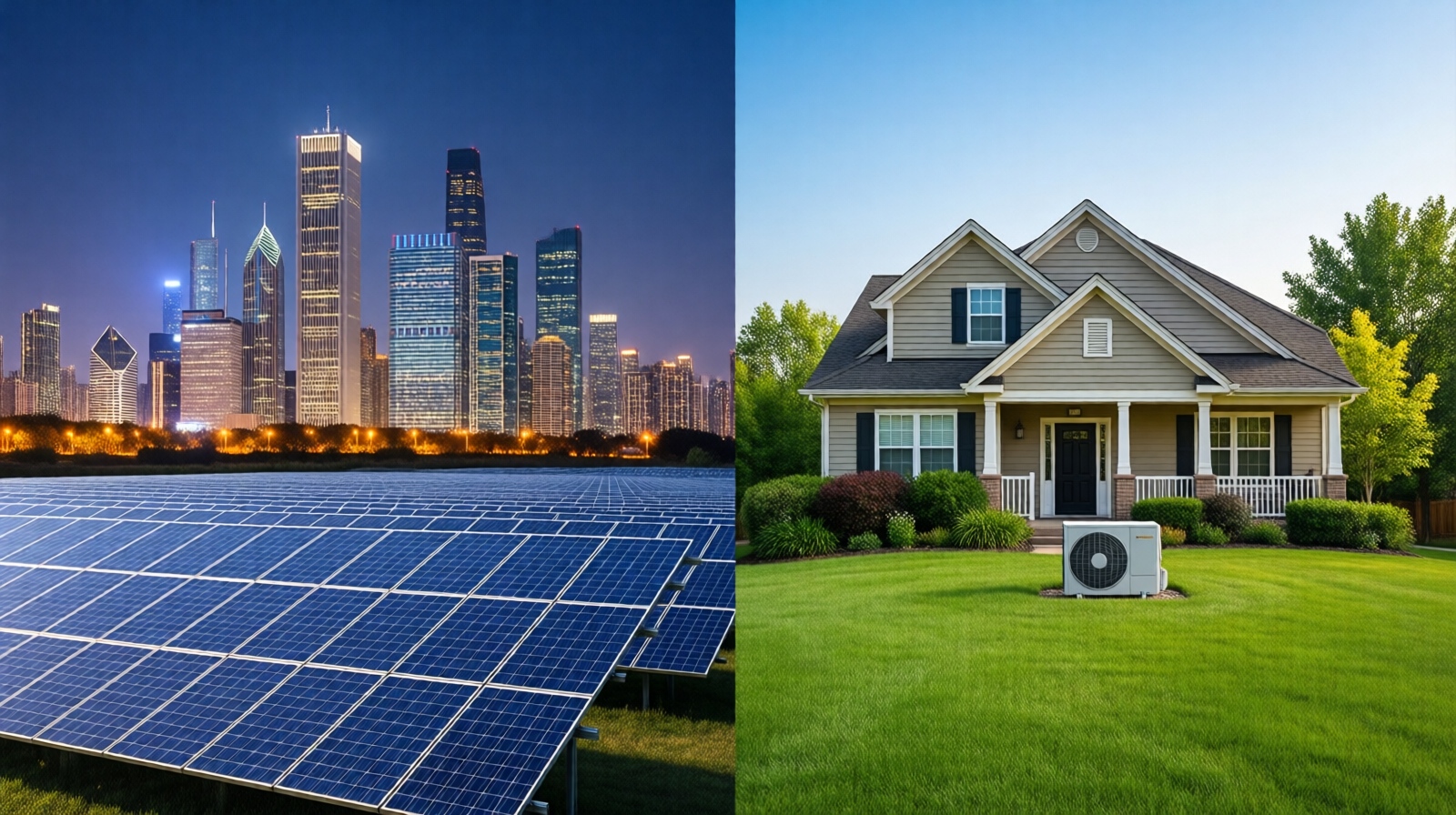

A Tale of Two Cities: Shanghai vs. Los Angeles
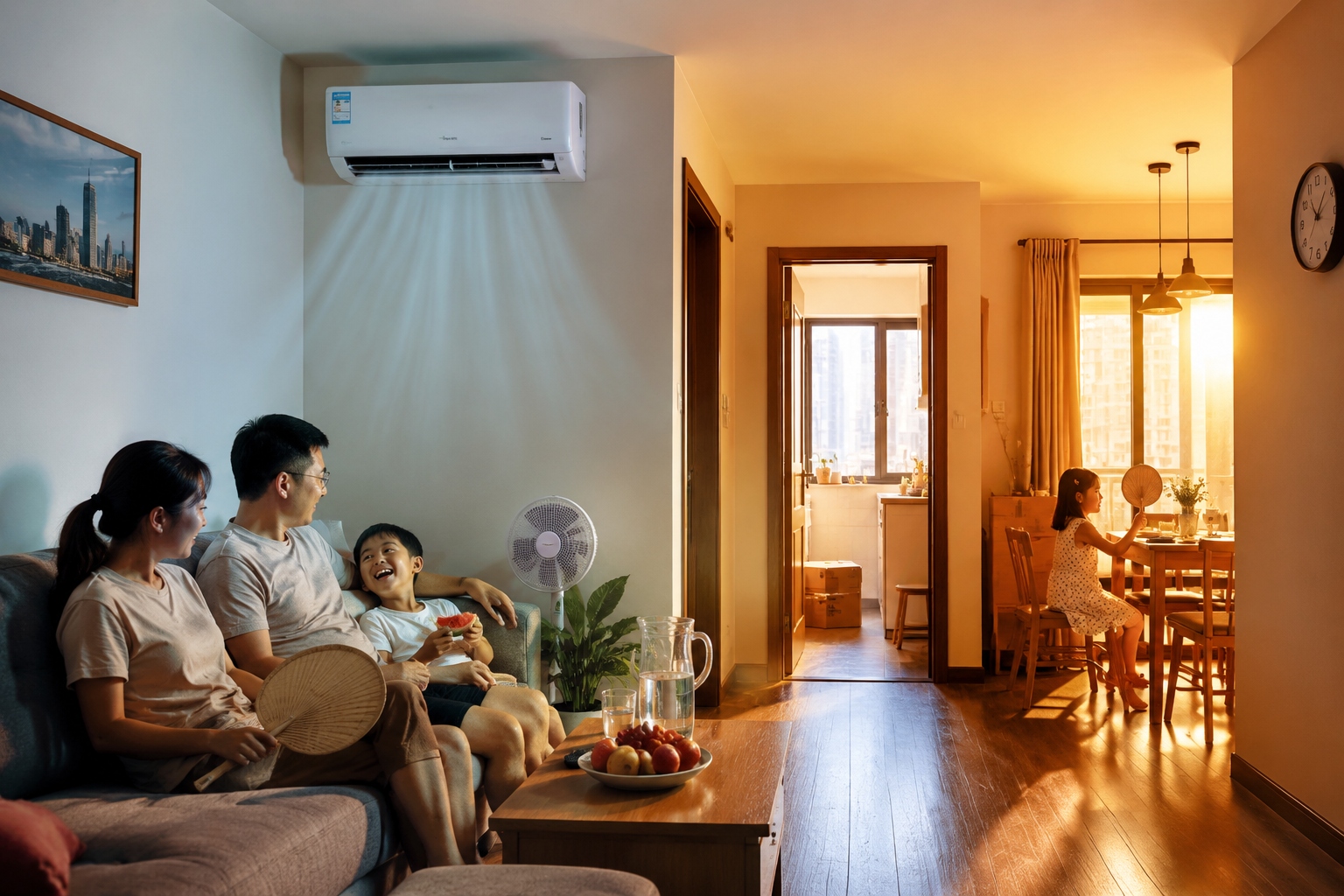
On a hot summer afternoon in Shanghai, a family of four turns on the air conditioner in the living room. The unit hums softly, cooling one room while the rest of the apartment stays warm. Meanwhile, in Los Angeles, a similar family sets the thermostat to 72°F (22°C) for the entire house, with the central air system running all day. The difference in energy use is not just a matter of comfort—it reflects a structural gap between two of the world’s largest electricity consumers.
China generates about twice as much electricity as the United States: roughly 9,400 terawatt-hours (TWh) per year compared to 4,300 TWh. Yet when you divide that by population, China’s per capita electricity consumption is only about 6,500 kilowatt-hours (kWh) per year, while the US figure is around 12,000 kWh. How can a country that produces twice the power still use less per person? The answer is not a puzzle—it’s a story of industry, lifestyle, and infrastructure.
Industry Devours the Juiciest Slice
China is often called the “world’s factory,” and that industrial base is the single biggest reason for its high total generation. According to the International Energy Agency (IEA), industry accounts for about 70% of China’s electricity consumption, compared to only about 30% in the United States. Every steel mill, cement plant, and semiconductor factory running 24/7 devours enormous amounts of power. In the US, the economy is more service-oriented, with less heavy industry and more energy going to commercial buildings, data centers, and homes.
Think of electricity as a pie. China’s pie is huge because it needs to power a massive industrial sector. But the slice for households is much smaller. The average Chinese home uses about 2,000–3,000 kWh per year, while an American home uses about 10,000 kWh. That’s a fivefold difference—and it explains why per capita figures are so lopsided.
Home Energy Habits: Cooling, Heating, and Everything Else
Let’s look at a typical American home. It has central air conditioning, a gas or electric furnace, a refrigerator, a clothes dryer, a dishwasher, multiple TVs, computers, and often a pool pump. Many homes in the US are single-family houses with large floor areas, requiring more energy to heat and cool. In China, most urban families live in apartments, often with smaller floor plans. Heating in northern China is provided by district heating systems that burn coal or natural gas, but many homes do not have central air conditioning. Instead, they use small window units or split ACs that cool only one room at a time.
Another factor: appliance penetration. In the US, almost every home has a clothes dryer. In China, many families still dry clothes on balconies or in shared drying rooms. The same goes for dishwashers, which are rare in Chinese kitchens. These differences add up to a significant gap in household electricity consumption.

Yet the gap is narrowing. As Chinese incomes rise, more families are buying larger homes, installing central AC, and using more appliances. The per capita electricity consumption in China has been growing at about 3–4% per year, while the US figure has been relatively flat for a decade.
The Green Revolution: China’s Renewable Energy Boom
Here is where the story gets interesting for the future. China is not just building more power plants; it is building them faster and cleaner than any other country. In 2024, China added more solar and wind capacity than the rest of the world combined. The country now has over 1,200 GW of renewable capacity, including massive solar farms in the Gobi Desert and offshore wind turbines along the coast.
Because China’s electricity demand is still growing, renewables are being added alongside coal, not replacing it at the same rate. But the share of coal in China’s power mix is declining. In 2023, coal accounted for about 60% of generation, down from 70% a decade earlier. The government aims to peak carbon emissions by 2030 and achieve carbon neutrality by 2060. To reach that goal, China will need to triple its renewable capacity by 2030.
This transformation has a direct impact on everyday life. In many Chinese cities, households can now buy “green electricity” certificates, and some residential complexes have rooftop solar panels that feed into the grid. Electric vehicles are also changing the equation: China has over 30 million EVs on the road, and each one adds to the demand for electricity while reducing oil imports.
Why Per Capita Usage Will Keep Rising
As China’s economy continues to grow and its middle class expands, household electricity consumption will rise. More people will buy air conditioners, electric vehicles, and smart home devices. But the growth will be more sustainable than the American model, because China is leapfrogging into efficient technologies. For example, China is the world’s largest market for high-efficiency air conditioners (inverter ACs) and LED lighting. The government sets strict energy efficiency standards for appliances and buildings.
At the same time, China’s industrial electricity intensity is declining. The country is shifting from heavy manufacturing to high-tech manufacturing and services, which require less energy per unit of output. The result: China’s total electricity consumption may eventually plateau, even as per capita usage rises.
So, the answer to the question “China generates twice as much power as the US, so why is per capita usage lower?” is simple: China uses a huge share of its electricity to make the things the world buys. The US uses a huge share to run its homes and cars. Both are changing. China’s per capita consumption will keep climbing, but it will likely never reach the American level because of efficiency, density, and different lifestyles.
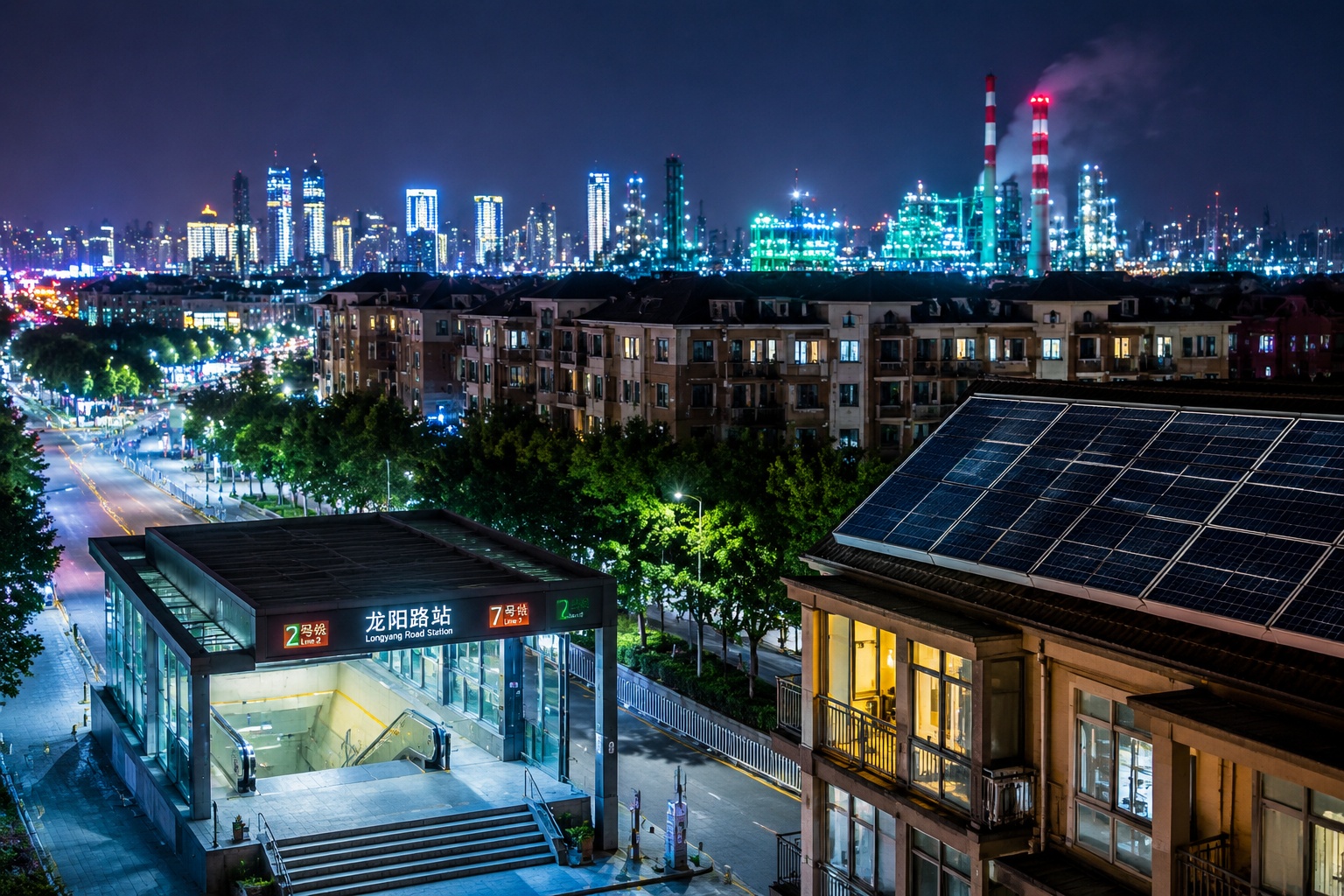
For a traveler from Europe or the US visiting China, the most visible difference is not the amount of electricity, but how it is used. Walk through a Chinese city at night: the streets are brightly lit, subways hum, and factories glow. But inside apartments, the lights are often dimmer, and the air conditioner runs only when needed. It’s a different rhythm—one that reflects a civilization that has learned to be efficient out of necessity, and now aims to be green by choice.
Start the discussion at forum.chinacomes.com