
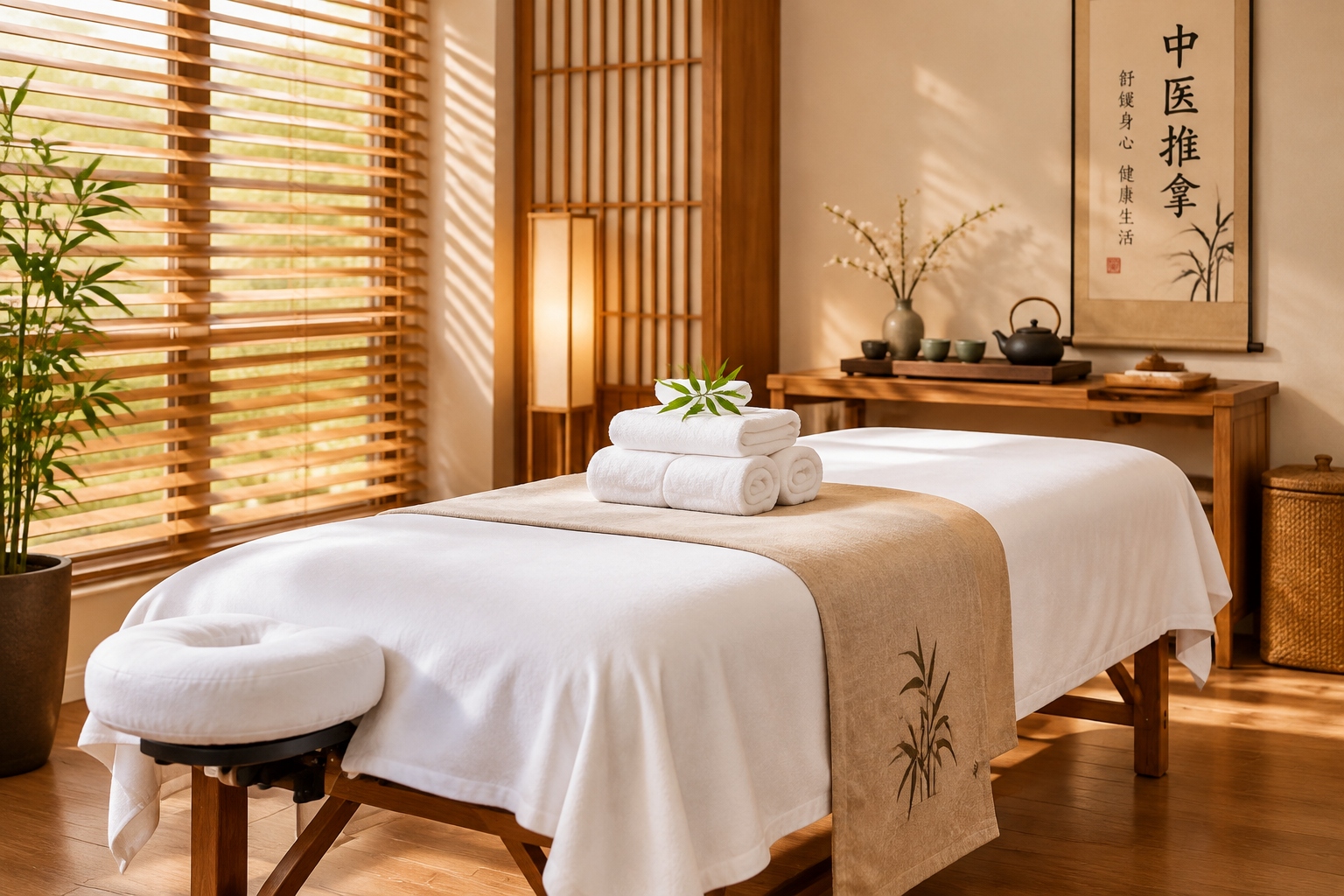

One Evening After Work
I was standing outside a small shop in Shanghai, sniffing the familiar smell of camphor and lavender. A friend had insisted I try “blind massage” after a week of hunched typing. Inside, the room was dark, the curtains drawn. A therapist walked in and said, “Please lie down.” He was blind, and his hands found my shoulders with a precision that felt almost sculptural. That was my first introduction to a world many visitors to China miss.
Chinese cities are full of places to relax: massage parlors, foot therapy centers, and specialized blind massage shops. They may look the same from the street, but they are quite different experiences. This guide explains the differences, the prices, and the unwritten rules, so you can choose the right one for your body and your budget.
The Three Styles Explained
Most foreigners think “Chinese massage” is one thing, but there are actually three distinct categories you’ll encounter. Understanding them helps you avoid surprises once you’re on the table.
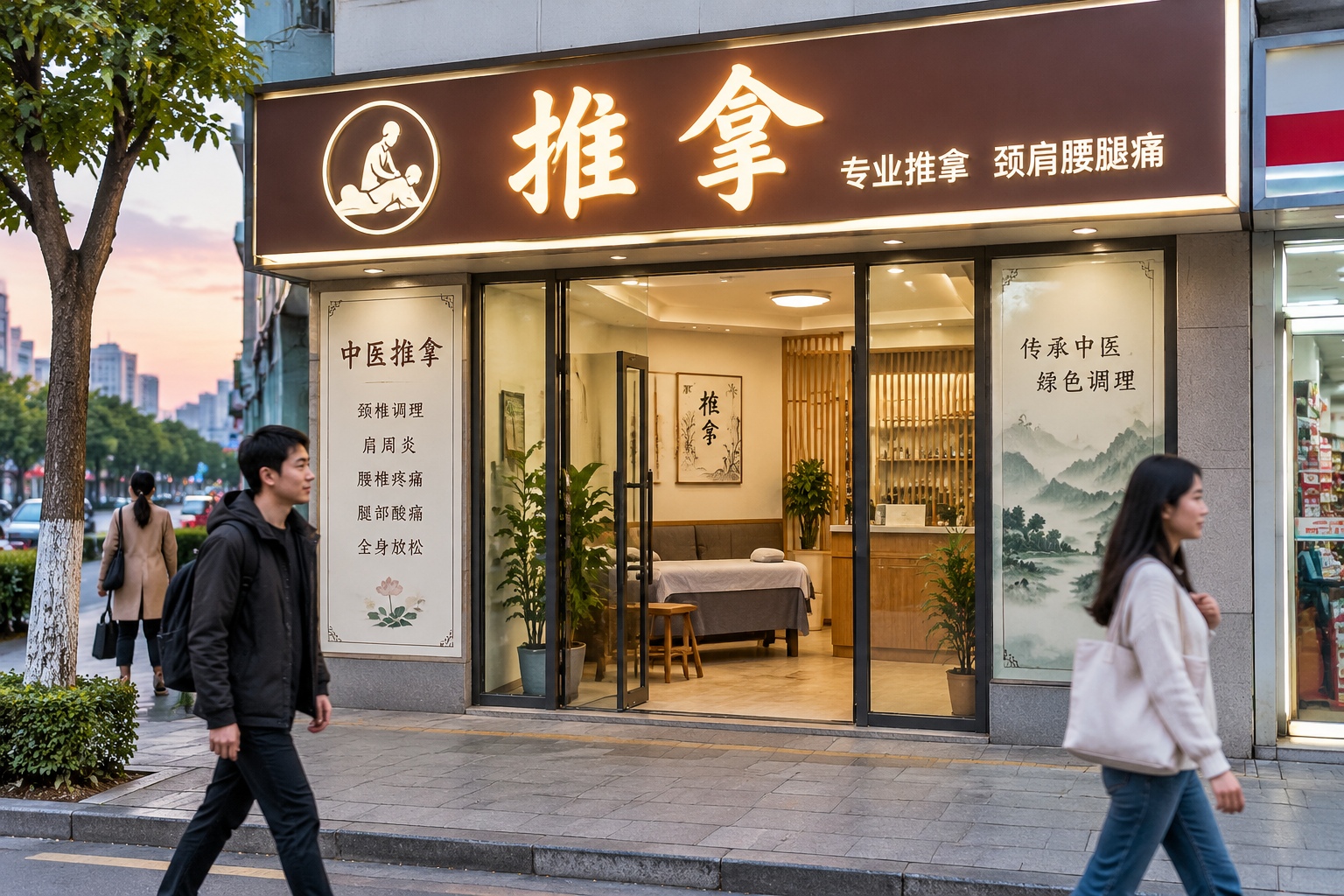
Massage / Tuina (中式按摩)
The most common type is tuina, a form of traditional Chinese massage that works on muscles, tendons, and pressure points across the body. It can be gentle or surprisingly strong—many locals prefer deep, painful pressure that leaves you bruised but loose. If you travel to Beijing, Shanghai, or Chengdu, you’ll see shops with “推拿” (tui na) on their signs. These places usually offer full-body sessions, often with hot towels, herbal oils, and stretching.
Foot Therapy (足疗)
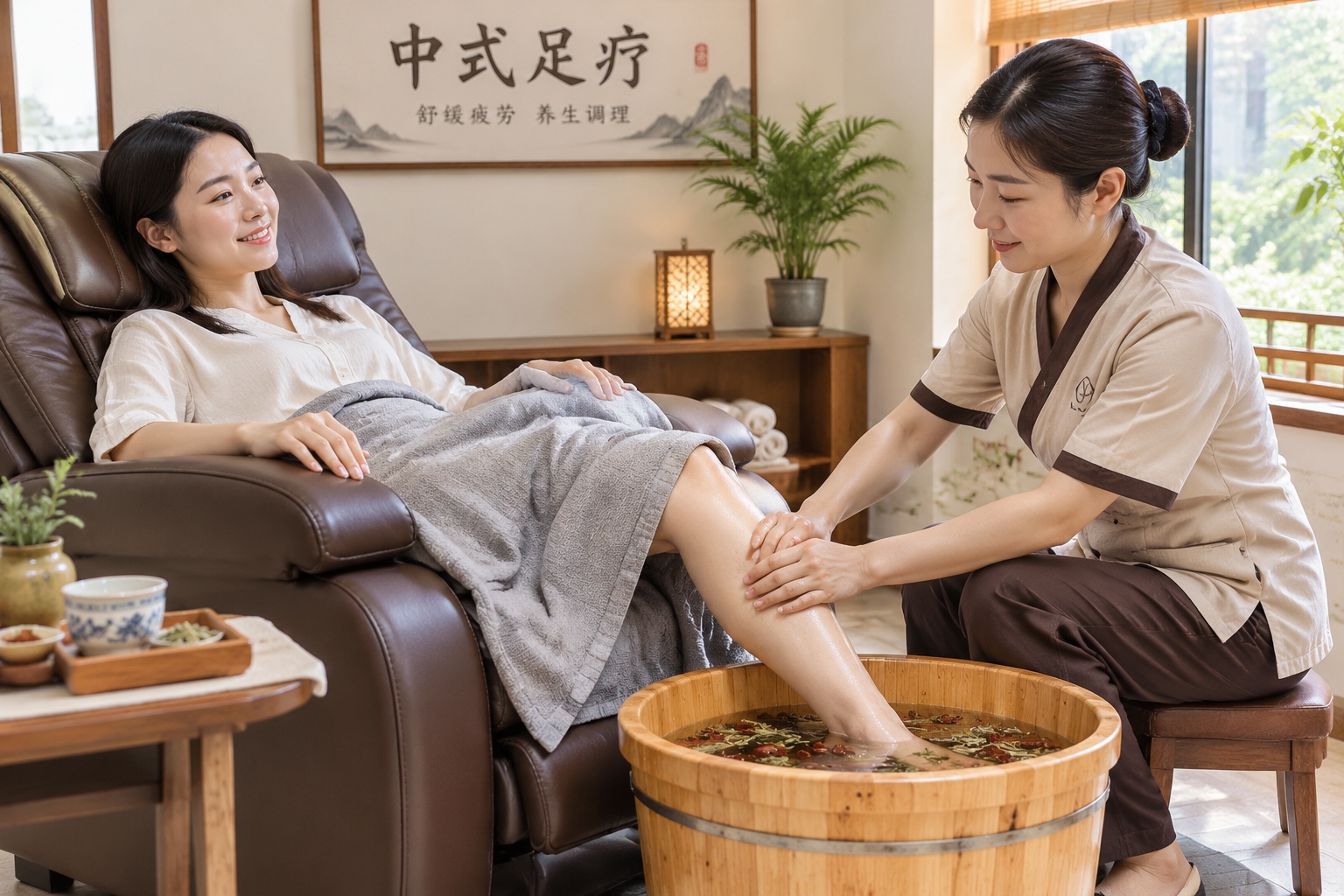
Foot therapy is a different ritual. Instead of a full-body rub, the focus is on your feet and lower legs. You sit in a reclining chair, soak your feet in a wooden tub of warm water, and let the therapist work the soles, toes, and calf muscles. It’s based on the idea that different foot zones connect to internal organs. Whether or not that map is accurate, it feels genuinely relaxing after a day of walking through China’s enormous metro stations. Many foot therapy shops also include shoulder and neck massage as part of the session.
Blind Massage (盲人推拿)
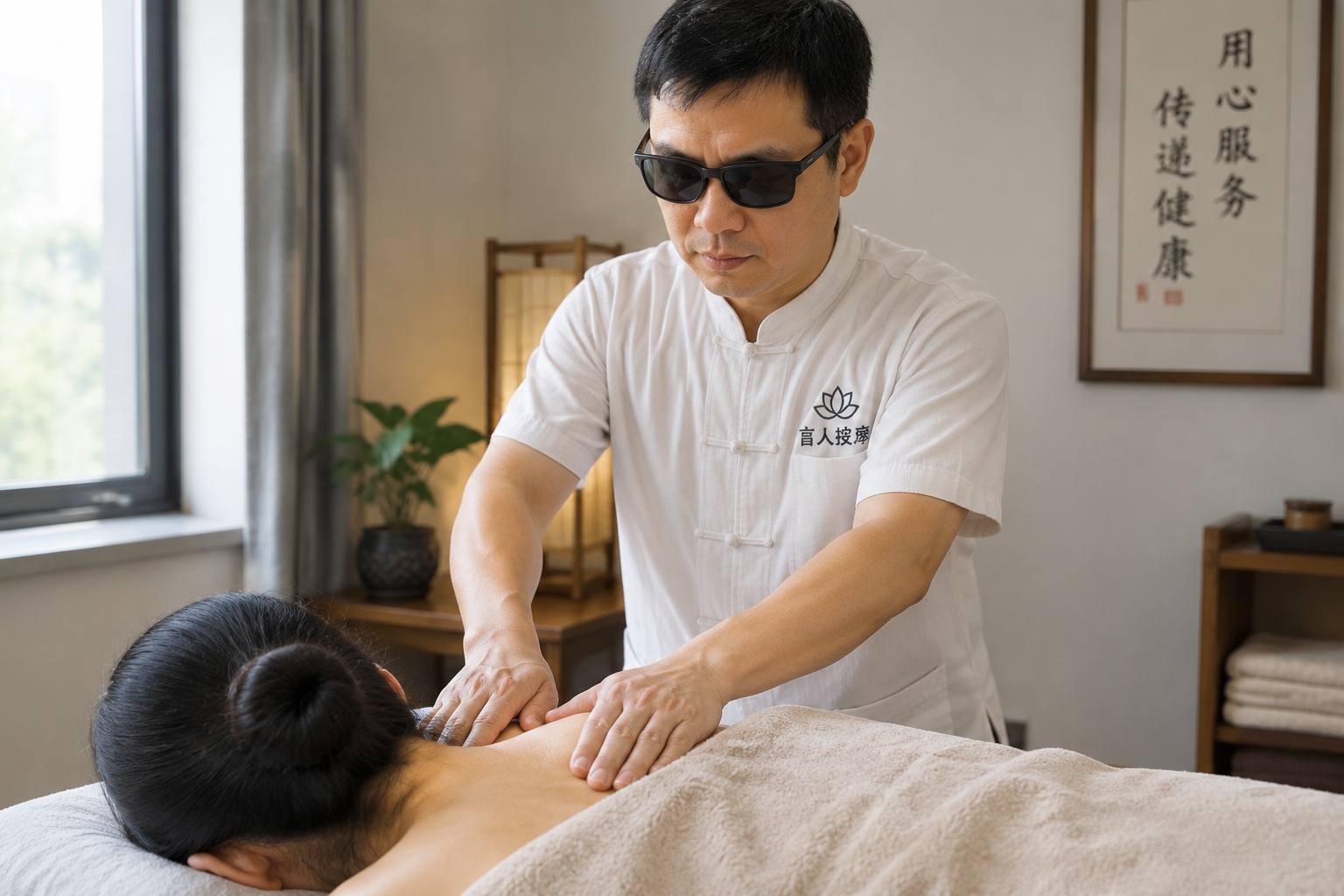
The third type is special: blind massage, or mangren tuina. These shops are run by and staffed with visually impaired therapists. Because their other senses are heightened, many regulars say their hands are more sensitive and precise than sighted therapists. The style is usually closer to medical tuina—deep, targeted work on specific tension points, not a fluffy spa treatment. These shops are also a vital source of employment for blind people in China, which gives your money a social meaning beyond relaxation.
How to Choose Based on Your Needs
With three options, how do you decide? It depends on what your body is asking for.
For Muscle Fatigue
If you’ve spent two days on a high-speed train or carried a backpack up the Great Wall, you need deep muscle work. Choose a regular massage (推拿) and tell the therapist where it hurts. A good tuina therapist can find knots you didn’t know existed. It’s normal for it to hurt a little during the session—communicate if it’s too strong.
For Stress Relief
If your neck feels tight from office work or long plane rides, blind massage is excellent. Many skilled blind therapists specialize in neck and shoulder issues. The quiet, dark environment also helps you switch off. I have a friend who goes every week just to decompress—she says it’s cheaper than therapy.
For Foot Health
If your feet ache from exploring, or you just want a light, pleasant experience, go for foot therapy. It’s also the most social: friends often sit in the same room, chat, and snack on tea and watermelon seeds. Some shops offer full-body add-ons, so you can make it an evening event.
For Specific Pain or Injuries
If you have a chronic problem like lower-back pain or a frozen shoulder, look for a licensed blind massage shop. Many of these therapists have formal medical training, and their lack of vision makes them rely on palpation—literally reading your body with their hands. It’s as close to a medical consultation as a massage gets in China without seeing a doctor.
How Much It Costs: From Street Shops to High-End Clubs
Prices in China vary a lot depending on the city and the neighborhood. Here’s a rough guide to what you’ll pay per hour.
Street-Level Shops
In residential neighborhoods, you’ll find small, no-frills shops with a massage table behind a curtain. A one-hour tuina session costs roughly ¥80–120 (about $11–17). Foot therapy is slightly more, often ¥100–150, because it includes soaking and lotions. These shops are functional—expect a flimsy towel and fluorescent lights rather than spa ambience.
Mid-Range Chains
National chains like Zhang Liang Massage or foot therapy brands are everywhere. They offer a clean, consistent experience with private rooms and standardized techniques. Prices range from ¥150–250 per session. These are good for tourists who want reliability and a menu in English.
High-End Spas
High-end hotels and spas charge ¥300–600 or more. You’ll get a beautifully lit room, fragrant oils, and therapists who speak some English. The skill level isn’t necessarily better—often you’re paying for the atmosphere and the anonymity. If you’re on a business trip and someone else is paying, go for it.
Blind massage shops sit in a different price bracket. Because they are usually small local operations with a social mission, they are incredibly affordable: ¥60–100 per hour. In Shanghai, I pay ¥98 at my regular place. It’s one of the best-value wellness experiences in the country.
Avoiding the Sales Trap: Before You Buy That Membership Card
Here’s the part nobody tells you on your first visit: many massage and foot therapy shops aggressively push membership cards. You’ll finish a pleasant session, and then the receptionist will try to sell you a 20-session card at a “discount.” The math might seem tempting, but be careful.
First, never sign up on your first visit. The promised discount will still be there tomorrow—it always is. Ask for a trial session or a single visit without any commitment. Second, check if the shop is licensed and established. Look at how long the business has been around; a shop that just opened may not survive the year with your money. Third, read the card terms. Some cards are only valid for a certain period, or non-refundable. If you’re a short-term visitor, just buy per visit.
One safeguard: China now requires many service businesses to honor refunds on unused cards. If you do buy and regret it, press the issue, but it’s better to avoid the hassle altogether.
The Special Meaning of Blind Massage: More Than a Treatment
Blind massage carries a deeper significance in China. Historically, vision impairment limited employment options. The government and community organizations began promoting tuina training for blind people decades ago, creating one of the most successful disability employment models in the country. Today, blind massage shops are a proud symbol of self-reliance. When you pay for a session, you’re not just relaxing your muscles—you’re supporting a community’s livelihood.
There’s also a distinct intensity to the experience. Because blind therapists cannot see the shape of your body, they develop extraordinary tactile skills. Many customers insist that blind therapists can find spots of chronic tension that sighted masseuses miss. That’s why a blind massage appointment can feel more like a therapeutic consultation than a luxury treatment.
For international visitors, it’s a chance to engage with a lesser-known part of Chinese society. Just be respectful: speak clearly, use your voice to let them know you’ve arrived, and avoid touching their white canes. It’s a simple human dignity rule that goes everywhere.
Practical Tips for First-Timers
- Go with a recommendation: Ask a local or read recent online reviews in Chinese lookup apps like Dianping. Some shops are great, some are mediocre.
- Communicate your pain level: In China, a common phrase is qīng yīdiǎn (lighter) or zhòng yīdiǎn (harder). Don’t suffer in silence.
- Bring cash or your phone: Most places accept WeChat Pay or Alipay, but cash works too.
- Check the room: For women traveling alone, it’s wise to choose reputable shops and, if you’re uncomfortable, request a female therapist.
- Hydrate: Drink plenty of water after a massage—flushing out the toxins is a common reminder from Chinese therapists.
Conclusion
The next time you see a massage shop in China, don’t just walk past. Whether it’s a quick foot soak after exploring old towns, a deep-tissue tuina session for sore legs, or the humbling skill of a blind therapist, these traditions tell you a lot about Chinese daily life. And in a country that moves fast, these quiet rooms are where the body catches up with the spirit.
Start the discussion at forum.chinacomes.com