
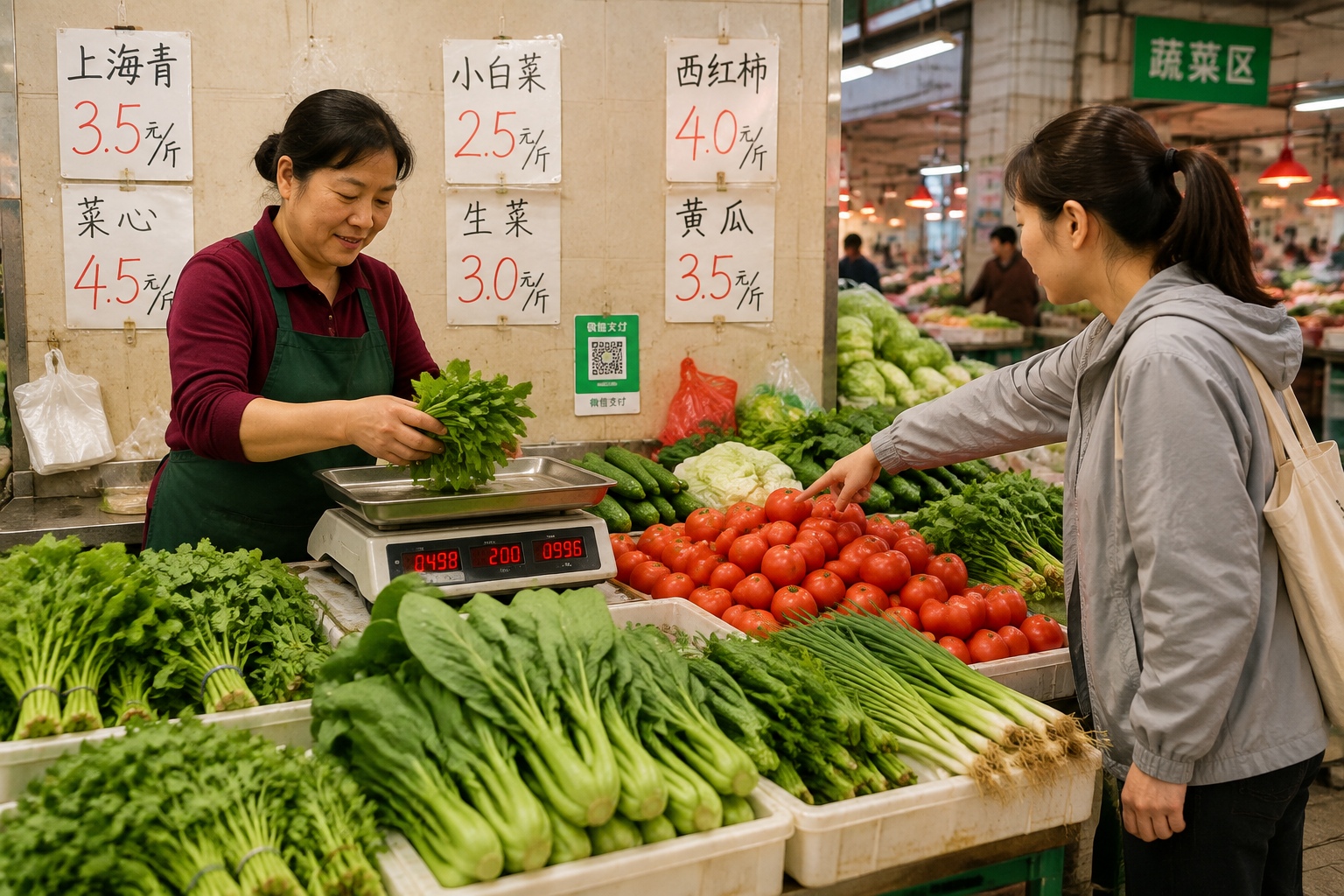

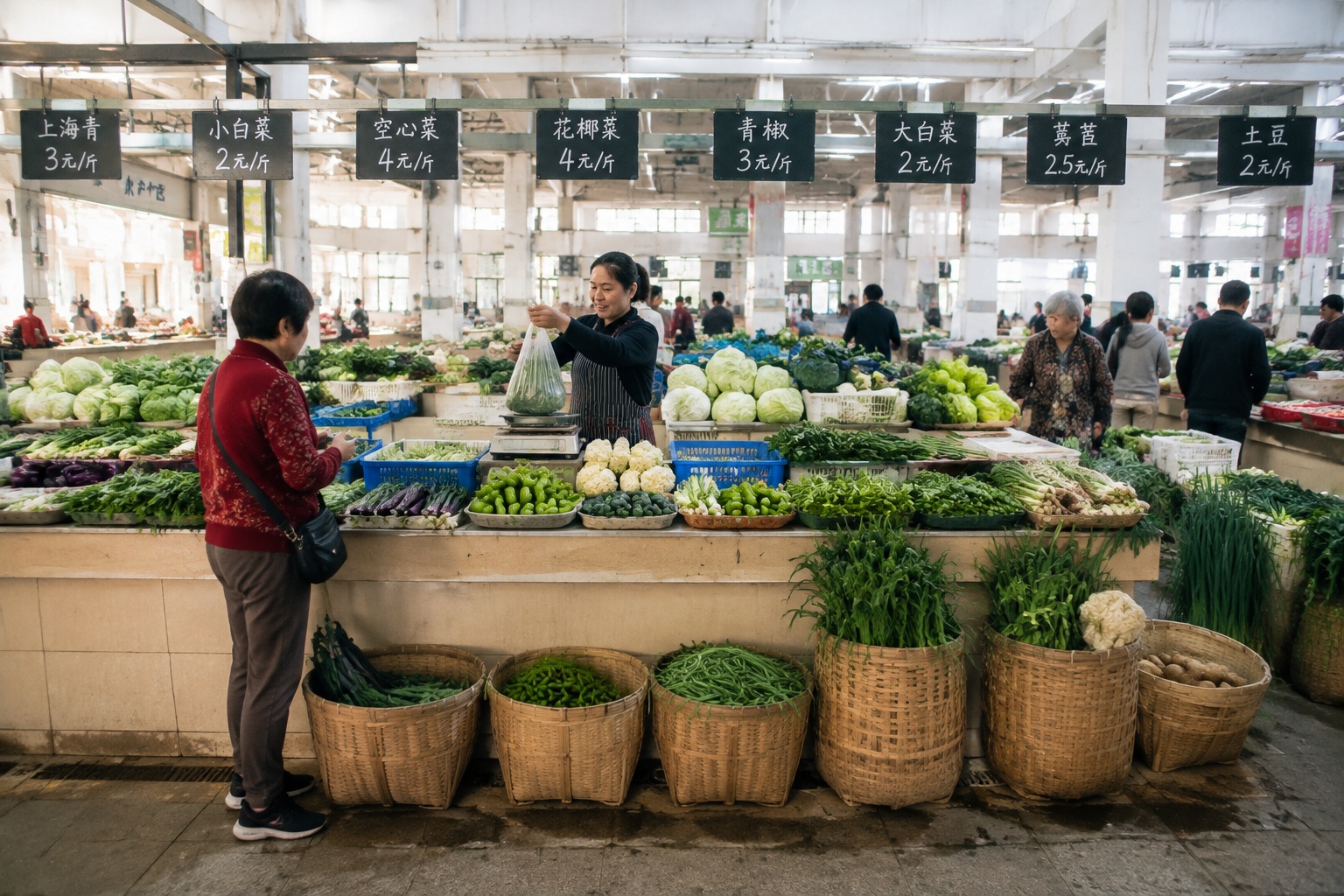
You step into a Chinese produce market and the noise hits you first. Vendors shout prices, a butcher hacks at a slab of pork, and a woman in a blue apron hands you a plastic bag. You want to buy some basil, but you don’t know the word. Do you panic? Not if you have a backup plan.
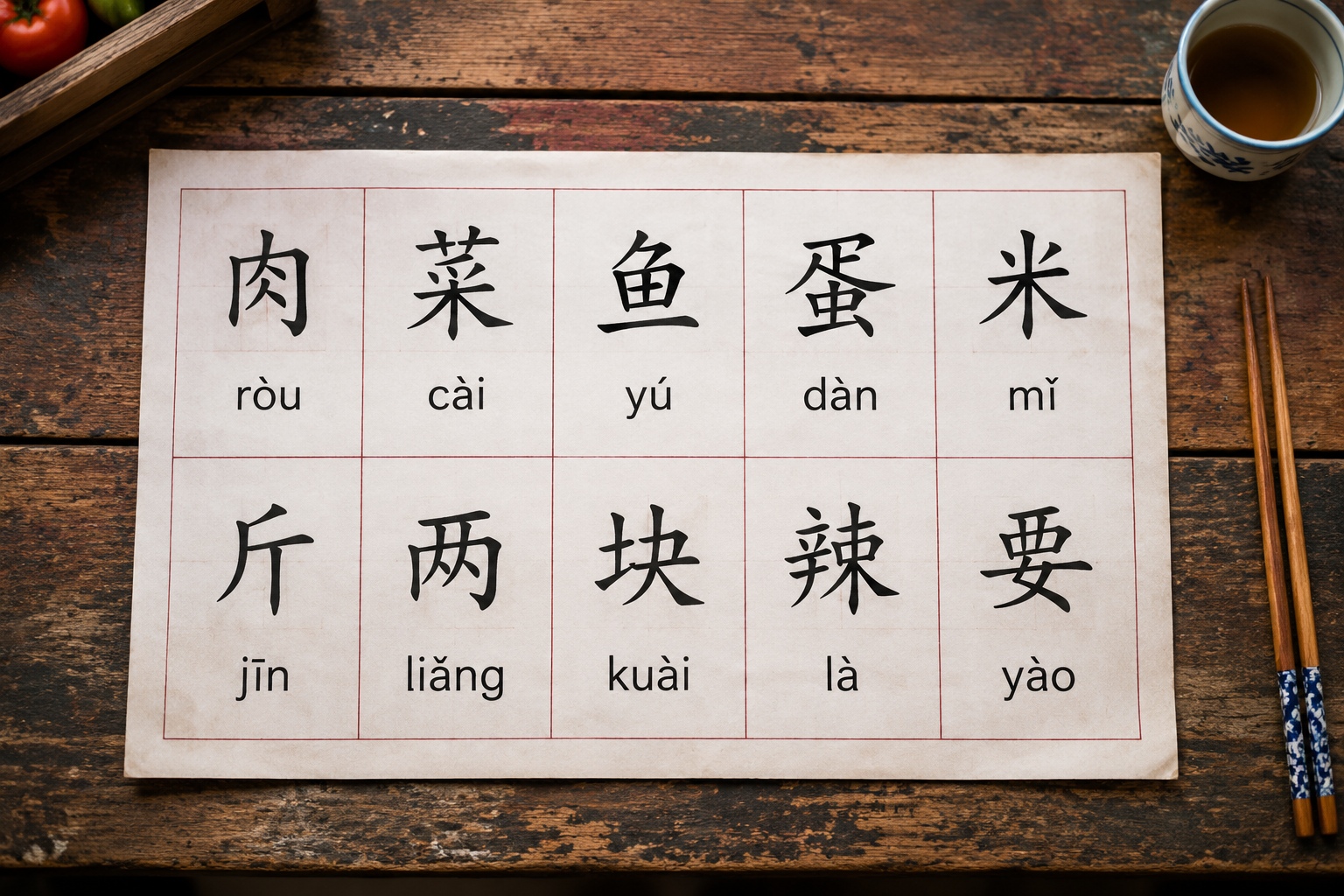
That backup plan is a set of just ten Chinese characters. These ten characters are the keys to buying food, understanding signs, and navigating a market conversation—without speaking fluent Chinese. They’re not random. They cover the categories you need, the numbers and weights you’ll hear, and the all-important word "spicy." Once you learn to recognize them, a market becomes a readable space instead of a sensory overload.
Here they are: 肉 (ròu, meat), 菜 (cài, vegetables), 鱼 (yú, fish), 蛋 (dàn, egg), 米 (mǐ, rice), 斤 (jīn, half kilo), 两 (liǎng, 50 grams), 块 (kuài, yuan), 辣 (là, spicy), and 要 (yào, want).
Why the Market Is the Perfect Place to Learn Chinese
In China, wet markets are the heart of daily life. Unlike supermarkets, every stall has its own vendor, and almost everything is written in Chinese: price tags, product names, even the small order slips. For a language learner, this is gold. You’re surrounded by real-life examples of written Chinese, with a story behind every character.
Markets are also forgiving. If you point at something and say the wrong tone, the vendor will usually help you. They’re used to foreigners fumbling through words. Plus, you can always pull out your phone and show a character on your screen.
Five Characters for Everything You Eat
The first five characters are your core food groups. Learn them cold, and you can group almost any ingredient into one of these categories.
肉 (ròu) — Meat
肉 looks like a rectangle with a few lines inside—think of it as slabs of meat hanging in a butcher shop. You’ll see it in 猪肉 (pork), 牛肉 (beef), and 鸡肉 (chicken). At a butcher’s stall, point at a cut and say zhèi kuài ròu — "this piece of meat." No need to know the exact cut.
菜 (cài) — Vegetables
菜 has the "grass" radical at the top, hinting that it’s plant-based. It covers all leafy greens and vegetables. You’ll see it on canvas signs in front of greengrocers, and in dishes like 青菜 (green vegetables). At a market, saying "cài" while pointing at a pile of greens is usually enough.
鱼 (yú) — Fish
鱼 is one of the few Chinese characters that actually resembles the thing it represents: a fish with a head, body, and tail. Fish tanks line the back of the market, and you can choose a live one. Say "wǒ yào yī tiáo yú" (I want one fish), or just point and say "yú."
蛋 (dàn) — Egg
蛋 uses the "insect" radical on the left, which might seem odd until you remember eggs come from animals. You’ll find 鸡蛋 (chicken eggs), 鸭蛋 (duck eggs), and 咸鸭蛋 (salted duck eggs). Eggs are often sold by weight. Ask for "yī jīn jīdàn" and you’ll get half a kilo of eggs.
米 (mǐ) — Rice
米 is raw rice grain. In a market, you’ll see large sacks labeled 大米 (rice). When buying, you can say "wǒ yào èr jīn mǐ" (I want half a kilo of rice). Rice is also a base for many foods, so you’ll see 米 in words for rice noodles and rice cakes.
Weights, Numbers, and Currency: 斤, 两, 块
Once you’ve chosen your ingredients, you need to understand how they’re measured. The most common weight at a Chinese market is the 斤 (jīn), which equals 500 grams. That’s a convenient half kilo. For smaller or expensive items, vendors use 两 (liǎng), which is one-sixteenth of a 斤—about 50 grams. Premium tea might be priced at "100元/两."
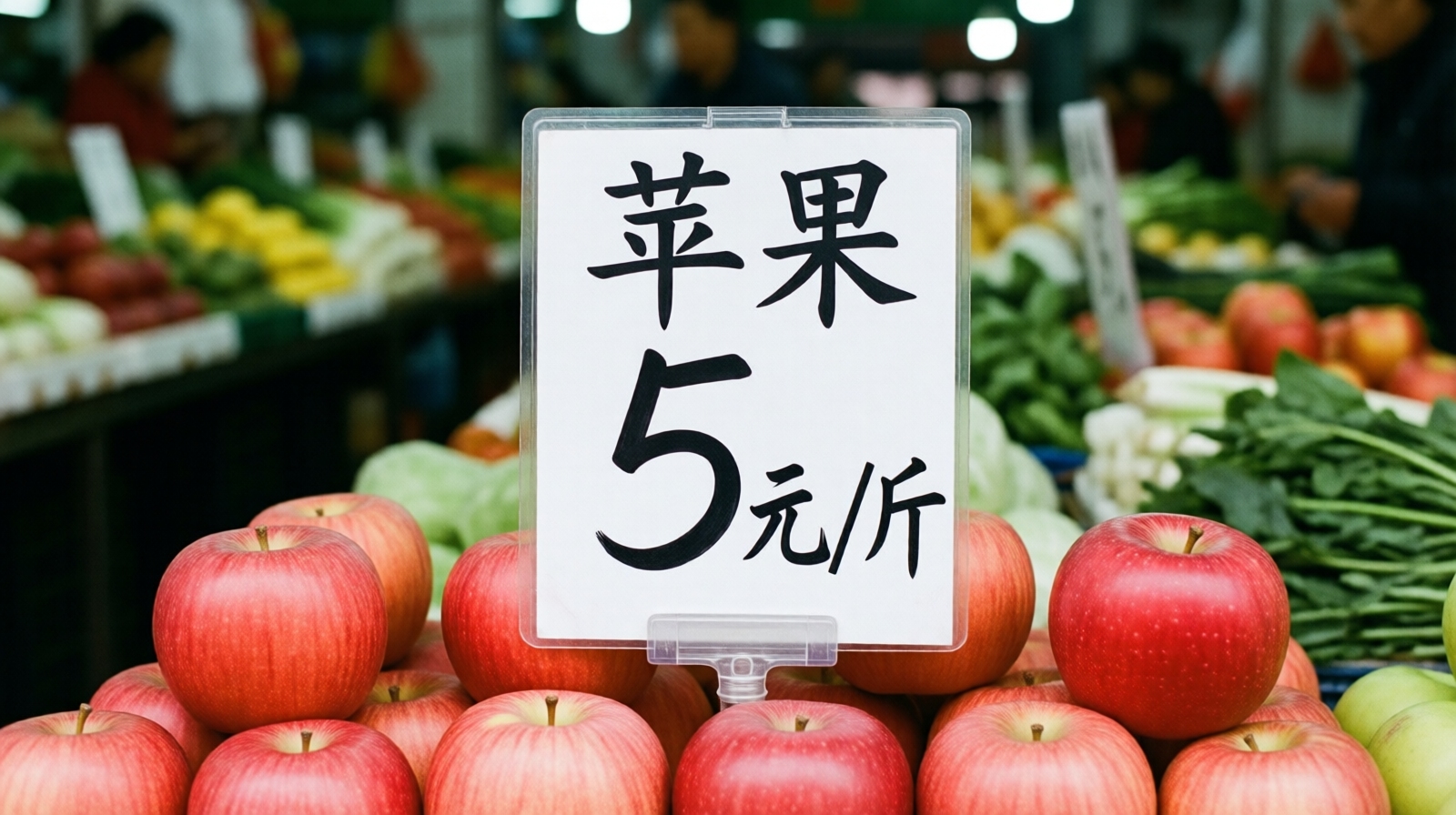
Price signs usually look like this: 苹果 5元/斤 — apples 5 yuan per half kilo. The character 元 (yuán) is the formal word for yuan, but in everyday speech, everyone says 块 (kuài). So "wǔ kuài" means five yuan. On a market sign, you’ll often see 元, but don’t be surprised if you also see 块.
To ask the price of something, point at it and say "jǐ kuài?" or just "duōshǎo qián?" (how much money?). The vendor might hold up fingers or show you a calculator with the number.
辣 (là): The Spicy Word
If there’s one character that can save you from a painful meal, it’s 辣 (là), meaning spicy. You’ll see it on chili sauce jars, on dried pepper packets, and in restaurant signs. If you want no spice, say "bú là" (not spicy) or show the character 不 (bù) followed by 辣.
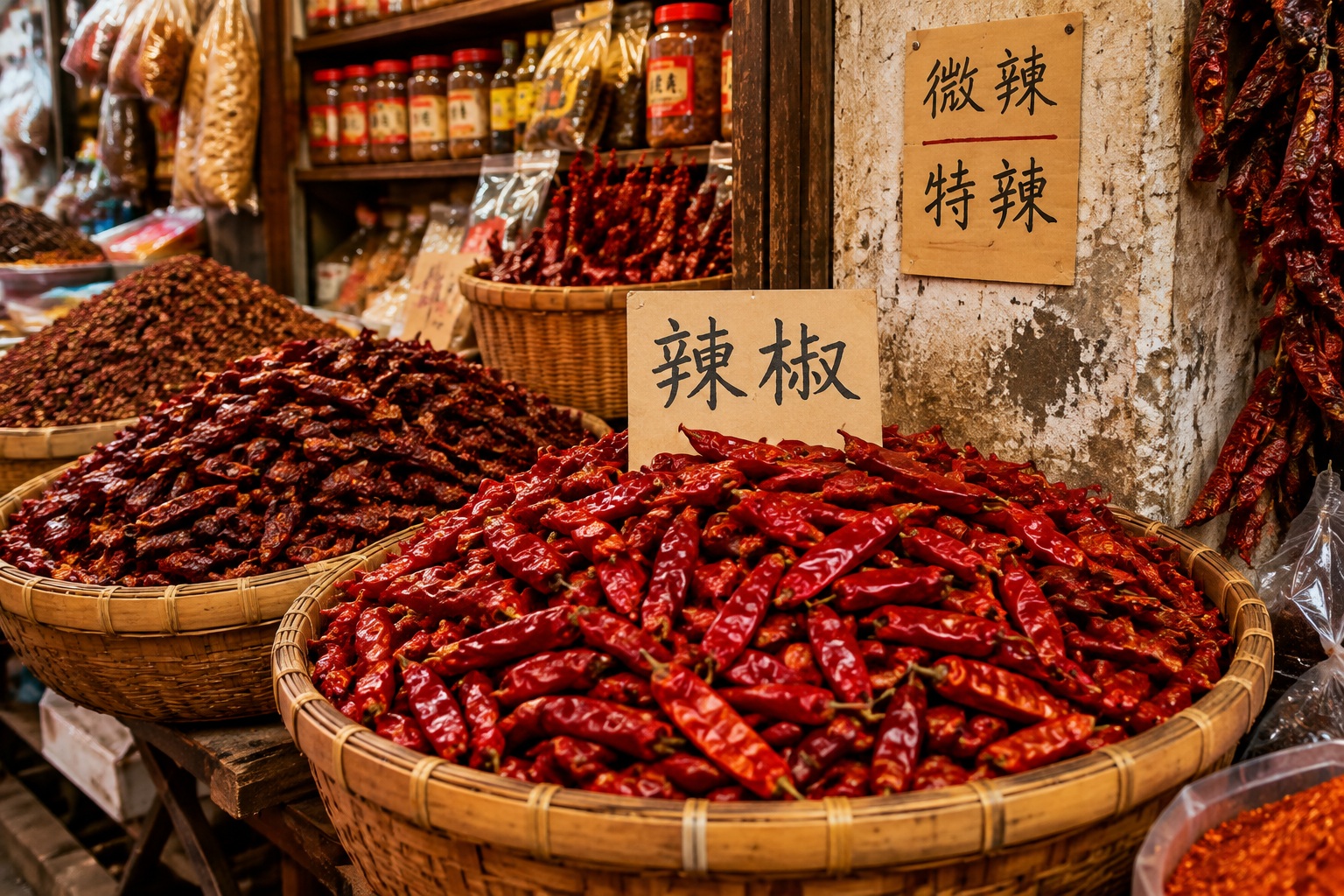
In restaurants and markets, you’ll also encounter levels of spice: 微辣 (wēi là) mild, 中辣 (zhōng là) medium, and 特辣 (tè là) extra spicy. At a spice stall, you’ll see dried chilies labeled 辣椒 (làjiāo), which literally means "spicy plant." Using 辣 in context is a great way to show you’re trying to communicate.
Menu Logic: Ingredient + Cooking Method
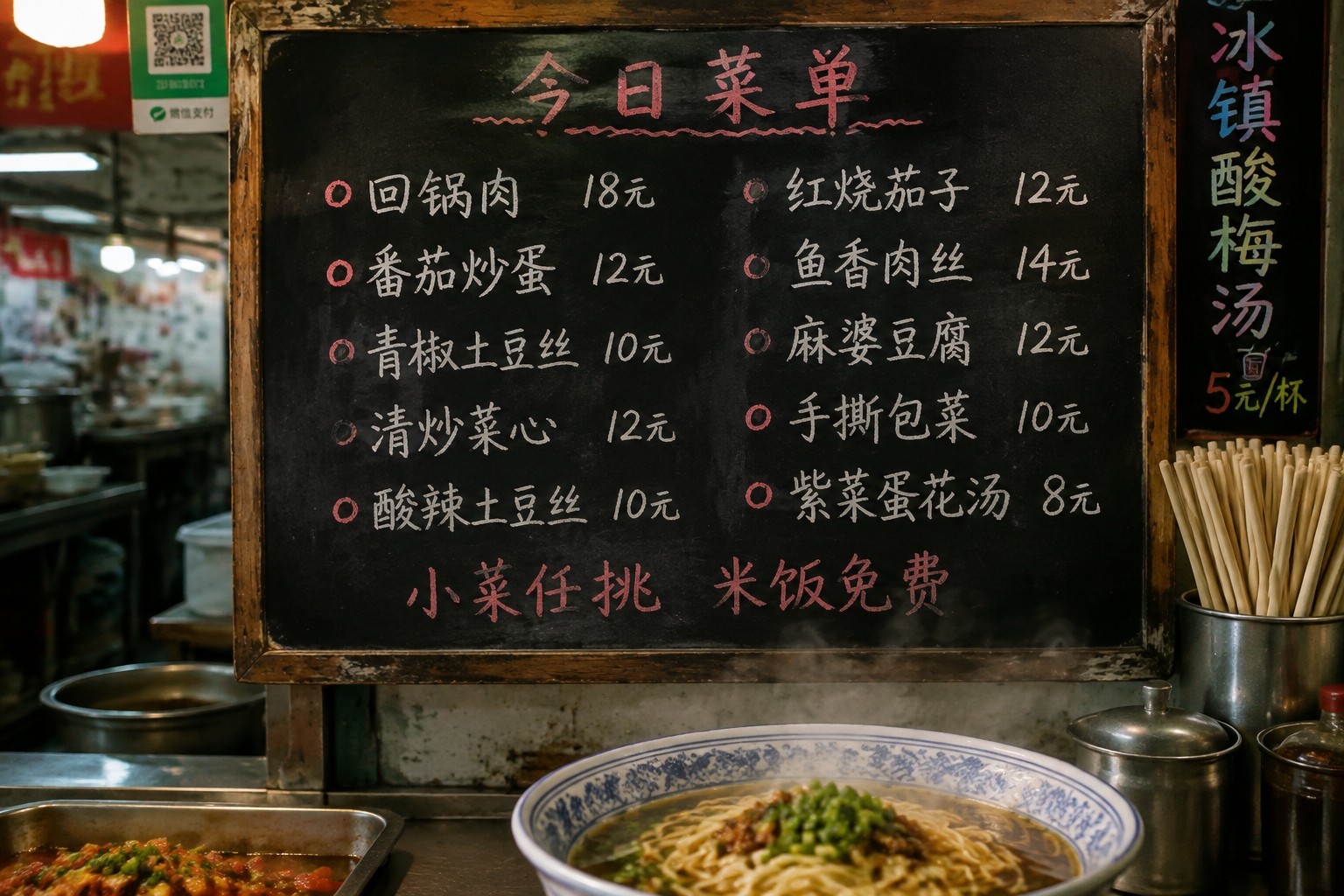
Markets in China often have small food stalls where you can grab lunch. The menu is usually written in Chinese, but it follows a simple pattern: the main ingredient comes first, followed by the cooking method. For example, 回锅肉 (twice-cooked pork) = 回锅 (return to pot) + 肉 (meat). 番茄炒蛋 (stir-fried tomato and egg) = 番茄 (tomato) + 炒 (stir-fry) + 蛋 (egg). 清炒菜心 (stir-fried choy sum) = 清炒 (light stir-fry) + 菜心 (vegetable heart).
If you recognize the ingredient characters from earlier, you can often guess what a dish contains. When in doubt, point to a dish and say "wǒ yào zhège" (I want this). That’s where the character 要 comes into play.
Putting It All Together: A Real Market Dialogue
Now let’s use these ten characters in a conversation. Imagine you’re buying vegetables and a piece of pork.
You: 师傅,这个菜怎么卖? (Shīfu, zhège cài zěnme mài?) — "Master, how much is this vegetable?"
Vendor: 三块一斤。 (Sān kuài yī jīn.) — "Three yuan per half kilo."
You: 我要一斤。 (Wǒ yào yī jīn.) — "I’ll take half a kilo."
Vendor: 好,三块。 (Hǎo, sān kuài.) — "OK, three yuan."
You: 我还要一块肉。 (Wǒ hái yào yī kuài ròu.) — "And I also want a piece of meat."
Vendor: 这块肉? (Zhè kuài ròu?) — "This piece?"
You: 对,我要半斤。 (Duì, wǒ yào bàn jīn.) — "Yes, I want half a jin."
Vendor: 一共五块五。 (Yīgòng wǔ kuài wǔ.) — "Total five and a half yuan."
You: 好,给你六块。 (Hǎo, gěi nǐ liù kuài.) — "OK, here’s six."
Vendor: 找你五毛。 (Zhǎo nǐ wǔ máo.) — "Here’s five mao change."
In this exchange, you used 菜, 块, 斤, 要, 肉. You also learned 两, 米, 鱼, 蛋 in earlier sections. With these ten, you can swap the ingredient and follow the same script for fish, eggs, or rice: 我要两斤鱼 (I want 1 kilo of fish).
Take These Ten Characters Home
Learning ten characters won’t make you fluent, but it will make you confident. You’ll recognize the characters for meat, vegetables, fish, eggs, and rice, understand weight units and prices, and be able to say "spicy" and "I want." Each character is a small window into how Chinese daily life is organized.
So next time you visit a Chinese market, don’t rely on translation apps alone. Write down these ten characters, glance at them when you need to, and step up to the stall. The market is loud and fast, but once you can read a price tag, you’re already inside the conversation.
Start the discussion at forum.chinacomes.com