
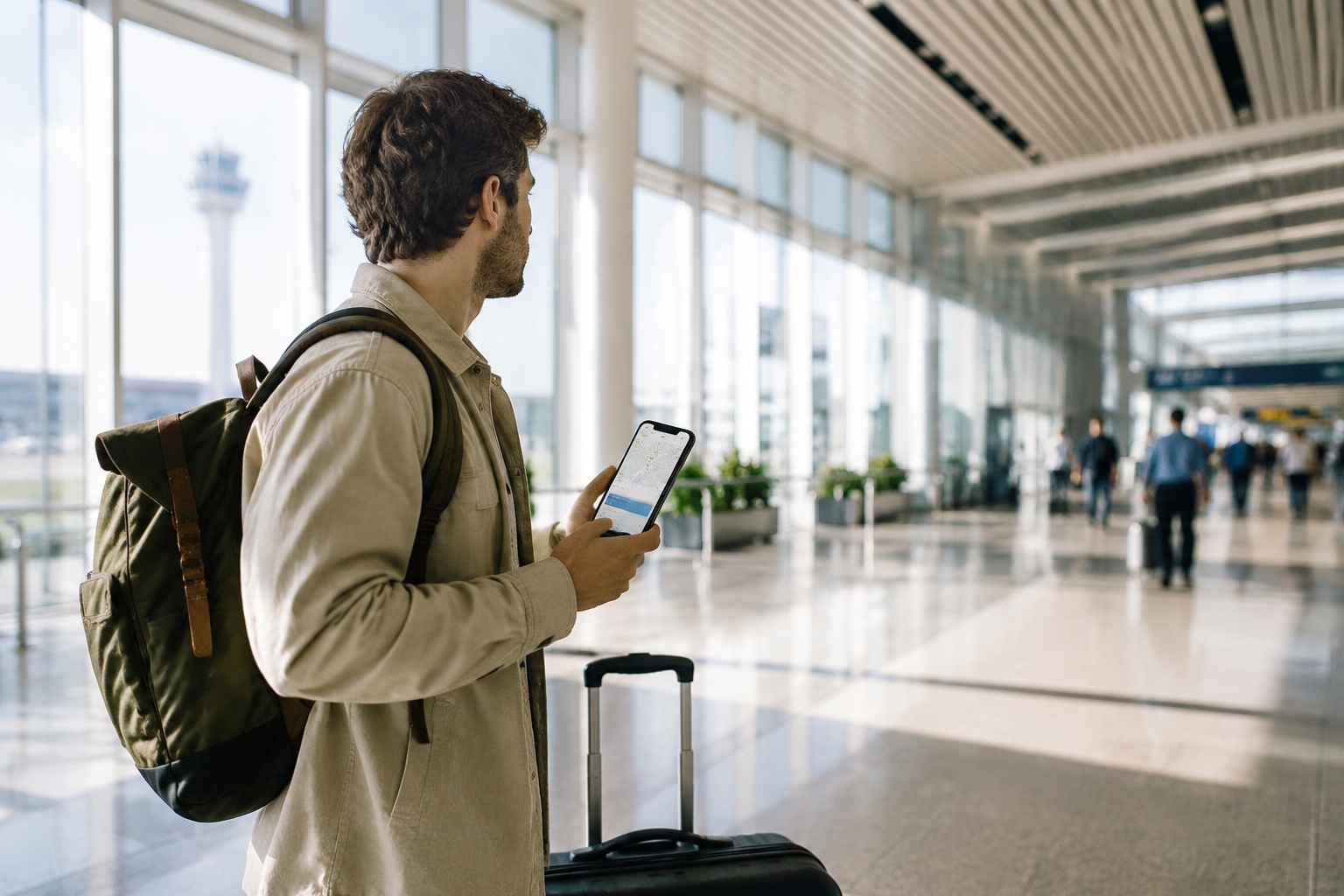

You step out of the arrivals hall, and the first thing that hits you is not the air — it’s the endless row of people holding name cards, the smoke from the cigarette area, and the fact that your phone has zero signal. This is Pudong Airport, or maybe Tianhe, or Qingdao Liuting. It’s your first hour in China, and you need a plan.
Before You Land: Set Up Your Phone
Download these apps before you fly, because some are slow to install afterward. Alipay, WeChat, DiDi (rides), and Amap (maps) are the survival basics. Also grab Google Translate or Apple’s Translator. You don’t need a Chinese App Store account yet — most of these are available globally. Make sure you can connect to free Wi-Fi at the airport once you arrive.
Airport to Your Bed: Transportation Without Tears
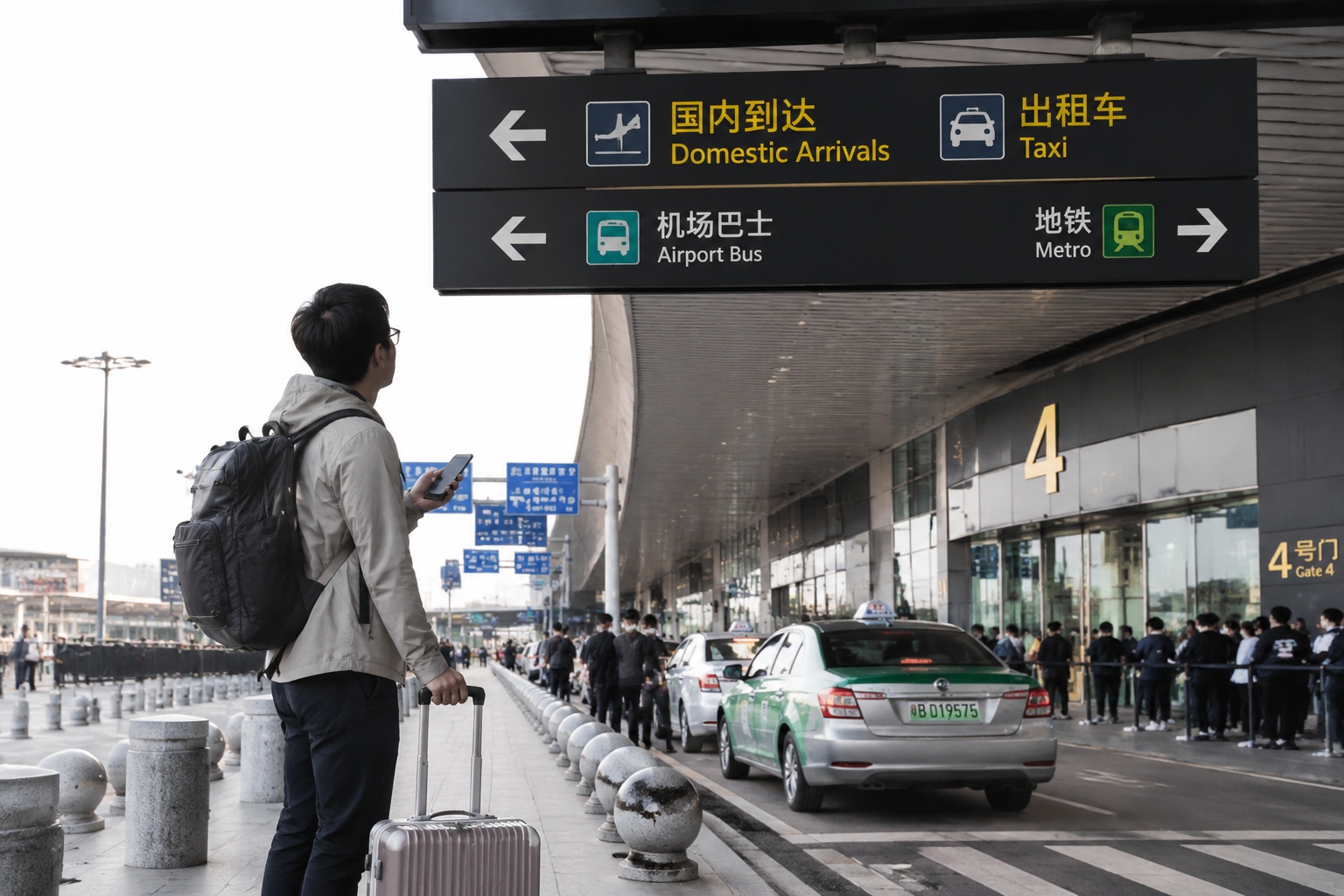
The easiest way is airport taxi. Follow the signs to the official taxi queue. Show the driver your hotel address in Chinese (have it written down). Cash is still accepted for taxis, but carry small bills. If you already have a Chinese phone number, you can use DiDi — it’s like Uber.
If you’re on a budget, the metro is fast and cheap. But huge airports like Beijing Daxing have complicated interchanges. A better first lesson is learning how to scan a QR code at the gate. That comes later, once you’ve set up your payment app.
Day 1: The Order of Operations
Your first day has five jobs. Do them in this order, and you’ll save at least an hour of frustration:
- Get a Chinese phone number. You can’t sign up for most services without one. Buy a prepaid SIM at the airport or a nearby carrier shop (China Mobile, China Unicom, China Telecom). Bring your passport.
- Set up Alipay or WeChat Pay. Connect a foreign credit card (Visa/Mastercard now work in many cases) or ask a friend to transfer some cash into your balance. This app becomes your payment method, map, taxi caller, and ID in many places.
- Register your accommodation. Chinese public security rules say you must register your address within 24 hours (up to 72 hours in some cities). Hotels do this automatically. If you’re staying in an Airbnb or with friends, you or your host have to go to the local police station. Don’t skip this.
- Buy a metro card. The Alipay transport card works on your phone, but a physical card is a reliable backup. It works in most cities and saves you from single-ticket lines.
- Learn one phrase. “不好意思” (excuse me) and “多少钱” (how much) will take you far.

What Can Wait (and What Can’t)
Don’t panic about opening a bank account on Day 1. It still requires a residence permit or student certificate. Also, don’t buy a SIM from a random street shop — the official carrier stores are faster and more reliable.
The one thing you truly cannot postpone is the accommodation registration. Not because you’ll be arrested, but because it affects your visa status and any future paperwork. If you change hotels, the next hotel will ask for your last registration slip. You don’t want to explain why you didn’t do it.
Also note: some international sites (Google Docs, Gmail, Instagram) are blocked. That’s expected. Many foreigners apply for a VPN before they land, or use the more accessible apps. This is your choice to research ahead of time.
The App Checklist
Here is the minimum set you need for the first three days:
- WeChat — texting, video calls, payments, reading news.
- Alipay — payments, metro, bike rental, in-app services.
- DiDi — rides in English mode. Or you can call a taxi through Alipay.
- Amap (Gaode Maps) — maps, public transport routes, navigation.
- Microsoft Translator or Google Translate — the camera function works on menus and signs.
- Trip.com — trains, flights, hotels. It’s the international version of Ctrip.
Change the language in Alipay and WeChat to English. Keep a rough sense of the exchange rate in your head: a coffee that costs 25 yuan is about 3.50 dollars. This makes pricing less alarming.

Small Emergencies, Real Answers
You don’t speak Chinese, and no one speaks English
Smile, use a translation app’s voice function, and show the other person your phone. Many young people can understand simple English or at least the interface. Older people often read the translation faster than they can listen.
Wi-Fi is down and your app won’t load
Ask a café or hotel for the Wi-Fi password (often printed on a sign). Or go to a telecom shop to top up your data. In many shopping malls, you can use Alipay’s “Surrounding” feature to find free wireless spots.
You ran out of cash
Contrary to rumor, China is not 100% cashless. Taxis take cash, some old markets do too. But many street vendors have only a QR code. Ask a nearby person to pay the vendor via Alipay, then hand them the cash. Or simply withdraw from a bank ATM using your international card.
After 72 Hours: What’s Next
If you’re staying longer, your to-do list expands. Open a bank account (helpful for paying rent and receiving a salary), apply for a residence permit extension, or simply visit a park to shake off the jet lag. The first three days are the steepest learning curve. By day four, you’ll have your coffee order memorized, you’ll know how to wave down a taxi, and you’ll stop fumbling with the supermarket self-checkout. That’s when China starts to feel less like a puzzle and more like a place where you can live.
Start the discussion at forum.chinacomes.com