

The Morning Streets of China
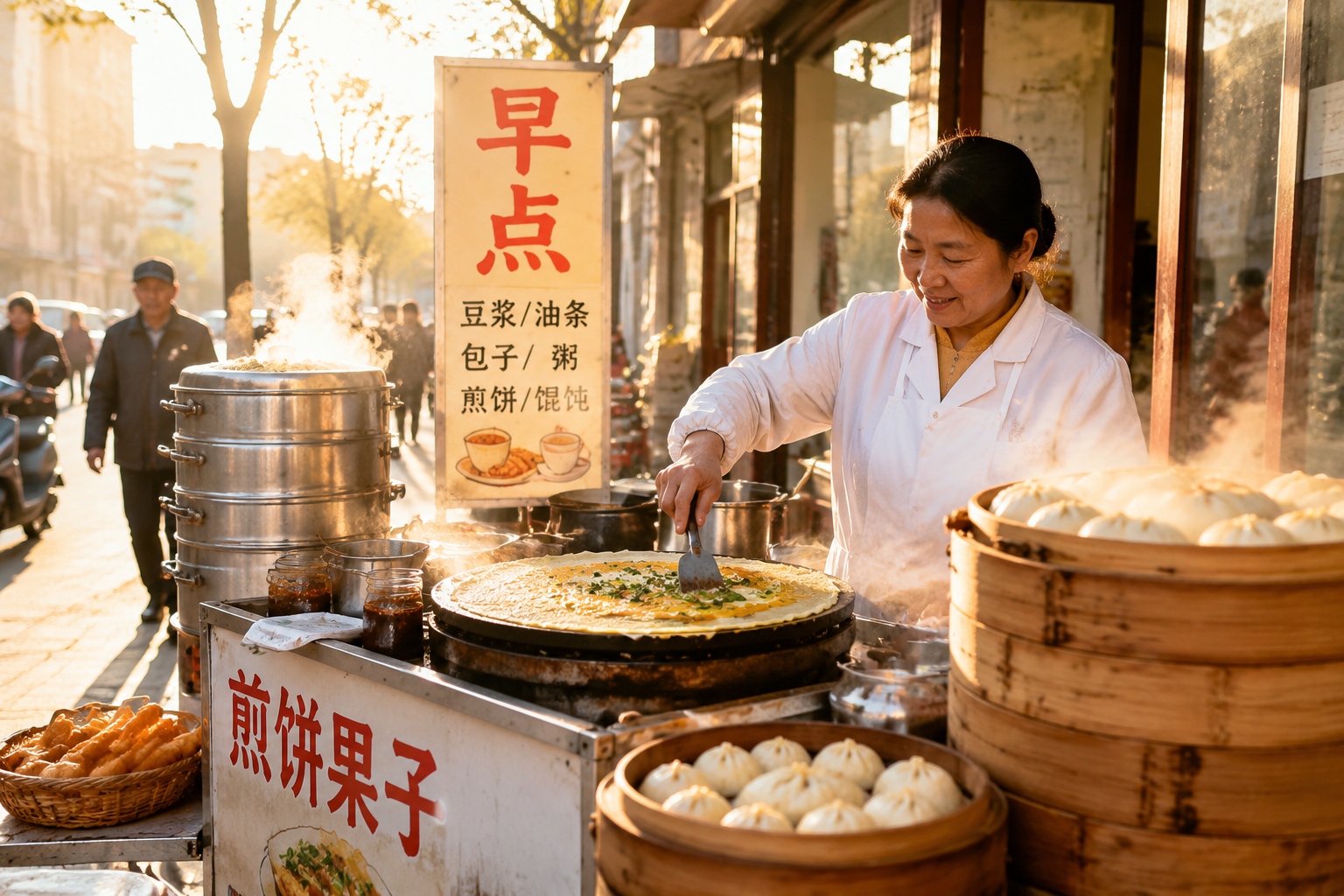
At 7 a.m. on a Shanghai street, a small stall hums with activity. A vendor pours batter onto a round griddle, spreads it with a wooden T-shaped scraper, cracks an egg over it, flips it with a spatula, and brushes on a dark, spicy sauce. Three minutes later, she hands a hot jianbing to a customer who has barely stopped cycling to grab it. That same hour, a thousand miles away in Guangzhou, people are queuing for steamed rice rolls, so thin you can see the filling inside them. In Beijing, someone sips a bowl of fermented mung bean soup and grimaces—partly from the strange smell, partly because they actually love it.
China doesn’t do a single breakfast. It does thousands of them. And the easiest way to understand this country is to eat your way through the morning.
Why Chinese Breakfasts Are So Different
The saying goes that northerners eat wheat and southerners eat rice, but that’s only the start. Regional climate, history and trade routes created an astonishingly varied breakfast landscape. In the north, you get heavy, chewy dough and rich soups—breakfasts that warm you up. In the south, you get light, silky rice-based dishes, perfect for humid mornings. On the road, truck drivers developed filling meat-heavy breakfasts; in the alleys, street vendors refined their recipes over generations.
The result? You could live in China for a year and eat a different breakfast every single day. Here’s a starting set to get you going.
The Big Five Breakfasts You Need to Know
Before we make a plan, let’s meet the stars of the show. These are the breakfasts you’ll encounter in food guides, street vendors’ menus, and conversations with locals.
Jianbing Guozi (煎饼果子) – The Street Crepe
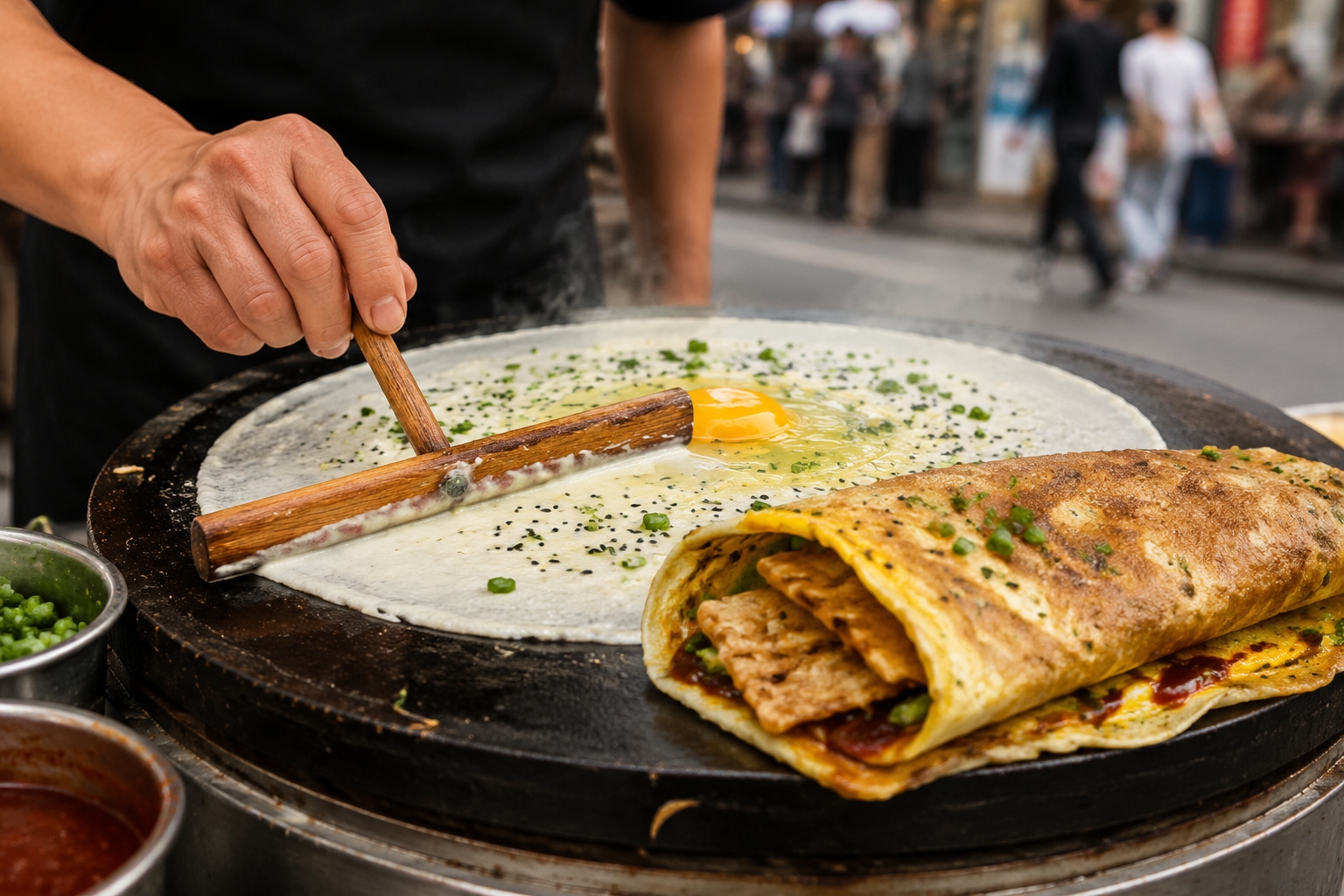
Think of a savory crepe with a crunch. A thin wheat and grain crepe is cooked on a round iron griddle, topped with an egg, sprinkled with scallions and coriander, then layered with a crispy fried cracker (báo cuì) and folded around sauces—usually a garlicky sweet bean sauce and a chilli paste. It’s sold on almost every city street corner in northern China, but it originated in Tianjin. It’s the ultimate grab-and-go breakfast, eaten from a paper bag as you walk to the subway.
The lingo: ‘Jiā dàn’ (add an egg) makes it richer; ‘duō fàng cōng huā’ (extra scallions) adds a fresh kick; ‘yào cuì de’ (make it extra crispy) tells the vendor you want a fresh fried cracker.
Re Gan Mian (热干面) – Wuhan’s Dry Noodles
Wuhan, the capital of Hubei province, likes its noodles dry. Fresh noodles are parboiled, then quickly mixed with sesame paste, soy sauce, vinegar, pickled vegetables and a spoonful of chili oil. It’s pungent, chewy and a little nutty. Locals eat it for breakfast from a paper bowl while standing on the street, often with a side of fermented soybean drink.
The lingo: ‘Gān mian’ (dry noodles) is the basic order; ‘jiā wèi’ (add toppings) can mean extra pickled radish or chili. ‘Fàng xiāng yóu’ (add sesame oil) is a local trick for extra nuttiness.
Chang Fen (肠粉) – The Silky Rice Rolls
From Guangdong province, these are steamed sheets of rice flour batter, so delicate they slide across the plate. They’re cooked in a steamer, topped with a filling (shrimp, beef, egg, or simply scallions), then rolled and drizzled with a light soy sauce. Eating them requires chopsticks and a steady hand—they’re soft and slippery.
The lingo: ‘Jiā dàn’ (add egg) is common; ‘shuāng dàn’ (double egg) is for the hungry. ‘Yào xiā’ (with shrimp) is a popular premium option.
Douzhi (豆汁儿) – Beijing’s Bold Surprise
This is the ultimate ‘love it or hate it’ breakfast. Douzhi is a fermented mung bean liquid, sour with a slight tartness, often served with crisp fried dough rings (jiǎo quān). It’s a quintessential old-Beijing meal, and many younger Chinese claim they can’t handle it. But locals say the sweet aftertaste makes it worth trying—at least once.
The lingo: ‘Yī wǎn dòuzhī’ (one bowl of douzhi) is the order. The vendor will ask if you want it hot or warm; you want it hot.
Plus: The Supporting Cast
These five are just a start. A proper breakfast map should also include:
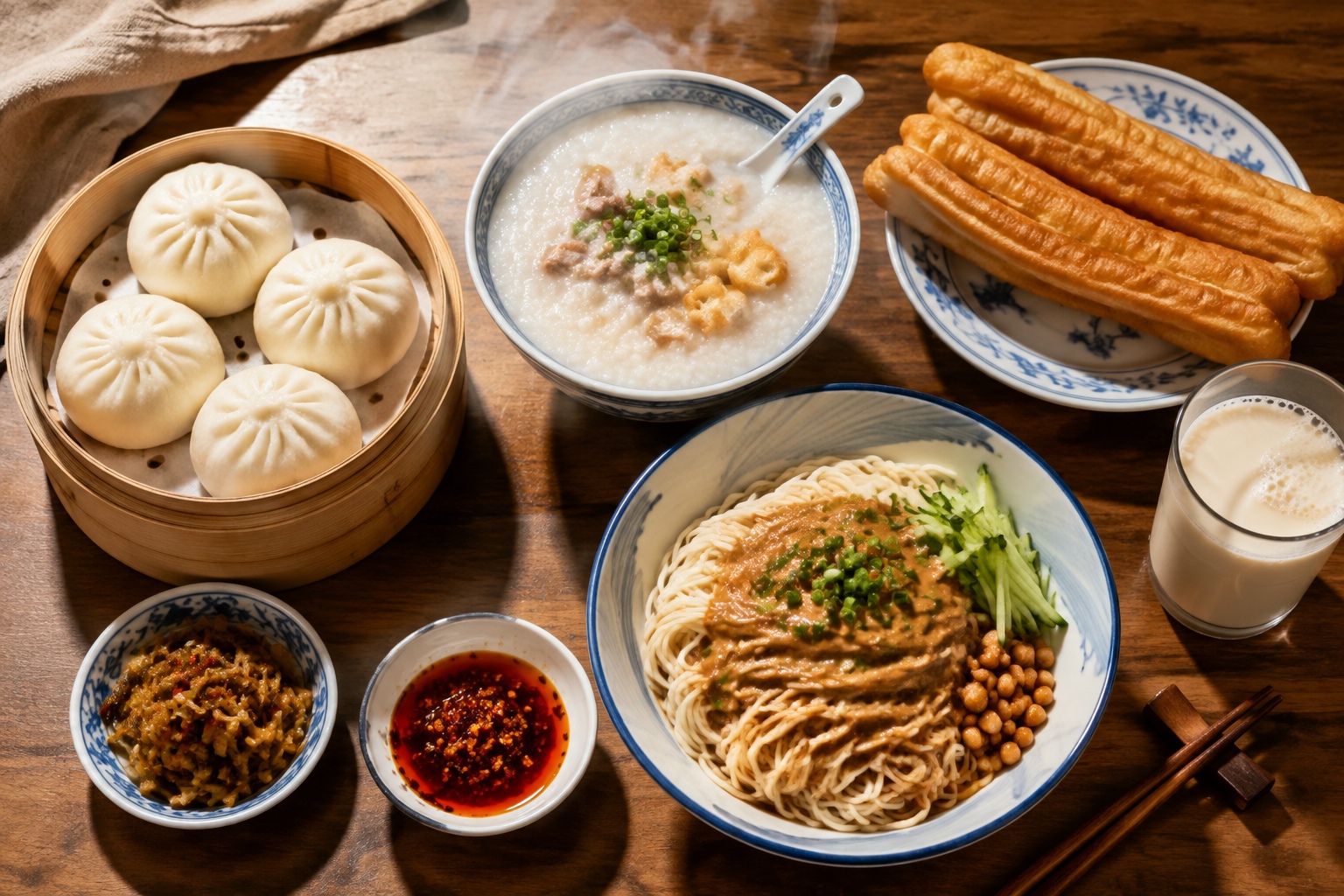
- Baozi (包子) – Steamed buns filled with pork, cabbage or red bean paste. Available everywhere, cheap and filling.
- Youtiao (油条) – Crunchy fried dough sticks, torn and dipped into soymilk or congee.
- Congee (粥) – Rice porridge with hundreds of toppings, from preserved egg to century egg and pork.
- Xiao long bao (小笼包) – Soup dumplings, typical in Shanghai and Jiangsu.
- Rou jia mo (肉夹馍) – The ‘Chinese hamburger’, a crispy flatbread filled with braised pork, popular in the northwest.
A City-by-City Breakfast Primer
If the big five whet your appetite, here’s a quick tour of what to expect in four major cities:
Beijing: Beyond the douzhi, you’ll find jianbing and baozi on every corner. The city’s hutong alleys hide tiny shops that have been perfecting the same recipe for decades.
Shanghai: Start with xiao long bao and a bowl of hot congee. Many locals pair these with a fried dough stick and a glass of soy milk.
Xi’an: In the northwest, breakfast is hearty. Try rou jia mo with a bowl of spicy lamb soup, or if you’re bold, a plate of liang pi (cold noodles).
Chengdu: The capital of Sichuan loves spicy noodles. A bowl of dan dan noodles or a red-oil wonton will wake you up faster than coffee.
The list goes on—Hangzhou’s river rice cakes, Nanjing’s salted duck congee, and the spicy potato-based breakfasts of Guizhou. The point is to keep exploring.
How to Order Like a Local: The Breakthrough Lingo
Orders at Chinese breakfast stalls are fast, loud and clipped. You don’t need to know Mandarin grammar; just a few words will do. Here’s a quick cheat sheet:
- Jiā dàn (加蛋) – Add an egg.
- Duō fàng cōng / shǎo fàng là (多放葱/少放辣) – Extra scallions / less spicy.
- Dà wǎn / xiǎo wǎn (大碗/小碗) – Large bowl / small bowl.
- Dài zǒu (带走) – To go. (Or ‘zài zhè chī’ – eat here.)
- Yào chòu dòufu – No, that’s for later. Stick to these.
Using these makes the vendor treat you like a regular, and it speeds up the line. It also shows respect for the craft.
Your 30-Day Breakfast Map (Practical Version)
Planning a full month is easy when you mix and match. The idea is to create a rotation so you don’t get stuck in a rut. Here’s a sample week that you can adapt to your city:
- Monday: Jianbing with egg and extra scallions + hot soy milk.
- Tuesday: Baozi (two pork, one cabbage) + a thick bowl of congee.
- Wednesday: Chang fen with shrimp + a cup of Cantonese-style milk tea (wait, that’s not breakfast, but it’s okay).
- Thursday: Re gan mian with pickled vegetables + a side of sesame sweet rice ball.
- Friday: Youtiao dipped in soy milk (the classic combo).
- Saturday: Rou jia mo + a bowl of spicy lamb soup.
- Sunday: A lazy brunch of Xiao long bao and a bowl of chicken congee.
Repeat for four weeks, but switch the fillings, sauces, and vegetables. You’ll never get bored—and you’ll learn which stalls in your neighborhood are the best.
The Breakfast Stall Experience
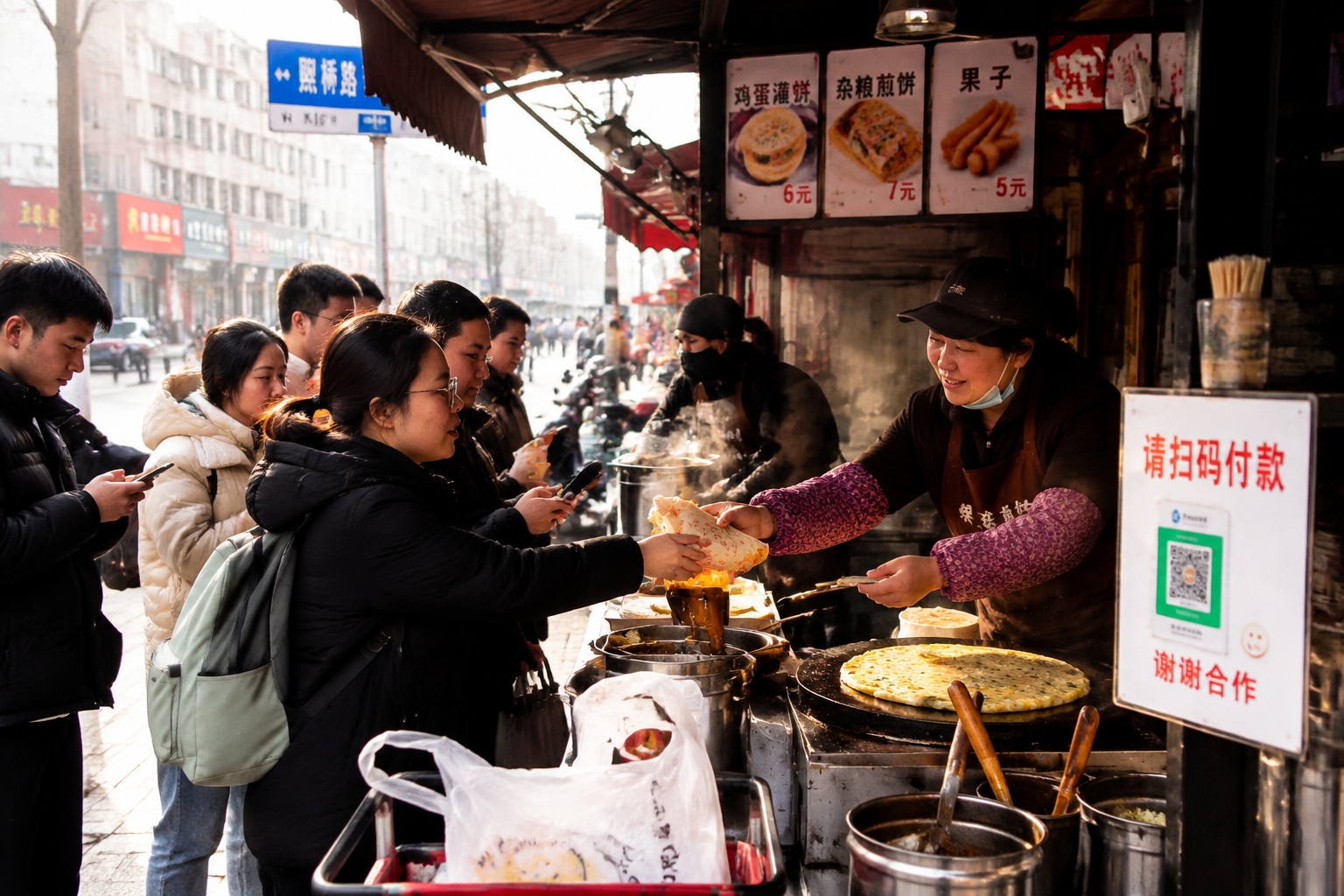
Morning markets and breakfast stalls are a microcosm of Chinese city life. The scene is always the same: steam rising, the clatter of woks, the hiss of griddles, and a line of locals holding their phones, ready to scan a QR code on the counter. You order in a burst of words, pay digitally (WeChat or Alipay) before you eat, and receive your food in a pace that seems too fast for the quality.
You’ll see office workers in suits standing next to construction workers, both silently enjoying the same bowl of soy milk. There’s no pretension here—everyone is equal in the face of a good breakfast. Breakfast is served early, usually from 6 to 10 a.m., so don’t sleep in.
The seating is often plastic stools on the sidewalk. The napkins are rough. The tea is free and unremarkable. And it’s perfect.
Prices are modest. A jianbing costs between six and ten yuan (about $1–1.50). Baozi go for one to two yuan each. A bowl of re gan mian is rarely more than eight yuan. You can eat a filling breakfast for under two dollars.
Why Breakfast Is the Best Introduction to China
Every country has its food. But in China, breakfast is the most democratic meal—it’s shared by office workers and taxi drivers, students and retirees. It’s fast but it’s not disposable. It’s local, often made by hand, and unchanged for decades.
So go ahead, pick a street corner tomorrow morning. You don’t need a map; the smell will guide you. And if you’re not sure what to say, just point and smile—that works too.
Start the discussion at forum.chinacomes.com