
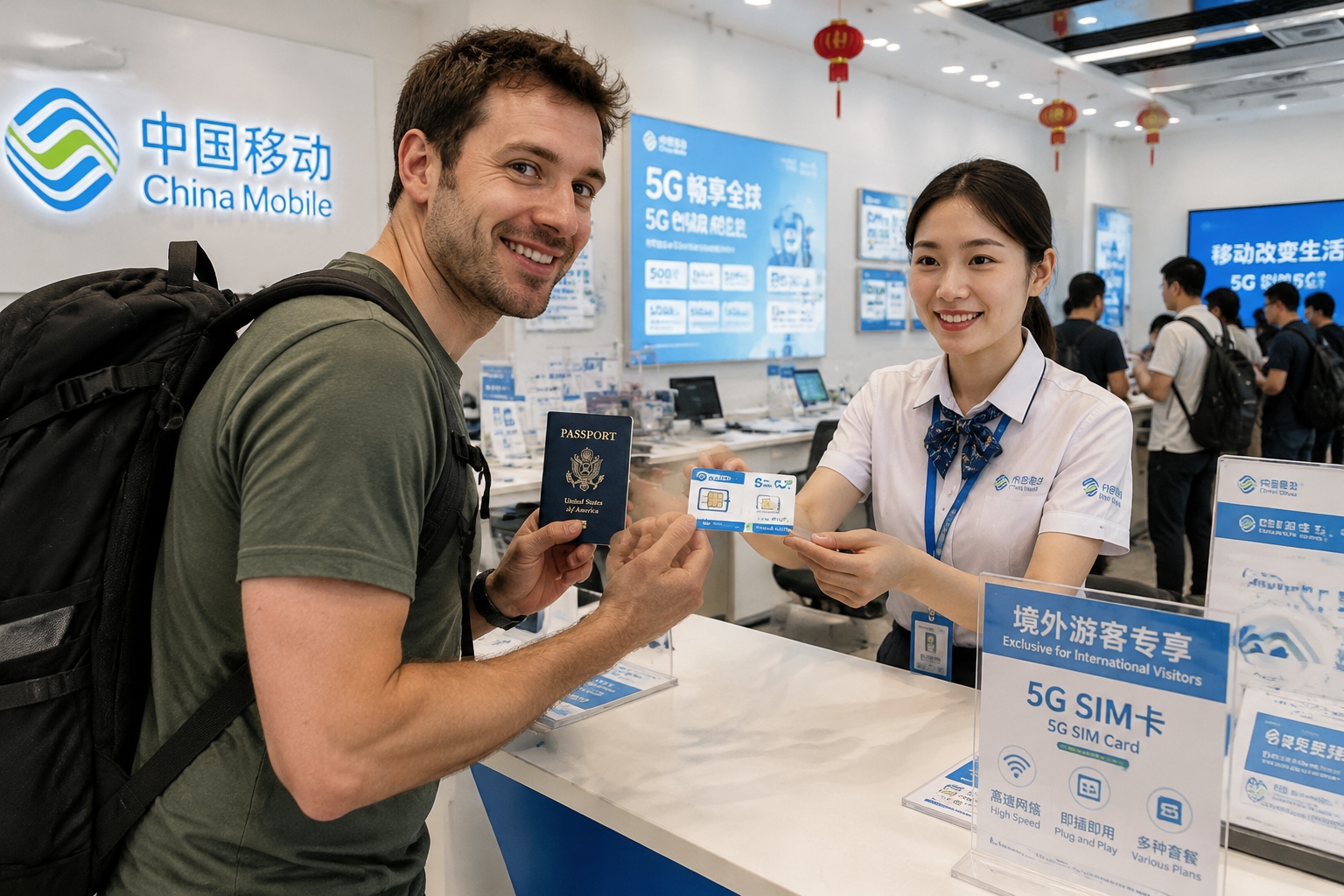

You’ve just landed at Shanghai Pudong International Airport. Your phone says ‘No Service,’ and the Wi-Fi password at the coffee shop is printed on a receipt you can barely read. You need a local SIM card, and fast. The airport kiosk is right there, but the line is long, and the staff speak limited English. You hand over your passport, they scan it, take a photo, and hand you a tiny plastic card. In ten minutes, you’re connected. But here’s the catch: the plan you just bought might auto-renew into a contract you can’t cancel without a trip to a store downtown. This is the hidden world of Chinese SIM cards – a system that’s both remarkably easy and surprisingly tricky at the same time.
Real-Name Registration: The Non-Negotiable First Step
In China, every SIM card is tied to a real person. This isn’t just a corporate policy – it’s a legal requirement under the ‘real-name system’ that started in 2013 to fight spam and fraud. If you’re a foreigner, your passport is your ticket. Foreigners with a Chinese driver’s license or residence permit also work, but a passport is the most universally accepted. Bring the physical document – no photocopies or digital scans will do. The registration process involves a live photo, where you look into a camera, and an ID scan. It’s quick, usually under 15 minutes in a carrier store, but can be slower at airport kiosks. One hidden rule: visitors from Hong Kong, Macau, and Taiwan use a special permit instead of a passport. And if you hold dual citizenship, the store will use your passport – they won’t accept a Chinese ID for a foreign national.
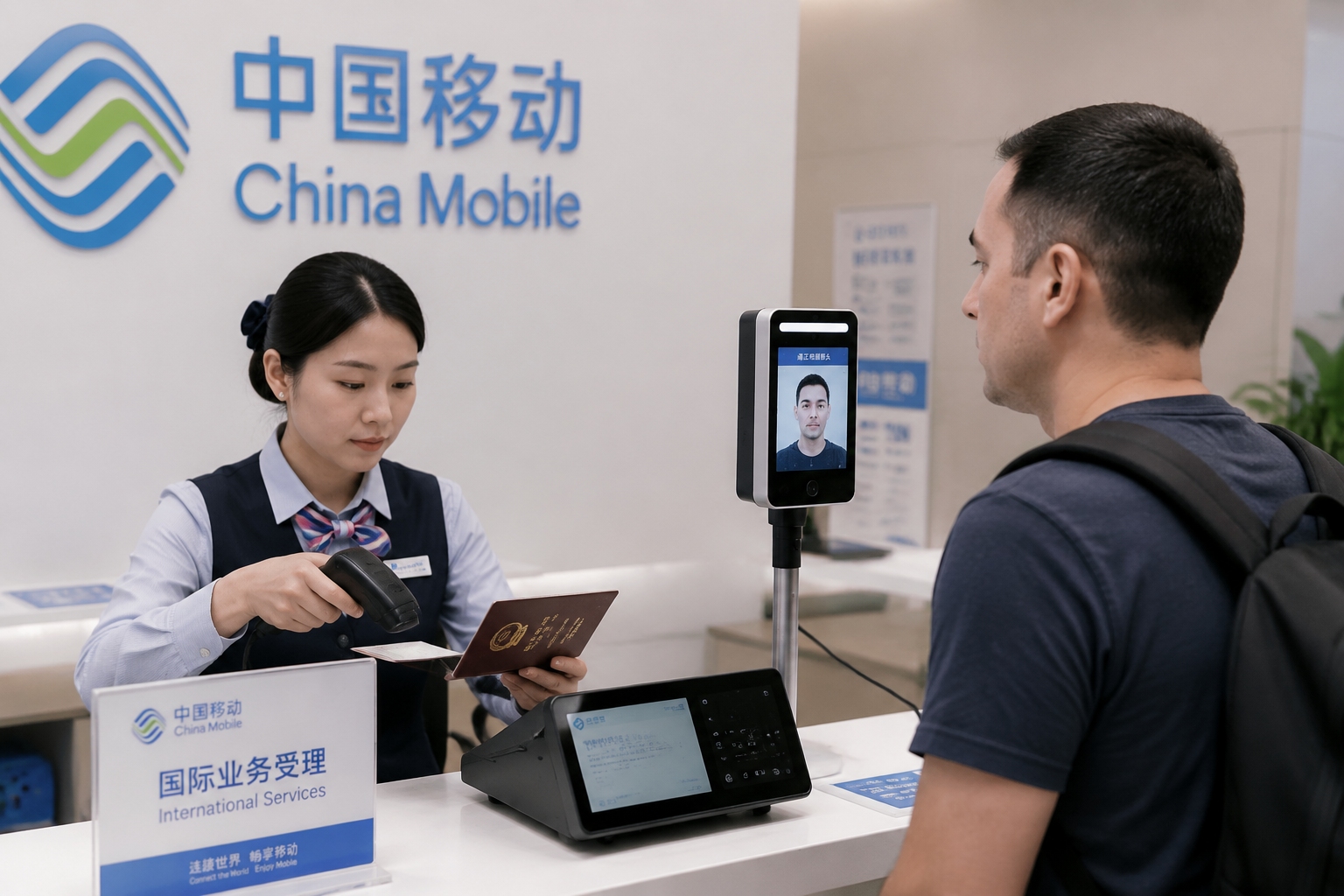
Also, note that your passport must be valid for at least the entire duration of your SIM contract. If your passport expires in a week, you might be refused or given a shorter-term plan. In large cities like Beijing and Shanghai, many carrier stores accept digital versions of your visa or entry stamp, but it’s safer to carry the physical passport.
Choosing a Plan: Data Is King, Calls Are an Afterthought
Ask a local what their phone bill looks like, and you’ll hear about gigabytes, not minutes. In China, the smartphone is a remote control for life: you use it for payments, ride-hailing, food delivery, hotel bookings, train tickets – essentially everything. All of that runs on mobile data. Voice minutes are almost irrelevant because most social calls happen over data on WeChat. So when you pick a plan, prioritize data above all.
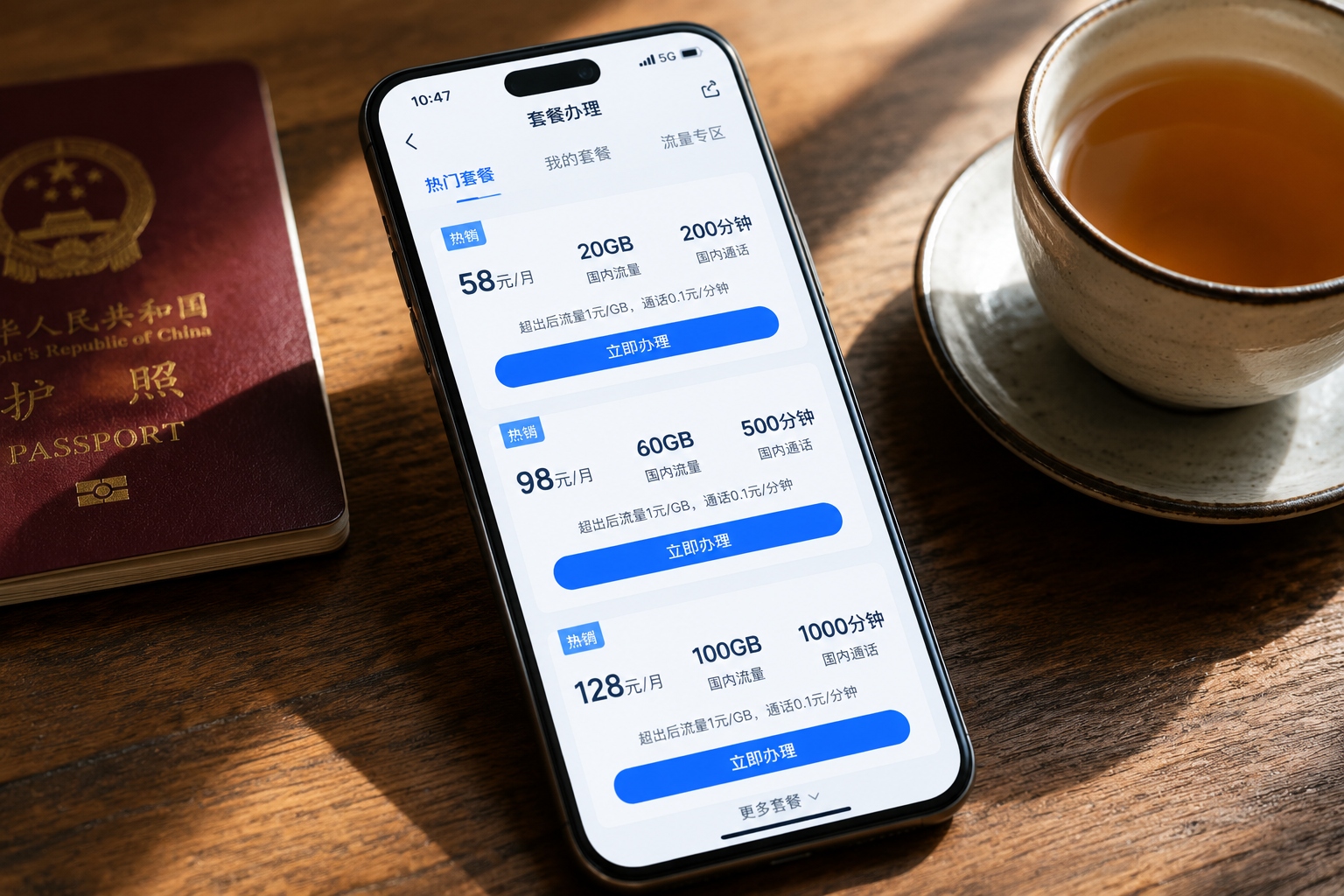
Carriers offer a dizzying array of plans. A common resident plan is 58–128 RMB per month, including 20–40 GB of general 5G data, plus 200–300 minutes of calls. Promotions often throw in extra ‘directed data’ for specific apps like Bilibili or Douyin. But beware: some packages include ‘campus data’ or ‘workplace data’ that only apply in certain zones – you might run out of general data while streaming in a mall. Read the fine print.
For tourists, there are dedicated ‘tourist SIMs’ at airports and online. They’re priced per week or month and often include a fixed amount of data, but they come with a premium price. A 7-day tourist SIM might cost 80–150 RMB for 15–30 GB. If you’re staying longer than two weeks, a standard prepaid plan from a carrier store is more cost-effective, though you’ll need to register in person. If you’re really here for a month, you might find the airport SIM is simple but overpriced – local plans offer far better value.
Which Carrier? China Mobile, Unicom, or Telecom?
All three major carriers – China Mobile, China Unicom, and China Telecom – are state-owned and offer similar coverage in cities. But differences matter once you leave the city center.
China Mobile is the largest, with the most extensive network coverage, especially in rural areas, high-speed rail lines, and remote places like Tibet or Xinjiang. If you plan to travel far beyond the big cities, China Mobile is the safest choice. China Telecom is known for strong coverage in southern China and offers attractive bundles with fixed-line broadband if you’re setting up a home. China Unicom has a reputation for better international connectivity – its networks have stronger roaming agreements and it’s often preferred by expats who need to call home. Unicom’s 5G speeds in cities are frequently among the fastest, according to speed tests.
Signal quality can also vary by building. In many office towers, underground parking garages, or subway stations, you might find that one carrier has a stronger signal than the others. Locals often discuss this on forums, and the consensus is: ask your landlord or colleagues which carrier they use. In some remote areas, there may be only one carrier with service, so if you’re an adventurer, you might want to carry two SIMs – a common practice among Chinese hikers.
eSIM: The Catch That Catches Everyone
If you’re coming from the US or Europe, you might assume you can download an eSIM and be done with it. While China’s carriers do support eSIM technology, support for phones on local numbers is extremely limited. As of 2025, China Mobile, Unicom, and Telecom offer eSIM only for smartwatches and some tablets. There is no consumer eSIM for phones in the standard sense. Some third-party providers like Airalo or Holafly sell ‘China eSIM’ plans, but these are data-only and run on a Hong Kong or international number. That means you won’t get a real Chinese phone number, which is essential for using local apps.
Why does that matter? Apps like Alipay, WeChat Pay, DiDi, and even some public Wi-Fi networks require phone number verification via SMS. A data-only eSIM cannot receive SMS, so you’ll be stuck. Hotel Wi-Fi often sends a code to your number. Without a real Chinese number, you’ll be locked out of many daily conveniences. So, while an international eSIM can give you internet, it won’t unlock the full Chinese digital ecosystem. For that, you need a physical SIM attached to a Chinese number.
There is a sliver of hope: a few local carriers have started piloting eSIM for postpaid customers with a Chinese ID, but this is not available to foreigners yet. So plan on getting a physical SIM card. If you have a dual-SIM phone, you can put your international eSIM alongside the Chinese SIM for calls home.
Avoiding the Traps: Auto-Renewal, Contracts, and Cancellation
Here’s where the ‘hidden knowledge’ really lives. Many cheap plans come with a 12-month or 24-month term if you take advantage of a promotional discount. The catch is the cancellation fee. If you cancel after three months, you may owe the rest of the discount you received, potentially hundreds of RMB. Also, many plans are on auto-renewal. If you leave China and the SIM is still active, it keeps charging every month. Even if you stop using it, the contract continues.
To cancel (xiāo hào), you typically need to go to a carrier store in person, bring the original passport, and settle any outstanding balance. Some carriers allow cancellation over the phone or through the app, but only if you have no contract. It’s safer to ask at the point of purchase about the contract length and early termination fees. Also, note that prepaid plans without a contract can simply lapse: if you don’t recharge, the SIM becomes inactive after a grace period and the number is eventually recycled. But if you have a postpaid monthly contract, you must formally cancel, or the charges will keep coming.
Another trap: if you buy a plan with a subsidized phone, the contract is typically 24 months and very difficult to break. Avoid buying a subsidized phone unless you’re absolutely sure about your stay’s length. Also, some stores may push ‘value-added services’ like ringtones or insurance that add to your bill. Politely decline unless you need them.

Final Pro Tips for a Hassle-Free Experience
Here’s what I’ve learned from helping friends set up SIMs:
1. For short trips (under 30 days), consider skipping the Chinese SIM entirely. Use an international data plan from your home carrier or a data-only eSIM from a trusted provider. You’ll survive without a Chinese number, though some apps like DiDi might not work. If you need a local number, a tourist SIM from the airport is acceptable, but be prepared to pay extra.
2. For stays of one to six months, get a prepaid plan from a carrier store. You can choose a data package and pay monthly, without a contract. You’ll still have a real number and can use all apps. You can top up via the carrier’s app or WeChat.
3. For long-term stays (over six months), a postpaid plan is often better value, especially if you bundle with home broadband. But always ask whether the plan involves a contract commitment. Try to find a ‘no-contract’ postpaid plan, even if it has slightly less data.
4. Use the carrier’s official app to manage your plan. You can top up data, change packages, and in some cases, get customer service in English (though it’s often limited). Also, you can order a new SIM online and have it delivered to your apartment – the courier will verify your identity in person.
5. Always carry your passport when visiting the carrier store. They will not serve you without it, and some stores may ask for proof of address if you’re setting up a postpaid account.
6. If you plan to travel within China, check your plan’s national roaming. Most plans include domestic roaming, but some specific cheap plans may not. Make sure your data works outside your home province.
Getting a Chinese SIM card is genuinely simple if you know the rules. The system is designed to be efficient, but it’s built on a foundation of identity verification and consumer contracts that reward those who read the fine print. With a little preparation, you can avoid the frustration and get online within minutes.
Start the discussion at forum.chinacomes.com