
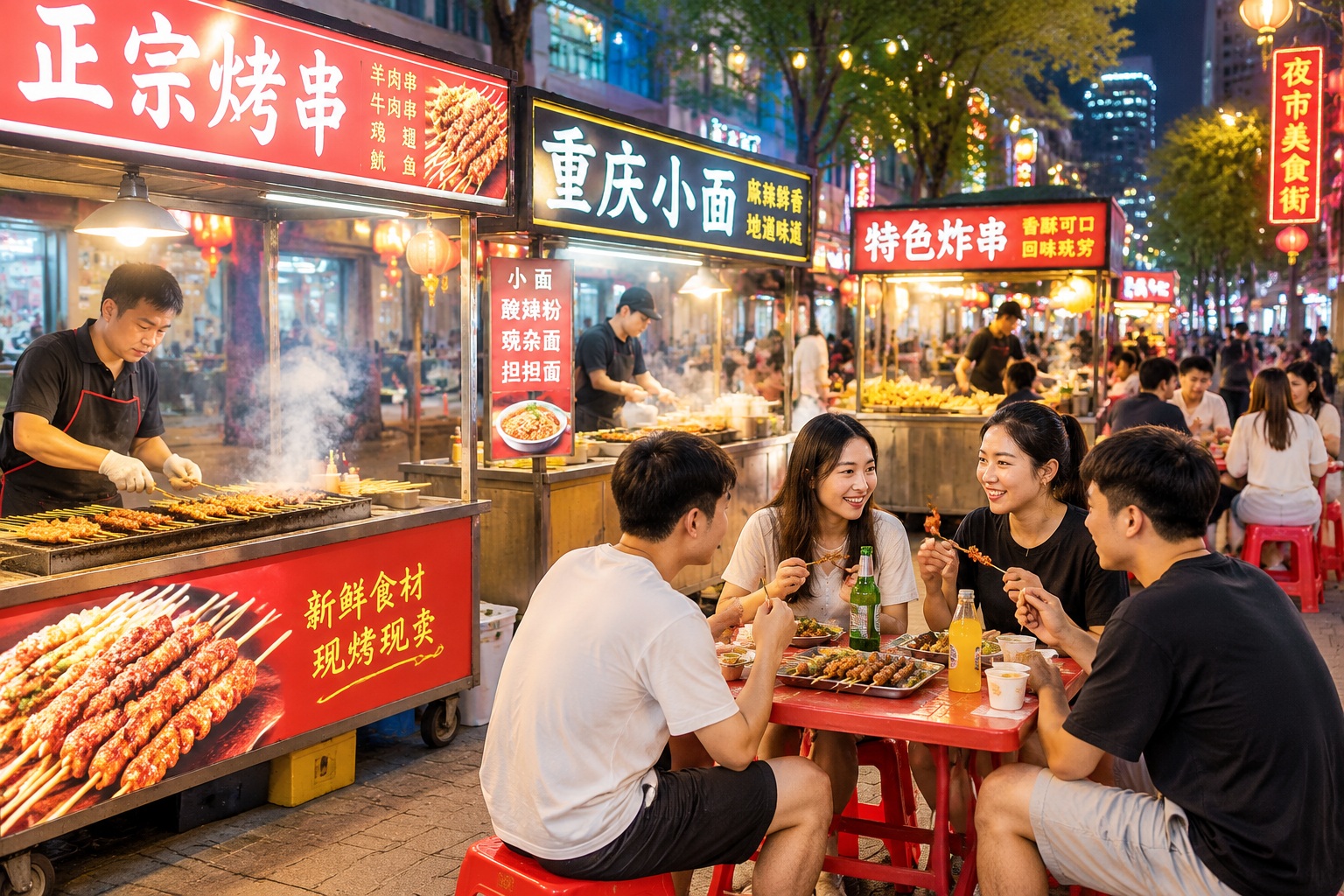

The Smoke and Sizzle of the BBQ Stall
It is 10:30 PM in a residential neighborhood in Chengdu. The daytime traffic has faded, but a narrow side street is humming with life. A vendor in a greasy apron fans a charcoal grill, sending sparks and smoke into the warm night air. The smell of cumin and chili hits you before you even find a seat. A dozen plastic stools are scattered around low wooden tables, each one already occupied by a small crowd of friends, couples, and late-shift workers.
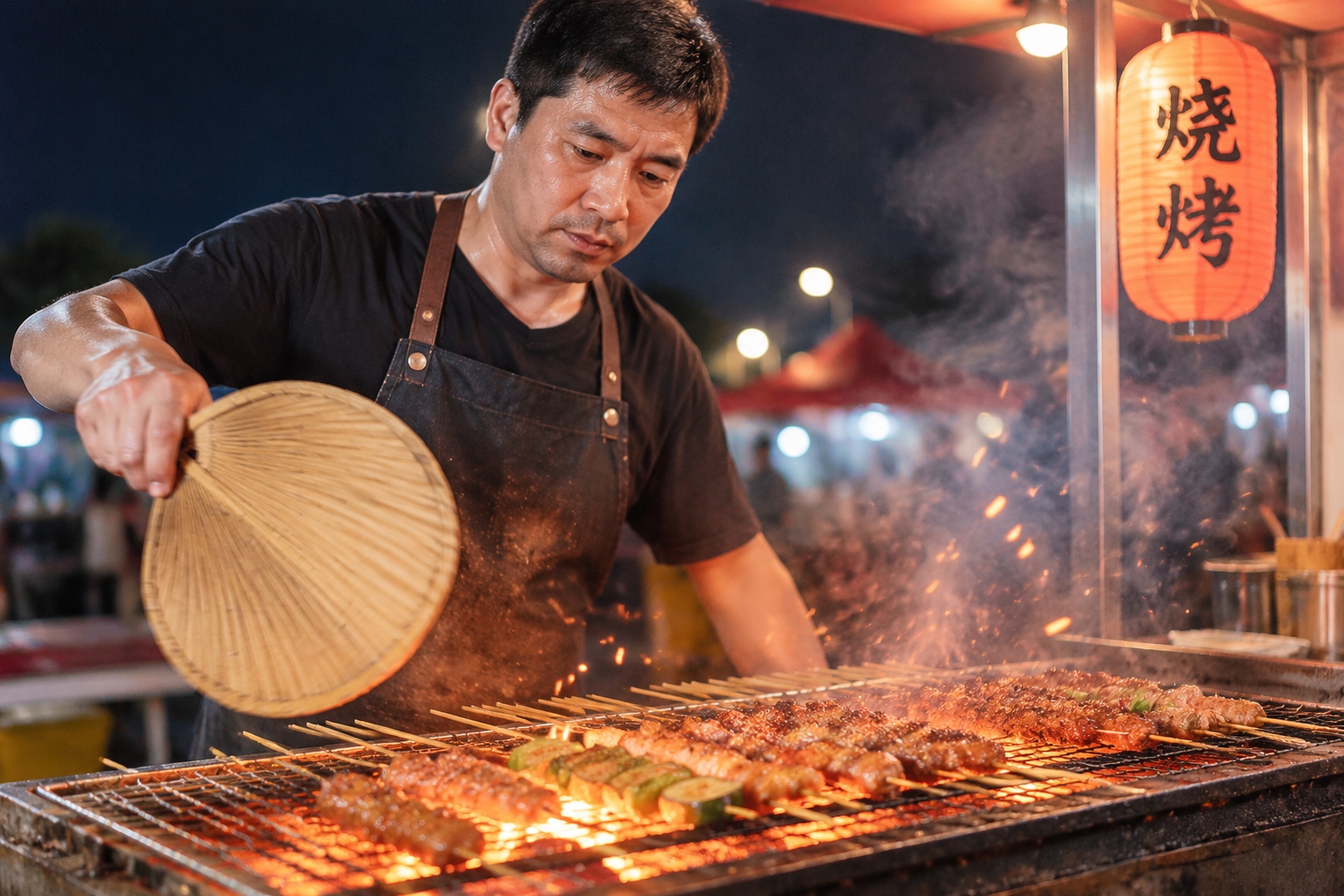
This is luchuan (撸串), or “skewer barbecue,” the unofficial staple of Chinese night snacks. You pick your skewers from a refrigerated shelf, hand them to the grill master, and wait. A cold bottle of beer is usually the first thing to arrive. The rules are simple: eat with your hands, don’t worry about the oil, and let the conversation flow as naturally as the smoke.
Classics of the Night: From Fried Noodles to Snails
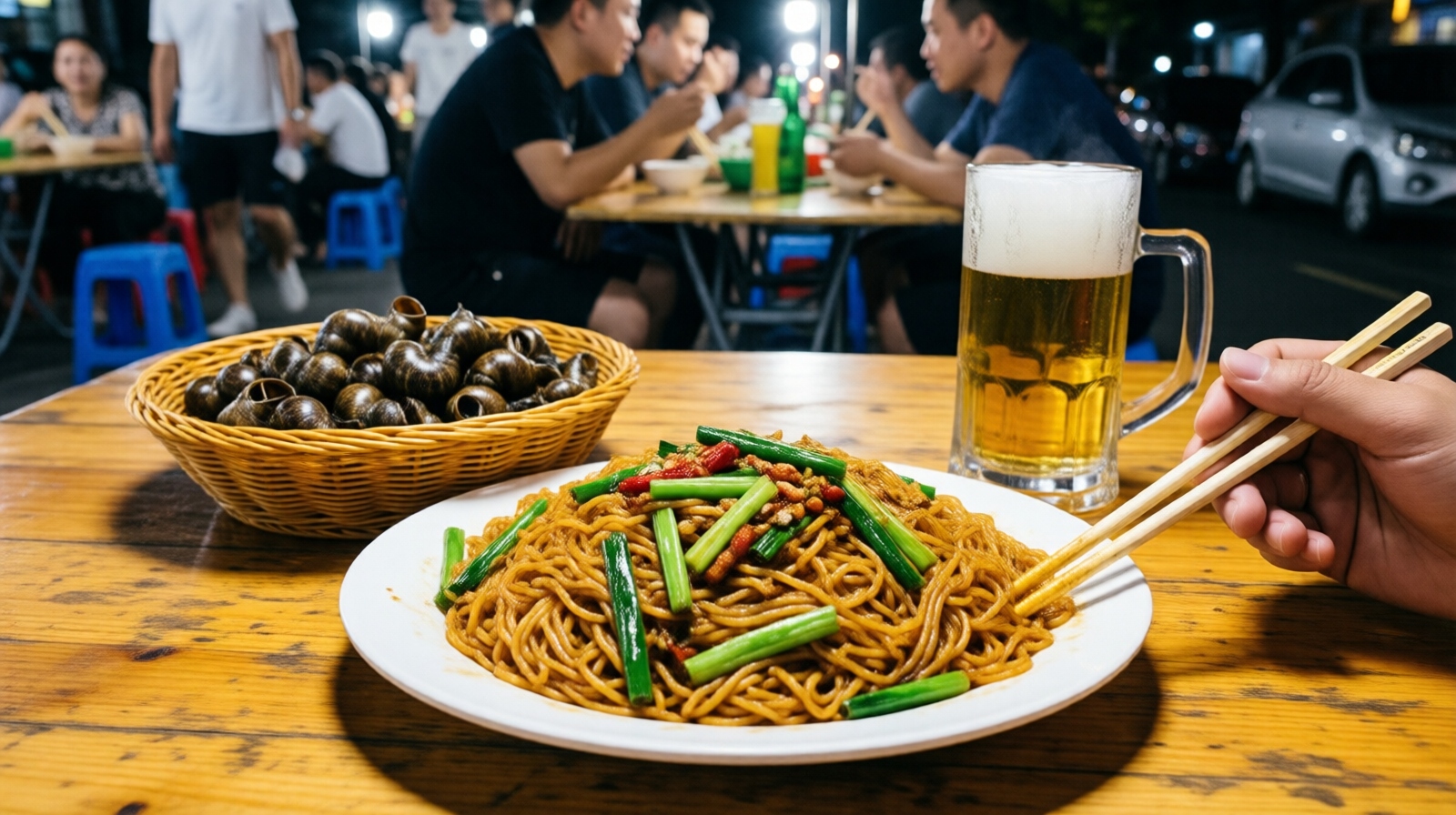
Not every night snack involves a grill. Walk a few blocks and you’ll find a da paidang (大排档), a simple food stall that sets up fold-out tables on the sidewalk. The menu is written on a whiteboard hanging from a tree. The bestsellers are almost always the same: chao fen (stir-fried rice noodles), tianluo (edible snails fried with chili and garlic), and luwei (braised duck necks, tofu, and eggs).
The cook moves with rehearsed speed: a blast of oil in a wok, a handful of noodles, a splash of soy sauce, and in two minutes a steaming plate lands in front of you. The snails are eaten with toothpicks, each one a small test of patience and skill. It’s messy, loud, and thoroughly satisfying.
Crayfish: The Summer Social Ritual
When summer arrives, night snack culture shifts to a single obsession: xiaolongxia (小龙虾), or crayfish. From June to August, entire streets in cities like Wuhan, Changsha, and Nanjing turn into open-air crayfish feasts. Gloved hands dive into mountains of red-shelled crustaceans, dunking each bite in a sweet-and-spicy sauce.
Why crayfish? Because it’s slow food that forces you to talk. Your hands are busy, you can’t scroll on your phone, and every bite is a shared experience. A typical order is several kilograms at a time, served in stainless steel basins. The meal can stretch from 9 PM to midnight, fueled by cold beer and a running tally of who can peel the fastest.

The Social Logic Behind “Chuan’r”
Night snacks are not just about hunger—they’re a form of social glue. In China, the phrase luchuan has become shorthand for casual, honest conversation. You don’t dress up for a skewer stall. You come as you are, often straight from work or the gym.
For many young professionals, this is where friendships are maintained and deals are occasionally sealed. The atmosphere is intentionally unpretentious. A manager might take a team out for barbecue instead of a formal dinner, because the informality eases tensions. The beer, the shared plates, and the late hour create a kind of trust that a conference room cannot reproduce.
When the City Stays Awake: Night Snacks and Urban Vitality
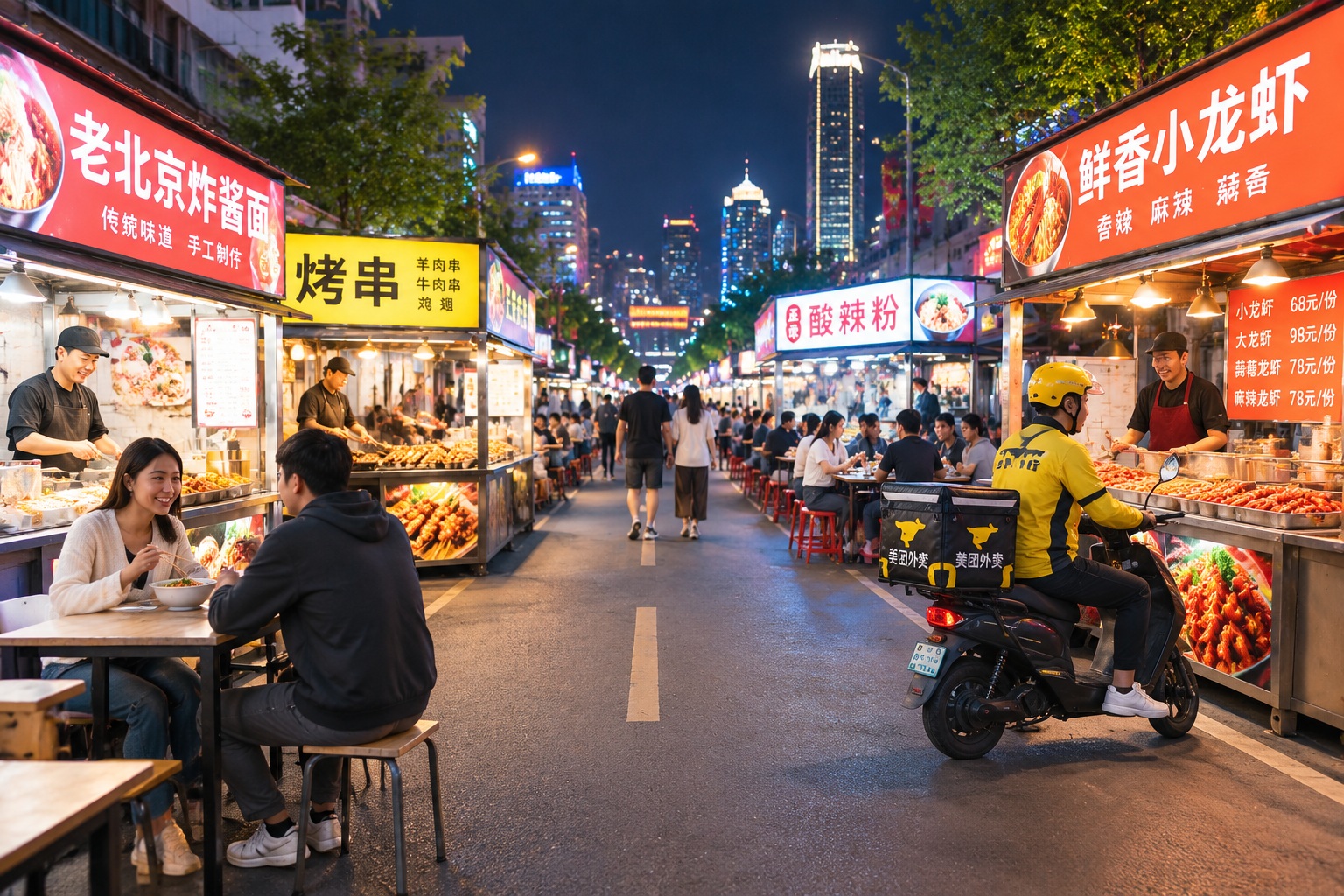
Night snack culture is also an economic force. In recent years, Chinese cities have actively promoted the “night economy” to boost local business. Many districts now allow streetside stalls to operate past midnight, and food delivery platforms keep kitchens running until 3 AM. In 2023, the national night-economy market size reached over 20 trillion yuan, according to industry estimates.
But numbers only tell part of the story. Step into any night snack street in a second-tier city, and you’ll see delivery riders waiting outside kaorou shops, office workers sharing a late-night chicken skewer, and retirees nursing a bowl of porridge. These are the hours when China lets its guard down. For a traveler or newcomer, it is the easiest way to experience the country’s daily reality—not from a train window or a hotel lobby, but from a plastic stool at 11 PM, with a skewer in one hand and a beer in the other.
Conclusion
Chinese night snack culture is not a trend or a checklist—it’s a rhythm. It pulses in the smoke of charcoal grills, in the crack of snail shells, and in the laughter of friends who have finally finished their work for the day. To join it is to start eating with your hands, stop checking your phone, and let the city show you a different face. After 10 PM, China isn’t sleeping. It’s eating, talking, and living.
Start the discussion at forum.chinacomes.com