
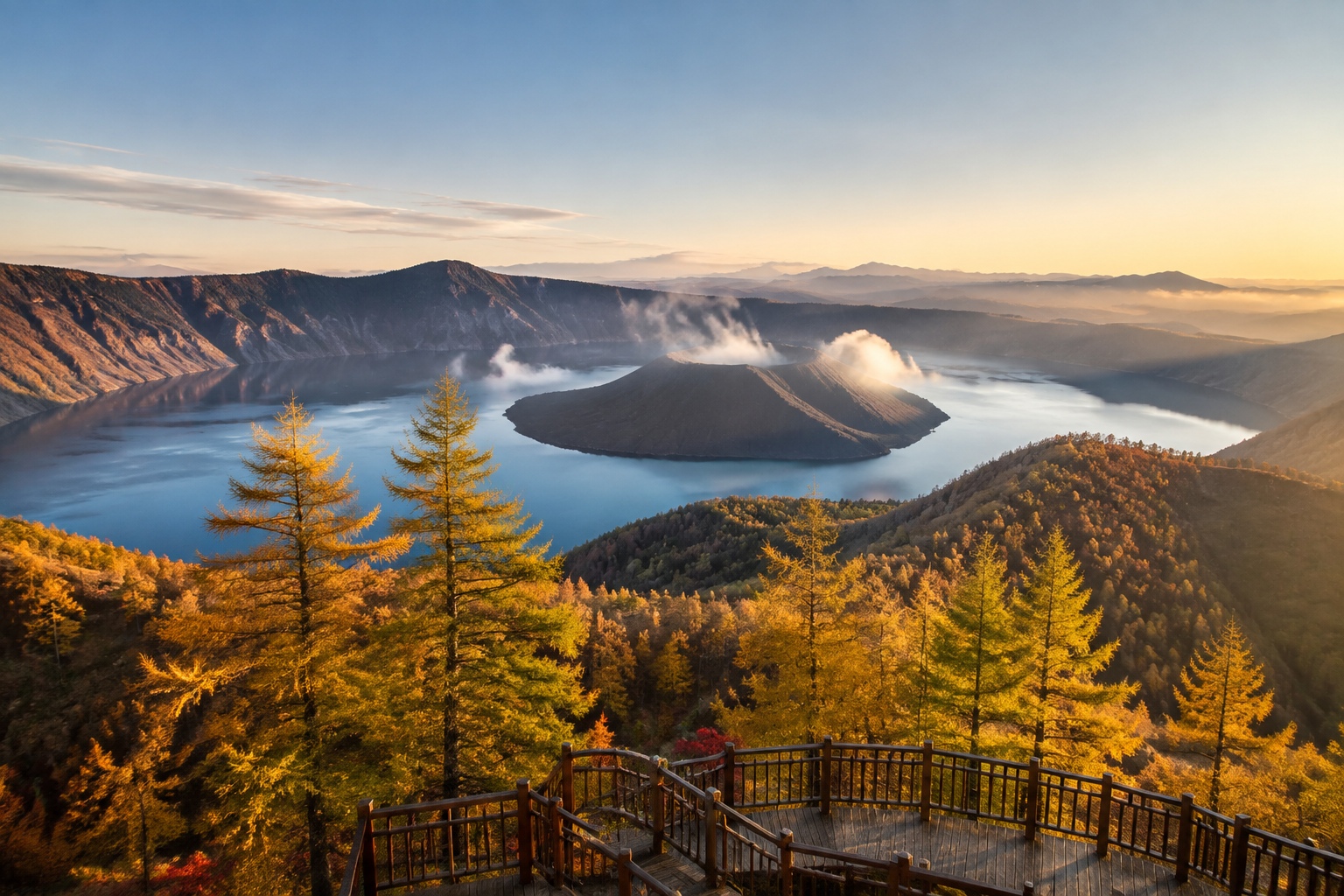

Introduction: The Volcanic Heart of Inner Mongolia
Most travelers to China head for the Great Wall or the skyscrapers of Shanghai. But if you venture northeast into the forests of Inner Mongolia, you’ll find Arxan — a town shaped by ancient volcanoes. Dormant for thousands of years, these peaks left behind a landscape of crater lakes, lava flows, and the hottest natural springs in the region. And at the center of it all sits China’s smallest railway station, a wooden building that still serves a handful of daily trains. This route offers a rare blend of geological wonder and human-scale infrastructure.
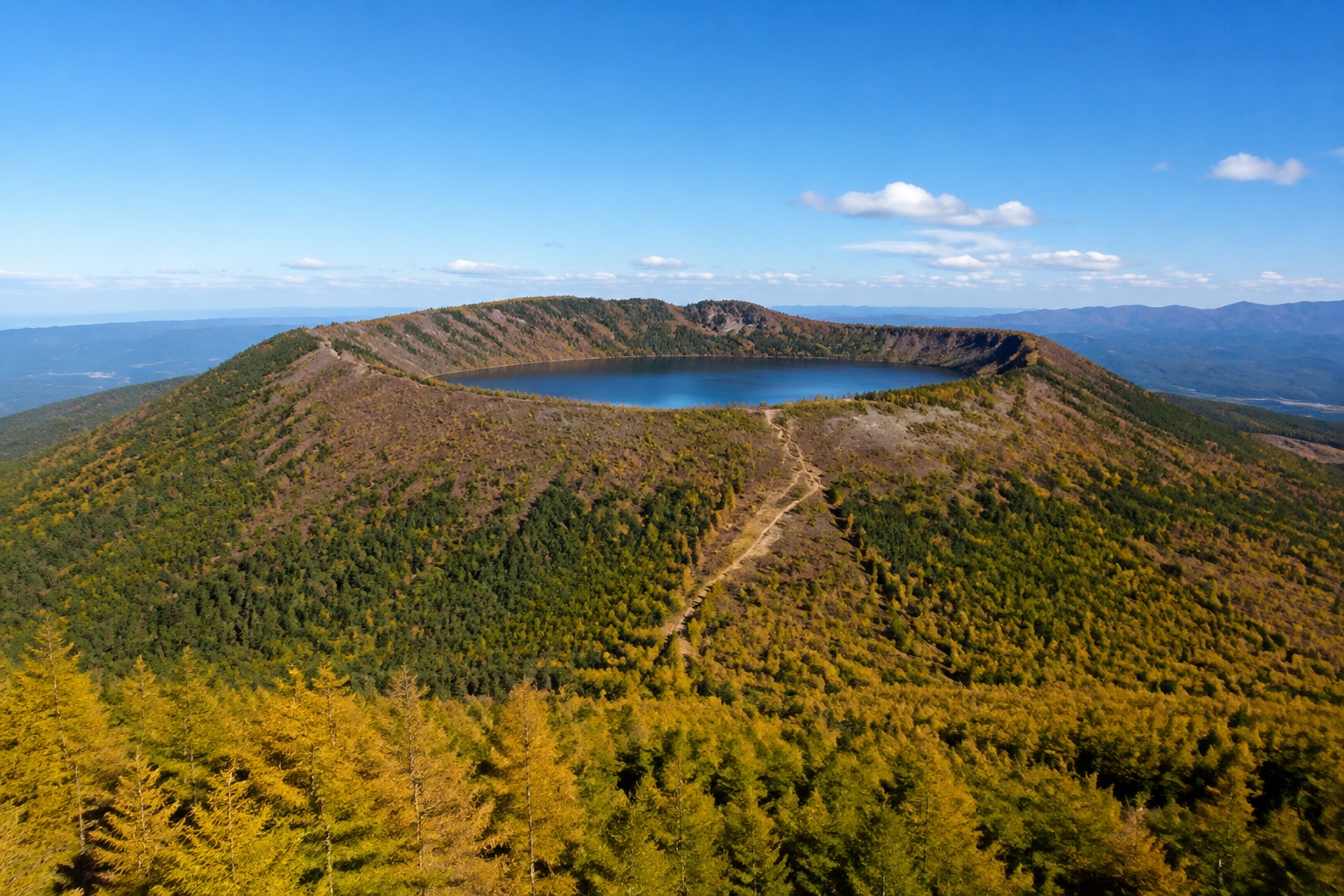
The Geology of Arxan: A Volcanic Playground
Arxan lies on the edge of the Greater Khingan Range, a volcanic belt that last erupted about 10,000 years ago. The area features over 50 volcanic cones, several crater lakes (known as “tianchi” or heavenly pools), and extensive lava plateaus. One of the easiest to reach is the Arxan Tianchi, a lake 133 meters deep that sits in a dormant volcanic crater. Unlike many volcanic lakes, it has no visible inlet or outlet — the water is fed entirely by rain and snow, making it a natural barometer of climate change. Scientists use sediment samples from the lakebed to reconstruct past weather patterns, offering clues about how the region’s climate may evolve.
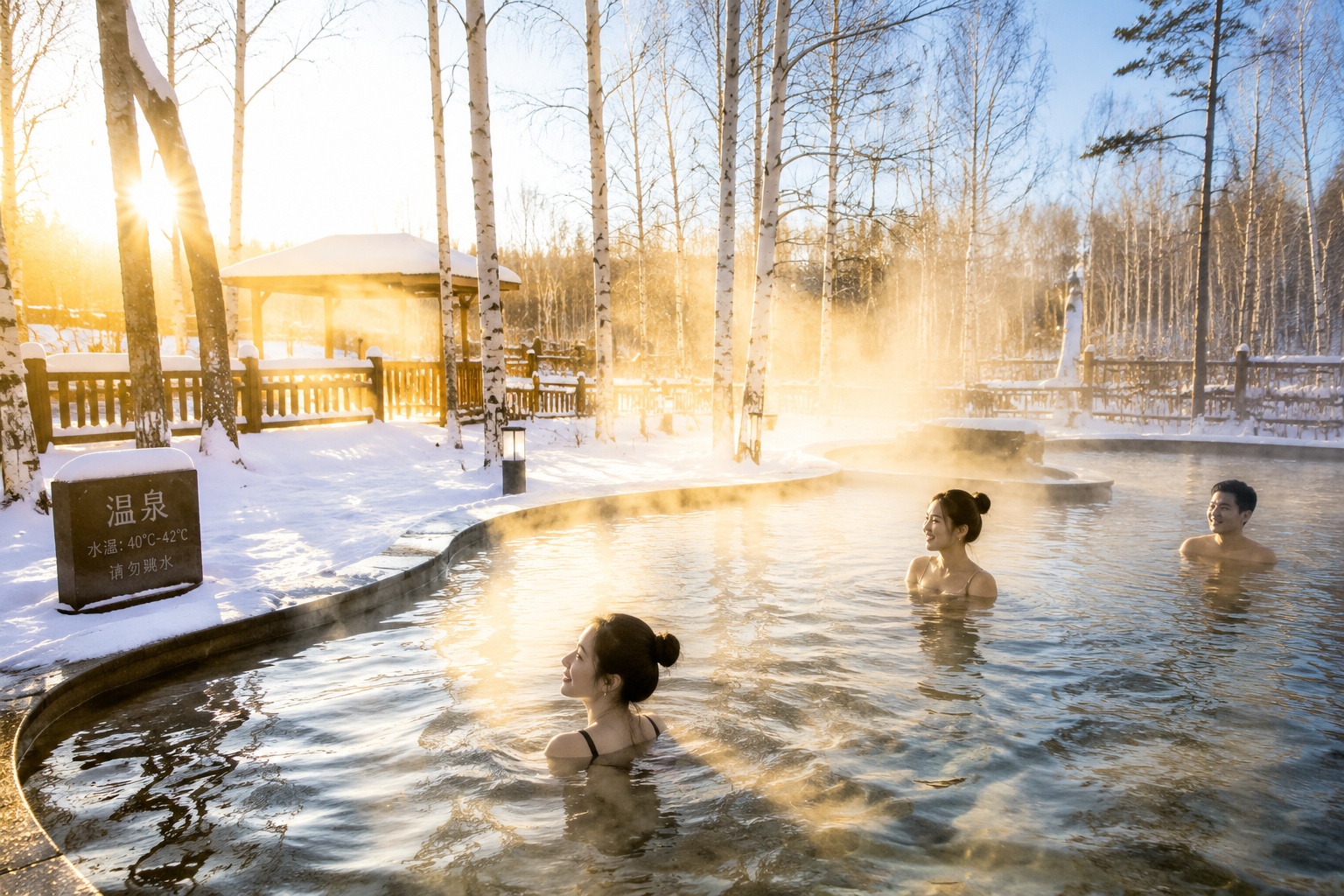
The volcanic soil is also responsible for the region’s famous hot springs. Rainwater seeps deep into the earth, is heated by residual volcanic magma chambers, and rises through fractures, emerging at temperatures between 30°C and 45°C. Over 30 spring outlets dot the area, each with a slightly different mineral composition — sulfur, radon, and silicate-rich waters are used for therapeutic baths.
Soaking in History: The Hot Spring Tradition
For centuries, local Mongol herders knew that bathing in these warm pools relieved joint pain and skin ailments. In the 1930s, Japanese colonizers built the first modern bathhouses here, as they recognized the springs’ potential for military rehabilitation. Today, the Arxan Hot Spring Museum and several resorts offer visitors a chance to soak in outdoor pools surrounded by birch and larch forests. The water is tested daily — the local government monitors pH, temperature, and bacterial levels to ensure safety. Unlike many commercial hot springs in China, where the water is often artificially heated, Arxan’s springs are genuinely geothermal. The experience is raw: you can smell the earth in the steam, and in winter, your hair freezes as you soak in 40°C water under a star-filled sky.
Into the Forest: Biodiversity and Conservation
Surrounding the volcanic cones is the Greater Khingan forest, one of China’s last remaining intact temperate forests. It covers 200,000 square kilometers, roughly the size of Belarus. The dominant trees are Dahurian larch, Mongolian pine, and white birch, which turn the landscape into a fire of gold and orange in autumn. This forest is a biodiversity hotspot: it shelters sable, red deer, and the rare black stork. Since 2015, China has implemented logging bans across most of the Greater Khingan, and Arxan’s forest coverage has increased from 64% to over 80% in just a decade. Rangers patrol the area using GPS trackers, and local communities receive payments for ecosystem services — a program that helps families shift from logging to ecotourism. In 2022, a camera trap captured footage of a wild Amur tiger, the first confirmed sighting in the region in 30 years, signaling that conservation is working.
China’s Smallest Train Station: Baiyinhua Station
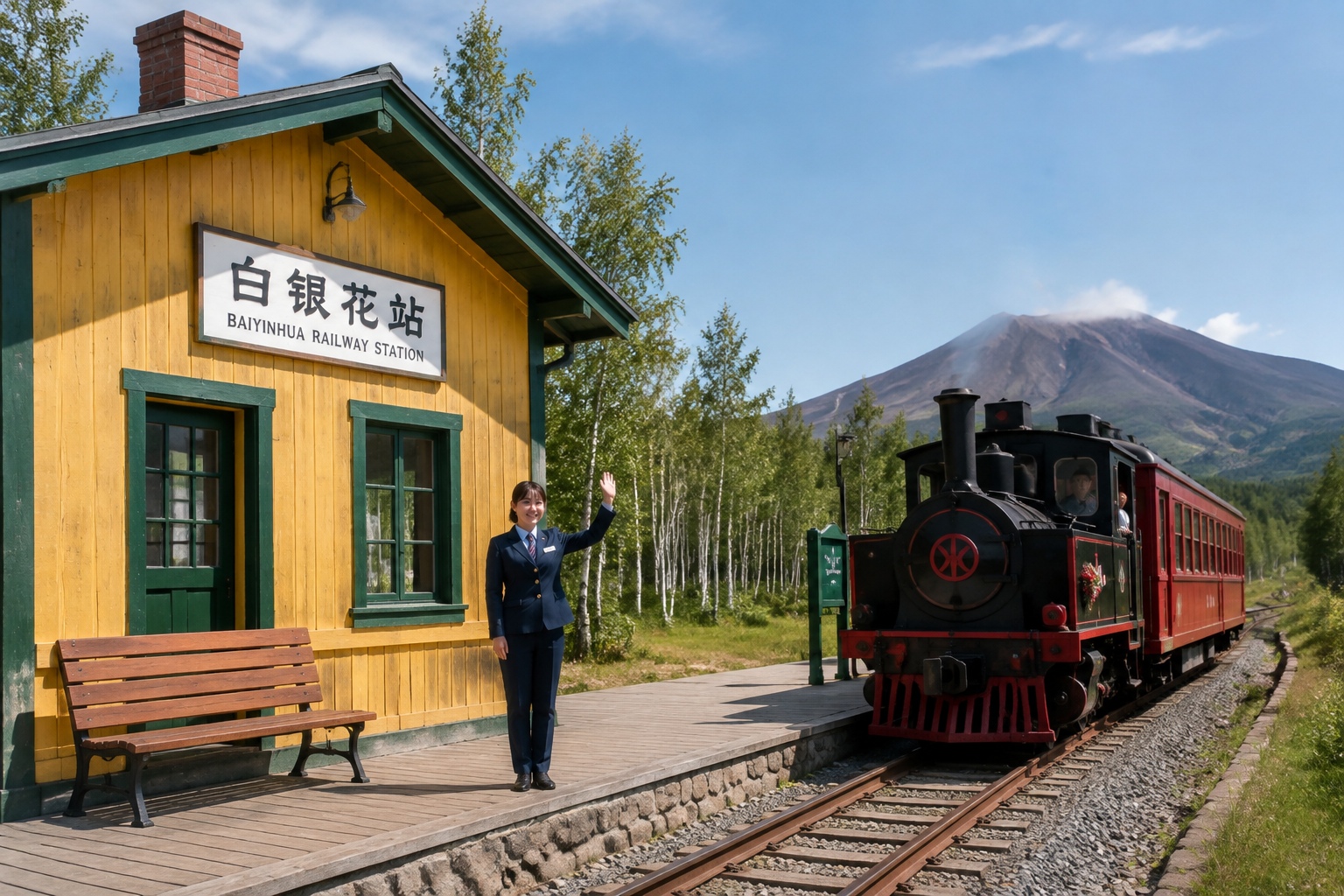
Twenty kilometers south of Arxan town lies Baiyinhua Station — officially recognized by Chinese railway authorities as the smallest passenger station in the country. The building is a single-story Russian-style wooden structure, painted pale yellow with green trim. Built in 1937 during the Japanese occupation, it once served as a coal loading dock. Today, only two trains stop here daily: a slow local that runs from Arxan to the city of Ulanhot, and a seasonal tourist train in summer. The station has no ticket counter, no waiting hall — just a wooden bench on the platform under a roof. The stationmaster, a woman named Ms. Zhang, has worked here for 27 years. She lives in a small room at the back of the building and remembers when the station served hundreds of coal miners. Now, most passengers are hikers heading into the forest. “The station is old, but it’s still needed,” she says. “Without it, the villages around here would be cut off.” The railway line itself is a narrow-gauge relic, with trains crawling at 40 km/h, but it offers one of China’s most scenic rides through birch forests and across volcanic plains.
Planning Your Route: A Self-Drive or Hiking Itinerary
The best way to experience the Arxan Volcanic Route is by car or bicycle, combining natural and cultural stops. Starting from Arxan town, drive south on National Road 203. Stop at the Arxan Geopark Visitor Center (about 10 km) to see exhibits on volcanic geology and the famous “stone forest” of lava formations. Continue to Arxan Tianchi — a 20-minute hike up wooden stairs leads to the crater rim. For the hot springs, visit the Arxan Hot Spring Resort at the base of the volcano; entry costs around 120 RMB ($17) and includes access to both indoor and outdoor pools. After soaking, drive 20 km south to Baiyinhua Station. You can park nearby and walk to the platform. The stationmaster is usually happy to chat if she’s not busy. If you want to ride the train, check the timetables in advance — the local train departs Arxan at 6:30 AM and returns in the evening. For a longer hike, the 15-km Tianchi Forest Trail connects the crater lake to a lava cave system. Allow a full day for the complete loop.
Conclusion: A Bridge Between Past and Future
Arxan may not have the fame of Yellowstone or the Alps, but it offers something increasingly rare: a landscape where nature and human history are still intimately connected. The volcanoes are quiet, but the springs still flow. The forest is regrowing. And the tiny station, with its solitary stationmaster, links these remote valleys to the wider world. This is not a theme park version of nature — it’s a real place where geology, ecology, and everyday life converge. For travelers willing to go off the map, the Arxan Volcanic Route is a reminder that the most extraordinary experiences often begin at the smallest stations.
Start the discussion at forum.chinacomes.com