

A Guangzhou Morning, Steamed and Fresh
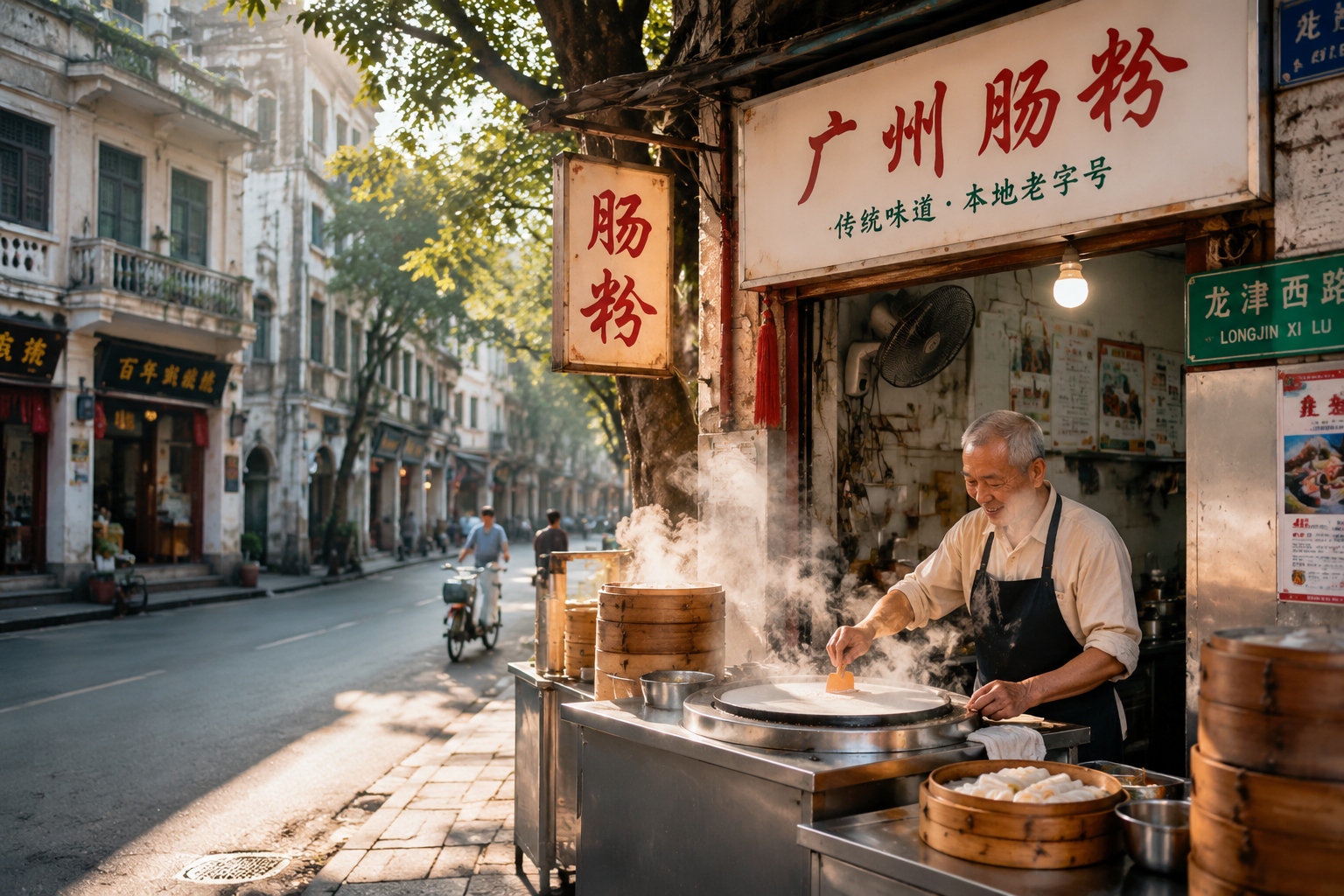
The day in Guangzhou doesn’t start with an alarm clock. It starts with a cloud of steam rising from a metal steamer on a street corner. By 6:30 AM, a small queue has already formed outside a shop that looks like it hasn’t been renovated since the 1980s. The woman in front of me orders without looking at the menu: one plate of cheung fun (rice noodle rolls), a bowl of congee with pork liver, and a cup of soy milk. The total comes to about 12 yuan (roughly $1.70).
This is not a scene staged for tourists. It’s just how a normal Tuesday begins in Guangzhou, a city of over 18 million people in southern China. For locals, food is not a special event—it’s the backbone of daily life. And the best guide to this city isn’t a Michelin star list. It’s the map of street stalls and old shops that have been feeding generations of families for decades.
How Locals Find Good Food: Follow the Crowd, Not the App
If you ask a Guangzhou resident where to eat, you’ll often get a vague answer: “Just go where the old people are queueing.” That’s not a joke. In a city that loves food, the locals have developed a reliable set of signals that are faster and more honest than any food app.
First, look for queues. If a stall has a line of retired uncles and aunties holding their own containers, you’ve found the real deal. Second, watch for “wok hei” (镬气) — the smoky, charred aroma that comes from stir-frying over a fierce flame. You can smell it from the street. Third, pay attention to the boss’s hands. If he’s working fast, barely looking at the order, and still getting every detail right, he’s been doing this for decades. That’s the sign of mastery.
Food apps like Dianping are useful for finding addresses, but locals know that a 4.5-star rating can be bought. The queue, however, cannot lie. So when you arrive in Guangzhou, forget the top-ten lists. Just find a residential area and wait for the crowd.
This is different from many Western cities, where a restaurant’s reputation is built on reviews and media coverage. Here, it’s built on repetition. A shop that survives in Guangzhou has to be good every single day, because it’s serving the same picky customers for years. That’s the bottom line.
Route One: Xiguan at Dawn – Cheung Fun and Congee
Start your food exploration in Xiguan, the old heart of Guangzhou. This is where you’ll find the oldest traditions and the most stubborn locals. The streets are narrow, the buildings are old, and the food is pure nostalgia.
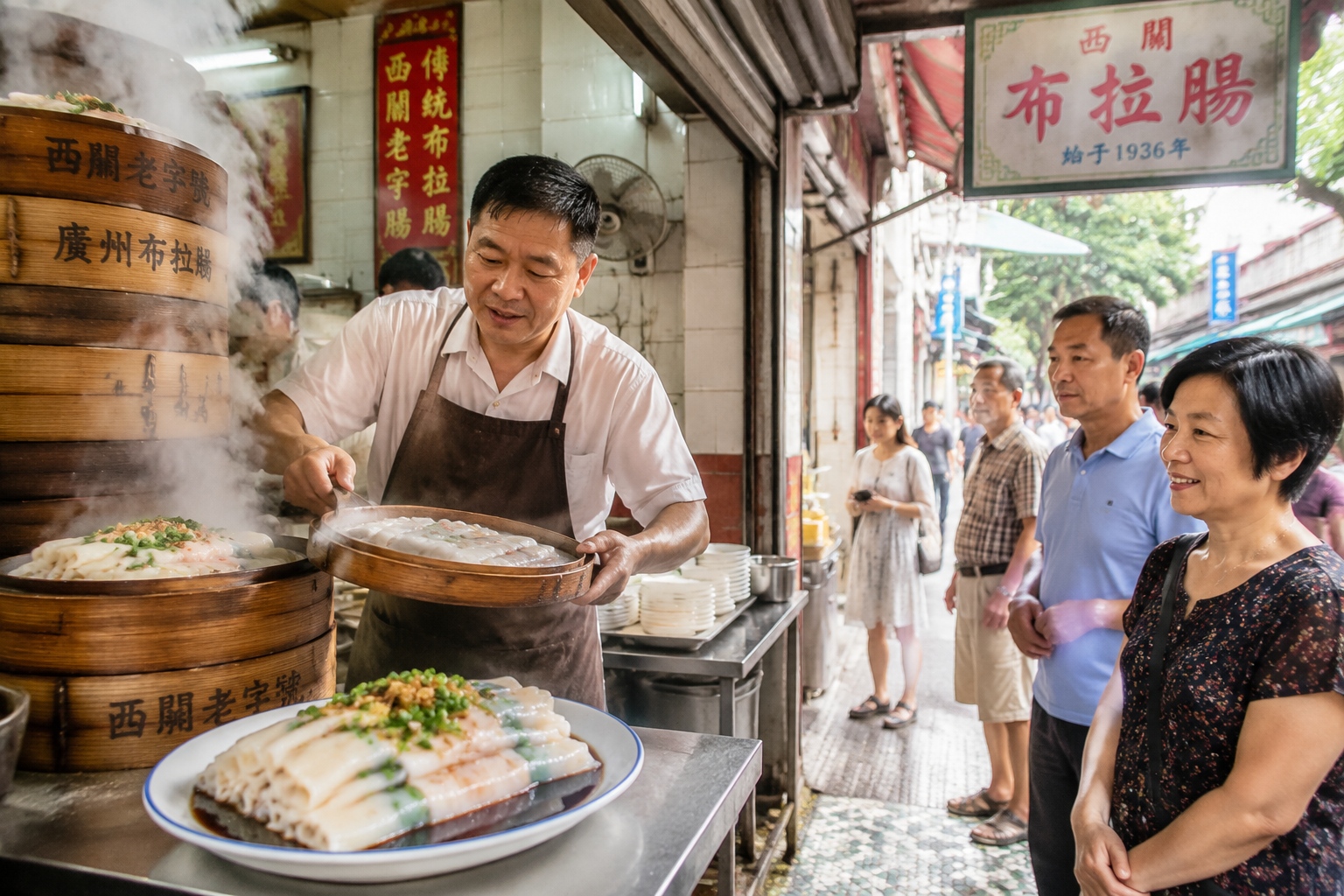
Your first stop should be a cheung fun stall. Cheung fun, which literally means “rice noodle roll,” is made by steaming a thin layer of rice flour slurry, adding fillings like minced beef, shrimp, or just scallions, then rolling it up and cutting it into small pieces. It’s served with a sweet soy sauce and sometimes a little chili oil. The texture is silky, almost like a warm jelly that melts in your mouth. In Guangzhou, you can find cheung fun at breakfast places, but the best ones are often in open-air markets where the steamer is right in front of you.
One of my favorite spots is a small shop on Longjin East Road, near the old Xiguan mansion. It’s open from 6 AM to 11 AM, and by 7:30, the steamed rice rolls are gone. The owner, a 60-year-old man named Chen, has been making cheung fun for 35 years. He doesn’t have a menu. You just tell him what you want, and he slides a bamboo tray into the steamer, pulls it out, and rolls it with a single motion. It’s a performance, but he’s been doing it so long that it’s as natural as breathing.
Pair your cheung fun with a bowl of “jidi congee” (及第粥), a Cantonese rice porridge cooked with pork liver, kidney, and meatballs. The name literally means “top scholar congee,” a reference to the imperial exam tradition. It’s a hearty, comforting bowl that warms you from the inside. The key is the rice: it’s cooked so long that it dissolves into a creamy paste, but it’s still light, not heavy like some Western porridges.
Why is breakfast such a big deal in Guangzhou? Historically, Cantonese people have a saying: “Eat breakfast like a king.” It’s a legacy of the tea-house culture (yum cha), where morning was a time to gather, share food, and gossip. Even today, you’ll see families spending an hour at breakfast, combining eating with socializing. It’s not just fuel.
Route Two: Nongjiangsuo and Wenming Road – Sweet Soups and Claypot Rice
After breakfast, take a stroll through the older districts. A good next stop is the Nongjiangsuo and Wenming Road area, which is known for traditional Cantonese desserts and soups. In the afternoon, the pace shifts. The morning rush is over, but the shops are still busy with people looking for a sweet break.
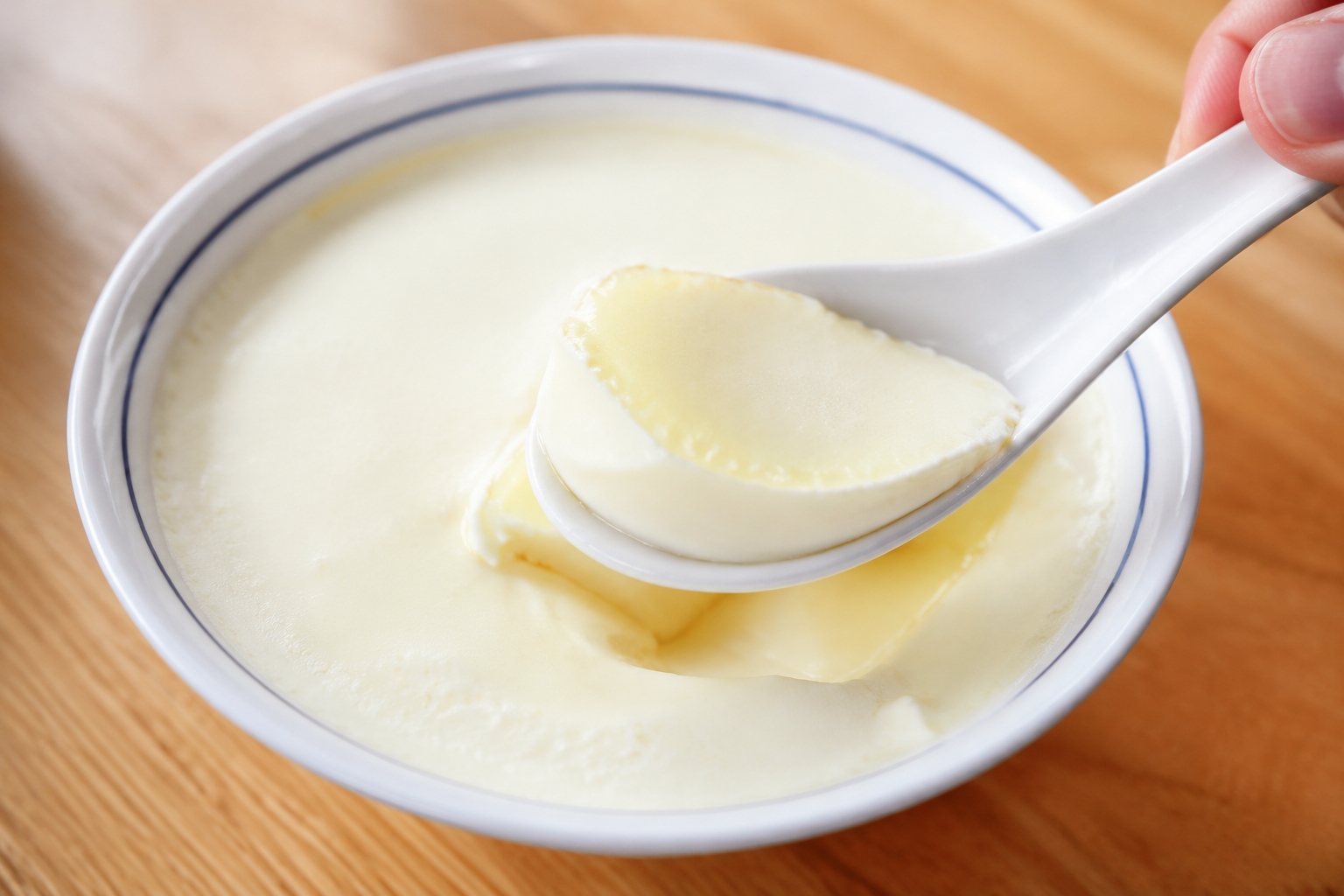
The main event here is “tong sui” (糖水), or sweet soup. This isn’t a thick syrup; it’s a bowl of warm, lightly sweetened liquid made from ingredients like red beans, mung beans, taro, or lotus seeds. The most famous Cantonese dessert is double-skin milk (双皮奶), which originated in nearby Shunde but has become a Guangzhou staple. It’s made from milk, egg whites, and sugar, boiled and then steamed twice, which creates a delicate skin on top. The result is a silky, custard-like dessert that’s not too sweet. It’s served in a small bowl, and you eat it with a spoon, savoring the creamy texture.
Another must-try is “water chestnut cake” (马蹄糕), a translucent jelly made from water chestnut flour, often pan-fried with a slightly crispy crust. It’s chewy, sweet, and refreshing. At a place like Yongji (永记) on Wenming Road, you can watch the staff make these treats right in the window.
For something more substantial, find a claypot rice (煲仔饭) spot. This is a simple dish: rice, meat (usually chicken, sausage, or ribs), and vegetables, cooked in a small clay pot over a gas flame. The magic happens at the end, when the rice at the bottom forms a crispy, golden crust. You add a splash of soy sauce, stir it up, and eat straight from the pot. In the humid heat of Guangzhou, claypot rice is a comfort food that makes you feel grounded. The shops are usually tiny, with plastic stools and loud fans, but the flavor is unforgettable.
What strikes me about this part of the city is how the food culture has survived even as the neighborhood has changed. Next to the old dessert shops, you’ll now see stylish coffee stands and art galleries. But the queues at the traditional shops haven’t shrunk. In fact, young people come here too, not to pose for Instagram, but because their parents brought them here when they were kids. Food memory runs deep.
Across the River: Haizhu’s Old and New Flavors
If you want to see how Guangzhou food is evolving, cross the Pearl River to the Haizhu district. This area, especially around Wufeng Village and Jiangnan West, has a mix of old villages and new developments. It’s where you’ll find both family-run stalls that have been around for decades and hip new eateries that cater to a younger crowd.
In Wufeng Village, tucked between high-rise buildings, there’s a small alley where aunties make “he fen” (thick rice noodles) by hand. It’s a dying art. The noodles are cut into wide, slippery strips and stir-fried with beef in a smoky wok. The flavor is intense, with a char that you can’t get from a home stove. The shop doesn’t have a sign. You just follow the smell of garlic and soy.
Meanwhile, in the Jiangnan West area, young entrepreneurs are opening food stalls that fuse Cantonese flavors with other styles. You might find a stall selling “matcha double-skin milk” or “durian rice rolls” — creations that would make a traditionalist tear up, but they’re surprisingly popular with the under-30 crowd. This isn’t a loss of tradition; it’s a continuation. Cantonese cuisine has always been open to new ideas, as long as the ingredients are fresh and the execution is careful.
What’s fascinating is how these new places coexist with the old ones. A few steps away from the matcha dessert shop, you’ll see a grandmother selling “jiao chuo” (water caltrop) from a basket on wheels, just like she did 20 years ago. That’s the reality of Guangzhou: not a carefully curated food museum, but a living, messy, delicious ecosystem.
After 9 PM: The Night Market Vibe
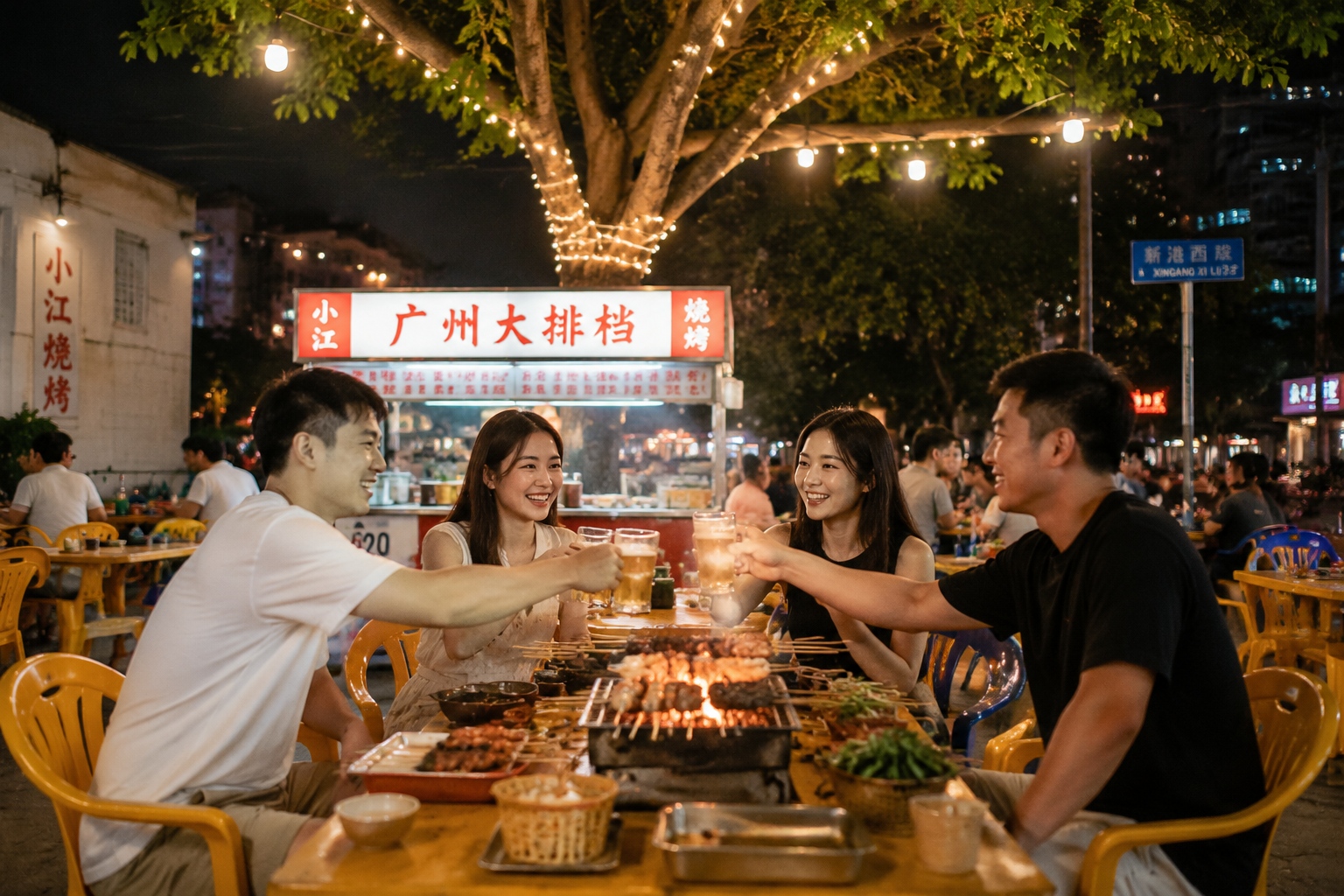
When the sun goes down, Guangzhou changes. The hot, humid air cools slightly, and the streets fill with “dapai dong” (大排档) — open-air food stalls that set up on the sidewalks. This is where locals come to unwind after a long day, order a few dishes, and share beer.
The food at a dai pai dong is not fancy. You’ll find stir-fried clams with black bean sauce, grilled oysters with garlic, and “siu yuk” (crispy roast pork). But the atmosphere is the real draw. The tables are low, the stools are plastic, and the sound of cooking and chatter is loud. It’s a place to be with friends, not to photograph your food (though you can).
One of my favorite evening spots is a barbecue stall on Baohua Road in Liwan district. The boss, Lao Wu, has been grilling skewers of chicken wings, lamb, and Chinese sausages for 15 years. His secret is a marinade of honey and Chinese spices that caramelizes on the grill. He fans the coals with a cardboard box, and the flames lick the meat. People queue for at least half an hour. You don’t order from a menu; you point at the skewers in the cooler and tell Lao Wu how many you want. He remembers everyone’s order without writing it down.
Why is the night market so important here? Because of the climate and the work culture. In a hot, humid city, outdoor dining is comfortable only in the evening. And after a long workday, people want to socialize without spending a fortune. A dai pai dong meal costs about 30-50 yuan ($4-7) per person, which is far cheaper than a restaurant. It’s the ultimate equalizer: office workers and taxi drivers sit side by side.
Practical Tips: Avoiding Tourist Traps
Now, let’s talk about the practical side. If you’re visiting Guangzhou, you might be tempted to go to Shangxiajiu (上下九) pedestrian street, which is famous in travel guides. But to be honest, it’s often crowded, and the food quality varies. Locals rarely go there. Instead, I recommend wandering into the surrounding side streets, where you’ll find the real deals.
Here are a few tips to help you eat like a local:
- Don’t rely on online reviews alone. Use them for addresses, but check the queue before deciding. If a place is packed with elderly locals, it’s probably good.
- Look at the price board. In Guangzhou, most small shops post a menu with prices on the wall. If you don’t understand Chinese, just point. If there’s no price board, ask before ordering, to avoid a surprise bill.
- Ask for the “hidden menu.” Some shops have items that aren’t listed, like a special soup or a dish that requires more prep. If the owner seems friendly, ask what he recommends. You might discover something amazing.
- Learn a few phrases. “Bu la” (not spicy), “1 fen tian” (a little sweet), “zhe ge duo shao qian?” (how much). Even broken Cantonese or Mandarin will get you more respect and better service.
- Go early or late. Popular spots sell out by noon. For breakfast, go before 8 AM. For night markets, go after 9 PM for the full experience.
Also, don’t be shy to share tables. It’s common in this city. You might end up eating next to a retired professor who can tell you the history of the dish you’re about to eat.
Final Bite: What Double-Skin Milk Says About Guangzhou
If you only try one dessert in Guangzhou, make it double-skin milk. Not because it’s the most exotic, but because it sums up this city’s character. It’s simple, but it requires patience and precision. The milk is full-fat, the egg whites are fresh, and the sugar is just enough to balance the richness. There’s no flashy plating, no molecular gastronomy. It’s just a bowl of something that tastes deeply of itself.
That’s Guangzhou. It’s a city that doesn’t need to show off. It’s confident in its old ways, but not stuck in them. It respects time, because time is what gives the best flavors their depth. A good bowl of double-skin milk can’t be rushed. And neither can a good life.
So when you come to Guangzhou, don’t just take photos. Sit down, order something you can’t pronounce, and take a moment to taste what 2,000 years of trade, migration, and daily life have created. The street food here is not just a map of flavors. It’s a map of how this city sees the world. And it’s open to everyone.
Start the discussion at forum.chinacomes.com