

At 7:30 a.m. in a Chengdu neighborhood, steam rises from a breakfast stall where a woman in her seventies unfolds a faded 5-yuan note and hands it over. The owner accepts it, dips it into a metal case, and gives her two coins. No QR code scan, no ‘payment received’ voice prompt. For a moment, it feels like the digital era has stepped aside.

That scene is not an exception in every city. In China, Alipay and WeChat Pay have become so common that many tourists believe cash is dead. But the central bank’s own data shows the amount of physical currency in circulation keeps growing. Cash survives in places where daily transactions are small, sellers are old, or the internet connection is unreliable. It also survives because the law says it must be accepted as legal tender.
Where Cash Still Has a Home
Wet Markets and Vegetable Stalls
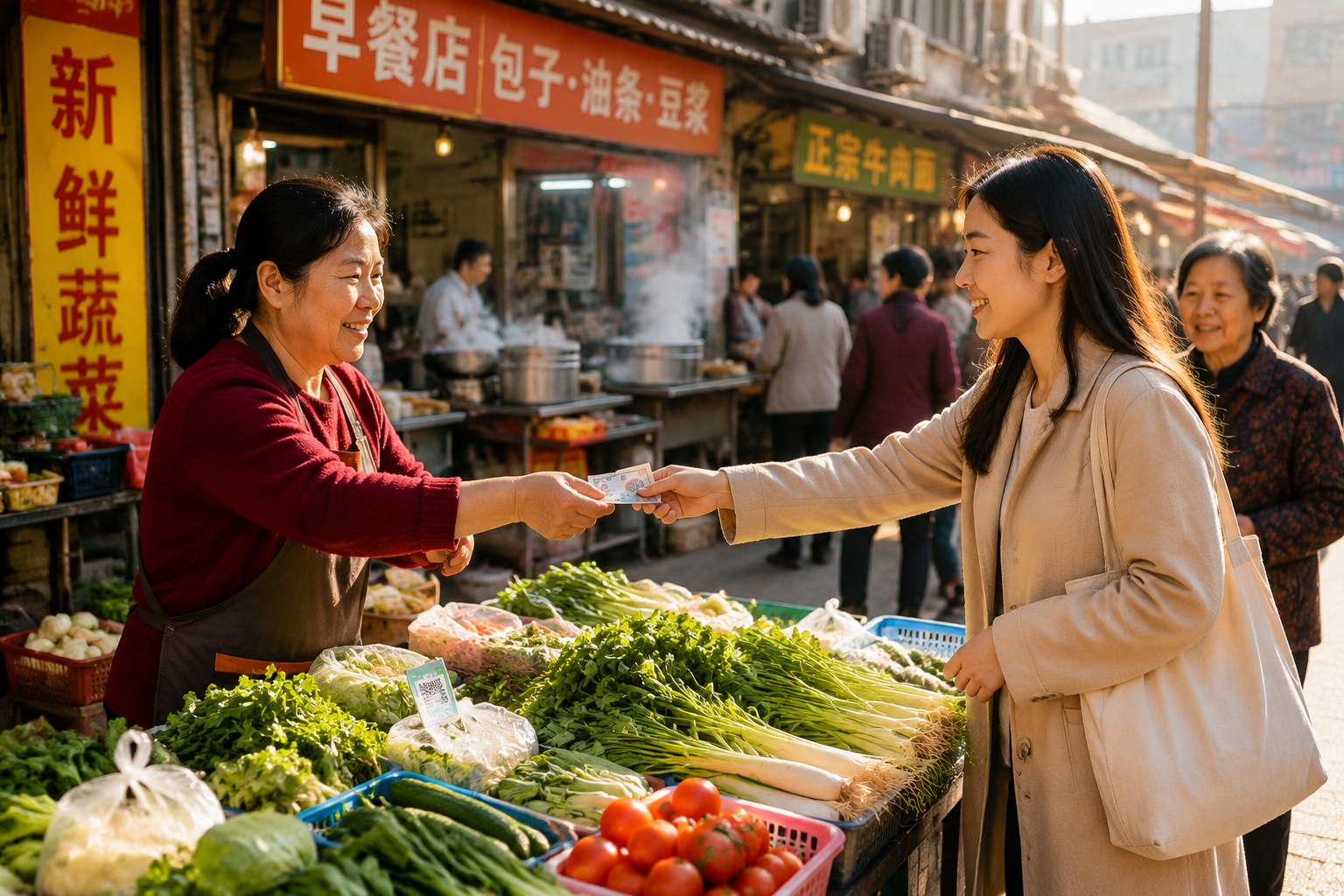
The true stronghold of cash is the wet market. Walk through a covered market in the early morning, and you will see rows of vendors who have been there for twenty years. Most of them display a QR code under the hanging light bulb, but when you hand them a banknote, they often smile and open a leather pouch filled with coins. Some still prefer notes because they can feel the money and avoid the 0.6% merchant fee on transfers. A vendor in Guangzhou once told me, ‘The phone is for my son. My vegetable stall is for cash.’
Small Family-Run Restaurants
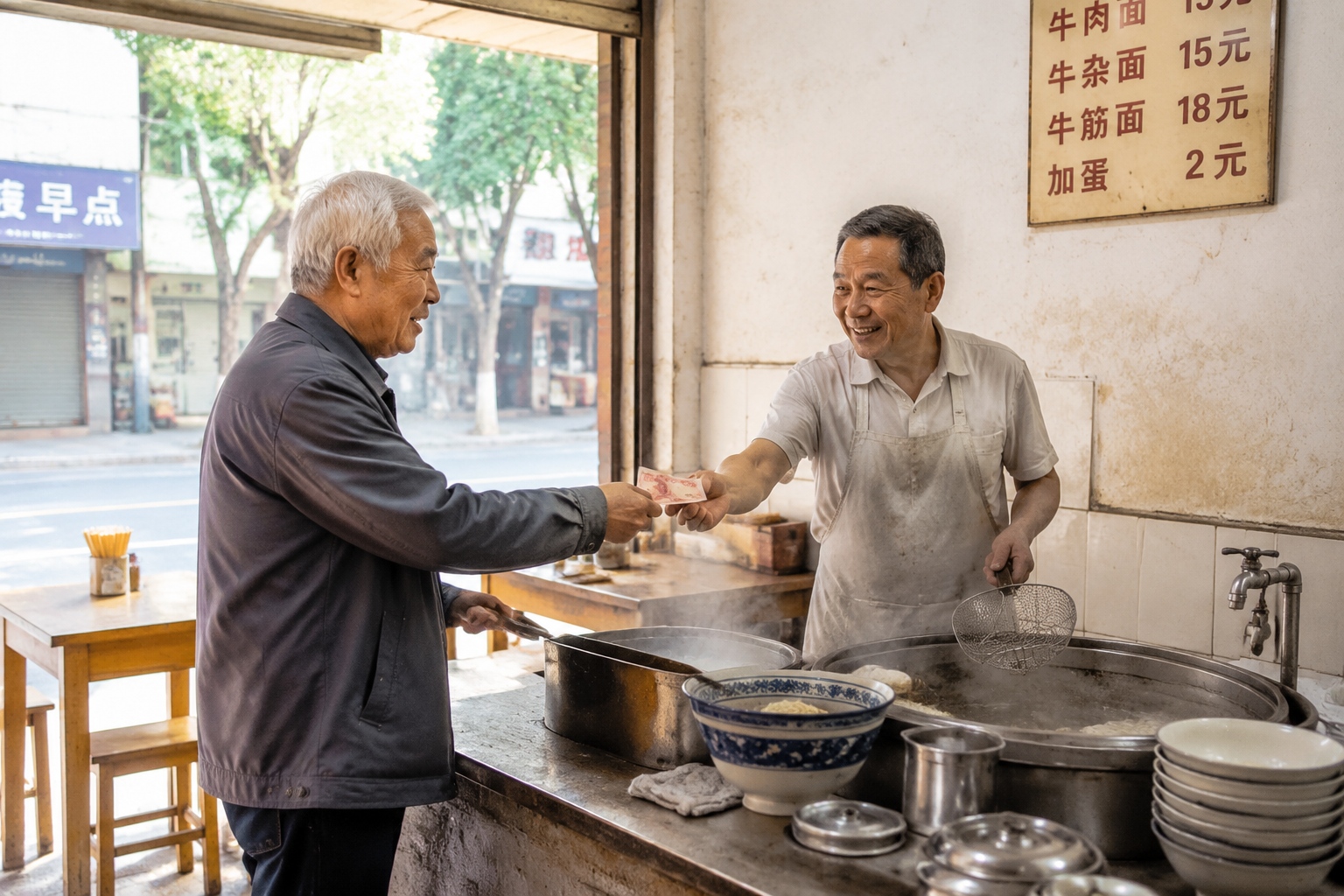
Noodle shops, dumpling houses, and breakfast counters are the next best place. The owner usually cooks, serves, and rings up orders. For them, accepting cash saves the trouble of linking a restaurant account, and some even set a minimum scan amount when paying with a phone. If the shop is older than five years and the walls are stained by steam, you can almost always pay with paper money. The rule is: give small bills. A 100-yuan note for a 6-yuan bowl of noodles will make the owner sigh.
Old Communities and Sidewalk Shops
Beyond the commercial streets, inside urban villages or old residential compounds, cash is still a normal method of payment. A community barber cutting hair for 15 yuan, a fruit stand that appears only after 5 p.m., a key-cutter who sets up a table near the gate — all of them accept cash. Many of these micro-businesses are run by people over 50, who are not interested in learning the app ecosystem.
How to Communicate in Cash Situations
Even when cash is welcome, you may need to signal your intention clearly. The easiest phrase is ‘可以用现金吗?’ (Can I pay cash?) or ‘我没带手机’ (I don’t have my phone). The second one is almost magical; a seller will instantly produce a small change. If you’re shy, just hold out your banknote. Most people understand the gesture.
What to Do If Someone Refuses Cash
Refusal is still rare, but you might meet a young cashier at a chain store who says, ‘No cash, sorry.’ Public institutions like hospitals and railway stations are required to accept cash, but private businesses are less strictly regulated. If it happens, don’t argue. Ask if they can break a large bill at the nearby shop. Or simply leave; there is probably another stall fifty meters away that will take it. It’s not about you. Even locals sometimes hear the same answer.
Getting Change, Avoiding Fakes, and Finding ATMs
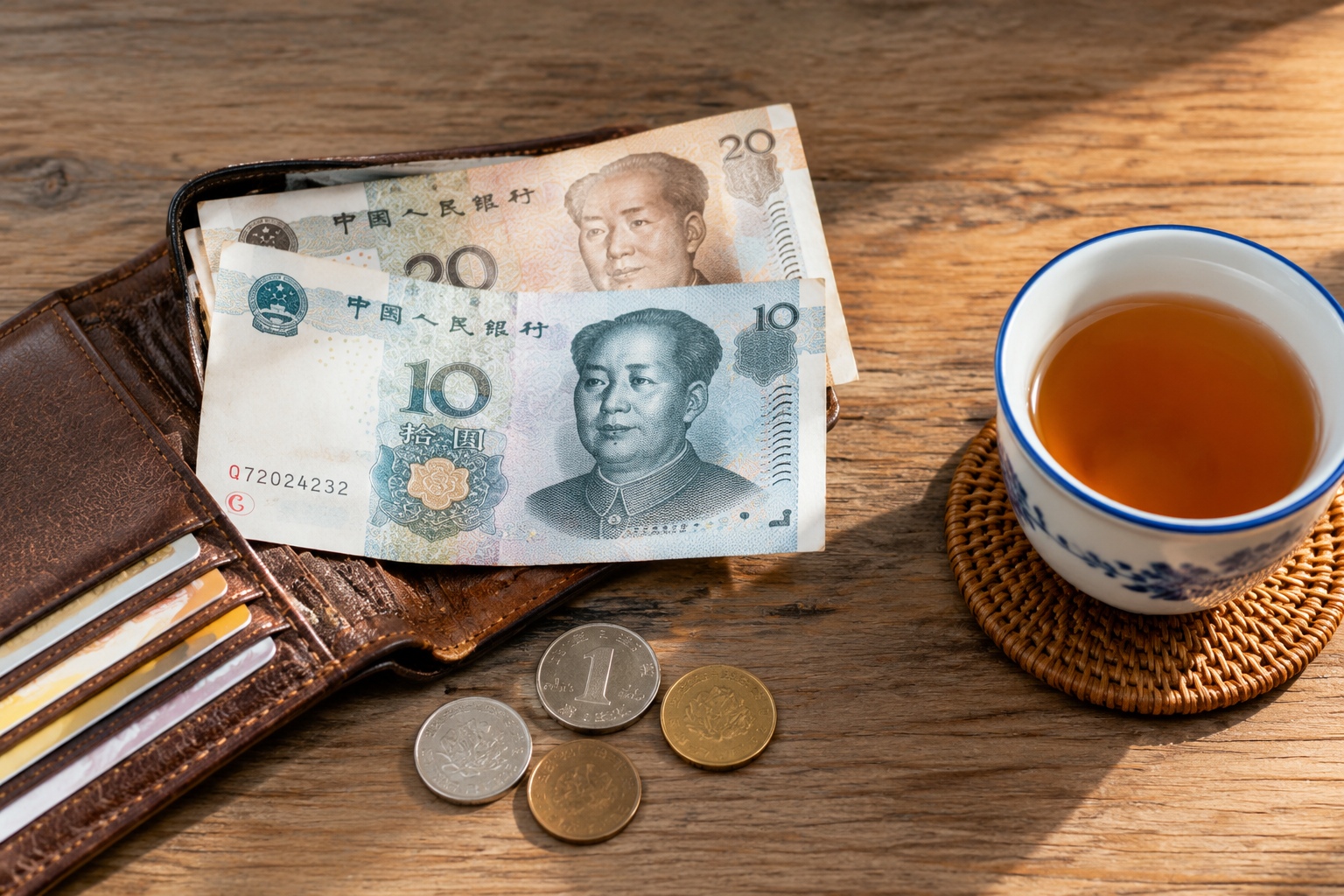
To make your cash work well, you need small denominations. Banks in China give out 10, 20, and 50 yuan notes freely. You can also break a big note by buying a bottle of water at a supermarket. But don’t expect small shops to change a 100-yuan note for a purchase under 10 yuan; they often don’t keep enough change.
Counterfeit banknotes are uncommon but you should know how to spot one. The safest quick check is to tilt the note: the holographic strip changes colors. Also feel the paper; real RMB has a rough raised texture that fakes don’t have. For 100-yuan notes, look for the faint portrait watermark that appears when held to light.
ATMs: Major banks like Bank of China, ICBC, and China Merchants Bank have ATMs that accept overseas cards if you have the right PIN. You can withdraw up to a few thousand yuan per day, subject to your bank’s fees. Always keep your password safe and choose an ATM inside a bank branch if possible.
Backup Plans: Foreign Cards, Prepaid Cards, and E-Wallets
Cash is not the only lifeline for visitors. As we covered in the previous guide to mobile payment, foreign-issued Visa, Mastercard, and Amex cards can be linked to Alipay or WeChat Pay. That gives you a digital backup for places where cash is inconvenient, such as city buses or high-speed rail tickets bought online. Prepaid travel cards are another option: load with US dollars or euros, and use the UnionPay network at millions of terminals.
For a short stay, the best combination is 500 to 800 yuan in small bills plus a linked mobile wallet. Use cash for markets and family restaurants, and use the app for anything with a machine. This approach avoids the awkward moments and still keeps you connected.
The Cash Survival Map for Everyday Life
Here is a practical checklist from our own experience:
Convenience stores: Accept cash, but they might not have change. Avoid big bills.
Supermarkets: Staffed registers take cash; self-checkout lanes do not.
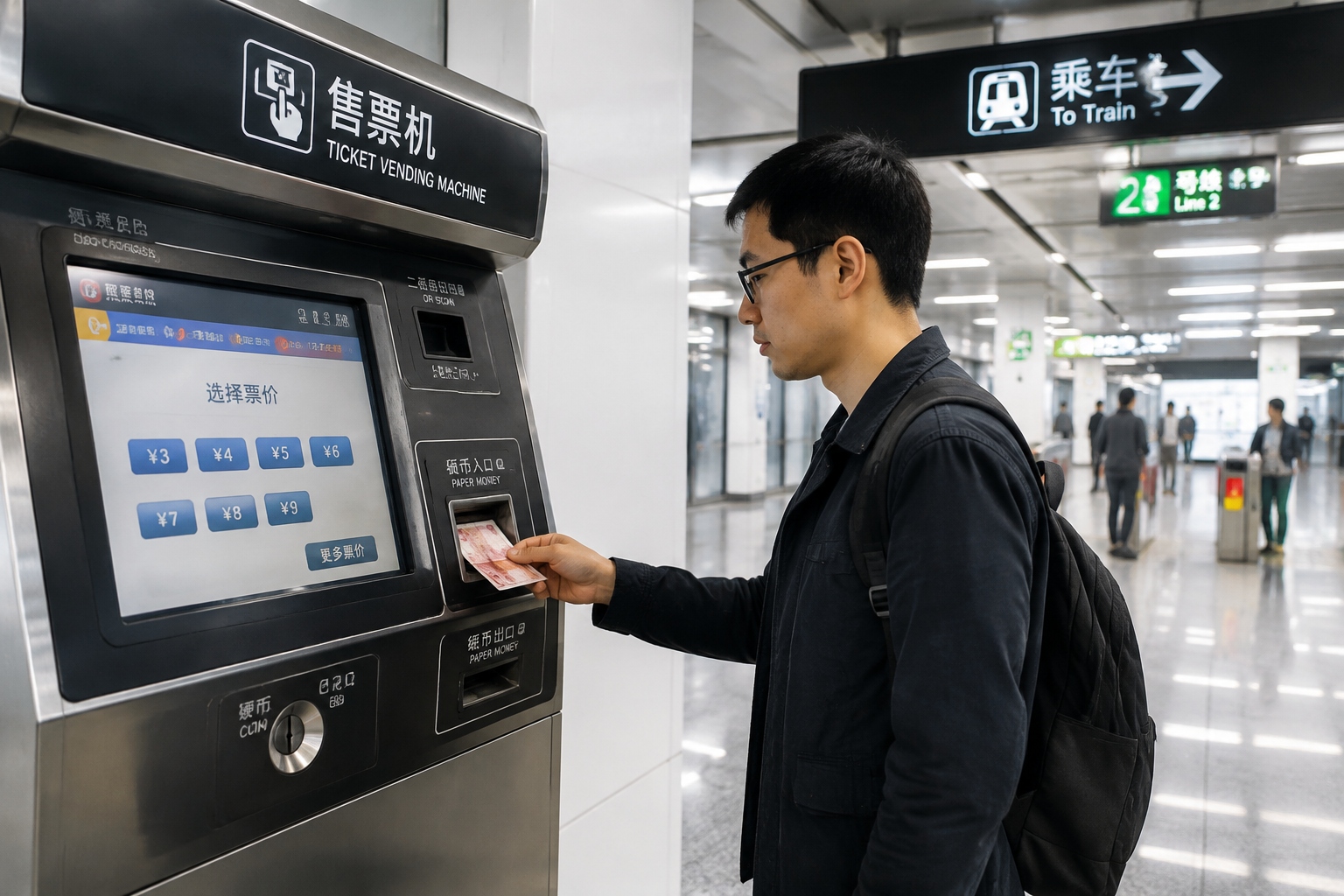
Metro stations: Ticket machines in most cities take 5, 10, and 20 yuan notes. Some newer stations may not accept cash, so check the machine before queuing.
Public buses: Almost never accept cash. Use the mobile fare card or buy a transit card if you plan to ride often.
Taxis: Drivers are required to accept cash, but many say they don’t have change. Keep small bills.
Fast food restaurants: Usually accept cash, but they may ask for exact change.
Night markets: A mix. The older generation vendors take cash happily; young sellers with glowing QR code stands may not have coins.
High-speed rail: Manual ticket counters accept cash at stations. Online booking is more convenient.
Hotels: Yes, cash is accepted for deposits and payments, though you may need to provide a national ID or passport.
Use this map as a reminder: when the business is independent and the transaction is small, cash keeps you alive. When it’s a chain or a self-service machine, you need the phone.
Final Thought
Paying with cash in China is like finding a quiet lane in a busy city. It doesn’t require a stable signal, a foreign credit card, or a Chinese bank account. It’s a universal key that opens the door to the smallest food stalls and the warmest conversations. The next time you see a steaming pot in an alley, reach into your pocket for a banknote. You’ll be surprised how often it still works.
Start the discussion at forum.chinacomes.com