
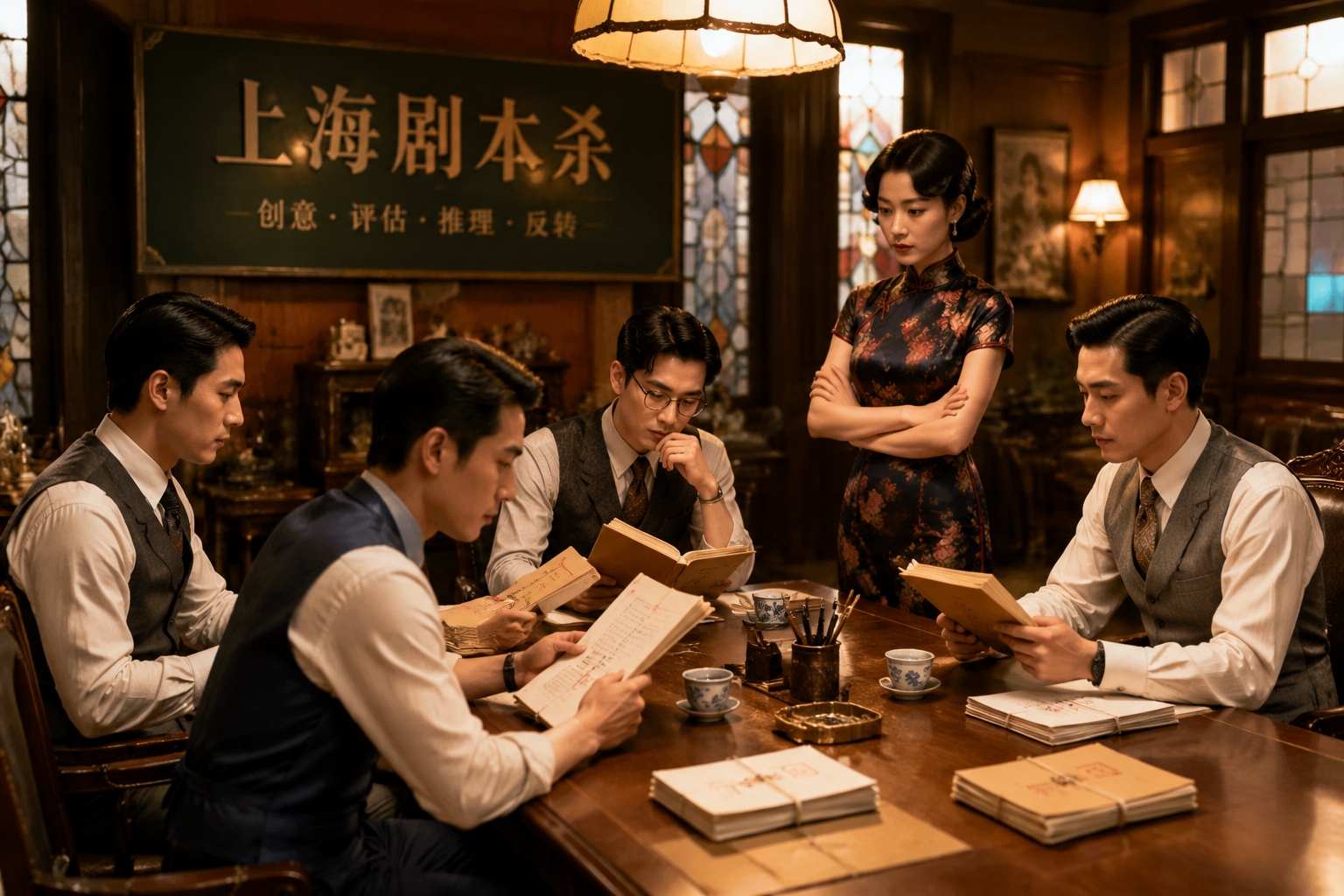

Eight PM, No Phones Allowed
The door closes with a soft click. The lights drop to a warm amber glow, and the room—a painstakingly recreated 1920s Shanghai parlor—begins to hum with a gramophone record. A young woman in a silk cheongsam slides a stack of bound scripts across the table. “Before we start, your phones go into this bag,” she says, pointing to a drawstring pouch. Around the table, six strangers-to-be exchange glances, half nervous, half excited.
This is the opening ritual of 剧本杀 (juben sha), or “script-killing,” a live-action role-playing game that has become one of China’s most popular social pastimes. On any given weekend evening, thousands of such rooms across the country fill with players aged mostly 18 to 35. They spend three to five hours together inside fictional worlds—murder mysteries, historical dramas, sci-fi adventures, even romantic comedies—guided by a game master and performed by actors.
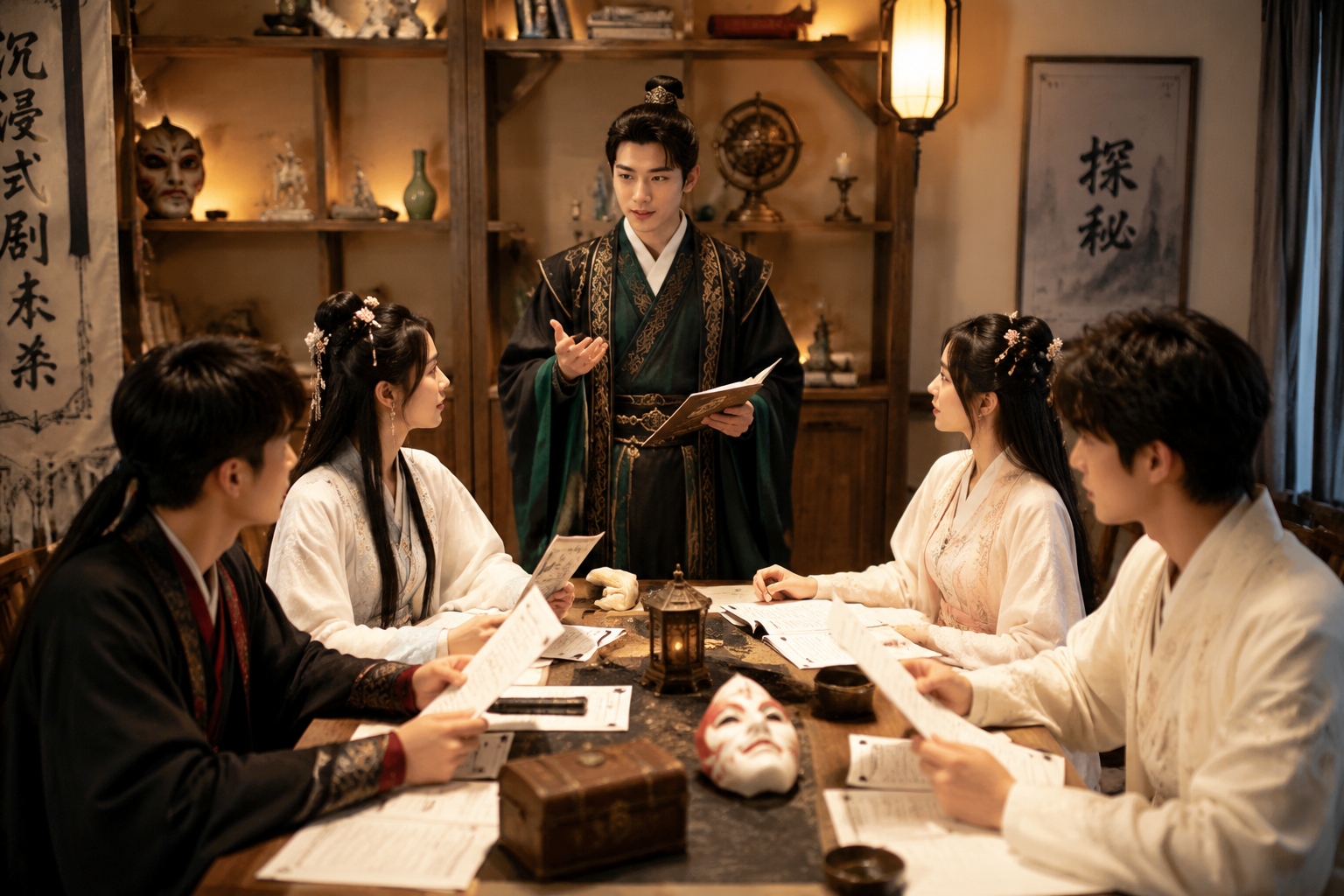
More Than a Game: A New Social Ritual
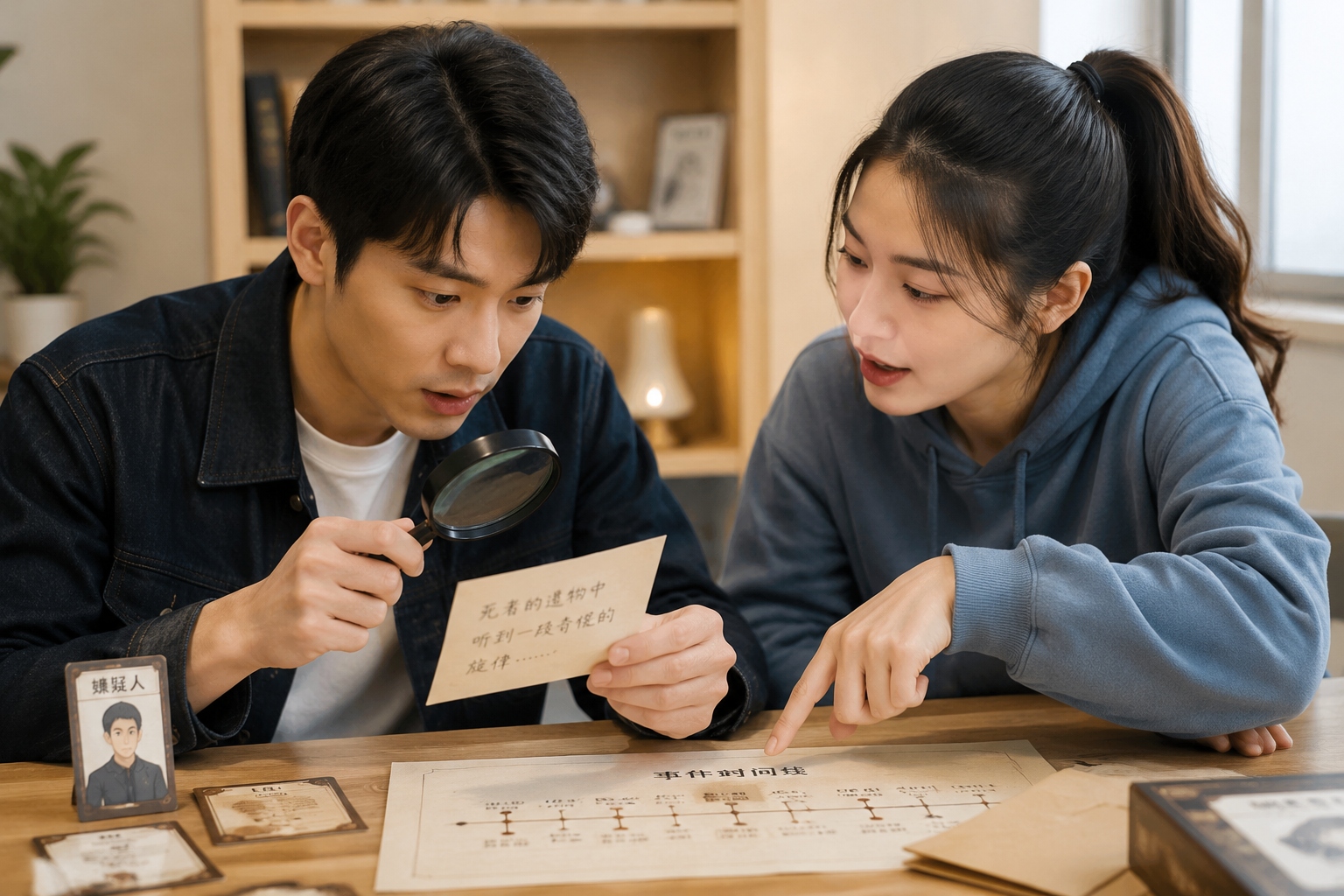
To understand the appeal, it helps to know what script-killing is not. Unlike a Western tabletop RPG like Dungeons & Dragons, where players create their own characters and the story is open-ended, most script-kill games are closer to an immersive combination of “Murder Mystery” party games and collaborative theater. Each participant receives a pre-written script describing their character, their secrets, and their lies. The core plot is usually a murder case that must be solved through conversation, evidence gathering, and logic. There are no dice to roll, no statistics to calculate; instead, your progress depends on how well you interrogate your friends—and how convincingly you bluff your way through your own alibi.
This structure makes the game surprisingly accessible. You don’t need any special knowledge or physical courage. You just need to talk, listen, and occasionally lie. “It’s like acting in a movie where you also have to solve the puzzle,” says Liu Yang, a 26-year-old accountant who plays at least twice a month in Shanghai. “After work, I used to go straight home and scroll my phone. Now I make plans with people and actually look them in the eyes for four hours.”
Why Young China Can’t Get Enough
The rise of script-killing is often linked to a broader shift in how Chinese urbanites socialize. In the past decade, group dinners and KTV have lost some luster among younger generations, who are looking for more structured and memorable experiences. A dinner might fade from memory; a night spent uncovering a fictional conspiracy becomes a story you tell for weeks.
Psychologists and cultural observers point to several factors driving the trend. First, script-killing caters to a deep desire for role reversal. In a society where young people often juggle demanding careers and high social expectations, taking on the role of a ruthless gangster or a lovesick heiress offers a rare escape. “You can be someone completely different for one night,” explains a game designer in Chengdu. “That’s liberating, especially when your real life feels too scripted already.”
Second, the game satisfies a craving for intellectual stimulation. The best script-kill games are cleverly designed puzzles that reward careful observation and deductive reasoning. For players who grew up on crime dramas and escape rooms, it offers a more complex, character-driven challenge. Many rooms now feature intricate mechanisms, props, and even magical lighting effects, raising the production value to near-theatre level.
The Economics of Imagination
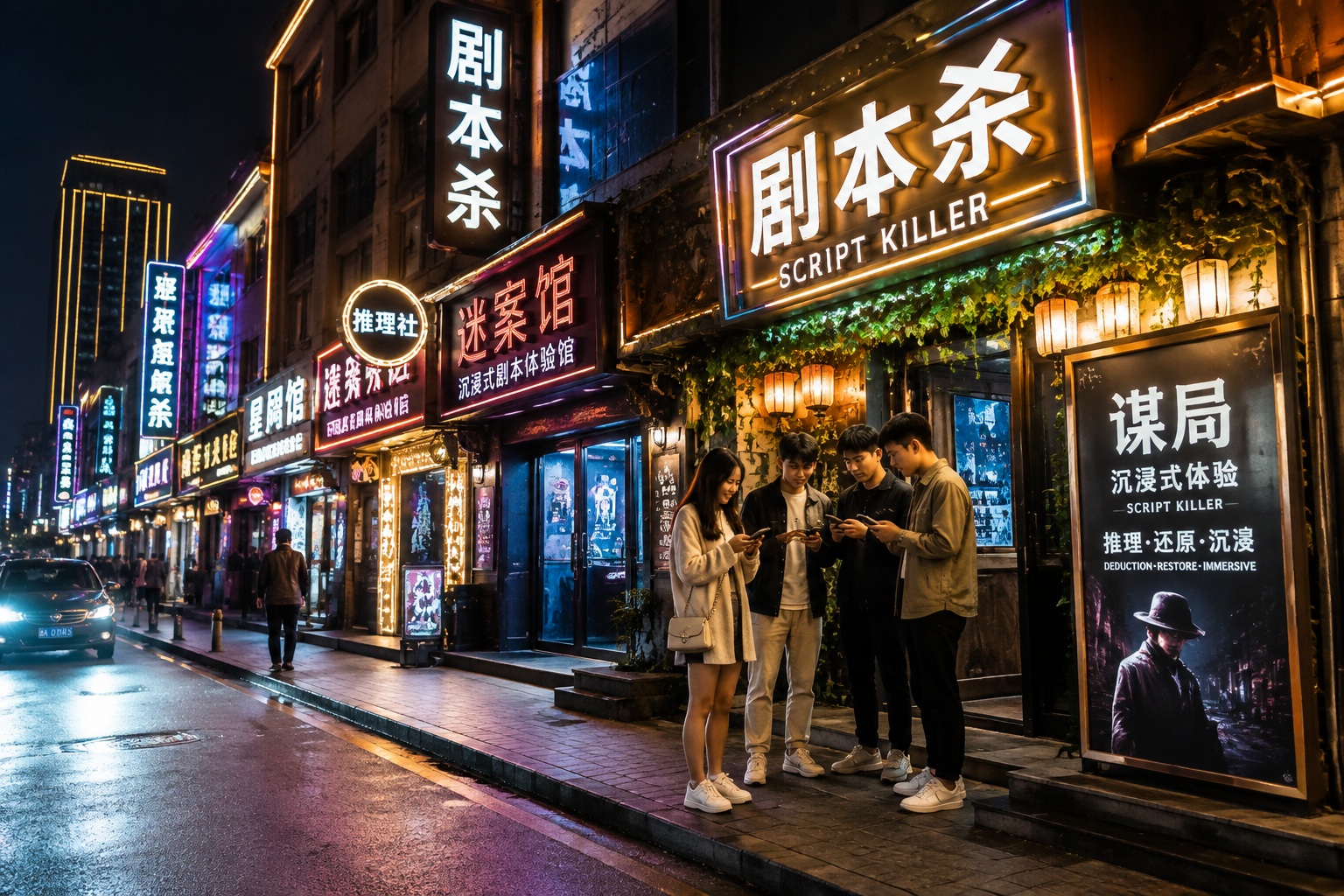
The script-killing boom has also reshaped urban landscapes. In major cities like Shanghai, Beijing, and Chengdu, entire streets have turned into clusters of themed storefronts, each promising a different fantasy behind heavy velvet curtains. Rents for these spaces have increased, and some landlords report that script-killing stores are more reliable tenants than traditional restaurants or bars, because they generate steady evening traffic throughout the week, not just on weekends.
The numbers are striking. According to industry reports, China had more than 45,000 script-killing stores by early 2023, up from around 3,000 in 2018. The market has grown into a multi-billion-yuan industry, attracting writers, actors, and theater directors. The most sought-after scripts are written by professional teams and sold to stores as physical boxes complete with detailed production guides. Some “city-limit” editions are only available to chosen venues, adding a layer of exclusivity that keeps players coming back.
Competing for the Night Economy
Late evenings, when the last bus leaves and neon signs flicker, script-killing stores become beacons of activity. This is part of China’s larger “night economy” push, which encourages venues to stay open late to stimulate consumption. Many stores operate until 2 or 3 a.m., catering to players who start at 9 p.m. after dinner. Some even offer themed snacks and drinks, blending the border between entertainment and hospitality.
For young entrepreneurs, the industry offers a low-barrier entry point. A small store with just three or four themed rooms can cost under 200,000 yuan (about $28,000) to set up, excluding renovation. “The real investment is in the story, not the bricks,” says Chen Jun, who opened his first script-killing room in Wuhan in 2021. He now runs four locations. “We hire writers to create original plots and train our staff as performers. Our customers come for the experience, not just the room.”
Not Without Its Contradictions
The rapid growth has not been problem-free. Content censorship is a constant challenge. Scripts that touch on topics like drugs, violence, or the supernatural often get flagged by regulators, forcing stores to edit or discard them. In 2021, Shanghai authorities introduced new rules requiring script-killing venues to register their scripts and ensure they don’t spread “negative publicity.” Some independent designers worry this could stifle creativity, while others say it forces the industry to mature.
There are also practical limits. A typical game can only accommodate six to ten players at a time, and finding enough friends to fill a slot isn’t always easy. This is why many stores now offer “dodging” services—essentially matching solo players with strangers. The social skill required to open up to strangers is itself a barrier, although many say the game’s structure makes it easier than a pure networking event.
More Than a Trend?
Whether script-killing will remain a cultural fixture or fade like many internet fads is an open question. Some industry veterans point to the development of more complex “immersive theater” experiences that do not require a script, blurring the lines between actor and audience. Others predict that the core format will evolve into a standard leisure activity, like going to the movies.
On a rainy Thursday evening in a second-floor store in Hangzhou, a group of five college students are just finishing a two-hour murder mystery. The game master removes the last clue from the evidence board. “So who killed the old man?” she asks. The students look at each other, then burst out laughing when one confesses to the crime with a sheepish grin. It’s late, but nobody rushes to put on their coats. They linger by the front desk, already asking which scenario they should book next week.
In a country where young people are often portrayed as glued to their screens, script-killing offers a tangible, face-to-face alternative. It doesn’t replace online life, but it carves out a space for deliberate, in-person connection. For a few hours, under warm lights and behind fictional masks, strangers become co-conspirators, detectives, and friends.
Start the discussion at forum.chinacomes.com